
Factory-direct industrial robots since 2012 ISO 9001 · Onsite-verified · OEM / ODM info@joribot.com
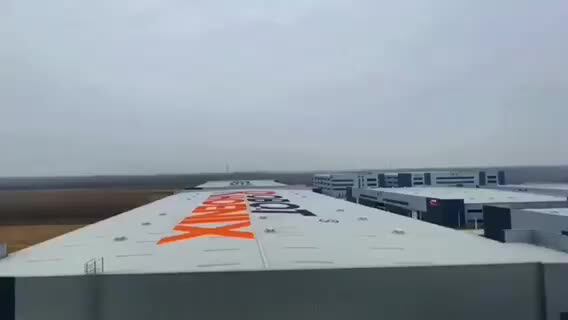
JORI Intelligent Technology Co., Ltd. factory and 4-axis delta robot for carton packing lines
JORI Intelligent Technology Co., Ltd. · Since 2012

4-Axis Delta Robot for Carton Packing Lines

High-speed, vision-guided parallel robots for cartoning, case packing, labeling and end-of-line automation — engineered with JORI’s own controller and 2D/3D vision.

High-speed delta robot for carton packing and pick and place automation
4-Axis Pick-and-Place

3–6 kg Payload · 0.08 mm Repeatability

Vision-guided picking, rotation and placement for cartons, trays, cases, labels and secondary packaging.

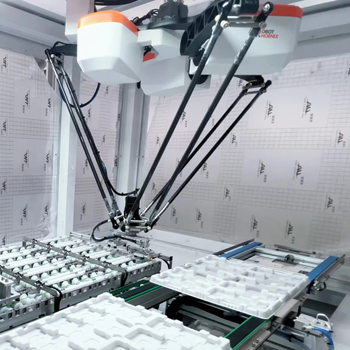
JORI robot integration and testing for carton packing lines
PLC-Ready · OEM Integration

Built for Cartoners and Case Packers

In-house controllers, vision, custom end-effectors and engineering support for machine builders and end users.

2012
Founded · R&D-driven
501–1,000
Employees · Public Profile
0+
m² Factory Area
97.06%
Response Rate · ≤2h
Information Gain · Buyer’s Guide

What a 4-Axis Delta Robot Adds to a Carton Packing Line

Speed alone is not a buying strategy. The right 4-axis delta robot must match your product, carton pitch, conveyor tracking, orientation accuracy, washdown regime and PLC architecture.

For packaging engineers and procurement teams, the search phrase 4-axis delta robot for carton packing lines usually signals a very specific problem: products must be picked from a moving conveyor, rotated to a precise orientation, and placed into a carton, tray, or case at a rate that manual operators cannot sustain. A 4-axis delta robot is often the best compromise between the speed of a parallel-kinematic spider robot and the orientation control normally associated with a SCARA or six-axis arm.

At JORI Intelligent Technology Co., Ltd., we have worked on desktop delta robots, SCARA robots, AGV/AMR platforms and automated system integration since 2012. Our delta robots, controllers and 2D/3D vision are developed in-house, which means a carton packing line project is not a chain of unrelated suppliers. The robot, controller, vision and integration support can be engineered around one another before the equipment is built.

Quick answer: what is a 4-axis delta robot?

A 4-axis delta robot uses three high-speed translational axes to move the tool center point in X, Y and Z, plus a fourth rotary axis to control the product’s orientation. On a carton packing line, that fourth axis matters when a pouch, label, cap, folded carton or blister must enter the case in a fixed direction. The robot picks, rotates and places in one coordinated motion cycle, reducing the need for mechanical turnover stations.

Typical specifications for the category include 3–6 kg payload, 0.08 mm repeatability on stable installations, IP54 protection options, PLC-ready integration and vision-guided picking. However, buyers should treat those figures as starting points rather than guarantees. The real cycle time depends on stroke length, tooling weight, product slip, conveyor tracking quality, carton pitch, vacuum response and safety requirements.

Why the fourth axis matters on a carton packing line

A 3-axis delta can move very fast, but it cannot rotate the payload. That is fine for bulk sorting or simple placement, but it is not enough when a label must face outward, a pouch must lie flat in one direction, or a carton blank must be aligned before insertion. A 4-axis delta robot can combine translation and rotation, so the product is oriented without a separate turning device. This can reduce floor space, mechanical complexity and product handling risk.

The trade-off is that the fourth axis must be engineered as part of the robot, not bolted on as an afterthought. JORI engineers review the product’s center of gravity, rotating inertia, gripper mass, cable routing and required angular acceleration. For lightweight carton packing, a compact rotary axis is often enough. For taller or heavier products, the cell may need a lower-speed motion profile or a different kinematic platform.

How to specify a 4-axis delta robot without over- or under-buying

Procurement teams often ask for the fastest robot in the catalogue. A more reliable approach is to define the production requirement first, then select the robot and tooling that can meet it with margin. The following checklist helps compare quotations on a like-for-like basis.

RequirementWhat to specifyWhy it matters
01Product & toolingProduct weight, dimensions, center of gravity, gripper type, vacuum cups or mechanical fingers, cable mass.Payload is not just the product. Tooling inertia changes acceleration and cycle time.
02OrientationRequired rotation angle, label position, tolerance, whether rotation happens during transport or before placement.The fourth axis should be sized for angular acceleration, not only static load.
03ThroughputProducts per minute, carton pitch, rework rate, upstream variation and target OEE.A robot can be fast in a video and slow in a real line if infeed is unstable.
04IntegrationPLC brand, communication protocol, conveyor encoder, safety relays, vision trigger and MES data needs.PLC-ready hardware reduces commissioning risk and protects your line schedule.
05EnvironmentDust, humidity, washdown, food contact risk, ambient temperature and cleaning chemicals.IP54 is useful for many packaging areas, but aggressive washdown may require a different hygiene strategy.
06Acceptance testFAT video or in-person run with your product, carton and conveyor speed; cycle-time data; reject handling; safety verification.This is the strongest evidence that the selected configuration will work after installation.

For carton packing lines, ask the robot supplier to simulate or demonstrate the worst-case product, not only the easiest one. The worst case may be a lightweight pouch that slips, a tall carton that traps air, or a product with an off-center label. JORI’s application engineers typically review video of the current line, product samples, carton drawings and the desired operator interface before recommending a model.

Where a 4-axis delta robot fits best

Typical applications include high-speed pick-and-place into cartons, tray loading, case packing, label orientation, flow-wrap transfer, blister feeding, wet-wipe lid handling and secondary packaging. Delta robots are less suitable when the task requires long reach, heavy payload, complex insertion or force-controlled assembly. In those cases, a SCARA robot, six-axis robot or a hybrid cell may be a better engineering choice.
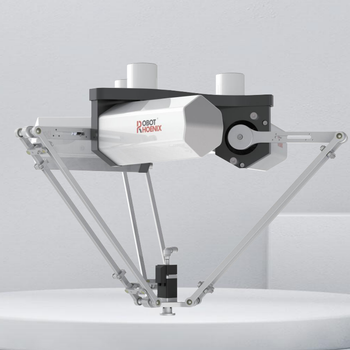
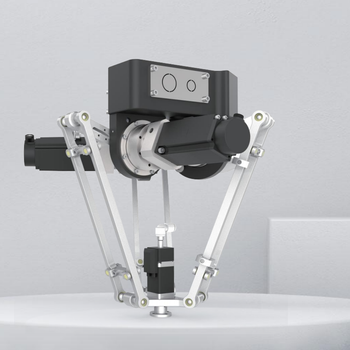
Recommended Configurations

4-Axis Delta Robots for Carton Packing Lines

Shortlist a configuration based on product weight, orientation control and integration needs. Standard models can be ordered from 1 set.

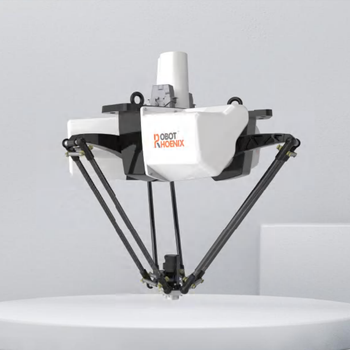
4-Axis Delta6 kg 4-axis delta robot with 0.08 mm repeatability for carton packing lines

6 kg 4-Axis Delta Robot with 0.08 mm Repeatability

6 kg · ±0.08 mm · Vision-ready
Recommended for 3–6 kg carton packing

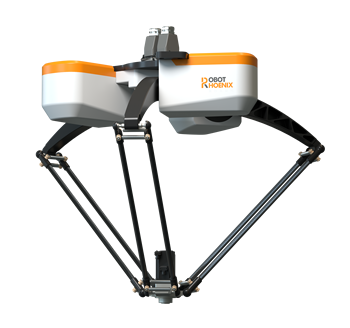
3 kg Delta Robot Arm with IP54 Protection

3 kg · IP54 · High speed
For food, pharma and daily chemical cartons
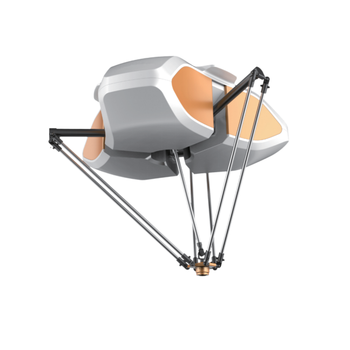
Carton Packer4-axis delta spider hand robot for carton packer line

4-Axis Delta Spider-Hand Robot for Carton Packer Lines

4-axis · Carton packing
For oriented pick-and-place into cases
PLC-Ready4-axis mini delta robot with PLC for cartoning machines

4-Axis Mini Delta Robot with PLC for Cartoning Machines

PLC-ready · Compact
For compact secondary packaging cells
120 pcs/minHigh-precision 4-axis delta robot for labeling at 120 pcs per minute

4-Axis Delta Robot for Labeling, 0.1 mm Precision

120 pcs/min · Labeling
For high-speed label or lid orientation

High-Speed Parallel Delta Robot for Precision Picking

High speed · Vision-ready
For random-orientation infeed and sorting

No matching robots on this page — browse the full delta robot catalogue below.

Future Procurement Trends

How Global Buyers Will Purchase Carton Packing Robots Next

Purchasing behavior is shifting from “lowest robot price” to “lowest risk per production hour.” These trends are especially visible in end-of-line packaging.

01

TCO-Led Decisions

Procurement teams are comparing total cost of ownership: installation, conveyor tracking, tooling, spare parts, remote support, energy use and downtime risk. A low robot price can be expensive if the controller integration or after-sales response delays the line.

02

Modular, Scalable Cells

Buyers increasingly start with one robot cell and add a second or third without redesigning the PLC, safety circuit or tooling. Modular delta robot cells reduce the risk of over-investing before the line has proven its throughput and uptime.

03

Simulation Before CAPEX

More buyers ask for cycle-time simulation, layout review and digital twin data before issuing a purchase order. The goal is not a pretty animation; it is proof that the robot can reach the carton positions, rotate the product and recover from missing-product gaps without starving the line.

04

Supplier Accountability

Carton packing cells involve the robot, conveyor, vision, PLC, safety and carton tooling. Buyers increasingly prefer a supplier who can take responsibility for integration interfaces rather than forcing the buyer to arbitrate between three vendors after the line is installed.

Product Development Trends

Where 4-Axis Delta Robots Are Heading

Delta robot hardware is maturing, but the surrounding controller, vision and integration layers are changing quickly. These developments affect specification and value engineering.

Integrated vision and AI-assisted picking

2D and 3D vision are becoming part of the robot cell rather than a separate engineering project. On carton lines, vision can detect product position and orientation, check for gaps, verify labels and guide the fourth axis. AI-assisted inspection can help classify defects, but buyers should still require deterministic acceptance criteria and traceable reject handling.

Higher hygiene and easier cleaning

Food, pharmaceutical and daily chemical lines continue to ask for easier cleaning, smoother surfaces and protection against dust or splashes. IP54 delta robots are common for many packing areas, yet aggressive washdown requires a broader hygiene review that includes tooling, cables, frame materials and drainage. Buyers should specify the cleaning procedure, not just the IP rating.

PLC-ready and easier commissioning

Machine builders want delta robots that behave like a controllable axis within the packaging machine, not a black box. PLC-ready control, clear I/O mapping and open integration documentation shorten commissioning. JORI’s in-house controller and vision development allow the robot, vision and packaging machine interface to be engineered together.

Smaller footprint, higher flexibility

Carton packing lines must handle more product variants and shorter runs. A 4-axis delta robot with quick-change tooling and recipe-driven motion can reduce changeover time. Compact mini delta robots are also becoming more common in secondary packaging cells where floor space is expensive.

Remote support and spare-part readiness

After-sales performance is now part of the product. Buyers want remote diagnosis, predictable spare parts and clear maintenance intervals. A supplier with in-house controllers and documented assembly processes can support a line across its lifecycle more effectively than a trading intermediary.

Why JORI

A Robot Supplier That Builds the Arm, the Controller and the Vision

JORI Intelligent Technology Co., Ltd. was founded in 2012 in Jinan, Shandong, China, and specializes in industrial robot R&D and manufacturing, controller and vision system development, OEM support and automated system integration. Our product lines include delta parallel robots, SCARA robots, silicon wafer robots, AGV/AMR platforms, autonomous forklifts, controllers and 2D/3D vision.

Because key technologies are developed in-house and protected by national patents, carton packing line buyers can work with one accountable source for the robot, controller, vision and integration support. Our public company profile lists 501–1,000 employees, US$10 million–US$50 million annual revenue, a 97.06% response rate and an average response time of 2 hours or less.

  • Independent R&D and national patents
  • In-house controller and 2D/3D vision
  • ISO 9001 quality management
  • Onsite-verified manufacturer profile
  • OEM, design and buyer-label support
  • MOQ 1 set for standard models
  • Export support for five continents
  • Response rate 97.06% · ≤2h
Buyer FAQ

What Global Buyers Ask About 4-Axis Delta Robots

Direct answers for procurement, packaging engineering and machine-building teams.

What is a 4-axis delta robot used for in carton packing lines?
A 4-axis delta robot picks products from a moving conveyor, rotates them to the required orientation and places them into cartons, trays, cases or secondary packaging. The fourth axis is a rotary axis that controls product orientation. It is useful for labels, pouches, folded cartons, caps, lids and products that must enter a carton in a specific direction. The robot is typically paired with a camera, vacuum gripper or mechanical end-effector, and a PLC or packaging machine controller.
What payload and speed should I specify for a carton packing line?
JORI delta robots commonly support 3–6 kg payloads with 0.08 mm repeatability. Real line speed depends on stroke, product weight, gripper mass, conveyor tracking, carton pitch, orientation change and vacuum response. The JORI portfolio includes configurations for up to 120 pcs/min in labeling-type applications, but buyers should not use a catalogue figure as a guaranteed carton packing cycle time. Share a product sample, carton drawing and line video so the motion profile can be validated.
Should I choose a 3-axis or 4-axis delta robot?
Choose a 3-axis delta robot when translation-only pick-and-place is sufficient and the product does not need controlled rotation. Choose a 4-axis delta robot when the product, label, pouch or lid must be rotated before placement. If the application requires complex insertion, heavy twisting, long reach or force control, a SCARA or six-axis robot may be more suitable. JORI can help compare the kinematic options based on the product and carton layout.
Can a 4-axis delta robot integrate with existing cartoners and case packers?
Yes. JORI develops its own controllers and 2D/3D vision, and offers PLC-ready delta robots for cartoning machines, carton packers, case packers and labeling equipment. Integration usually requires I/O lists, communication protocol details, conveyor encoder signals, safety requirements, vision trigger timing and tooling drawings. Involving the robot supplier early in the packaging machine design reduces commissioning risk and avoids interface surprises.
Does JORI offer OEM or custom end-effectors?
Yes. JORI provides OEM service, design service and buyer-label options, and supports machine builders with custom end-effectors, controller integration and automated system integration. For carton packing lines, custom tooling may include vacuum cups, mechanical fingers, rotary adapters, product guides, sensors and quick-change interfaces. A custom end-effector should be designed around product weight, center of gravity, cleaning requirements and maintenance access.
What is the minimum order quantity and response time?
Standard delta robots can be ordered from 1 set, so buyers can validate a single cell or pilot line before scaling up. JORI reports a 97.06% response rate and an average response time of 2 hours or less. Send your product dimensions, weight, required throughput, carton type, PLC preference and layout to info@joribot.com for an engineering recommendation.
How should I calculate ROI for a carton packing robot?
Calculate the annual labor cost avoided, the value of increased output, the reduction in scrap and rework, and the reduction in downtime caused by manual variability. Then compare that benefit against the robot cell cost, integration cost, tooling, spare parts, maintenance and operator training. A practical ROI model should use the conservative cycle time validated at FAT, not the highest catalogue speed. For multi-shift operations, the payback is usually driven by labor availability and consistent OEE as much as by robot price.
What support and spare parts are available after delivery?
JORI supports buyers through remote diagnosis, spare parts planning, controller and vision configuration, and integration guidance for machine builders. Because key robot, controller and vision technologies are developed in-house, technical questions can be traced back to the responsible engineering team. Buyers should confirm the spare-part list, recommended maintenance intervals and training plan before purchase.
What information should I include in an inquiry?
Include the product weight and dimensions, center of gravity, required orientation, target products per minute, carton or case dimensions, conveyor speed and direction, gripper preference, PLC and communication requirements, cleaning environment and desired delivery schedule. Photos or video of the current line are especially useful. Email these details to info@joribot.com and JORI’s application engineers will recommend a 4-axis delta robot configuration for your carton packing line.

Planning a 4-Axis Delta Robot Cell for Your Carton Packing Line?

Send your product, cycle-time, carton and PLC requirements — JORI Intelligent Technology Co., Ltd. responds within 2 hours.

info@joribot.com
Contact Us