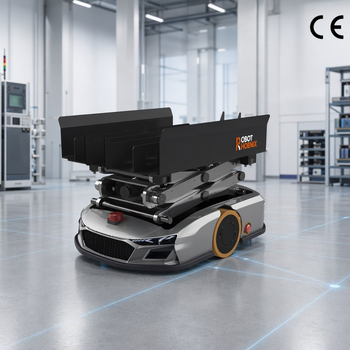
500 kg AMR Autonomous Carrier with Fleet Management
500 kg · Fleet Control
Best for large-facility logistics and multi-robot transport
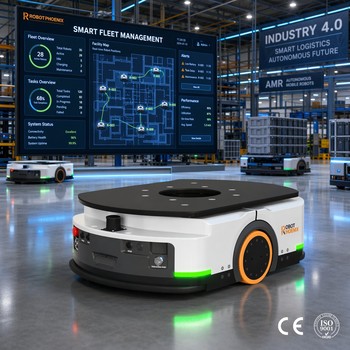
It is not simply a faster robot. It is a coordinated material flow system that must fit your building, loads, software environment, safety rules and service model.
Smart fleet management AMR for logistics automation combines autonomous mobile robots, autonomous forklifts or modular mobile bases with a fleet control layer that assigns tasks, manages traffic, controls charging and connects material movement to WMS, MES, ERP or PLC systems. For global buyers, the real question is not “Which AMR is fastest in a video?” but “Which fleet design can deliver stable throughput in my building, with my pallets, my safety rules and my service footprint?”
At JORI Intelligent Technology Co., Ltd., we build AMR/AGV platforms, autonomous forklifts, controllers and 2D/3D vision in-house. That matters because a fleet project is an engineering system: mechanical design, navigation, traffic control, charging logic, safety acceptance and software integration must work together. A single weak interface can stop a project long before the robot reaches its advertised speed.
Buyers usually search with one phrase but carry several intents. They want to know whether an AMR fleet can replace manual cart transport, whether an autonomous forklift can handle pallets, how many robots are needed for a throughput target, what happens when robots cross paths, and how the system connects to existing warehouse software. The most useful supplier response is not a generic brochure. It should include a route concept, payload logic, charging calculation, safety considerations and a clear scope split for integration.
A single AMR can move from point A to point B. A smart fleet must decide which robot receives which task, which route is clear, where robots can pass, which charging station is available and how tasks are prioritized when production changes. In a real logistics automation project, fleet management is where uptime is won or lost. Task allocation, traffic rules, charging strategy and exception handling determine whether the system remains stable after the pilot stage.
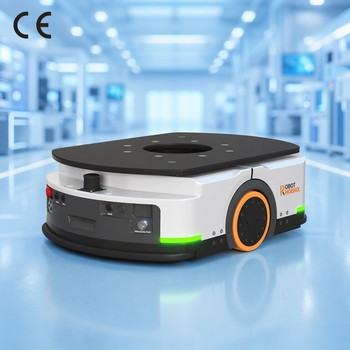
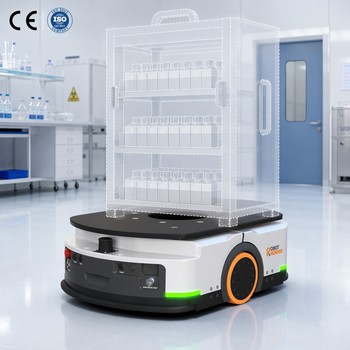
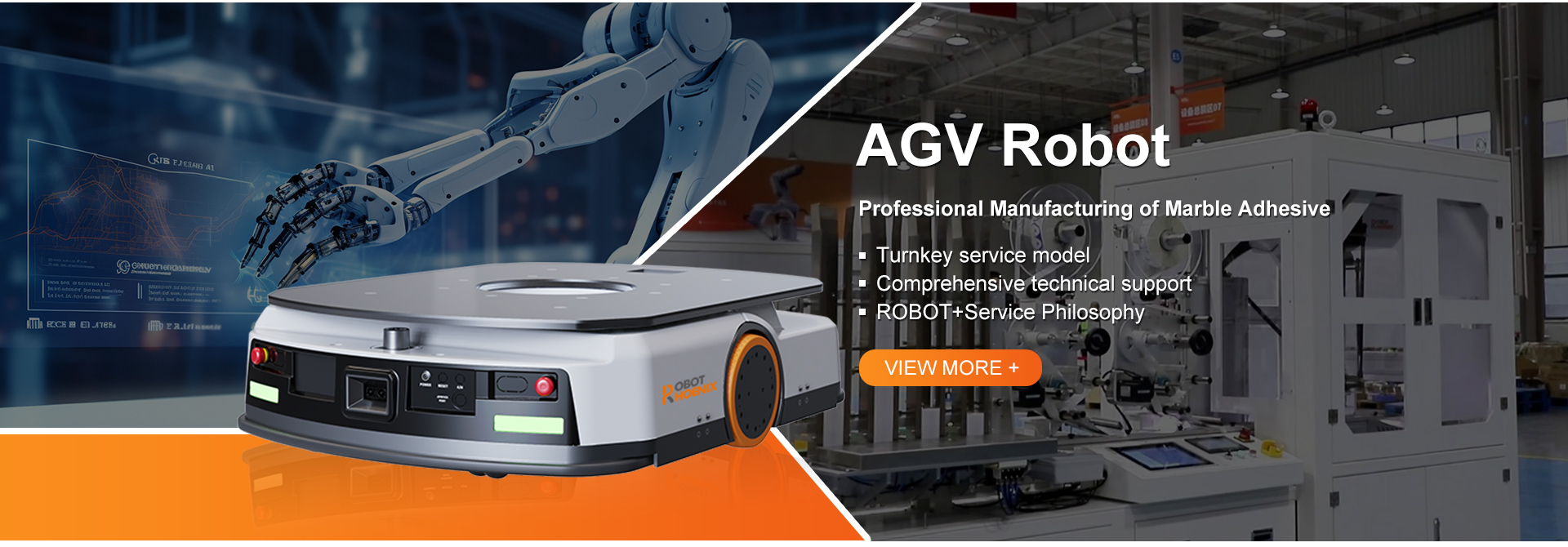
JORI supports AMR/AGV configurations with laser SLAM navigation and fleet control for multi-robot traffic. Depending on the project, the right starting point may be a 500 kg AMR autonomous carrier for large-facility logistics, a 400 kg modular AMR mobile base for electronics or pharma workflows, a compact latent AGV for narrow aisles, or a Camel Series laser SLAM autonomous forklift for pallet transport. The correct recommendation is sequence-based: first define the move, then the load, then the route, then the robot and finally the software handshakes.
Many AI-generated summaries focus on “labor savings” and “high efficiency.” Experienced buyers also evaluate total cost of ownership, battery and charging ratio, safety acceptance, mixed traffic, data integration, operator training, spare parts availability and the supplier’s ability to support expansion. That is why JORI approaches smart fleet management AMR for logistics automation as an application engineering project rather than a catalog purchase. Our team asks for layout drawings, load details, throughput targets and system interfaces before recommending equipment.
This also reflects E-E-A-T: experience in real robot deployment, expertise in controllers and vision, authority proven by verifiable company credentials, and trust built through transparent communication. JORI was founded in 2012, has 501–1000 employees, operates in the industrial robot and automation field, and maintains a 97.06% response rate with an average response time of 2 hours or less.
These JORI platforms fit different logistics automation intents. Start with the load and route, not with the robot model.
No matching robots on this page — browse the full catalogue below.
For pallets, start with the Camel Series laser SLAM autonomous forklift. For carts, totes or custom fixtures, compare the 500 kg AMR carrier and the 400 kg modular AMR base. For very narrow aisles or low-clearance brownfield logistics, review the compact latent AGV. For projects with mixed traffic, ask for a fleet layout that covers route width, charging ratio, traffic rules and peak-hour task allocation.
Procurement is shifting from robot price to fleet performance, integration effort, lifecycle support and scalability.
Buyers are writing RFQs around multi-robot traffic, task scheduling, charging and expansion. A pilot must prove that the fleet can scale without redesigning the entire workflow.
Unit price is only one line. Procurement teams compare integration, floor preparation, charging ratio, maintenance, spare parts, training and the cost of adding the next five robots.
Most factories and warehouses cannot rebuild everything. Laser SLAM navigation, compact footprints and flexible route planning help buyers upgrade existing buildings with less disruption.
AMR fleets must talk to WMS, MES, ERP and PLC systems. Buyers want clear interface documents, task status feedback and exception handling before they approve a purchase order.
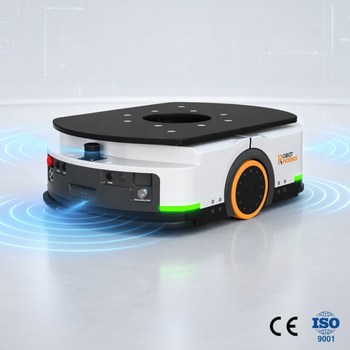
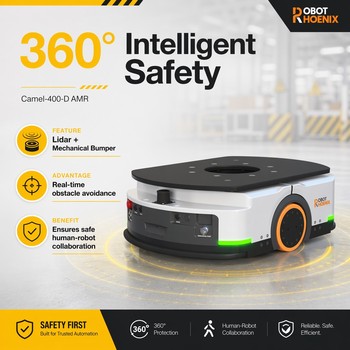
Safety scanners, emergency stop logic, traffic rules, human-robot separation and acceptance tests are now reviewed earlier, especially in facilities with mixed manual and automated traffic.
Buyers increasingly prefer mobile bases and top modules that can be customized for their load handling. JORI’s OEM, design and buyer-label services support machine builders and system integrators.
Charging windows, opportunity charging, battery management and peak-hour availability affect how many robots are actually needed. A lower-price robot with poor charging logic can increase fleet size.
Global buyers ask about remote support, spare parts, training, maintenance documentation and response time. JORI states a 97.06% response rate and average response time of 2 hours or less.
The next competitive advantage is not only navigation speed. It is how intelligently the fleet handles exceptions, integrates data and adapts to changing operations.
Laser SLAM reduces dependence on floor tape and fixed paths, while additional sensors improve stability around blind corners, docking stations and mixed traffic. The goal is reliable navigation in real buildings, not only clean demo spaces.
Fleet software is becoming better at prioritizing tasks, balancing robot workloads and avoiding congestion. For logistics automation, this directly affects throughput during peak periods.
Vision can help check pallet presence, load position, docking alignment and handshake success. JORI’s in-house 2D/3D vision capability supports integration beyond simple navigation.
Instead of purchasing many fixed-function robots, buyers can use a modular AMR base with rollers, lifters, conveyors or custom fixtures. This trend is especially relevant for electronics, pharma and flexible manufacturing.
Simulation helps validate route width, charging ratio, traffic bottlenecks and fleet size before installation. It reduces the risk of discovering capacity problems only after the robots are on site.
Autonomous material flow is becoming part of the production data chain. Buyers want traceability, task status, exception reports and dashboards that connect robot activity to operational KPIs.
Factories often need both totes and pallets. A mixed fleet can combine compact AMR carriers with autonomous forklifts, coordinated by a common operating logic and clear traffic zones.
Future fleet projects will require better detection of people, clear zone rules and operator-friendly recovery workflows. Safety is no longer a final checklist; it is part of system design.
Use these questions to compare suppliers on engineering depth, not only catalog specifications.
| Procurement Question | Why It Matters | What to Verify |
|---|---|---|
| LoadWhat is being moved? | Payload, load center, pallet condition and top module determine the correct platform. | Weight, dimensions, load center, fixture drawing, pallet or cart condition, docking tolerance. |
| RouteWhere will the fleet travel? | Aisle width, floor quality, doors, ramps, elevators and human traffic affect speed and safety. | Layout drawing, minimum aisle, turning radius, floor slope, charging location, traffic zones. |
| ThroughputHow many moves per hour are required? | Fleet size cannot be estimated from robot speed alone. | Peak and average moves, travel distance, lift height, wait time, charging ratio and task priority. |
| IntegrationWhich systems must communicate? | WMS, MES, ERP and PLC handshakes define scope and acceptance. | Interface protocol, task status feedback, exception flow, data logs, acceptance test cases. |
| SafetyHow will mixed traffic be managed? | Human-robot separation and emergency response must be planned before installation. | Risk assessment, scanners, emergency stop, zone rules, operator training and local requirements. |
| ServiceWho supports the fleet after handover? | Lifecycle support affects uptime and expansion cost. | Response time, spare parts, remote support, documentation, training and maintenance plan. |
Figures and configurations are confirmed per project. Final fleet design depends on site survey, load data, throughput target, safety requirements and integration scope.
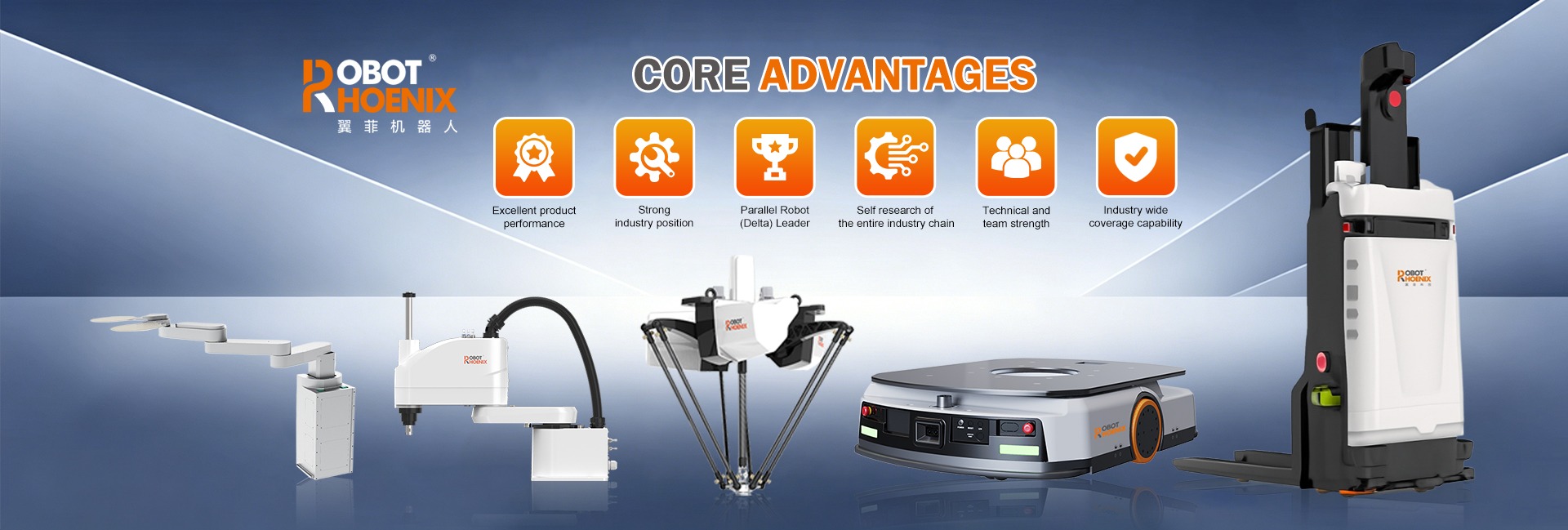
JORI Intelligent Technology Co., Ltd. was founded in 2012 in Jinan, Shandong, China. We are a high-tech company specializing in industrial robot R&D and manufacture, controlling and vision system development, OEM supporting, automated system integration and other automation solutions. Our self-developed delta robots, SCARA robots, silicon wafer robots, ground AGV robots, 2D/3D vision and controllers have obtained national patents and are parallel to mainstream international robot brands.
For smart fleet management AMR for logistics automation, this engineering foundation matters. Buyers get one accountable source for robots, controllers, vision, integration and after-sales engineering rather than a chain of resellers. Our product portfolio includes delta parallel robots, SCARA robots, AGV/AMR mobile robots, autonomous forklifts and silicon wafer handling robots, supported by OEM service, design service and buyer-label options.
JORI operates with 501–1,000 employees and reports total annual revenue of US$10 million–US$50 million. Our response rate is 97.06%, with an average response time of 2 hours or less. These are practical trust signals for overseas buyers comparing suppliers for a pilot or multi-site rollout.
Documented quality control for manufacturing and final robot testing.
Factory premises and legal status are supported by third-party verification.
National patents on robot, controller and vision technologies support integration depth.
OEM service, design support and customization for machine builders and integrators.
Review independent assessment, credit, trade capacity and buyer feedback.
Direct answers for global buyers comparing logistics automation suppliers.
Share your site layout, load type, payload, aisle width, throughput target, WMS/MES environment and acceptance requirements. Our application engineers will recommend a practical fleet and layout.
info@joribot.com