Blog
Top 10 Industrial Robotics Companies in the World
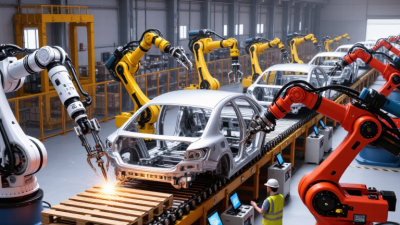
Industrial Robotics is no longer confined to fenced-off assembly lines. In modern plants, robots weld vehicle frames, place tiny electronic components, and move heavy pallets with steady precision. Their performance depends on more than the arm itself. Controllers, sensors, software, safety systems, and service support all shape results. Choosing a supplier can feel less like buying a machine and more like designing a production system. Details matter.
Joseph F. Engelberger, a pioneer of industrial robotics, is often credited with saying, “I can’t define a robot, but I know one when I see one.” The remark is memorable, but today’s buyers need more than recognition. They compare payload, reach, cycle time, integration support, and long-term operating costs. A robot that excels in a showroom may not suit a cramped workshop or a fast-moving packaging line. Real conditions can be messy.
This overview examines ten influential companies in the global Industrial Robotics market, including established names such as ABB, FANUC, Yaskawa, and KUKA. It considers their areas of strength, technologies, and relevance to manufacturers across different sectors. The list should be read as a practical guide, not a universal verdict: company scale, product availability, and local support can change the picture. No ranking can capture every factory’s needs. A careful comparison starts with the task, the workspace, and the people who will run the system.
Read more »
 By:Amelia
- November 27, 2026
7 Industrial Robot Arm Buying Tips for Global Buyers
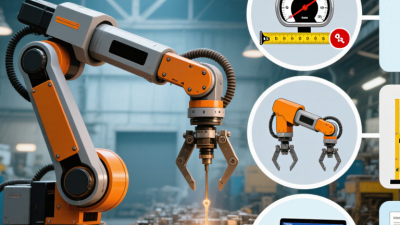
Global buyers need more than a robot’s advertised payload. An Industrial Robot Arm must fit the real task, production space, and operating pace. A model that lifts a heavy part may still miss the required reach or cycle time. Check the actual work envelope, repeatability, end-effector weight, and mounting position. That matters.
Joseph Engelberger, widely regarded as a pioneer of industrial robotics, offered a useful reminder: “I can’t define a robot, but I know one when I see one.” For buyers, the lesson is to look beyond labels and examine how the system performs on the factory floor. Ask suppliers for application data, clear technical documentation, and a demonstration using parts similar to yours. A polished video is not enough.
The seven buying tips in this guide focus on practical decisions: matching payload and reach, checking accuracy, reviewing controller and integration needs, and assessing safety features. They also cover total cost, supplier support, spare-parts access, and commissioning plans. Request a breakdown of tooling, installation, training, and maintenance—not just the arm’s purchase price. Compare quotations carefully. Small details count.
A specification sheet can still mislead when it leaves out real cycle conditions or tool weight. A trial run may expose limits that look minor on paper. Buyers should document their assumptions, then revisit them with operators and integrators. No checklist removes every risk, but careful questions can prevent expensive surprises.
Read more »
By:Amelia
- November 27, 2026
What Are the Best Types of Industrial Robots in 2026?
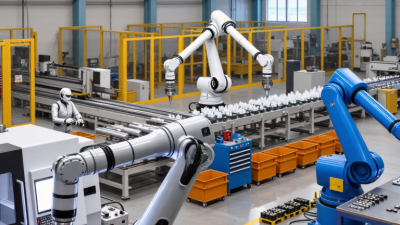
In 2026, the best Industrial Robot is not simply the fastest or strongest model. It is the one that fits the task, workspace, and production plan. A robot loading a CNC machine faces different demands from one sorting small parts or welding a vehicle frame. Reach, payload, repeatability, cycle time, and integration all matter. So does the space around the cell.
This guide compares the main industrial robot types: articulated, SCARA, delta, Cartesian, and collaborative robots. Each has a distinct working style. An articulated arm can reach around fixtures and handle varied paths. A SCARA robot often suits fast, precise assembly on a flat work surface. Delta systems can pick lightweight items at high speed. Cartesian robots move along straight axes, while collaborative robots may support tasks near people when the application is properly assessed. No type wins every job.
The right choice starts with real production details, not a catalog headline. Measure the part, note its weight, and map the robot’s path, including tool changes and maintenance access. Then compare the full system: gripper, vision, safety equipment, programming, and service support. These details can change the budget and the expected return. Specifications also vary by manufacturer, and advertised performance may not match a difficult factory environment. That deserves a closer look. Robot categories overlap, and newer models keep narrowing old differences. This comparison offers a practical starting point, not a universal verdict.
Read more »
By:Amelia
- November 27, 2026