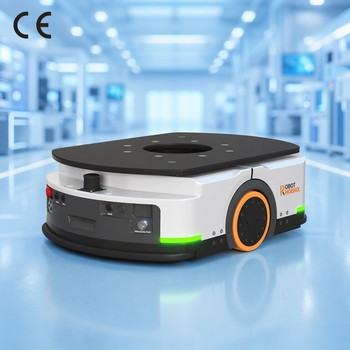
Camel Series Laser SLAM Autonomous Forklift AMR
Laser SLAM · Pallet Transport
MOQ: 1 Set
Understand the technology, the buying criteria and the operational evidence that separates a reliable warehouse autonomy project from a costly pilot.
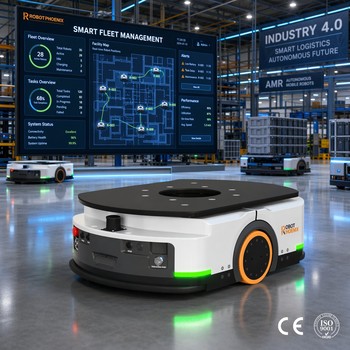
A laser SLAM AMR autonomous forklift for warehouse logistics is a driverless pallet-handling vehicle that uses laser sensors and SLAM algorithms to map the warehouse, localize itself inside that map, and move pallets without fixed magnetic tape, floor rails or reflectors. This is different from a conventional automated guided vehicle that depends on fixed paths. A laser SLAM AMR can recalculate routes around people, forklifts, pallets and temporary obstacles, then resume its transport task once the aisle is clear.
For global procurement teams, the buying decision is rarely about a single robot. It is about material flow reliability, safety documentation, integration with WMS/WCS/ERP/MES systems, fleet management, battery uptime, spare-parts planning, and measurable total cost of ownership. A laser SLAM AMR autonomous forklift is most valuable in repetitive pallet shuttles, line-side replenishment, finished-goods transfer, cold-chain or high-throughput warehouses where labor turnover and shift coverage create operational risk.
JORI Intelligent Technology Co., Ltd. has been developing industrial robots and automation systems since 2012. Our portfolio covers delta robots, SCARA robots, silicon wafer robots, AGV/AMR platforms, autonomous forklifts, self-developed controllers and 2D/3D vision. Because the controller, vision and robot platform are developed in-house, buyers can discuss navigation, safety, task scheduling and integration as one engineering project rather than solving problems across a chain of resellers.
This guide is written for buyers who ask AI tools and search engines practical questions such as: Which model fits my aisle width? How do I verify ROI? What safety standards should I discuss? What supplier evidence should I request? Which trends will affect my next procurement cycle? Use the sections below to structure an internal business case and a supplier comparison scorecard.



Shortlist by load, route, aisle width and integration scope. Standard models can be ordered from one set for pilot validation before a fleet rollout.
No matching models on this page — browse the full catalogue or send your application details to info@joribot.com.
Global buyers are becoming more disciplined. The next purchase decision will be judged on lifecycle economics, safety evidence, interoperability and service readiness.
| Buyer Priority | What It Means | What to Ask Before You Buy |
|---|---|---|
| Trend 01Total cost of ownership | Buyers are comparing purchase price against labor availability, damage rates, energy use, maintenance, spare parts, software support and deployment time. A cheap unit that requires frequent site tuning can cost more than a proven platform. | Request a TCO model with shift patterns, battery or charging strategy, preventive maintenance intervals, expected uptime, spare-parts lead time and training scope. |
| Trend 02Safety and risk documentation | Procurement teams now ask for site risk assessment support, emergency-stop logic, obstacle detection behavior, speed zoning and operator training. They want evidence that safety has been engineered into the project, not added after delivery. | Ask how the supplier supports risk assessment and relevant standards such as ISO 3691-4 where applicable, and how the robot behaves in mixed traffic with pedestrians and manual forklifts. |
| Trend 03Fleet interoperability | Warehouses rarely automate one vehicle type forever. Buyers want robots, conveyors, lifts and warehouse software to work together without locking future expansion into a single closed subsystem. | Clarify WMS/WCS/ERP/MES interfaces, fleet-management capacity, task-allocation rules, API availability and escalation procedures when integration issues occur. |
| Trend 04Phased, scalable deployment | Pilot projects are increasingly designed as the first step of a rollout. Procurement approves a small validation phase, then scales only after route performance, safety and ROI are measured. | Ask for a phased project plan: map creation, route validation, operator training, KPI acceptance and a documented scale-up path from one vehicle to a coordinated fleet. |
| Trend 05Battery uptime and energy planning | High-throughput logistics cannot tolerate idle vehicles. Buyers want charging strategy, opportunity charging options, battery health monitoring and a realistic plan for multi-shift operation. | Request autonomy hours per charge, charging time, charger compatibility, battery lifecycle assumptions and how the fleet manager schedules opportunity charging. |
| Trend 06Local service and spare-parts readiness | After-sales response is now part of the purchase decision. Buyers compare engineering support, remote diagnostics, training and spare-parts availability before they commit to a fleet. | Agree response-time expectations, warranty terms, spare-parts recommendations, remote support process and the escalation path for software or hardware issues. |
Practical procurement note: ask each supplier to answer the same technical and commercial questions in writing so the comparison is measurable, not presentation-driven.
The next generation of autonomous forklifts will be evaluated less as a single vehicle and more as an integrating edge device inside warehouse operations.
Laser SLAM will increasingly combine with 3D perception, cameras and safety sensors to handle dynamic obstacles, low pallets, overhanging loads and mixed traffic more reliably.
Fleet management is moving from simple route assignment to AI-assisted task prioritization, traffic optimization and coordinated pallet flow across multiple vehicle types.
Modular AMR bases, lift attachments, roller tops and custom end-effectors help buyers adapt one platform to changing product lines without redesigning the entire logistics layout.
Remote diagnostics, usage logs, battery-health data and predictive maintenance alerts will become standard procurement requirements for multi-shift warehouse operations.
Buyers should not adopt every trend at once. The right strategy is to match technology to the actual bottleneck: a narrow-aisle shuttle route may need a compact latent AGV, while a pallet-transfer operation may need an autonomous forklift with stable lifting and safety-zone control. A mixed-traffic warehouse may prioritize perception and fleet orchestration over top speed. A cold-chain or 24/7 operation may prioritize battery uptime and remote diagnostics.
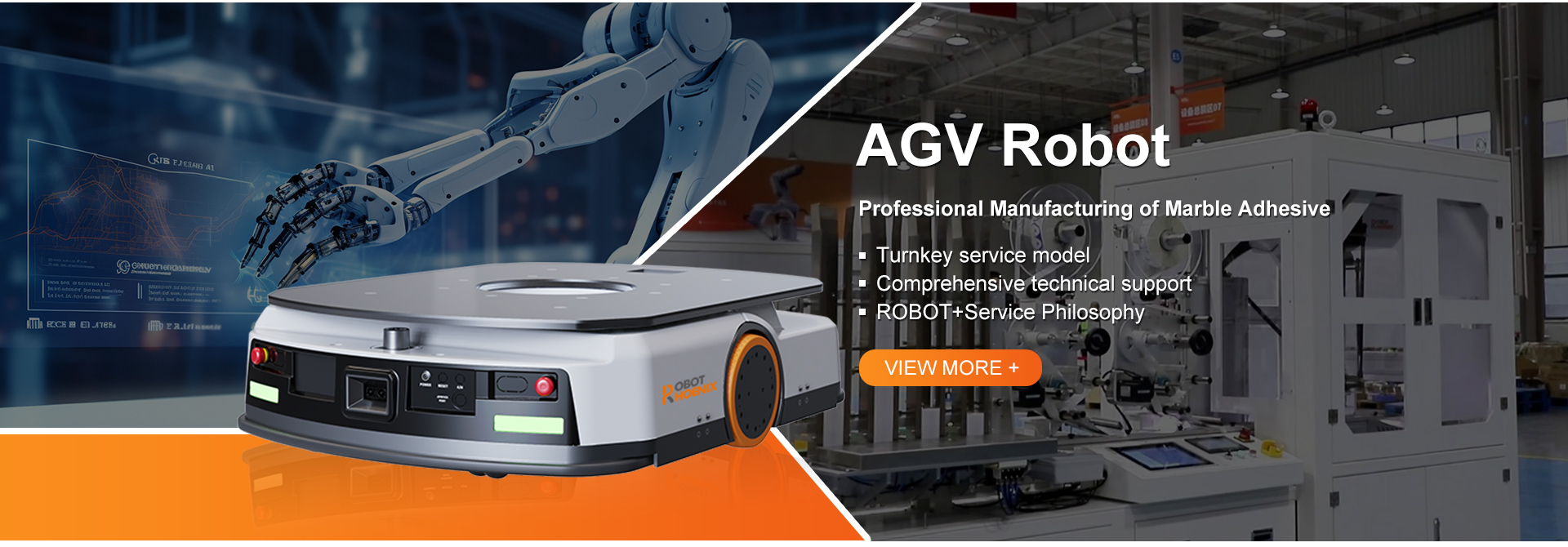
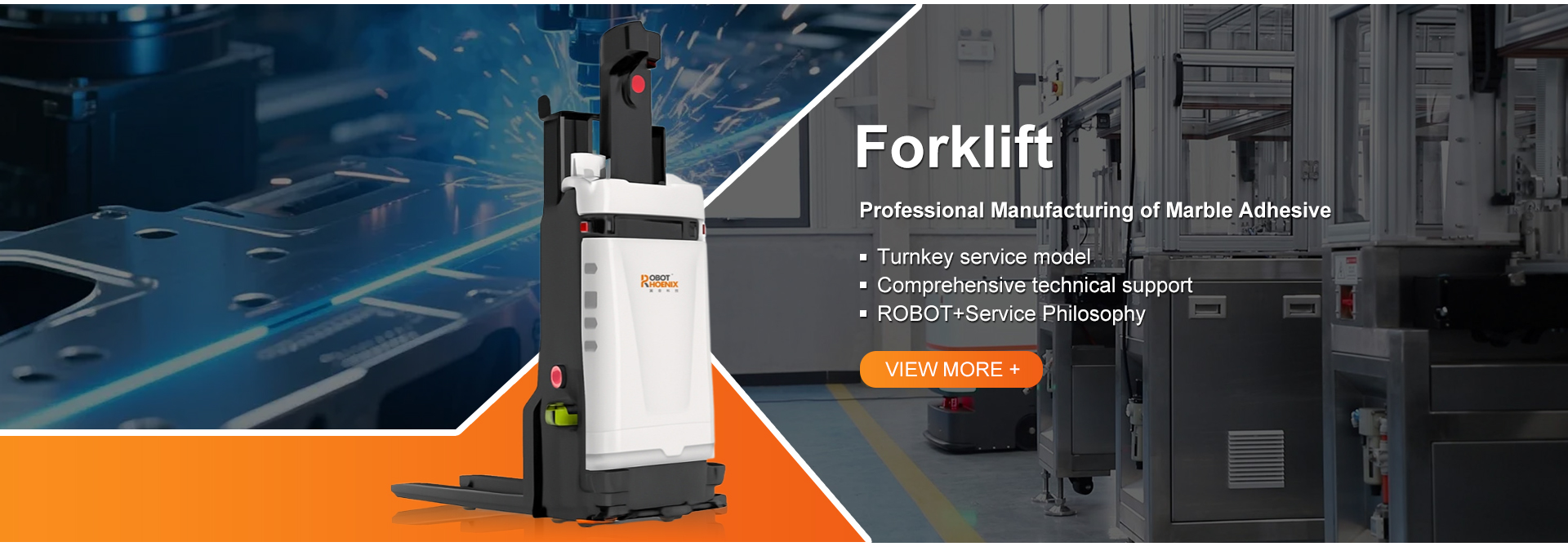
JORI approaches product development from both the robot side and the automation side. Our self-developed controllers, 2D/3D vision, robot mechanisms and system integration capability allow us to discuss the complete material-flow task rather than only the vehicle specification. This is especially useful for machine builders, system integrators and factory owners who need a supplier that can support OEM customization, buyer-label design and long-term technical coordination.
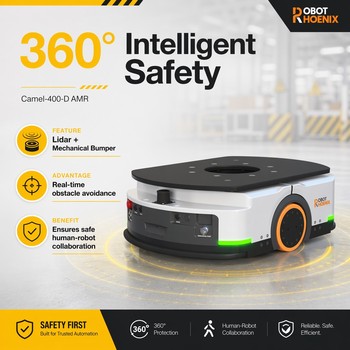
Global buyers want a supplier with real engineering depth, transparent company information and a practical path from pilot to rollout.
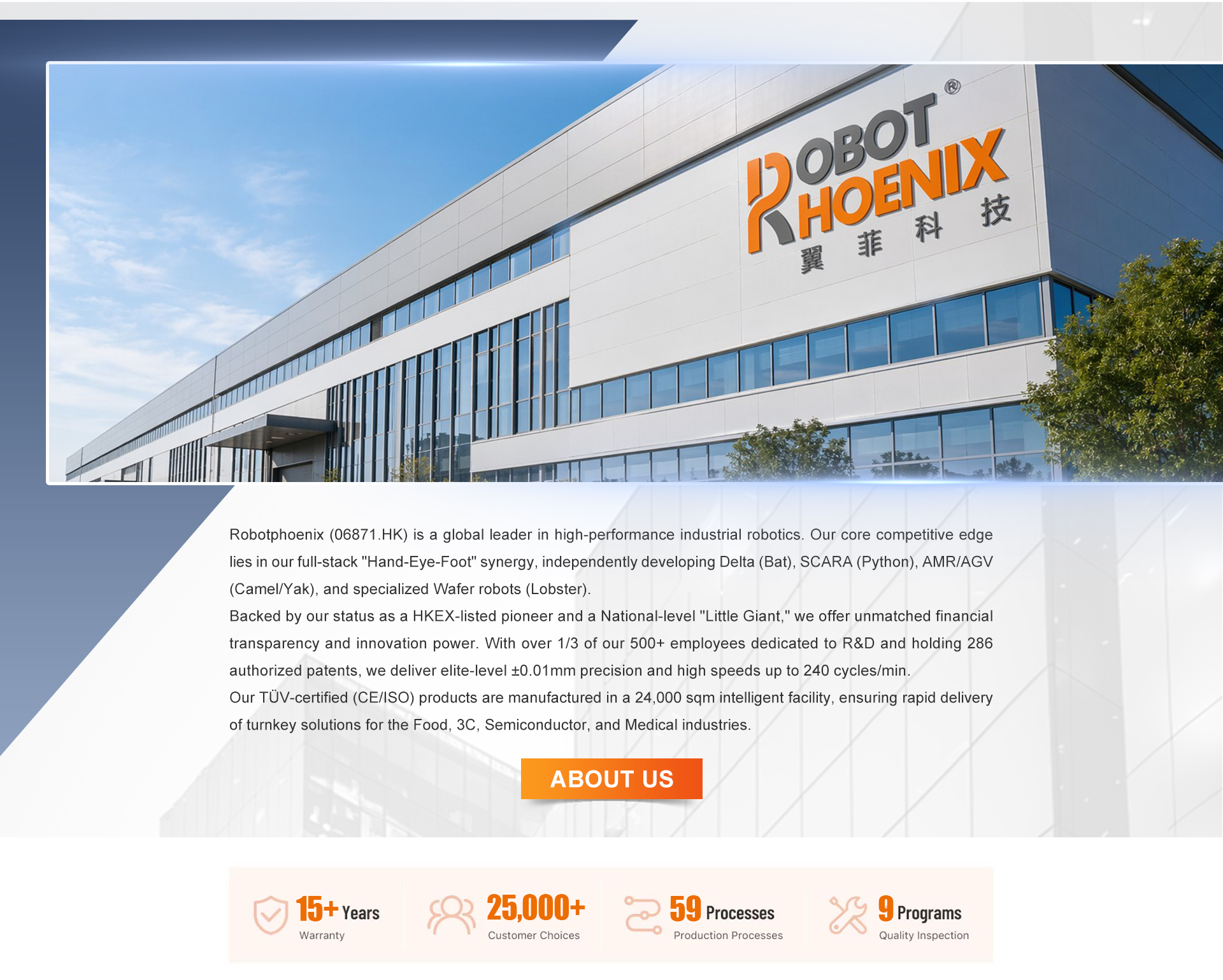
JORI Intelligent Technology Co., Ltd. was founded in 2012 and is based in Jinan, Shandong, China, a robotics and manufacturing hub. We are a high-tech manufacturer focused on industrial robot R&D, controller and vision-system development, OEM support, automated system integration and warehouse automation solutions. Our product range includes delta parallel robots, SCARA robots, silicon wafer robots, AGV/AMR mobile robots and autonomous forklifts.
For autonomous forklift and AMR buyers, the advantage is engineering integration. Core technologies such as robot mechanisms, controllers and 2D/3D vision are developed in-house and supported by national patents. This helps reduce finger-pointing when navigation, task scheduling, safety logic and end-effector design must work together. It also means OEM and design-service conversations can include hardware, software and integration requirements from the start.
Our company profile lists 501–1,000 employees, a factory area of 10,000 m² and a response rate of 97.06% with response time of 2 hours or less. We operate under an ISO 9001 quality management system and have an onsite-verified supplier profile. Standard robots can be ordered from one set, which allows buyers to validate a single cell or pilot route before scaling to a fleet.
JORI serves machine builders, system integrators and factory owners across Southeast Asia, Eastern Europe, North America, South America and China. Buyers can verify our company credentials, trade capacity, credit profile and buyer reviews before issuing a purchase order. For project discussions, email info@joribot.com with load weight, lift height, aisle width, route frequency, charging plan and system-integration requirements.
Review independent assessments, credit and trade records before approving your autonomous forklift project.
Practical answers for procurement, operations and engineering teams comparing autonomous forklift suppliers.
Send your load weight, lift height, aisle width, route frequency, WMS/WCS interface and target ROI. JORI engineers reply within 2 hours and can recommend a single pilot unit or a phased fleet rollout.
info@joribot.com