
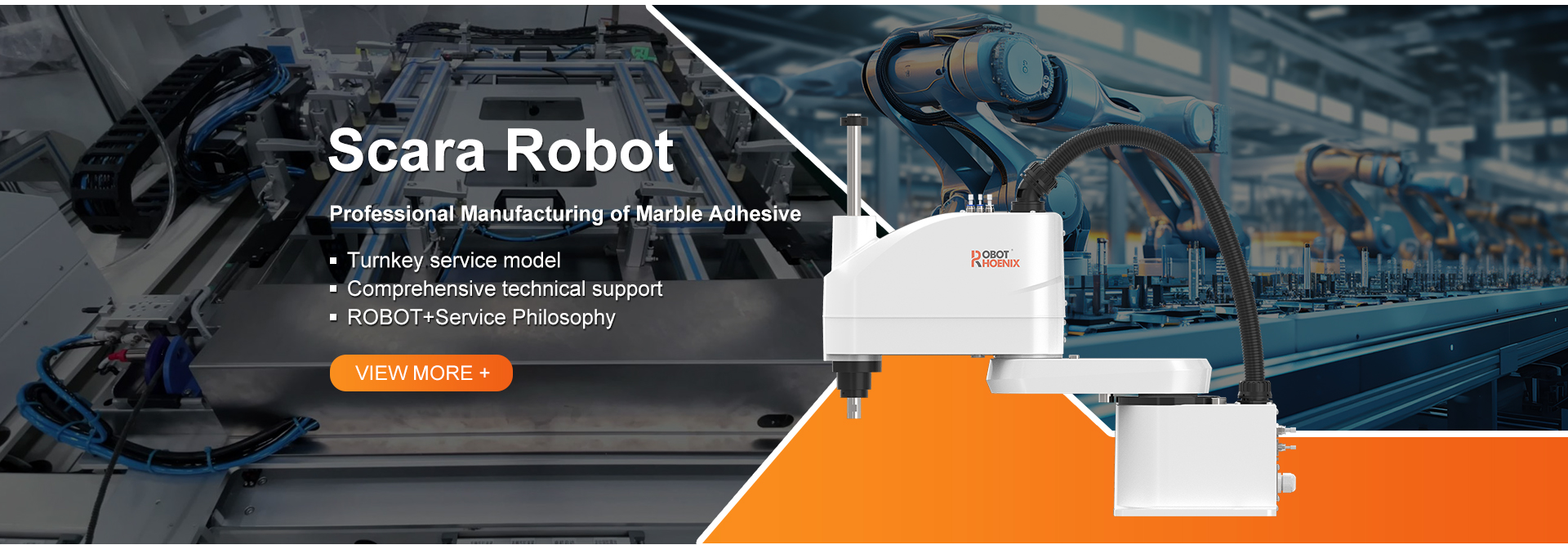
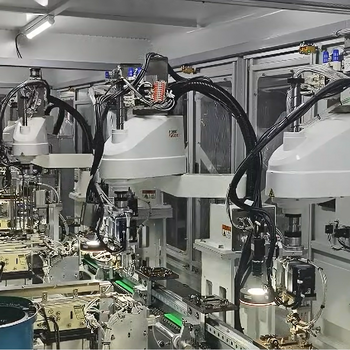
Electronics and Small-Part Assembly
Component placement, tray loading, fixture transfer and inspection loading in compact cells.

The search intent behind this keyword is not only “show me a robot.” Buyers want to know whether a compact four-axis SCARA can lower cost per pick, how much integration changes the budget, what payload and reach are realistic, how quickly the cell pays back, and how to verify a supplier before placing an order.
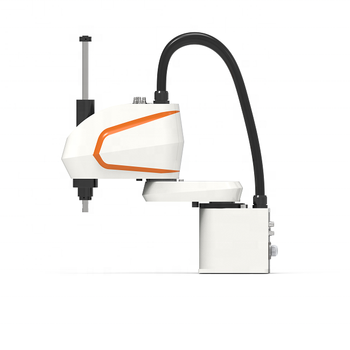
A mini industrial SCARA robot for low-cost pick and place is a compact four-axis robot designed to move small parts quickly between fixed positions, conveyors, trays, fixtures and packaging stations. Its value comes from focus: it performs planar handling, assembly, loading and placement work without the cost and complexity of a larger six-axis robot or a high-speed delta cell when the application does not need complex three-dimensional orientation.
However, “low-cost” should never mean “low diligence.” The real installed cost includes the robot, controller, teach pendant, end-effector, fixtures, vision, safety guarding, conveyor interface, programming, commissioning, spare parts and operator training. A mini SCARA can deliver fast payback when part weights are stable, reach is sufficient and cycle time is matched to the production line. It becomes expensive when the robot is oversized, the gripper is poorly designed, or the machine builder must redesign the cell after delivery.
For global procurement teams, the most reliable decision process is to compare complete cells rather than bare robot prices. Ask each supplier to confirm payload with tooling, reach at the working height, repeatability, cycle time with the actual part, controller communication, vision requirements, installation footprint, lead time, warranty and spare-parts plan. That is the information procurement teams need to judge value, not simply the lowest quotation.
JORI Intelligent Technology Co., Ltd. has focused on industrial robot R&D and manufacturing since 2012, with in-house development of robot mechanics, controllers, 2D/3D vision and automation integration. That structure matters in a cost-sensitive SCARA project because the robot, controller and vision decisions can be coordinated by one engineering team instead of several disconnected vendors.
For most cost-sensitive projects, start with a compact four-axis SCARA, define the real working envelope, and add vision only where part location or inspection genuinely requires it.
The JORI mini industrial SCARA robot is best positioned for small-part transfer, tray loading, fixture placement, inspection loading, electronics handling and simple packaging support. It is a practical first robot for factories moving from manual pick-and-place to repeatable automation because the machine footprint is compact, integration requirements are easier to define, and a single-set pilot order lets the buyer validate the cell before scaling across lines.
Choose a larger four-axis SCARA when the part is heavier, the required reach is longer, or the cell must cover multiple conveyors and buffer positions. The decision should be based on measured part weight with the gripper installed, the worst-case reach position, the required cycle time, and the number of product variants the cell must handle. Do not size the robot from the part weight alone; tooling, vacuum cups, magnets, clamps and cables all reduce the usable payload margin.
For a low-cost pick-and-place cell, keep the first configuration disciplined. Use a reliable pneumatic or electric gripper, a simple fixture, standard digital I/O and only the vision resolution the application needs. Then, once the line runs at the target cycle time, add traceability, inspection or conveyor tracking. This staged approach reduces initial capital and protects the payback calculation.
| Application Question | Recommended Mini SCARA Approach | Knowledge Gain for Buyers |
|---|---|---|
| PayloadPart + gripper + dynamic load | Select a model with headroom above the calculated moving mass. | Many quotations fail because the vacuum cup, bracket and hoses are ignored when sizing. Always ask for the payload calculation with the proposed tooling. |
| ReachPick, place and maintenance access | Confirm the worst-case reach at working height, not only the catalogue maximum. | A compact robot can cover a shorter distance but still need clearance for fixture changes, operator access and cable routing. |
| Cycle timeReal part, real path | Ask for cycle time using the actual part, gripper and placement tolerance. | Dry-cycle speed is not the same as production cycle time. Acceleration, grip delay, vision exposure and safety checks all add time. |
| VisionFixed position or randomly arriving parts | Use fixed tooling first; add 2D or 3D vision where location or inspection uncertainty exists. | Vision is valuable but adds cost. Define the tolerance, lighting, background and part variation before approving a vision-guided cell. |
| ROIComplete installed cost | Compare labor savings, throughput gain, scrap reduction, quality improvement and floor-space savings. | Payback should be calculated from the installed cell cost, not the robot alone. A slightly higher quote can have a faster payback if it reduces integration risk. |
Final specifications, payload and cycle time must be confirmed per configuration and application.
Procurement behavior is changing from “buy the cheapest robot” to “validate the lowest-risk route to a stable cell.” These trends matter to machine builders, distributors and factory owners alike.
Global buyers increasingly place a one-set or one-cell order before committing to a fleet. A pilot proves cycle time, operator acceptance and integration quality. JORI standard robots can be ordered from one set, which supports this low-risk evaluation model.
Procurement teams are asking for energy use, spare-parts availability, maintenance intervals, expected life, training and commissioning support. A low robot price cannot compensate for a slow integration project or a cell that requires frequent expert intervention.
Machine builders want a robot and controller partner that can support private label, custom end-effectors, PLC communication and repeat orders. Supplier consolidation reduces engineering variation and makes spare-parts planning easier across multiple production lines.
Buyers are specifying future vision, conveyor tracking and MES connectivity even when the first cell is simple. A mini SCARA project should leave room for cameras, lighting, encoders and communication options without replacing the controller or rebuilding the cell.
When automation is needed to relieve labor pressure, lead time becomes a commercial issue. Buyers compare production schedules, shipping terms, spare-parts availability and average response time. JORI reports a 97.06% response rate and an average response time of 2 hours or less.
Procurement teams increasingly require ISO 9001 evidence, onsite verification, company credit records and buyer reviews. For E-E-A-T, a supplier should be verifiable through company profile pages, trade capacity, transaction records and independent assessment links.
The next generation of low-cost SCARA robots will compete less on bare mechanics and more on integration, software, vision, service and total cell productivity.
Compact SCARA robots are moving toward integrated controllers, EtherCAT communication and PLC-ready interfaces. This reduces cabinet size, simplifies machine-builder integration and improves access to conveyor tracking, vision and factory data systems.
2D/3D vision continues to become more accessible. AI-assisted part recognition, simpler calibration and guided teaching reduce the engineering skill needed to launch a pick-and-place cell. Buyers should still verify lighting, tolerance and edge cases with real parts.
Mini SCARA arms are becoming more compact and modular, with flexible mounting, cable routing and end-effector interfaces. This trend lowers guarding costs, shortens commissioning and makes it easier to redeploy the robot when product lines change.
Offline programming and digital simulation reduce downtime during changeovers. Data logging supports OEE analysis, preventive maintenance and quality traceability. These features are increasingly requested even for low-cost cells because they protect future scalability.
Lightweight SCARA mechanics, efficient servo drives and standby strategies reduce power consumption. Buyers are adding energy use to the procurement scorecard because many cells run multiple shifts and energy is a recurring cost.
As cells become smaller, safety design and operator interaction become more important. Risk assessment, guarded zones, light curtains and collaborative work sequences help factories deploy SCARA robots beside people without sacrificing productivity.
Use this engineering checklist to compare suppliers on application fit, not just robot brand or headline speed.
| Evaluation Area | What to Ask the Supplier | Why It Matters | Recommended Evidence |
|---|---|---|---|
| 01Payload Margin | What is the usable payload after the gripper, bracket, cables and part are installed? | A robot selected at its maximum payload may not achieve the required acceleration or cycle time. | Payload calculation sheet and proposed end-effector drawing. |
| 02Reach and Layout | Does the reach cover the worst-case pick, place, inspection and maintenance positions? | Reach must include clearance for fixtures, conveyors, operators and spare parts. | Layout drawing with working envelope and cable routing. |
| 03Cycle Time | What cycle time is guaranteed with the actual part, path and placement tolerance? | Production cycle time includes grip delay, vision exposure, acceleration, deceleration and safety checks. | Video or test report using parts supplied by the buyer. |
| 04Repeatability and Quality | What repeatability is required by the product tolerance, and how is it verified? | Excessive precision can increase cost; insufficient precision causes rejects and downtime. | Inspection capability study and acceptance criteria. |
| 05Controller and Vision | Which PLC protocols, vision interfaces, conveyor encoders and MES connections are supported? | Machine builders need predictable integration and spare parts throughout the cell life. | I/O list, communication manual and sample programs. |
| 06Installation and ROI | What is included in the installed cost, commissioning plan, training and warranty? | The lowest robot price can hide integration, freight, duty or service costs. | Itemized quotation, project schedule and payback model. |
JORI engineers can review part drawings, cycle-time targets and layout constraints to recommend a mini SCARA configuration.
Mini SCARA robots are most competitive when the motion is planar, repeated thousands of times per shift and supported by a well-designed fixture.
Component placement, tray loading, fixture transfer and inspection loading in compact cells.

Placing small products into trays, blisters, cartons or inspection fixtures at a stable rhythm.

Loading and unloading small parts from fixtures, test stations and assembly equipment.
For low-cost automation, supplier verification is part of the product. JORI combines factory experience, in-house engineering, quality management and direct communication for global buyers.
JORI Intelligent Technology Co., Ltd. was founded in 2012 in Jinan, Shandong, China, a major robotics and manufacturing base. The company specializes in industrial robot R&D and manufacturing, controller and vision system development, OEM support and automated system integration. Its product scope includes delta parallel robots, SCARA robots, silicon wafer robots, AGV/AMR mobile robots and autonomous forklifts.
Because JORI develops robot hardware, controllers and 2D/3D vision in-house, a buyer can coordinate the robot, motion control, vision and integration through one engineering team. National patents on core products and an ISO 9001 quality management system provide additional evidence that the supplier is organized around repeatable production, not simple resale. JORI also supports OEM service, design service and buyer-label options, which is valuable for machine builders who need a stable robot platform under their own brand.
The company profile shows 501–1,000 employees, total annual revenue of US$10 million–US$50 million, a 97.06% response rate, an average response time of 2 hours or less, and 9 years of company participation in supplier verification. Buyers can also review the company profile, factory video, trade capacity, transaction history, credit profile, supplier assessment and buyer reviews before placing an order.
Use independent company evidence, trade records and buyer feedback in your supplier evaluation.
Strong vendor selection includes visual evidence of the production environment, engineering capability and field experience.

Standard models can be ordered from one set for pilot validation. Final payload, reach, cycle time and integration are confirmed per application.
No matching SCARA options are shown for this filter. Please view the full SCARA catalogue or contact JORI engineers.
These are the questions global buyers, machine builders and procurement teams most often ask before requesting a quotation.
Share your part weight, cycle time, layout and vision requirements. JORI engineers reply with practical model recommendations, integration notes and quotation details.
info@joribot.com