A 2025 buyer’s guide for global procurement teams: how to specify a 4-axis SCARA robot, compare total cost, qualify suppliers and prepare for the next generation of flexible assembly cells.
What is a SCARA robot for pick and place automation?
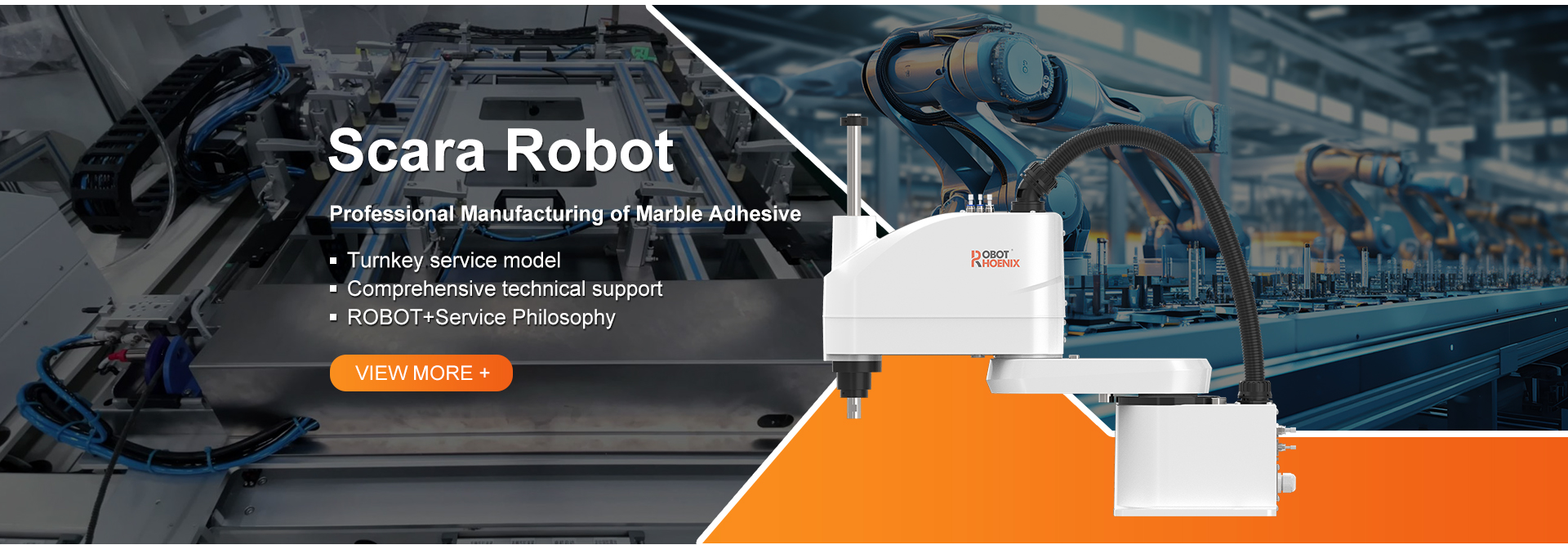
A SCARA robot for pick and place automation is a 4-axis industrial robot designed for fast, repeatable planar movement: X, Y, Z and rotation around the vertical axis. It is usually the most efficient choice when parts are light to medium weight, movements are predominantly horizontal, and the cell needs a compact footprint with high repeatability.
For global buyers, the correct specification is not simply “the fastest SCARA.” The right system balances cycle time, payload margin, repeatability, end-effector design, vision, line interface, spare-parts strategy and total cost of ownership. JORI Intelligent Technology Co., Ltd. supports this evaluation with factory-direct SCARA robots, in-house controllers, 2D/3D vision options, OEM engineering and automated system integration.
Start with the motion profile
Measure horizontal travel, vertical stroke, part orientation and required cycle time. SCARA robots win when the task is planar and repetitive, such as loading, unloading, assembly, insertion, inspection or cartoning.
Confirm precision and payload
Do not size a robot at 100% payload. Add margin for grippers, vision cameras, cables and inertia. Verify repeatability with the actual part and tool, not only catalogue speed.
Evaluate the full cell
Include the controller, vision, conveyors, safety, programming, spare parts, training and integration. A lower robot price can become expensive if the supplier cannot support the full automation scope.
Selection intelligence
Why SCARA Robots Fit So Many Pick-and-Place Cells
Four practical reasons buyers choose a 4-axis SCARA robot for assembly, loading and packaging automation.
01
Compact cell layout
The SCARA arm moves over the work area without needing the large swept envelope of many articulated robots. That saves floor space and can fit easily beside existing conveyors.
02
Fast planar moves
Pick-and-place automation usually involves repeatable horizontal transfer. A SCARA architecture is efficient for these moves, helping reduce cycle time without complex 3D path planning.
03
Repeatable precision
Electronics, medical devices, small components and packaging all benefit from stable, repeatable placement. The right SCARA configuration protects yield and reduces rejects.
04
Cost-effective automation
For planar tasks, a SCARA robot can deliver a better return than over-specifying a 6-axis robot. JORI offers mini and 4-axis models with in-house controllers and OEM support.
Product recommendations
Recommended SCARA Robot Options for Pick and Place Automation
Standard models can be ordered from 1 set, then configured with the end-effector, controller, vision and line interface your process requires.
4-Axis SCARA
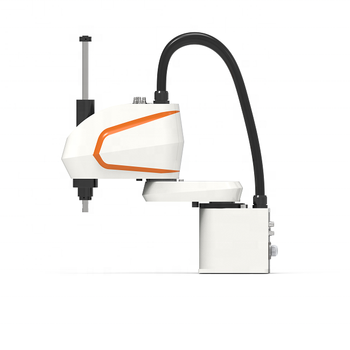
JORI 4-Axis SCARA Robot for Pick & Place Automation
Best for electronics assembly, small-part placement, loading and unloading, inspection handling and compact assembly cells where planar precision matters. Supports in-house controller integration and 2D/3D vision options.
Mini Industrial SCARA Robot for Low-Cost Pick and Place
An economical option for small work envelopes, machine tending, simple transfer tasks and first-time automation projects. It helps buyers validate a cell or pilot line before scaling across multiple stations.
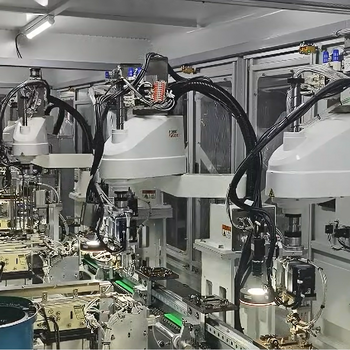
For randomly oriented parts, conveyor tracking, quality checks or high-mix production, JORI engineers can integrate a SCARA robot with vision, custom grippers, PLC communication and line control.
Buyer tip: ask for a cycle-time study using your real part and gripper. Catalogue cycle times are usually measured under ideal conditions. A supplier with application engineering capability can show you the actual motion path, acceleration limits and vision processing time.
Buying guide
SCARA vs. Delta vs. 6-Axis: Which Robot Fits the Task?
Use this comparison to shortlist the correct architecture before you request quotations.
Robot Architecture
Best For
Trade-Off to Consider
Typical Buyer Question
SCARA4-axis SCARA robot
Planar pick and place, assembly, insertion, loading, unloading, inspection handling
Limited complex 3D orientation compared with an articulated robot
Is the task mostly horizontal and repetitive with a compact footprint requirement?
DeltaParallel robot
Ultra-high-speed picking, sorting and packaging of light products
Usually not the first choice for precise planar assembly or heavier payloads
Is maximum throughput the dominant requirement, with very light parts?
6-AxisArticulated robot
Complex 3D assembly, welding, machine tending and multi-angle handling
Larger footprint, higher programming complexity and often higher cost
Does the part require complex orientation, reach or path control?
CustomVision + SCARA cell
High-mix production, random orientation, conveyor tracking and quality checks
Requires close integration between robot, camera, lighting, PLC and end-effector
Can the supplier support vision, integration and after-sales in one scope?
Final robot selection depends on part geometry, cycle time, quality standard, environment and line layout. JORI engineers can recommend a configuration after reviewing your application data.
Future procurement trends
How Global Buyers Will Purchase SCARA Robots in 2025–2030
Procurement is moving from “buy a robot” to “secure a reliable automation capability.” These trends are shaping RFQs and supplier selection.
1. Total cost of ownership replaces lowest price
Buyers increasingly compare energy use, spare parts, programming time, integration effort, uptime and training. A SCARA robot that is easy to maintain and integrate can outperform a cheaper unit over five years.
2. High-mix, low-volume flexibility
Production lines must change products more often. Quick-change end-effectors, recipe-driven programming, vision guidance and compact SCARA cells help buyers handle small batches without long changeover downtime.
3. Verified suppliers and documented quality
Procurement teams are checking ISO 9001, onsite-verified manufacturer status, credit records, response rate and spare-parts capability before releasing purchase orders. Technical transparency has become a competitive advantage.
4. OEM and private-label projects
Machine builders want SCARA robots that can be branded, integrated into their own equipment and supported with custom controllers, vision or end-effectors. JORI’s OEM, design and buyer-label services address this need.
5. Local support and lifecycle planning
Buyers ask how quickly spare parts can be supplied, how training is delivered and how software or controller updates are managed. A clear lifecycle plan reduces production risk after installation.
6. Data-ready automation
SCARA cells must communicate with PLCs, MES and line-control systems. Buyers increasingly value suppliers that understand robot controllers, 2D/3D vision, traceability and line integration—not only arm mechanics.
Product development trends
What the Next SCARA Robot Generation Will Deliver
Hardware is only part of the roadmap. Controllers, vision, software and application support decide how productive a SCARA robot becomes on the factory floor.
Integrated in-house controllers and vision
Faster setup with recipe-driven programming
Quick-change end-effectors for high-mix lines
2D/3D vision for random picking and inspection
Compact cleanroom and ESD-ready configurations
Simplified line integration with PLC and line control
Remote diagnostics and spare-parts planning
JORI’s engineering model combines SCARA robot hardware, robot controllers, 2D/3D vision and automated system integration under one supplier. That matters because pick-and-place cells fail at the interfaces as often as they fail at the robot itself—gripper communication, vision timing, conveyor tracking or PLC handshakes.
Buyers should ask future-facing questions: Can the controller support additional axes or I/O? Is vision integrated or supplied by a third party? Can the supplier support a pilot line and then replicate the cell globally? What documentation and training will be delivered? These answers reveal whether a SCARA robot is a one-off purchase or a scalable automation platform.
From single robot to scalable cell
JORI’s product lines include delta parallel robots, SCARA robots, silicon wafer robots, AGV/AMR platforms, autonomous forklifts, controllers and 2/3D vision. This cross-technology experience helps buyers design a complete pick-and-place workflow: robot, feeding, vision, transport and line control.
For machine builders and OEMs, the goal is repeatable deployment. A pilot SCARA cell should be documented so it can be copied to other factories with the same quality standard.
Why Global Buyers Evaluate JORI Intelligent Technology Co., Ltd.
JORI Intelligent Technology Co., Ltd. was founded in 2012 in Jinan, Shandong, China, a robotics and manufacturing hub. The company is a high-tech manufacturer focused on industrial robot R&D and production, controller and vision system development, OEM support and automated system integration.
Because JORI develops delta robots, SCARA robots, silicon wafer robots, AGV/AMR platforms, 2D/3D vision and controllers in-house, buyers can work with one accountable source for hardware, software, engineering and after-sales support. The company serves machine builders, system integrators and factory owners across Asia, Europe and the Americas.
In-house SCARA, delta, AMR, wafer robots and vision
OEM, design, buyer-label and system integration
MOQ from 1 set · response rate 97.06% · ≤2h average reply
Procurement note: Accepted delivery terms include FOB, CFR, CIF, EXW, CIP, FCA, CPT and express delivery. Payment methods include T/T, L/C, credit card, PayPal, Western Union, MoneyGram and escrow, subject to order confirmation. Email info@joribot.com for a formal quotation.
SCARA Robot for Pick and Place Automation: FAQ for Global Buyers
What is a SCARA robot for pick and place automation best used for?
It is best for high-speed planar transfer, loading and unloading, assembly, insertion, inspection handling and packaging where parts are light to medium weight. Common applications include electronics, consumer goods, medical devices, small components, cartoning and machine tending. JORI configures SCARA robots with in-house controllers, 2D/3D vision options and custom end-effectors.
How do I choose between a SCARA, delta and 6-axis robot?
Choose a SCARA when the task is mainly planar and requires repeatable placement in a compact cell. Choose a delta robot for ultra-high-speed picking of very light products, such as food or pharmaceutical sorting. Choose a 6-axis articulated robot when complex 3D orientation, multi-angle reach or welding-type motion is required.
What data should I send in a SCARA robot RFQ?
Send part dimensions and weight, required cycle time, horizontal reach and vertical stroke, repeatability, orientation, vision and conveyor-tracking needs, environment, PLC and line interface, annual volume, target ROI and delivery schedule. A video of the current manual process and product drawings can shorten the engineering review.
What is the minimum order quantity and what delivery terms are available?
JORI standard SCARA robots can be ordered from 1 set, so buyers can validate a pilot cell before scaling. Accepted delivery terms include FOB, CFR, CIF, EXW, CIP, FCA, CPT and express delivery. Payment methods include T/T, L/C, credit card, PayPal, Western Union, MoneyGram and escrow, subject to order confirmation.
Can JORI customize the SCARA robot for my production line?
Yes. JORI provides OEM service, design service, buyer-label options and custom end-effectors. Its engineers can integrate SCARA robots with existing packaging machines, carton packers, assembly lines, controllers, 2D/3D vision and line-control systems.
What after-sales support is available?
JORI provides application engineering, integration support, documentation, spare-parts planning and after-sales service. The company reports a 97.06% response rate and an average response time of 2 hours or less. Buyers can email info@joribot.com with drawings, videos or process details.
How should procurement verify a SCARA robot supplier?
Verify ISO 9001, onsite-verified manufacturer status, credit and transaction records, technical response quality, references and spare-parts availability. Request a cycle-time simulation or test video for your part, and confirm the exact scope of supply: robot, controller, vision, end-effector, safety, integration, training and warranty.
How can I calculate ROI for a SCARA pick-and-place cell?
ROI depends on labor cost, operating shifts, cycle time, yield improvement, integration cost, uptime, maintenance and spare-parts consumption. Share your current process video, part drawings and production target so JORI can configure a realistic SCARA cell and provide a quotation for engineering review.
Ready to Specify a SCARA Robot for Pick and Place Automation?
Send part weight, cycle time, reach, vision and line-layout details. JORI Intelligent Technology Co., Ltd. will review the application and recommend a factory-direct SCARA configuration.