Factory-direct industrial robots since 2012 ISO 9001 · Onsite-verified · OEM / ODM info@joribot.com
0%

Industrial Robotics is no longer confined to fenced-off assembly lines. In modern plants, robots weld vehicle frames, place tiny electronic components, and move heavy pallets with steady precision. Their performance depends on more than the arm itself. Controllers, sensors, software, safety systems, and service support all shape results. Choosing a supplier can feel less like buying a machine and more like designing a production system. Details matter.

Joseph F. Engelberger, a pioneer of industrial robotics, is often credited with saying, “I can’t define a robot, but I know one when I see one.” The remark is memorable, but today’s buyers need more than recognition. They compare payload, reach, cycle time, integration support, and long-term operating costs. A robot that excels in a showroom may not suit a cramped workshop or a fast-moving packaging line. Real conditions can be messy.

This overview examines ten influential companies in the global Industrial Robotics market, including established names such as ABB, FANUC, Yaskawa, and KUKA. It considers their areas of strength, technologies, and relevance to manufacturers across different sectors. The list should be read as a practical guide, not a universal verdict: company scale, product availability, and local support can change the picture. No ranking can capture every factory’s needs. A careful comparison starts with the task, the workspace, and the people who will run the system.
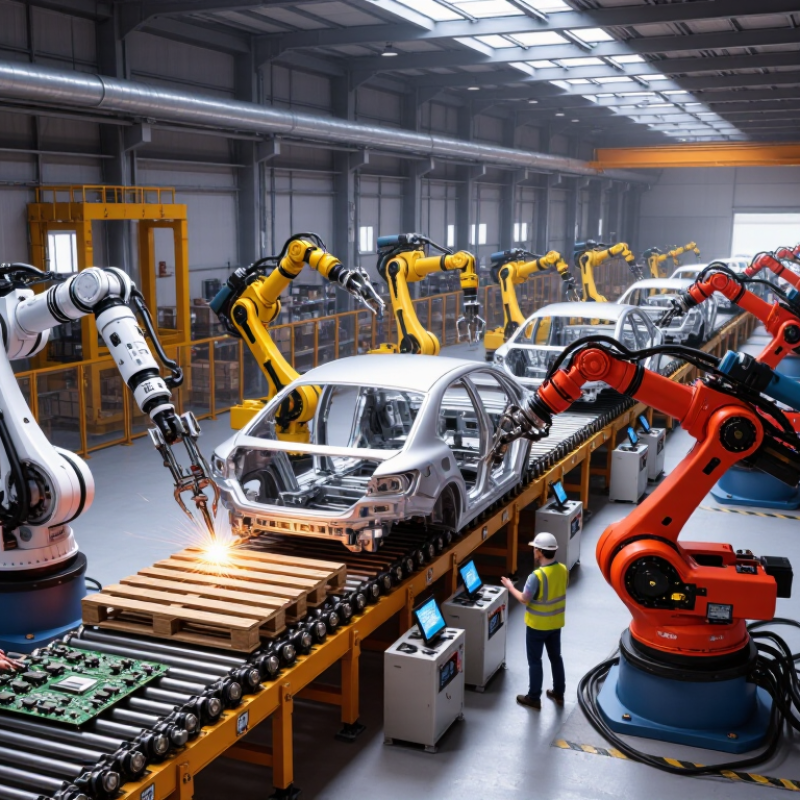
Top 10 Industrial Robotics Companies in the World

How Industrial Robotics Companies Are Evaluated

Evaluating industrial robotics companies requires more than comparing unit sales. The International Federation of Robotics’ World Robotics 2024 report recorded 541,302 industrial robot installations worldwide in 2023. The estimated operational stock reached 4,281,585 units. These figures show market scale, not whether a supplier’s systems suit a particular factory.

541,302
industrial robot installations worldwide in 2023
4,281,585
units

A practical assessment starts with measurable performance: payload, reach, repeatability, cycle time, and uptime under real production conditions. Ask for test results using your parts, tooling, and shift patterns.

A robot that moves quickly in a demo may slow down when handling a warm casting or sharing space with workers. Safety design matters. So do programming tools, integration support, spare-parts access, and technician response times. Request lifecycle costs, including installation, training, maintenance, and expected downtime—not just purchase price.

The IFR report also shows that installations remain concentrated in major manufacturing regions, so local service coverage deserves scrutiny. A supplier’s published case study can help, but one successful cell is not proof of consistent performance across sites. Compare references from similar applications and verify the operating conditions. Some evaluation scores still rely too heavily on brochure specifications. That is easy to do. It is also a weakness worth challenging.

The Global Industrial Robotics Market

The global industrial robotics market is growing, but progress is uneven. The International Federation of Robotics (IFR), in World Robotics 2024, recorded 541,302 new industrial robot installations in 2023. This was the second-highest annual total on record. The worldwide operational stock reached about 4.28 million units. That is a substantial installed base, not proof that every factory is automating successfully.

IFR reported that Asia accounted for roughly 70% of new installations in 2023. Manufacturers use robots for welding, palletizing, machine tending, and repetitive assembly. A robot beside a CNC machine can keep parts moving through a night shift, but only when tooling, sensors, and maintenance are ready. Installation totals do not reveal utilization, payback, or integration failures. The market can look strong while individual projects struggle.

Tips: Track cycle time, downtime, and staffing needs before choosing a system. Small details matter. Compare total operating costs, including grippers, safety barriers, training, and service—not only the purchase price. Good plans still need adjustment.

Profiles of the Top 10 Industrial Robotics Companies

The ten profiles reveal an industry shaped by scale, precision, and practical service. International Federation of Robotics data reported 4,281,585 industrial robots operating worldwide in 2023, with 541,302 new installations that year (World Robotics 2024). That installed base favors suppliers able to support equipment long after delivery. Several leading profiles focus on general-purpose arms for automotive and metalworking plants. Others specialize in compact units, high-speed assembly, or collaborative systems designed to work near people. Scale matters. Yet a large catalogue does not guarantee a smooth factory rollout.

The profiles also differ in how they solve production problems. Some companies pair robots with vision systems and offline programming tools; others concentrate on dependable hardware and local service networks. IFR reported that Asia accounted for 70% of new installations in 2023, while Europe represented 17% and the Americas 10%. These figures help explain why regional support, training, and spare-parts access matter alongside robot speed. A strong profile should describe real deployment strengths, not just specifications. I would still question broad claims about “easy integration”: cable routing, safety checks, and operator training can turn a neat demonstration into weeks of work.

Key Technologies and Product Specialties

Across the world’s leading industrial robotics companies, product specialties often matter more than headline payload. Six-axis arms handle welding, machine tending, and complex assembly. SCARA robots suit fast, precise pick-and-place work. Delta systems move small items quickly, while mobile robots transport materials between work cells. Each design solves a different production problem.

Key technologies include machine vision, force sensing, motion control, and safety-rated features. Vision can help a robot locate parts arriving in slightly different positions. Force sensors support delicate insertion, where excessive pressure may damage a component. Advanced controllers coordinate several axes, but programming and integration still take time. Collaborative models can work near people in suitable setups; they do not remove the need for risk assessment. The comparison is not always neat: product ranges overlap, and real performance depends on the application.

Tips: Match payload, reach, cycle time, and repeatability to the actual task. Check floor space, tooling, and service access before choosing a model. Ask for a test using your parts. A glossy demo may not reflect a dusty, crowded production line.

Comparing the Companies Across Industries and Regions

Comparing industrial robotics companies across regions requires more than counting units sold. The International Federation of Robotics reported 541,302 installations worldwide in 2023, with about 70% in Asia, 17% in Europe, and 10% in the Americas. These shares indicate where deployment is concentrated, not which supplier performs best. Local maintenance teams, spare-parts access, and integration support can matter more than headline sales.

Industry needs also shape a fair comparison. IFR’s World Robotics 2024 report records roughly 135,000 installations in automotive and 125,000 in electrical and electronics during 2023. Automotive lines often need fast, repeatable handling of heavy components; electronics plants may prioritize compact cells and precise placement. Fit matters more. A company strong in one setting may be less suitable in another, especially where factory layouts, workforce skills, and service coverage differ.

Regional totals have limits. They do not show uptime, total ownership costs, or how well a robot handles a specific task. Buyers should compare payload, reach, cycle time, safety features, and local support against real production requirements. Reporting categories can blur, too. That makes rankings useful, but imperfect. A plant manager should test performance on the actual line before treating a global market share as proof of operational value.

FAQS

How many industrial robots were operating worldwide in 2023?

About 4.28 million industrial robots were operating worldwide. Another 541,302 were installed that year.

Which robot type suits fast pick-and-place work?

SCARA and delta robots often suit quick, precise handling. The best fit still depends on the parts and required cycle time.

What tasks can six-axis robots handle?

Six-axis arms are used for welding, machine tending, and complex assembly. Their reach and payload must match the actual work cell.

How can machine vision help on a production line?

Vision can locate parts that arrive in slightly different positions. It is useful, but setup and testing still take time.

Do collaborative robots remove the need for safety checks?

No. They may work near people in suitable setups, but risk assessment remains necessary. A close working distance deserves careful review.

What should a factory check before choosing a robot?

Check payload, reach, cycle time, and repeatability. Also measure floor space and leave room for tools and service access.

Why does regional support matter?

Robots may need training, spare parts, and maintenance after delivery. Asia accounted for 70% of new installations in 2023, making local support especially relevant there.

Is a polished robot demonstration enough to judge performance?

Not really. Test with your own parts, ideally in conditions resembling the factory. Dust and crowded work cells can change the result.

Conclusion

This article explores how leading industrial robotics companies are evaluated, considering factors such as technology, product range, reliability, industry experience, and global reach. It also examines the broader Industrial Robotics market, including the forces shaping demand and the different needs of manufacturers across regions. Rather than focusing on brand names, the overview explains how companies compete through automation solutions designed for varied production environments.

The article outlines key technologies and product specialties, from robotic systems suited to precise assembly to solutions for material handling and other manufacturing tasks. It compares how capabilities differ across industries and regions, helping readers understand why a solution that works well in one setting may not fit another. Together, these perspectives provide a clear framework for assessing the companies that shape industrial automation and the trends influencing its future.

Amelia

Amelia

Amelia is a professional marketing specialist with a strong understanding of the company’s products, services, and customer needs. She regularly contributes expert articles to the company website, sharing clear, practical information that helps readers understand product features, compare......