In 2026, the best Industrial Robot is not simply the fastest or strongest model. It is the one that fits the task, workspace, and production plan. A robot loading a CNC machine faces different demands from one sorting small parts or welding a vehicle frame. Reach, payload, repeatability, cycle time, and integration all matter. So does the space around the cell.
This guide compares the main industrial robot types: articulated, SCARA, delta, Cartesian, and collaborative robots. Each has a distinct working style. An articulated arm can reach around fixtures and handle varied paths. A SCARA robot often suits fast, precise assembly on a flat work surface. Delta systems can pick lightweight items at high speed. Cartesian robots move along straight axes, while collaborative robots may support tasks near people when the application is properly assessed. No type wins every job.
The right choice starts with real production details, not a catalog headline. Measure the part, note its weight, and map the robot’s path, including tool changes and maintenance access. Then compare the full system: gripper, vision, safety equipment, programming, and service support. These details can change the budget and the expected return. Specifications also vary by manufacturer, and advertised performance may not match a difficult factory environment. That deserves a closer look. Robot categories overlap, and newer models keep narrowing old differences. This comparison offers a practical starting point, not a universal verdict.
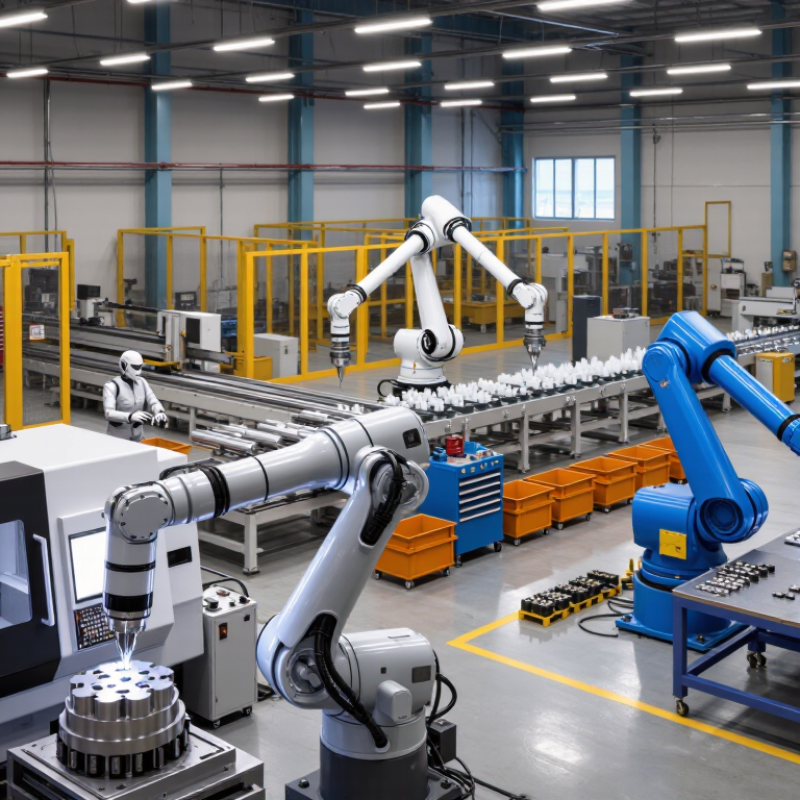
How Industrial Robots Are Classified in 2026
In 2026, industrial robots are best classified by how they move, what they handle, and where they work. Articulated robots use rotating joints to reach around fixtures and approach parts from different angles. SCARA robots suit fast, mostly horizontal assembly, while Cartesian robots move along straight axes and fit orderly, box-shaped work areas. Delta robots are lightweight and quick, often used to sort small items. Different motions, different strengths.
A second useful distinction is payload and reach. Check the full working load, including the gripper and any part—not just the robot’s headline capacity. Also compare repeatability, cycle time, floor space, and the conditions around the cell, such as dust, moisture, or heat. Collaborative robots are grouped by their intended interaction with people, not by one specific arm shape. That distinction matters. A label alone cannot tell you whether a setup suits a real task; tooling, layout, and risk assessment still matter. Classification can feel messy, because one machine may fit several categories. That is normal. For a practical comparison, describe the motion, load, reach, application, and operating environment together.
What Defines the Main Types of Industrial Robots
What Defines the Main Types of Industrial Robots
Industrial robot types are mainly defined by their mechanical layout, axes of motion, reach, payload, and control method. ISO 8373 describes an industrial robot as an automatically controlled, reprogrammable, multipurpose manipulator with three or more programmable axes. Geometry is only half. In real installations, the useful category is the one that can reach the workpiece and repeat the required path.
Articulated robots use rotating joints, making them suited to welding, machine tending, and handling parts around obstacles. SCARA robots move quickly across a horizontal plane, often assembling small components. Cartesian robots travel along straight axes; their box-like work envelope suits tasks such as palletizing. Delta robots use linked arms for fast picking, while collaborative robots are designed for operation near people under specified safety conditions. They are not a separate kinematic class.
A tidy label can still hide important differences. Two articulated robots may vary greatly in reach, stiffness, and payload, so compare the application, not just the name. The International Federation of Robotics reported 4,281,585 industrial robots operating worldwide at the end of 2023 in World Robotics 2024. That installed base reflects diverse production needs, not one universally best design.
Check cycle time, floor space, and the actual part weight before choosing. Small details matter.
How Articulated, SCARA, Cartesian, and Delta Robots Work
Articulated, SCARA, Cartesian, and Delta robots solve different movement problems. An articulated robot uses rotating joints, much like an arm, to reach around fixtures and handle parts from varied angles. It suits welding, machine tending, and complex assembly. SCARA robots move quickly across a horizontal plane, with vertical motion for picking and placing. They are common on compact assembly lines. Cartesian robots travel along straight X, Y, and Z axes. Their box-shaped work area makes positioning and programming relatively straightforward. Delta robots use several linked arms above the work surface. They can sort small items rapidly, but their payload and reach are more limited.
The scale of deployment matters. The International Federation of Robotics reported 4.28 million industrial robots operating worldwide in 2023, with 541,302 newly installed that year in World Robotics 2024. Those figures describe the whole industry, not demand for any one robot type. In practice, compare payload, reach, cycle time, and access before choosing a design. A SCARA may beat an articulated arm on a repetitive pick-and-place task; it may struggle when parts arrive at changing angles. A Delta robot can move tiny packages quickly. Not heavy ones. Cartesian systems are often easy to understand, though guarding and floor space still need attention. One detail gets overlooked: real cycle times include gripping, settling, and operator access. Datasheets rarely tell the whole story.
What Are the Best Types of Industrial Robots in 2026?
How articulated, SCARA, Cartesian, and delta robots work—and how their payload capacities can differ.
Payload capacity (kg): Bars show broad, indicative ranges on a logarithmic scale, not fixed limits for every robot. Actual capacity depends on the model, configuration, and application.
- Articulated: Rotating joints provide flexible reach for tasks such as welding, handling, and assembly.
- SCARA: Fast, selective compliance suits many horizontal-plane assembly and pick-and-place tasks.
- Cartesian: Linear axes move along straight paths, making these robots useful for precise handling and larger work areas.
- Delta: A parallel-arm design enables rapid pick-and-place, typically with lighter payloads.
How Robot Types Match Different Production Tasks
Choosing an industrial robot starts with the task, not the robot’s silhouette. An articulated arm handles varied angles, such as welding around a vehicle frame or moving castings between fixtures. SCARA robots suit fast, repeatable assembly on a flat plane. Cartesian systems travel along straight axes, making them useful for palletizing or machine tending. Delta robots pick lightweight items quickly from a moving belt. Collaborative robots can support flexible work cells, but their reach, payload, and speed still need careful assessment.
A neat robot taxonomy can mislead. Real production lines have awkward fixtures, changing product mixes, and occasional jams. In those conditions, a simpler robot may outperform a more flexible one. The International Federation of Robotics reported 541,302 industrial robot installations worldwide in 2023, with 4,281,585 robots operating globally (World Robotics 2024). That scale reflects varied production needs, not one universal machine. Compare cycle time, payload, reach, and positioning accuracy against the actual part and workpiece layout. Then test the choice with real tooling. The awkward detail? A robot’s rated reach may not include the gripper, cables, or clearance needed around a fixture. That is easy to overlook.
What Are the Best Types of Industrial Robots in 2026? — How Robot Types Match Different Production Tasks
| Robot Type |
Motion and Work Area |
Typical Payload and Reach |
Best-Matched Production Tasks |
Key Strengths |
Main Considerations |
| Articulated robot |
Usually 6 rotary axes, with a wide, flexible work envelope. |
Broad range: from a few kilograms to hundreds of kilograms; reach varies from compact cells to several metres. |
Arc and spot welding, machine tending, material handling, painting, assembly, and palletizing. |
High flexibility; can approach parts from many angles and serve multiple process layouts. |
Requires careful reach, joint-limit, tooling, and collision planning. Safety guarding or a risk-assessed collaborative setup may be needed. |
| SCARA robot |
Typically 4 axes; fast horizontal movement with vertical insertion and rotation. |
Commonly light-to-medium payloads, often up to around 20 kg; reach is generally under about 1.2 m. |
Small-part assembly, screwdriving, dispensing, packaging, and pick-and-place on a horizontal plane. |
Fast, repeatable planar motion and good stiffness for vertical insertion tasks. |
Less suited to complex 3D paths or frequent changes in approach angle than a multi-axis articulated robot. |
| Cartesian / gantry robot |
Linear motion along two or three perpendicular axes; gantry systems can cover large rectangular areas. |
Highly configurable, from small precision stages to systems carrying heavy loads over long spans. |
Machine loading, dispensing, cutting, inspection, palletizing, and handling large or heavy workpieces. |
Simple, predictable motion; scalable travel and payload; straightforward coverage of rectangular work zones. |
Needs suitable floor or overhead structure and can occupy substantial space. Motion is less adaptable around obstacles. |
| Delta (parallel) robot |
Parallel-link mechanism, usually 3 or 4 axes; very fast movement in a limited overhead work zone. |
Typically light payloads, often a few kilograms per pick; work area is usually compact. |
High-speed picking, sorting, and packing of small, lightweight products on conveyors. |
High pick rates and low moving mass make it effective for repetitive, rapid handling. |
Limited payload and working volume; overhead mounting and accurate conveyor tracking may be required. |
| Collaborative robot (cobot) |
Usually a multi-axis articulated arm designed with features for closer human interaction. |
Commonly light-to-medium payloads, often up to around 30 kg; reach and capacity depend on the model. |
Assembly, machine tending, inspection, screwdriving, and flexible workstations with frequent changeovers. |
Often easier to redeploy and integrate in compact cells; may support hand-guiding and force-sensitive operation. |
Collaborative operation is not automatically safe. A task-specific risk assessment is required; speed or payload may be limited by the application. |
Selection note: Payload and reach figures are broad, indicative ranges rather than guaranteed specifications. Actual capacity depends on the robot configuration, tooling, speed, accuracy requirements, workpiece, and safety design.
Conclusion
Industrial robots in 2026 can be understood by their structure, movement, payload, reach, precision, and level of interaction with people. An Industrial Robot is selected not simply for its design, but for how well its capabilities fit a production task. Articulated robots use rotating joints to reach around complex workspaces, while SCARA robots are suited to fast, precise tasks on a horizontal plane. Cartesian robots move along straight axes, making them useful for predictable, box-shaped work areas, and Delta robots use lightweight arms for rapid handling of small items.
Collaborative robots are designed to work alongside people in appropriate production settings, while mobile robots move materials between areas of a facility. Each type supports different needs, from assembly and machine tending to packaging, inspection, and transport. Matching a robot to a task means considering speed, accuracy, workspace, payload, flexibility, and how it fits into the wider factory workflow.