China Best Delta Robot Factory & Wholesaler
High-speed delta robots, 4-axis parallel robots and SCARA automation engineered in-house for pick-and-place, carton packing, precision assembly, vision inspection and packing-line integration.
8 Delta & SCARA Robot Models for Fast RFQ and Wholesale Sourcing
Buyers looking for a China best delta robot factory & wholesaler usually need more than a catalogue image. They need a model that matches payload, cycle time, repeatability, controller integration and end-of-line layout. The eight factory-direct options below cover light-load pick-and-place, carton packing, vision-guided handling, 3C assembly and high-speed packaging support.
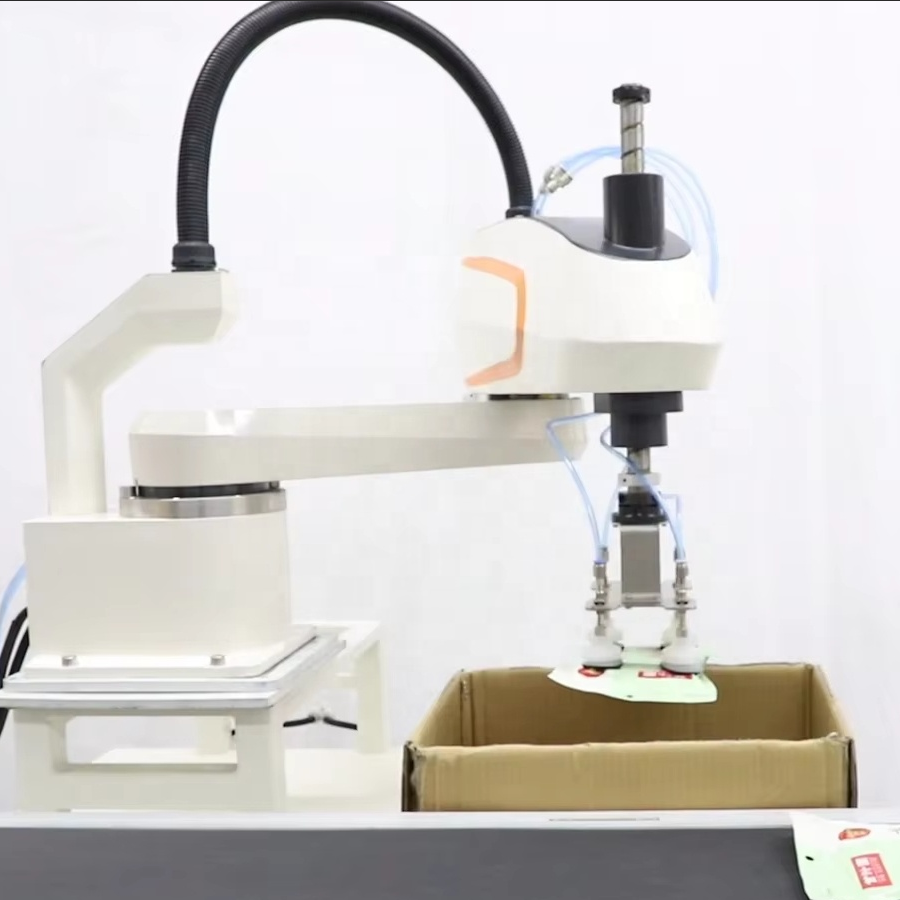
Light Load 4 Axis Industrial Manipulator Robot Scara Robot for Pick and Place Application
A compact SCARA platform for light-load pick-and-place where small footprint, fast ROI and straightforward PLC integration matter.
Contact Us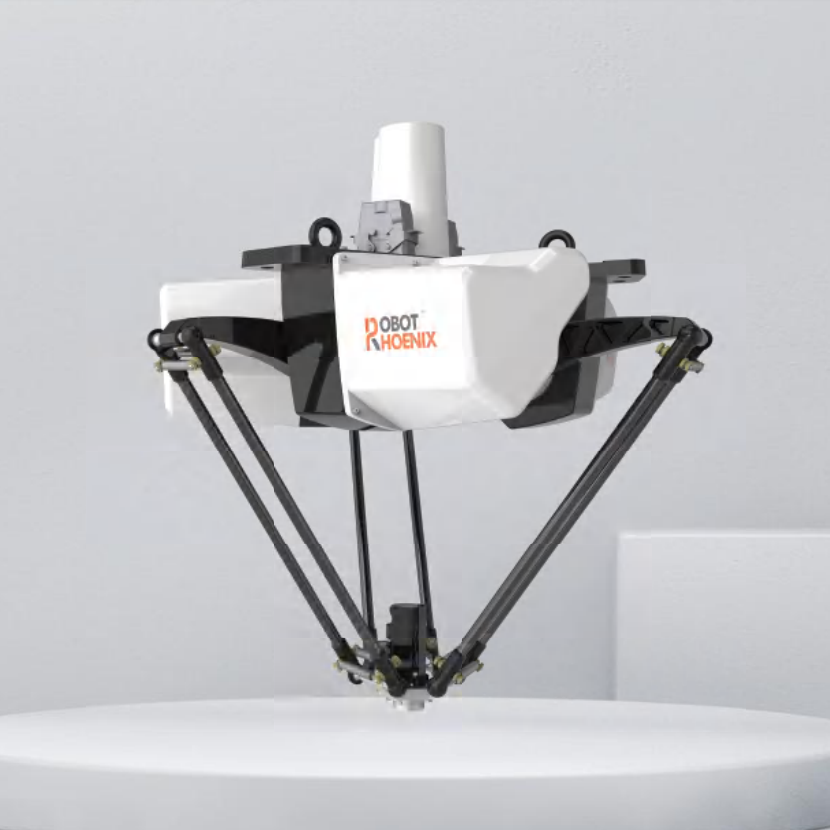
Robotphoenix New 4-Axis Parallel Robot Arm Delta Spider Hand Robot for Carton Packer Line
A 4-axis delta spider-hand robot configured for carton packer lines, repetitive pick-and-place and OEM packaging-machine integration.
Contact Us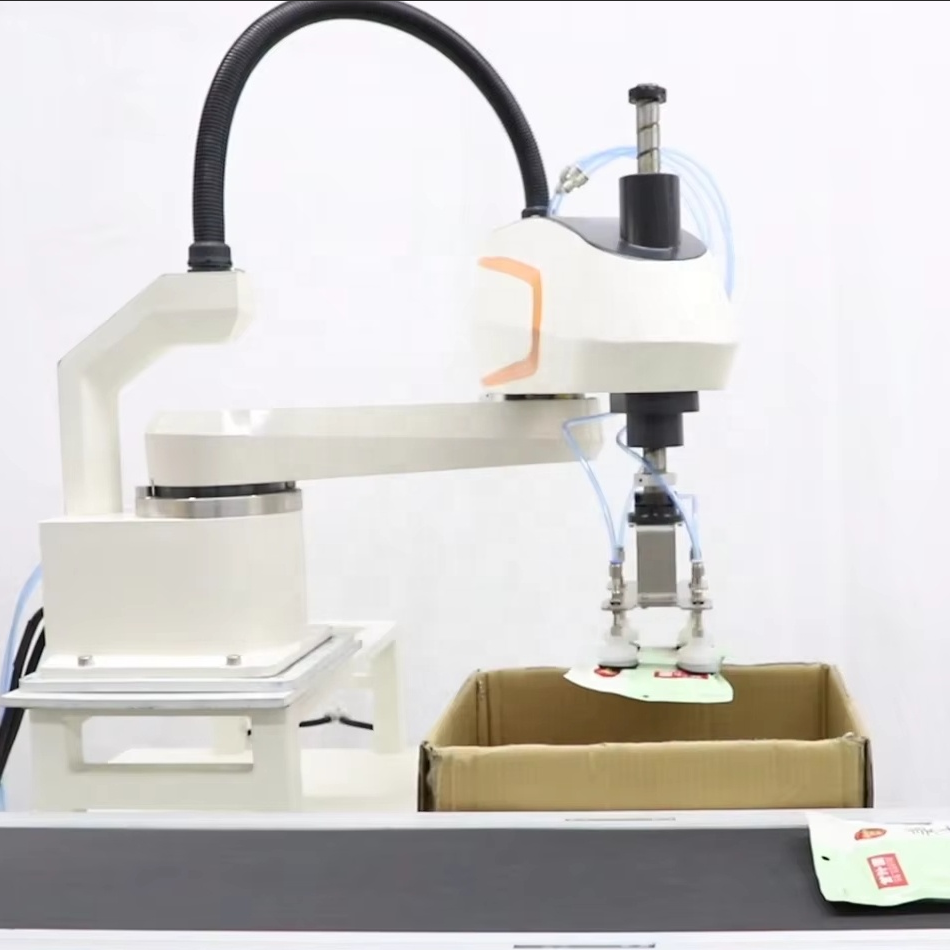
Newly Design Industrial Articulated Robotic Arm Scara for Precision Assembly & Handling
An articulated SCARA arm for precision assembly, insertion, fixturing and handling cells requiring repeatable planar motion.
Contact Us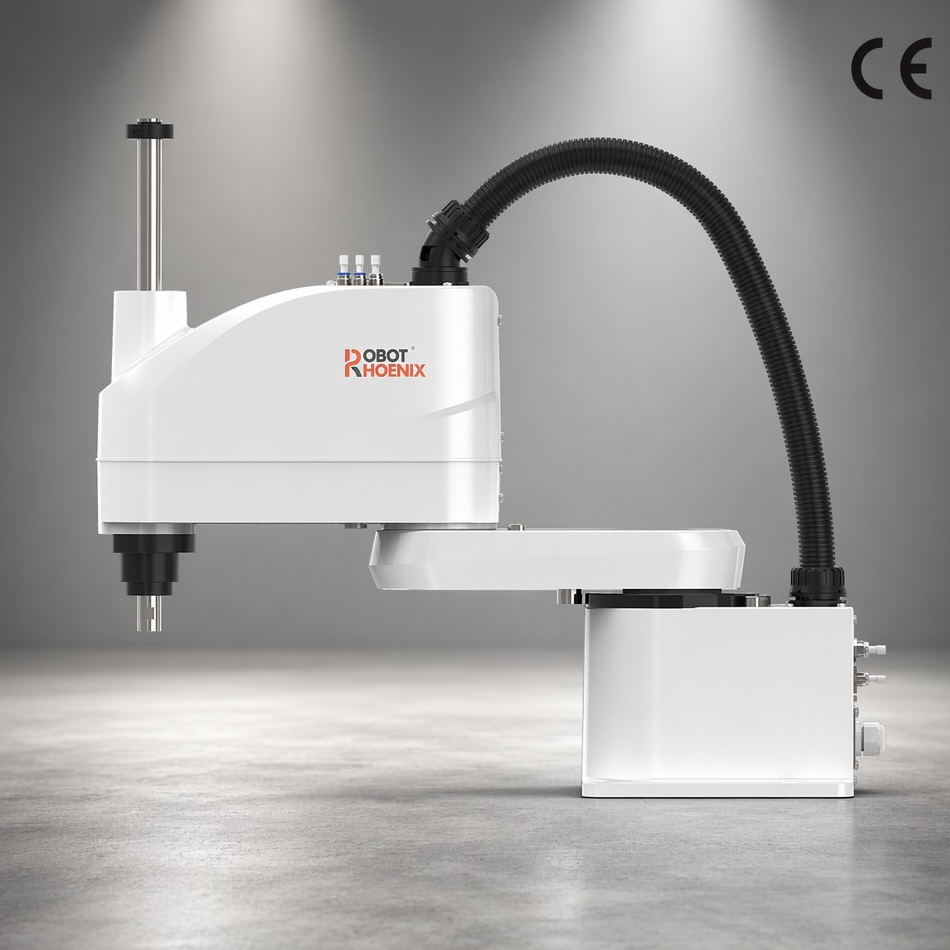
High Efficiency 6kg Payload Manipulator Scara Robot with Vision for Picking and Placing
A 6 kg SCARA with vision for mixed-SKU picking, orientation checks and quality verification before placement.
Contact Us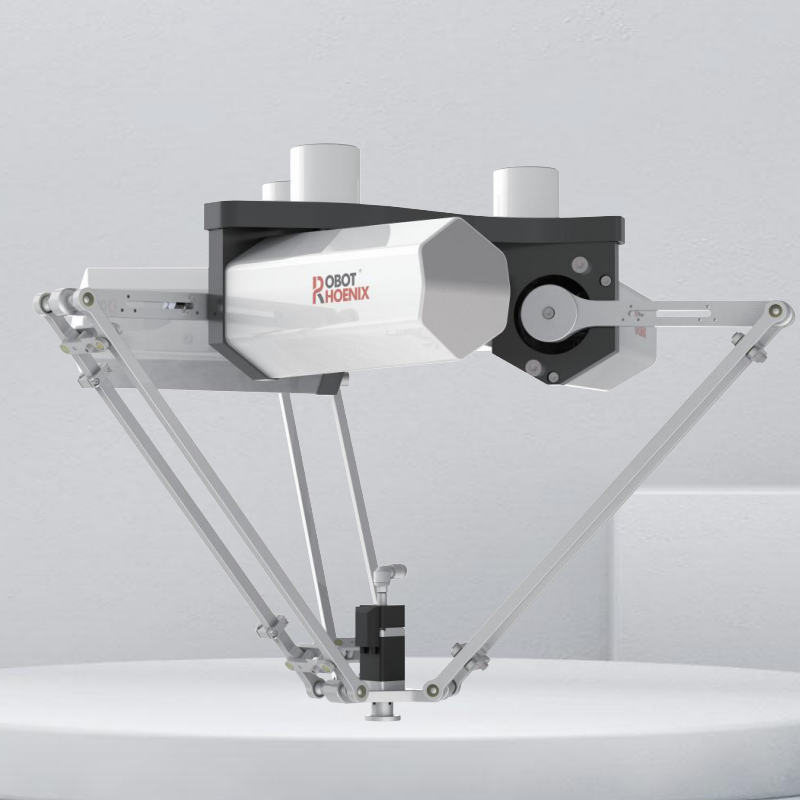
Robotphoenix New Design Industrial Robot Delta 6kg Payload 0.08mm Repeatability 2/3/4 Axis
A 6 kg delta robot with 0.08 mm repeatability and 2/3/4-axis configurations for high-speed sorting, packing and labeling.
Contact Us
New Condition High-Speed Industrial Innovative Manipulator Delta Robot for Light Industry
A high-speed delta manipulator for light industry projects where cycle time, compact cell design and rapid changeover drive the business case.
Contact Us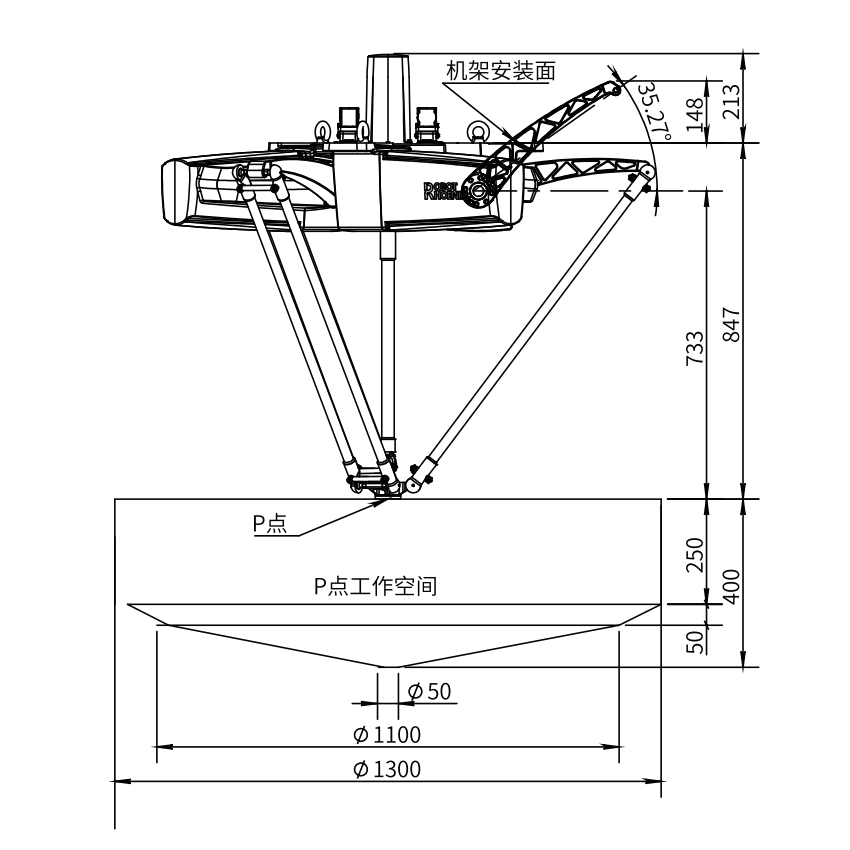
Industrial Robotic Arm Parallel Robot 2/3/4 Axis Delta Robot for Pick&Place Application
A broad 2/3/4-axis parallel robot platform for machine builders and integrators specifying pick-and-place automation.
Contact Us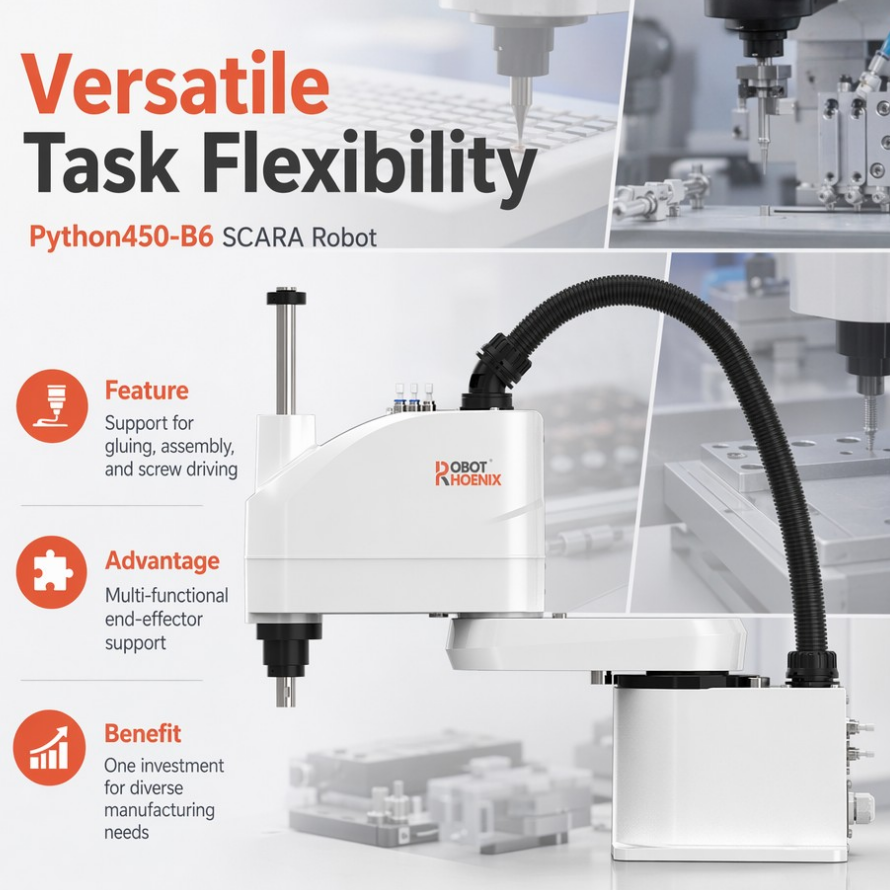
New Condition High Precision 400mm Reach Arm Scara Robot with PLC for 3C Electronic Assembly
A 400 mm reach SCARA with PLC support for 3C electronic assembly, small-part handling, inspection and precision placement.
Contact UsWhy JORI Is a Practical China Delta Robot Wholesaler for Global Buyers
JORI Intelligent Technology Co., Ltd. has manufactured industrial robots since 2012 in Jinan, Shandong, China. The company is not a trading intermediary that merely relabels imported machinery. Its engineering scope includes delta parallel robots, SCARA robots, silicon wafer handling robots, AGV/AMR platforms, autonomous forklifts, robot controllers and 2D/3D vision systems. For procurement teams, this in-house capability changes the supplier evaluation process: one engineering team can answer questions about the arm, controller, vision recipe, PLC handshake, end-effector, safety logic and final acceptance test.
As a factory-direct robot supplier, JORI supports OEM service, design service, buyer-label programs and automated system integration. Standard robots can be ordered from one set, allowing a buyer to validate a pilot cell before scaling a packaging or assembly line. The company operates an ISO 9001 quality management system, has an onsite-verified manufacturing profile and serves buyers in North America, South America, Eastern Europe, Southeast Asia and China. Its average response time is two hours or less, with a 97.06% response rate, which matters when a line upgrade or spare-parts issue cannot wait.
- Independent R&D capability
- Original factory for delta, SCARA & AGV
- 10+ years serving overseas markets
- One-stop automation integration
- OEM, design & buyer-label service
- ISO 9001 quality management
 Jinan · ISO 9001 · OEM / ODM
In-House R&D and Patents
Delta, SCARA, wafer, AGV and controller technologies are developed internally and protected by national patents, reducing integration ambiguity.
Original Factory, Not a Reseller
Buyers can discuss robot structure, controller configuration, software handshakes and acceptance testing directly with the manufacturing team.
ISO 9001 and Onsite Verification
Quality control covers component inspection, assembly checks, run-in testing and final documentation for export projects.
OEM, Buyer Label and Integration
Machine builders can request custom end-effectors, PLC-ready configurations, controller integration and private-label programs.
Which Delta Robot or SCARA Robot Should You Shortlist?
The right recommendation is not the robot with the highest headline speed. It is the configuration that delivers stable cycle time, acceptable repeatability, simple maintenance and a clean interface to conveyors, vision, PLCs and packaging machines.
Carton Packing and Case Packing
For carton packer lines, evaluate the 4-axis parallel robot or the 6 kg delta with 0.08 mm repeatability. Confirm product presentation, gripper weight and required picks per minute before selecting the model.
3C Electronics and Precision Assembly
For small parts, inspection, insertion or screwdriving, a 400 mm reach SCARA with PLC support is often more practical than a large delta cell because the layout is compact and fixture access is clearer.
Vision-Guided Picking
A 6 kg SCARA with vision suits mixed-SKU picking, orientation verification and placement where the robot must adapt to product variation on the conveyor.
Light-Load Pick-and-Place
For light-load SCARA or delta applications, compare the Light Load 4 Axis model with the high-speed delta for light industry. The decision usually turns on layout, product weight and target OEE.
| Buyer Scenario | Recommended Platform | Why It Fits | Procurement Check |
|---|---|---|---|
| High-speed carton packing | 4-axis delta / 6 kg delta | Fast overhead motion, compact cell, easy conveyor interface | Confirm gripper weight and pack pattern |
| 3C electronic assembly | 400 mm reach SCARA with PLC | Precise planar motion in a small footprint | Check fixture clearance and I/O count |
| Vision-guided pick-and-place | 6 kg SCARA with vision | Adapts to orientation and mixed SKU presentation | Validate lighting and camera mounting |
| Light-load SCARA cell | Light Load 4 Axis SCARA | Cost-effective automation for simple transfer tasks | Verify cycle time with real samples |
Final specifications are confirmed per configuration, product sample and factory acceptance test criteria.
How Delta Robot Procurement Is Changing for Wholesale Buyers
Price comparison alone is no longer enough. Procurement teams are now asked to justify total cost of ownership, integration risk, spare-parts availability and the ability to scale from a pilot cell to a multi-line rollout.
Total Cost of Ownership Becomes the Default
Buyers compare purchase price with downtime cost, energy use, spare-parts lead time, changeover time and engineering support. A lower sticker price can become expensive if the controller or vision recipe is closed and difficult to maintain.
Pilot Cells Replace Blind Scale-Up
MOQ 1 set is increasingly important. A pilot cell validates gripper design, conveyor tracking, vision lighting and operator acceptance before a buyer commits to multiple units or a full line upgrade.
Vision and PLC Convergence
Delta robots are increasingly selected as part of a complete cell: camera, lighting, PLC, safety, conveyor encoder and MES interface. Buyers want one engineering owner for the robot and vision handshake rather than fragmented responsibility.
Service SLA and Spare Parts Visibility
International buyers now ask for recommended spare-parts lists, module replacement procedures, response-time commitments and remote support. A wholesaler that cannot show service readiness becomes a project risk.
What Is Next for Delta Robot and Parallel Robot Technology?
The next buying cycle will reward suppliers that can show measurable improvements in speed stability, washdown protection, modular tooling and digital engineering support — not just new sheet-metal covers.
Faster Cycles With Stable Repeatability
Six-kilogram delta robots with 0.08 mm repeatability show how high speed and accuracy are moving into mainstream packaging. Buyers should test cycle time over a full shift, not only in a short demonstration.
IP54 and Washdown-Friendly Options
Hygiene-sensitive food, pharmaceutical and daily-chemical lines require protection against dust and water splash. IP54 and cleanable configurations will continue to expand beyond specialized projects.
Modular End Effectors and Quick Change
Vacuum grippers, mechanical grippers, tool changers and custom fingers are becoming modular. A robot that can switch tools quickly supports shorter production runs and reduces changeover loss.
Digital Twin and Offline Programming
Simulation, offline programming and digital twin models help buyers verify reach, cycle time and collision risk before shipment. This trend reduces commissioning time and makes remote engineering support more practical.
The strongest China delta robot factory and wholesaler will be the one that can connect product development to procurement evidence: measured cycle time, controller documentation, safety validation, spare-parts data and a clear path from pilot to production.
How to Evaluate a China Delta Robot Factory and Wholesaler
This audit list is intentionally more specific than a standard supplier profile. It gives procurement and engineering teams a practical information-gain checklist for comparing robot factories before releasing a purchase order.
Verify factory ownership and patents
Ask whether delta, controller and vision technologies are developed in-house. Review patent or certificate evidence and confirm the manufacturing site.
Benchmark cycle time with real products
Run the actual product weight, gripper, conveyor speed and pack pattern. A clean lab sample can hide a difficult real-world presentation.
Clarify who owns the controller and vision
Confirm PLC handshakes, vision recipe ownership, software licenses and who can troubleshoot integration issues after delivery.
Require FAT and SAT acceptance criteria
Define repeatability, cycle time, pick accuracy, uptime checks and safety tests before shipment. Document the final acceptance method.
Review spare-parts BOM and service scope
Request recommended spare parts, replacement intervals, remote support options and response-time commitments for your region.
Confirm safety and ingress protection
Match the robot protection class and safety logic to the actual environment. Food, pharma and wet-wipe applications may need IP54 or washdown provisions.
Map end-effector and conveyor interfaces
Check gripper weight, mounting pattern, vacuum routing, camera mounting, encoder signals and the available I/O count.
Request reference lines and operating videos
Ask for comparable projects, factory video evidence and operator feedback. A verifiable reference is more valuable than a generic catalogue claim.
FAQs About Buying Delta Robots From a China Factory
These are the questions engineering and purchasing teams ask most often during the first technical review.
What makes a delta robot factory different from a trading company?
What is the minimum order quantity for JORI industrial robots?
Should I choose a delta robot or a SCARA robot?
Can JORI robots integrate with existing packaging machines?
Which delivery and payment terms are accepted?
How quickly will I receive a response?
Can the factory customize end-effectors, vision and PLC integration?
What information should I send for an accurate delta robot quotation?
Send Your Part Weight, Cycle Time and Layout for a Factory-Direct Recommendation
Whether you need a single delta robot for a pilot cell, a 6 kg parallel robot for carton packing or an OEM configuration for a packaging-machine line, our engineering team can help you compare payload, repeatability, controller integration and delivery options. Email info@joribot.com or start the conversation now.
Contact Us