Why Buyers Shortlist This China Palletizing Automation Manufacturer & Exporter
Palletizing automation is not a single robot purchase. At the end of a line, cartons, trays, bags or shrink-wrapped packs arrive at variable rates, and the cell must synchronize conveyor tracking, vision, case orientation, pallet pattern, safety and line-side replenishment.
For importers, the real risk is not finding a low FOB price. The risk is selecting a manufacturer/exporter that cannot document repeatability, controller integration, spare-parts support or commissioning capability after the equipment arrives. A China best palletizing automation manufacturer should be evaluated as an engineering partner: can it explain the robot’s role in the end-of-line layout, prove how the controller talks to the case packer, and support a pilot cell before full-scale CAPEX?
JORI Intelligent Technology Co., Ltd. was founded in 2012 in Jinan, Shandong, a national robotics hub. Its product range includes delta parallel robots, SCARA robots, AMR/AGV platforms, autonomous forklifts and silicon wafer handling robots, with in-house development of robot controllers and 2D/3D vision. That matters for palletizing projects because the robot arm is only one part of the cell; the controller, vision recipe, end-effector, safety logic and line interface determine whether the cell performs reliably at production speed.
What to verify before comparing quotations
- Does the manufacturer publish a real factory history, product lines and controller capability, or act only as a trading intermediary?
- Can it supply a single set for a pilot cell, then scale to a second robot, mobile platform or pallet conveyor without changing software suppliers?
- Are ISO 9001, onsite verification, credit records and trade history available for review before down payment?
- Is the proposed robot matched to product weight, center of gravity, cycle time, orientation tolerance and pallet pattern?
- Will the exporter provide English documentation, spare-parts recommendations, training and remote commissioning support?
Engineering emphasis in high-speed end-of-line projects
Illustrative weighting for high-speed end-of-line projects; adjust each criterion to your product data, line layout and pallet-pattern validation.

Factory evidence matters in export procurement
JORI is an original robot factory for delta, SCARA and AGV platforms, with in-house R&D, controller and vision development, OEM support and automated system integration. Buyers can review company profile, supplier assessment, trade capacity, transaction level and buyer reviews before committing a palletizing project.
8 Robots Shortlisted for Palletizing, Case Packing and Pick-and-Place Cells
The following platforms from JORI’s industrial robot range are frequently evaluated for end-of-line handling, sorting, tray loading and machine-builder integration. Product paths are preserved for direct specification review.
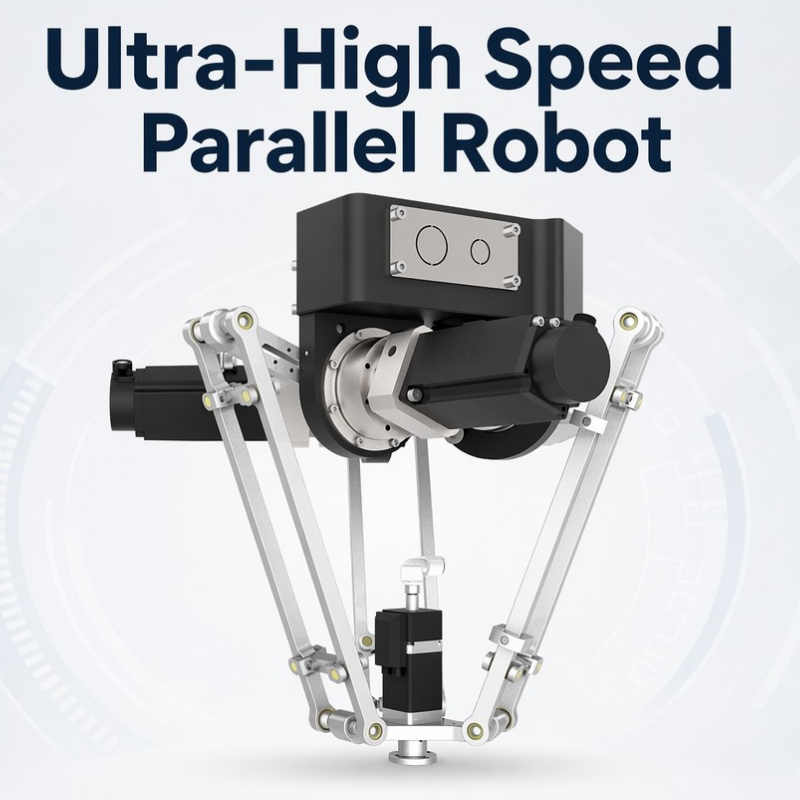
Customized Integrated Delta Parallel Robot for Pick-and-Place and Sorting
Best for mixed carton or tray handling where the end-effector and frame must match an existing case packer. Integrated design reduces interfaces between robot, gripper and line controller.

High-Precision Industrial SCARA Robot Arm for Pick-and-Place
Suits light assembly and precise placement upstream of palletizing, such as inserting products into trays or positioning cases before layer forming. Compact footprint supports cells with limited floor space.

Low-Price Industrial Manipulator SCARA Arm with Integrated Motor
Cost-controlled SCARA platform for simple pick-and-place, loading and sorting tasks. Integrated motor architecture simplifies the mechanical envelope and suits repetitive, moderate-payload work.
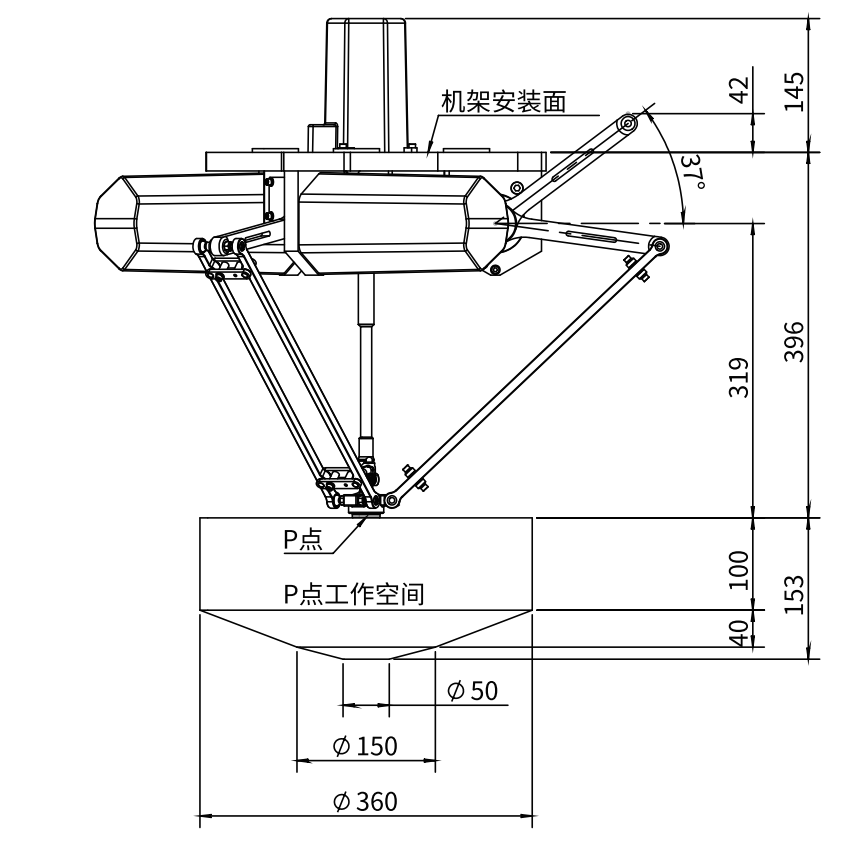
Hot-Selling Delta Parallel Robot for Material Gripping and Sorting
For sorting and gripping operations that feed a case packer or palletizer. Delta parallel kinematics are suited to fast, repetitive moves over a conveyor and can be combined with vision for orientation checks.

High-Speed Spider Arm Delta Robot for Wet Wipe Lid Applicators
Application-specific delta platform for wet-wipe lid applicator machines. The high-speed arm matches the cyclic demand of lid feeding and pressing, with integration support for packaging machine builders.
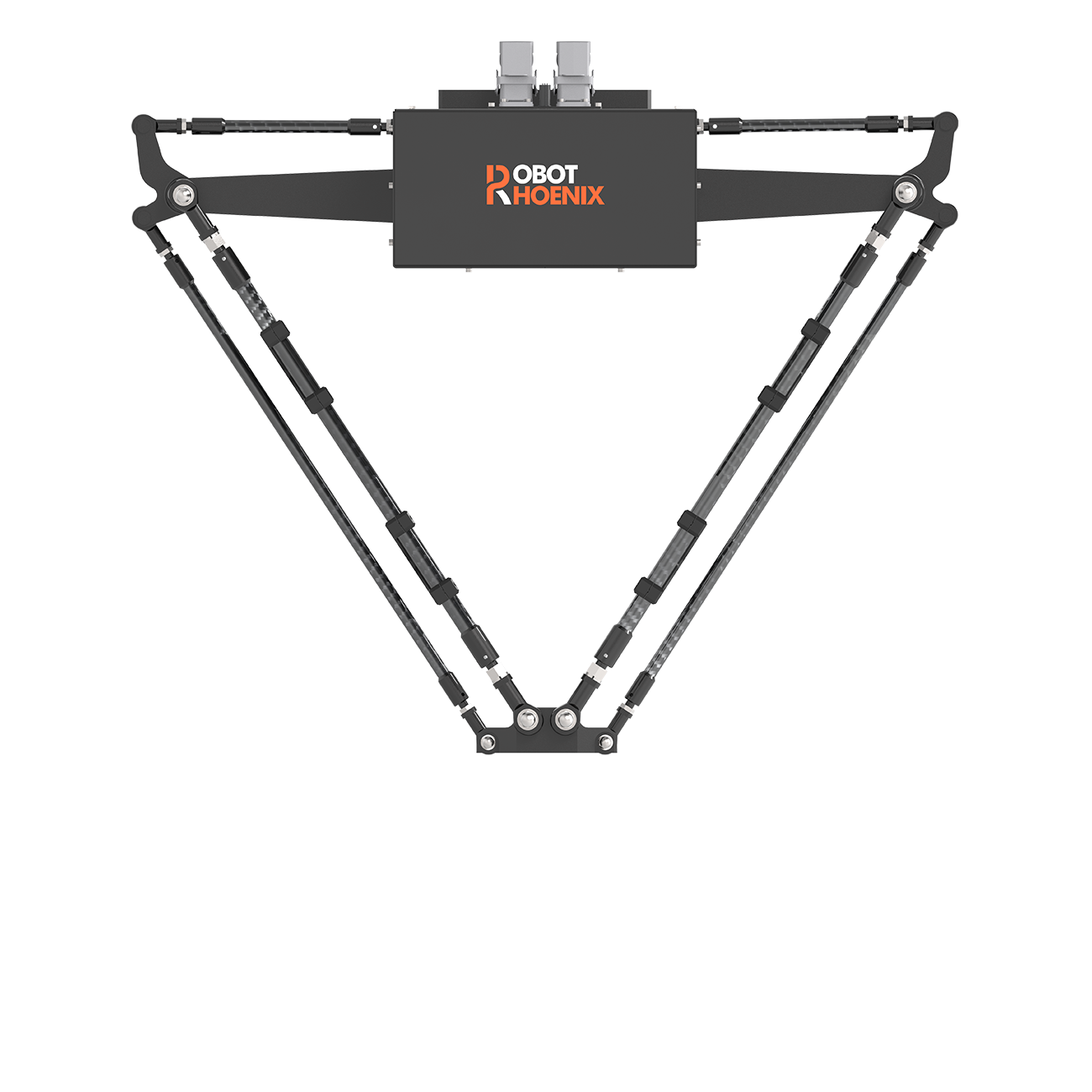
High-Speed, High-Accuracy Delta Robot with New Kinetics
Recommended when accuracy and cycle time must be balanced in a new cell. The updated kinetics help engineering teams tune stability and positioning during continuous pick-and-place; validate with a cycle test.
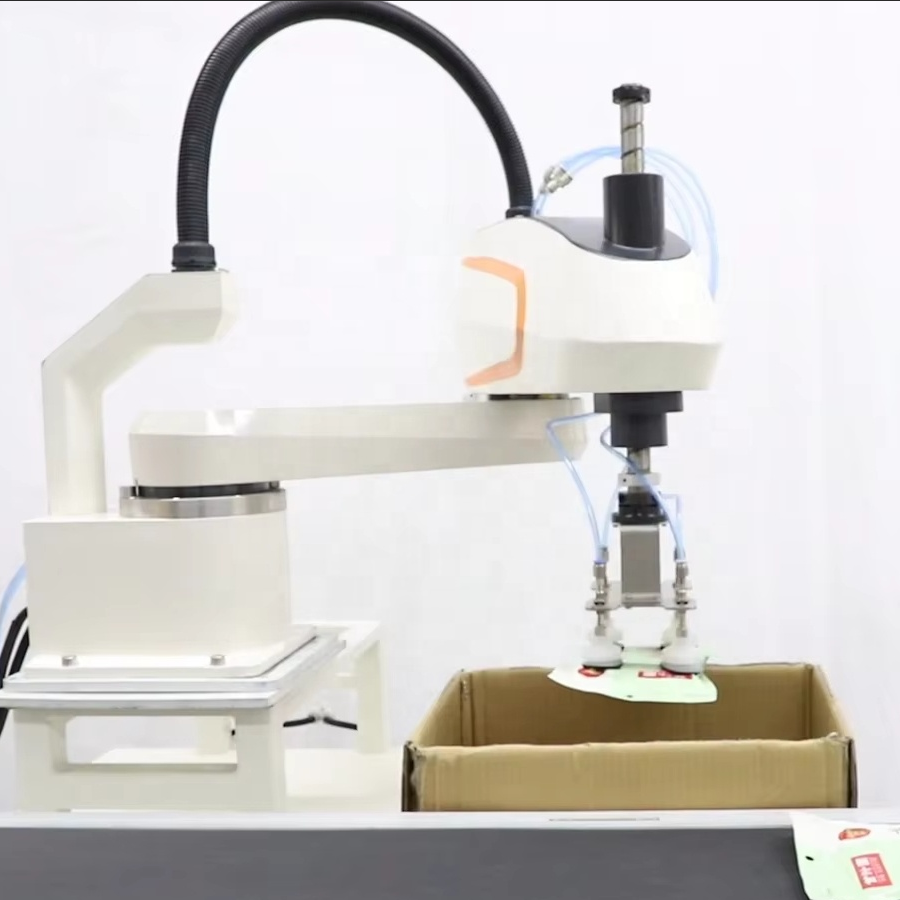
Light-Load 4-Axis Industrial SCARA Manipulator
For light-load pick-and-place applications where a 4-axis SCARA is sufficient. A good fit for tray loading, small-part transfer and compact end-of-line tasks with modest payload requirements.
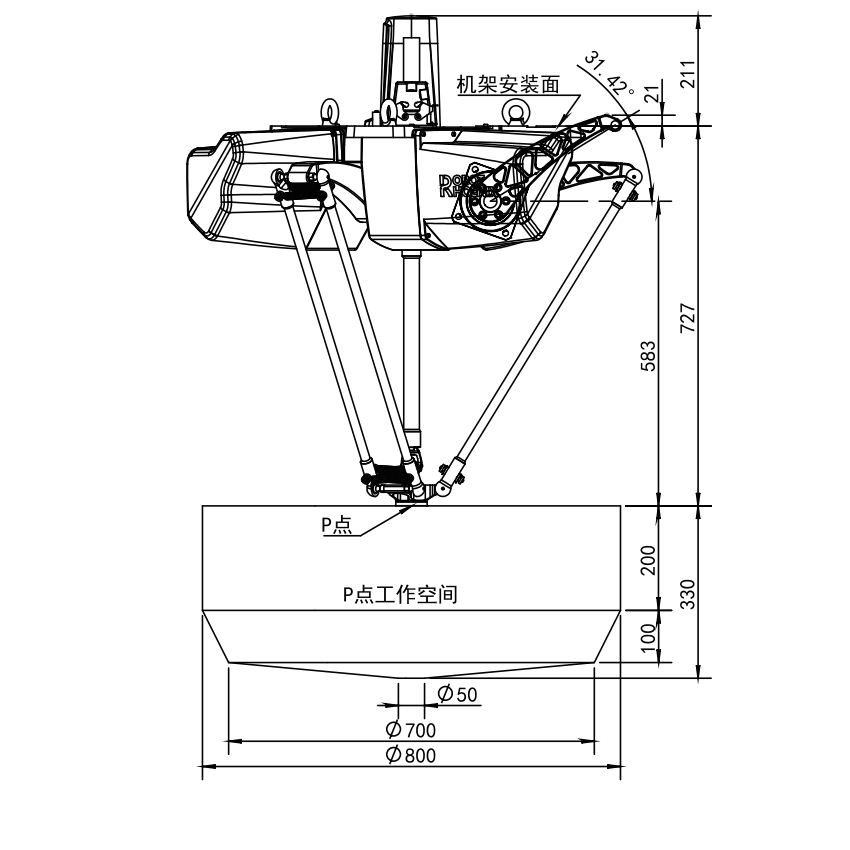
Industrial Delta Robot for Goods Picking, Placing and Sorting
For high-throughput goods picking, placing and sorting. Use it when the line needs a cost-effective parallel robot for repetitive product handling and the pallet pattern has already been validated.
Need the full specification pack, controller options and export quotation?
Get CatalogProof Points That Reduce Export Risk for Integrators and Machine Builders
In industrial equipment, E-E-A-T is not a badge collection. It is evidence that the factory can repeat quality, document engineering decisions and support the installed base after commissioning.
In-house R&D from mechanics to vision
Mechanical design, robot controllers, 2D/3D vision and software are developed in-house, with national patents behind delta, SCARA, wafer and AGV platforms. Buyers gain one accountable source instead of a reseller chain.
Original factory depth since 2012
JORI operates as an original factory for delta, SCARA and AGV robots, with a 10,000+ m² facility and 500+ employees. That scale supports pilot builds, OEM projects, custom end-effectors and repeat production orders.
ISO 9001 and onsite-verified status
Documented quality control runs from component inspection to final robot run-in testing. Supplier assessment, credit profile, trade capacity, transaction level and trade history are available for review before a purchase order.
OEM, design service and buyer label
Machine builders can use OEM service, design service and buyer-label options, with support for custom end-effectors, controller integration and automated system integration. This is valuable when a palletizing cell must fit an existing machine platform.
Export experience across five continents
JORI serves buyers in North America, South America, Eastern Europe, Southeast Asia and China. Delivery terms include FOB, CFR, CIF, EXW, CIP, FCA, CPT and express delivery, with multiple payment and currency options.
Fast response and single-set MOQ
Standard robots can be ordered from one set, so importers can validate a pilot cell before scaling. The company reports a 97.06% response rate and average response time of 2 hours or less; project enquiries can be sent to info@joribot.com.
Match the Robot Family to the Palletizing Task, Not the Catalogue Cover
Begin with product weight, center of gravity, incoming orientation, cycle time, pallet pattern and line interface. Then select the robot family and confirm the business case with an acceptance test.
High-speed pick-and-place or sorting
Choose a delta robot when products are relatively light, arrive randomly on a conveyor and cycle time is the bottleneck. Use vision and conveyor tracking to confirm orientation. Delta arms are commonly applied in case packing, tray loading, bag picking and sortation upstream of palletizing.
Precision placement in a compact cell
Choose a SCARA robot for planar assembly, insertion, tray loading and precise positioning before pallet forming. A 4-axis SCARA can provide a compact footprint and cost control when the product does not require a delta robot’s high-speed overhead reach.
Pallet transport and mobile logistics
Use AMR/AGV platforms and laser SLAM autonomous forklifts when finished pallets must move from the cell to stretch wrapping, staging or the warehouse. Fleet management helps synchronize routes, reduce fixed floor infrastructure and support flexible layout changes.
Fragile or clean handling
For semiconductor, photovoltaic and fragile substrate handling, a wafer handling robot with custom end-effectors may be appropriate. The selection should be based on contamination control, motion smoothness, substrate size and the required interface with existing process equipment.
For an RFQ, include product weight, center of gravity, primary and secondary packaging, target rate, pallet dimensions, pattern drawing, ambient conditions, PLC protocol, safety zone and spare-parts plan.
Palletizing Automation Procurement Trends Buyers Are Planning For Now
Procurement teams are shifting from “lowest robot price” to “lowest lifecycle risk.” The trend changes what importers ask for in an RFQ and how they compare a China palletizing automation exporter.
From one machine to scalable modules
Buyers increasingly prefer a pilot cell that can be expanded with a second robot, mobile platform, pallet conveyor or vision station. A manufacturer that supports single-set orders and phased CAPEX reduces the risk of a large, all-at-once automation project and makes it easier to prove ROI before scaling.
Total cost of ownership becomes the quote
Energy per cycle, mean time to repair, spare-parts lead time, remote diagnostics and training are moving into the commercial comparison. Importers are asking for lifecycle cost assumptions alongside FOB price, because an inexpensive robot that stops a line for a week is not a low-cost decision.
Mixed-SKU handling and traceability
E-commerce, shorter runs and more packaging variants require recipe changeover, vision inspection and data logs. Buyers are asking whether the controller can store pallet patterns, verify label or lid presence and integrate with line software without a separate vision vendor.
Local support and export documentation
Nearshoring does not remove import documentation, commissioning support or spare-parts planning. Procurement teams now evaluate English manuals, packaging standards, remote commissioning capability, training videos and the named support contact before placing an order.
What the Next Palletizing Automation Cell Will Demand from Robot Hardware
Robot hardware is converging with vision, controls and mobile logistics. For buyers, the practical question is whether the supplier can support that convergence without creating new integration risk.
Compact high-speed kinematics
Delta and SCARA designs continue to improve the speed-to-payload ratio while reducing footprint and maintenance access requirements. Integrated motors, lighter arms and application-specific frames help machine builders fit automation into existing end-of-line layouts rather than rebuilding the line around the robot.
Integrated controller and 2D/3D vision
In-house controllers and vision reduce cabinet space, simplify PLC integration and make vision recipes easier to tune. For palletizing and case packing, integrated vision can support orientation checks, mixed-product picking and quality verification before the product enters the pallet pattern.
Mobile robots converge with palletizing
AMR/AGV platforms and autonomous forklifts are becoming part of the palletizing cell, not a separate warehouse project. Laser SLAM navigation reduces fixed infrastructure, while fleet software coordinates transport tasks. The future cell will be judged on material flow, not only robot cycle time.
Safety, simulation and OEM customisation
Digital validation, guarded cell design, custom end-effectors and buyer-label programs are becoming standard expectations for exporters serving machine builders. Suppliers that can document engineering choices and support custom integration are better positioned than catalogue-only sellers.
What Importers Ask Before Selecting a China Palletizing Automation Exporter
What should I look for in a China palletizing automation manufacturer and exporter?
Can delta and SCARA robots handle palletizing, or do I need a six-axis industrial robot?
What is the minimum order quantity and can I validate a pilot cell?
How do I compare total cost of ownership for robotic palletizing?
Can JORI integrate with existing case packers, conveyors and wet-wipe lid applicators?
What delivery, payment and support terms are available?
Need a Palletizing Automation Partner Who Can Document the Engineering?
Send product weight, footprint, cycle time, pallet pattern and line interface. JORI engineers can recommend a delta, SCARA, AMR or autonomous forklift configuration and reply with preliminary catalogue and selection guidance, typically within 2 hours.
Get CatalogEmail: info@joribot.com · Jinan, Shandong, China · MOQ from 1 set · OEM / design service available