China Best Robot Vision System Suppliers & Exporter
Vision-guided delta, SCARA and parallel robot systems built on a self-developed controller and 2D/3D vision stack — engineered in-house since 2012 and available from a single set for pilot validation.
Get Catalog8 Vision-Ready Robot Systems Shortlisted for 2025 Procurement
These eight platforms cover the configurations that dominate real inquiries — high-speed delta picking, IP54 food and pharma handling, 400 mm SCARA assembly, and vision-guided bin feeding.

New Condition High Precision 400mm Reach Arm Scara Robot with PLC for 3C Electronic Assembly
A 400 mm working envelope plus PLC handshaking targets compact 3C assembly stations where the machine builder wants the robot integrated into an existing control architecture rather than on its own controller.
View details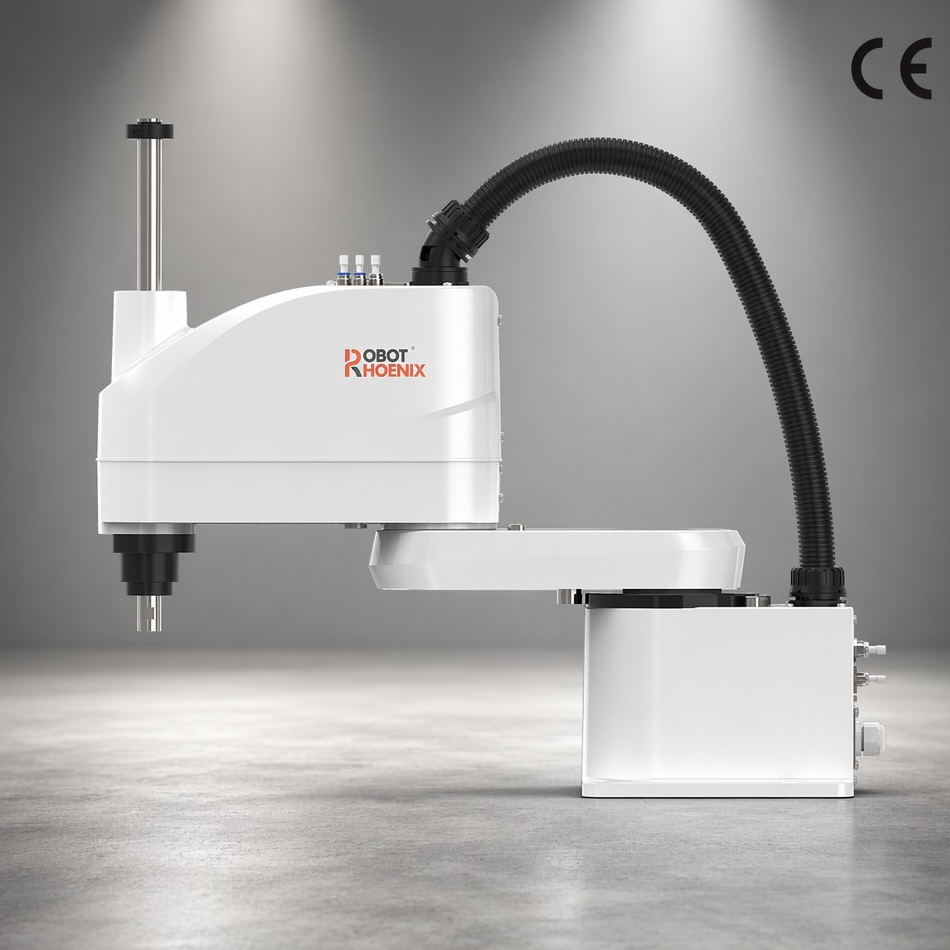
High Efficiency 6kg Payload Manipulator Scara Robot with Vision for Picking and Placing
6 kg payload with camera-guided picking, aimed at tray and tote feeding where parts arrive in a pose the fixture cannot guarantee — not just flat conveyor placement.
View details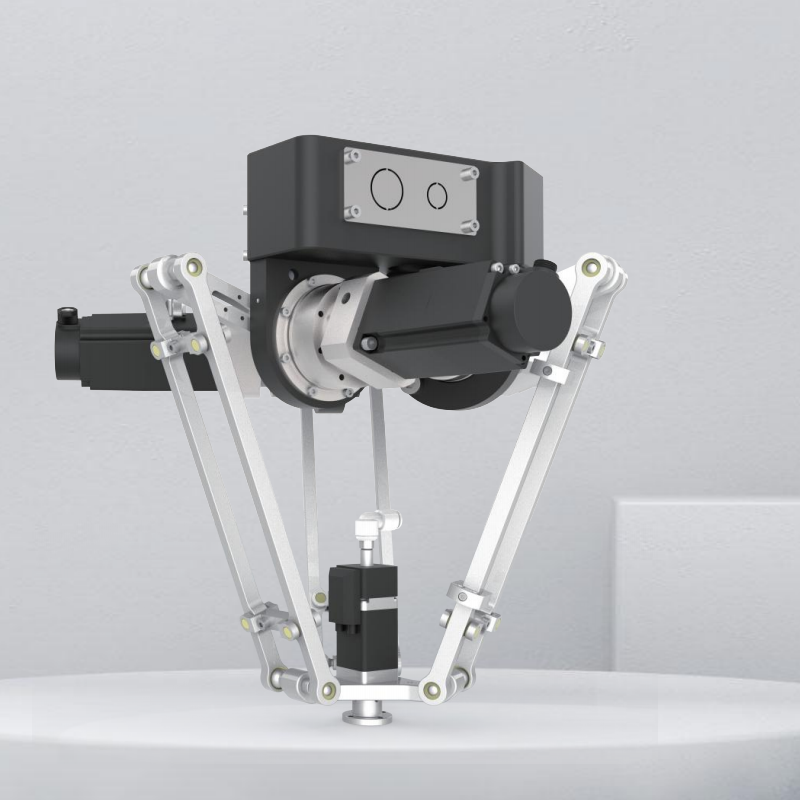
High Speed 3kg Load Industrial Delta Robot Arm with IP54 Protection for Robotic Pick & Place
IP54 protection moves a 3 kg delta into dust-laden or occasionally washed-down lines — environments where an unprotected parallel robot is usually excluded at the specification stage.
View details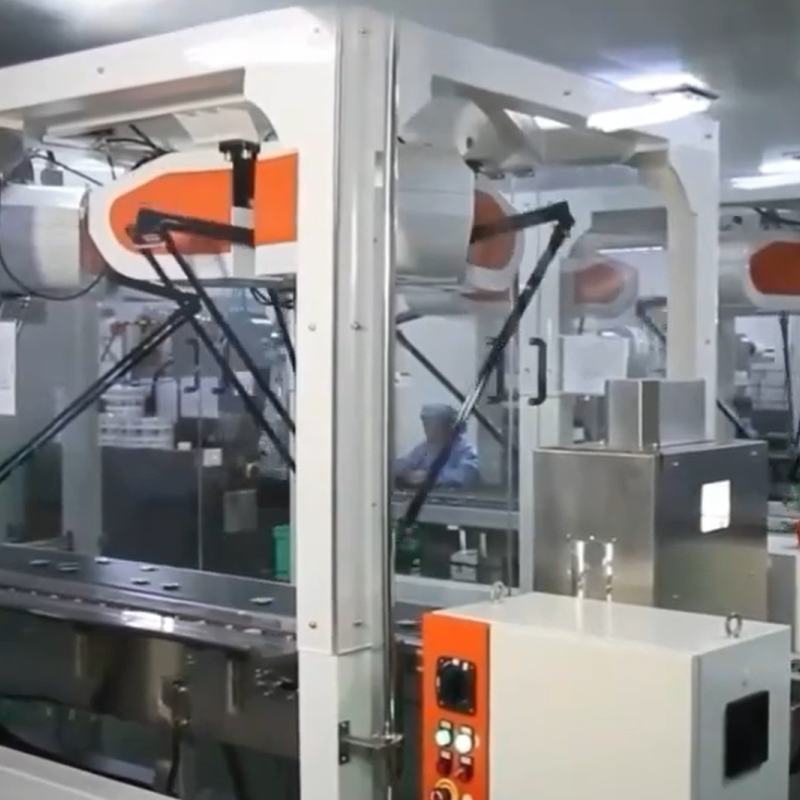
6kg Payload IP54 Protection Grade Pick Place Sorting Parallel Robot with Robot Gripper
Gripper-based handling instead of vacuum suction — the correct choice for bottles, formed containers and items whose surface cannot hold negative pressure reliably.
View details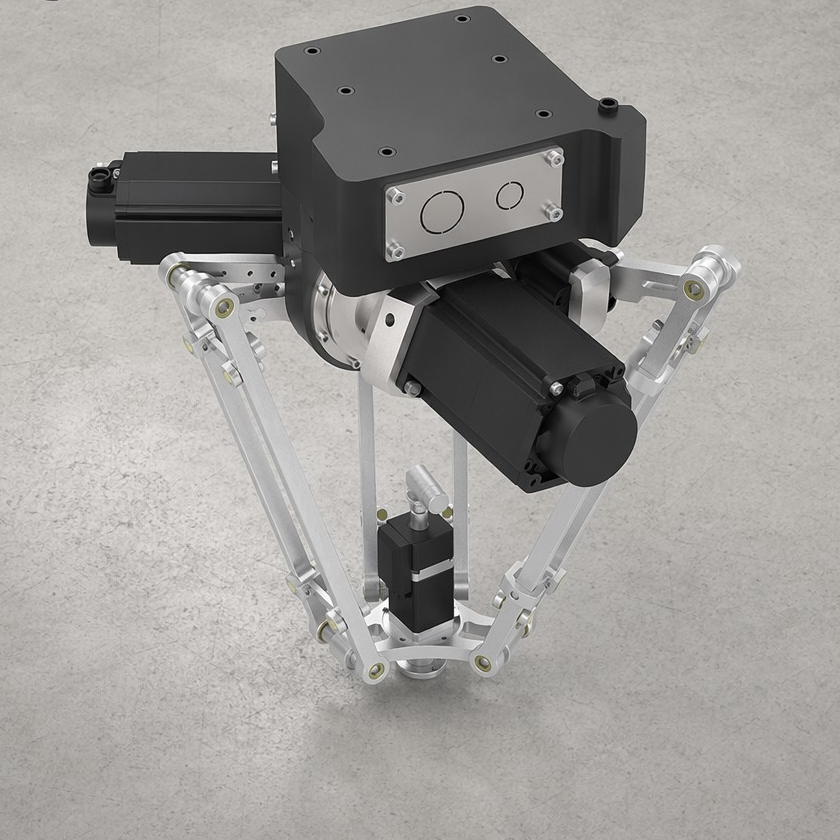
New Condition High-Speed Industrial Innovative Manipulator Delta Robot for Light Industry
Built for the repetitive high-cycle work in light industry, where cycle time is treated as a hard constraint rather than an aspiration.
View details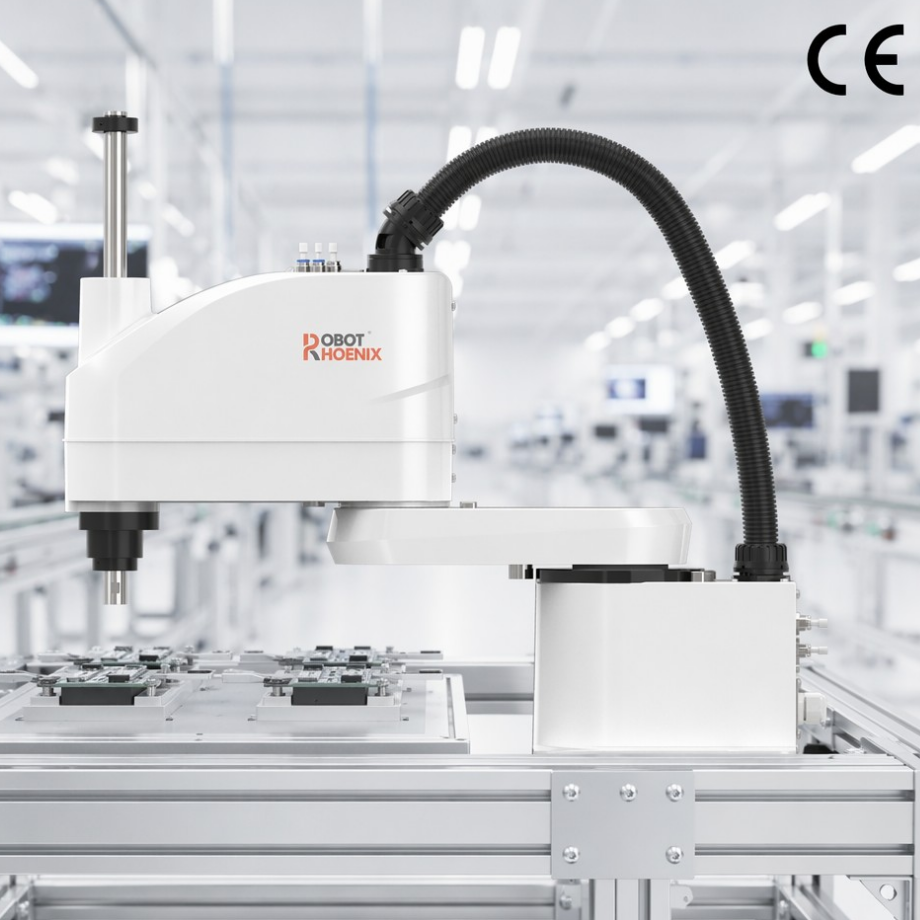
New Design Compact High Accuracy Industrial Robot Arm Scara with 2D/3D Vision System
2D pose recognition plus 3D height compensation in a compact frame — for in-machine cells where the camera must sit inside an enclosure and parts may arrive stacked.
View details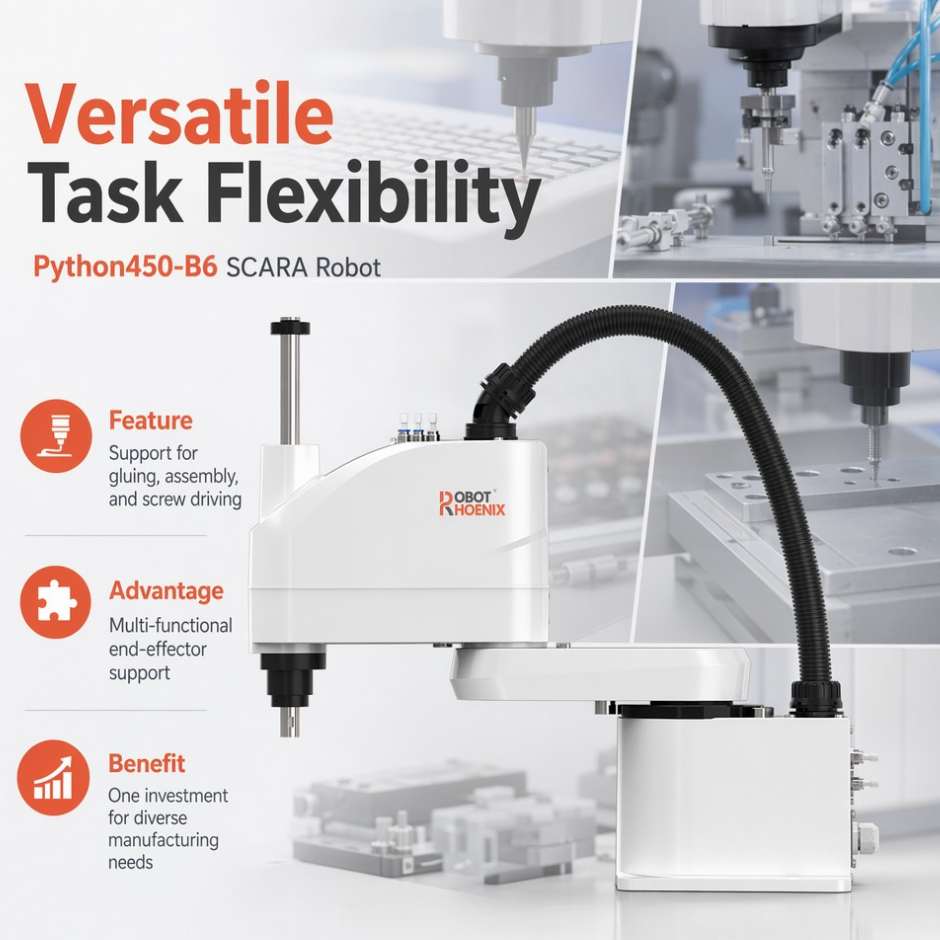
Four-Axis Industrial Robot Hand SCARA for Loading/Unloading and Sorting in Food Industry
Loading, unloading and sorting on food lines, where hygiene, footprint and changeover time usually outweigh a marginal peak-speed advantage on paper.
View details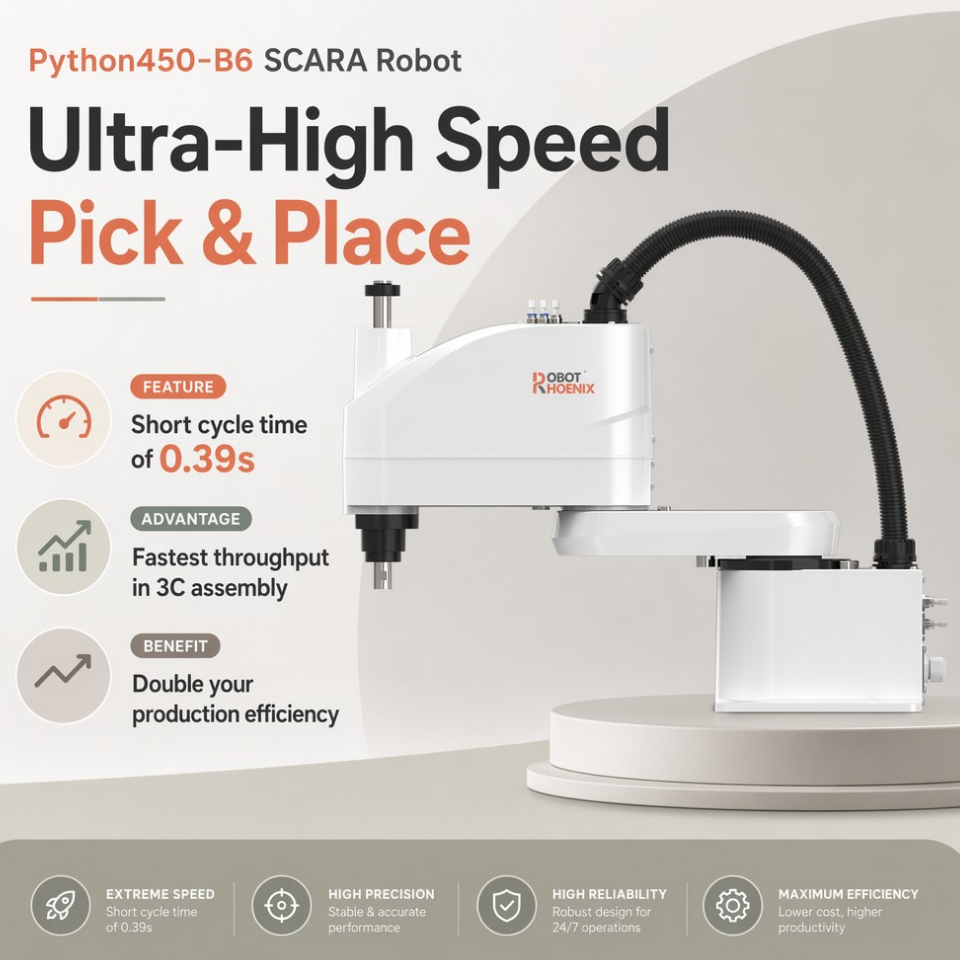
Robotphoenix High Speed Manipulator Scara Robot with Gripper for Product Accuracy Picking
Accuracy-first picking for grippers and fixtures, where consistent placement matters more than raw throughput.
View detailsWhy Vision Specifications Now Decide the Purchase
Five years ago the first line of a quotation comparison was payload and reach. Today the vision layer sets the throughput ceiling, and the arm merely follows it. On a line running at 120 pieces per minute — a figure this catalogue's labeling platforms already meet — each full cycle is 500 milliseconds. Trigger latency and the exposure-plus-transfer stage consume 20–30 ms; the sub-pixel pose computation takes another 15–25 ms; the remainder is everything the controller has left for motion, gripper actuation and recovery.
That arithmetic explains why 2025 inquiries now carry questions that never appeared in a robot RFQ: which trigger mode, what exposure time on your fastest line, how is hand-eye calibration performed and how often is it repeated, can the camera pre-process the region of interest. A supplier who designs its own controller and 2D/3D vision stack has those parameters to expose. A reseller does not.
One distinction is worth separating before any negotiation begins. Mechanical repeatability — ±0.08 mm on the delta platforms in this catalogue — and vision-guided absolute accuracy are different specifications. A camera can measure and compensate for weak absolute accuracy. It cannot recover from repeatability that will not return the gripper to the same point twice. Evaluate the two numbers separately, because they answer different questions.
How to Assess a China Robot Vision System Supplier Before You Commit
Six checks that separate a manufacturer with accountable engineering from a trading intermediary with a catalogue.
In-House Controller and Vision
Ask for the tuning parameters directly: exposure, trigger delay, camera-to-robot-base transform, conveyor encoder scaling. If they are locked inside a black box, every lens change becomes a re-integration project.
An Onsite-Verified Factory
ISO 9001 governs process; an onsite check governs physical reality. A facility of 10,000+ m² with 500+ employees carries spare-parts depth that two intermediaries in an office cannot replicate.
Published Repeatability Conditions
A repeatability figure means nothing without its test load and measurement method. Ask how ±0.08 mm was established and at what payload — then compare like with like across suppliers.
Real Integration Documentation
Request the actual I/O list: digital handshake bits, EtherCAT or Modbus register maps, and how the controller behaves when a trigger is missed. Documented error handling is the difference between a demo and a production cell.
Sample Runs on Your Parts
A trial build before the purchase order exposes the failures no datasheet mentions: reflective surfaces, black-on-black parts, transparent film and inconsistent incoming orientation.
After-Sales Engineering Depth
Response within two hours and a 97% response rate are verifiable operating numbers. Follow them up with three harder questions: spare-part stocking, remote diagnostics scope, and commissioning support terms.
Inside the Vision Stack: Where Cycle Time Is Actually Spent
A vision-guided cell is a five-stage pipeline. Understanding the stages is the fastest way to predict where your line will lose milliseconds.
The 2D-versus-3D decision should follow how parts arrive, not the camera budget. Flat feeding with a fixed presentation is fully served by 2D no matter how fast the line runs. Bins, bulk piles, multi-layer trays and drifting part heights require 3D even on a slow cycle — and "it's a slow line, so 2D will do" is the most common first-installation error in this category.
Calibration is the quiet failure point. Hand-eye calibration maps the camera frame into the robot base frame, and it drifts with thermal expansion, a knocked camera bracket or a lens change. A system that can be re-calibrated with a calibration target in fifteen minutes without re-teaching the line is worth more in year two than a system with a better first-day number and a two-hour recovery procedure.
Delta vs Parallel vs SCARA: Which Architecture Fits the Cell
Match the kinematic form to the task, then confirm the visual requirement — not the other way round.
| Configuration | Typical Payload | Best-Suited Task | What the Vision Must Solve | Check Before You Buy |
|---|---|---|---|---|
| 400 mm SCARA with PLC | Light | 3C assembly, screwdriving, connector insertion | Part positioning inside small trays | Available handshake bits on your PLC |
| 6 kg Vision SCARA | Up to 6 kg | Tray and tote feeding, sorting, machine tending | 2D pose plus reach verification | Whether parts need 3D height |
| 3 kg Delta, IP54 | 3 kg | High-speed conveyor pick and place | Conveyor tracking and orientation | Presence of washdown or airborne dust |
| 6 kg IP54 Parallel + Gripper | 6 kg | Food and pharma sorting with mechanical grip | Sorting and orientation on moving belt | Gripper stroke against product size |
| Compact SCARA, 2D/3D Vision | Light to medium | In-machine cells with limited enclosure space | 3D height and stacked-part resolution | Camera standoff distance inside the guard |
Figures reflect current catalogue models. Final configuration, camera selection and cycle-time budget are confirmed against your part samples.
How Robot Vision Systems Will Be Bought Through 2030
Six shifts already visible in live purchasing behavior, not forecasts.
Pilot-First, One Set at a Time
Standard delta, SCARA and parallel platforms ship from a single set, so validation happens on one cell before capital is committed to a full line.
Direct to the Manufacturer
Buyers increasingly engage the factory rather than a reseller, particularly for OEM programs where every specification change must be renegotiated with an accountable engineering team.
OEM and Buyer-Label Programs
Machine builders embedding robots into their own equipment need private labeling, custom end-effectors and controller integration — not a stock arm with a sticker.
Robot, Controller and Vision Bundled
When all three come from one source, accountability is consolidated. Nobody in the chain can point at the other supplier when a pick misses.
Flexible Trade and Payment Terms
FOB, CFR, CIF, EXW, CIP, FCA, CPT alongside T/T, L/C, card, PayPal, Western Union, MoneyGram and escrow lets procurement adapt terms to internal treasury and compliance rules.
Lifecycle Cost Over Lowest Price
Spare-part availability, remote diagnostics and commissioning support now score alongside the purchase price in supplier evaluation matrices.
Where Robot Vision Hardware Is Heading
The direction of travel across delta, SCARA and parallel platforms — and what it means for a purchase decision made today.
Controller and Vision Convergence
Functions that once required an external vision PC are migrating into the robot controller, cutting latency and removing a black box from the integration chain.
3D Vision Moving Down-Market
3D sensing is reaching mid-range models, making bin picking and depalletizing practical for mid-sized manufacturers rather than only tier-one plants.
Ingress Protection as Standard
IP54 and above is shifting from a custom request to a catalogue option — driven by food, pharmaceutical and packaging lines that cannot accept an unprotected arm.
Modular End-Effector Interfaces
Standardized gripper, suction and fixture mounts shorten changeover and let one robot handle a wider product mix without mechanical rework.
Edge AI Inspection
Defect-detection inference is moving onto the controller, removing a separate inspection PC and the transfer delay between camera and inspection machine.
Lighter Structures, Better Dynamics
Lighter arm construction reduces moving mass, which improves dynamic performance and energy use — a decisive factor on high-cycle delta lines.
Robot Vision System Procurement: Common Questions
What is the minimum order quantity for these industrial robots?
Standard delta robots, SCARA robots and parallel robot platforms can be ordered from one set. That lets procurement validate a single cell or pilot line against real production data before scaling to a full installation.
Do you offer OEM, private-label or custom robot solutions?
Yes. OEM service, design service and buyer-label options are available. Machine builders are supported with custom end-effectors, controller integration and full automated system integration, so the robot is delivered as part of your machine rather than as a standalone unit.
Should I specify a delta robot or a SCARA robot?
Choose a delta robot for very fast, lightweight pick-and-place from a moving conveyor — typically 3 to 6 kg payload. Choose a SCARA robot for planar assembly, insertion and precise placement inside a compact footprint. Share the part weight, required cycle time and cell layout and the engineering team will recommend a specific model.
Which delivery and payment terms are accepted?
Delivery terms include FOB, CFR, CIF, EXW, CIP, FCA, CPT and express delivery. Payment methods include T/T, L/C, credit card, PayPal, Western Union, MoneyGram and escrow, settled in USD, EUR, GBP, JPY, CAD, AUD, HKD, CHF or CNY.
Can these robots integrate with my existing packaging machines?
Yes. Controllers and 2D/3D vision are developed in-house, and PLC-ready delta robots are designed for cartoning machines, carton packers and lid applicator equipment, so the robot can be driven by the machine's existing control logic.
How do I decide between 2D and 3D vision for my application?
If parts arrive flat, separated and in a predictable orientation, 2D vision is sufficient regardless of line speed. If parts arrive in bins, bulk piles, multi-layer trays or at inconsistent heights, 3D is required even at a slow cycle. The decision follows the material presentation, not the camera budget.
How quickly does the team respond to an inquiry?
The published average response time is two hours or less, with a 97% response rate. Include application details, drawings, or a short video of the current process to accelerate the technical evaluation.
What information should I send with a quotation request?
Part weight and dimensions, required cycle time or throughput per minute, how parts are presented (conveyor, tray, bin or bulk), the available footprint, the control platform in use (PLC brand and communication protocol) and a short video of the current manual process. These six inputs are usually enough to return a configured model, vision option and trade terms.
Request a Configured Catalog for Your Vision-Guided Cell
Send part weight, cycle time and material presentation, and the engineering team will return a model recommendation, 2D/3D vision option and trade terms within two working hours. Standard configurations start from one set.
Get Catalog