Factory-direct industrial robots since 2012 ISO 9001 · Onsite-verified · OEM / ODM info@joribot.com
Factory-Direct Robot Manufacturer · Since 2012

China Top Automated Assembly System Manufacturers & Exporter

Delta, SCARA and mobile assembly robots engineered in-house in Jinan, Shandong — with the specification logic procurement teams need to defend the capex, not just the unit price.

  • In-house controller & 2D/3D vision
  • ISO 9001 quality system
  • MOQ from 1 set
  • ≤2-hour engineering reply
Featured Assembly Robot Models

Eight Automated Assembly Robots Buyers Shortlist First

Every model below runs on our own controller platform, and 2D/3D vision can be scoped at quotation stage — so camera, lighting and PLC handshaking arrive as one validated package instead of three separate purchase orders.

2012
Founded · in-house R&D from day one
500+
Employees across R&D, assembly & QA
10,000+
m² manufacturing floor in Jinan
97%
Inquiry response rate · ≤2 hours
Scope Before Quote

What an Automated Assembly System Actually Includes — and Why the Definition Protects Your Capex

In English-language sourcing, the phrase “automated assembly system” points in three directions at once: a bare robot arm, a conveyor-fed assembly line, and a full turnkey cell with feeding, inspection, labelling and cartoning. Suppliers price all three differently, which is why two quotations for the same “assembly robot” can differ by a factor of four and still both be honest. Defining the scope before the RFQ is the cheapest cost-control step in the entire project.

A working definition we use with buyers separates five engineering layers. Miss one and the cell will run at the quoted rate on the day of acceptance but not in month six.

01 KinematicsDelta, SCARA, six-axis or mobile base — this fixes the motion envelope, not the result.
02 End EffectorVacuum, parallel gripper, magnetic, screwdriver, dispenser or a hybrid tool.
03 Part PresentationBowl feeder, tray, magazine, or random orientation on a moving belt.
04 Sensing & Control2D/3D vision, force feedback, PLC handshaking and safety logic.
05 Line LogisticsAMR/AGV transfer, buffers, rework loops and WIP handling.

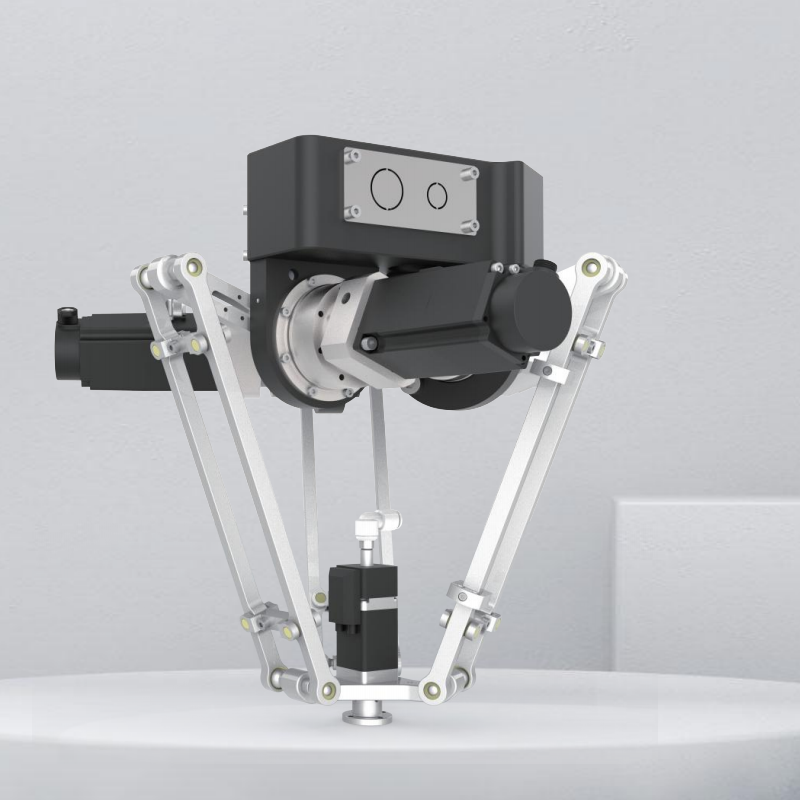
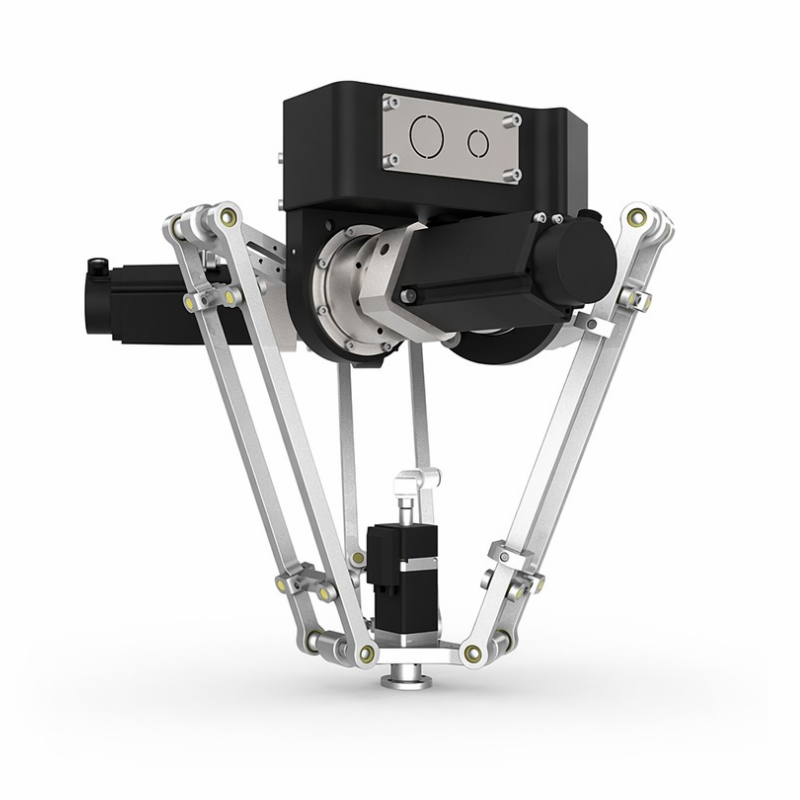
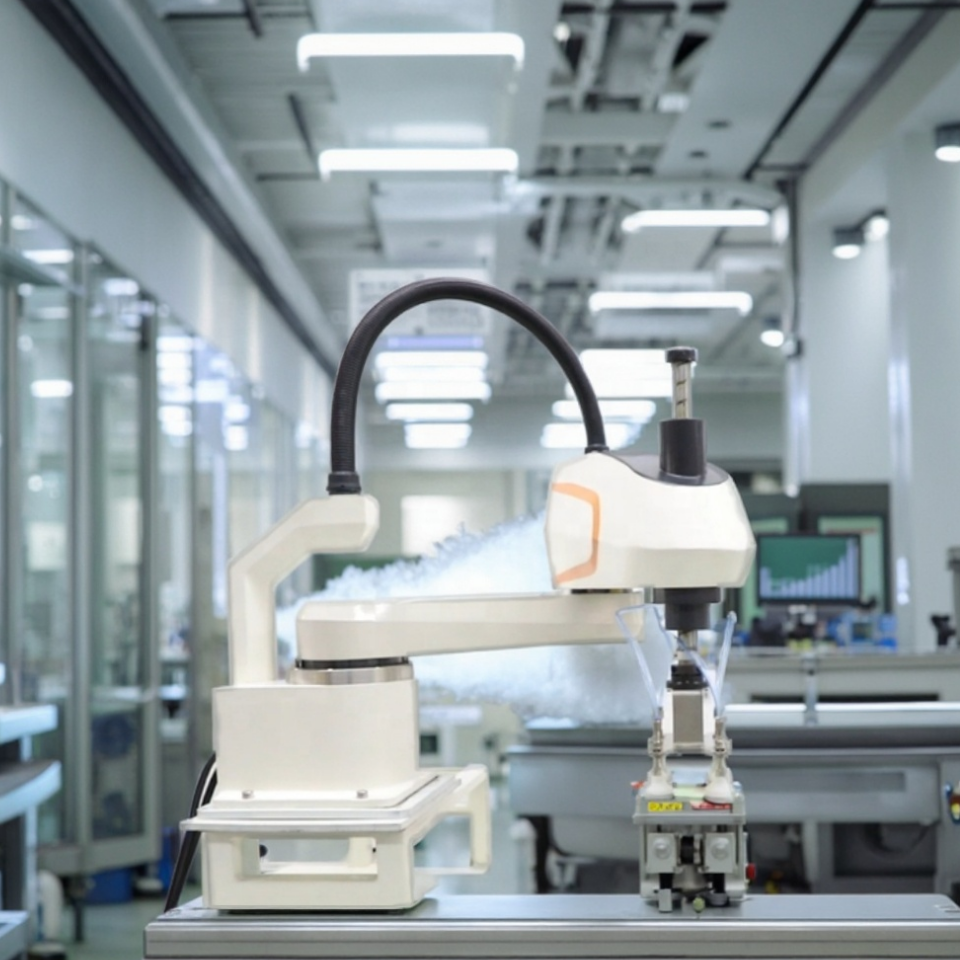
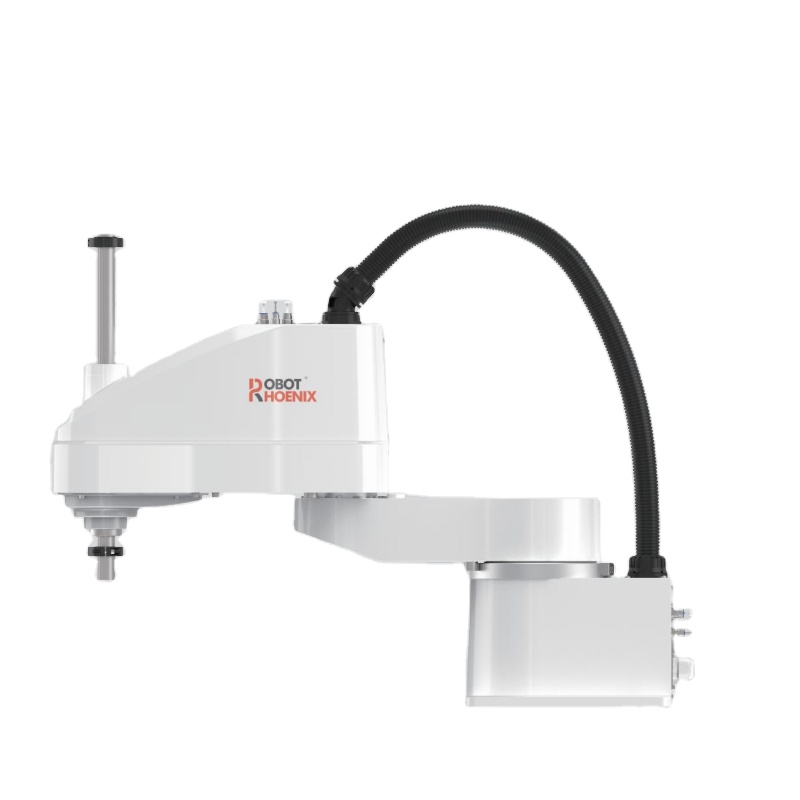
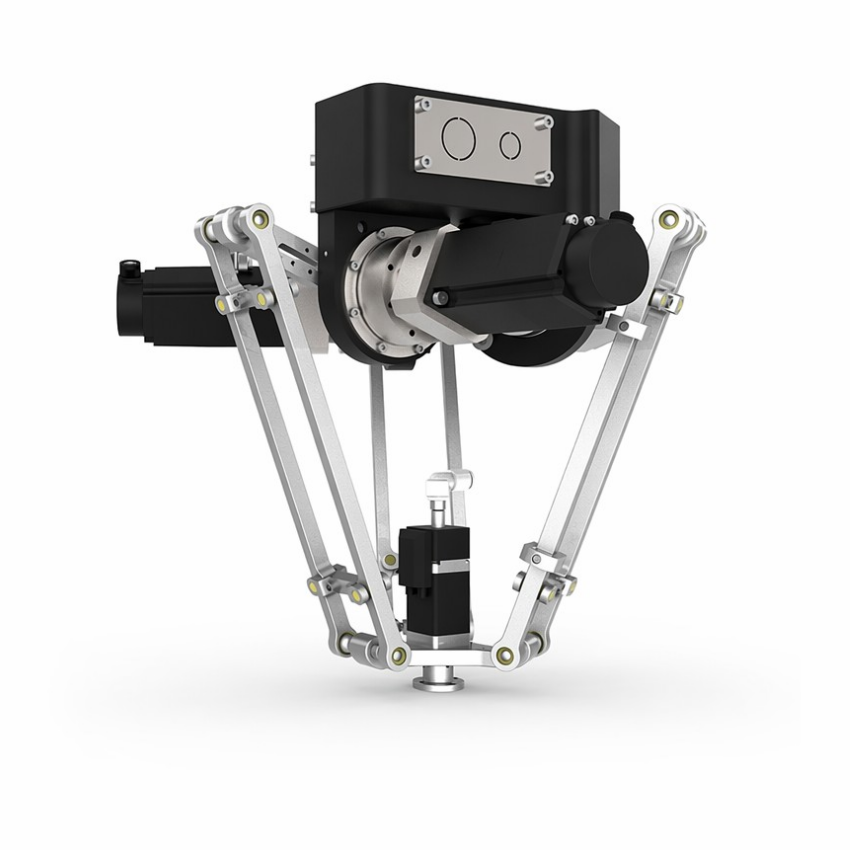
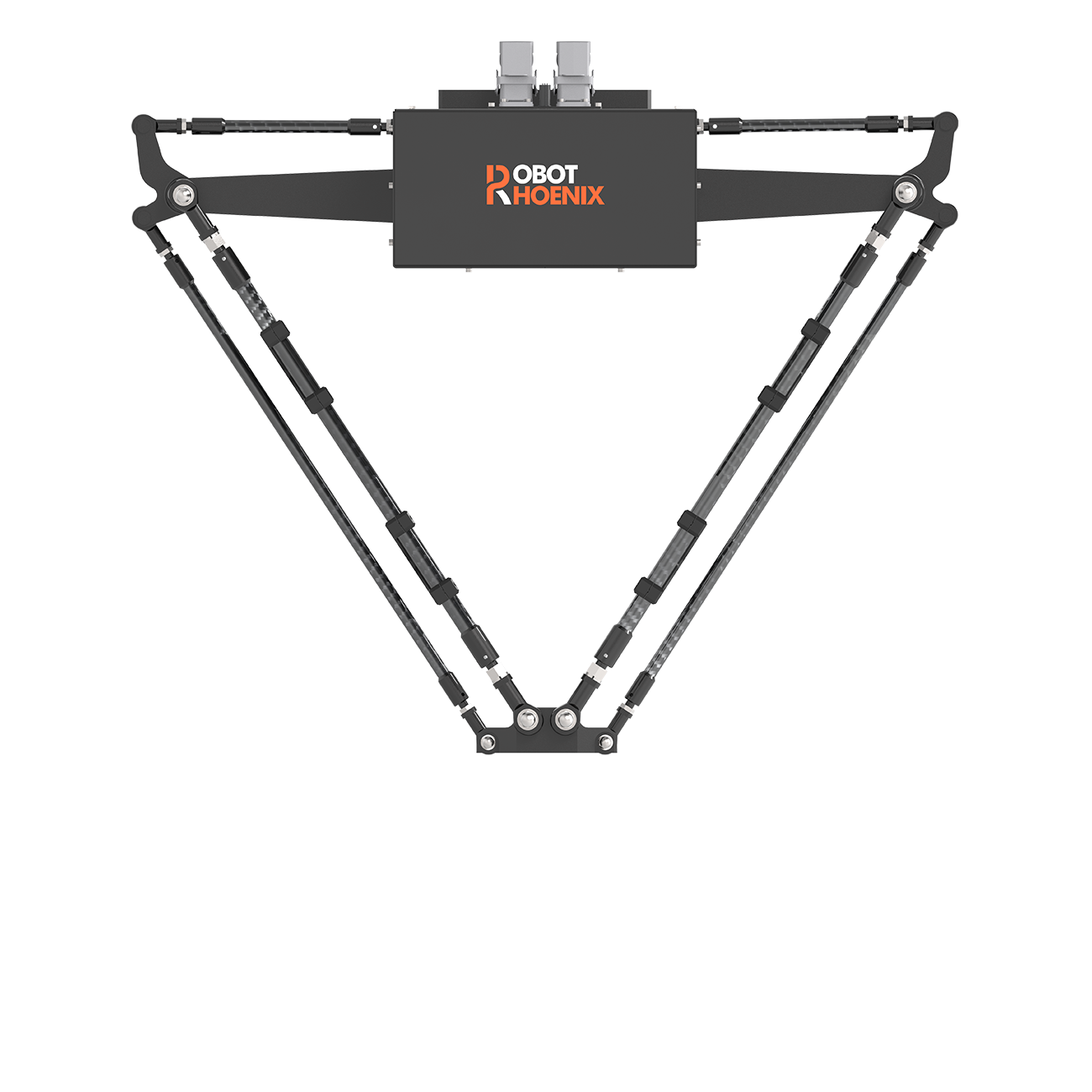
Kinematics gets all the attention, yet it is only the first layer. A delta robot wins when the part is light and the real constraint is cycles per minute — typically 60 to 200 picks in a packaging or small-part sorting cell. A SCARA robot wins when the constraint is planar accuracy plus a clean vertical insertion stroke, which is why it dominates electronics assembly, connector seating and automotive sub-assembly. Asking a delta to perform a force-controlled press-fit, or asking a SCARA to chase product on a fast conveyor, produces a technically valid quotation that will disappoint in production.

China’s robotics sector is also layered, and the layers are not equivalent. There are trading companies that resell imported arms, integrators that buy third-party arms and build cells around them, and manufacturers that design the mechanism, write the controller firmware and build the vision pipeline themselves. The difference shows up years later in spare-part lead time, firmware updates and whether anyone can explain why a specific motion profile was chosen. Three questions separate them quickly: who designed the controller, who wrote the vision algorithm, and who performs final assembly and run-in testing. A trading desk answers all three with a partner’s name.
Search Intent Map

Four Buyer Intents Behind This Keyword — and the Answer Each One Needs

Procurement research on assembly robots rarely happens in one session. It moves through four intent stages, and a useful manufacturer page has to satisfy all four without repeating itself.

Informational

“How fast can a delta robot pick, and how accurate is it really?” Engineers want cycle time, repeatability, payload and inertia limits — stated as engineering constraints, not marketing claims.

Comparative

“Delta vs SCARA vs six-axis for our task.” This buyer needs a decision matrix with sharp boundaries, including the cases where each option is the wrong choice.

Commercial Investigation

“Is this exporter a real factory?” Verification, ISO 9001 scope, onsite assessment, patent ownership and OEM capability carry more weight here than price.

Transactional

“MOQ, lead time, Incoterms, payment currency.” This buyer is one email away from an RFQ and only needs the commercial mechanics confirmed without friction.

Procurement Outlook

Six Procurement Trends Reshaping Automated Assembly Purchasing, 2025–2030

What changed is not the hardware catalogue — it is how buyers structure the decision. These six shifts are visible in tender documentation and RFQ behaviour across North America, Eastern Europe and Southeast Asia.

Modular cells over bespoke lines

72%

Buyers increasingly specify a reconfigurable cell that can be re-tooled for the next product, instead of a single-purpose line that becomes scrap when the SKU changes.

One-set pilots before rollout

68%

A single arm or one AMR validates cycle time and integration risk before a multi-station order is released. MOQ of one set has become a shortlisting criterion rather than a favour.

Vision written into the RFQ

64%

Camera resolution, lighting strategy and inference latency now appear in the technical annex, which favours suppliers who own their vision stack over those who resell a black box.

Dual-sourcing inside one country

59%

Rather than splitting between continents, buyers qualify two Chinese manufacturers of different scale — one for volume, one for custom variants — and keep both approved.

TCO replaces unit price

57%

Energy per thousand cycles, spare-part costs and downtime exposure are entering the comparison sheet. A cheaper arm with a proprietary controller and no local spares rarely wins on that maths.

Remote commissioning and digital handover

52%

Video-based factory acceptance testing plus remote engineering support reduces travel cost and shortens the gap between shipment and production start.

Percentages above are directional planning indicators drawn from buyer conversations and public tender documents between 2023 and 2025. Treat them as a heuristic for what to ask suppliers, not as a market census.

Technology Direction

Where Automated Assembly Technology Is Actually Moving

Six development fronts that change what a buyer should specify today so the cell is still competitive in 2030.

In-house controllers replace black-box stacks

Ownership of the controller determines who can tune motion profiles, integrate third-party vision and issue firmware updates five years after delivery. A resold controller becomes a dependency, not a component.

2D/3D vision with on-edge inference

Vision is shifting from a separate PC cabinet to inference running close to the camera. That cuts latency in conveyor tracking, reduces cabinet footprint and simplifies the electrical drawing.

Force-aware insertion and assembly

Repeatability alone cannot seat a connector or press a bearing. Torque and force feedback let a delta or SCARA take on tasks that previously required a six-axis arm or a human operator.

Digital twin and offline programming

Simulating reach, cycle time and collision before shipment reduces onsite commissioning days — the single largest hidden cost in an overseas assembly project.

Mobile manipulation

Mounting a SCARA or delta on a laser-SLAM mobile base turns a fixed cell into a serviceable station for high-mix production, where re-laying conveyors is no longer economical.

Hygienic and cleanroom-ready design

IP54-rated delta arms, smooth surfaces and wafer-grade handling are moving from special order to standard option as food, pharma and semiconductor buyers tighten specifications.

Manufacturer Credentials

Why JORI Is a Robot Manufacturer First and an Exporter Second

Experience, expertise, authority and trust are not adjectives on a brochure. In industrial sourcing they are verifiable facts about who designs, who builds and who answers the phone in year four.

JORI Intelligent Technology Co., Ltd. was established in 2012 in Jinan, Shandong — a national robotics hub — and operates from No. 101 Puyi Jinan Robot Industrial Park, No. 3588 Spaceflight Avenue, High-Tech Zone. The company employs between 500 and 1,000 people and runs a manufacturing floor exceeding 10,000 m². Its product lines cover delta parallel robots, SCARA robots, AGV/AMR platforms, autonomous forklifts and silicon wafer handling robots, alongside OEM support and automated system integration.

The distinction that matters commercially is vertical integration. Delta mechanisms, SCARA arms, wafer robots, mobile platforms, the robot controller and the 2D/3D vision system are developed in-house and protected by national patents. For a buyer, that means one accountable source when a cell underperforms — not a chain of reseller, integrator and component vendor each pointing at the other.

  • Independent R&D capability
  • Original factory for delta, SCARA & AGV
  • 10+ years serving overseas markets
  • One-stop automation integration
  • OEM, design & buyer-label service
  • ISO 9001 quality management

ISO 9001 quality system

Documented control from incoming component inspection through to final robot run-in testing, so acceptance criteria survive a change of production shift.

Onsite-verified manufacturer

Factory premises have been checked onsite and legal status confirmed by a third-party verifier — a distinction trading companies cannot claim.

Self-developed technology

National patents covering delta, SCARA, wafer and AGV robots, plus the controllers and vision systems that drive them.

OEM, design & buyer label

Machine builders can white-label delta and SCARA units, request custom end-effectors and have controller integration handled at source.

Export reach across five continents

Robots are in service with machine builders, integrators and factory owners across Southeast Asia, Eastern Europe, North America, South America and China.

≤2-hour engineering reply

A 97% inquiry response rate and an average reply under two hours, so a stalled specification question does not cost a week of project time.

Selection Matrix

Matching Kinematics to the Assembly Task

Use this table to shortlist a family before contacting an engineer. The final row is the honest one: each option is the wrong choice somewhere.

Robot FamilyBest ForTypical FiguresChoose It When
Series 01Delta Parallel RobotHigh-speed picking, sorting, labelling, cartoning3–6 kg payload · ±0.08 mm repeatability · up to 120 pcs/min labelling · IP54 optionLight parts arrive randomly on a moving conveyor and cycle time is the bottleneck.
Series 02SCARA RobotAssembly, insertion, precise planar placement4-axis · compact footprint · mini low-cost variantsYou need accurate planar motion with a vertical stroke inside a small cell.
Series 03AMR / AGVMaterial transport between assembly stations400–500 kg payload · laser SLAM · fleet managementOperators spend hours pushing carts and the layout changes often.
Series 04Autonomous ForkliftPallet handling in warehouse and line-side buffersLaser SLAM navigation · Camel SeriesRepetitive pallet shuttles run across shifts with persistent labour shortages.
Series 05Wafer RobotSemiconductor and photovoltaic wafer transferSelf-developed motion control · custom end-effectorsFragile substrates need smooth, contamination-conscious handling.
Assembly Applications

Industries Where These Assembly Cells Earn Their Place

Each family is tuned for a specific production reality — speed, hygiene, precision or heavy-load transport.

Food & Beverage

Vision-guided delta picking, sorting and case packing at conveyor speed, with IP54 variants suited to wash-down cleaning regimes.

Pharmaceutical

Blister, vial and carton handling with clean, repeatable motion and full traceability of every pick-and-place cycle.

Electronics & 3C

SCARA assembly, screw driving, insertion and inspection for compact cells where floor area is the binding constraint.

Semiconductor & Solar

Silicon wafer transfer robots built for semiconductor and photovoltaic lines, where a single scratch is an unrecoverable loss.

Warehouse & Logistics

Laser SLAM AMRs and autonomous forklifts that keep material flowing between assembly stations around the clock.

Daily Chemicals & Wet Wipes

Delta-based lid applicator and carton packer cells for hygiene products, engineered to integrate with existing packaging machines.

Cost Engineering

Total Cost of Ownership: The Number That Actually Decides the Order

The purchase price of a delta or SCARA arm is usually the smallest line in the project budget. Integration, end-effector design, guarding, safety validation and commissioning typically outweigh the mechanism itself, and the costs that follow acceptance — spares, downtime, re-tooling for the next SKU — decide whether the project is judged a success two years later.

That is why the useful comparison is not “robot A versus robot B” but “hours of production lost per year.” A supplier who owns the controller and the vision stack can usually resolve a fault remotely in hours; a supplier who resells both will escalate through two partners before anyone reads the error log. When you evaluate a Chinese assembly robot exporter, ask what the escalation path looks like at 2 a.m. on a Sunday, and how long a replacement controller or reducer takes to reach your site.

Mechanism

~26%

Of a typical single-station assembly cell budget — the figure most RFQs focus on exclusively.

Integration & tooling

~38%

End effector, feeding, guarding, PLC handshaking and safety validation.

Commissioning

~19%

Travel, onsite tuning and production ramp — reducible through offline programming and remote FAT.

Lifecycle risk

~17%

Spares, downtime exposure and re-tooling across the asset’s ten-year service life.

Indicative budget split for a single-station assembly cell. Actual ratios vary with product size, tooling complexity and existing infrastructure.

Buyer FAQ

Procurement FAQ: Automated Assembly Systems from China

The questions that appear in almost every first email to a Chinese robot manufacturer — answered with the commercial detail procurement actually needs.

What is the minimum order quantity for JORI industrial robots?
Standard delta robots, SCARA robots and AMR/AGV platforms can be ordered from one set. That matters because most overseas buyers validate a single cell or pilot line before releasing a multi-station budget, and a supplier who will not ship one unit is effectively asking you to carry the integration risk without evidence.
Do you offer OEM, ODM or private-label assembly robots?
Yes. JORI provides OEM service, design service and buyer-label options, and supports machine builders with custom end-effectors, controller integration and complete automated system integration. This is the usual route for cartoning, labelling and wet-wipe lid applicator machine manufacturers who want the robot branded as part of their own line.
Should I choose a delta robot or a SCARA robot for my assembly task?
Choose a delta robot for very fast, lightweight pick-and-place from a moving conveyor, typically 3–6 kg payload, where cycles per minute dominate. Choose a SCARA robot for planar assembly, insertion and precise placement inside a compact footprint. If the task needs both speed and a force-controlled vertical stroke, the honest answer may be a hybrid cell or a six-axis arm — share part weight, cycle time and layout on the live chat and an engineer will say so directly.
Which trade terms and payment methods are accepted?
Delivery terms include FOB, CFR, CIF, EXW, CIP, FCA, CPT and express delivery. Payment methods include T/T, L/C, credit card, PayPal, Western Union, MoneyGram and escrow. Invoicing currencies cover USD, EUR, GBP, JPY, CAD, AUD, HKD, CHF and CNY, which removes the FX friction that often delays a first order from a new supplier.
Can these robots integrate with my existing packaging machines?
Yes. Controllers and 2D/3D vision are developed in-house, and PLC-ready delta robots are designed specifically for cartoning machines, carton packers and wet-wipe lid applicator lines. Where the existing machine uses a third-party PLC, the handshake protocol is documented before shipment so commissioning does not stall on site.
How do I verify that a Chinese supplier is a real manufacturer?
Check three things independently. First, whether the company owns patents on the mechanism, controller or vision rather than licensing them. Second, whether an onsite assessment has been performed and published. Third, whether they can explain a specific motion profile and why it was chosen — a trading desk can quote a payload but rarely explains inertia compensation. JORI publishes its assessment, credit and trade-capacity records for exactly this reason.
What is the typical lead time and what information should I send first?
Lead time depends on configuration and whether vision is included; standard models move faster than custom end-effector projects. To get a credible answer in one exchange, send part weight and dimensions, required cycle time, orientation on arrival, the existing PLC brand, and a short video of the current manual process. That five-item package usually shortens an RFQ cycle from weeks to days.
How quickly will I receive a technical reply?
JORI maintains an average response time of two hours or less, with a response rate of 97.06%. Use the Inquire Now button on this page to start a live conversation, or email info@joribot.com with drawings, videos or a link to your current process if the specification is still being defined.

Send the Cycle Time, Not the Brochure

Tell us the part, the rate and the layout. Our engineers will come back with a robot family, an end-effector concept and the honest constraint list — usually within two hours.

Inquire Now info@joribot.com