China Top Four Axis Robot Manufacturer & Exporters
JORI Intelligent Technology engineers four-axis SCARA, delta parallel and high-speed pick-and-place robots in Jinan, Shandong — with self-developed controllers, 2D/3D vision, ISO 9001 quality management and export support for machine builders, integrators and factory owners worldwide.
Founded 2012 · MOQ 1 set · 500+ employees · 10,000+ m² factoryEight Production-Ready Robots for Fast Picking, Assembly and Packing
These eight models are a practical shortlist for buyers comparing a China four-axis robot manufacturer and exporters. Each product image is shown in full proportion, and every product URL is preserved from the original catalogue.
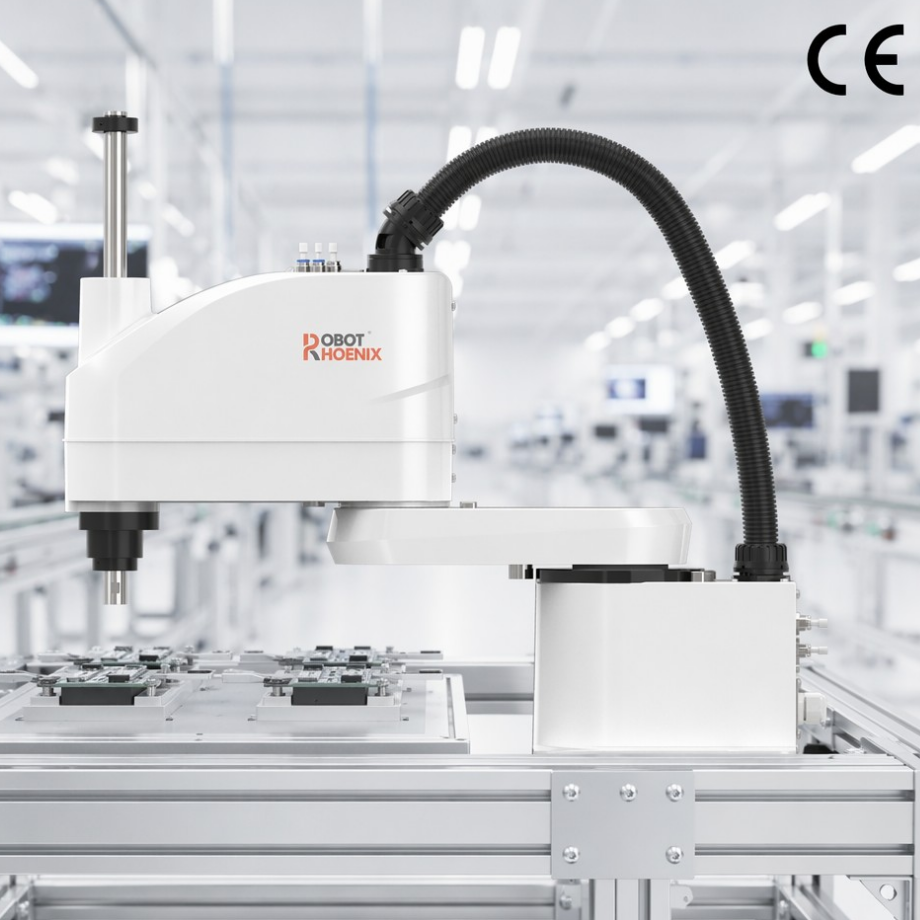
New Design Compact High Accuracy Industrial Robot Arm Scara with 2D/3D Vision System
Compact SCARA configuration for electronics assembly, inspection and small-part placement where vision-guided accuracy saves floor space.
View product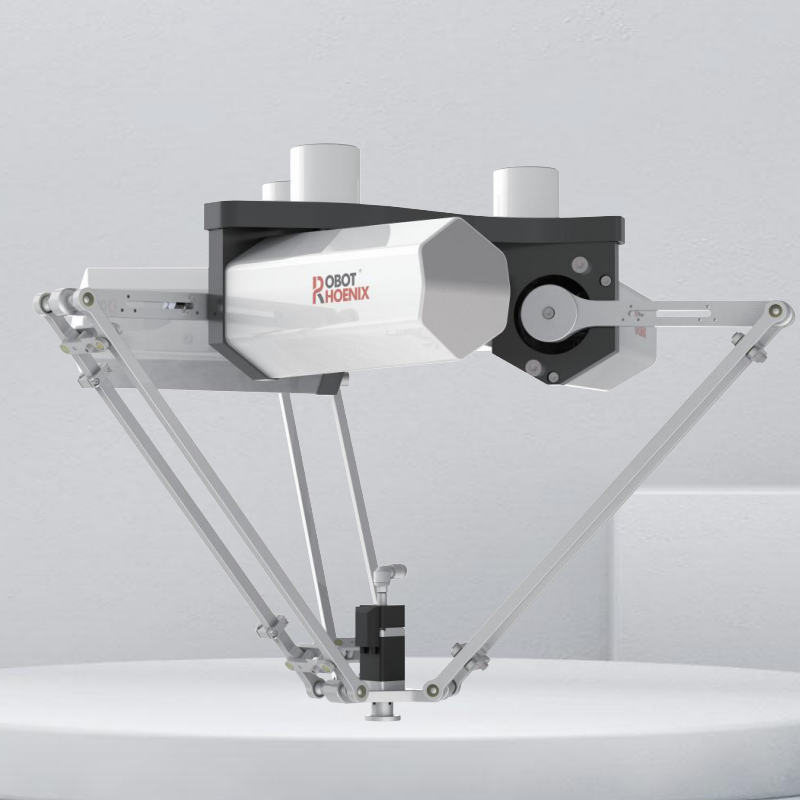
Robotphoenix New Design Industrial Robot Delta 6kg Payload 0.08mm Repeatability 2/3/4 Axis
High-speed delta robot for food, pharmaceutical and carton-packing lines that need repeatable precision at conveyor speed.
View product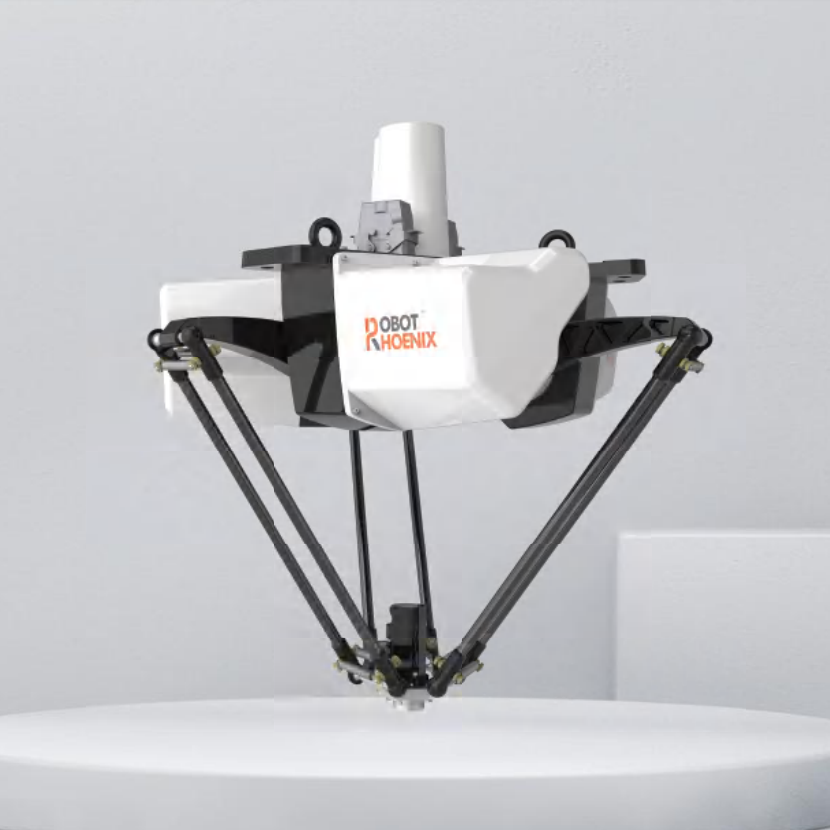
Robotphoenix New 4-Axis Parallel Robot Arm Delta Spider Hand Robot for Carton Packer Line
Spider-hand style four-axis parallel robot built for carton packers, end-of-line packing and repetitive pick-and-place tasks.
View product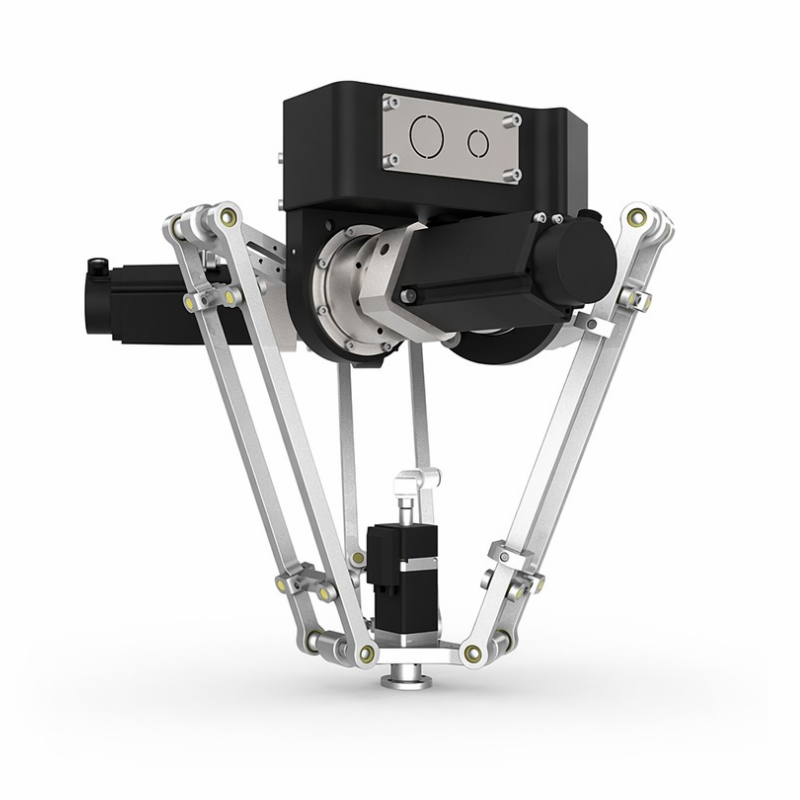
Low Cost Customized 2/3/4 Axis Industrial Manipulator Delta Robot for Pick and Place
Flexible entry point for pilot cells and cost-sensitive projects, with custom axis configuration and OEM support for machine builders.
View product
High Precision Pick and Place 4-Axis Parallel Robot Delta with Vision Tracking System
Vision-tracking delta robot for moving conveyors, where product position varies and the robot must pick without mechanical stoppers.
View product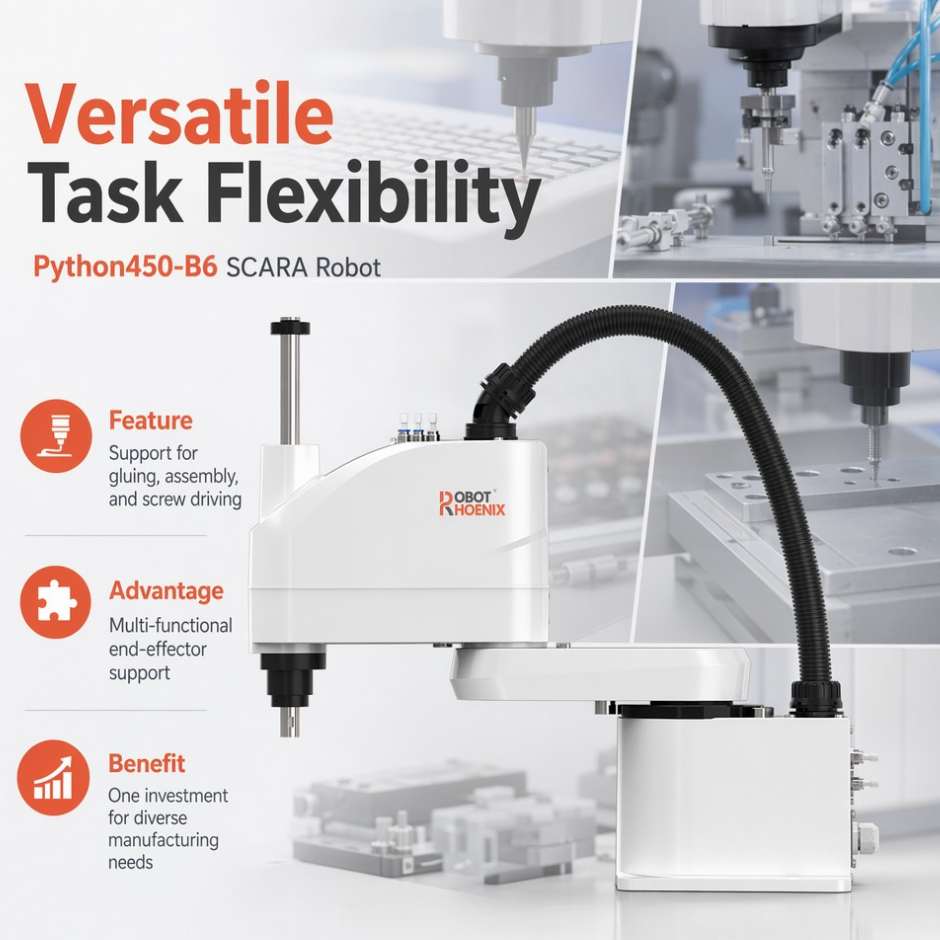
Four-Axis Industrial Robot Hand SCARA for Loading/Unloading and Sorting in Food Industry
Four-axis SCARA robot for food-industry loading, unloading and sorting, with integration support for hygiene-conscious production lines.
View product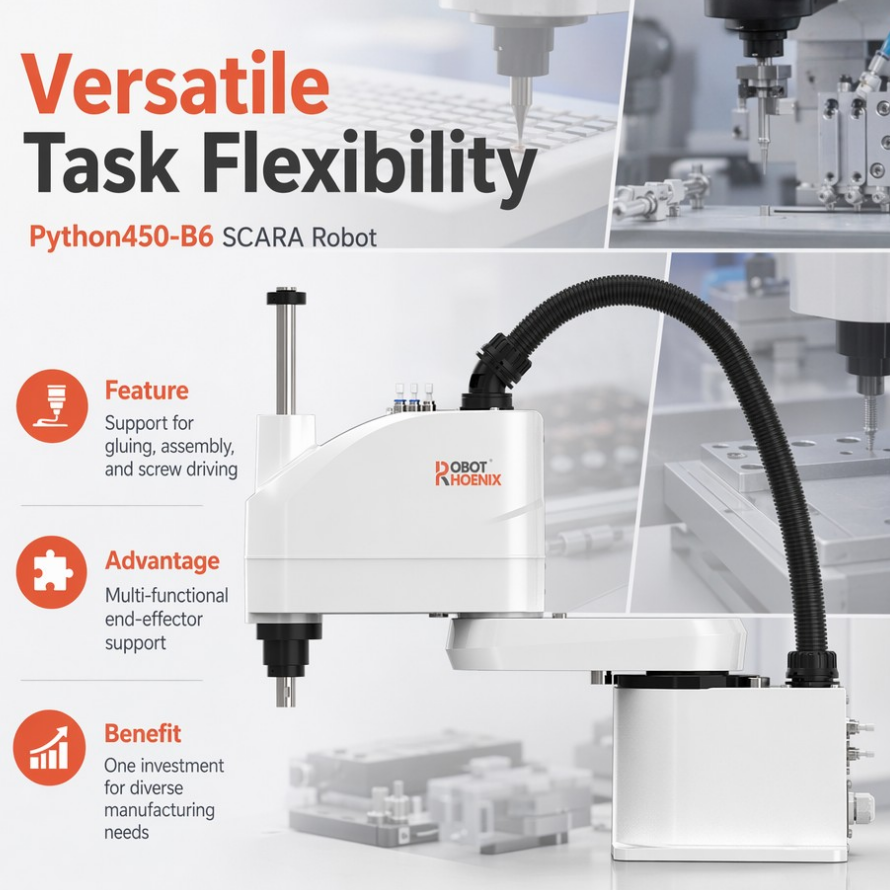
New Condition High Precision 400mm Reach Arm Scara Robot with PLC for 3C Electronic Assembly
400 mm reach SCARA robot for compact 3C electronic assembly cells, with PLC-ready control and precise planar motion.
View product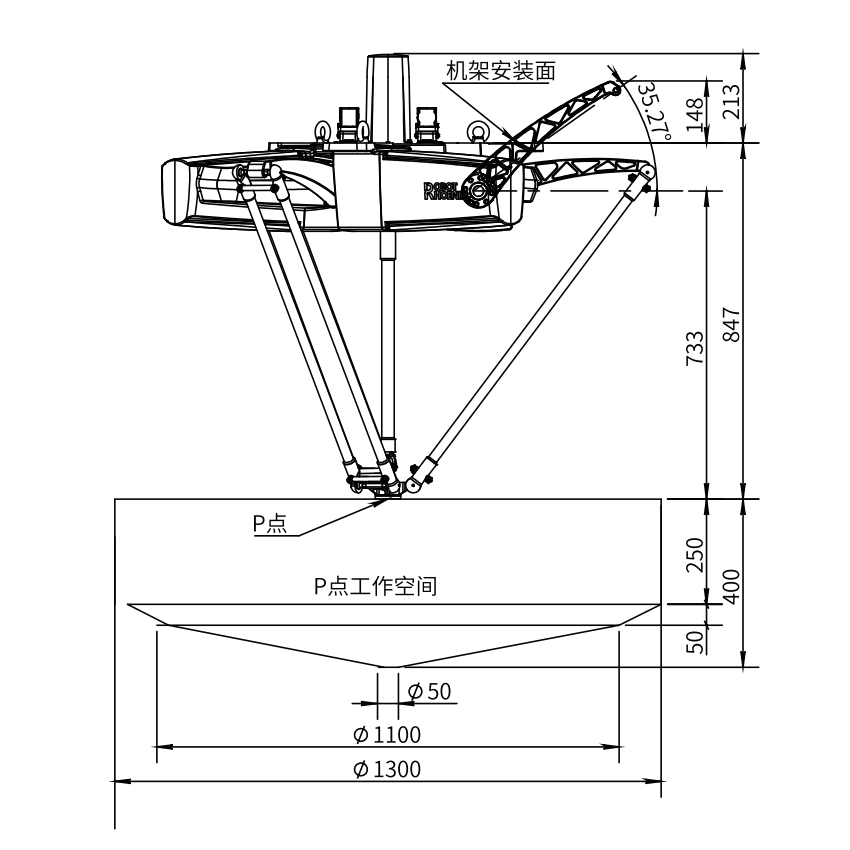
Industrial Robotic Arm Parallel Robot 2/3/4 Axis Delta Robot for Pick&Place Application
General-purpose delta platform for automation projects that need high cycle rates, wide working envelope and adaptable end-effectors.
View productWhy Global Buyers Shortlist JORI as a China Four-Axis Robot Manufacturer
A credible four-axis robot supplier is not simply a trading company with a catalogue. Buyers need evidence of mechanical engineering, controller development, vision integration, factory quality control and support after shipment. JORI Intelligent Technology Co., Ltd. was founded in 2012 in Jinan, Shandong — a robotics and manufacturing hub — and has built its business around in-house R&D, original factory manufacturing and one-stop automation integration.
JORI develops delta parallel robots, four-axis SCARA robots, silicon wafer handling robots, AGV/AMR platforms and autonomous forklifts. Critically, the controller and 2D/3D vision development are also part of the in-house engineering scope. That matters for procurement teams because a robot arm is only one part of a working cell. The controller, vision software, end-effector interface, PLC handshake and after-sales engineering must all work together. A supplier that understands the full stack can reduce integration risk, shorten commissioning time and give one accountable source for hardware and software decisions.
The company operates as an original factory for delta, SCARA and AGV robot families, holds ISO 9001 quality management certification, and has served overseas buyers for more than a decade. Its export experience covers machine builders, system integrators and end users in Southeast Asia, Eastern Europe, North America, South America and China. OEM service, design service and buyer-label options are available for companies that need to adapt a robot platform to their own brand, machine enclosure or control architecture.
- Independent R&D capability
- Original factory for delta, SCARA & AGV
- 10+ years of export support
- OEM, design & buyer-label service
- In-house controllers & 2D/3D vision
- ISO 9001 quality management
Controller & vision in-house
One engineering team can align robot motion, camera triggers, PLC handshakes and end-effector logic instead of relying on multiple vendors.
Factory-direct quality
ISO 9001 processes, component inspection, assembly control and final robot run-in testing support repeatable delivery quality.
OEM & integration support
Custom end-effectors, controller integration, buyer labels and packaging-machine interoperability are part of the project conversation.
Export verification
Onsite-verified supplier status, credit profile, trade capacity and buyer reviews help procurement teams complete due diligence.
How to Compare Four-Axis SCARA and Delta Robots Before You Buy
Four-axis robots are not interchangeable. A fast delta robot and a compact SCARA robot may both perform pick-and-place, but they solve different production problems. Use the matrix below as a procurement starting point.
| Robot Type | Best Process Fit | Key Buying Criteria | Integration Watch-Out |
|---|---|---|---|
| Four-axisSCARA Robot | Planar assembly, insertion, sorting, loading, small-part placement | Reach, repeatability, payload, controller openness, PLC interface | Check whether the cell needs vision, force sensing or a custom gripper before locking the reach. |
| DeltaParallel Robot | High-speed picking, sorting, labelling, cartoning and case packing | Cycle time, payload, repeatability, working envelope, IP protection | Confirm conveyor tracking, camera mounting and rejection logic early in the layout. |
| 4-axisSpider-Hand Robot | Carton packer lines, packaging machines and repetitive pick-and-place | Axis configuration, PLC readiness, end-effector design, line speed | Validate the mechanical interface with the packaging machine builder, not only the robot datasheet. |
| VisionGuided Delta | Randomly oriented products, moving conveyors, inspection-linked picking | 2D/3D vision, lighting, calibration, tracking accuracy, software support | Ask for a sample-part test; vision performance depends on part contrast, speed and presentation. |
Model performance varies by configuration. Always confirm payload, cycle time, repeatability and interface scope against your actual part and line layout.
Example evaluation weighting for a four-axis robot purchasing decision
A lower unit price can be misleading if the robot requires extra engineering, a slower commissioning process or a proprietary interface that limits future expansion. A better procurement model is to compare the validated cell cost: robot, controller, vision, end-effector, safety guarding, PLC integration, commissioning, training and spare-parts plan. Buyers should also calculate payback using labor hours removed, scrap reduction, throughput increase and quality improvement. For food, pharmaceutical and 3C electronics lines, the cost of a missed cycle or a quality escape can be larger than the robot hardware difference.
Future Procurement Trends for Four-Axis Robots, 2025–2027
Procurement is moving from “buy an arm” to “buy a validated production capability.” The following shifts are especially important for buyers sourcing from China four-axis robot manufacturers and exporters.
Pilot-first purchasing
Buyers increasingly order one set to validate a single cell before scaling. A low MOQ of one set makes it practical to test cycle time, vision stability and operator acceptance before a multi-line rollout.
Vision as a standard input
Random product presentation, labor variation and high-mix production make 2D/3D vision a procurement requirement rather than an upgrade. Camera, lighting and software support must be evaluated together.
TCO instead of unit price
Energy use, changeover time, spare parts, remote support and controller openness now enter the comparison. A machine builder may prefer a slightly higher robot price if it reduces commissioning days.
OEM co-development
Packaging-machine builders and integrators want robot platforms they can brand, adapt and support. OEM service, buyer labels and custom interfaces become sourcing criteria, not afterthoughts.
Another procurement shift is supply-chain de-risking. Buyers who previously purchased only from local distributors now evaluate factory-direct manufacturers that can provide ISO 9001 evidence, onsite verification, export documentation and responsive engineering communication. For four-axis robot projects, the quality of the technical conversation is often as important as the quotation. A supplier that asks for part weight, cycle time, product orientation, conveyor speed, gripper concept, control architecture and line layout is more likely to deliver a workable cell than a supplier that only sends a price list.
Payment and delivery terms also matter. JORI supports delivery terms such as FOB, CFR, CIF, EXW, CIP, FCA, CPT and express delivery, and accepts payment methods including T/T, L/C, credit card, PayPal, Western Union, MoneyGram and escrow in multiple currencies. For first orders, buyers should confirm Incoterms, packaging, spare-parts scope, warranty terms and commissioning responsibilities in writing. These details protect both sides and reduce delays at the port or during installation.
Product Development Trends: What the Next Generation of Four-Axis Robots Will Deliver
Robot hardware is becoming more compact, more integrated and more software-defined. The next purchasing cycle will reward suppliers that can connect motion, vision, safety and data without adding unnecessary complexity.
Integrated controller and vision
Self-developed controllers and vision reduce the number of vendors in a cell. The robot, camera trigger, conveyor encoder and PLC handshake can be engineered as one system, which simplifies diagnostics and spare-parts planning.
Higher speed with compact frames
Delta and four-axis parallel robots continue to push cycle time while keeping a small footprint. Models with 3–6 kg payload, 0.08 mm repeatability and IP54 protection are relevant for packaging, food and pharmaceutical lines.
Clean and hygiene-aware design
Food, medical and electronics production demand smooth surfaces, protected joints and easy cleaning. Buyers should ask how the robot behaves in washdown, dust or cleanroom-adjacent environments before selecting a model.
Interoperable automation
Four-axis robots increasingly work beside AMRs, autonomous forklifts, wafer handling robots and packaging machines. Fleet management, PLC integration and open interfaces become part of the robot purchasing decision.
JORI’s product range reflects this direction. The portfolio includes high-speed delta robots, four-axis SCARA robots, 400 mm reach SCARA models for 3C electronic assembly, vision-tracking delta robots, 400–500 kg AMR platforms, laser SLAM autonomous forklifts and silicon wafer handling robots. For buyers, the practical lesson is to choose a supplier that can grow with the project. A pilot cell may start with one four-axis robot, but the same factory may later add conveyor tracking, pallet transport, autonomous forklifts or a second packaging line. A supplier with a broader automation portfolio can reduce the cost of future integration.
Verify the Manufacturer Before You Approve the Purchase Order
Trust should be built from evidence: factory images, process descriptions, certifications, trade records and buyer feedback. The following visuals come from JORI’s original company content and support a more informed supplier evaluation.

Factory premises
Onsite-verified manufacturing base in Jinan, Shandong, supporting robot assembly, testing and integration projects.

Assembly & testing
ISO 9001 quality management and final run-in testing help confirm repeatable delivery before shipment.

Engineering support
In-house controllers, vision development and system integration reduce reliance on third-party technical support.
ISO 9001
Certified quality system covering component inspection, assembly control and final robot testing.
Onsite-verified
Factory premises and legal status are independently checked, giving overseas buyers a stronger basis for due diligence.
Patented technology
National patents support delta, SCARA, wafer and AGV robot development, controllers and vision integration.
≤2 hour response
Average response time of 2 hours or less with a 97.06% response rate helps projects keep moving during evaluation.
Where Four-Axis and Delta Robots Deliver Measurable Value
Applications should be selected by production reality: product weight, orientation, hygiene level, cycle time and the interface with existing machinery.
Food & beverage
Vision-guided delta picking, sorting and case packing at conveyor speed, with layouts designed around hygiene and changeover.
Electronics & 3C
SCARA assembly, insertion and inspection for compact cells where 400 mm reach and PLC-ready control improve layout efficiency.
Packaging & cartoning
Delta and four-axis spider-hand robots support carton packers and wet-wipe lid applicator lines with PLC and packaging-machine integration.
Daily chemicals
High-speed lid placement, sorting and carton packing for hygiene products, with vision and end-effector support for stable output.
Four-Axis Robot Procurement FAQ for Global Buyers
These are the questions international buyers most often ask when evaluating a China four-axis robot manufacturer and exporter.
What is a four-axis robot, and where is it used?
Should I choose a four-axis SCARA robot or a delta robot?
What is the minimum order quantity for JORI industrial robots?
Does JORI offer OEM, custom or buyer-label robot solutions?
Can JORI robots integrate with existing packaging machines?
Which delivery and payment terms are accepted?
How can I verify a supplier before placing the first order?
How quickly will I receive a technical reply?
Build a Faster, More Flexible Four-Axis Robot Cell
Send your product, cycle-time and layout requirements. JORI’s engineering team will help match the right SCARA, delta or parallel robot and prepare the next technical step for your project.
Get Catalog