8 Production-Ready Robots for Sorting, Picking and Packing
These are not catalogue-only images. Each robot family is selected around a practical line requirement: cycle time, product presentation, hygienic design, vision feedback, end-effector strategy and the handover between conveyor, robot and packaging machine. Product URLs and images are retained from the original range so buyers can move directly from specification review to inquiry.

Robotphoenix New 4-Axis Parallel Robot Arm Delta Spider Hand Robot for Carton Packer Line
A spider-hand delta configuration for end-of-line carton packing where conveyor tracking, compact footprint and fast settling matter.
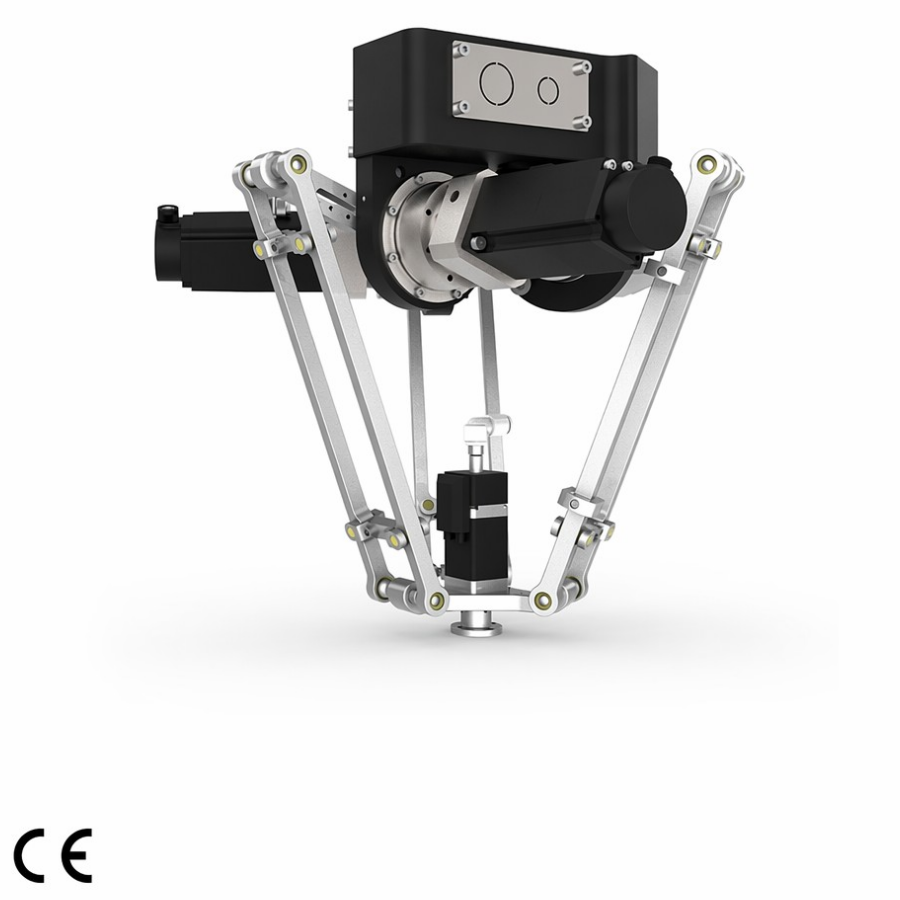
High Speed Consumer Goods Industries Bottle Unscrambling Machine Component Delta Robot
Designed for bottle unscrambling and orientation duties where gentle handling and continuous product flow directly affect line uptime.
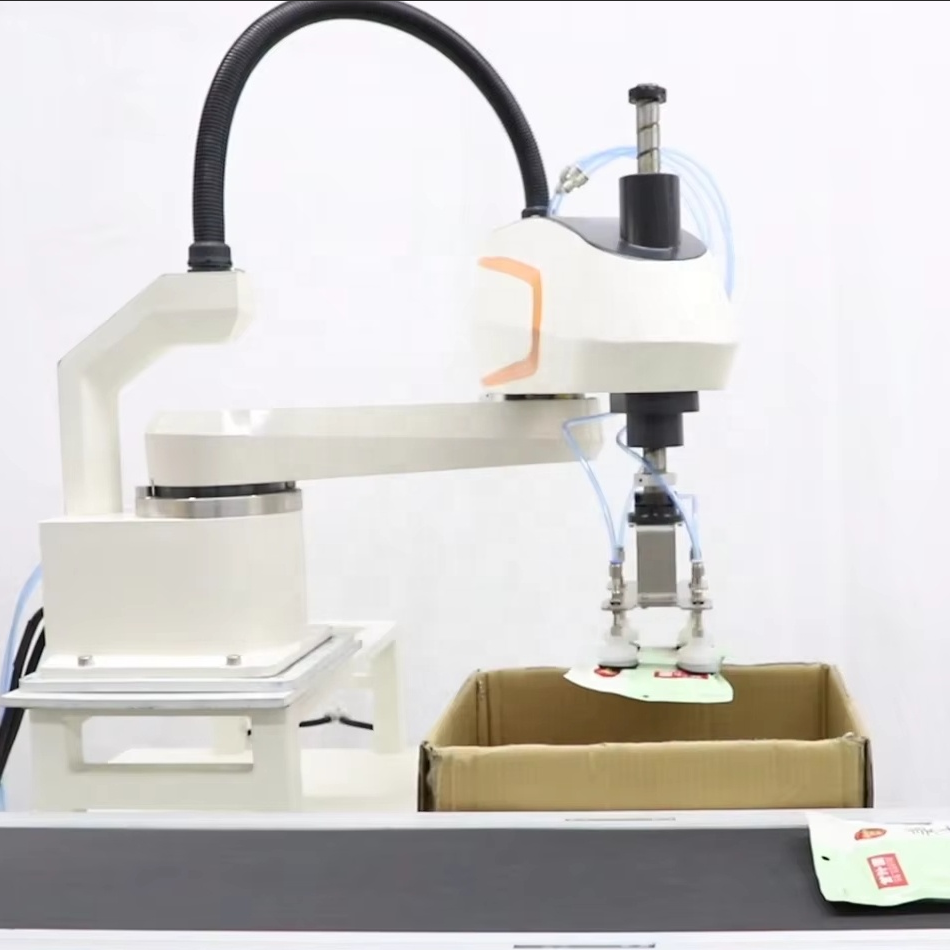
Newly Design Industrial Articulated Robotic Arm Scara for Precision Assembly & Handling
A compact SCARA solution for precision assembly, insertion and handling tasks that require repeatable planar motion.

High-Speed Spider Arm Delat Robot for Fully Automatic Wet Wipe Lid Applicator Machine
A purpose-built delta robot for wet-wipe lid applicator machines, synchronizing pick, orientation and placement at production speed.
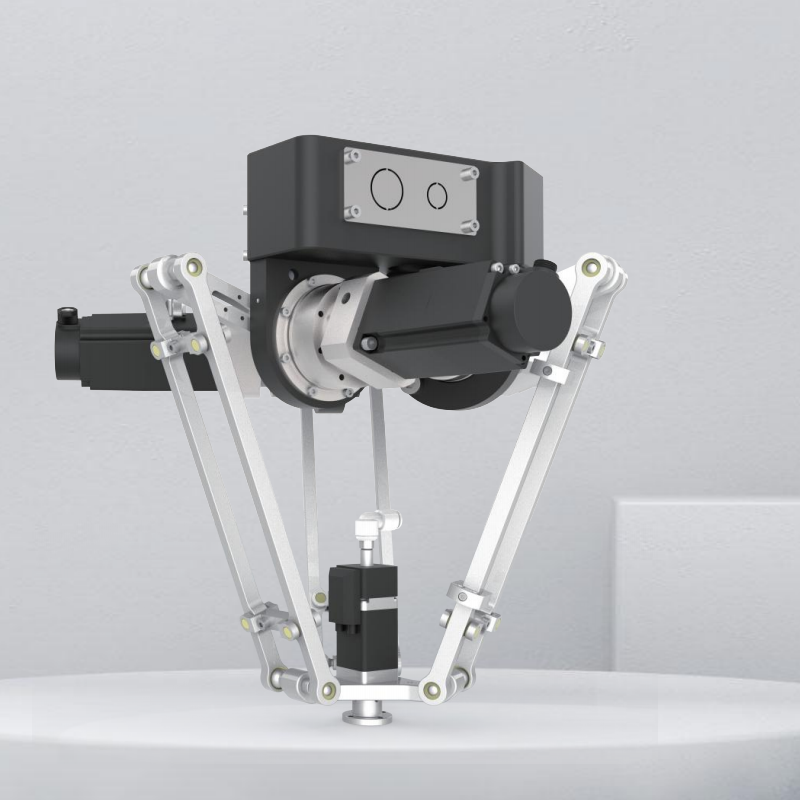
High Speed 3kg Load Industrial Delta Robot Arm with IP54 Protection for Robotic Pick& Place
A 3 kg payload delta arm with IP54 protection for pick-and-place duties that demand fast cycles and practical washdown tolerance.
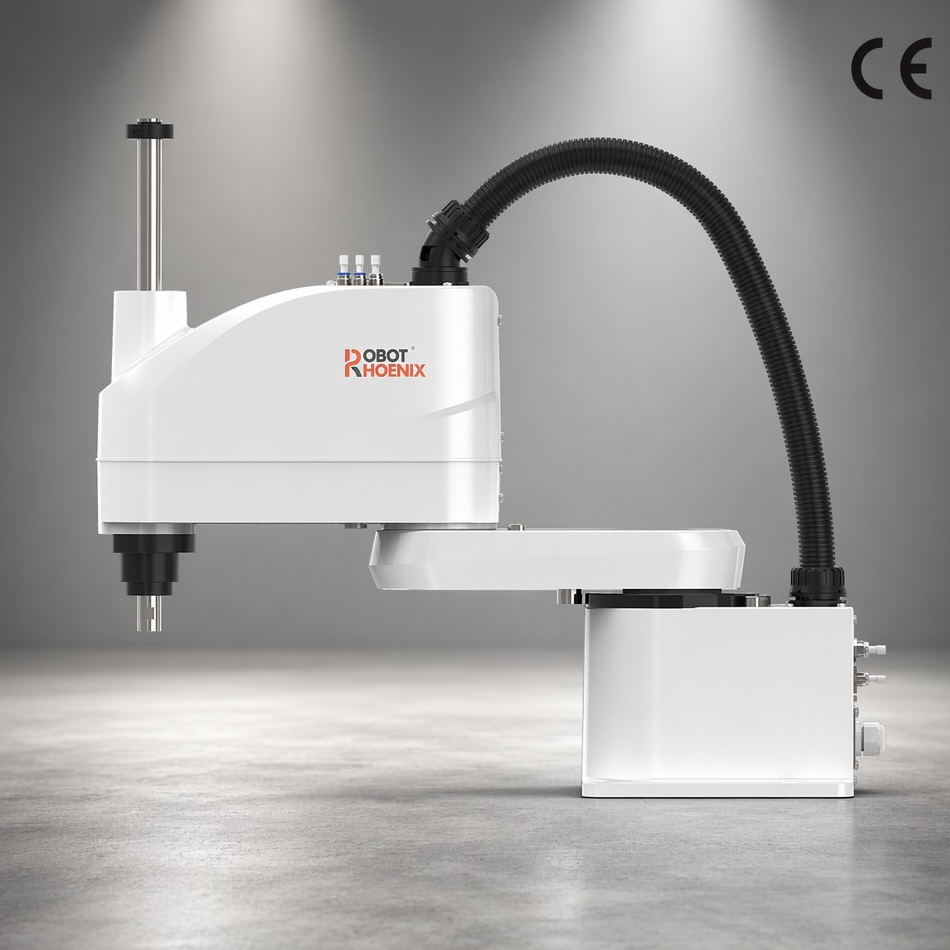
High Efficiency 6kg Payload Manipulator Scara Robot with Vision for Picking and Placing
A 6 kg payload SCARA with vision integration for mixed-model picking, alignment and quality-critical placement.
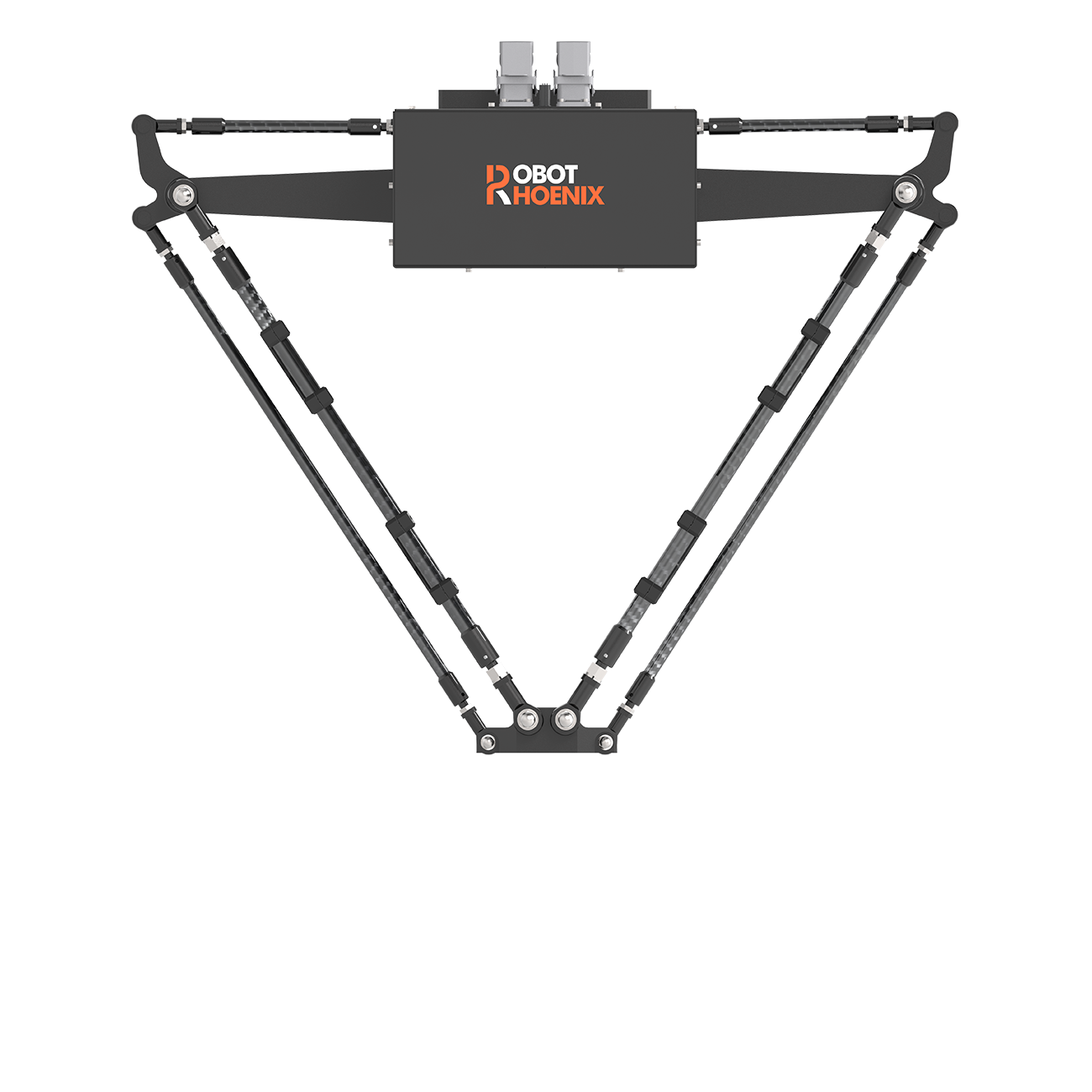
Industrial Manipulator High Speed and Accuracy Delta Robot with New Design Kinetics
A kinetic-design delta manipulator for high-speed sorting and packing, tuned for rapid acceleration, accuracy and stable settling.
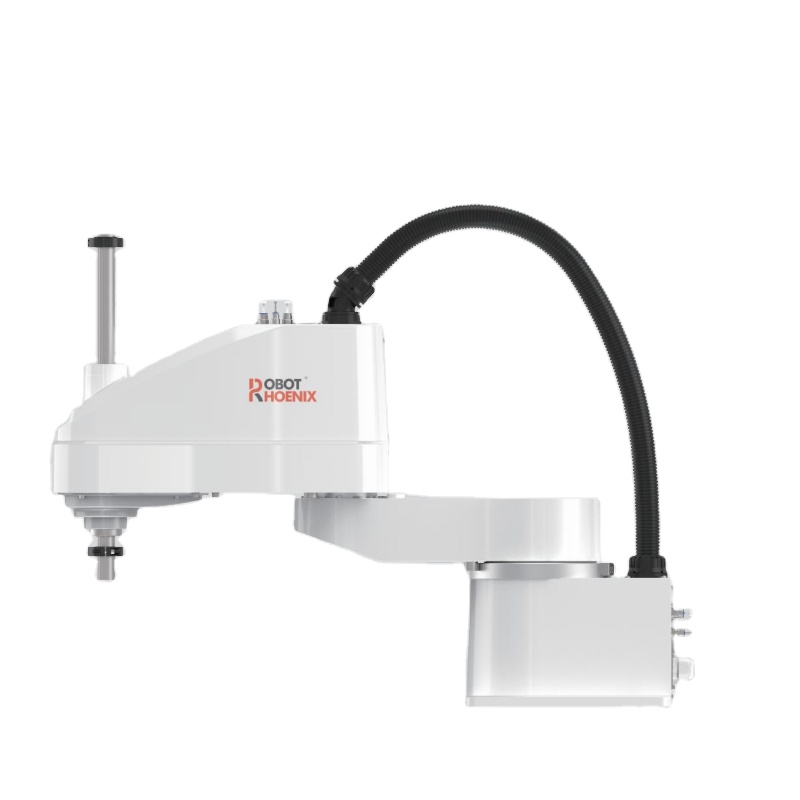
Advanced Industrial 4 Axis Robot Scara Robot for Pick and Place in Food Industry Gripping
An advanced 4-axis SCARA for food-industry pick-and-place and gripping, balancing speed, precision and easy line integration.
Not sure which model fits your conveyor, carton or bottle line? Send product photos, weight, dimensions, target picks per minute and your line layout. Our engineering team will recommend a delta, SCARA or vision configuration with a practical acceptance test plan.
Send an InquiryWhat High-Speed Sorting Robot Performance Really Means
High-speed sorting robots are often marketed with a single “picks per minute” number. In real production, throughput is a system outcome shaped by product presentation, vision latency, robot motion, end-effector grip, conveyor speed and OEE. Procurement teams that evaluate the whole cell make better decisions.
The system view: cycle time, presentation and OEE
A delta robot can be extremely fast in a laboratory demonstration, yet deliver lower output when the product arrives poorly spaced, the vision system hesitates, or the packaging machine stops for film changes. For this reason, JORI engineers evaluate sorting projects against the complete pick-place-confirm cycle, not an isolated arm speed. The useful question is not “how fast is the robot?” but “how many good products can the cell transfer per hour at the required quality level?”
Three engineering details deserve particular attention. First, repeatability affects how reliably the end effector meets the product without crushing or misalignment. Second, vision latency and exposure time affect the effective cycle when products move on a conveyor. Third, end-effector mass changes the acceleration profile, so a lighter gripper may raise real throughput more than a higher catalogue speed rating.
For buyers comparing China-based manufacturers and wholesalers, the strongest evidence is a documented cycle study at the intended stroke, payload, gripper mass and conveyor speed, followed by a factory acceptance test using representative products. That is how a sorting robot becomes a predictable production asset rather than an impressive specification sheet.
A practical planning formula helps align engineering and finance teams early:
Five questions that reveal real sorting performance
- What is the repeatability at the required stroke and payload?
- How is conveyor tracking handled, and what is the vision latency?
- What end-effector mass was assumed in the cycle-time test?
- Can the controller integrate with my PLC, safety circuit and MES?
- What acceptance test will confirm throughput before shipment?
These questions turn a robot quotation into an engineering comparison. They also expose whether a supplier is a genuine manufacturer with in-house controls and vision capability, or a trading intermediary relying on third-party integration.
High-Speed Sorting Robot Procurement Trends for 2026–2030
Factory buyers and machine builders are changing how they evaluate sorting automation. The shift is from isolated robot price comparisons to lifecycle cost, integration certainty and verifiable engineering evidence.
Total cost of ownership replaces lowest unit price
Procurement teams increasingly ask for energy use, air consumption, maintenance intervals, spare-part pricing and changeover time. A lower-priced robot that requires extra integration engineering or frequent gripper changes can cost more over five years than a factory-direct robot with documented lifecycle support.
Interface-first and modular cells
Machine builders want robots that drop into cartoners, unscramblers and lid applicators with predictable PLC handshakes, safety logic and communication options. Standard mechanical and electrical interfaces reduce commissioning risk and make later capacity expansion faster.
Factory acceptance testing with data
Buyers are requesting cycle-time videos, vision validation, repeatability records and FAT checklists. Rather than accepting a theoretical speed, they want evidence that the robot cell handles the real product mix, including missing labels, reflections and randomly oriented items.
Service proximity and lifecycle documentation
Spare parts, remote diagnostics, controller documentation and engineer response time now carry weight in supplier selection. For overseas buyers, a supplier with export experience and a clear escalation path reduces the operational risk of a stopped packaging line.
The most competitive purchasing strategy is to compare robots on the same application brief: product size, weight, arrival pattern, target throughput, hygiene requirement, line voltage, communication protocol, destination country and expected operating hours. This creates apples-to-apples proposals and reduces late-stage engineering changes.
Where High-Speed Sorting Robot Technology Is Moving
The next generation of sorting robots will be judged less on raw arm speed and more on how intelligently the full cell handles variation, changeover, hygiene and integration.
Vision-first sorting for random product flow
2D and 3D vision are becoming standard for randomly oriented products, reflective packaging and mixed SKU lines. Vision-guided robots reduce the need for mechanical orienting devices and make changeover faster when product formats change.
AI-assisted inspection and recovery
AI-based inspection can support defect rejection and help the robot recover from mispicks or tilted products. The practical value is less downtime, fewer jams and better traceability when the line handles variable incoming quality.
Integrated controller, motion and vision
Self-developed controllers and vision reduce the number of vendors at the integration boundary. For the buyer, fewer interfaces can mean faster commissioning, clearer responsibility during acceptance and simpler spare-parts planning.
Hygienic and protection-rated design
Food, daily chemical and medical applications increasingly request IP54 protection, stainless surfaces and cleaning-friendly cable routing. The right specification depends on washdown frequency and chemical exposure, so the protection class should be confirmed with the cleaning procedure.
Digital twin and simulation before build
Simulation helps validate reach, cycle time and layout before the machine is built. Buyers can ask for a simulation-based feasibility review when the product mix is complex or when line space is constrained.
Compact, energy-aware mechanics
Lighter arms, optimized kinetics and efficient controller design reduce energy consumption and floor-space demand. Compact delta and SCARA designs are especially valuable where existing lines must be upgraded without a building expansion.
Match the Sorting Robot to Your Production Reality
Different sorting tasks reward different robot architectures. Use these application matches as a starting point, then confirm with product samples and a cycle-time study.
Carton packing and end-of-line sorting
Choose a 4-axis delta robot when lightweight products must be picked from a conveyor and placed into cartons at high speed. Confirm carton pitch, product orientation and gripper mass before selecting the model.
See carton packing robotBottle unscrambling and consumer goods
A high-speed delta robot suits bottle sorting and orienting where continuous flow and gentle handling matter. Validate bottle stability, surface friction and upstream accumulation before fixing the cycle time.
See bottle unscrambling robotPrecision assembly and small-part handling
SCARA robots are often the better fit for planar assembly, insertion and precise placement in a compact cell. When parts arrive randomly, add vision guidance to reduce fixtures and improve product changeover.
See precision SCARAWet-wipe lid application
A spider-arm delta robot can synchronize lid pick, orientation and placement on a fully automatic wet-wipe lid applicator. The project should define lid deformation limits, adhesive or press requirements and reject handling.
See lid applicator robotHow to Compare High-Speed Sorting Robot Suppliers and Wholesalers
Use the same evidence checklist for every supplier. This protects the project from optimistic speed claims and late-stage integration gaps.
| Evaluation Area | What to Request | Why It Matters |
|---|---|---|
| Engineering ownership | Evidence of in-house robot, controller and vision development; patent or R&D statements; factory profile. | Reduces the risk of finger-pointing between arm supplier, controller supplier and vision integrator. |
| Cycle-time validation | Cycle study at your stroke, payload, gripper mass and conveyor speed; video of the representative product test. | Prevents purchasing a robot that meets a catalogue number but not the real line output. |
| Controls integration | PLC handshake, safety logic, communication protocol, I/O list and robot programming responsibility. | Keeps commissioning predictable and avoids unplanned engineering hours. |
| Vision capability | 2D/3D vision options, lighting strategy, calibration procedure, reject handling and changeover workflow. | Vision quality often determines whether random product flow can be sorted reliably. |
| Hygiene and protection | IP rating, surface finish, cleaning method, cable routing and material compatibility for the product environment. | Supports food, daily chemical and medical applications without early corrosion or cleaning downtime. |
| Lifecycle support | Spare-parts list, documentation, remote troubleshooting path, engineer response target and warranty terms. | Protects uptime after installation and improves total cost of ownership. |
| Commercial flexibility | MOQ, OEM/design service, delivery terms, payment terms, packing method and export experience. | Helps distributors, machine builders and end users structure a practical purchase. |
For a faster quotation, prepare a short application brief: product photos, weight and dimensions, arrival pattern, target throughput, line voltage, communication protocol, cleaning requirement, destination country and preferred delivery term. This information allows a manufacturer to recommend a robot family rather than quote a generic model.
Why JORI Is a Credible China Sorting Robot Manufacturing Partner
JORI Intelligent Technology Co., Ltd. is a high-tech manufacturer specializing in industrial robot R&D and production, controller and 2D/3D vision development, OEM support and automated system integration. Founded in 2012 in Jinan, Shandong, the company serves machine builders, integrators and factory owners across North America, South America, Eastern Europe, Southeast Asia and China.
Factory-direct engineering, not a reseller chain
The most important buyer advantage is accountability. JORI develops delta parallel robots, SCARA robots, silicon wafer robots, AGV/AMR platforms, robot controllers and 2D/3D vision in-house. That means the arm, the motion control, the vision interface and the integration support can be engineered as one system. When a sorting cell needs a custom end effector, a PLC handshake or a specific conveyor-tracking strategy, the engineering conversation stays inside one supplier boundary.
The company operates from Jinan Robot Industrial Park at No. 3588 Spaceflight Avenue, High-Tech Zone, Jinan, Shandong, China. Its factory area is approximately 10,000 m², with a workforce of more than 500 people. The quality system is ISO 9001 certified, and the company has been onsite-verified as a manufacturer. These credentials matter because they give procurement teams a way to check legal status, premises and quality management before placing a production order.
JORI also supports OEM service, design service and buyer-label options for machine builders. This is useful for wholesalers and equipment brands that need a factory-direct robot platform but want their own branding, controller configuration or mechanical interface. Standard models can be ordered from one set, allowing a buyer to validate a pilot cell before scaling to multiple lines.


In-house R&D and national patents
Delta, SCARA, wafer, AGV/AMR, controller and vision technologies are developed in-house and protected by national patents. This supports faster customization and clearer technical accountability.
ISO 9001 and onsite-verified manufacturing
Documented quality management, factory premises checks and third-party verification help overseas buyers assess supplier credibility before committing to a sorting robot project.
OEM, design and buyer-label support
Machine builders can request custom end effectors, controller integration, branding and configuration support. This makes JORI suitable for wholesalers and OEM equipment programs.
Controller and 2D/3D vision integration
Self-developed controls and vision reduce integration friction between the robot, camera, conveyor and packaging machine. PLC-ready delta robots are available for cartoners and lid applicators.
10+ years serving overseas markets
Export experience across North America, South America, Eastern Europe, Southeast Asia and China supports practical documentation, packing, delivery terms and communication.
Fast procurement response
Average response time is 2 hours or less, with a 97.06% response rate. MOQ starts from one set for standard models, and commercial terms include FOB, CFR, CIF, EXW, CIP, FCA, CPT and express delivery.
Need a factory-direct quotation or an OEM discussion? Share your application details and our team will respond with a recommended robot model, integration notes and commercial terms. Accepted payment methods include T/T, L/C, credit card, PayPal, Western Union, MoneyGram and escrow, with multiple currency options.
Send an InquiryHigh-Speed Sorting Robot Procurement Questions
These are the questions buyers most often ask when comparing China-based sorting robot manufacturers and wholesalers.
What is the minimum order quantity for these sorting robots?
How fast can a high-speed sorting robot run?
Should I choose a delta robot or a SCARA robot for sorting?
Can the robot integrate with my existing carton packer or packaging machine?
What information do you need to recommend a sorting robot model?
Do you offer OEM or custom end-effector support?
Which delivery and payment terms are accepted?
How is quality validated before shipment?
Can I request IP54 protection or a hygienic configuration?
How quickly will I receive a reply?
How should I calculate the return on investment for a sorting robot?
Send Your Application. Get a Factory-Direct Recommendation.
Tell us what you sort, how fast the line runs and where the product must go. Our engineering team will review your delta or SCARA application, propose a suitable robot configuration and outline the next step for quotation, OEM customization or system integration.
Email: info@joribot.com · Jinan, Shandong, China
Include product photos, weight, cycle target and line layout for a faster reply.