8 Material Handling Robots for Fast, Repeatable Production
These eight models cover the most common commercial search intents: high-speed delta picking, compact SCARA placement, vision-guided sorting, food-industry loading, bottle unscrambling and low-cost automation for light industry. Every product link below preserves the original model URL for direct specification review.
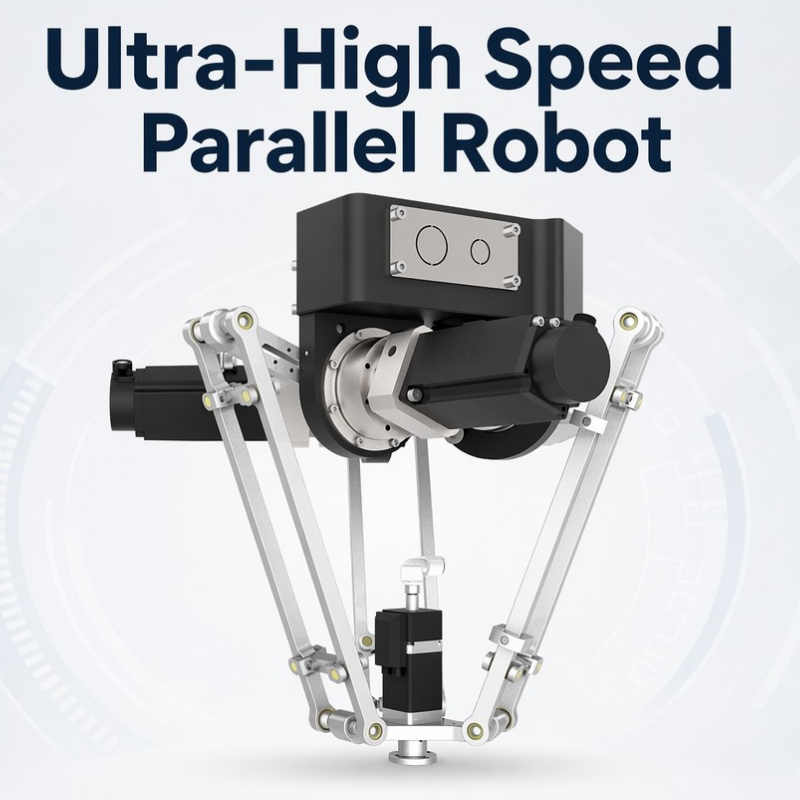
Newly Design Customized Integrated Robot Parallel Robot Delta for Pick Place and Sorting
A customized parallel robot concept for mixed pick-place and sorting cells where layout, end effector and controls must fit the line.
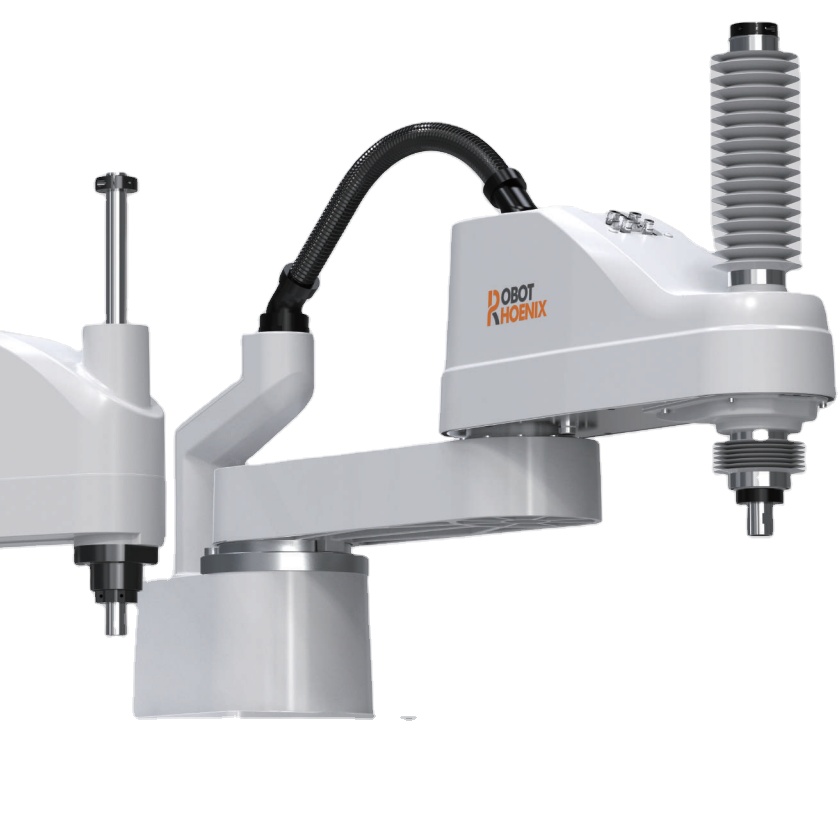
High-Precise Industrial SCARA Robot Arm Scara Robot for Pick and Place in Light Industry
A precision SCARA option for compact assembly, insertion and light-industry placement tasks where cycle consistency matters.
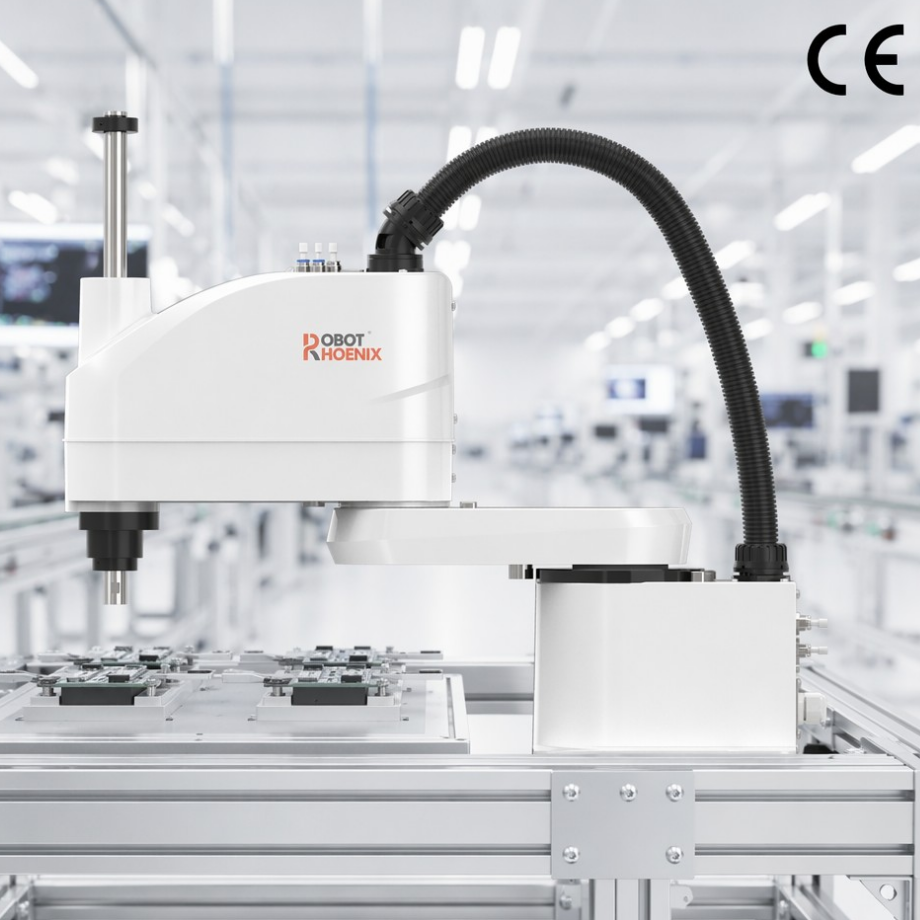
New Design Compact High Accuracy Industrial Robot Arm SCARA with 2D/3D Vision System
Combines SCARA mechanics with 2D/3D vision for random orientation, inspection-adjacent placement and flexible changeover.
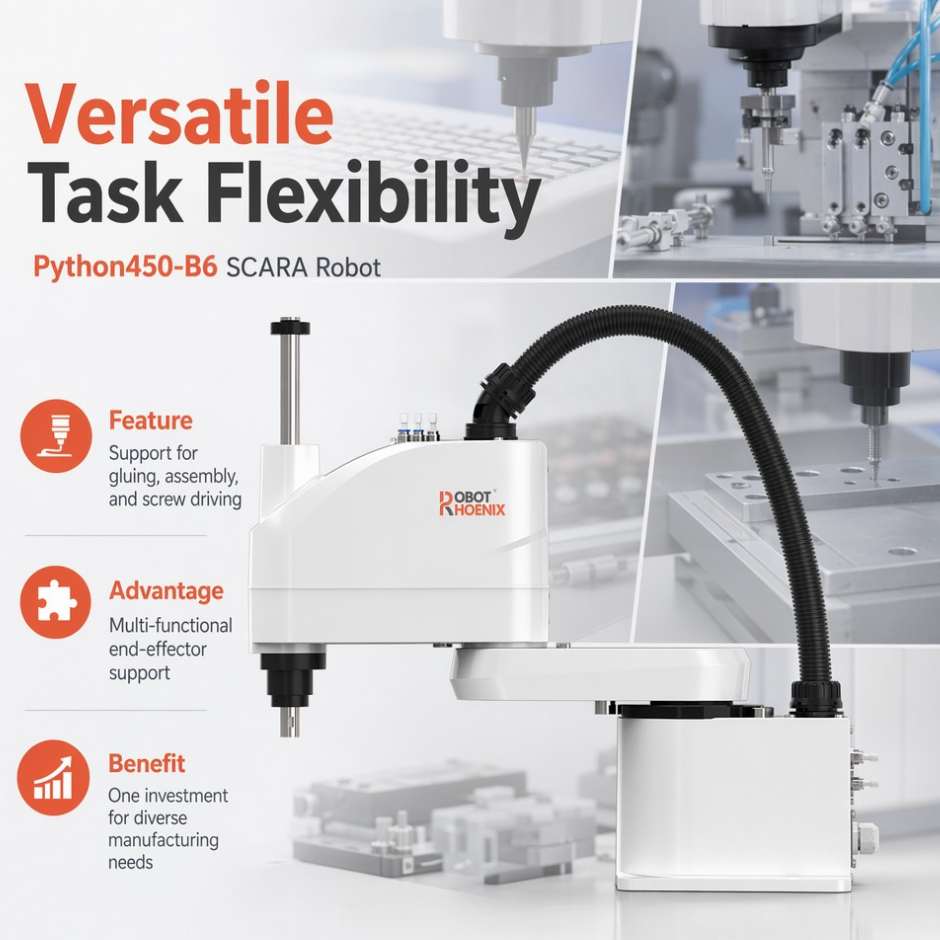
Four-Axis Industrial Robot Hand SCARA for Loading/Unloading and Sorting in Food Industry
Designed for food-line loading, unloading and sorting, where repeatable motion and clean integration are critical.
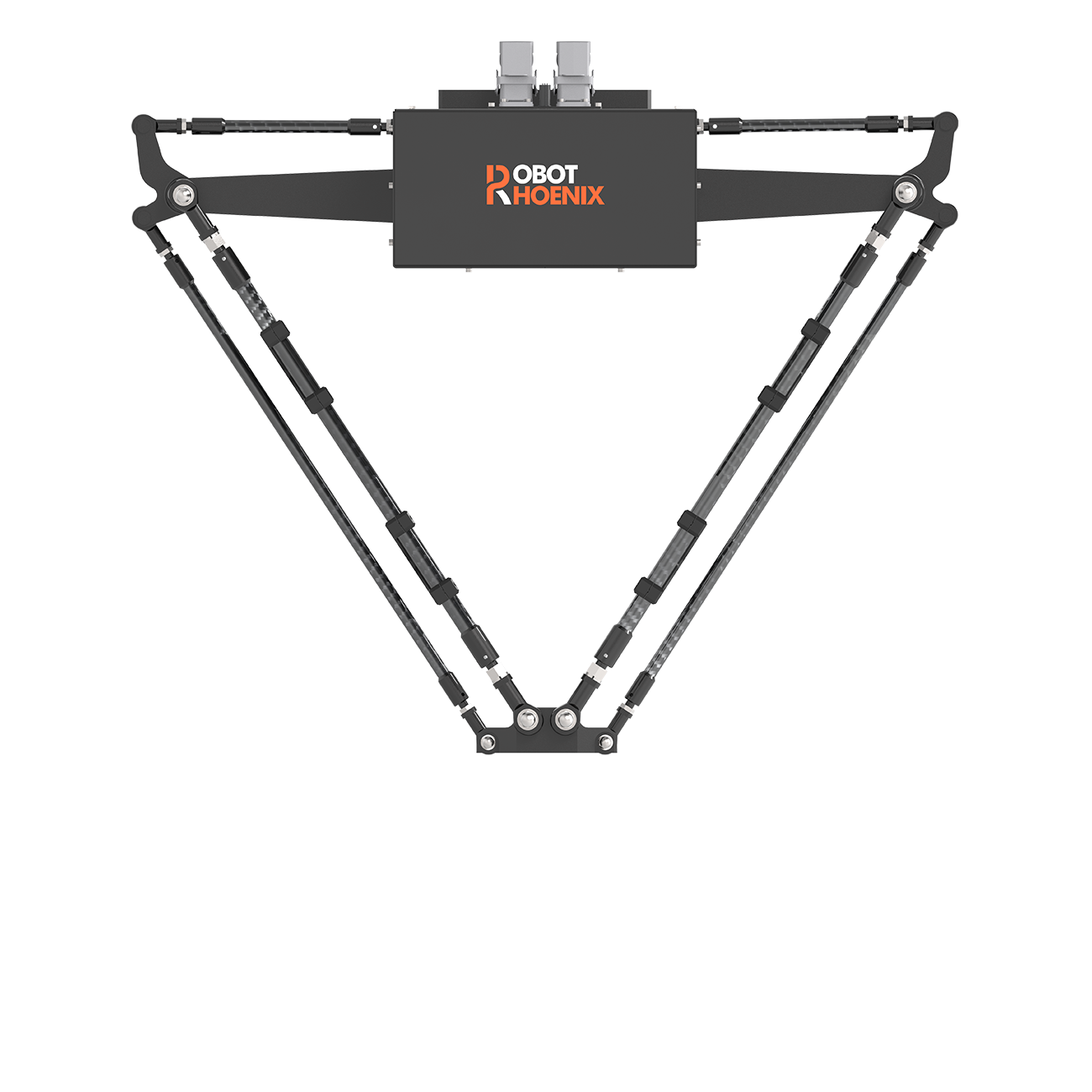
Industrial Manipulator High Speed and Accuracy Delta Robot with New Design Kinetics
A high-speed delta platform for packaging, sorting and transfer applications where motion dynamics determine output.
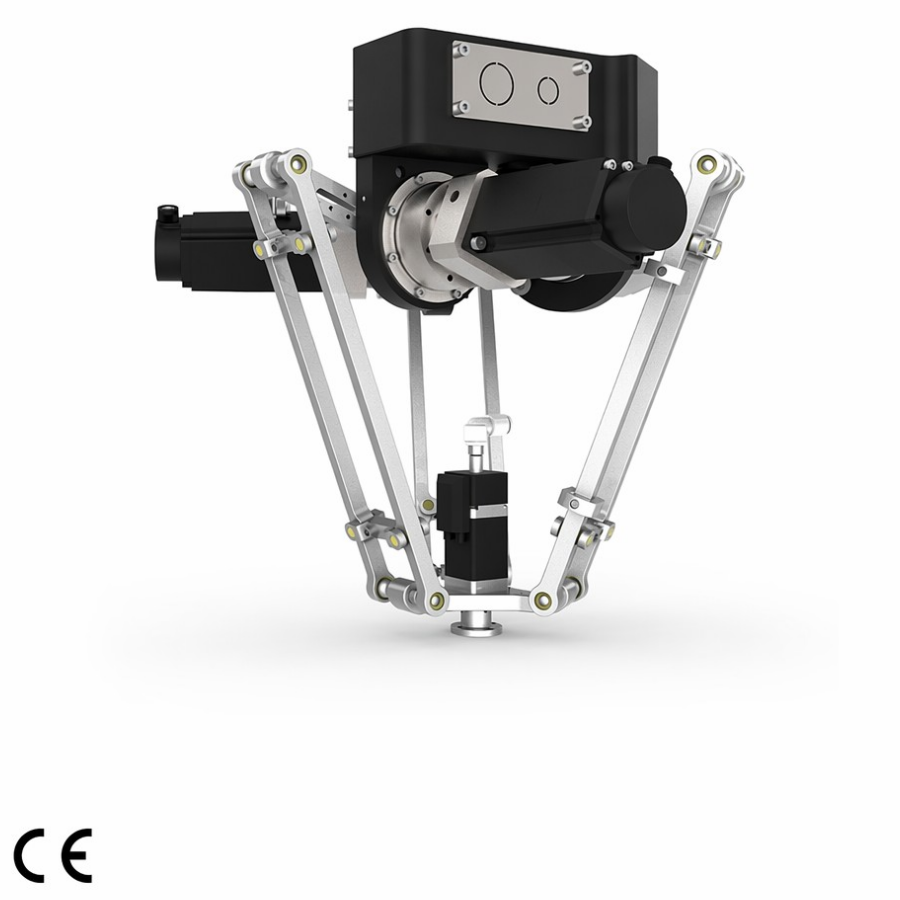
High Speed Consumer Goods Industries Bottle Unscrambling Machine Component Delta Robot
A focused delta configuration for bottle unscrambling and consumer-goods handling inside high-speed packaging equipment.
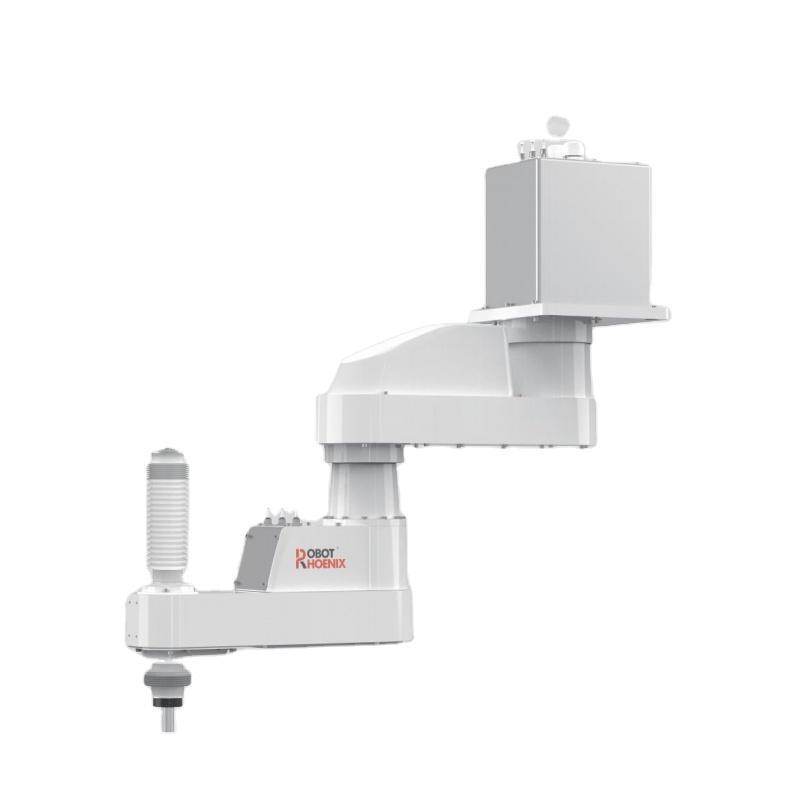
Compact Structure High Precision 550mm Reach Radius 3kg Payload 4-axis SCARA Robot
A space-efficient 3 kg payload SCARA with 550 mm reach for small cells, electronics handling and low-cost automation.
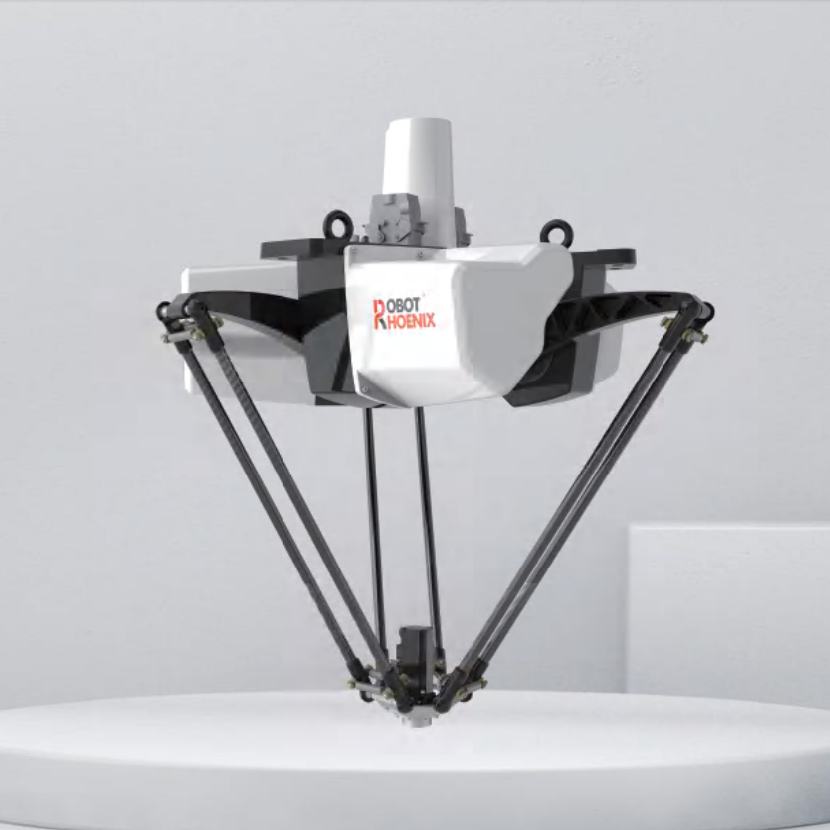
Robotphoenix 4 Arm Payload 3-6kgs Delta Robot for Pick Place Consumer Goods
A 4-arm delta model for 3–6 kg consumer-goods picking, offering a practical balance of payload and high-speed coverage.
Founded with in-house robot R&D and manufacturing focus.
Employees supporting engineering, production and export service.
Factory area for robot assembly, testing and automation integration.
Public response rate with average inquiry reply of 2 hours or less.
Why a China Material Handling Robot Factory Is Now a Strategic Supplier, Not Just a Price Option
Material handling automation has entered a new procurement phase. Buyers are no longer asking only “What is the unit price of a delta robot or SCARA robot?” They are asking whether the supplier can shorten commissioning, support custom end effectors, integrate 2D/3D vision, supply spare parts and keep cycle times stable after the line ramps up. That shift favors factories with real engineering depth rather than trading companies that resell standard catalog machines.
China’s advantage is not simply component cost. It is the density of robot controllers, servo drives, vision systems, precision machining, sheet-metal fabrication, sensors and packaging-machine builders within a mature industrial ecosystem. For a global buyer, this creates an opportunity to consolidate mechanical design, control software, vision integration and factory acceptance testing with one accountable source. The strongest suppliers use this ecosystem to deliver application-specific throughput, not just a robot arm with a datasheet.
JORI Intelligent Technology Co., Ltd., based in Jinan, Shandong, is a representative example of this factory-direct model. Since 2012, the company has focused on industrial robot R&D and manufacturing, controller and 2D/3D vision development, OEM support and automated system integration. Its product scope includes delta parallel robots, SCARA robots, AGV/AMR platforms, autonomous forklifts and silicon wafer handling robots. For procurement teams, the practical question is how to separate a genuine engineering factory from a catalog reseller. The answer lies in verifiable evidence: in-house controller ownership, vision capability, patent portfolio, ISO 9001 processes, onsite verification, trade history and the ability to explain trade-offs between cycle time, payload, repeatability and changeover.
A top factory should be able to calculate cycle time with you, not at you. Required robot count can be estimated as total picks per minute divided by rated picks per minute, adjusted by a realistic utilization factor. If a line needs 240 picks per minute and a robot can sustain 60 picks per minute at 80% utilization, the theoretical count is about five robot cells before redundancy and buffer strategy are considered. That simple calculation often changes the buying decision more than a discount. It also exposes whether the supplier understands sustainable throughput at target OEE rather than peak demo speed.
Another hidden cost is integration. A low-cost robot that requires weeks of extra PLC programming, vision tuning and safety validation can be more expensive than a higher-priced factory-direct model with an open controller, familiar fieldbus support and documented interface logic. Buyers should request the control architecture, I/O map, communication protocol, vision calibration workflow and spare-parts list during the quotation stage. The winning supplier is not the one with the lowest robot price; it is the one that compresses your commissioning curve and protects production continuity after handover.
Factory-Direct Due Diligence Snapshot
Use these evidence points to compare a China material handling robot manufacturer before placing a pilot order.
- In-house controller, motion software and vision capability
- ISO 9001 process controls and final run-in testing
- Third-party onsite verification and trade records
- Custom end-effector, OEM and private-label support
- Documented spare-parts and after-sales response path
Match the Robot to the Production Constraint, Not to the Catalog Page
Use this buyer-oriented matrix to shortlist the right model family before requesting a quotation. It converts common search intent — delta vs SCARA, speed vs precision, vision vs fixed tooling — into practical procurement filters.
| Production Constraint | Recommended Model Direction | Why It Fits | Buying Signal |
|---|---|---|---|
| Random orientation on conveyor | Delta or SCARA with 2D/3D vision | Vision-guided picking handles position and orientation variation without custom bowl feeders. | You expect frequent SKU changes or mixed batches. |
| High-speed cartoning and sorting | High-speed delta robot with kinetic design | Parallel-link mechanics provide fast moves across a defined work envelope. | Cycle time is the line bottleneck and product weight is moderate. |
| Precision assembly or insertion | High-precision SCARA robot | SCARA architecture suits planar placement with repeatable vertical motion. | You need compact cells, low vibration and accurate part seating. |
| Food loading and sorting | Four-axis SCARA for food industry | Designed around hygiene-conscious handling and repetitive loading/unloading. | Washdown, changeover and operator safety are part of the line design. |
| Bottle unscrambling | Delta robot for bottle unscrambling | Focused high-speed handling for consumer goods packaging equipment. | You build or upgrade packaging machines rather than a single workstation. |
| Small cell with limited floor space | Compact 3 kg payload SCARA, 550 mm reach | Shorter reach and compact structure reduce guarding footprint and cost. | Electronics, small parts or benchtop-style automation is planned. |
| Consumer goods multi-pick | 4-arm delta robot, 3–6 kg payload | Balances payload coverage with multi-arm picking for repetitive handling. | You need fast deployment across several similar packaging lines. |
| Custom integrated automation | Integrated parallel robot or OEM engineering | Mechanical, control and vision scope can be matched to the customer’s machine. | You need a private-label or co-developed automation module. |
Specifications should be confirmed against your part weight, center-of-gravity, cycle time, travel path and safety requirement before final selection.
Future Procurement Trends for Material Handling Robot Wholesalers
The buyer-supplier relationship is moving from transactional equipment purchase to validated outcome delivery. These trends will shape RFQs, supplier scorecards and pilot orders.
From Unit Price to Validated Throughput
Procurement teams will compare factory acceptance test data, sustainable picks per minute and OEE assumptions, not just robot list price. Suppliers that can model throughput with the buyer will win pilot projects.
Pilot-First, Scale-Later Purchasing
MOQ 1 set supports proof-of-concept cells before multi-line rollout. Buyers will validate changeover, maintenance access and operator training on one cell, then standardize the winning configuration.
Verification Becomes Part of the RFQ
ISO 9001, onsite verification, transaction history and buyer reviews will be requested earlier. A factory that can present transparent evidence reduces the perceived risk of cross-border sourcing.
OEM and Private-Label Standardization
Machine builders increasingly want robot modules with their own branding, controller interface and documentation. OEM support must cover end effectors, labels, manuals and long-term spare-parts planning.
Define the Part and Path
Share weight, center of gravity, orientation, conveyor speed and target cycle time. A clear input avoids unnecessary payload upgrades.
Request a Cycle-Time Model
Ask for picks per minute at realistic acceleration, not only peak speed. Include vision exposure and communication latency.
Verify Control Ownership
Confirm whether the controller, motion software and vision tools are developed in-house or sourced from third parties.
Agree FAT and Support
Lock acceptance criteria, spare-parts list, training scope, warranty path, delivery terms and response SLA before purchase.
How Material Handling Robots Are Evolving Beyond the Isolated Workstation
The next competitive advantage is not a single faster axis. It is the ability to integrate motion, vision, data and changeover into a line that remains productive under real factory conditions.
Vision and Control Convergence
2D/3D vision is moving closer to the robot controller. Integrated calibration, hand-eye workflows and simpler recipe switching reduce engineer time and support multi-SKU production.
Higher Payload-to-Weight Ratio
Delta and SCARA designs are becoming more structurally efficient, allowing compact frames to cover practical payloads without sacrificing settling time or repeatability.
Modular End Effectors
Quick-change grippers, vacuum tools and custom fingers let one robot serve several product families. This shifts procurement toward modular tooling packages rather than fixed single-purpose cells.
Digital Traceability
Recipe logs, cycle data and maintenance records are becoming part of the automation value proposition, especially for regulated food, pharma and electronics production.
Hygienic and Safe Design
Food and pharmaceutical buyers increasingly require cleanable surfaces, cable routing discipline, IP protection options and safety integration that fits existing line guards.
Factory-Level Interoperability
Robots must communicate with PLCs, MES, packaging machines and mobile platforms. Open interfaces and documented integration logic are becoming decisive supplier selection criteria.
Factory Advantages That Reduce Buyer Risk
For an overseas buyer, E-E-A-T is not an abstract SEO concept. It is the measurable evidence that the supplier has experience, technical expertise, authority and reliability before a purchase order is issued.
Founded in 2012
More than a decade of industrial robot development, manufacturing and export experience supports mature project execution.
In-House Controller and Vision
Self-developed controller and 2D/3D vision capability help align mechanical motion, vision calibration and machine integration under one engineering team.
ISO 9001 and Onsite Verification
Documented quality management and third-party onsite verification give procurement teams concrete evidence for supplier qualification.
Patent-Backed Original Factory
National patents across delta, SCARA, wafer and AGV robot technologies support the claim of original factory engineering rather than pure resale.
OEM / ODM and Buyer Label
OEM service, design service and buyer-label options support machine builders that need a branded robot module and customized documentation.
Scale and Integration Depth
A 10,000+ m² factory and 500+ employee organization provide capacity for robot production, testing, system integration and export support.
Fast Engineering Response
An average response time of 2 hours or less and a 97.06% public response rate help overseas buyers keep RFQ cycles moving.
Global Buyer Experience
Export experience across Asia, Europe and the Americas supports practical communication on standards, shipping, payment terms and after-sales planning.
A Practical Validation Protocol Before You Place a Robot Order
Serious procurement teams should move through four gates: application data, engineering response, factory evidence and acceptance criteria. At the application-data gate, provide part weight, center of gravity, orientation, incoming conveyor speed, target cycle time, available footprint and operator access. At the engineering-response gate, ask for a short cycle-time calculation, recommended model, vision requirement, safety boundary and integration assumptions. If the supplier only sends a catalog page, that is a warning sign.
At the factory-evidence gate, review legal entity information, ISO 9001 certification, onsite verification, patent claims, trade records and buyer reviews. If possible, request a live video review of assembly and run-in testing. At the acceptance-criteria gate, agree the factory acceptance test: which product will be picked, at what speed, with what repeatability, for how many consecutive cycles, and what happens if the result misses target. A clear FAT/SAT process protects both sides and turns a price conversation into an engineering conversation.
Finally, calculate total cost of ownership beyond the robot price: end effectors, vision lighting, safety guarding, PLC integration, programming, spare parts, operator training, freight, duties and downtime risk. A supplier that helps you model these costs is demonstrating the kind of expertise that reduces long-term procurement risk.
Red Flags in Material Handling Robot RFQs
- No request for part weight, orientation or cycle-time target
- Vague claim of “high speed” without acceleration or path data
- No documentation for controller, vision or fieldbus integration
- No spare-parts list, training scope or response SLA
- Factory verification, certification and trade history are unavailable
Material Handling Robot Buying Questions, Answered Clearly
These are the questions most procurement teams ask before selecting a China material handling robot factory or wholesaler.
What is the minimum order quantity for a factory-direct material handling robot?
How should I choose between a delta robot and a SCARA robot?
Does the factory offer OEM, ODM or custom end-effector support?
Can these robots integrate with existing packaging machines?
Which delivery and payment terms are commonly accepted?
How can I verify the factory before placing an order?
What information should I send to get an accurate quotation?
How fast is the inquiry response and after-sales communication?
Send Your Part Weight, Cycle Time and Layout — Get a Factory-Direct Robot Shortlist
Share your application details with JORI engineers and receive a practical recommendation for delta, SCARA, vision-guided or custom material handling automation. Include product photos, conveyor speed and target output for a more precise response.