China Top Parallel Manipulator Suppliers & Exporter
Compare high-speed delta parallel robots, 4-axis SCARA manipulators and vision-guided pick-and-place cells from an ISO 9001 manufacturer with in-house controllers, 2D/3D vision and OEM engineering.
What Makes a Top China Parallel Manipulator Supplier Different?
Buyers searching for a China parallel manipulator exporter usually need more than a robot arm. They need a supplier who can match the mechanism to the work envelope, provide the controller and vision layer, support OEM machine builders and stand behind the cell after shipment.
A parallel manipulator is often searched as a delta robot: a high-speed mechanism with multiple arms connected to a common moving platform. In real procurement, the comparison often expands to 4-axis SCARA robots because both architectures compete for pick-and-place, sorting, assembly and packaging tasks. The correct choice depends less on the product name and more on part presentation, required cycle time, reach envelope, cleanliness level and integration ownership.
China’s industrial robot supply base is broad, so a credible supplier should make verification easy. Look for a manufacturer with a documented quality system, verifiable factory identity, original R&D rather than trading-only resale, and a clear export process. JORI Intelligent Technology Co., Ltd. has operated since 2012, develops delta robots, SCARA robots, AGV/AMR platforms, wafer robots and in-house controllers with 2D/3D vision, and supports OEM, design and buyer-label projects for machine builders and integrators. That combination matters because a parallel manipulator is rarely bought as a stand-alone object; it is bought as a motion component inside a production promise.
Information gain for procurement teams: the cheapest quoted robot arm is rarely the lowest installed cost. A lower-cost arm can create hidden expense if the vision, controller, gripper, safety interface and PLC handshake are not designed as one system. For high-speed picking from moving conveyors, a delta parallel robot can justify its premium through acceleration, stability and reduced product damage. For planar assembly, insertion or machine tending, a SCARA robot often wins through reach, compactness and predictable integration. The right supplier helps you quantify that trade-off before quotation, not after commissioning.
When speed defines the ROI
Delta parallel manipulators are a strong fit for lightweight products arriving randomly on conveyors: food, personal care, wet wipes, cartons, labels and small packaged goods where cycle time is the bottleneck.
When precision and footprint matter
SCARA robots are often more practical for planar pick-and-place, insertion, assembly, auto-parts handling and electronics cells where the work envelope is compact and the motion is predominantly horizontal.
When one engineering source reduces risk
In-house controller and vision development can shorten the handoff between mechanical design, camera calibration and PLC communication—especially for OEM machine builders who need repeatable integration.
8 Proven Parallel Manipulator and SCARA Robot Configurations
These models cover compact vision, 6 kg payload SCARA picking, customized integrated delta sorting, cost-focused SCARA handling, 4-axis delta vision tracking, auto-parts vision cells, high-speed gripper picking and wet-wipe lid applicator machines.
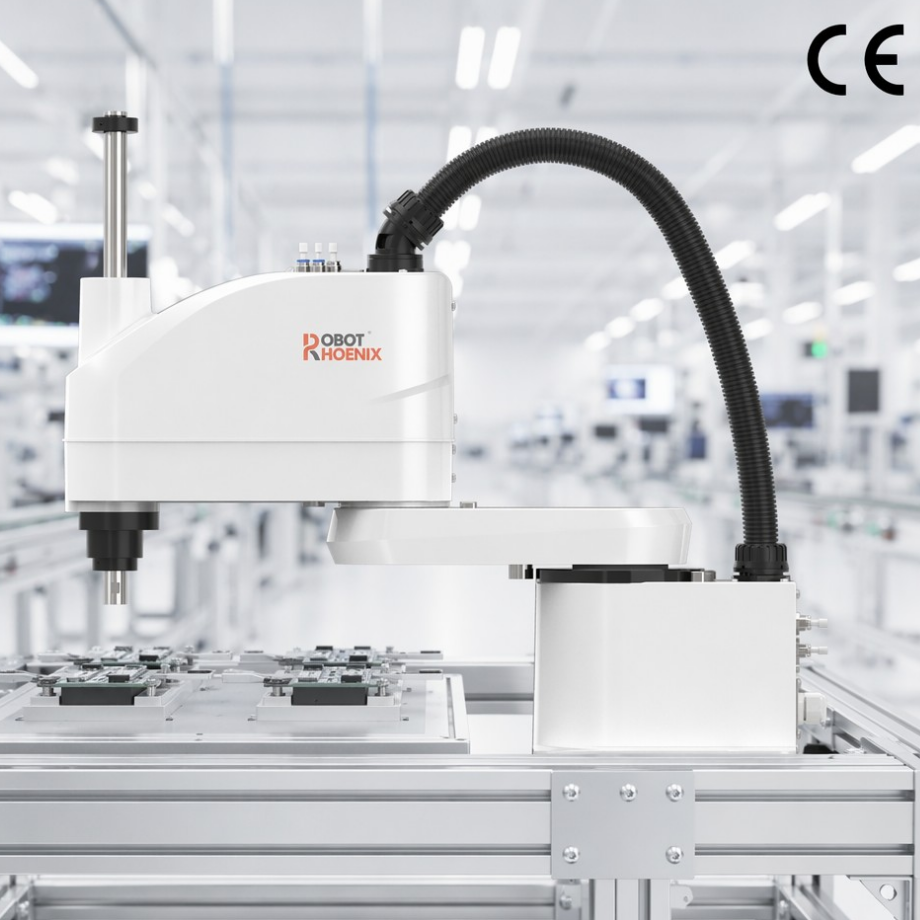
New Design Compact High Accuracy Industrial Robot Arm SCARA with 2D/3D Vision System
A compact SCARA cell for electronics, medical consumables and small assemblies where part presentation varies. The 2D/3D vision option can reduce fixture complexity and support faster changeover.
- 2D/3D vision
- Compact footprint
- OEM integration
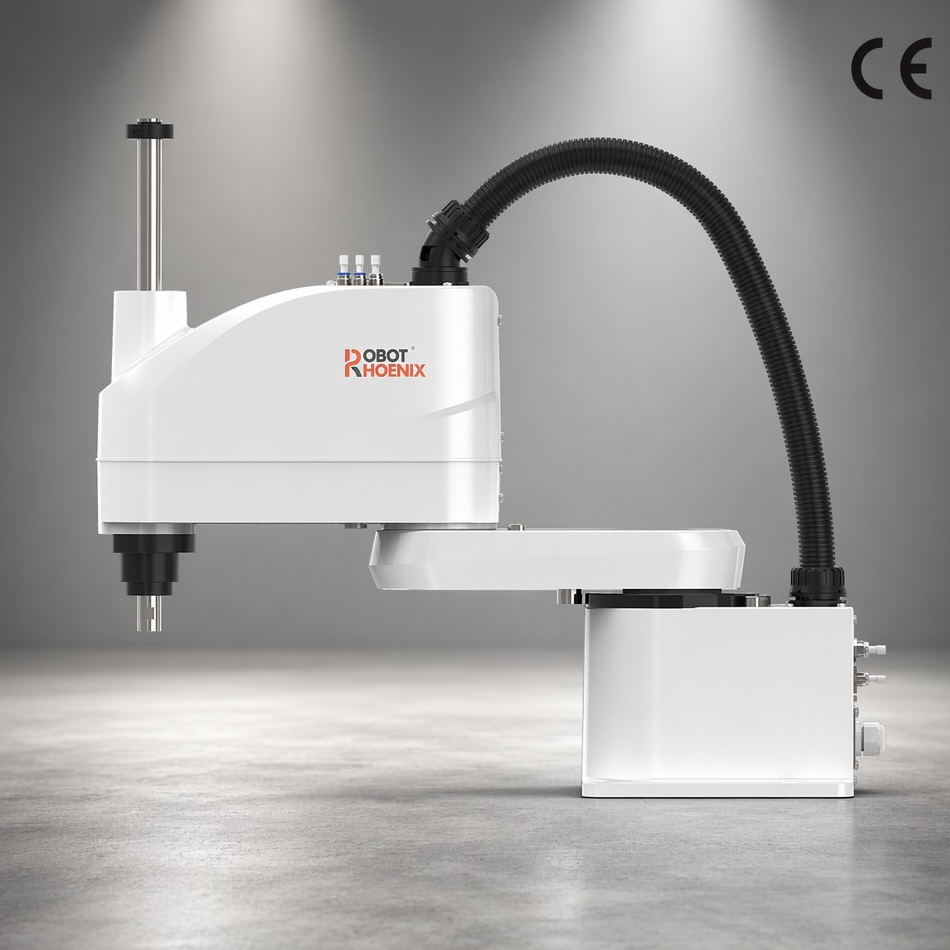
High Efficiency 6kg Payload Manipulator SCARA Robot with Vision for Picking and Placing
A 6 kg payload SCARA with vision for picking and placing. Suited to packaging infeed, machine tending and assembly where reach and repeatable placement matter more than raw delta acceleration.
- 6 kg payload
- Vision-guided
- Pick & place
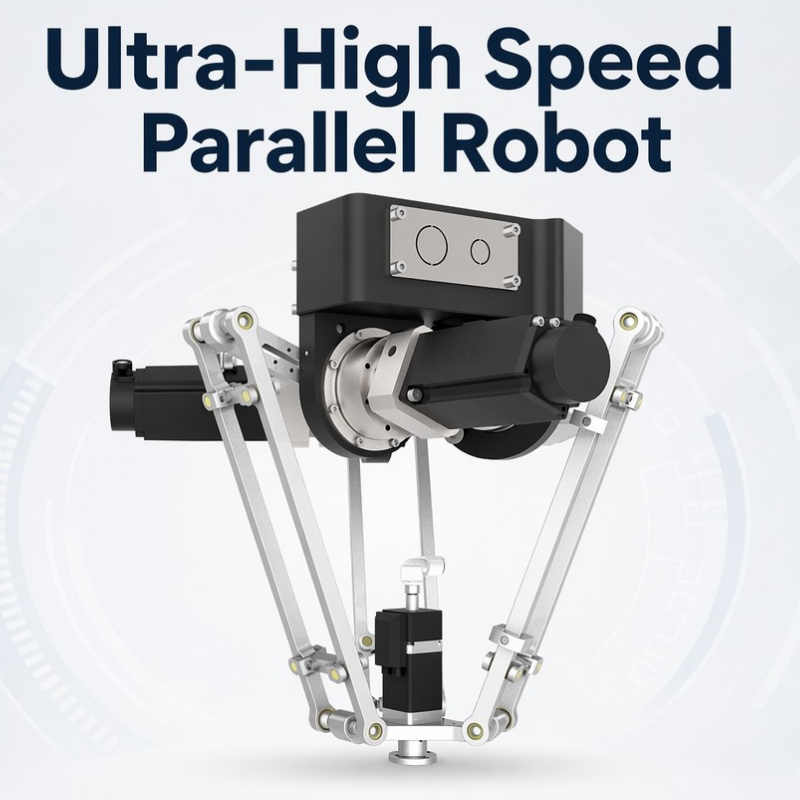
Newly Design Customized Integrated Robot Parallel Robot Delta for Pick Place and Sorting
A customized integrated delta parallel manipulator for pick, place and sorting. A practical route for integrators who want a pre-integrated robot, controller and vision architecture rather than separate components.
- Integrated parallel robot
- Sorting
- Customized
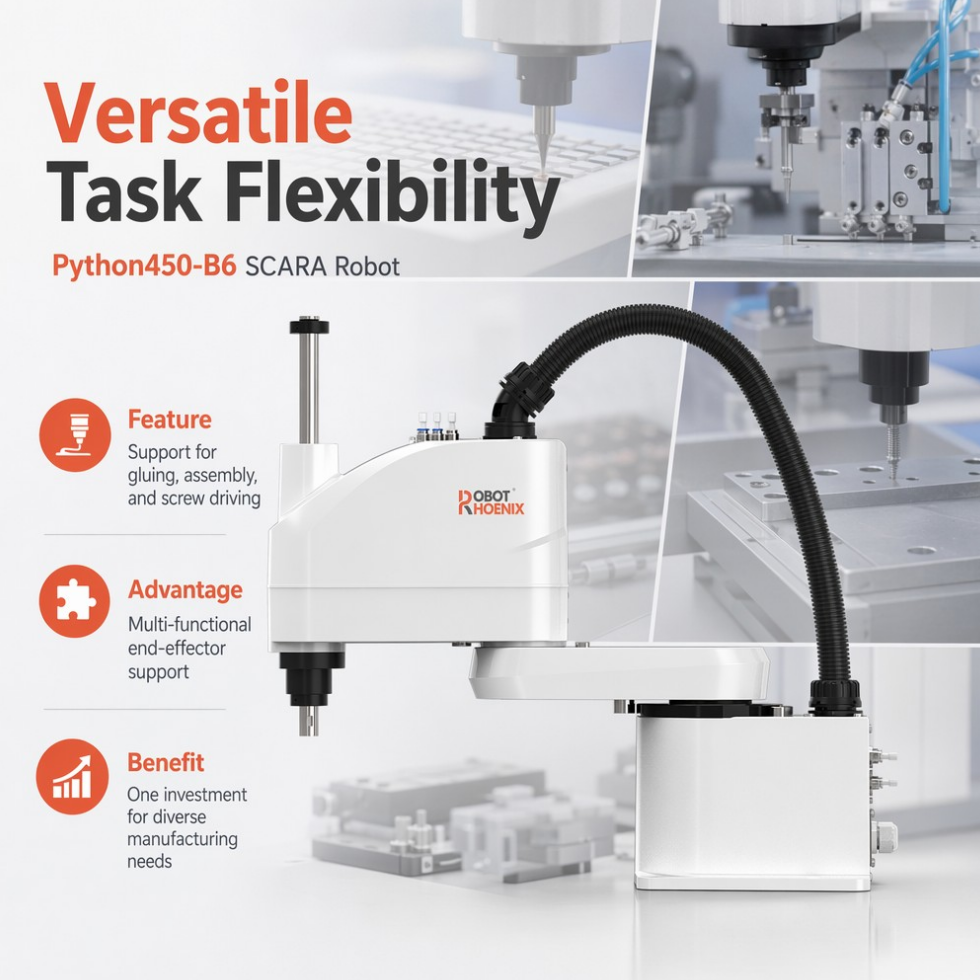
Newly Design Low Price Industrial Manipulator SCARA Robot Arm with Integrated Motor
A value-focused SCARA with integrated motor design for cost-sensitive cells that still need four-axis motion, compact installation and straightforward communication with production equipment.
- Integrated motor
- Low price
- Compact installation

High Precision Pick and Place 4 Aixs Parallel Robot Delta with Vision Tracking System
A high-precision 4-axis delta with vision tracking for moving conveyors, food packaging, personal-care lines and sorting operations where camera or encoder tracking is required.
- Vision tracking
- 4-axis delta
- High precision
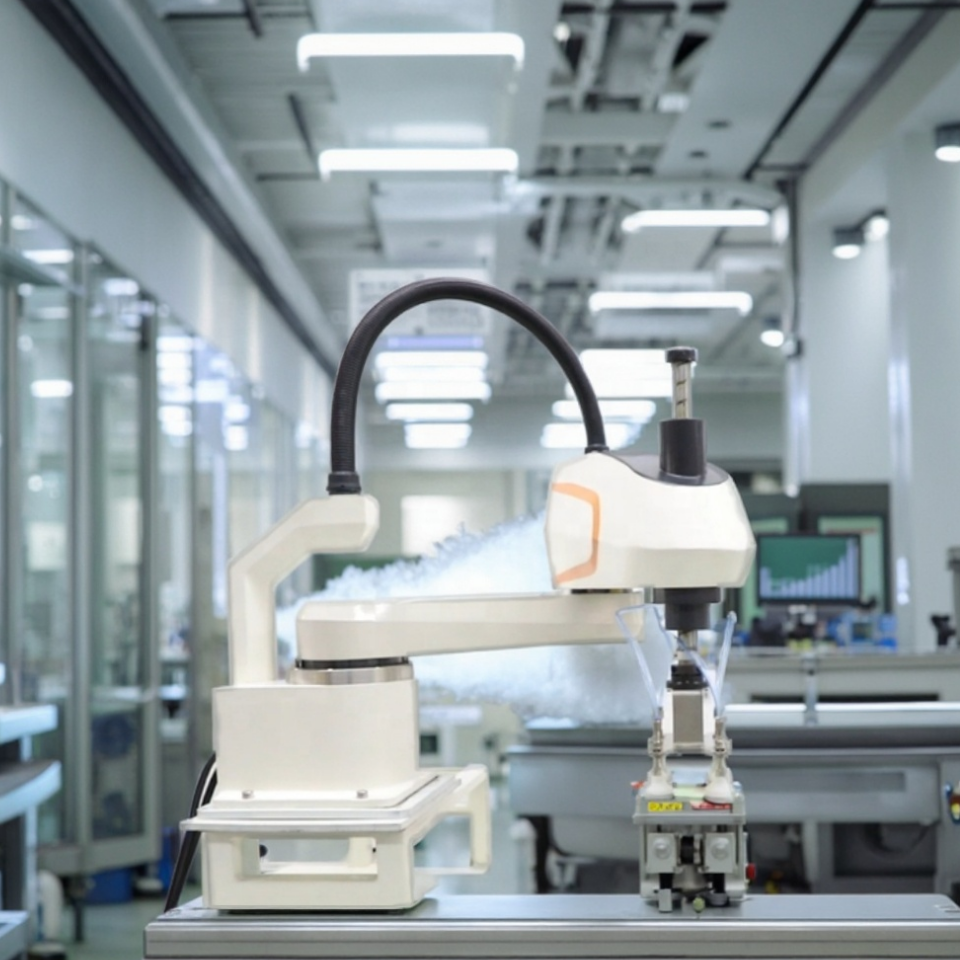
Industrial 4-Aixs Robot Arm Scara Robot Arm with Vision System for Auto Parts Industry
A 4-axis SCARA arm with vision for auto parts. Supports pick-and-place, machine tending and inspection-adjacent tasks where part orientation, repeatability and traceability are important.
- Auto parts
- Vision system
- 4-axis SCARA
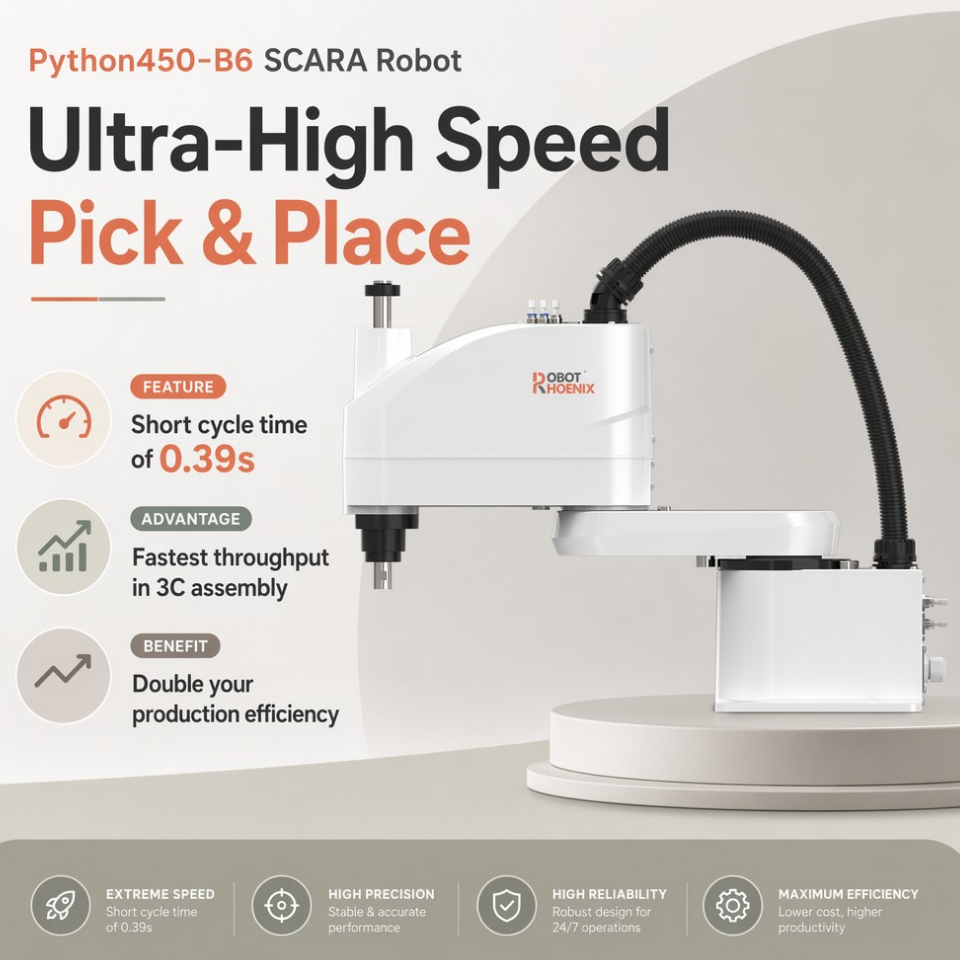
Robotphoenix High Speed Manipulator SCARA Robot with Gripper for Product Accuracy Picking
A high-speed SCARA with gripper for accurate picking. A fit for repetitive pick-and-place cells where a mechanical gripper and a fast cycle are more important than complex insertion.
- High speed
- Gripper ready
- Accurate picking
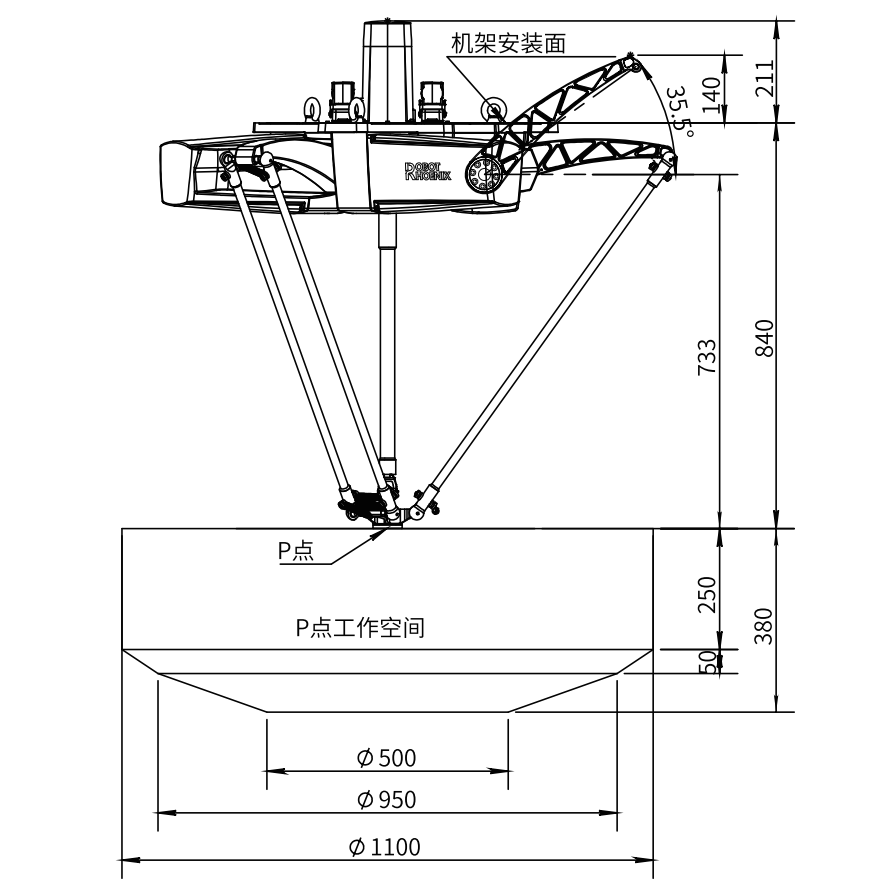
High-Speed Spider Arm Delat Robot for Fully Automatic Wet Wipe Lid Applicator Machine
A high-speed spider-arm delta for wet wipe lid applicator machines. Designed for packaging machine builders that need a PLC-ready pick-and-place motion unit with tight line synchronization.
- Spider arm delta
- Wet wipe lid
- Machine builder ready
Delta Parallel Robot vs SCARA: A Procurement Comparison
Use this matrix to shortlist the mechanism before you compare supplier quotations. The fastest way to waste an automation budget is to compare unlike robot architectures without agreeing on the process requirement.
| Selection factor | Delta parallel manipulator | SCARA robot | Buyer question to resolve |
|---|---|---|---|
| Motion architecture | Parallel arms connect to a common moving platform; strong for fast, repeated pick-and-place. | Serial 4-axis architecture; strong for planar reach, insertion and compact assembly cells. | Is the dominant motion high-speed flying pick, or precise X-Y-Z placement with rotation? |
| Typical work envelope | Compact, high-acceleration envelope above a conveyor or packaging line. | Compact footprint with predictable horizontal reach and vertical stroke. | Can the action fit under the robot without adding a long conveyor or transfer mechanism? |
| Payload and speed balance | Usually selected for lightweight products and short cycle time; 3–6 kg class models are common in the category. | Often selected for small-to-medium payloads where reach, repeatability and integration simplicity dominate. | What is the real part weight, gripper weight and dynamic acceleration requirement? |
| Physical integration | Often overhead-mounted above conveyors, cartoners or wet-wipe packaging machines. | Often floor or frame-mounted beside an assembly station or machine tool. | What does the cell layout allow, and who owns safety guarding and cable routing? |
| Hidden cost to check | Vision tracking, conveyor encoder, calibration and hygiene enclosure can dominate project cost. | Gripper design, force control, insertion strategy and PLC handshake can dominate project cost. | Is the quotation for a bare robot or for a validated cell with acceptance criteria? |
| Best-fit JORI families | Delta parallel robot, integrated parallel robot, spider-arm delta, 4-axis delta with vision tracking. | Compact SCARA, 6 kg payload SCARA, integrated-motor SCARA, auto-parts SCARA with vision. | Can the supplier provide controller, vision, end-effector, OEM labeling and after-sales support in one scope? |
Procurement shortcut: if the part is already oriented and the task is insertion or assembly, start with SCARA. If the part arrives randomly and the line speed is the throughput constraint, start with delta. If both are possible, request a joint cycle-time simulation and total installed cost comparison—not two bare-arm quotes.
Product Procurement Trends for Parallel Manipulators, 2026–2030
Robot buyers are becoming more sophisticated. The conversation is shifting from headline payload and unit price to validated throughput, integration scope and long-term support.
Total installed cost replaces unit price
Buyers increasingly score the robot, controller, vision, gripper, integration labor, commissioning and spare-parts plan together. A delta arm with a proven vision package may be cheaper at the finished cell level than a lower-priced arm that requires more engineering.
Vision-ready becomes standard
2D and 3D vision is moving from a special option to a normal requirement for random picking, conveyor tracking and quality verification. Suppliers that develop controller and vision together can reduce calibration complexity for machine builders.
OEM co-development expands
Machine builders want private-label robots, custom end-effectors, dedicated mounting frames and documented API handshakes. They are selecting suppliers that can act as an engineering partner rather than a catalogue reseller.
Pilot-first purchasing grows
MOQ 1 set matters because buyers want to validate a single cell, line or prototype before scaling. Suppliers that support pilot cells with the same controller and software architecture reduce the risk of a second engineering cycle at volume.
Service speed is part of the technical score
Export buyers ask how quickly application questions are answered, whether spare parts are identified by serial number and how commissioning is supported remotely. A documented response process is now a competitive advantage.
Hygiene, traceability and uptime
Food, personal-care and medical packaging projects ask for cleanable surfaces, IP-rated options, traceable production data and energy-conscious motion. Suppliers that understand packaging line realities can specify the right protection level without overspending.
How Parallel Manipulator Products Will Develop Through 2030
The next generation of delta and SCARA robots will be judged by how easily they plug into data, vision and service workflows—not only by mechanical speed.
AI-assisted vision and faster calibration
Vision models are becoming easier to train on new parts. Future cells will compress changeover time by combining pre-trained recognition, automatic calibration prompts and simpler operator interfaces.
Integrated joint modules and lighter arms
Integrated motors, compact reducers and lighter structures will make SCARA and delta robots easier to install, more energy-efficient and simpler to protect in hygienic or compact machine enclosures.
Open controllers and digital twins
PLC-ready communication, open APIs and simulation-ready kinematic models will help integrators validate cycle time and reach before hardware arrives. Digital twins will reduce commissioning risk.
Application-specific hygiene and uptime
Food, wet-wipe, medical and electronics lines will demand right-sized IP protection, cleanable surfaces, traceable maintenance records and motion profiles that protect fragile products at high speed.
Why Global Buyers Shortlist JORI as a China Parallel Manipulator Exporter
JORI Intelligent Technology Co., Ltd. is a high-tech robot manufacturer in Jinan, Shandong, China. Since 2012, the company has specialized in industrial robot R&D and production, controller and 2D/3D vision development, OEM support and automated system integration.
Founded in 2012 with independent R&D
More than a decade of robotics development in a national robotics hub. The product line includes delta parallel robots, SCARA robots, silicon wafer robots, AGV/AMR platforms and autonomous forklifts.
In-house controllers and 2D/3D vision
Hardware, software and vision are developed together. Buyers get one accountable engineering source for robot, controller, vision and integration handoff instead of a fragmented reseller chain.
ISO 9001 and onsite verification
The quality system is documented, and the company is presented as an onsite-verified manufacturer. Buyer due diligence can include assessment, credit, trade capacity and transaction records.
OEM, design and buyer-label service
Machine builders can request OEM service, design service and private-label support, including custom end-effectors and controller integration for packaging, sorting and assembly cells.
Factory scale for pilot and volume orders
500+ employees and 10,000+ m² of factory area support a product roadmap that spans delta, SCARA, AGV/AMR, forklift and wafer handling robots. Standard models can be ordered from 1 set.
Export support with fast response
JORI reports a 97.06% response rate with an average reply time of 2 hours or less. Export terms include FOB, CFR, CIF, EXW, CIP, FCA, CPT and express delivery, with multiple payment options.
Verify the supplier before you commit to the cell design
For export buyers, proof should be easy to review. JORI publishes company profile, factory video, trade capacity, transaction level, credit profile, supplier assessment and buyer review pages. The engineering team can discuss cycle time, part weight, gripper design, vision requirements, PLC handshake and line layout before quotation.
Request an application review

Parallel Manipulator Supplier FAQ for Procurement Teams
Use these answers to prepare an RFQ, compare quotations and reduce the risk of buying a robot that does not fit the line.
What is the minimum order quantity for JORI industrial robots?
Standard delta robots, SCARA robots and AMR/AGV platforms can be ordered from 1 set. This supports a pilot cell, prototype line or single-station validation before a wider production rollout. For custom end-effectors or buyer-label projects, the commercial scope is confirmed during technical review.
Should I choose a delta parallel manipulator or a SCARA robot?
Choose a delta parallel manipulator for very fast, lightweight pick-and-place from moving conveyors, typically in the 3–6 kg class and often in food, personal-care, wet-wipe or packaging applications. Choose a SCARA robot for planar assembly, insertion, machine tending or precise placement in a compact footprint. Share the part weight, gripper weight, required cycle time, conveyor behavior and line layout; JORI engineers can recommend the mechanism and vision scope.
Does JORI offer OEM or custom robot solutions?
Yes. JORI provides OEM service, design service and buyer-label options and supports machine builders with custom end-effectors, controller integration and automated system integration. This is especially relevant for packaging machine builders that need a delta robot integrated into a cartoner, labeler, wet-wipe lid applicator or similar production line.
Which delivery and payment terms are accepted?
Accepted delivery terms include FOB, CFR, CIF, EXW, CIP, FCA, CPT and express delivery. Accepted payment methods include T/T, L/C, credit card, PayPal, Western Union, MoneyGram and escrow, in USD, EUR, GBP, JPY, CAD, AUD, HKD, CHF and CNY. Final eligibility can depend on the order value, destination and commercial scope.
Can JORI robots integrate with my existing packaging machine?
Yes. JORI develops its own controllers and 2D/3D vision and offers PLC-ready delta robots for cartoning machines, carton packers and wet-wipe lid applicator equipment. The project team can review the line’s encoder signals, trigger logic, safety interface and available mounting space before confirming the integration concept.
Do I need vision, or can I use fixed-position picking?
Use fixed-position picking when parts are mechanically oriented and repeatable. Add 2D vision when orientation or position varies on the conveyor; add 3D vision when height, pile position or depth variation matters. A vision-ready parallel manipulator can reduce fixture cost, but it requires robust lighting, calibration and an agreed changeover procedure. The least expensive vision system is the one scoped to the real variation, not the maximum theoretical capability.
How should I compare quotations from different China parallel manipulator suppliers?
Ask every supplier to quote the same scope: robot model, controller, vision hardware and software, end-effector, cables, safety interface, PLC handshake, documentation, acceptance test, spare-parts list and warranty terms. Compare total installed cost and cycle time at the product level, not just robot payload. Also verify the supplier’s factory status, quality system, export terms and after-sales response process.
How quickly does JORI respond to inquiries?
JORI maintains an average response time of 2 hours or less and a reported 97.06% response rate. For the fastest technical review, include product photos or videos, part weight, gripper details, required cycle time, conveyor speed, available mounting space, target line layout and any preferred PLC or communication protocol.
Send Your Cycle Time, Part Weight and Layout
Tell us what the cell must achieve. JORI’s application engineers can return a shortlist of delta parallel robots, SCARA robots or integrated vision cells for your line.
info@joribot.com