ISO 9001 · Onsite-Verified Manufacturer · Jinan, China
China Wholesale Automatic Unloading Robot Factory & Exporters
Source high-speed delta robots, SCARA robots, AMR platforms and autonomous forklifts directly from JORI — a factory-direct manufacturer since 2012 with self-developed controllers, 2D/3D vision, OEM engineering and a 97% response rate within two hours.
8 Factory-Direct Automatic Unloading & Pick-and-Place Robots for Wholesale Buyers
Compare proven robot families before you request drawings. These eight models are recommended for automatic unloading, conveyor picking, sorting, tray transfer, carton packing, machine tending and precision placement. Every product URL is preserved; for custom grippers, vacuum end-effectors, vision cameras or PLC handshakes, use the inquiry button to reach JORI’s engineering team.
A high-speed parallel robot with integrated gripper for conveyor picking, sorting and automatic unloading where hygiene protection and repeatability matter.
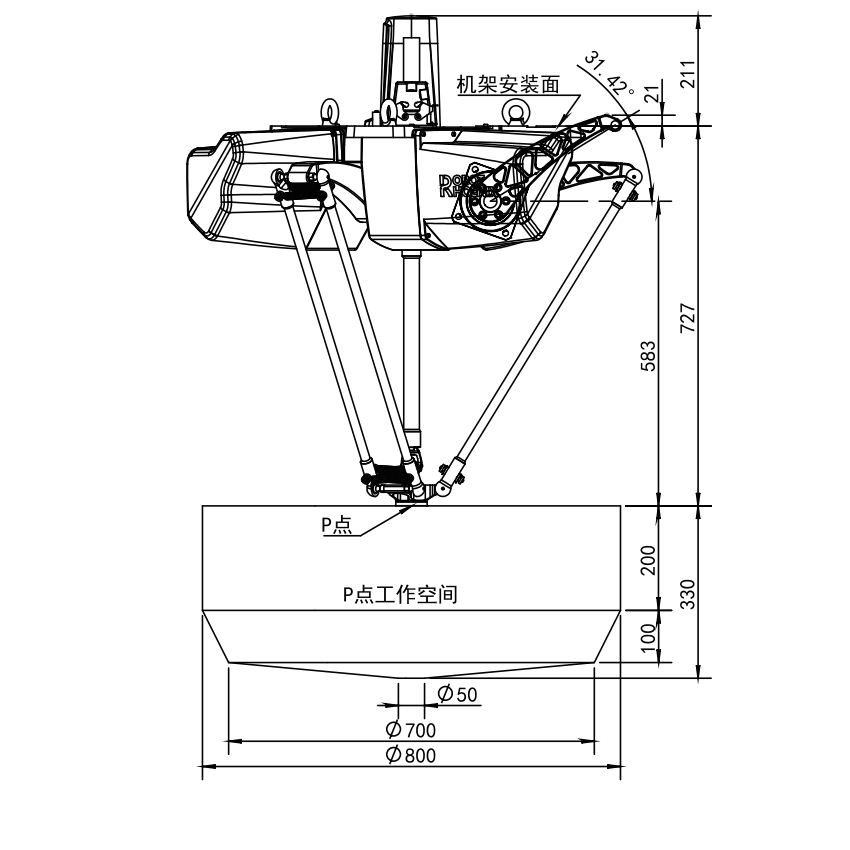
A lightweight delta arm for fast automatic unloading from moving conveyors. A strong candidate when cycle time, compactness and dust protection are the main constraints.
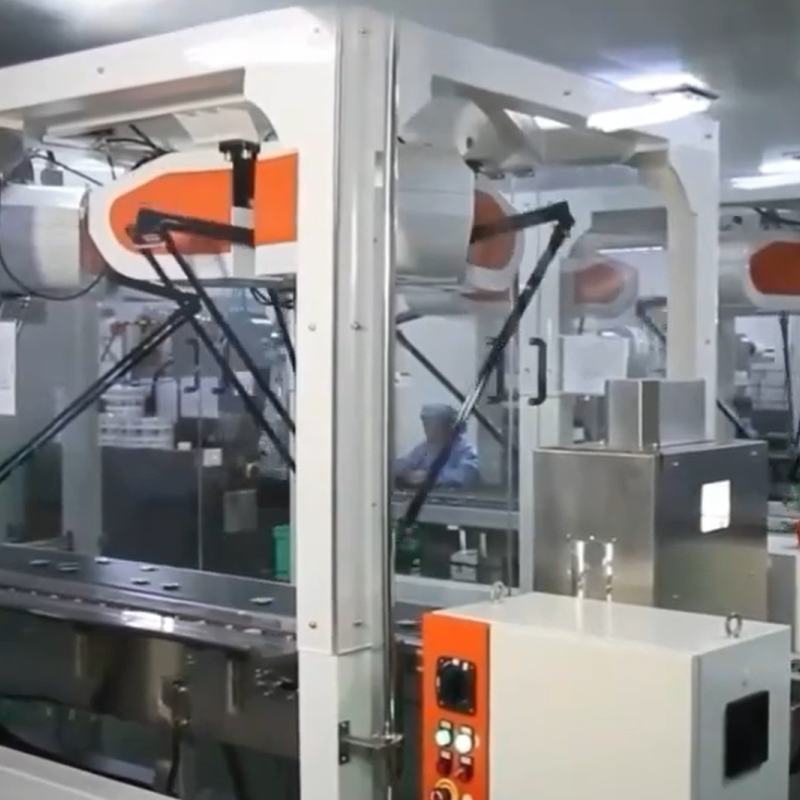
An industrial delta robot for repetitive goods picking, placing and sorting. It fits multi-lane conveyor tracking and high-throughput transfer in food, daily chemical and consumer goods lines.
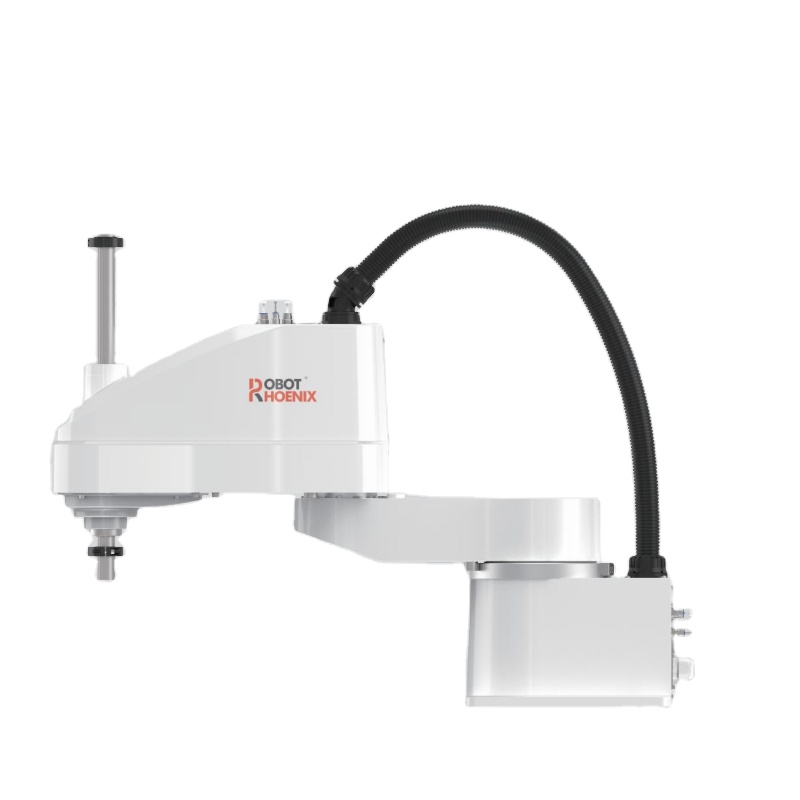
A compact SCARA solution for food-industry pick-and-place and gripping. It delivers precise planar placement where a delta robot is not required or where cell space is tight.
A new-condition high-speed manipulator for light-industry unloading, packing and transfer. Suitable for buyers seeking a modern delta platform for mixed light products.
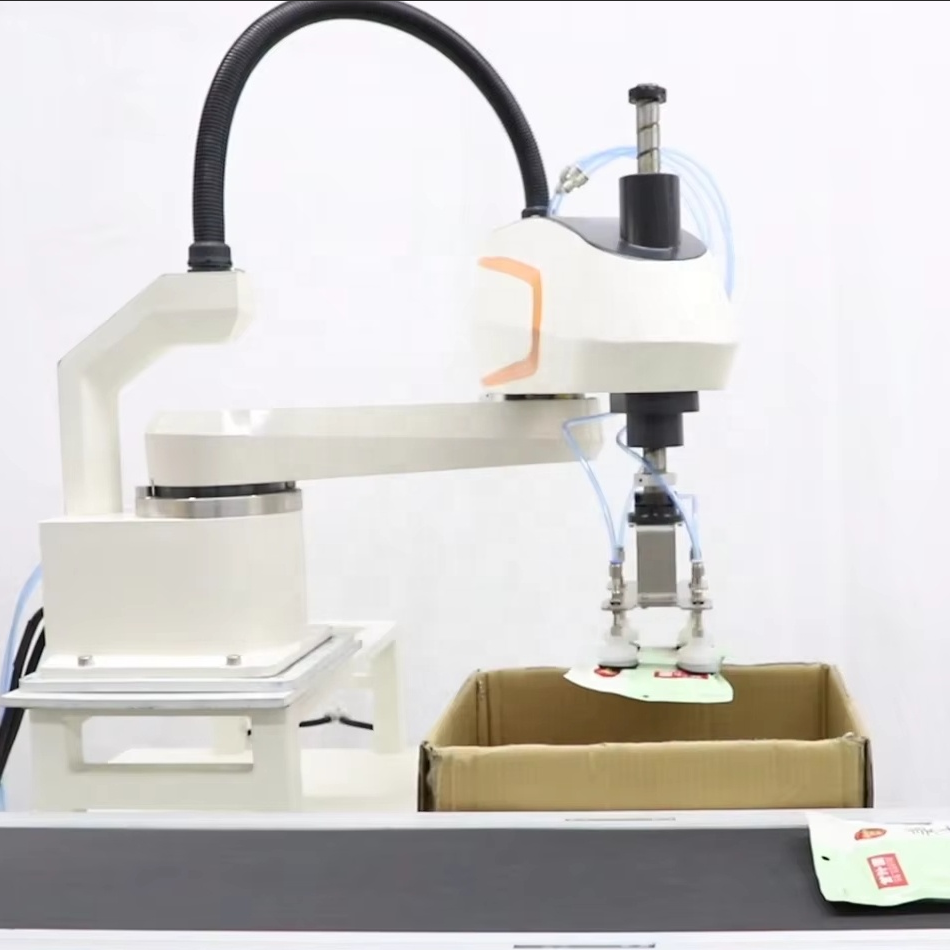
A 6 kg payload SCARA robot with vision for picking and placing. The larger payload and visual alignment support parts feeding, tray handling and post-unloading placement.
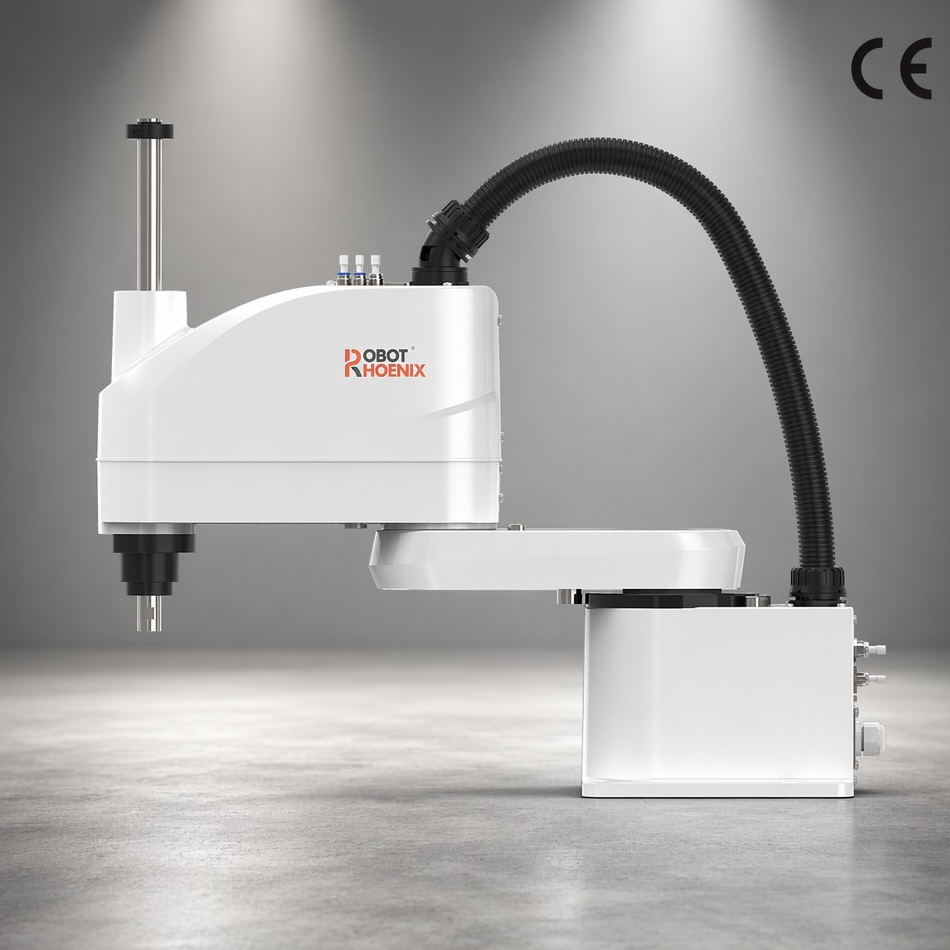
An industrial SCARA arm for precision assembly and handling. It is a logical choice when an automatic unloading robot must feed a downstream insertion, test or assembly station.
A low-cost mini SCARA robot for pick-and-place. Ideal for pilot cells, compact machine tending and wholesale buyers validating an automation concept before scaling.
What Is an Automatic Unloading Robot — and How Should Wholesale Buyers Evaluate It?
An automatic unloading robot is a robotic cell that removes parts, cartons, trays or components from a conveyor, bin, machine or pallet and transfers them to the next process. In practice, the “robot” is only one part of the solution: the gripper, conveyor tracking, vision alignment, controller logic, safety enclosure and line handshake determine whether the cell meets its promised cycle time. That is why experienced procurement teams evaluate automatic unloading robots as production equipment, not as standalone catalogue items.
For China wholesale sourcing, the lowest unit price is rarely the lowest project cost. Information gain comes from asking for cycle-time simulation, gripper layout, conveyor tracking method, controller interface, spare-parts list, export packaging standard and commissioning scope. A factory that builds the arm, controller and vision in-house can shorten the engineering loop because mechanical, motion and vision variables are validated by one accountable team. Buyers should also verify whether the supplier is an original manufacturer or a trading intermediary, especially when the line requires PLC integration, custom end-effectors or fast after-sales response.
Choose a delta robot for very fast, lightweight pick-and-place from moving conveyors, typically 3–6 kg payload.
Choose a SCARA robot for planar assembly, insertion, precise placement and compact machine tending.
Choose AMR or autonomous forklifts when the “unloading” task is really pallet or carton transport between zones.
Application fit snapshot
Indicative fit scores for common automatic unloading duties. Final selection depends on part geometry, gripper design, line speed and site safety requirements.
High-speed sorting · delta robot94
Precision placement · SCARA88
Mixed-SKU vision handling90
Pallet transfer · AMR / forklift82
Fit scores are a visual planning aid, not a performance guarantee. JORI confirms specifications per configuration.
Future Procurement Trends for China Wholesale Automatic Unloading Robot Factory & Exporters
Procurement teams are moving from catalogue buying to evidence-based cell sourcing. Across JORI’s export inquiries from North America, South America, Eastern Europe, Southeast Asia and China, six trends are shaping purchase decisions.
Trend 01
Pilot-first purchasing with MOQ 1 set
Buyers increasingly validate a single unloading cell before scaling. JORI standard delta, SCARA and AMR platforms can be ordered from 1 set, which lowers the cost of technical validation and shortens approval cycles.
Trend 02
Total cost of ownership over headline price
Procurement now compares integration engineering, spare parts, changeover time, remote support and operator training. A lower-priced arm that requires a third-party controller or vision vendor can cost more over a five-year horizon.
Trend 03
Factory-direct verification and E-E-A-T signals
Wholesale buyers check ISO 9001, onsite verification, patents, trade records and buyer reviews before shortlisting exporters. Manufacturer transparency matters because automatic unloading robots are integrated into live production lines.
Trend 04
Modular end-effectors and fast changeover
Skus change faster than lines do. Buyers request quick-change grippers, vacuum cups, magnetic modules and custom fingers so one unloading robot can handle several part families without a long mechanical rebuild.
Trend 05
Vision-guided mixed-SKU handling
Randomly oriented parts, transparent packaging and mixed trays push buyers toward 2D/3D vision, conveyor tracking and AI-assisted inspection. Vision reduces mechanical fixtures and makes changeover more software-driven.
Trend 06
Remote support, spare parts and export documentation
Export buyers want faster engineering response, clear packing standards and predictable spare-parts supply. JORI reports an average response time of 2 hours or less and a 97.06% response rate for buyer inquiries.
Product Development Trends: What to Specify in the Next Unloading Robot
The next generation of automatic unloading robots is being specified around speed, hygiene, vision, openness and serviceability. These are the development directions that matter for 2026–2030 procurement planning.
01 · Speed and protection
Higher throughput with IP54 hygiene protection
Delta robots remain the benchmark for lightweight, high-speed unloading. IP54 protection supports dusty or splash-prone environments, while repeatability around ±0.08 mm helps maintain placement quality at high cycle rates.
02 · Compact SCARA cells
Mini SCARA robots for lower-cost automation
Compact 4-axis SCARA robots are becoming the preferred choice for small cells, electronics handling, machine tending and precise placement. Mini models lower the entry cost for wholesale buyers testing automation for the first time.
03 · Integrated perception
2D/3D vision and conveyor tracking as standard options
Vision-guided picking reduces fixture dependence and supports mixed-SKU flow. Buyers should ask whether the robot supplier develops the controller and vision in-house, because integration depth affects commissioning speed and long-term support.
04 · Open integration
PLC-ready control and packaging-line compatibility
Automatic unloading robots increasingly feed cartoners, labelers, wet wipe lid applicators and packing machines. PLC-ready delta robots and documented controller interfaces reduce the risk of line stoppages and simplify handshakes with existing equipment.
05 · Mobile automation
Laser SLAM AMRs and autonomous forklifts
Material flow is being automated beyond fixed cells. Laser SLAM AMRs from 400–500 kg payload, compact latent AGVs and autonomous forklifts reduce tape-based navigation and support fleet management in changing layouts.
06 · High-value handling
Wafer robots and fragile-substrate transfer
Semiconductor and photovoltaic lines require smooth, repeatable transfer of fragile wafers. Custom end-effectors, contamination-conscious design and stable motion control are becoming important selection criteria for high-value material handling.
How to Shortlist the Right Automatic Unloading Robot Before You Request a Quote
Use this buyer’s matrix to align the application with the robot family, then send a complete RFQ package to reduce back-and-forth engineering.
Application
Recommended family
Proof points
Best-fit signal
High-speed conveyor unloading of 3–6 kg parts
Delta parallel robot
3–6 kg payload · 0.08 mm repeatability · IP54 option · up to 120 pcs/min labeling
Light parts arrive randomly; cycle time is the bottleneck; reject or return handling is required.
Planar moves, small cell space and accurate placement dominate the business case.
Pallet or carton movement between zones
AMR / autonomous forklift
400–500 kg AMR platforms · laser SLAM navigation · fleet management · Camel Series forklift
Operators spend hours pushing carts or shuttling pallets, and the layout changes frequently.
Semiconductor or solar wafer transfer
Wafer handling robot
Self-developed motion control · smooth repeatable handling · custom end-effectors
Fragile substrates require clean, stable transfer with low vibration and custom tooling.
Part photo and weightDimensions and materialCycle time targetConveyor speed and orientationGripper or vacuum requirementPLC / controller protocolLine layout drawingAnnual volume and destination country
Why JORI Is a Reliable China Automatic Unloading Robot Factory for Wholesale Buyers
JORI Intelligent Technology Co., Ltd. was founded in 2012 in Jinan, Shandong, China, and specializes in industrial robot R&D, controller and 2D/3D vision development, OEM support and automated system integration. With a 10,000+ m² factory, 500+ employees and in-house engineering across delta, SCARA, AMR/AGV, autonomous forklift and wafer robot lines, JORI gives buyers one accountable source for hardware, software and after-sales engineering.
2012Founded · R&D-driven manufacturer
500+Employees across engineering and production
10,000+m² factory area in Jinan, China
97%Response rate · average reply ≤2 hours
In-house controller and vision development
JORI develops its own robot controllers and 2D/3D vision systems, protected by national patents. This helps buyers resolve motion, vision and gripper issues with one engineering team instead of a reseller chain.
JORI provides OEM service, design service and private-label options for machine builders. Custom end-effectors, controller integration and automated system integration are supported for project-specific unloading cells.
ISO 9001 quality and onsite verification
The factory operates under ISO 9001 quality management, with documented inspection and run-in testing. JORI is presented as an onsite-verified supplier, and buyers can review assessment, credit and trade records before purchase.
Export experience across five continents
JORI robots are exported to North America, South America, Eastern Europe, Southeast Asia and China’s domestic market. Accepted delivery terms include FOB, CFR, CIF, EXW, CIP, FCA, CPT and express delivery.
One accountable source from RFQ to commissioning
Buyers can order standard models from 1 set, then scale with engineering support. Payment methods include T/T, L/C, credit card, PayPal, Western Union, MoneyGram and escrow, with response within two hours on average.
JORI headquarters and robot manufacturing facility in Jinan, Shandong, China.
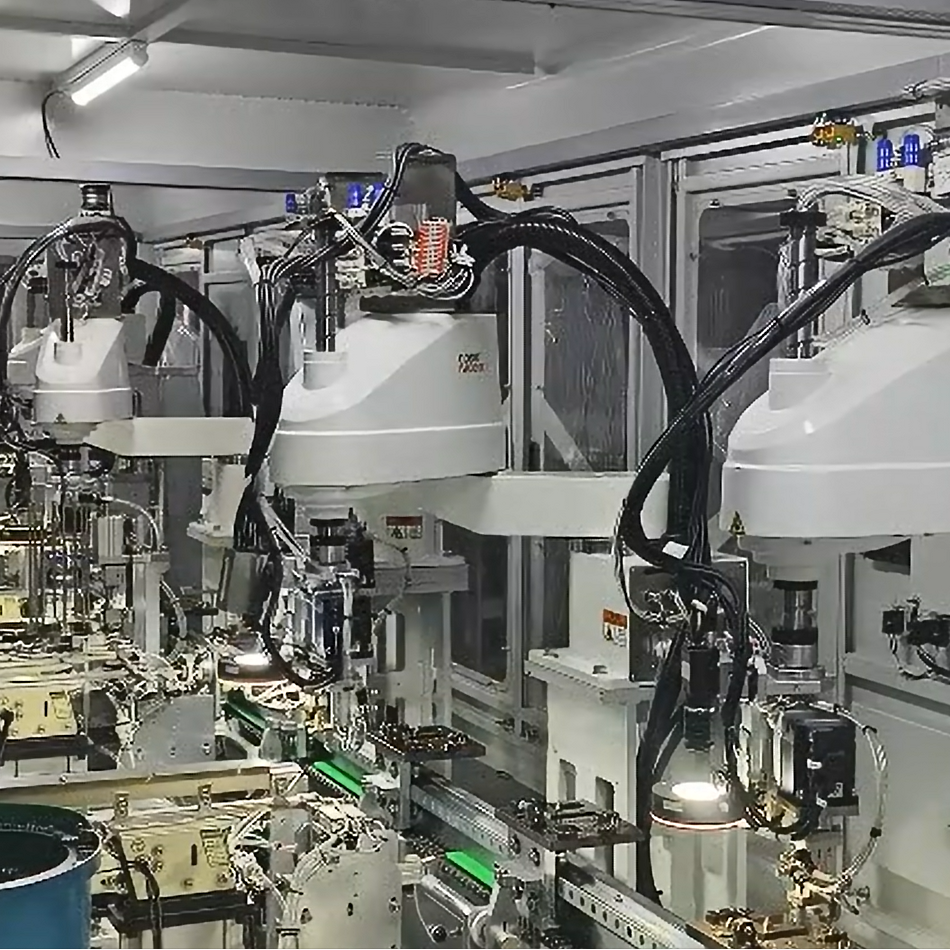
Robot assembly and testing area supporting delta, SCARA and mobile robot production.
Engineering team supporting OEM projects, custom end-effectors and line integration.
Send your line layout and cycle-time target for a factory-direct review.
JORI’s engineers can recommend a delta, SCARA, AMR or forklift configuration and confirm customization options.
Procurement FAQ for China Wholesale Automatic Unloading Robot Buyers
These are the questions international procurement teams ask most often when evaluating JORI automatic unloading robots and factory-direct supply.
What is the minimum order quantity?
Standard delta robots, SCARA robots and AMR/AGV platforms can be ordered from 1 set. This allows buyers to validate a single cell or pilot line before scaling to multiple stations.
Should I choose a delta robot or a SCARA robot?
Choose a delta robot for very fast, lightweight pick-and-place from moving conveyors, typically 3–6 kg payload. Choose a SCARA robot for planar assembly, insertion and precise placement in a compact footprint. Share part weight, cycle time and layout and JORI’s engineers will recommend a model.
Can the robot integrate with existing packaging machines?
Yes. JORI develops its own controllers and 2D/3D vision, offers PLC-ready delta robots for cartoning machines, and supports machine builders such as wet wipe lid applicator and carton packer manufacturers.
Which delivery and payment terms are accepted?
Delivery terms include FOB, CFR, CIF, EXW, CIP, FCA, CPT and express delivery. Payment methods include T/T, L/C, credit card, PayPal, Western Union, MoneyGram and escrow, in USD, EUR, GBP, JPY, CAD, AUD, HKD, CHF and CNY.
How quickly does JORI respond to inquiries?
JORI maintains an average response time of 2 hours or less and a 97.06% response rate. Buyers can send application details, drawings or videos of the current process to info@joribot.com.
Does JORI offer OEM or custom robot solutions?
Yes. JORI provides OEM service, design service and buyer-label options, and supports machine builders with custom end-effectors, controller integration and automated system integration.
Request a Factory-Direct Automatic Unloading Robot Proposal
Send product dimensions, weight, cycle time, conveyor speed, gripper requirement and destination country. JORI’s engineering team will recommend a robot family, confirm customization options and reply within two hours on average.
 Delta · IP54