SCARA
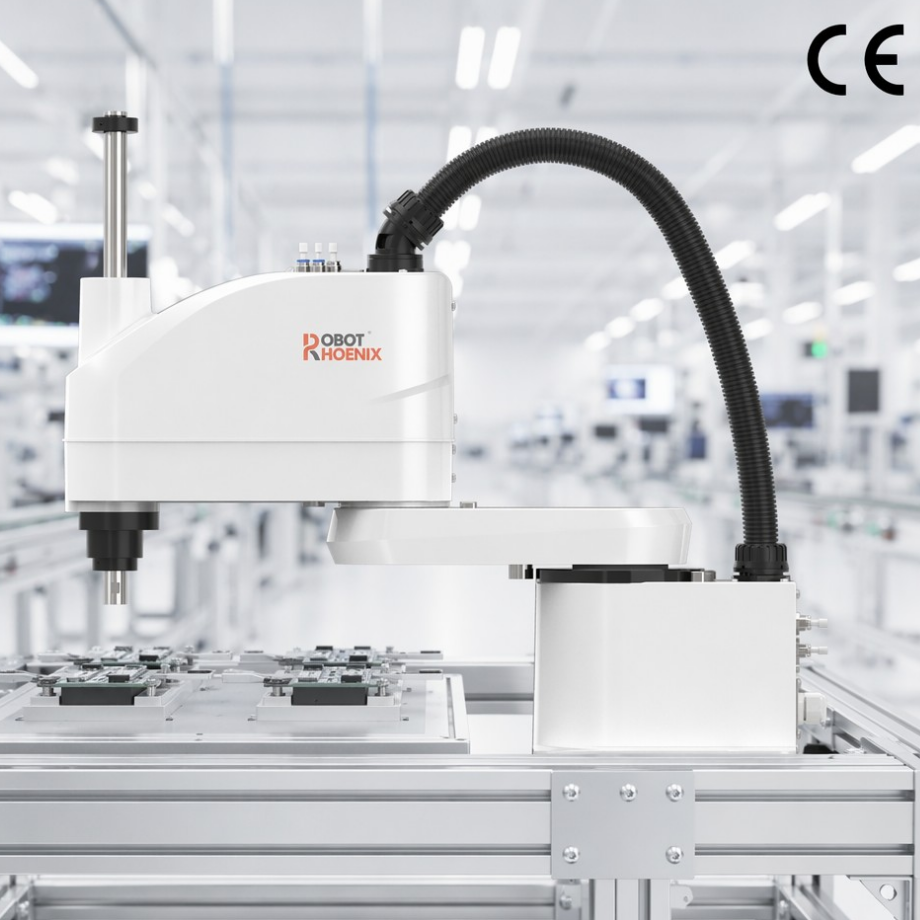
New Condition High Precision 400mm Reach Arm SCARA Robot with PLC for 3C Electronic Assembly
400 mm reach · PLC integrated
MOQ: 1 Set · OEM label available
Each model below ships as a standard unit or as an OEM configuration — your end-effector, your fieldbus, your label. MOQ starts at one set.
Five years ago, an inbound robot enquiry looked like a shopping list. Today it looks like a technical audit — and that change reshaped how suppliers are chosen.
Five years ago an enquiry read like a shopping list: one six-kilogram delta robot, one camera, one controller, best price, please. Today the same buyer sends fourteen questions, and three of them decide the deal — does the manufacturer build its own controller, can the firmware expose the fields we need, and will you ship under our brand with our documentation?
That shift is not marketing language. It is driven by margin pressure on machine builders, by procurement teams consolidating suppliers, and by end users who have learned that an unplanned week of downtime costs more than the purchase order did.
Arm length, payload headroom, mounting orientation, IP rating, cable routing and a two-colour brand scheme. This is the layer every factory can quote, and the layer that is least likely to become a project risk.
Fieldbus selection, PLC-ready I/O mapping, HMI branding, firmware feature flags and motion recipe exposure. This is where genuinely custom programmes separate from rebadged boxes.
End-effector design, vacuum cup layout, gripper geometry, vision recipe training, cycle recipes and safe-zone configuration tuned to the parts you actually handle.
Pilot quantities from a single set, ramp-up pricing, buyer-label documentation, market-specific manual languages and regional compliance paperwork handed over with the shipment.
Mechanics are the easy half. If a supplier resells a third-party controller, every firmware-level request enters a release cycle it does not control. The decisive audit question is simple: who wrote the motion control firmware on the arm you are showing me?
If people and machine must share a workstation, that is a workcell design problem rather than a property of the arm. Safety functions and performance-level determination belong to the integrator, decided against a full risk assessment referencing ISO 10218 and ISO/TS 15066. Ask suppliers to state plainly which functions sit in the arm, which in the controller, and which in the cell.
What procurement teams are writing into specifications this year — and what it means for the shortlist.
Instead of sourcing an arm, a camera and a controller from three vendors, buyers now source one platform — arm, controller, vision and documentation — and configure it. Fewer interfaces means fewer failure points at commissioning, and a shorter path from purchase order to first good part.
"Who develops your controller and vision?" has moved from a technical footnote to a scoring item. When the supplier owns the motion firmware, a functional change is a configuration task measured in weeks. When it does not, the buyer inherits a dependency chain it cannot see or schedule around.
Single-set trial orders are no longer treated as too small to bother with. Buyers install one unit, run their real product through it for a month, validate the measured cycle time, then place the repeat order. A supplier that accepts a one-set pilot is signalling flexible production rather than catalogue-only sales.
Evaluation spreadsheets now carry a seven-to-ten-year line item: gearboxes, harnesses, controller boards and end-effector consumables. Spare-part availability and typical replenishment lead time are weighed against unit price, because a cheap arm with a four-month board lead time is not cheap at all.
Buyers increasingly want the robot manufacturer and their own systems integrator in the same technical conversation — before the purchase order, not after. Willingness to publish interface documentation, join a factory acceptance test and support the integrator's programming team has become a decisive commercial factor.
Fixed cells only cover part of the floor. Interest is rising in autonomous mobile bases carrying a manipulator between stations, with the buying questions shifting to payload, navigation method, fleet management and how the platform talks to an existing MES or WMS.
Where the engineering roadmap is heading — and how each direction changes the specification you should be writing.
Motion control is migrating into the arm base or a compact adjacent unit. The result is less cabinet wiring, less floor space and one shared thermal and ingress-protection strategy. For OEM buyers this means a tighter machine envelope that is easier to fit inside an existing electrical standard.
Vision is becoming a function block inside the controller rather than a separate box on the cell. 2D handles location and inspection, 3D handles grasp planning on random orientation. Calibration is shared, latency drops and recipes live in one interface instead of two.
In packaging and sorting, throughput is capacity. Repeatability around ±0.08 mm is now a baseline for mid-to-high-end models, so the differentiators have moved to acceleration profiles, vibration suppression and how fast the vision pipeline returns a pose on a moving conveyor.
One arm, several products, minutes between changeovers. That requires standardised mechanical and electrical interfaces — vacuum, discrete I/O, fieldbus pass-through — plus tooling stored with its own recipe. Changeover time is now being written into specifications as a standalone acceptance criterion.
Floor tape and QR grids are disappearing. Laser SLAM lets a layout change become a remap rather than a construction job, and multi-vehicle coordination — traffic rules, charging strategy, task allocation — is increasingly discussed alongside production capacity planning rather than as an afterthought.
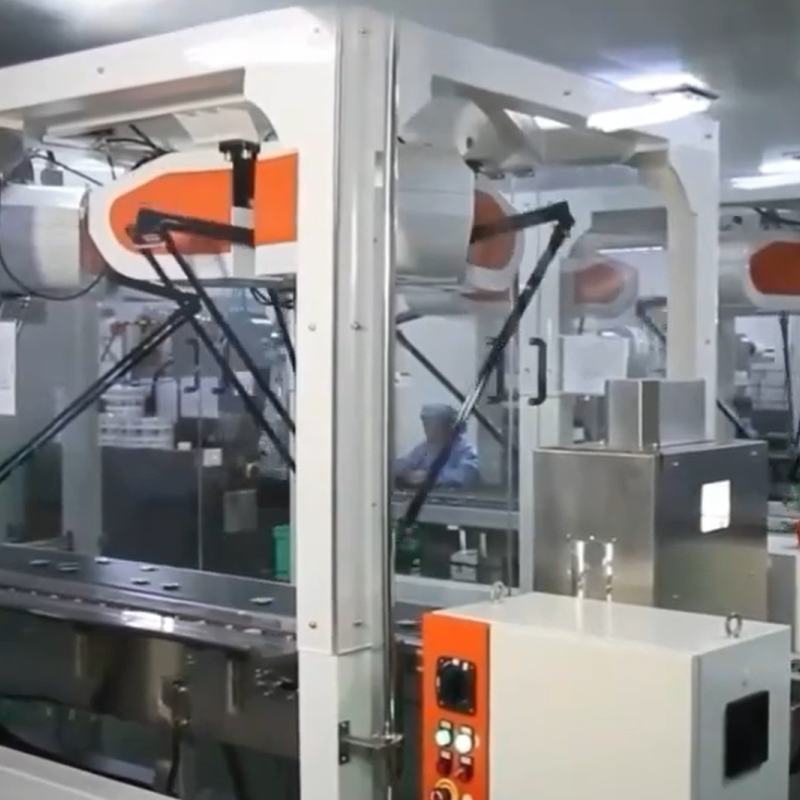
For a cartoning, labelling or lid-applicator machine builder, the decisive property is not the robot itself but whether it plugs into the existing PLC logic without a separate programming environment. Standard I/O and PLC-ready delta models are consequently winning slots inside complete machine packages.
An engineering comparison to shortlist the right platform before you contact anyone.
| Robot Family | Best For | Key Figures | Choose It When |
|---|---|---|---|
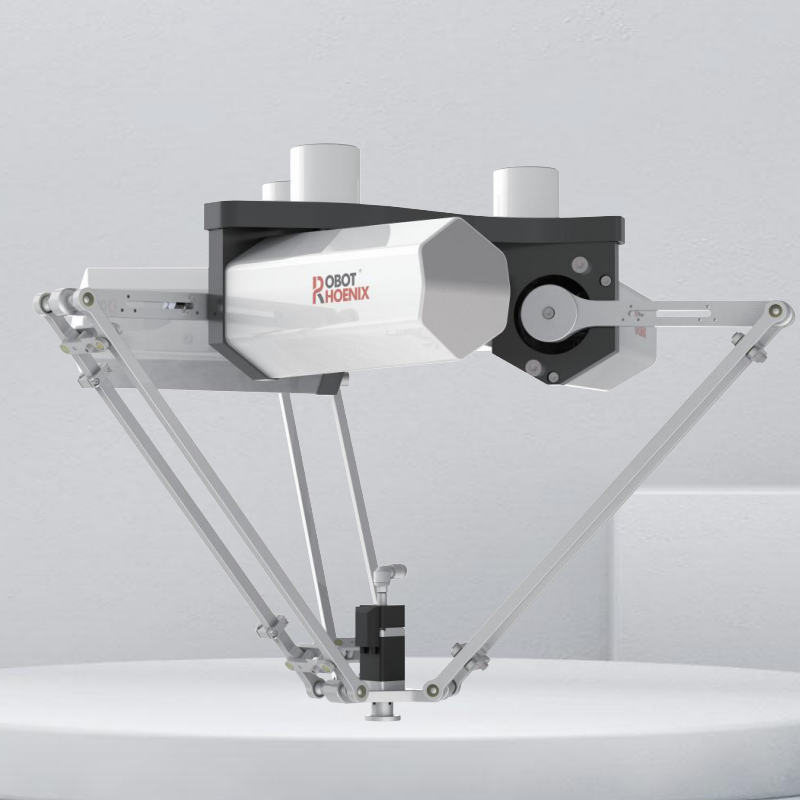
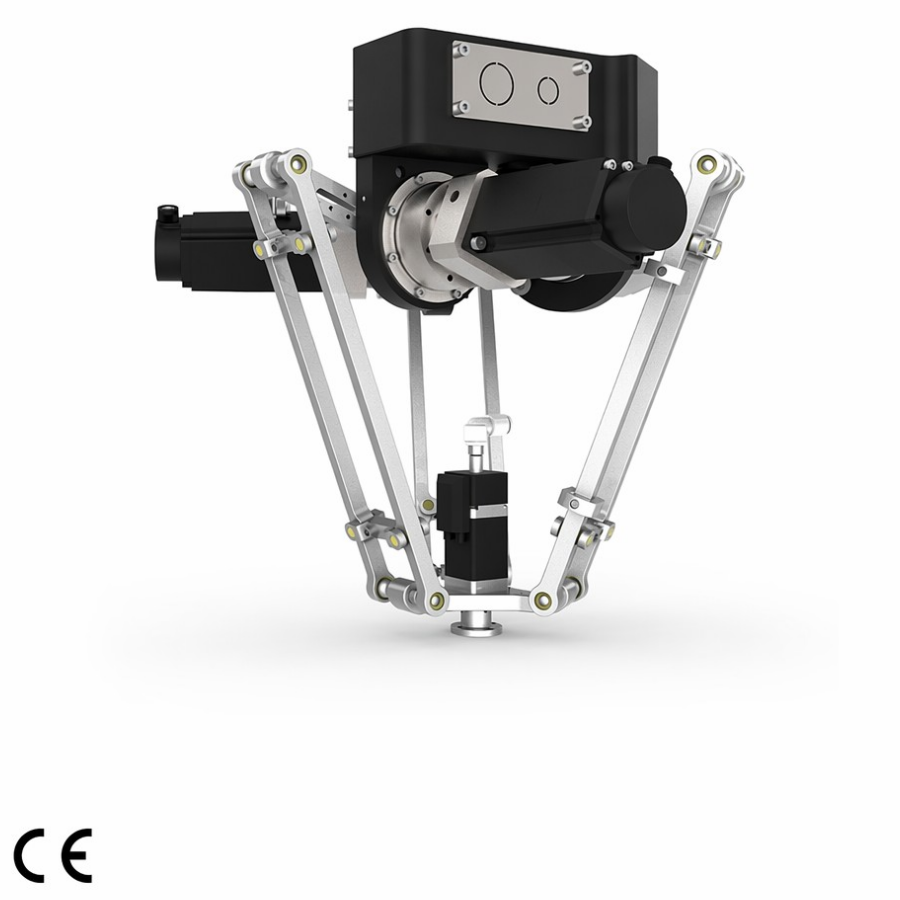
| Series 01Delta Parallel Robot | High-speed picking, sorting, labelling, cartoning, bottle unscrambling | 3–6 kg payload · ±0.08 mm repeatability · up to 120 pcs/min labelling · IP54 option · PLC-ready variants | Light products arrive at random on a moving conveyor and cycle time is your bottleneck. |
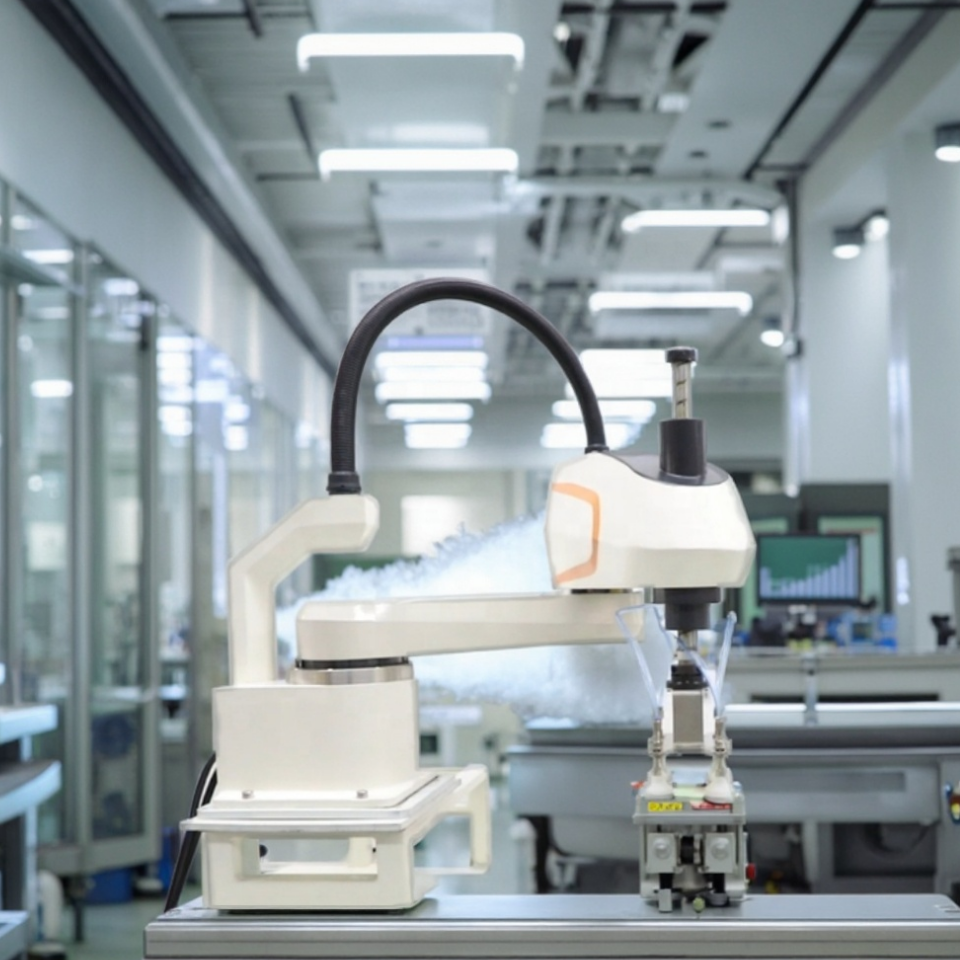
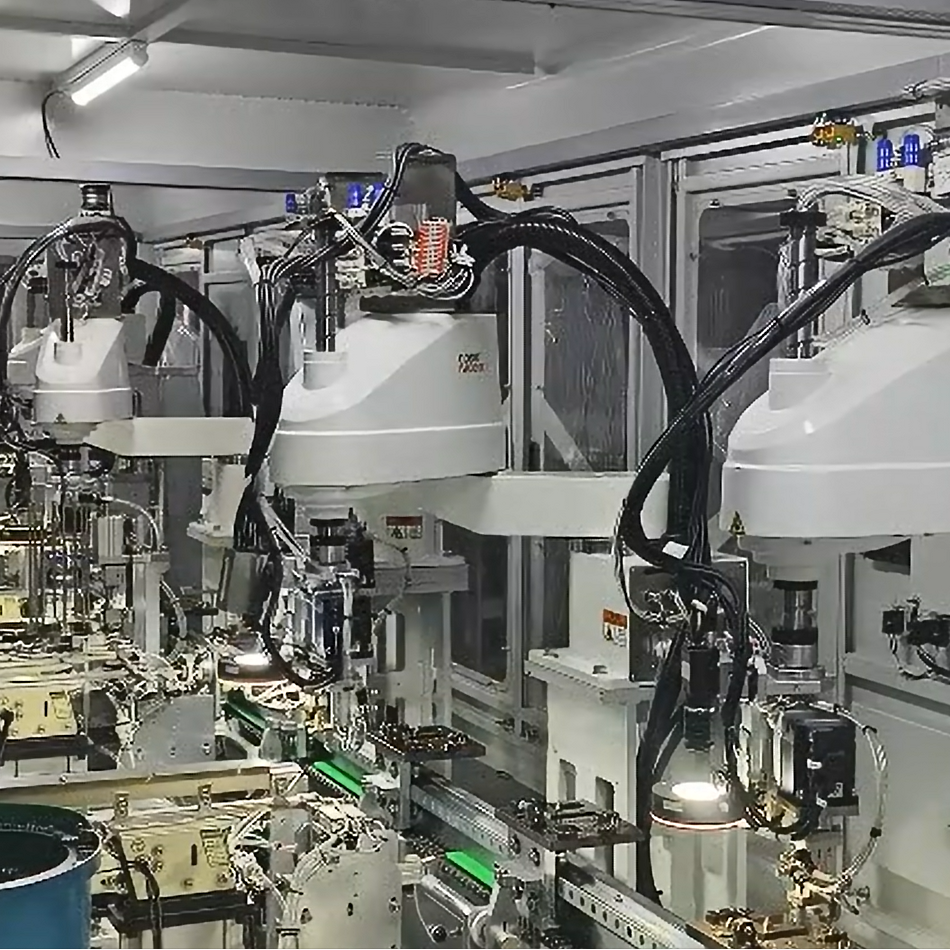
| Series 02SCARA Robot | Planar assembly, insertion, precise placement, 3C electronics, auto parts | 4-axis · compact footprint · 400 mm reach models · 2D/3D vision options · low-cost mini variants | You need accurate planar motion in a small cell where floor space is the constraint. |
| Series 03AMR / AGV | Material transport between stations and lines | 400 kg and 500 kg payload platforms · laser SLAM · fleet management · compact latent models | Operators spend hours pushing carts and the layout changes more often than the product does. |
| Series 04Autonomous Forklift | Pallet handling in warehouses and smart logistics | Camel Series · laser SLAM navigation · site layout planning support | Repetitive pallet shuttles run across shifts and labour is hard to secure. |
| Series 05Wafer Handling Robot | Semiconductor and photovoltaic wafer transfer | Self-developed motion control · smooth handling for fragile substrates · custom end-effectors | Fragile or contamination-sensitive substrates need gentle, repeatable transfer. |
Figures reflect current catalogue models. Final specifications are confirmed per configuration after engineering review.
Experience, verifiable credentials and one accountable engineering team behind the arm, the controller and the vision.
JORI Intelligent Technology Co., Ltd. was founded in 2012 in Jinan, Shandong — one of China's established robotics hubs. The company employs more than 500 people across a 10,000 m² manufacturing and testing facility, and specialises in industrial robot R&D and production, controller and 2D/3D vision development, OEM support and automated system integration.
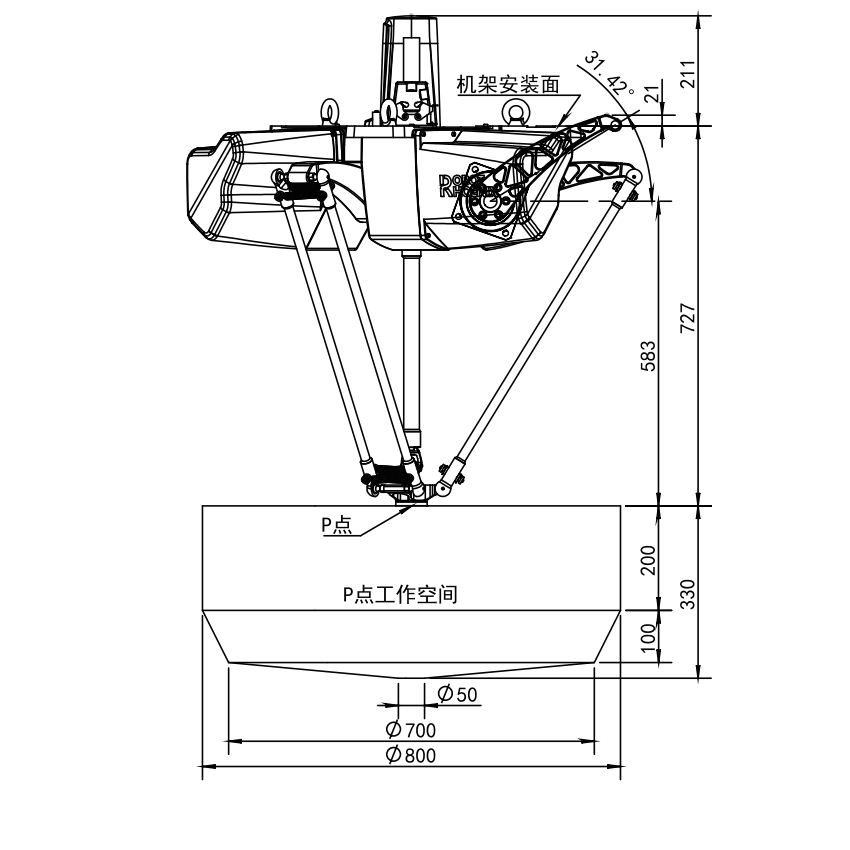
The product families that matter to OEM buyers are built in-house: delta parallel robots with 3–6 kg payload and repeatability to 0.08 mm in 2/3/4-axis configurations, SCARA robots including compact models with 2D/3D vision, laser-SLAM AGV/AMR platforms at 400 kg and 500 kg, autonomous forklifts and silicon wafer handling robots. Because the controllers and vision systems are developed by the same engineering team, a request such as "add this inspection step to the cycle" becomes a configuration change rather than a new development project.
The commercial side is built for export. Standard models ship from one set. OEM service, design service and buyer-label options are available for machine builders. Average response time is two hours or less with a 97.06% response rate. Trade terms cover FOB, CFR, CIF, EXW, CIP, FCA, CPT and express delivery; payment is accepted via T/T, L/C, credit card, PayPal, Western Union, MoneyGram and escrow, in USD, EUR, GBP, JPY, CAD, AUD, HKD, CHF and CNY. Reference clients and active projects span Southeast Asia, Eastern Europe, North America, South America and the domestic China market.
Verification matters more than assertion. The company holds ISO 9001 certification and has been checked as an onsite-verified manufacturer, with supplier assessments, credit records and trade history published independently for review before any purchase order is raised.
Arm, controller, vision and after-sales engineering come from the same team, so nobody can point at another supplier when a cell underperforms.
Design service, brand customisation, manual and documentation support, and interface adaptation built for companies that resell the robot as part of their own machine.
ISO 9001, onsite verification, national patents on delta, SCARA, wafer and AGV platforms, plus published credit and trade records that let buyers run due diligence early.
Voltage, standards, manual language and logistics are handled per destination, which shortens the gap between a confirmed order and a running line.


Print this list before your next supplier visit. The answers will tell you more than any brochure.
Name the contributor, not just the brand. If it is a third party, ask what the change-request cycle looks like for a functional request.
Native vision means one calibration file, one recipe library and one team responsible for latency. Attached vision means two support queues.
Ask for the measurement on your actual product at your actual orientation, not a catalogue figure produced from a clean, single-pose pick.
Test standard, travel distance, payload during test and the instrument used matter more than the headline number. Ask for the test report.
Confirm EtherCAT, Modbus, Profinet or discrete I/O compatibility with the PLC stack you already run on the line.
IP54 is a number; washdown practice is a routine. Ask how the arm behaves under your actual cleaning chemicals and frequency.
Dimension drawings, electrical schematics, spare-part list, programming manual and maintenance intervals. Late documentation is hidden commissioning cost.
Joint gearboxes, harnesses, controller boards and vacuum generators — request a replenishment lead time and an availability commitment in writing.
Establish which safety functions live in the arm, which in the controller and which in the cell, and require a full risk assessment before acceptance.
Direct answers, no brochure language.
Send product weight, target cycle time and layout constraints. You will receive a recommended model, a suggested configuration and a quotation — typically within two hours.