8 Precision Assembly Robots for Custom OEM Programs
These factory-direct configurations cover SCARA assembly, high-speed delta picking, vision tracking, IP54 protection and application-specific packaging automation. Every model can be reviewed as a standalone cell or adapted for a machine-builder OEM program.
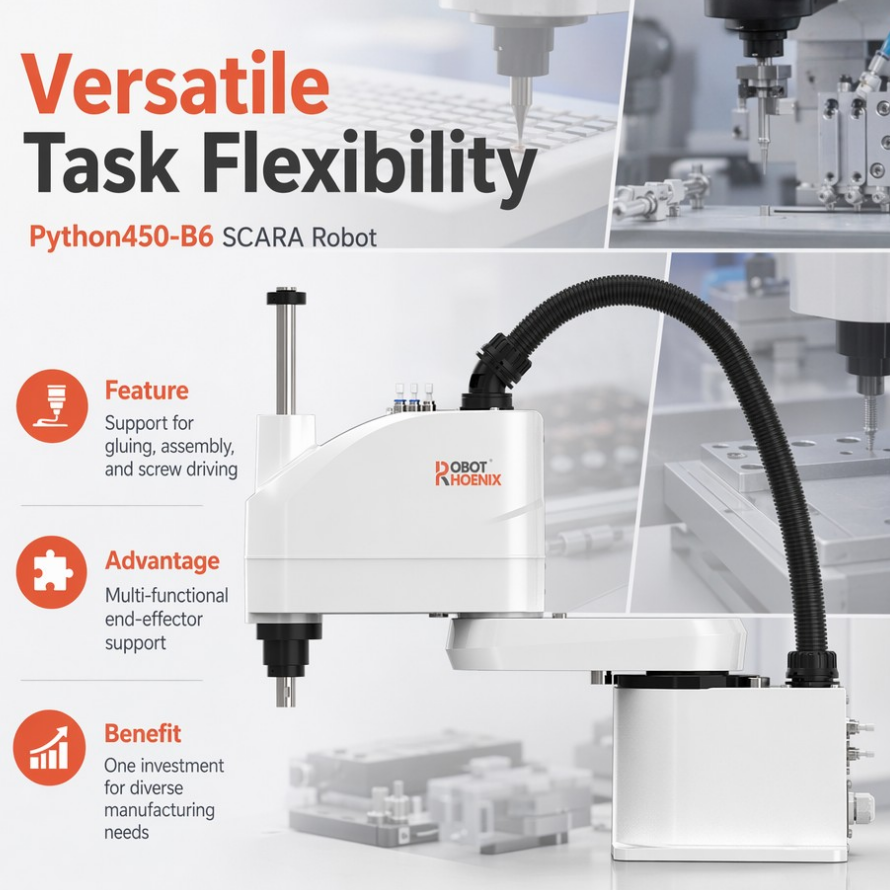
New Condition High Precision 400mm Reach Arm Scara Robot with PLC for 3C Electronic Assembly
Recommended for: compact 3C electronics assembly, screw driving, small-part placement and PLC-coordinated production cells.
- 400 mm reach for tight work envelopes
- PLC-ready for machine-builder integration
- High-precision planar assembly motion

High Speed 3kg Load Industrial Delta Robot Arm with IP54 Protection for Robotic Pick& Place
Recommended for: food, pharmaceutical and light industrial pick-and-place where wash-down protection and fast cycles matter.
- 3 kg payload for small packaged products
- IP54 protection for demanding environments
- Ideal for conveyor-fed pick-and-place
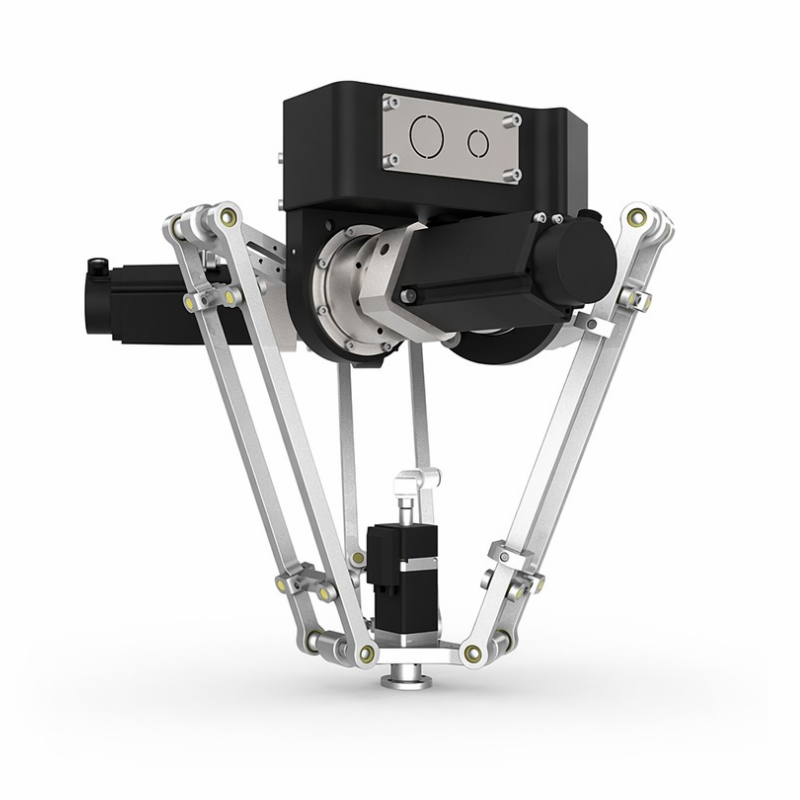
Low Cost Customized 2/3/4 Axis Industrial Manipulator Delta Robot for Pick and Place
Recommended for: OEM machine builders that need a cost-controlled delta platform with axis and tooling customization.
- 2, 3 and 4 axis configurations
- OEM design and buyer-label potential
- Practical pilot-to-volume procurement path
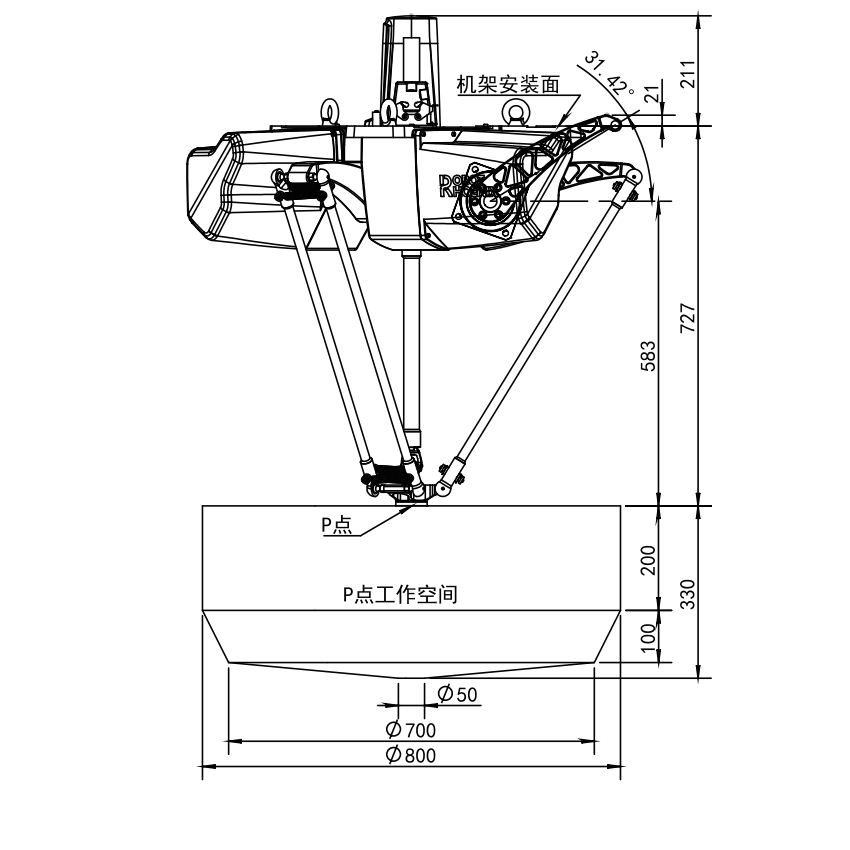
Industrial Delta Robot High Efficiency Parallel Robot for Goods Picking Placing Sorting
Recommended for: sorting, grading and packing lines where throughput and continuous motion dominate the business case.
- High-efficiency parallel kinematics
- Goods picking, placing and sorting
- Scalable for conveyors and vision systems

High Precision Pick and Place 4 Aixs Parallel Robot Delta with Vision Tracking System
Recommended for: randomly oriented products on moving conveyors, where vision tracking reduces manual presentation and fixture cost.
- 4-axis delta for orientation control
- Vision tracking for moving targets
- High-precision placement and packing
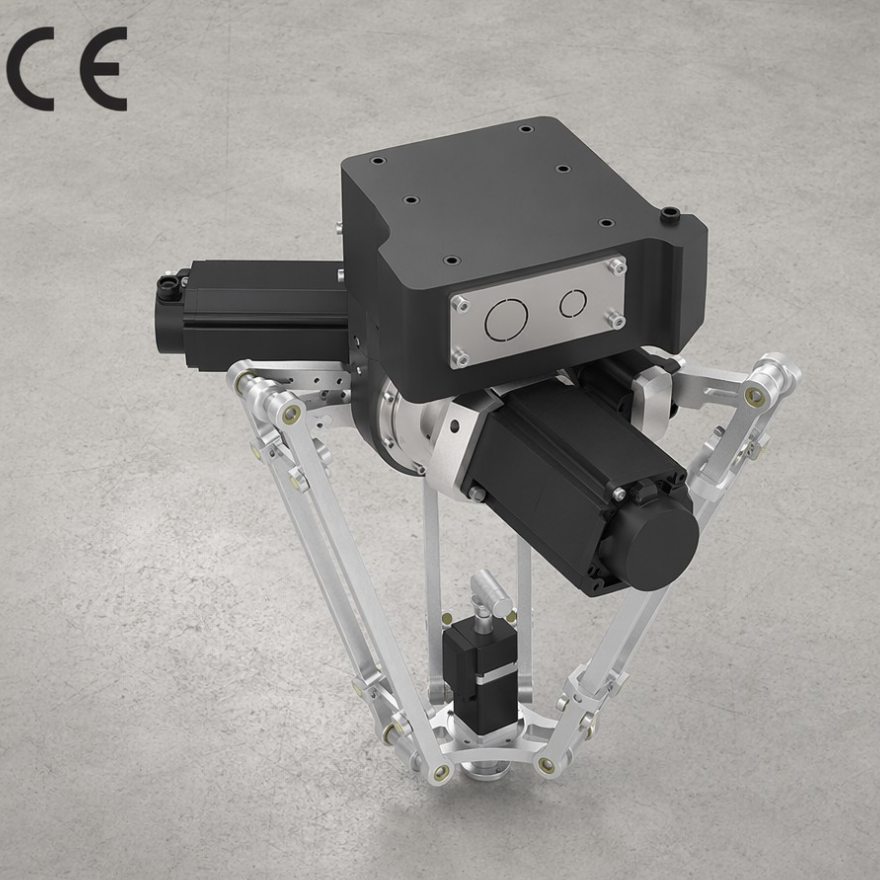
Smart Parallel Robot Picking and Placing Robot Manipulator Delta Robot with Visual System
Recommended for: mixed-SKU picking, visual inspection and flexible packing cells that need faster changeover between batches.
- Integrated visual picking concept
- Flexible changeover for product variants
- Useful for quality-aware pick-and-place
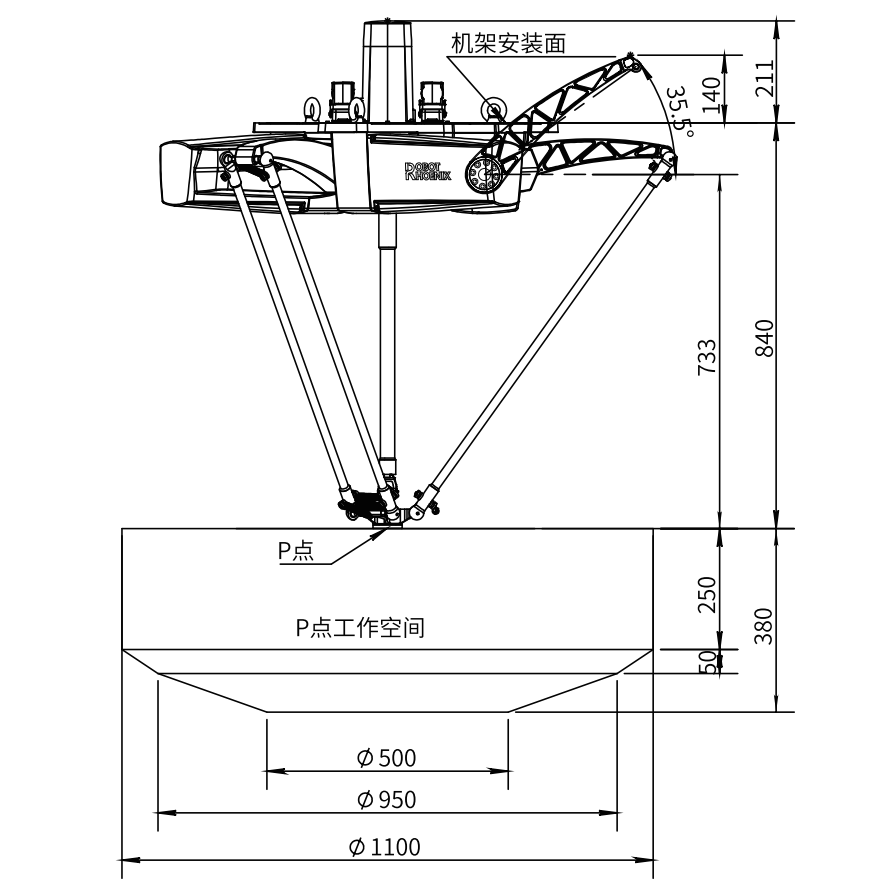
High-Speed Spider Arm Delat Robot for Fully Automatic Wet Wipe Lid Applicator Machine
Recommended for: hygiene product packaging, wet-wipe lid placement and daily-chemical lines requiring repeatable high-speed motion.
- Application-specific wet-wipe lid handling
- High-speed spider-arm delta platform
- Integration support for packaging machines
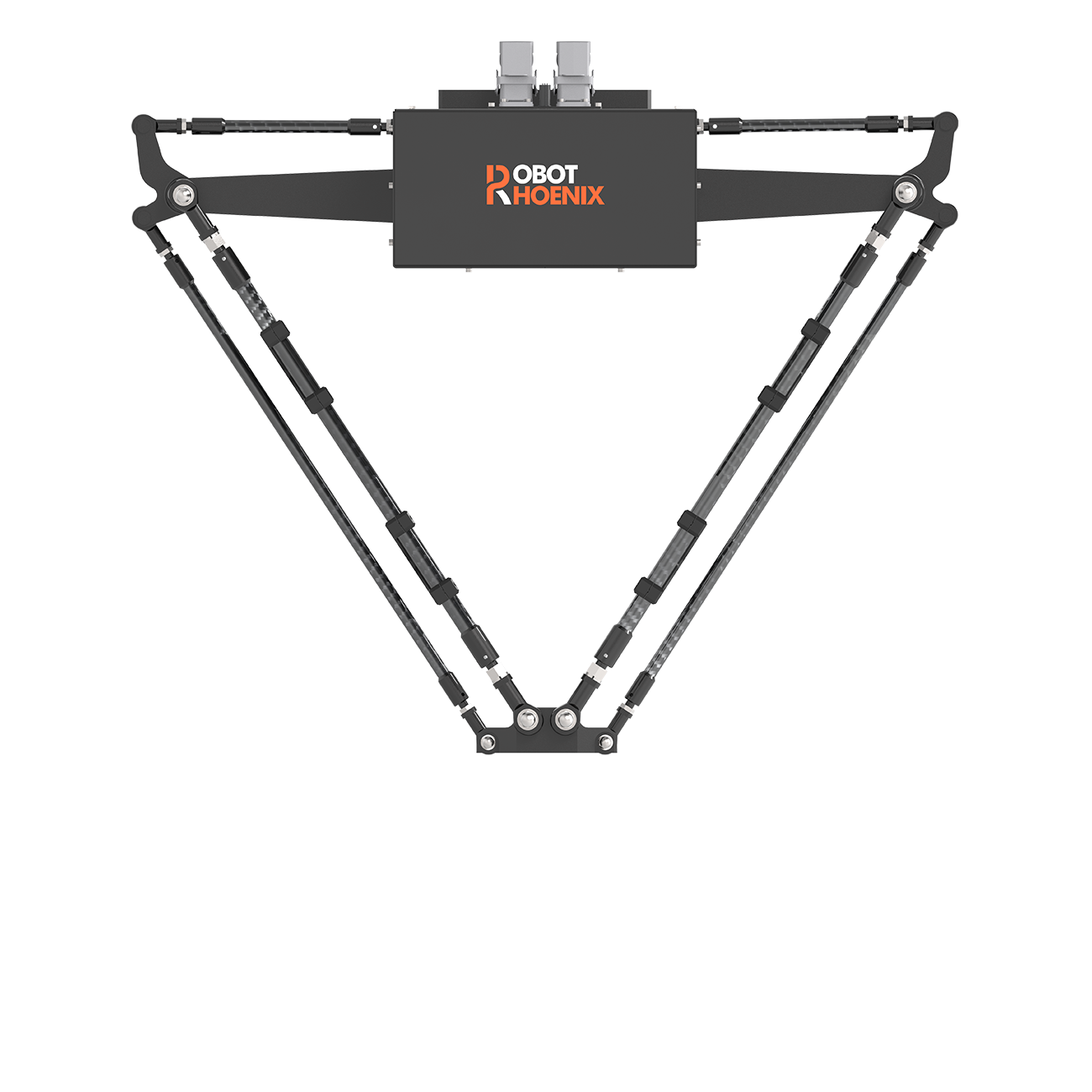
Industrial Manipulator High Speed and Accuracy Delta Robot with New Design Kinetics
Recommended for: manufacturers comparing cycle time, accuracy and serviceability in a new automated assembly or packing line.
- New kinetics for high-speed motion
- Accuracy-oriented mechanical design
- Suited to custom end-effectors and cells
All models can be reviewed for OEM labeling, controller integration, end-effector design and factory acceptance testing. Standard platforms can be ordered from 1 set.
What “Custom OEM” Should Mean Before You Approve a Precision Assembly Robot
A genuine custom OEM program is more than a logo on a catalogue arm. It is an engineering agreement covering motion, tooling, controls, validation and lifecycle support.
For procurement teams, the central question is not simply “which robot is cheapest?” It is whether the supplier can prove repeatability, cycle time and integration readiness under your operating conditions. In precision assembly, a robot that performs well in a demonstration cell can still fail in production if the end-effector mass, part presentation, conveyor tracking, PLC handshake or safety envelope has not been engineered as one system. That is why a credible Custom OEM precision assembly robot manufacturer should behave like an engineering partner, not a catalogue reseller.
JORI Intelligent Technology Co., Ltd. has focused on industrial robot R&D and manufacturing since 2012, with in-house development of robot hardware, controllers and 2D/3D vision. For buyers, this matters because the mechanical arm, controller logic and vision path are not assembled from unrelated suppliers with unclear responsibility. The result is a clearer path from application brief to factory acceptance test, especially for machine builders that need a repeatable robot platform under their own brand.
Payload and inertia are specified together
Do not approve a robot only on product weight. End-effector mass, offset, acceleration and gripper design all affect real payload capacity.
Accuracy and repeatability are separated
Repeatability describes return to a taught point; accuracy describes how close the robot reaches the commanded point. Both matter in assembly.
Cycle time is validated with vision and I/O
Ask for cycle-time data using your part, conveyor speed, camera position, PLC handshake and actual end-effector — not a theoretical no-load figure.
Controls match your plant architecture
Confirm PLC brand, EtherCAT or Modbus requirements, I/O count, safety logic, recipe management and whether the controller can run standalone.
The mechanical envelope is confirmed
Reach, mounting, cable routing, maintenance clearance and safety fencing must be checked against the actual cell layout before shipment.
Factory acceptance criteria are written down
Request FAT documentation, test-part results, tooling repeatability checks, vision calibration records and a spare-parts list.
Delta, SCARA or 4-Axis Vision Delta? A Practical Selection Matrix
Precision assembly projects often fail at the selection stage because the robot family is chosen before the process constraints are understood.
| Robot Path | Best Fit | What to Verify | Common Procurement Mistake |
|---|---|---|---|
| SCARA400 mm / PLC | 3C electronics assembly, small-part placement, screw driving and compact planar work | Reach envelope, Z-axis stroke, PLC compatibility, repeatability under payload, fixture clearance | Choosing a delta robot for a task that actually needs vertical insertion and compact planar precision |
| Delta3 kg / IP54 | Fast pick-and-place from conveyors, food and pharma packaging, light product handling | Hygiene level, IP rating, wash-down policy, belt tracking, gripper mass and cycle time | Accepting a payload figure without calculating gripper inertia and acceleration demand |
| 4-Axis VisionDelta | Randomly oriented products, moving conveyors, mixed-SKU picking and vision-guided packing | Camera mounting, lighting, calibration, tracking latency, reject handling and recipe changeover | Buying vision as an afterthought instead of validating the full vision-to-motion loop |
| Custom2/3/4-Axis | OEM machine builders that need differentiated tooling, lower cost structure or buyer-label platform | Design ownership, controller access, spare-part strategy, MOQ transition and documentation | Treating customization as a one-off prototype without a production and service plan |
| ApplicationWet Wipe Lid | High-speed lid applicator machines and daily-chemical packaging lines | Lid feed method, suction/gripper design, line speed, machine interface and reject recovery | Optimizing the robot alone while ignoring the upstream lid feeder and downstream cartoner |
The strongest procurement decision is usually the one supported by a joint cycle-time study, not a catalogue comparison alone.
Future Procurement Trends for Custom OEM Precision Assembly Robots
Buyers are shifting from “buy a robot” to “buy a validated production capability,” with suppliers expected to support pilot builds, integration and lifecycle performance.
Pilot-first purchasing with MOQ 1
Procurement teams increasingly validate a single cell before scaling. A supplier that can support 1-set orders without sacrificing engineering attention has an advantage.
Verified manufacturing and risk control
ISO 9001, onsite verification, credit records and trade history are now part of the technical evaluation, especially for new overseas suppliers.
Application-specific specification
Buyers are moving away from generic payload categories toward application data: part orientation, gripper type, conveyor speed, inspection criteria and changeover time.
Software and vision before hardware price
Vision tracking, controller openness and PLC handshake can decide project feasibility. The lowest robot price is irrelevant if integration consumes extra weeks.
Lifecycle TCO instead of purchase price
Spare parts, remote support, training and calibration documentation are being evaluated as part of total cost of ownership, not as after-sales extras.
Local support with global sourcing
Buyers want factory-direct economics with export documentation, responsive English communication and a realistic service path for multiple regions.
Product Development Trends: What the Next Generation of Assembly Robots Must Deliver
Robot hardware is becoming more compact and integrated, while buyer expectations are moving toward faster commissioning and less dependence on specialist integration labour.
Vision-native control architecture
2D/3D vision, conveyor tracking and recipe switching are becoming part of the robot control layer rather than separate bolt-on systems.
Faster kinematics with tighter footprints
Delta and SCARA platforms are being refined for higher acceleration, shorter settle time and compact installation in existing production lines.
Protection for hygiene and clean processes
IP54 and clean-surface designs are increasingly requested for food, pharmaceutical and daily-chemical assembly where wash-down and debris control matter.
Simulation-assisted commissioning
Digital models and offline programming help buyers validate reach, cycle time and collision risk before the robot cell is built on site.
Why JORI Is a Credible Custom OEM Manufacturing Partner
The supplier behind a precision assembly robot must combine mechanical engineering, controls, vision, production discipline and export responsiveness.
JORI Intelligent Technology Co., Ltd. is based in Jinan, Shandong, China, and has been developing industrial robots since 2012. The company manufactures delta parallel robots, SCARA robots, AGV/AMR platforms, autonomous forklifts and silicon wafer handling robots, and also supplies robot controllers, 2D/3D vision and automated system integration. For OEM buyers, the practical advantage is a single accountable source for the arm, controller, vision and integration path.
National patents, ISO 9001 quality management and onsite-verified supplier records give procurement teams concrete evidence to review before placing a pilot order. With standard platforms available from 1 set, buyers can validate a cell without committing to a large initial volume, then scale once the cycle time and quality metrics are proven.

Independent R&D capability
Robot mechanics, controller and vision are developed in-house, enabling faster customization and clearer technical accountability.
OEM and buyer-label support
Machine builders can discuss private-label programs, custom end-effectors, controller integration and documentation requirements.
ISO 9001 quality system
Documented quality control supports component inspection, robot assembly and final run-in testing before export.
Factory-direct integration support
JORI supports automated system integration, helping buyers connect robots with packaging machines, conveyors and PLC controls.
Export-ready communication
Average response time of 2 hours or less and a 97.06% response rate help overseas buyers keep projects moving across time zones.
Verifiable supplier credentials
Onsite verification, supplier assessment, credit profile, trade capacity and transaction records can be reviewed before purchase.
Application Scenarios Where OEM Precision Changes the Business Case
Different industries require different trade-offs between speed, hygiene, vision, footprint and integration depth.
3C electronics assembly
SCARA and compact delta platforms support small-part placement, screw driving, inspection and fixture-to-fixture transfer in tight work envelopes.
Food and beverage packing
IP54 delta robots handle packaged goods, sorting and case packing where fast pick-and-place and hygiene-conscious design are both required.
Pharmaceutical and medical
Repeatable motion, clean integration and traceable validation help support blister, vial, carton and medical-device handling projects.
Wet wipes and daily chemicals
High-speed spider-arm delta robots are used in fully automatic wet-wipe lid applicator machines and daily-chemical packaging lines.
Automotive components
Custom end-effectors and PLC integration support repetitive assembly, feeding and inspection tasks in tier-one and tier-two production environments.
Semiconductor and solar
JORI also develops wafer handling robots for semiconductor and photovoltaic lines, extending precision motion capability into fragile-substrate transfer.
How to Reduce Risk Before You Issue a Purchase Order
Use this checklist to compare robot manufacturers and suppliers on engineering substance, not only headline specifications.
| Validation Area | What to Request | Why It Matters |
|---|---|---|
| Cycle-time proof | Video and data using your part, gripper, conveyor speed and vision path | Prevents a demonstration robot from becoming a slow production bottleneck |
| Repeatability proof | Test report at rated payload with end-effector offset and acceleration | Assembly quality depends on repeatable placement, not catalogue precision alone |
| Controller compatibility | I/O list, PLC protocol, safety logic and recipe management documentation | Reduces commissioning delays and hidden integration engineering cost |
| Vision performance | Calibration method, lighting plan, tracking latency and reject strategy | Vision-guided picking fails when the motion loop and reject handling are undefined |
| OEM readiness | Labeling, documentation, spare-parts list, training and change-control process | Protects your brand and service commitments after the robot is shipped |
| Commercial terms | MOQ, lead time, payment method, Incoterms, warranty and after-sales path | Keeps a technically strong project financeable and operationally sustainable |
JORI accepts standard platforms from 1 set and supports FOB, CFR, CIF, EXW, CIP, FCA, CPT and express delivery options. Payment terms can include T/T, L/C, credit card, PayPal, Western Union, MoneyGram and escrow in major currencies.
Common Questions From Custom OEM Robot Buyers
These are the questions that most often determine whether a robot cell moves from concept to purchase order.
What is the minimum order quantity for JORI industrial robots?
Does JORI offer OEM or custom robot solutions?
Should I choose a delta robot or a SCARA robot?
Which delivery and payment terms are accepted?
Can JORI robots integrate with existing packaging machines?
How can I validate cycle time before purchase?
What support is available after delivery?
How quickly does JORI respond to inquiries?
Send Your Assembly Brief and Get an Engineered Quote
Share part weight, cycle time, conveyor speed, vision needs, PLC brand, footprint, OEM label and target delivery date. JORI engineers can respond with a recommended robot, end-effector concept, controller I/O plan and validation route.
Factory-direct · MOQ 1 set · ISO 9001 · Onsite-verified · Jinan, Shandong, China