8 Robotic Modules for Custom Palletizing and End-of-Line Automation
A custom OEM robotic palletizer is rarely a single catalog item. It is an engineered cell that combines a robot, controller, vision, end-of-arm tooling, pallet pattern logic, guarding, conveyors and line-level safety. The eight products below are proven JORI building blocks for machine builders, integrators and factory owners who need faster configuration, recognizable quality and a single source for core motion technology.
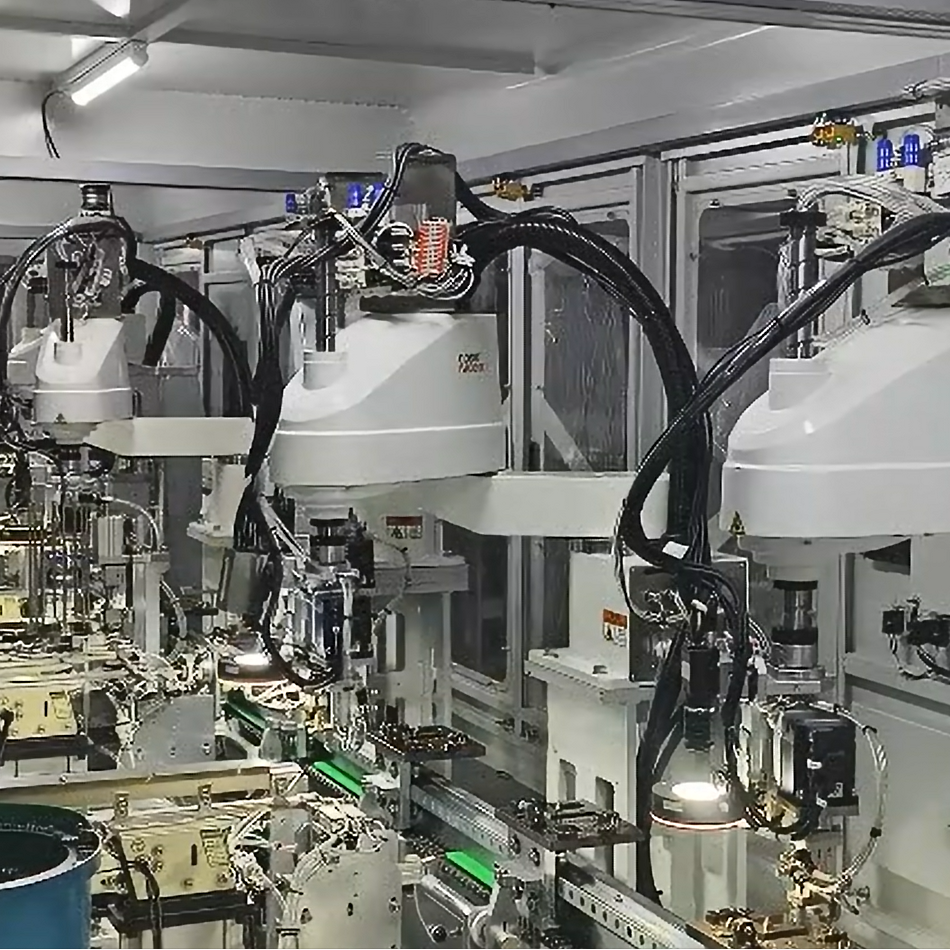
High Quality Mini Industrial Robot SCARA for Pick & Place at Low Cost – New Condition
A compact SCARA module for small-case sorting, tray loading and space-constrained end-of-line cells where a full-size palletizer would be over-engineered.
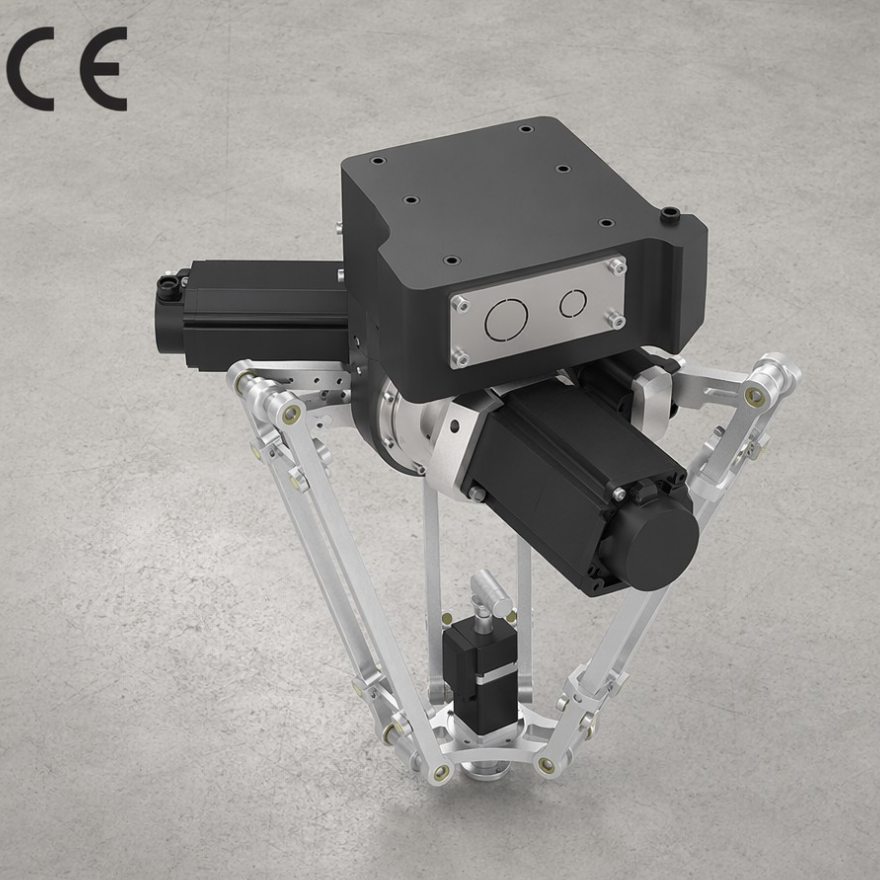
Smart Parallel Robot Picking and Placing Robot Manipulator Delta Robot with Visual System
Vision-guided delta module for high-speed pick-and-place, mixed-SKU sorting, reject handling and inspection upstream of pallet pattern formation.
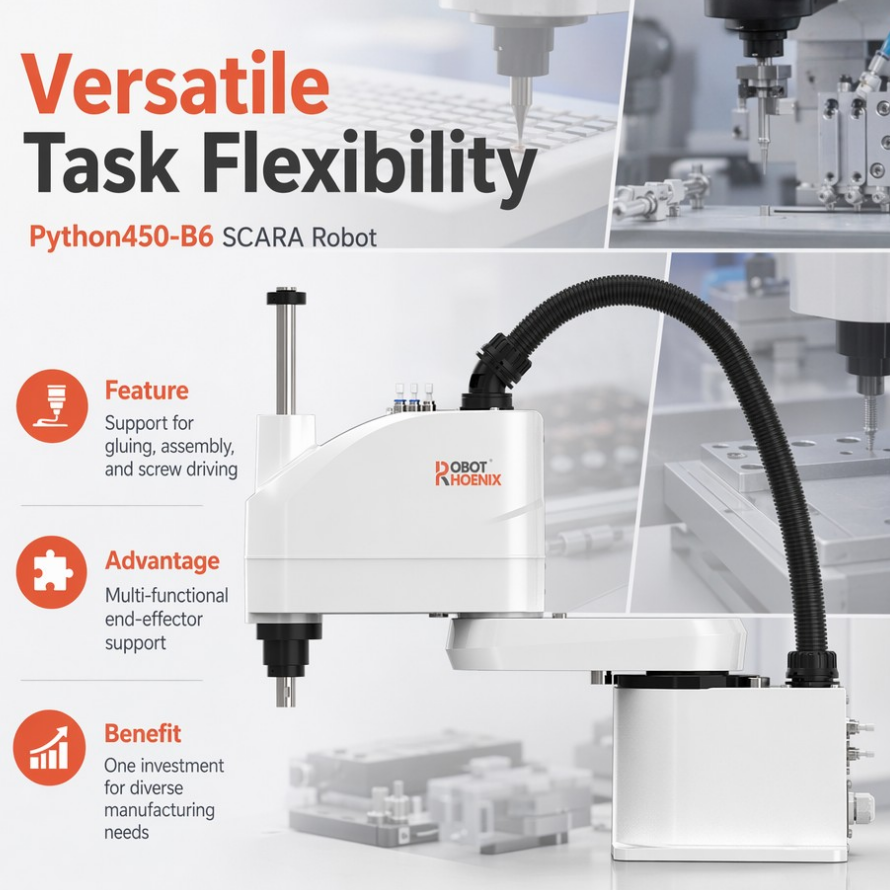
New Condition High Precision 400mm Reach Arm SCARA Robot with PLC for 3C Electronic Assembly
A high-precision SCARA platform for electronics assembly, insertion and kitting; useful where palletizing is fed by delicate component handling.
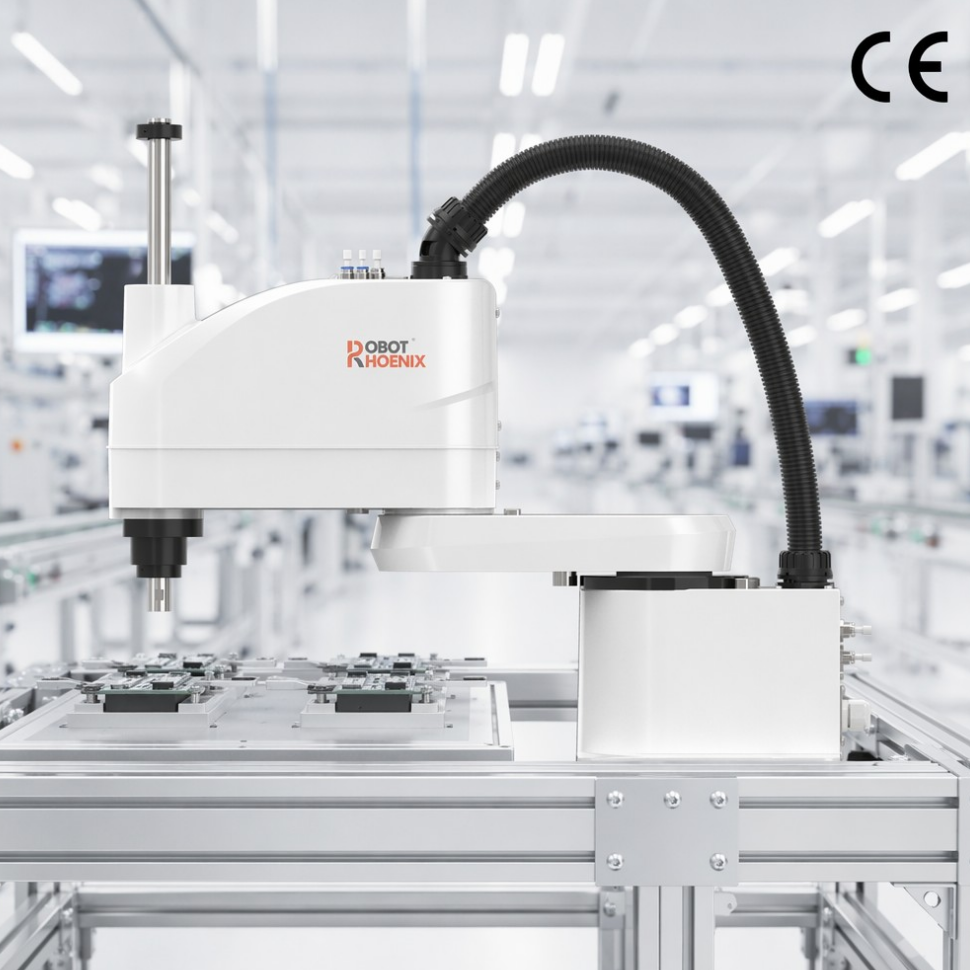
High Speed and Accuracy Newly Developed Industrial Robot Arm Four Axis SCARA Robot
A high-throughput SCARA platform for repetitive pick-and-place, machine tending and secondary packaging transfer before the palletizer.

High Speed 3kg Load Industrial Delta Robot Arm with IP54 Protection for Robotic Pick& Place
IP54 protection supports food, pharmaceutical and wet-wipe packaging environments where hygiene-conscious handling and fast pick cycles matter.
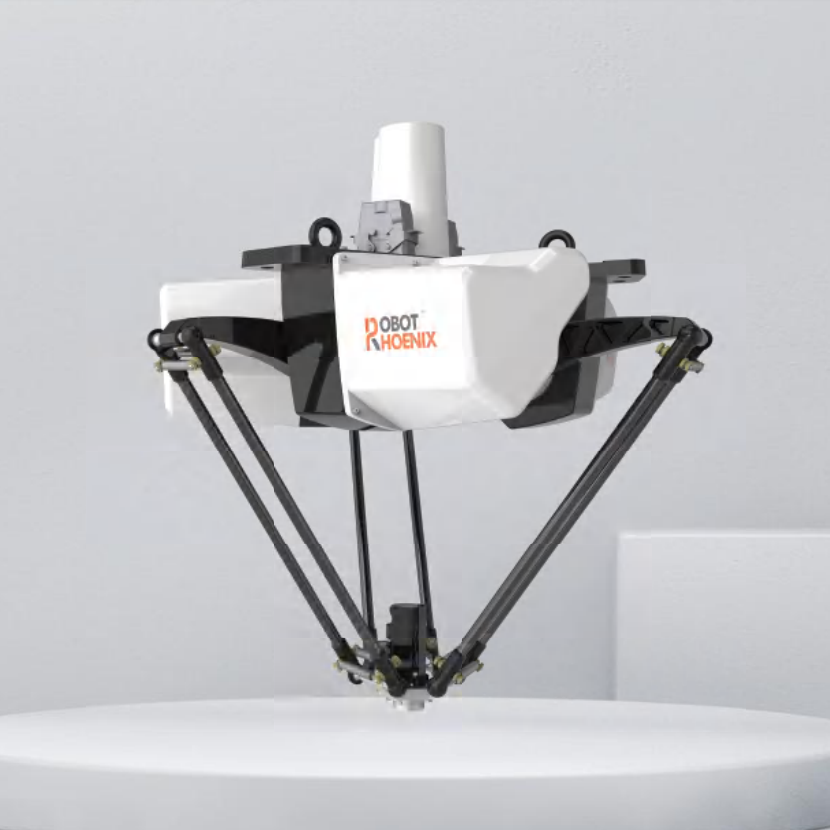
Robotphoenix New 4-Axis Parallel Robot Arm Delta Spider Hand Robot for Carton Packer Line
Carton-packer integration experience for high-speed case or tray handling, lid application and palletizer infeed where cycle time is constrained.

High Precision Pick and Place 4 Axis Parallel Robot Delta with Vision Tracking System
Vision tracking for products arriving at random orientation; helps maintain pattern accuracy when upstream conveyors release mixed or unpredictable items.
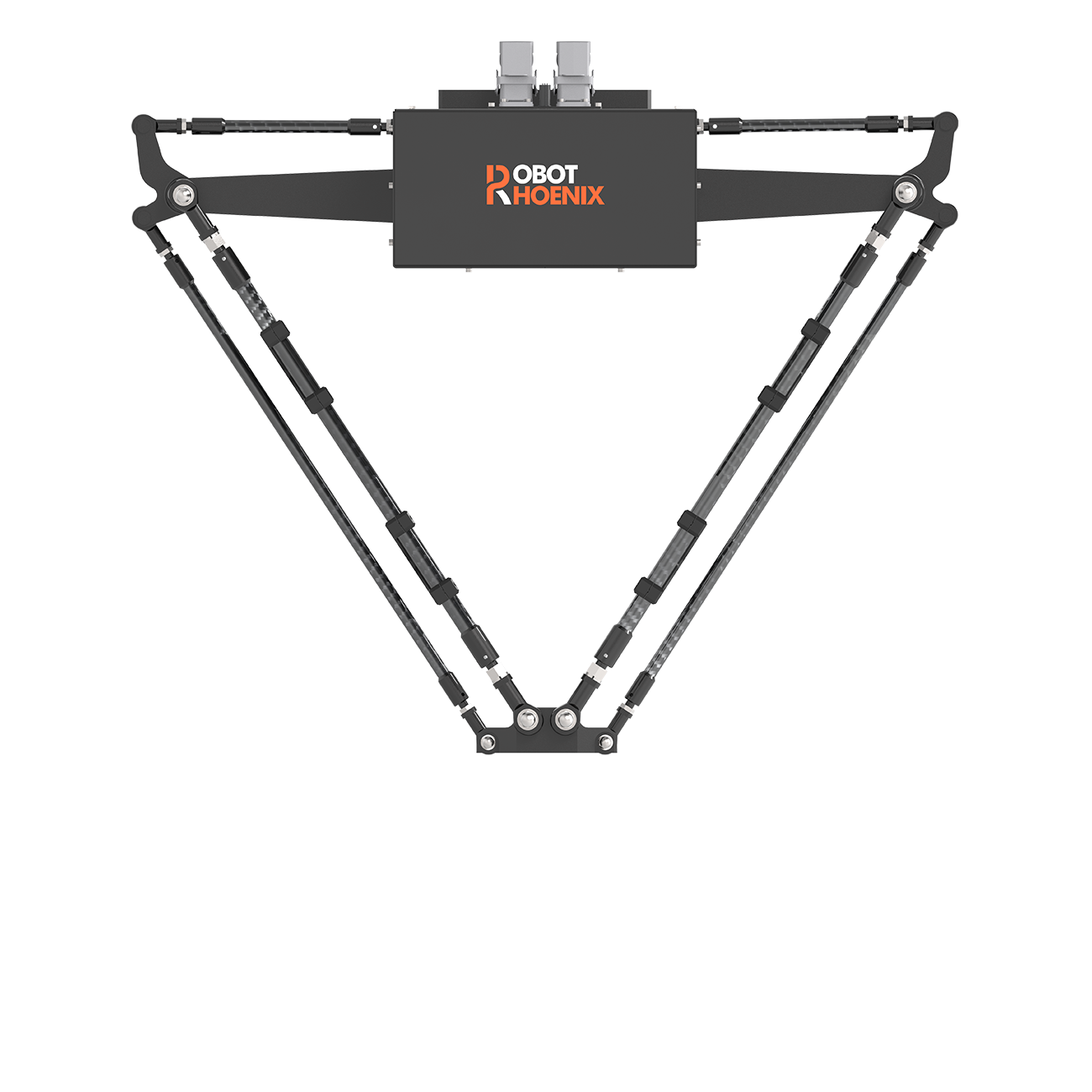
Industrial Manipulator High Speed and Accuracy Delta Robot with New Design Kinetics
New kinematics for fast, accurate motion; a strong candidate for high-cycle sorting and pick-and-place before a robotic palletizer or case packer.
Product links and images above reflect JORI’s public robot catalogue. For a complete palletizer, JORI engineers combine these standard modules with custom EOAT, guarding, conveyors, controls and safety logic.
Get a QuoteBuilt for Buyers Who Need More Than a Reseller
Custom palletizing projects require engineering depth, production capacity and responsive technical communication. These verified company figures show why JORI is considered by machine builders, system integrators and factory owners across Asia, Europe and the Americas.
Standard delta robots, SCARA robots and AMR/AGV platforms can be ordered from 1 set, so buyers can validate a single cell or pilot line before scaling up. OEM service, design service and buyer-label manufacturing are available for qualified projects.
How Buyers Will Evaluate Robotic Palletizer Manufacturers Through 2030
Procurement is moving away from a narrow “robot price” comparison. Buyers now evaluate whether a palletizer supplier can support recipe changeovers, mixed-SKU handling, line integration, OEM branding, spare parts and long-term serviceability. That shift favors manufacturers who control more of the stack — robot, controller, vision and application engineering.
Mixed-SKU Flexibility Becomes Mandatory
Retail, e-commerce and contract packaging lines face shorter runs and more product variants. Buyers will favor palletizer suppliers whose controls can store recipes, adjust patterns and combine vision with pattern-generation software, instead of locking the line into one case size.
OEM Sourcing and Private Label Accelerate
Machine builders and integrators increasingly want a robot and controller platform they can brand, configure and support under their own name. A manufacturer that offers OEM service, design service and buyer-label options reduces time-to-market without forcing the integrator to develop core motion technology in-house.
TCO and Serviceability Outrank Lowest Bid
Procurement teams are building total cost of ownership models around uptime, spare parts, remote diagnostics, training and engineering response. A supplier with documented quality management, fast technical replies and export experience is easier to justify to operations and finance stakeholders.
A Configurable End-of-Line Capability, Not Just an Arm
For custom palletizing, the most valuable supplier is the one that can shorten the distance between a product drawing and a validated cell. That requires more than a robot catalog.
- Pilot-friendly entry: standard modules available from 1 set for validation before a full line rollout.
- Single-source accountability: arm, controller and vision developed by the same manufacturer.
- Line-level integration: PLC-ready robots and controllers designed for cartoners, labelers, conveyors and packaging machines.
- Verifiable credentials: ISO 9001, onsite verification, credit and trade records that procurement can review.
Ask for a Line Acceptance Test, Not Only a Robot Datasheet
A palletizer is only as good as the line feeding it. Before comparing quotations, define a joint acceptance test that includes the worst-case product, the fastest required cycle, the full pallet pattern, a simulated upstream stoppage and a changeover between two SKUs.
This single procurement habit exposes weak integration assumptions earlier, protects the project budget and makes supplier comparison more objective.
The Next Generation of OEM Robotic Palletizing Technology
Palletizing hardware is becoming more compact, more connected and more software-defined. The robot arm remains important, but the surrounding motion control, vision, tooling and data layer increasingly determine whether a cell can adapt to future products.
Higher Throughput in a Smaller Footprint
Compact SCARA and delta kinematics continue to improve speed-to-footprint ratios. For space-constrained packaging rooms, the ability to place a fast robot close to existing conveyors is often more valuable than a larger machine with excess reach.
AI-Assisted Vision and Pattern Logic
Vision is moving from simple presence detection to orientation tracking, defect awareness and pattern guidance. Mixed-SKU palletizing benefits when the control layer can identify the product and adapt placement without stopping the line for manual reprogramming.
Modular End-of-Arm Tooling
Vacuum, clamp, bag, tote and slip-sheet tools are becoming easier to exchange. A modular EOAT strategy lets one cell handle more packaging formats and gives maintenance teams a faster path to replacement parts.
Open Controls and MES/PLC Integration
Buyers want palletizer cells that speak to existing PLCs, safety systems, MES dashboards and future automation platforms. Open integration reduces commissioning risk and supports traceability requirements in food, pharma and electronics manufacturing.
Safety-First Architecture
As palletizers sit closer to operators and AGV routes, safety logic, zone control and guarding design become part of the robot decision. Suppliers who understand line-level safety can reduce late-stage layout changes and commissioning delays.
Digital Twins and Lifecycle Data
Simulation and remote diagnostics help validate reach, cycle time and pattern changes before installation. Over time, lifecycle data supports predictive maintenance, spare-parts planning and continuous improvement across multiple plants.
JORI’s in-house controller and 2D/3D vision development align with these trends. For OEM buyers, that means fewer technical hand-offs when a palletizer concept needs custom vision, tooling or PLC communication.
How to Specify a Custom OEM Robotic Palletizer
A successful palletizer specification translates production reality into engineering constraints. The more precisely the buyer defines product, pattern, cycle and interface requirements, the faster a manufacturer can confirm robot selection, EOAT, safety scope and project risk.
Payload and Product Stability
Define the real weight, center of gravity and surface of every case, bag, tray or tote. Palletizing performance depends on how the product behaves under acceleration, not only on a nominal payload number.
Cycle Time and Reach
Provide cases per minute or pallets per hour, plus peak-rate conditions and shift patterns. A robot that meets average rate but fails at peak rate will become a bottleneck during seasonal or promotional production.
Pallet Pattern and Layer Logic
Share pallet footprint, layer count, mixed-SKU rules, slip sheets, interlocking requirements and pattern changes. Pattern complexity directly affects software scope, end-of-arm tooling and robot kinematics.
End-of-Arm Tooling
Vacuum, clamp, fork, bag or hybrid tooling must match the product and the pallet pattern. A modular EOAT plan supports future SKUs and keeps maintenance practical when suction cups or gripper jaws wear.
Controls and Line Interface
Specify PLC brand, communication protocol, safety architecture, MES data needs and conveyor handshakes. A palletizer must behave as part of the line, not as an isolated island that requires manual coordination.
Safety and Validation
Plan guarding, light curtains, interlocks, maintenance access and operator training early. Safety review should happen during concept design, not after the mechanical layout is already fixed.
Five-Layer OEM Palletizer Specification Model
| Specification Layer | What the Buyer Should Provide | Why It Changes the Quote | JORI OEM Lever |
|---|---|---|---|
| Layer 1Product definition | Case, bag, tray or tote dimensions; weight; surface; center of gravity; flexibility; temperature; hygiene requirements. | Determines EOAT type, acceleration limits, robot payload margin and protection level. | SCARA, delta and IP54 platforms; custom end-effectors; application review. |
| Layer 2Throughput | Average and peak cases per minute, pallets per hour, shift pattern, upstream and downstream buffer. | Sets robot kinematics, reach, pattern complexity and buffer strategy. | High-speed delta and 4-axis robot options; PLC-ready integration. |
| Layer 3Pattern and vision | Pallet footprint, layer count, mixed SKU, slip sheets, orientation, inspection and traceability needs. | Defines software scope, vision hardware and commissioning time. | In-house controller and 2D/3D vision; vision tracking models. |
| Layer 4Line interface | Conveyor handshakes, PLC brand, safety logic, MES reporting, voltage, plant layout and maintenance access. | Reduces integration risk and avoids late electrical or safety redesign. | OEM controller integration; support for packaging and carton lines. |
| Layer 5Commercial scope | OEM branding, spare parts, training, documentation, acceptance test, delivery terms and payment terms. | Clarifies lifecycle cost, warranty process and project accountability. | OEM service, design service, buyer-label manufacturing, ISO 9001 processes. |
Where Custom Palletizing Modules Earn Their Place
Custom OEM palletizing is not limited to one industry. The same core robot and control platform can support high-speed sorting, precise placement, hygienic handling or pallet transport when the application engineering is matched to the environment.
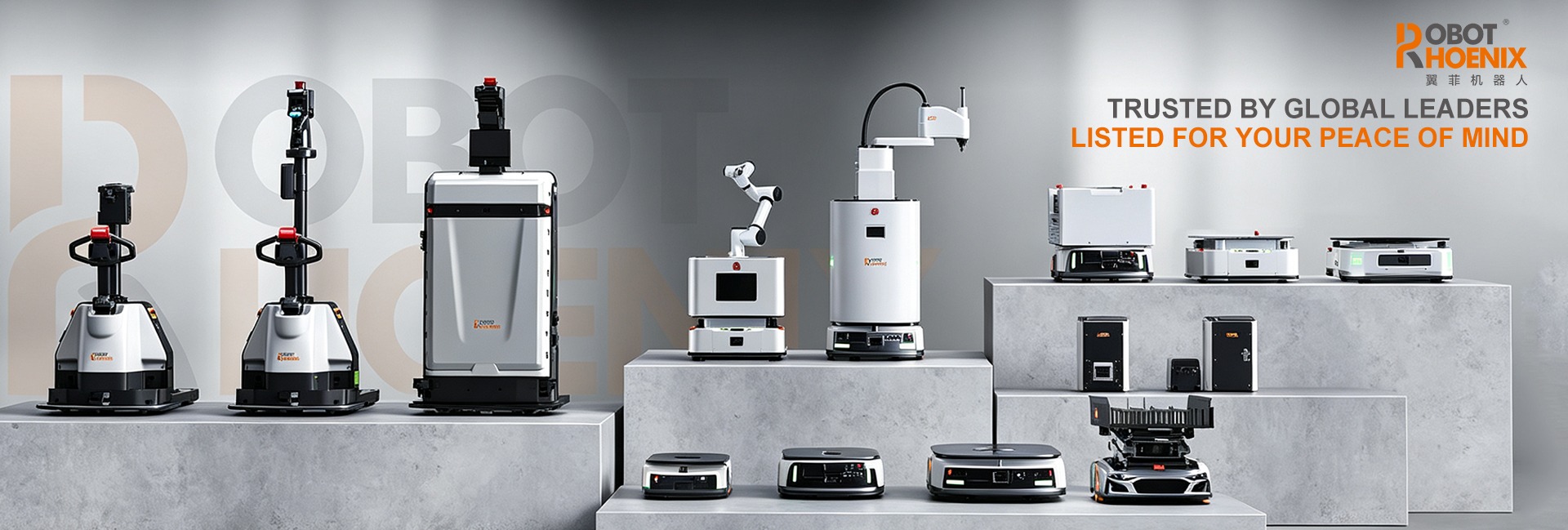
Food & Beverage
Vision-guided delta picking, sorting and case packing at conveyor speed, with IP54 protection options for hygiene-conscious lines.
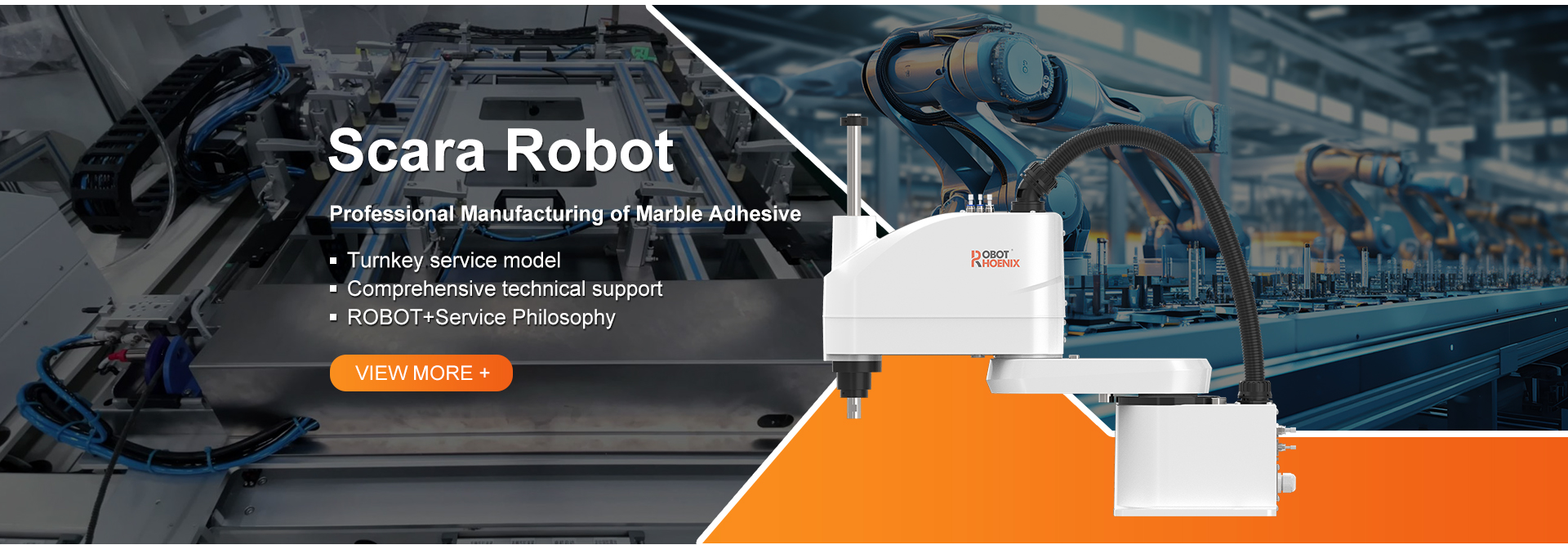
Electronics & 3C
SCARA assembly, insertion and inspection for compact cells where precise feeding and traceable placement support downstream packing.
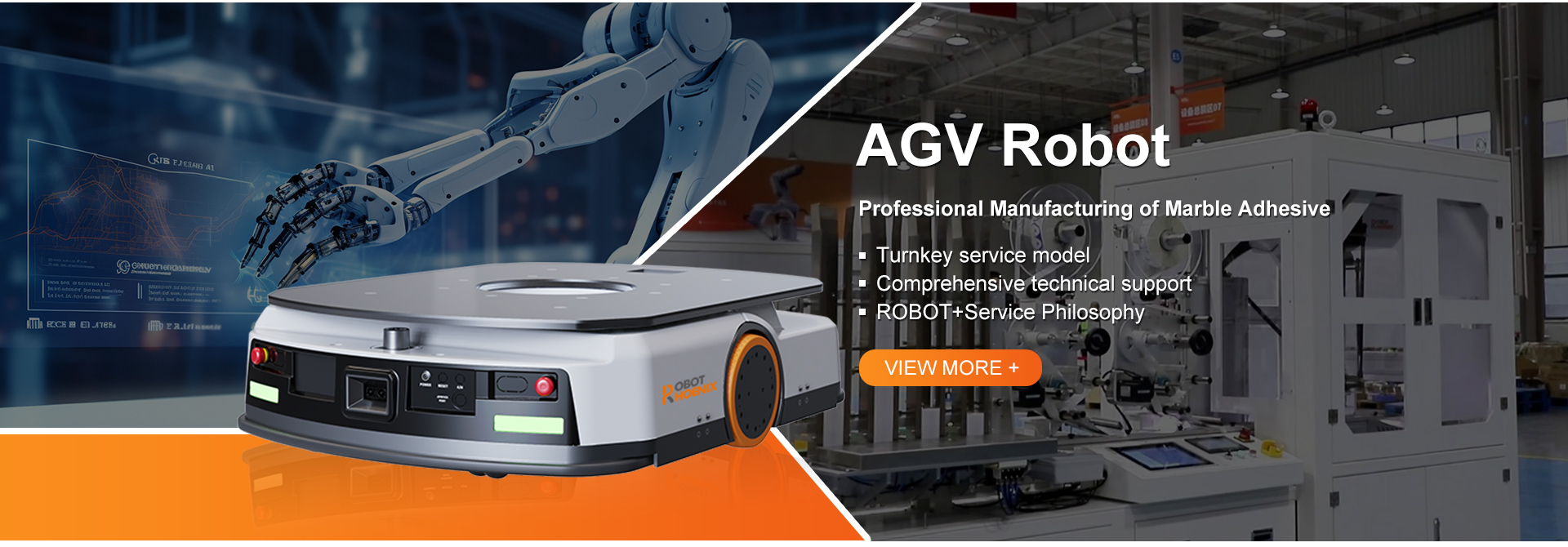
Warehouse & Logistics
Laser SLAM AMRs and autonomous forklifts help move pallets between palletizing, staging and dispatch zones without fixed floor tracks.

Daily Chemicals & Wet Wipes
Delta-based lid application, carton packing and transfer cells for hygiene products, where speed and repeatable handling define line output.
Why JORI Is a Credible OEM Robotic Palletizer Supplier
JORI Intelligent Technology Co., Ltd. was founded in 2012 in Jinan, Shandong, China, and specializes in industrial robot R&D and production, controller and 2D/3D vision development, OEM support and automated system integration.
One Engineering Team for the Arm, Controller and Vision
Because JORI’s delta robots, SCARA robots, silicon wafer robots, AGV/AMR platforms, controllers and 2D/3D vision are developed in-house and protected by national patents, buyers get one accountable source for hardware, software and after-sales engineering — not a reseller chain.
For a custom OEM palletizer project, this matters. The robot, controller, vision, tooling and line interface can be reviewed together. Integration questions are resolved by the same engineering organization that understands the motion platform, reducing the risk of finger-pointing between unrelated suppliers.
JORI has more than 10 years of experience serving overseas markets and supports machine builders, system integrators and factory owners across Southeast Asia, Eastern Europe, North America, South America and China.
- Independent R&D capability and national patents
- Original factory for delta, SCARA, AGV/AMR and wafer robots
- OEM service, design service and buyer-label options
- One-stop automation integration support
- ISO 9001 quality management and onsite-verified supplier profile


Self-Developed Technology
National patents on delta, SCARA, wafer and AGV robots, controllers and vision reduce dependency on third-party motion stacks and support faster customization.
Original Factory Accountability
JORI is an original robot factory with production, testing and integration resources, not a pure trading intermediary. That improves traceability when custom work is required.
OEM, Design and Buyer Label
Machine builders can source robot modules for private-label palletizing cells, custom end-effectors and controller integration without building core robotics capability from scratch.
ISO 9001 Quality Management
Documented quality control from component inspection to final robot run-in testing helps buyers reduce incoming inspection risk and qualify the supplier internally.
Responsive Application Engineering
Average response time of 2 hours or less and a 97.06% response rate help project teams keep feasibility, quotation and layout discussions moving.
Verifiable Before You Buy
Independent assessment, credit profile, trade capacity and transaction history are available for procurement due diligence before a custom palletizer project is released.
Verify Us Before You Commit
Review independent assessments, credit and trade records for your supplier qualification file.
Custom OEM Robotic Palletizer Questions Buyers Ask First
Use these answers to prepare an internal technical review, supplier comparison or capital request for a custom end-of-line palletizing project.
What is a custom OEM robotic palletizer?
A custom OEM robotic palletizer is an end-of-line cell engineered around a specific product mix, pallet pattern, cycle rate, layout and control environment. The OEM aspect means the robot, controller, vision, end-effector and software can be supplied for integration under a machine builder’s brand, rather than being limited to a fixed catalog model. JORI supports this model with in-house robot and controller technology, design service and buyer-label options.
What can JORI supply for a palletizing project?
JORI supplies SCARA robots, delta parallel robots, 4-axis delta robots, in-house controllers, 2D/3D vision, and AMR/AGV or autonomous forklift platforms where pallet transport is part of the project. For complete palletizer cells, the engineering scope can include custom end-effectors, line interface support and integration with conveyors, cartoners and packaging machines. Final configuration depends on product weight, cycle rate and pattern complexity.
Which robot type is better for palletizing: SCARA or delta?
Delta robots are usually preferred for very fast, lightweight pick-and-place from moving conveyors, especially when vision guidance or mixed-SKU sorting is involved. SCARA robots are stronger for planar assembly, precise placement and compact cells where footprint and accuracy matter. For carton packing and end-of-line transfer, a 4-axis delta or high-speed SCARA may be the better fit. Buyers should share product weight, cycle time and layout before selecting a model.
What is the minimum order quantity for JORI robots?
Standard delta robots, SCARA robots and AMR/AGV platforms can be ordered from 1 set, which allows buyers to validate a single cell or pilot line before scaling up. Complete custom palletizer projects are quoted according to engineering scope, tooling, controls and integration requirements.
Does JORI offer OEM, private-label and design services?
Yes. JORI provides OEM service, design service and buyer-label options for machine builders and integrators. The company can support custom end-effectors, controller integration and automated system integration, helping OEMs bring a palletizing or packaging solution to market without developing every core component internally.
Can JORI robots integrate with existing packaging machines?
Yes. JORI develops its own controllers and 2D/3D vision, and offers PLC-ready delta robots for cartoning machines, carton packers and wet-wipe lid applicator lines. Integration discussions should cover conveyor handshakes, safety logic, product sensing, reject handling and the communication protocol used by the plant.
What information is needed for an accurate quotation?
Provide product dimensions, weight and center of gravity; case, bag, tray or tote type; pallet footprint and layer pattern; required cycle rate and peak rate; upstream and downstream equipment; available floor space; PLC and safety architecture; target country and voltage; OEM branding requirements; and any acceptance-test criteria. Photos or videos of the current line are especially useful for early feasibility review.
Which delivery, payment and response terms are supported?
Delivery terms include FOB, CFR, CIF, EXW, CIP, FCA, CPT and express delivery. Payment methods include T/T, L/C, credit card, PayPal, Western Union, MoneyGram and escrow, in USD, EUR, GBP, JPY, CAD, AUD, HKD, CHF and CNY. JORI maintains an average response time of 2 hours or less and a 97.06% response rate for inquiries.
Send Your Load, Cycle Rate and Layout. We Will Return a Buildable Concept.
Share the product profile, pallet pattern, conveyor interface and target throughput. JORI’s engineering team will review the right robot module, OEM scope and integration path for your custom palletizing cell.
Standard modules from 1 set · OEM & buyer-label support · ISO 9001