Eight Robotic Platforms for Custom Sorting, Picking & Packing Lines
These eight platforms are the practical building blocks of a custom OEM robotic sorting system. Procurement teams can verify the original product pages, then match payload, reach, vision, gripper design and line integration to the sorting task.
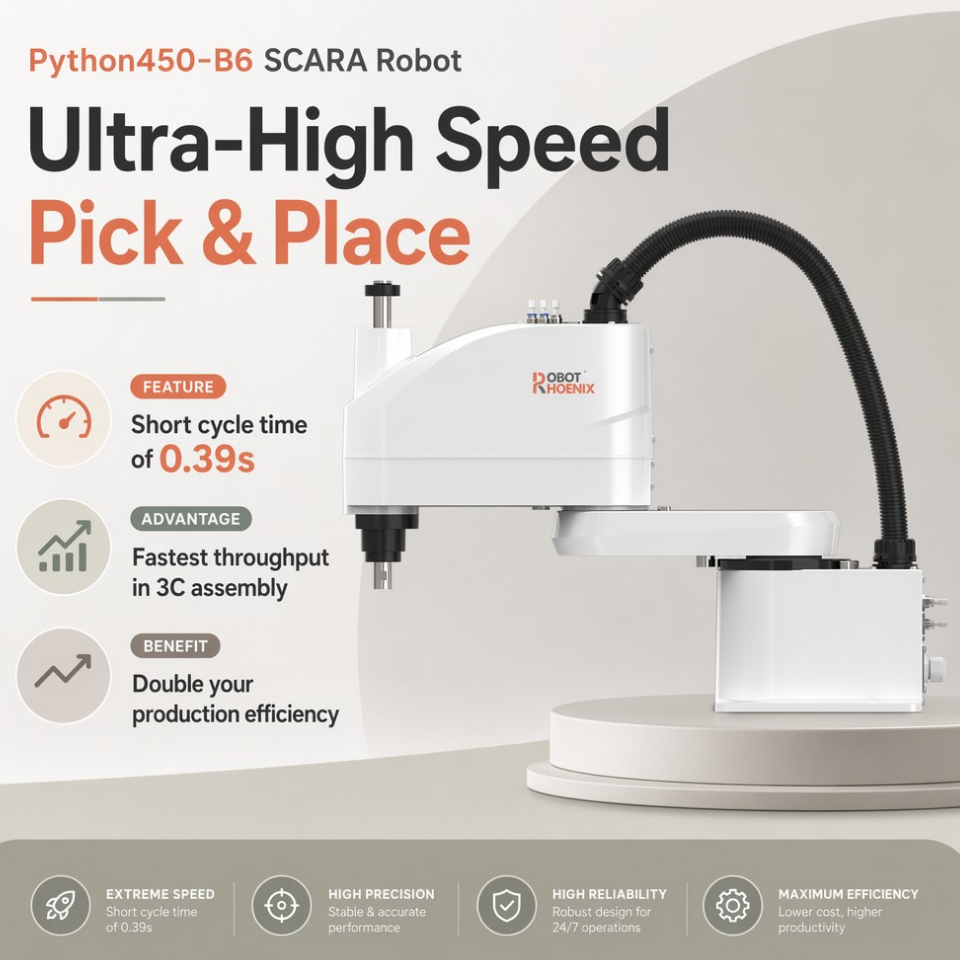
Robotphoenix High Speed Manipulator SCARA Robot with Gripper for Product Accuracy Picking

High Speed 3kg Load Industrial Delta Robot Arm with IP54 Protection for Robotic Pick & Place
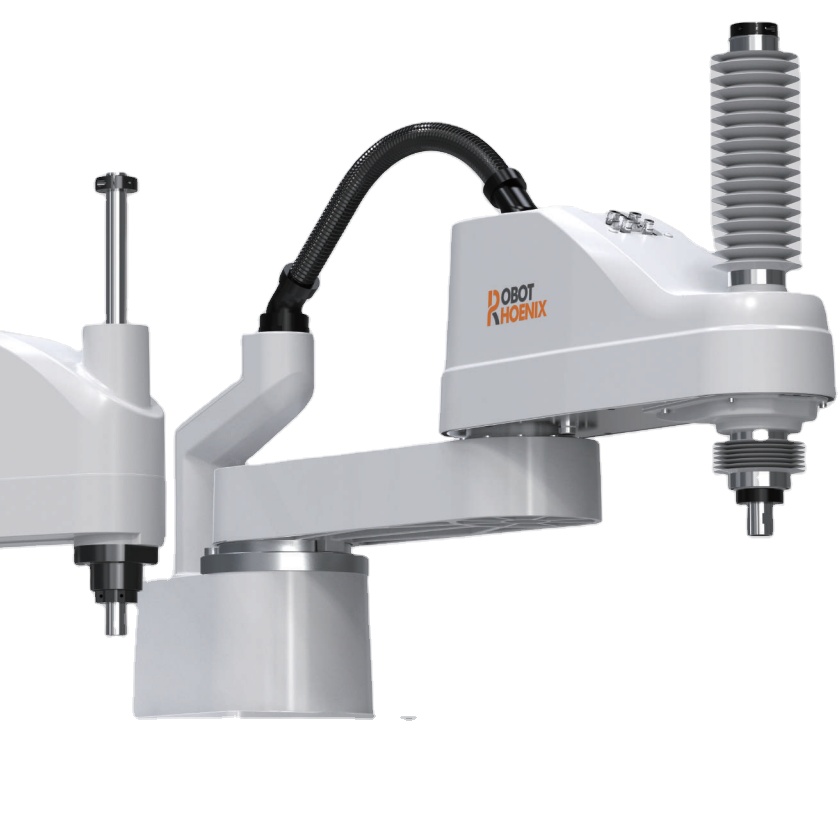
High-Precise Industrial SCARA Robot Arm for Pick and Place in Light Industry

High Precision Pick and Place 4 Axis Parallel Robot Delta with Vision Tracking System
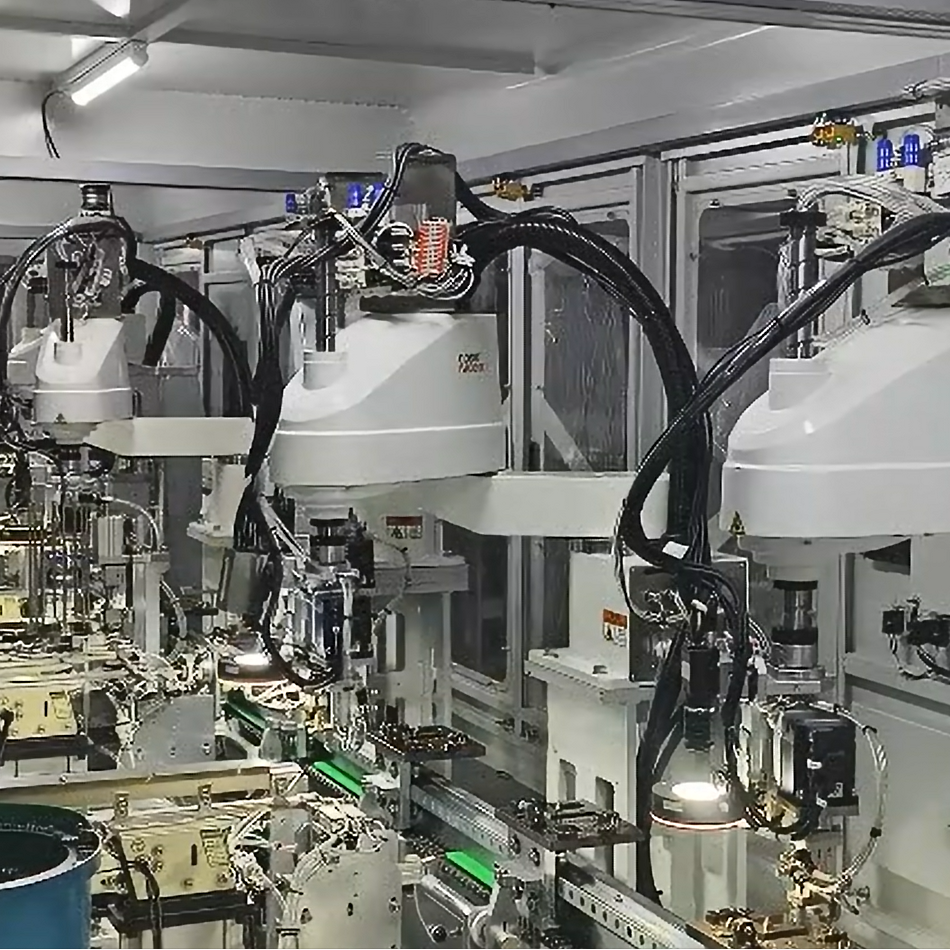
High Quality Mini Industrial Robot SCARA for Pick and Place at Low Cost — New Condition
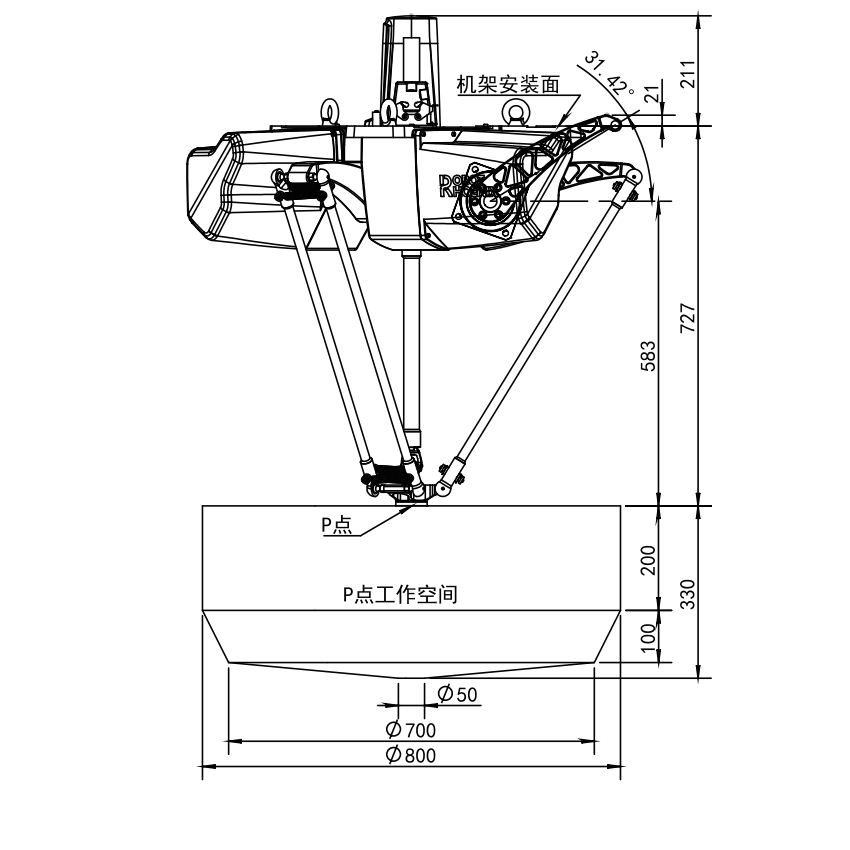
Industrial Delta Robot High Efficiency Parallel Robot for Goods Picking, Placing & Sorting
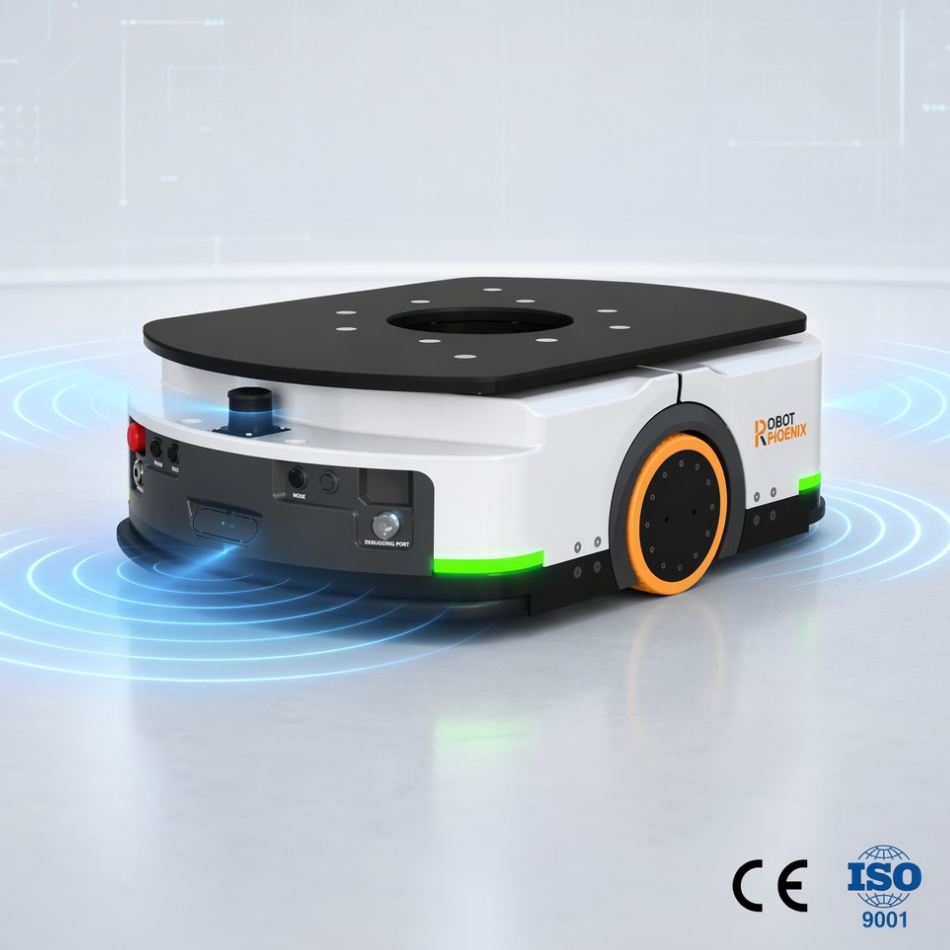
Compact and Latent Mobile Robot AGV for Narrow Aisle Warehouse and Factory Transportation
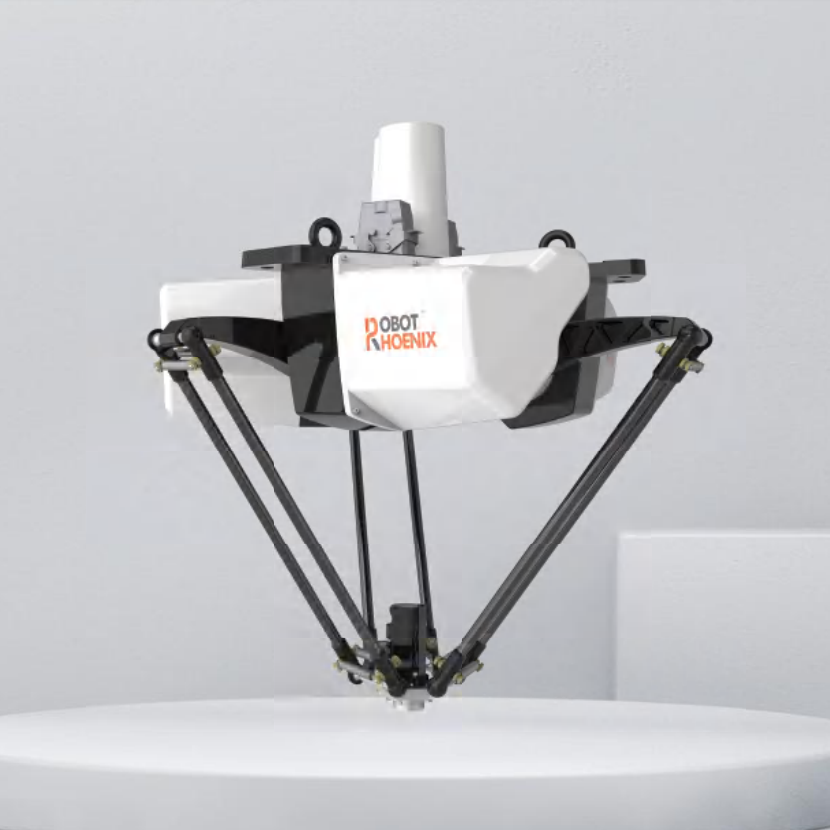
Robotphoenix New 4-Axis Parallel Robot Arm Delta Spider Hand Robot for Carton Packer Line
What a Custom OEM Robotic Sorting System Really Includes
A sorting robot is only one part of the capital project. The difference between a stable line and a bottleneck is usually found in product presentation, sensing, end-of-arm tooling, controls, data and after-sales engineering.
From a robot arm to a sorting system: four design layers
A custom OEM robotic sorting system is engineered around the product first. The product layer defines weight, dimensions, surface friction, flexibility, hygiene level and how parts arrive at the cell. The sensing layer decides whether the system needs 2D vision, 3D vision, laser profiling, weight feedback or simple photoelectric triggering. The motion layer matches the robot family, reach, payload and cycle time. The data layer connects the cell to PLCs, MES or packaging machines so that rejected parts, batch records and changeover recipes are traceable.
For buyers, this means the lowest robot price is rarely the lowest project cost. A high-speed delta robot may be ideal for lightweight products moving on a conveyor, while a SCARA robot may be better for planar insertion and precise placement in a compact cell. For pallet movement or buffer transport, an AGV or AMR can remove manual pushing between sorting stations. The correct configuration is the one that stabilizes the whole flow, not just the pick motion.
Why in-house controllers and vision matter
JORI Intelligent Technology Co., Ltd. develops delta robots, SCARA robots, AGV/AMR platforms, autonomous forklifts, wafer handling robots, controllers and 2D/3D vision in-house. That structure is useful for custom sorting projects because robot motion, vision triggering, conveyor tracking and HMI logic can be reviewed by one engineering team. It also simplifies OEM support for machine builders that need private-label controls, custom end effectors or PLC-ready integration.
Since 2012, the company has built its manufacturing base in Jinan, Shandong, China, with ISO 9001 quality management, national patents and more than ten years of overseas project experience. Standard models can be ordered from one set, which allows a buyer to validate a pilot cell before scaling to multiple lines.
Sorting project checklist before RFQ
- Product weight, dimensions, material and whether the surface is sticky, transparent or reflective.
- Incoming flow: random on conveyor, nested in trays, stacked, or manually fed.
- Target throughput and acceptable cycle-time tolerance during peak production.
- Required accuracy, rejection logic and traceability level.
- Available floor space, ceiling height, safety fencing and operator access.
- Voltage, air supply, communication protocol and country-specific export requirements.
- Changeover frequency and recipe management expectations.
Total cost of ownership signals
Compare quotations on spare-part availability, remote support response, gripper change time, energy consumption, guarding scope, training and documentation. A one-set pilot with a clear acceptance test is often more valuable than a low headline price with undefined integration scope.
Procurement Trends Reshaping Custom Robotic Sorting Systems, 2025–2030
Buyers are moving from single-machine purchasing toward staged automation programs. The strongest suppliers will be judged on pilot speed, mixed-SKU flexibility, export compliance and measurable total cost of ownership.
Staged ROI validation
Procurement teams increasingly start with one cell or pilot line, then scale after cycle time, yield and labor savings are verified. MOQ from one set supports this approach.
Mixed-SKU flexibility
Short product life cycles reward lines that can switch recipes, grippers and vision models quickly. Fixed tooling with long changeover is becoming harder to justify.
Export and service confidence
Factories compare suppliers on FOB, CFR, CIF, EXW, CIP, FCA and CPT options, multi-currency payment terms, spare-part planning and remote engineering response.
Open integration, lower lock-in
PLC-ready cells, documented protocols and controller access are now part of due diligence. Buyers want machine builders, integrators and factory engineers to work from the same data.
The procurement shift is not simply “more robots.” It is more accountability: a robot supplier that can support pilot validation, OEM customization, export documentation and lifetime service becomes a strategic partner rather than a component vendor.
Product Development Trends in Robotic Sorting
Future sorting cells will be easier to teach, faster to change over and more connected to production data. The winning architecture combines modular mechanics with vision, controls and serviceability.
Vision-first sorting
2D/3D vision, laser tracking and AI-assisted classification are being used to handle transparent, reflective, deformable and randomly oriented products with less manual teaching.
Modular cell architecture
Frames, safety modules, quick-change end effectors and standardized conveyor interfaces shorten engineering time and make future capacity expansion less disruptive.
Digital twins and data
Cycle-time simulation, OEE dashboards and recipe libraries help buyers validate return on investment before installation and improve performance after ramp-up.
Compact safety and sustainability
Smaller guarded footprints, energy-efficient motion and cleanroom or washdown variants are becoming standard requirements for food, pharma, electronics and semiconductor sorting.
Recommended Configurations by Sorting Challenge
The right recommendation depends on product behavior, cycle time and the cost of a wrong pick. These three starting points help teams shortlist a custom OEM robotic sorting system before engineering review.
High-throughput food and FMCG sorting
Use a delta robot with vision tracking when lightweight products arrive randomly on a conveyor and peak throughput is the bottleneck.
- 3–6 kg payload options
- 0.08 mm repeatability class
- IP54 protection and stainless-friendly layouts
- PLC-ready cartoning and packing integration
Precision electronics and medical sorting
Use a SCARA robot when the task needs compact planar motion, insertion, precise placement or inspection handling in a small cell.
- 4-axis architecture for fast planar moves
- Mini low-cost models for pilot lines
- In-house controller and 2D/3D vision options
- Custom grippers for delicate components
Warehouse and order consolidation
Combine delta sorting with AGV or AMR transport when the bottleneck is not only picking but also moving totes, trays or pallets between zones.
- 400–500 kg AMR/AGV platforms
- Laser SLAM navigation without floor tape
- Fleet management for multi-robot traffic
- Compact latent AGV for narrow aisles
| Robot family | Best sorting fit | Key figures to discuss | Choose it when |
|---|---|---|---|
| DeltaParallel robot | High-speed picking, sorting, labeling, cartoning, packing | 3–6 kg payload, 0.08 mm repeatability, up to 120 pcs/min labeling, IP54 option | Light products arrive randomly and cycle time is the main constraint. |
| SCARA4-axis robot | Assembly, insertion, precise placement, small-part handling | Compact footprint, mini low-cost models, vision options | The cell needs accurate planar motion in limited floor space. |
| AMR / AGVMobile robot | Transport between sorting stations, buffers and packing zones | 400–500 kg payload, laser SLAM, fleet management | Manual cart or pallet movement is wasting labor and floor space. |
| ForkliftAutonomous platform | Pallet shuttling in warehouses and factories | Laser SLAM navigation, repetitive shift work | Pallet routes are predictable and labor availability is unstable. |
| WaferHandling robot | Semiconductor, photovoltaic and fragile substrate transfer | In-house motion control, custom end effectors | Fragile wafers require smooth, repeatable and contamination-conscious handling. |
Factory & Exporter Advantages Buyers Can Verify
For a custom OEM robotic sorting system, supplier strength is measured in engineering depth, quality systems, export experience and response speed. JORI supports machine builders, system integrators and factory owners from one accountable manufacturing base.

Original factory and in-house R&D
Delta robots, SCARA robots, AMR/AGV, autonomous forklifts, wafer robots, controllers and vision systems are developed in-house, reducing reseller layers and finger-pointing.
OEM, design and buyer-label service
Custom end effectors, controller integration, private-label options and system integration are available for machine builders and automation partners.
ISO 9001 and onsite-verified profile
Documented quality management, onsite-verified manufacturer status and independent trade records help procurement teams complete supplier due diligence.
Export experience across five continents
Buyers in North America, South America, Eastern Europe, Southeast Asia and China use JORI robots. Delivery terms include FOB, CFR, CIF, EXW, CIP, FCA, CPT and express delivery.
Pilot-friendly MOQ and fast response
Standard delta robots, SCARA robots and AMR/AGV platforms can be ordered from one set. The average response time is about two hours or less, with a 97.06% response rate.
One-stop integration for sorting cells
Robot arm, controller, vision, mobile platform and application engineering can be coordinated as one project, covering food, pharma, electronics, semiconductor and logistics use cases.
Custom OEM Robotic Sorting System Procurement FAQ
These are the questions international buyers usually ask before requesting a quotation, sample test or factory visit.
What is the minimum order quantity for a custom robotic sorting system?
How do I choose between a delta robot, SCARA robot and mobile robot?
Can the robot integrate with existing packaging, cartoning or wet wipe lid applicator machines?
Which delivery and payment terms are accepted?
What information should I send with my RFQ?
How quickly will I receive a reply, and what about after-sales support?
Build a Sorting Cell Around Your Product — Not a Catalog Compromise
Send your product samples, cycle-time targets and line layout. JORI engineers will recommend a delta, SCARA, AMR or combined sorting configuration, confirm OEM customization scope and reply with export-ready specifications.