Custom OEM Vision Guided Automation Supplier & Wholesalers
High-speed delta robots, precision SCARA robots and 2D/3D vision-guided pick-and-place systems for machine builders, system integrators and wholesale automation buyers who need one accountable engineering partner.
Eight Vision-Guided Automation Products for Fast-Scale Projects
Start with a pilot cell, prove the cycle time, then scale through repeat OEM orders. Product links are retained exactly for technical review and quotation.

High-Speed Spider Arm Delat Robot for Fully Automatic Wet Wipe Lid Applicator Machine
Built for wet-wipe canister lines where lids, caps or labels must be oriented and placed at high cadence. A compact delta envelope sits over the conveyor while vision verifies position before each pick.
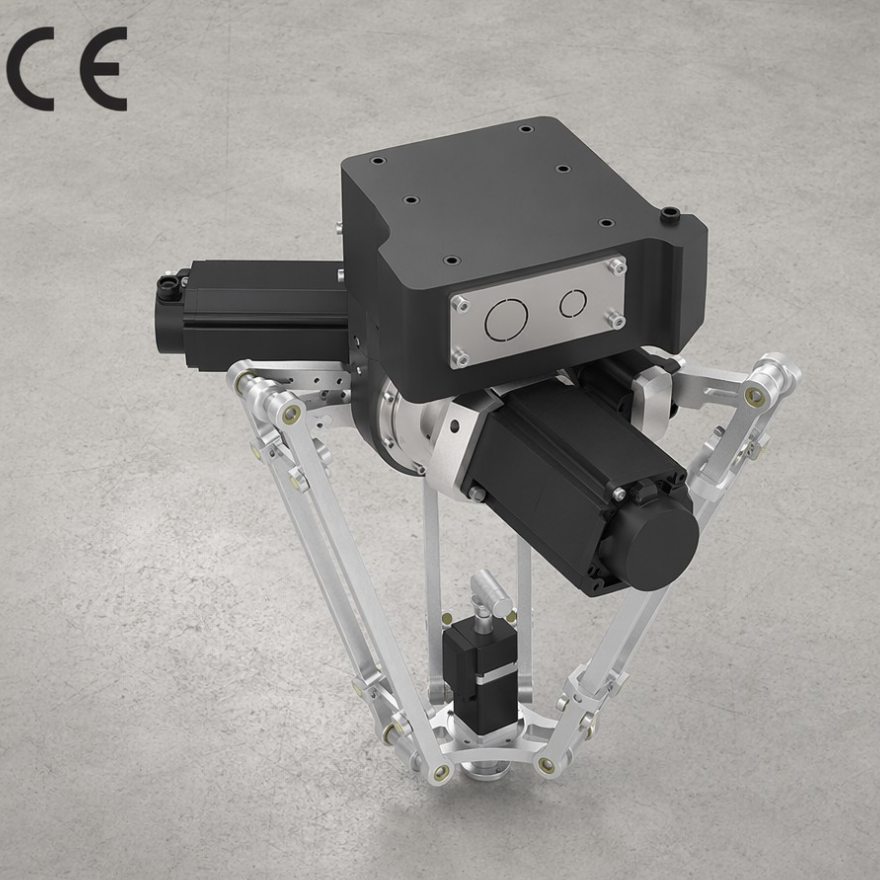
Smart Parallel Robot Picking and Placing Robot Manipulator Delta Robot with Visual System
A strong fit for mixed-SKU picking, conveyor tracking, bin feeding and quality sorting. Vision turns the robot into a specification-level component for food, consumer goods and light assembly cells.

High-Precise Industrial Scara Robot Arm Scara Robot for Pick and Place in Light Industry
Use this SCARA when the task is planar assembly, insertion, tray loading or precise placement in a compact footprint. It is often the better choice where an overhead delta envelope would interfere with tooling.
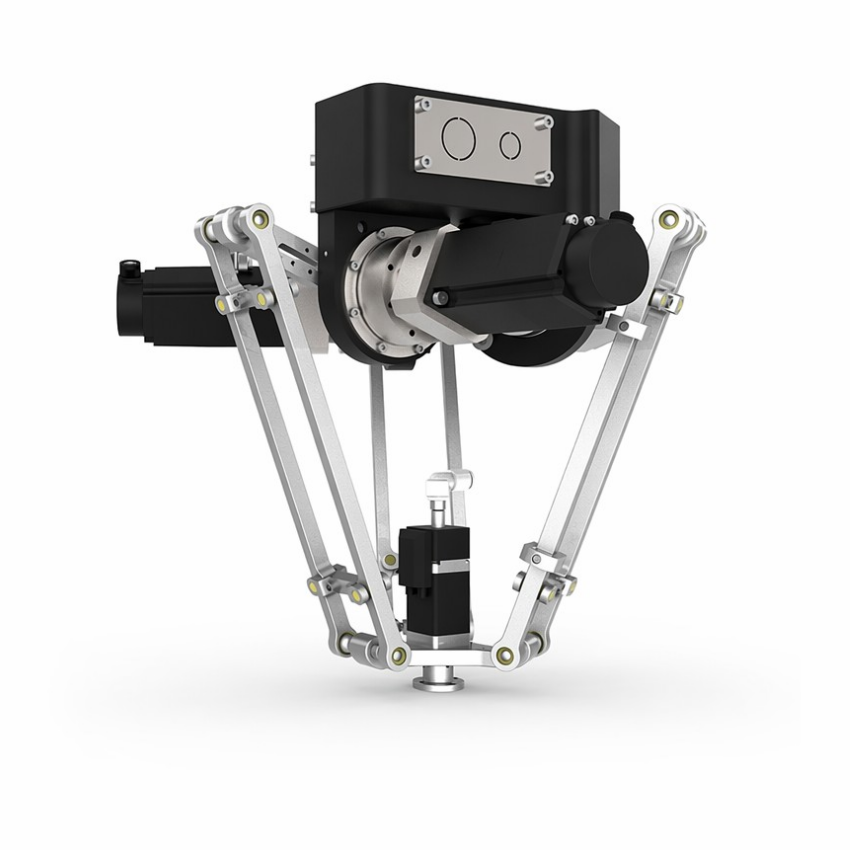
High Precision Pick and Place 4 Aixs Parallel Robot Delta with Vision Tracking System
Designed for conveyor applications that need rotation control as well as X/Y/Z motion. Vision tracking reduces fixturing and helps align labels, caps, pouches or small components before placement.
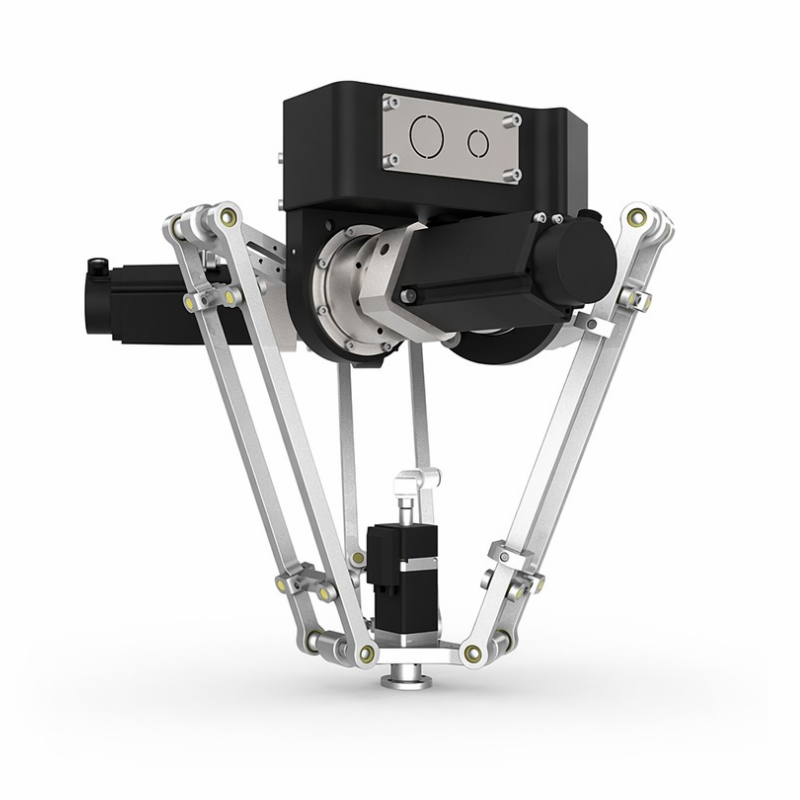
Low Cost Customized 2/3/4 Axis Industrial Manipulator Delta Robot for Pick and Place
Suited to machine builders and wholesalers developing a price-competitive platform. Standardize the base BOM, then use 2-, 3- or 4-axis options to cover multiple customer requirements.
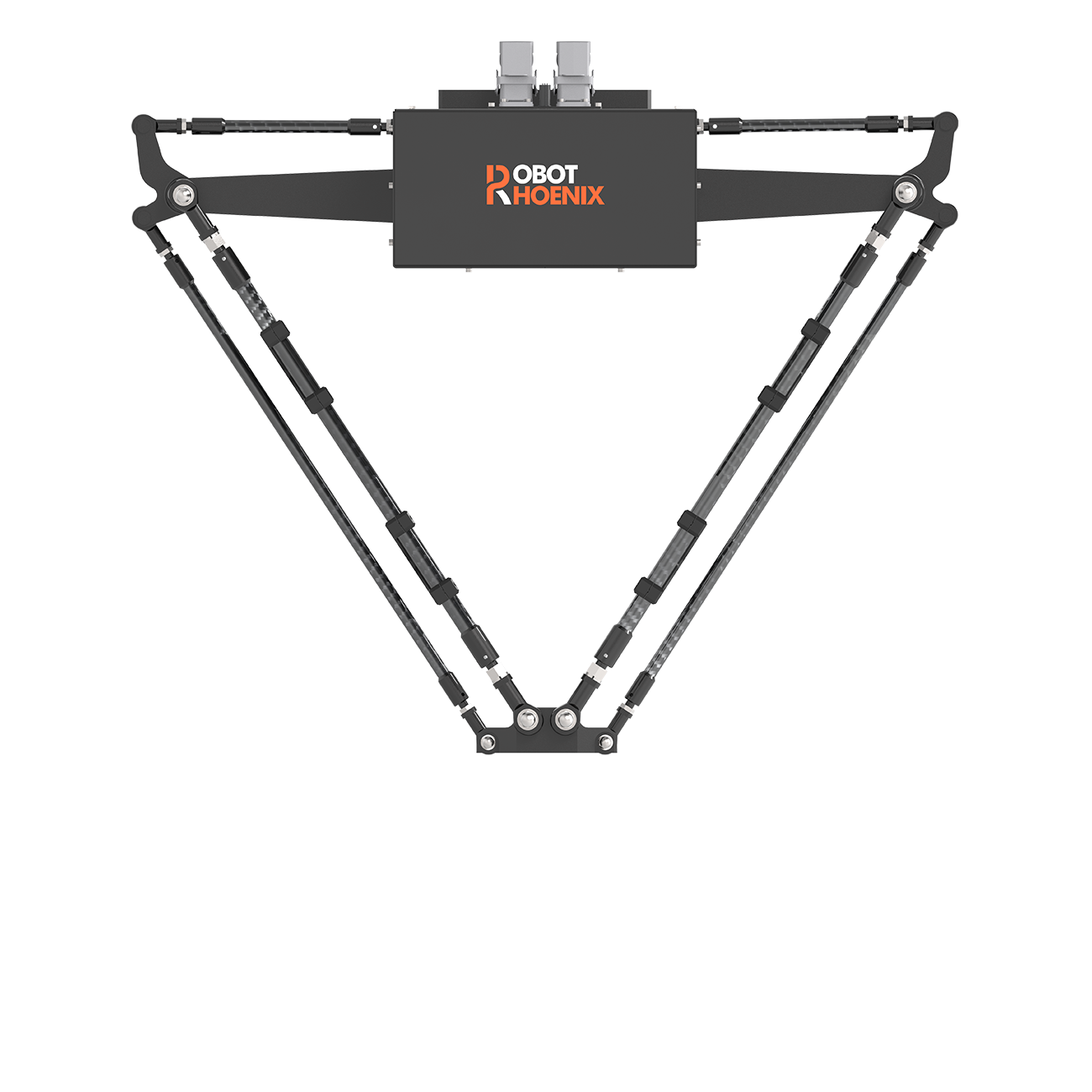
Industrial Manipulator High Speed and Accuracy Delta Robot with New Design Kinetics
Recommended when cycle time and repeated motion quality are the bottlenecks. Kinematic design and reduced moving mass shorten settling time, improving throughput without simply increasing motor size.
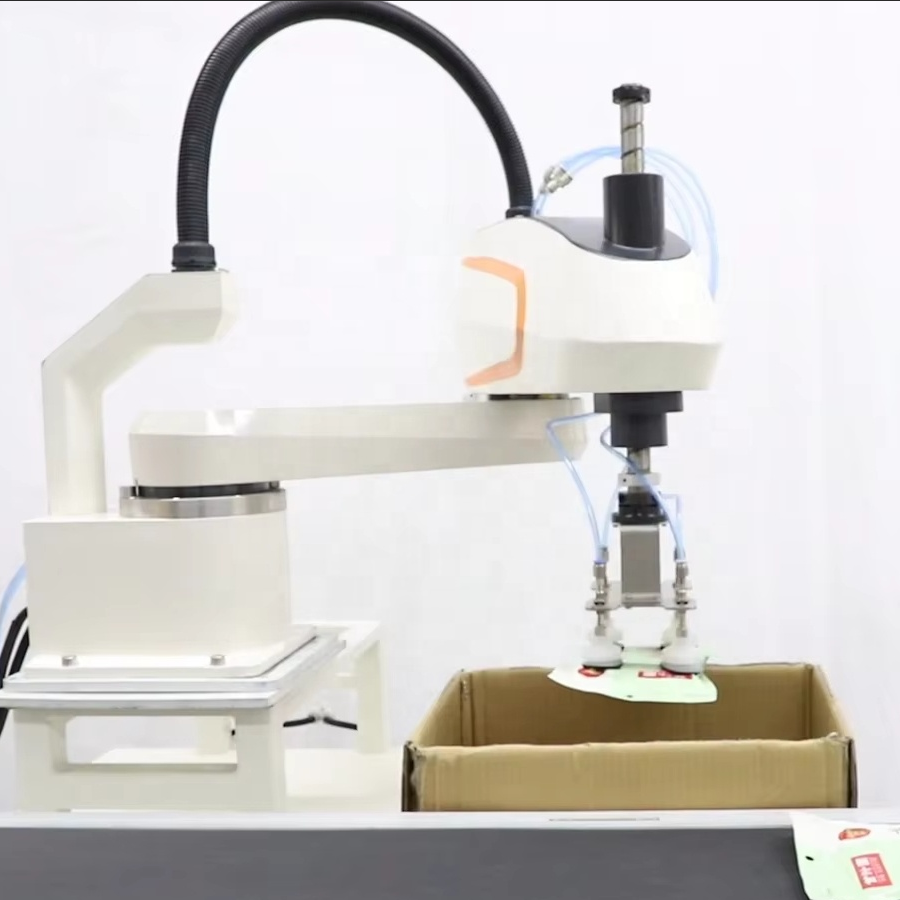
Light Load 4 Axis Industrial Manipulator Robot Scara Robot for Pick and Place Application
A practical choice for light-payload, high-mix production where floor space and changeover matter. It suits small components, trays, electronics housings and sub-assembly transfer.

Robotphoenix New 4-Axis Parallel Robot Arm Delta Spider Hand Robot for Carton Packer Line
Designed around end-of-line carton packing, where product orientation and repeatable loading matter. The parallel arm can align products into lanes, trays or cartons and work with PLC-controlled conveyors.
Not sure which platform fits the line? Share product weight, target cycle time, conveyor layout and gripper concept. Our engineers can recommend a delta, SCARA or 4-axis parallel platform before quotation.
Send an InquiryFounded in Jinan, Shandong, with a focus on industrial robot R&D and manufacturing.
Published employee scale supporting engineering, production and international support.
Factory area for robot assembly, testing and application verification.
Published response rate with an average reply time of about 2 hours or less.
What a Custom OEM Vision-Guided Automation Supplier Actually Delivers
Vision-guided automation is often mis-specified when procurement treats it as a robot-arm purchase. A production-ready cell is a closed loop of image acquisition, part localisation, motion planning, end-effector choice, PLC handshaking, reject handling and traceability. If one link is left until commissioning, the project loses time in exactly the phase where the line is supposed to be ramping up.
JORI Intelligent Technology Co., Ltd. addresses that risk by keeping robot mechanics, controllers and 2D/3D vision inside one engineering organisation. Delta robots, SCARA robots, AGV/AMR platforms, autonomous forklifts and wafer-handling robots are developed in-house, so customisation is grounded in existing platforms rather than a one-off prototype. For wholesale buyers, the deeper value is BOM stability: the same controller logic, vision architecture and spare-part approach can support multiple models and repeat orders.
The most useful information gain for buyers is not another payload table. It is the acceptance-test logic that proves whether a robot cell will survive real production: what part is presented, how lighting changes, how the gripper behaves after 200,000 cycles, how the line PLC handles a no-read, and how the supplier documents the result. That is why this supplier category should be evaluated on engineering evidence, not only unit price.
- Payload including EOAT and product variation
- Cycle time at the real target pattern
- Part contrast, lighting and camera view
- PLC, fieldbus and safety handshake
- Reject strategy and quality traceability
- Acceptance test, drawings and spare-parts plan
Procurement weighting for OEM robot cells
Match the Robot Platform to the Production Reality
Use application signals to shortlist the right series, then confirm the specification with a real product sample, gripper mass and conveyor speed.
Wet-wipe lid application
For canister lids, caps and labels, specify the high-speed spider arm delta robot. The key detail is not only speed, but how the robot confirms lid orientation, handles a miss and recovers without stopping the upstream filler.
Review the wet-wipe solutionMixed-SKU vision picking
When products arrive randomly or change by batch, use the smart parallel robot with visual system. Request a lighting trial and a no-read strategy; these two details determine whether the cell runs at rate or stops for operator intervention.
Review the vision deltaPrecision assembly in a small cell
For insertion, screwdriving support, tray loading or precise placement, compare the industrial SCARA and the light-load 4-axis SCARA. Specify tooling weight, approach clearance and whether the cell needs a fixed or mobile base.
Review the SCARA rangeMoving conveyor tracking
Use the 4-axis delta with vision tracking where orientation matters. Confirm encoder type, product pitch, camera field of view and the handshake between vision and line PLC. This is where many projects gain or lose cycle time.
Review the 4-axis vision systemCost-controlled OEM platform
For wholesale programmes, compare the low-cost customized 2/3/4-axis delta and the high-speed kinetic design. A price-led platform wins when requirements are stable; a kinetics-led platform wins when the same cell must support future SKUs.
Review the OEM delta optionsEnd-of-line carton packing
For lanes, trays and cartons, the Robotphoenix 4-axis parallel robot arm is designed around the handshake between vision, conveyor and packing pattern. Request a layout study with carton dimensions, product gap and changeover sequence.
Review the carton packer deltaHow OEM Robot Buyers Will Purchase in 2026–2030
Procurement is shifting from single-machine purchasing to evidence-based programme purchasing. The following trends matter to wholesalers, machine builders and factory owners planning multi-site automation.
Pilot-to-scale purchasing
Buyers increasingly order one set to validate cycle time, vision stability and changeover, then convert to repeat orders. Suppliers must make the pilot configuration identical to the production BOM.
Private-label & wholesale programmes
Machine builders want a robot platform that can carry their own documentation, branding and service model. Stable BOMs and predictable interfaces become more valuable than a one-time discount.
Vision as a contract metric
Lighting, camera resolution, recognition rate and no-read handling will be written into acceptance criteria. Buyers should request test data with their own parts, not only catalogue images.
Total cost of ownership
Unit price remains important, but uptime, spare-part lead time, engineering response, power use and changeover time increasingly determine the winner. TCO models are becoming standard in OEM procurement.
Supply-chain resilience
Buyers are qualifying suppliers for documentation, export experience and support responsiveness. Verifiable company credentials reduce the risk of switching costs during a ramp-up.
Data-ready machines
Robots are becoming part of the factory data layer. Buyers will ask how vision results, cycle counts, alarms and recipe changes are logged, and how the controller integrates with existing PLCs.
What Will Change in Vision-Guided Delta and SCARA Automation?
The next competitive advantage is not a faster catalogue number. It is a platform that shortens engineering time, reduces changeover risk and makes repeat orders easier to support.
Vision-first kinematics
Robot design is being tuned for camera speed, exposure and tracking error, not only mechanical repeatability. The goal is stable picking from moving conveyors with fewer fixtures.
Open controller handshakes
Machine builders need robots that speak the same language as cartoners, labelers and fillers. PLC-ready integration, fieldbus options and clear I/O maps reduce commissioning time.
Modular end-effectors
Quick-change grippers, vacuum tools and mechanical fingers allow one robot platform to serve multiple SKUs. Standard mounting patterns are becoming a purchasing advantage.
Hygienic and durable designs
Food, wet-wipe and pharmaceutical lines require easy cleaning, protected surfaces and robust cable routing. IP-rated configurations and smooth enclosures are becoming selection criteria.
Digital twin & remote commissioning
Simulation, remote diagnostics and recipe libraries reduce travel and start-up time. Wholesalers benefit when they can support a customer without re-engineering every cell.
Multi-axis delta and compact SCARA
Four-axis delta robots are expanding into carton packing and orientation-critical work, while light-load SCARA robots continue to shrink the footprint of assembly cells.
Specify by Application Signal, Not by Payload Alone
Payload is only the beginning. A delta robot and a SCARA robot can look similar in a brochure and behave very differently once tooling, conveyor tracking and safety zones are considered. Use this matrix to align the technical brief before asking for a quotation.
For OEM and wholesale programmes, define which parts of the specification should be standard and which should be configurable. That separation is what allows a machine builder to serve several customers without rebuilding the engineering package for every order.
| Application signal | Recommended platform | What to specify |
|---|---|---|
| Signal 01High-cadence lids, caps or labels | High-speed delta or 4-axis parallel robot with vision | Line layout, encoder, camera field of view, lid orientation, reject mode and target cycle time. |
| Signal 02Mixed-SKU picking and sorting | Vision-guided delta with conveyor tracking | Part contrast, lighting, minimum gap, no-read strategy, gripper mass and product variability. |
| Signal 03Precise small-cell assembly | Industrial SCARA or light-load SCARA | Tooling weight, approach clearance, XY tolerance, Z stroke and required inspection handshake. |
| Signal 04End-of-line carton packing | 4-axis parallel delta for carton packer lines | Carton dimensions, pack pattern, lane formation, changeover sequence and PLC communication. |
| Signal 05Cost-controlled OEM platform | Customized 2/3/4-axis delta or SCARA | Which modules stay fixed, which options vary by customer, private-label needs and repeat-order forecast. |

Why JORI Is a Credible OEM Partner for Vision-Guided Automation
JORI Intelligent Technology Co., Ltd. was founded in 2012 in Jinan, Shandong, China, and operates as a high-tech manufacturer focused on industrial robot R&D, production, controllers, 2D/3D vision, OEM support and automated system integration. The company’s product families include delta parallel robots, SCARA robots, AGV/AMR platforms, autonomous forklifts and silicon wafer handling robots.
Because the controller, vision and robot mechanics are developed in-house, buyers gain one accountable technical path for the robot, the application software and the after-sales engineering conversation. That matters most when a machine builder needs a fast answer to a non-standard gripper, PLC handshake or vision-lighting question. For wholesalers, it also creates a more stable basis for repeat orders, private-label documentation and long-term spare-part planning.
Verify the supplier before you scale
Review independent company records, trade capacity, transaction level and buyer feedback before committing to a repeat OEM programme.
Common Questions from OEM and Wholesale Buyers
These are the questions that most often determine whether a robot cell moves from concept to purchase order.
What is a custom OEM vision-guided automation supplier?
It is a supplier that can adapt a robot platform, gripper, vision setup, controller logic and documentation to a machine builder’s application, rather than selling only a standard catalogue arm. The supplier must support the mechanical envelope, the image-processing task and the PLC handshake.
Can I order one set before scaling to wholesale volumes?
Yes. JORI’s published terms allow standard delta robots, SCARA robots and AMR/AGV platforms to be ordered from one set, which lets a buyer validate a pilot cell or a single machine build before committing to repeat orders.
How do I choose between a delta robot and a SCARA robot?
Choose a delta robot for very fast, lightweight pick-and-place from conveyors, especially where vision tracking and a large overhead work envelope are useful. Choose a SCARA robot for planar assembly, insertion and precise placement in a compact footprint. Part weight, cycle time, approach clearance and tooling mass should decide the final configuration.
Can the robot integrate with an existing wet-wipe lid applicator or cartoning machine?
Yes. JORI develops its own controllers and 2D/3D vision and offers PLC-ready delta robots for cartoning machines, wet-wipe lid applicators and end-of-line packaging equipment. Share the machine drawing, I/O list and safety architecture so the interface can be reviewed early.
What customization is available for OEM programmes?
OEM service, design service and buyer-label options are available. Typical customization covers end-effector mounting, working envelope, controller integration, vision configuration, documentation and repeat-order BOM control. The exact scope should be fixed in the technical agreement.
Which payment and delivery terms are accepted?
Published terms include FOB, CFR, CIF, EXW, CIP, FCA, CPT and express delivery. Payment methods include T/T, L/C, credit card, PayPal, Western Union, MoneyGram and escrow, with currencies such as USD, EUR, GBP, JPY, CAD, AUD, HKD, CHF and CNY.
How is quality controlled and verified?
JORI operates an ISO 9001 quality-management system and has third-party supplier assessment and onsite verification records. For critical projects, ask for component inspection records, run-in testing, vision test results and the acceptance checklist before shipment.
What information speeds up quotation and cycle-time validation?
Send product samples or photos, part weight and dimensions, target cycle time, current line layout, conveyor speed, gripper concept, PLC type, safety requirements and any previous failure modes. Video of the existing process is often more useful than a written description alone.
Do you support wholesalers and private-label machine builders?
Yes. Wholesale and private-label conversations should focus on BOM continuity, documentation ownership, spare-parts support, training and how engineering changes are communicated across repeat orders. These factors protect the machine builder’s own service reputation.
Which markets does JORI serve?
JORI serves buyers in Southeast Asia, Eastern Europe, North America, South America and China, with export experience and English-language technical communication. Application requirements, voltage, safety standards and documentation language should be confirmed during quotation.
Figures and terms reflect published company and product information; final specifications, availability and commercial conditions are confirmed per configuration and order.
Ready to Specify a Vision-Guided OEM Robot Cell?
Send your product details, target cycle time, conveyor layout and gripper concept. The engineering team can recommend the right delta, SCARA or 4-axis parallel platform and confirm the next step for quotation.