Factory-direct industrial robots since 2012 ISO 9001 · Onsite-verified · OEM / ODM info@joribot.com
OEM / ODM loading robot engineering since 2012

OEM/ODM Automatic Loading Robot Manufacturers & Supplier

High-speed delta and SCARA loading robots for machine tending, cartoning, wet-wipe lid application, food sorting and 3C assembly — supported by in-house controllers, 2D/3D vision and factory-direct customisation.

ISO 9001 quality system MOQ 1 set Average reply ≤ 2 hours
Recommended Loading Robot Platforms

Eight OEM/ODM Automatic Loading Robot Configurations

This shortlist is drawn from JORI’s production catalogue and arranged by the loading problem each platform solves. Product links are preserved so engineering teams can compare mechanisms, reach, vision requirements and line-integration options before requesting a customised proposal.

Manufacturing evidence, not marketplace claims

A Loading Robot Supplier You Can Verify Before the First PO

OEM/ODM projects require more than a product photo. The supplier should be able to prove engineering depth, production control, export experience and responsive support.

2012
Founded in Jinan, Shandong — a robotics hub in China.
R&D-led industrial robot manufacturer.
500+
Employees supporting R&D, production, integration and export service.
Cross-functional engineering capacity.
10,000+
m² factory area for robot production, testing and system integration.
Onsite-verified manufacturer profile.
97.06%
Response rate, with an average reply time of 2 hours or less.
Useful during urgent line upgrades.
Enterprise advantages

A Manufacturer That Owns the Arm, Controller and Vision Stack

JORI Intelligent Technology Co., Ltd. has been developing and producing industrial robots in Jinan, Shandong, since 2012. Its scope is deliberately broader than a robot assembly line: delta robots, SCARA robots, silicon wafer robots, AGV/AMR platforms, 2D/3D vision and robot controllers are developed in-house and protected by national patents. For an OEM/ODM loading project, this matters because the gripper, robot, controller, vision and line interface must behave as one system — not as a chain of unrelated components.

For machine builders, that single-source structure reduces integration ambiguity. JORI provides OEM service, design service and buyer-label options, custom end-effectors, controller integration and automated system integration. PLC-ready delta robots are especially relevant for cartoning machines, carton packers and wet-wipe lid applicator manufacturers that need repeatable loading motion inside an existing machine frame.

Trust signals are part of the buying decision. JORI operates an ISO 9001 quality management system, has an onsite-verified manufacturer profile, and publishes independent supplier assessment, credit profile, trade capacity and transaction records for buyers completing due diligence. Its export footprint covers Southeast Asia, Eastern Europe, North America, South America and China, with a 97.06% response rate and average reply time of two hours or less.

Independent R&D Robot arms, controllers, 2D/3D vision and national patents developed in-house.
Original factory Delta, SCARA, AGV/AMR, forklift and wafer robot lines under one manufacturer.
10+ years of export service Experience with machine builders and system integrators on five continents.
One-stop integration Robot, controller, vision, end-effector and line-interface coordination.
OEM / ODM / Buyer Label Custom configurations, design service and private-label programmes for builders.
ISO 9001 & onsite verification Quality management plus third-party-checked factory and trade records.
JORI Intelligent Technology headquarters and industrial robot facility
JORI headquarters and robot manufacturing facility in Jinan, Shandong.
JORI robot assembly and testing area for delta and SCARA robots
Assembly and testing discipline supports repeatable robot quality before shipment.
Engineering selection guide

Delta vs. SCARA vs. 4-Axis Loading Robots: Match the Mechanism to the Motion

Automatic loading robot selection starts with the motion problem, not the model number. Part weight, reach, orientation, cycle time, conveyor behaviour and upstream machine interface determine whether a delta, SCARA, vision-guided cell or PLC-ready configuration is the lower-risk choice.

Robot mechanism Best loading task Why choose it Watch-outs before purchase Relevant configurations
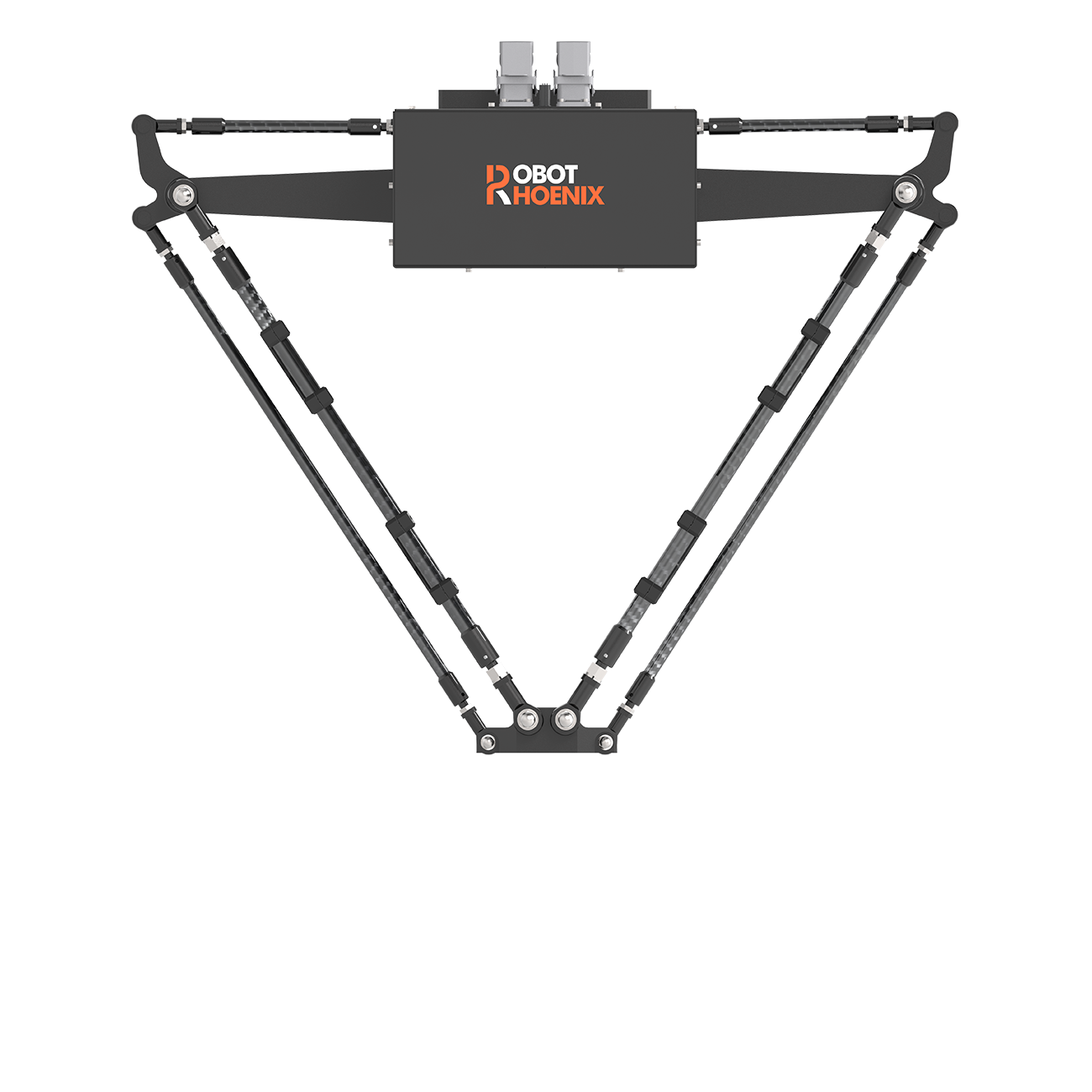
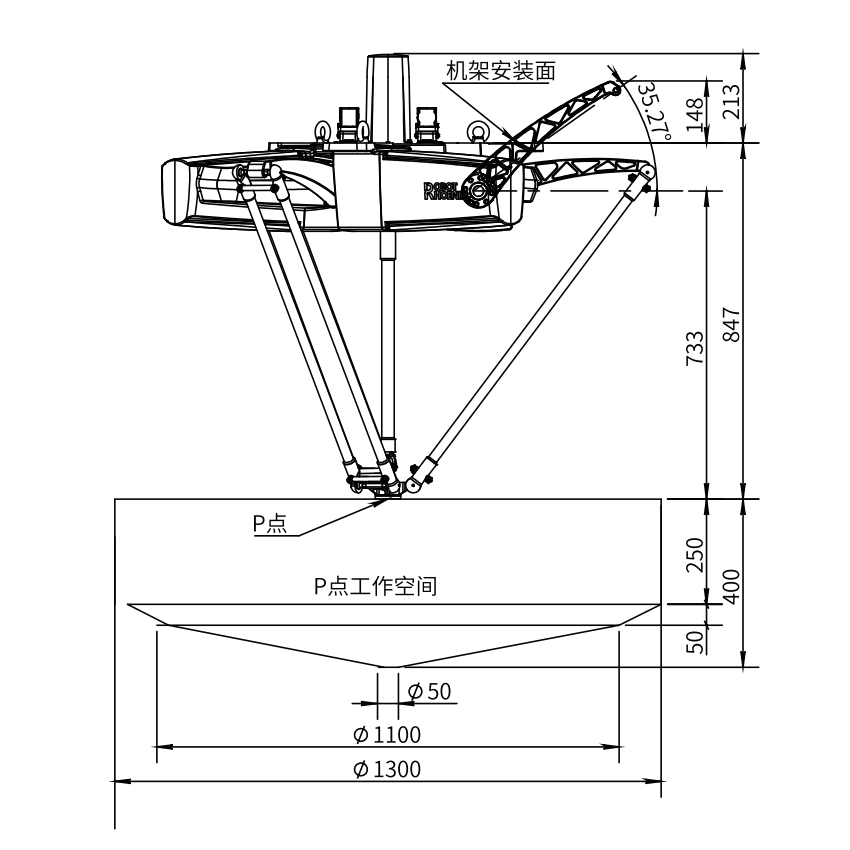
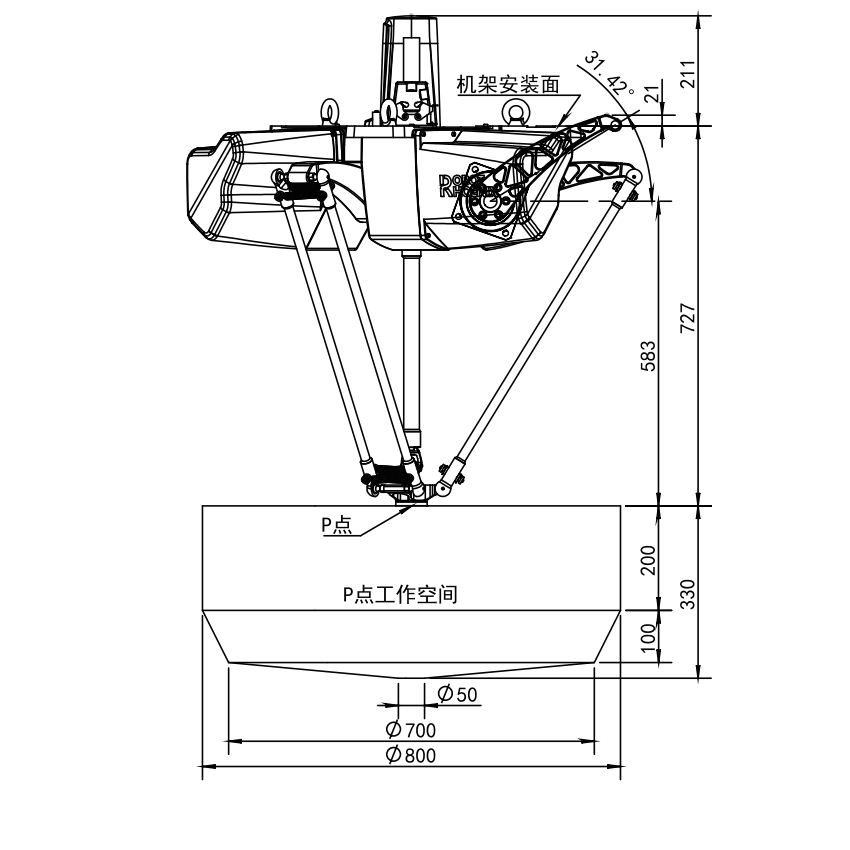
Fast pick & placeDelta parallel robot Lightweight cartoning, lid placement, sorting, high-speed pick-and-place from a moving conveyor. Excellent cycle-time potential with compact moving mass and repeatable overhead motion. Payload and reach limits; tooling design and conveyor tracking need early validation. High-speed delta, 2/3/4-axis delta, wet-wipe lid applicator delta.
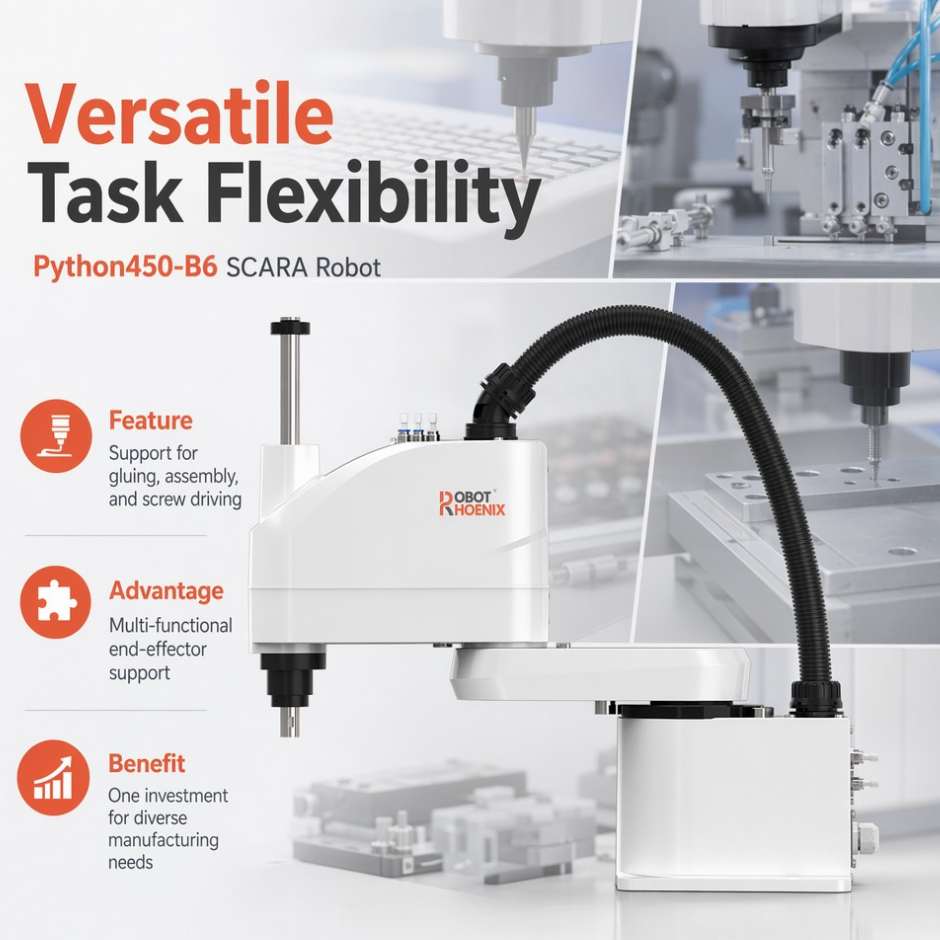
Planar precisionSCARA robot Auto-parts handling, 3C assembly, fixture loading, food loading/unloading and sorting. Precise planar motion in a compact footprint; well suited to insertion and placement. Limited vertical stroke in some layouts; part presentation must be stable. Vision SCARA, 400 mm reach SCARA, integrated-motor SCARA, food-industry SCARA.
Random orientationVision-guided loading cell Parts arriving in bins, on conveyors or in mixed orientation needing recognition and traceability. More flexible product handling; can combine pick guidance with inspection logic. Calibration, lighting, teaching time and vision software ownership must be clear. SCARA with vision for auto parts; vision-guided delta sorting cells.
Machine builderPLC-ready loading robot Cartoning machines, lid applicators, case packers and OEM machines with an existing PLC architecture. Cleaner integration with the host machine and a familiar control model for OEM engineering teams. Signal mapping, safety logic and recipe management should be agreed before FAT. 400 mm SCARA with PLC; PLC-ready delta robots for carton packers.
OEM/ODM programmeCustom end-effector platform Multiple SKUs, buyer-label machines, repeat builds across several production lines. One engineering partner can control robot, controller, vision and tooling interfaces. Requires a clear specification, change-control process and spare-parts plan. JORI OEM service, design service and buyer-label configurations.

Selection guide reflects typical application logic. Final specifications must be confirmed with part samples, cycle-time targets, layout drawings and line-interface requirements.

Information gain for procurement

Automatic Loading Robot ROI: A Practical TCO Model for Procurement Teams

Most quotations stop at robot price. A loading cell’s real cost includes the robot, controller, vision, end-effector, guarding, integration, commissioning, spare parts, training and the downtime absorbed during ramp-up. Compare proposals on risk-adjusted cost per good cycle, not catalogue price per arm.

Use a simple payback formula before the technical review: this forces the project team to separate labour avoidance from throughput contribution and rework reduction.

Payback months = Total installed cell cost ÷ Monthly net cash benefit
Monthly net benefit = Labour avoided + Rework avoided + Throughput contribution + Uptime gain − Consumables − Maintenance − Training

Procurement note: ask each supplier to state the assumptions behind cycle time, changeover time, operator count and spare-parts consumption. A lower robot price can be more expensive if the end-effector, vision or line interface requires a second integration round.

Cycle-Time Proof

Request cycle data at 90%, 95% and 100% speed, including approach, grip, transfer, placement and release. Validate with the actual part and conveyor behaviour.

Evaluation weight in a typical RFP35%

OEE Impact

Map the loading cell to the true bottleneck. Measure uptime, reject handling and blocked-flow recovery, not only robot acceleration.

Weight for line-level impact30%

Changeover & Recipes

For multi-SKU production, ask how product recipes are stored, recalled and protected. Operator training should be part of the quotation scope.

Weight for mixed-product lines20%

Service & Spares

Clarify spare-parts lists, controller support, remote diagnostics, warranty boundaries and response commitments for the region.

Weight for lifecycle risk15%
Application fit

Where an OEM/ODM Automatic Loading Robot Creates the Fastest Payback

The strongest loading robot projects usually share three traits: repetitive motion, a clear bottleneck and a product that can be presented or recognised reliably.

Auto parts loading

Vision-guided SCARA handling for orientation checks, fixture loading and repeatable placement in auto-parts production.

3C electronics assembly

400 mm reach SCARA platforms with PLC integration for PCB handling, small-part loading and compact assembly cells.

Food loading & sorting

Four-axis SCARA and delta robots for loading, unloading and sorting, with layouts designed around hygiene and line flow.

Wet-wipe lid application

High-speed spider-arm delta robots for lid pick, orientation and press-fit application on fully automatic wet-wipe canister lines.

Carton packing & case packing

PLC-ready delta loading robots for cartoning machines, carton packers and end-of-line packing cells with frequent recipe changes.

Random pick-and-place

Vision-guided delta sorting cells for mixed orientation, goods picking and placing where manual fatigue or inconsistency is a bottleneck.

OEM/ODM project path

From Application Brief to Factory Acceptance Test

A loading robot is only as good as the assumptions behind it. JORI’s engineering workflow keeps product data, cycle time, tooling, controls and validation visible from the first discussion.

01

Application data review

Product weight, dimensions, presentation method, conveyor speed, target cycle time, available footprint and upstream machine signals are reviewed together.

02

Mechanism & EOAT selection

Delta or SCARA, reach, payload, vision, gripper and PLC interface are shortlisted against the motion problem rather than a catalogue page alone.

03

OEM/ODM build & controls

Robot, controller, 2D/3D vision, end-effector and line-interface engineering are coordinated under one supplier responsibility.

04

FAT, ramp-up & support

Testing criteria should be agreed early: cycle time, handling reliability, recipe recall, safety logic and spare-parts readiness.

Procurement FAQ

Frequently Asked Questions About OEM/ODM Automatic Loading Robots

These are the questions most often raised during technical review, supplier comparison and commercial negotiation.

What is an automatic loading robot?
An automatic loading robot is a programmable manipulator used to pick, orient, transfer and place parts, cartons, lids, trays or components into a machine, fixture, conveyor or packaging line. In OEM/ODM projects, the robot is usually integrated with a controller, end-effector, 2D/3D vision and a PLC or host-machine interface.
What is the difference between OEM and ODM for loading robots?
OEM generally means the robot is built to a buyer’s specification or brand, while ODM means the manufacturer contributes more of the design and configuration. JORI supports OEM service, design service and buyer-label options, including custom end-effectors, controller integration and automated system integration.
What is the minimum order quantity for JORI industrial robots?
Standard delta robots, SCARA robots and AMR/AGV platforms can be ordered from 1 set, so buyers can validate a single cell or pilot line before scaling to multiple machines or production sites.
Should I choose a delta robot or a SCARA robot for loading?
Choose a delta robot for very fast, lightweight pick-and-place from moving conveyors, typically in the 3–6 kg payload range, such as lid application, cartoning or sorting. Choose a SCARA robot for planar assembly, insertion and precise placement in a compact footprint, such as 3C electronics, auto parts or food loading.
Can a loading robot handle randomly oriented parts?
Yes, when the cell includes appropriate vision and lighting. JORI develops 2D/3D vision and controllers in-house, which allows the robot, camera and end-effector to be planned as one loading system rather than separate purchases. Part samples, contrast and presentation method should be reviewed early.
Can JORI robots integrate with my existing packaging machines?
Yes. JORI develops its own controllers and 2D/3D vision, offers PLC-ready delta robots for cartoning machines, and supports machine builders such as wet-wipe lid applicator, carton packer and case packer manufacturers.
Are food and wet-wipe applications supported?
JORI supplies four-axis SCARA robots for loading, unloading and sorting in the food industry, plus high-speed delta robots for automatic wet-wipe lid applicator machines. The right configuration depends on product contact materials, cleaning practice, cycle time and line layout.
Which delivery and payment terms are accepted?
Accepted delivery terms include FOB, CFR, CIF, EXW, CIP, FCA, CPT and express delivery. Accepted payment methods include T/T, L/C, credit card, PayPal, Western Union, MoneyGram and escrow, in USD, EUR, GBP, JPY, CAD, AUD, HKD, CHF and CNY.
How can I verify JORI before placing an order?
Review the supplier assessment, credit profile, trade capacity and transaction records available on the JORI company profile. The company also maintains an ISO 9001 quality management system and an onsite-verified manufacturer profile, so buyers can complete due diligence before the first purchase order.
How quickly will I receive a reply?
JORI maintains an average response time of 2 hours or less and a 97.06% response rate. Send product details, cycle-time targets, layout drawings or videos of the current process to info@joribot.com for a faster engineering review.
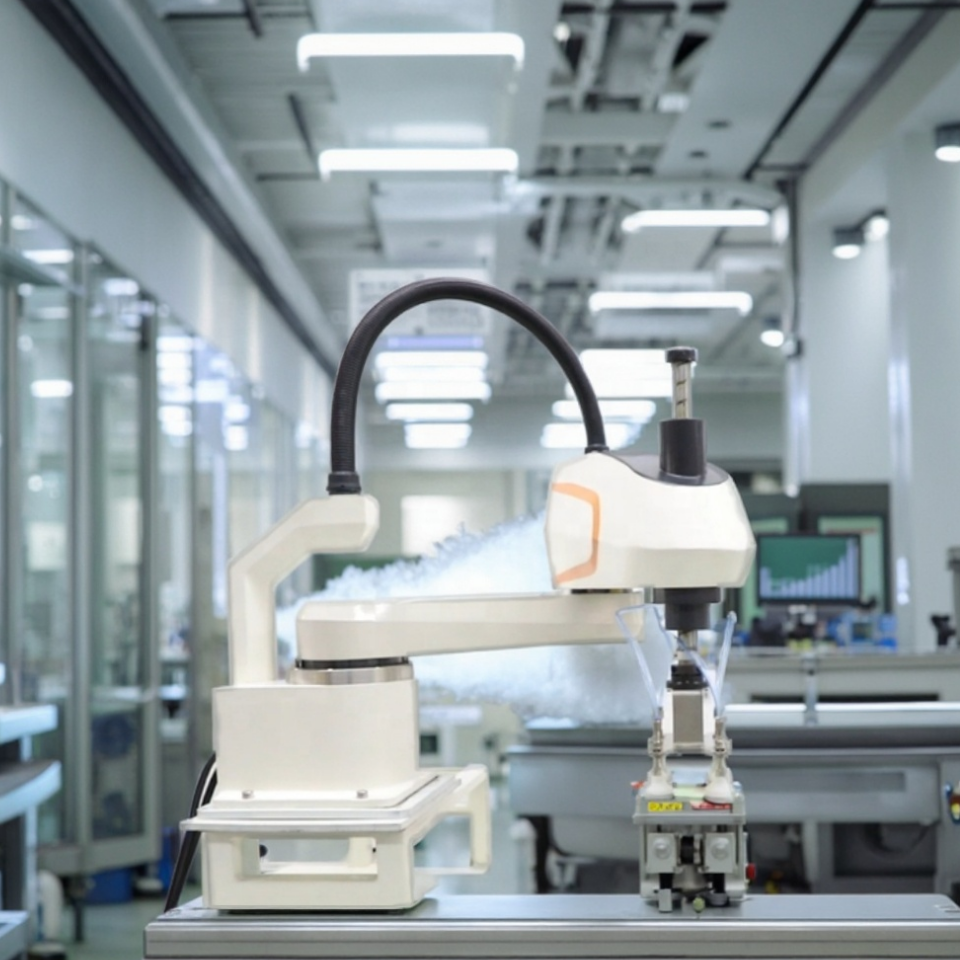
Ready to Specify an Automatic Loading Robot That Fits Your Line?

Send product weight, cycle-time target, conveyor speed, end-effector requirements, available footprint and your target OEE. Our engineers will help you shortlist a delta, SCARA or PLC-ready configuration for OEM/ODM review.

Get Catalog