OEM/ODM Industrial Robot Manufacturers & Manufacturer
Engineering high-speed delta robots, compact SCARA arms, laser SLAM AMR/AGV, autonomous forklifts and wafer-handling robots with in-house controllers, 2D/3D vision and accountable global support.
8 Industrial Robot Models for OEM/ODM Programs
The fastest way to evaluate an OEM/ODM industrial robot manufacturer is to match a proven platform to your real cycle time, part geometry, hygiene standard and integration environment. These eight models cover bottle unscrambling, delta pick-and-place, food-grade SCARA loading, four-axis assembly, kinetic delta design, latent AGV transport, 6 kg vision-guided SCARA picking and compact 2D/3D-vision inspection.
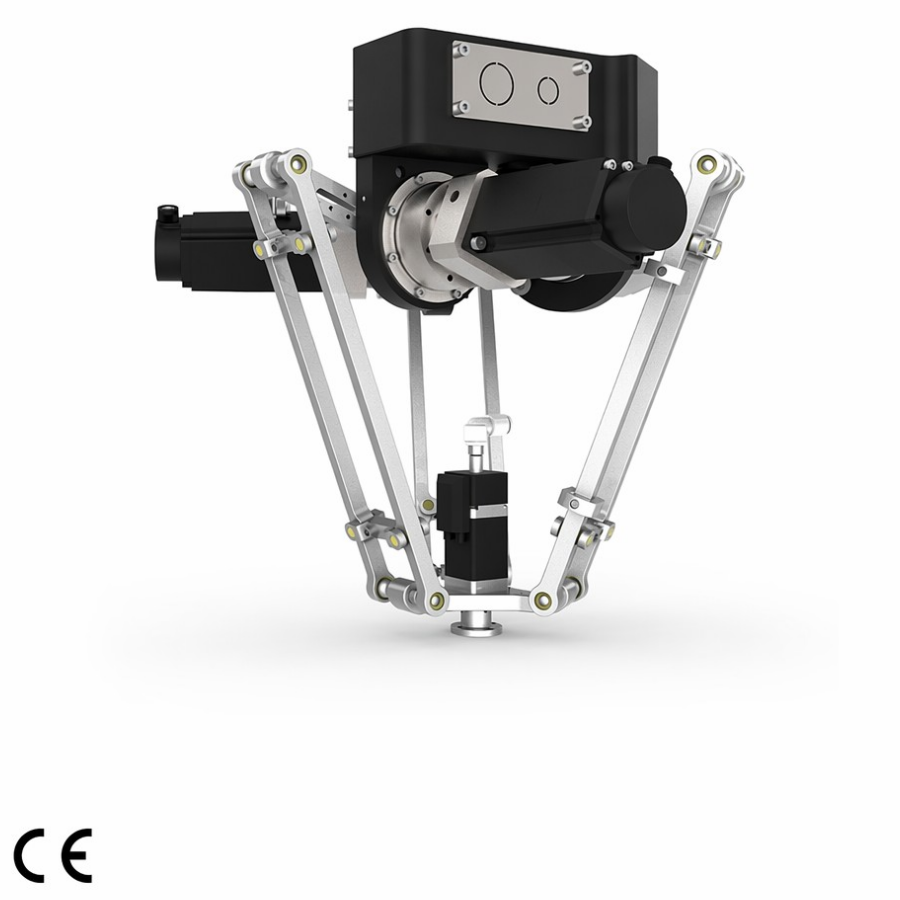
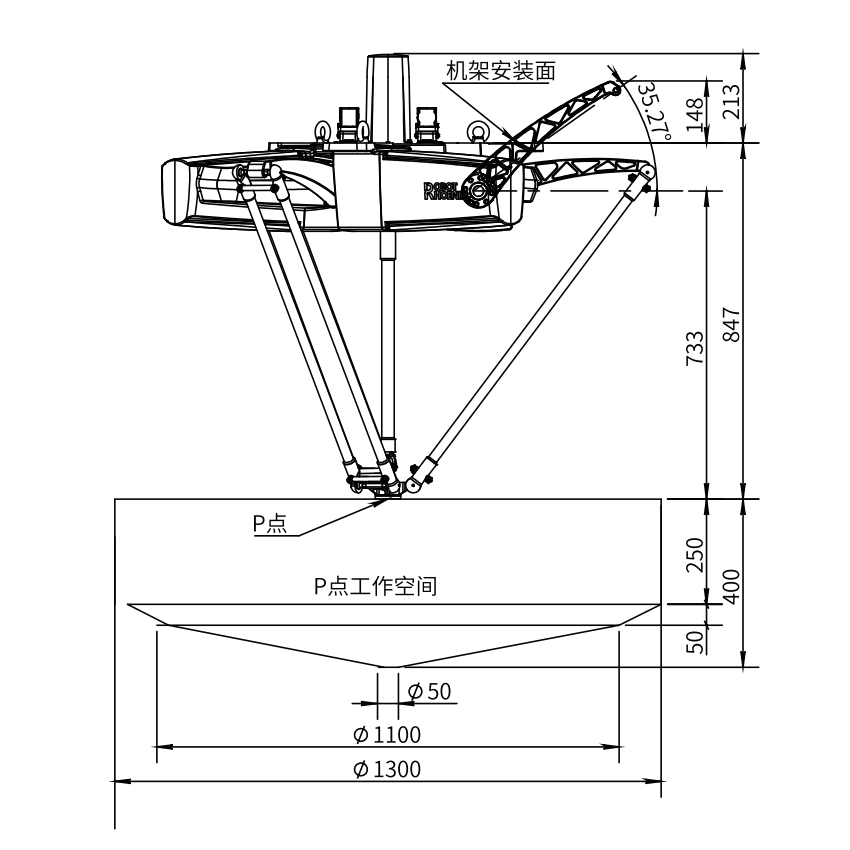
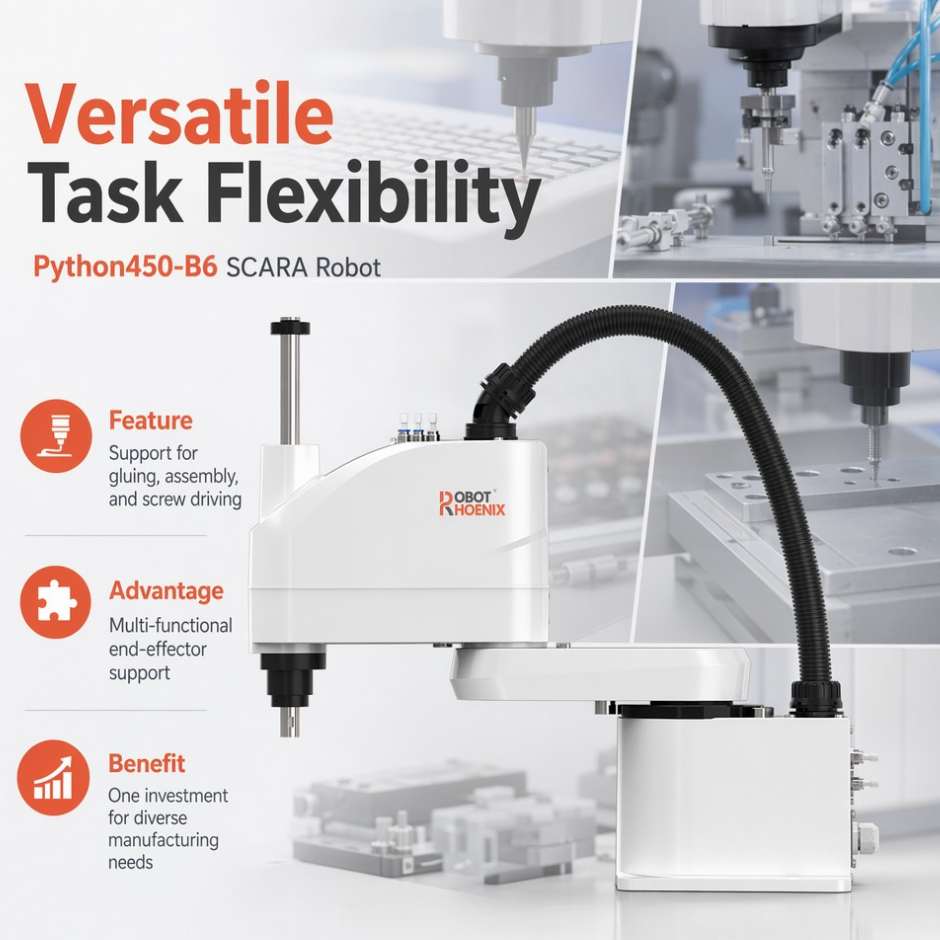
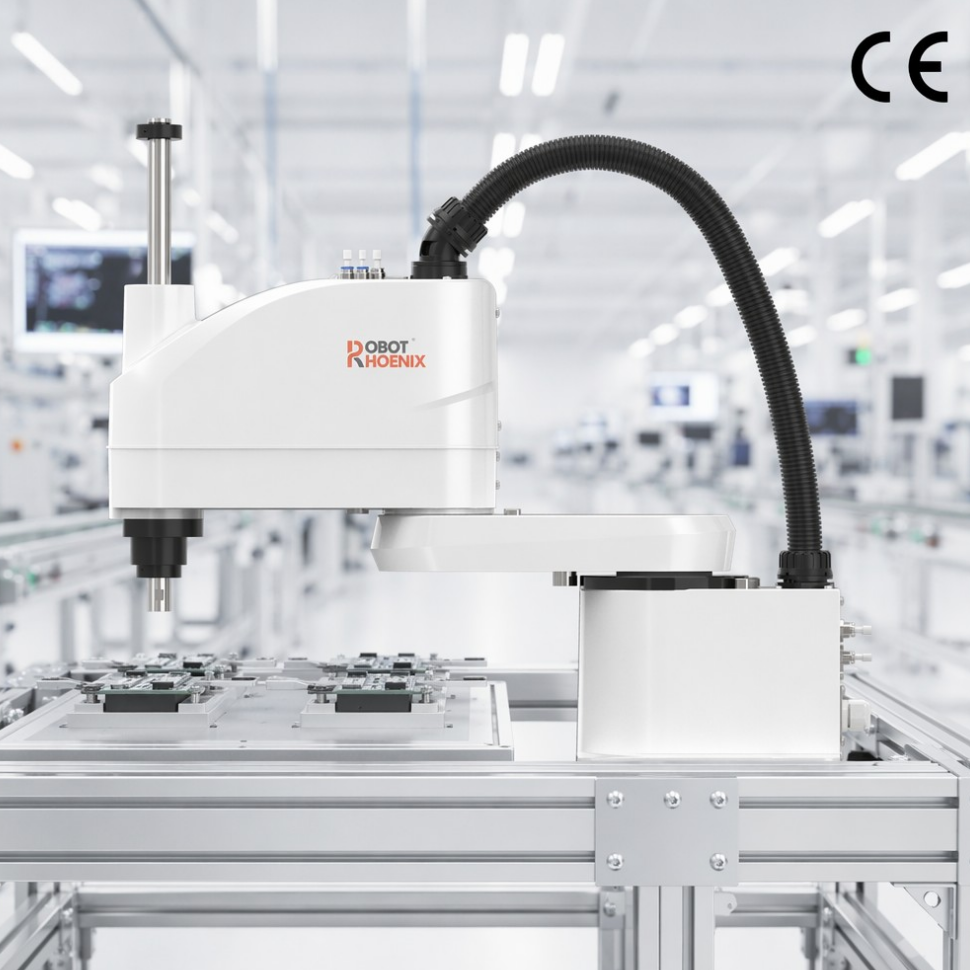
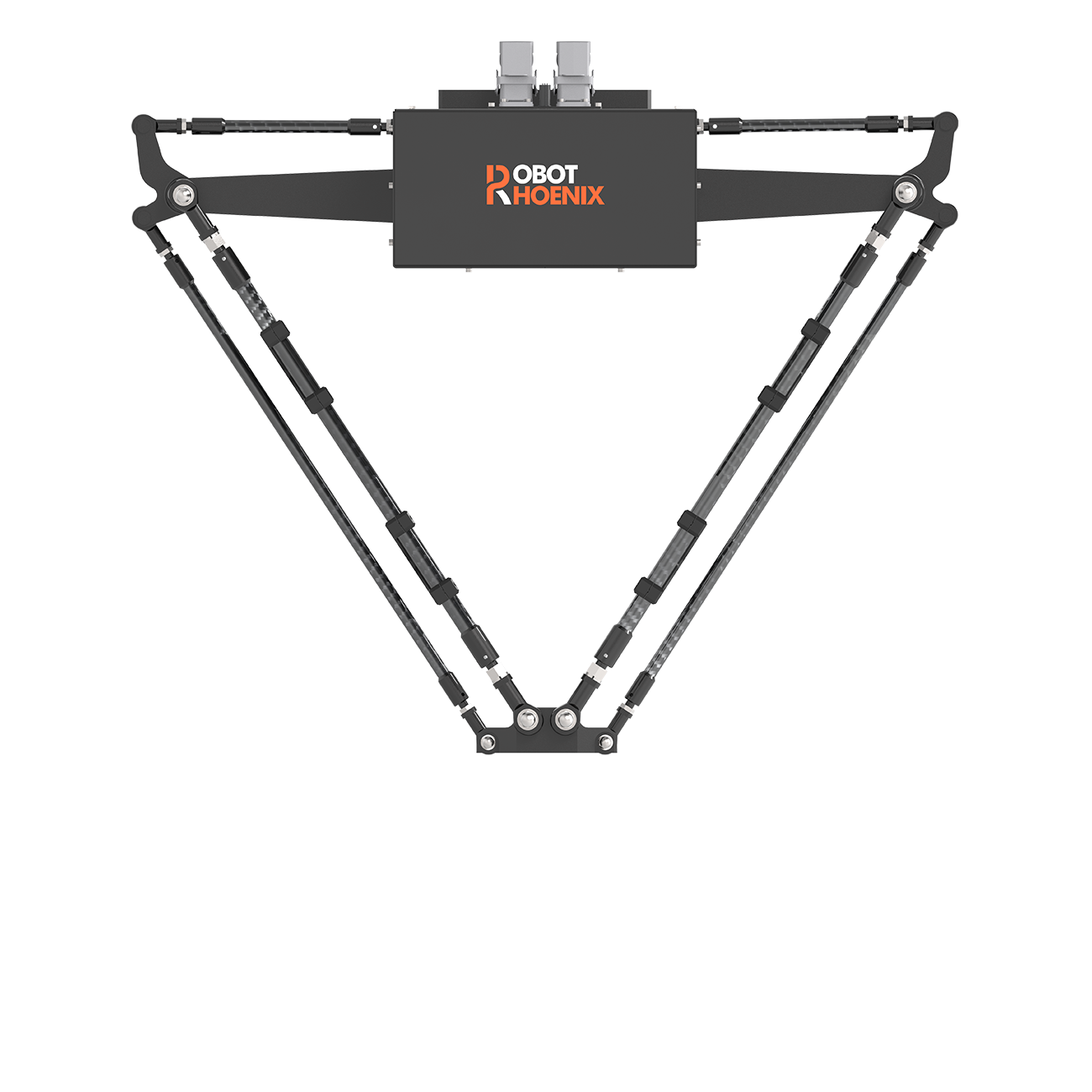
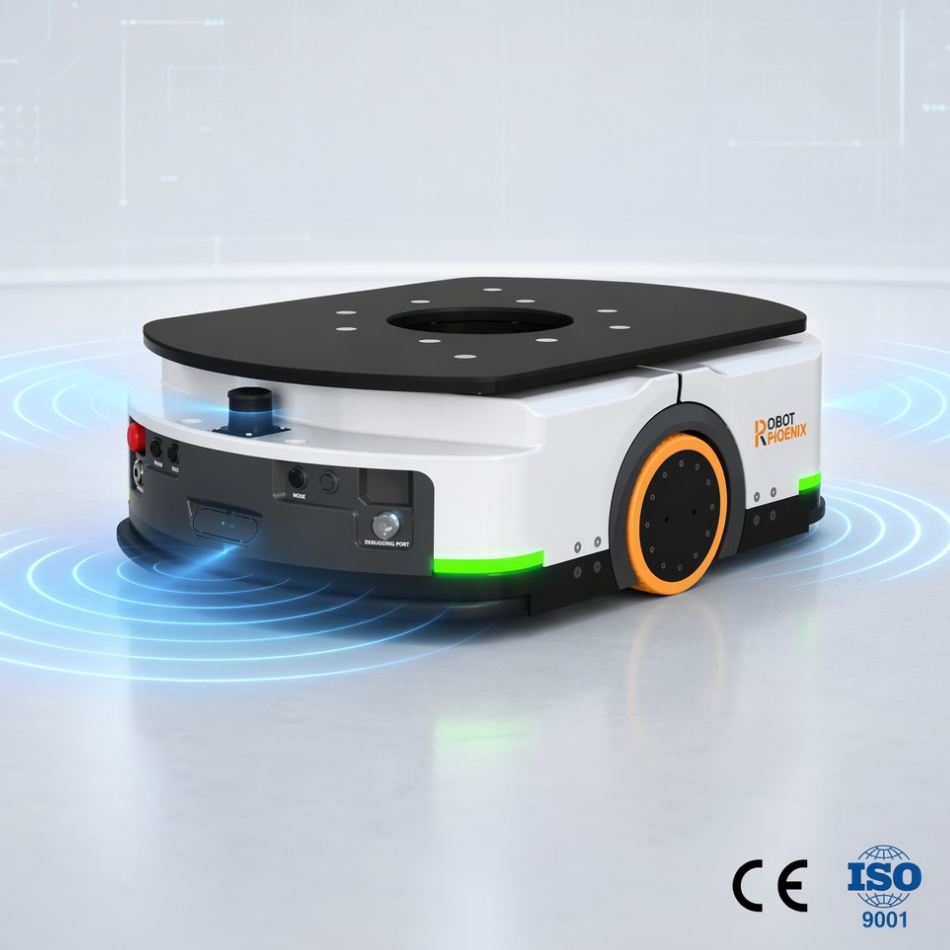
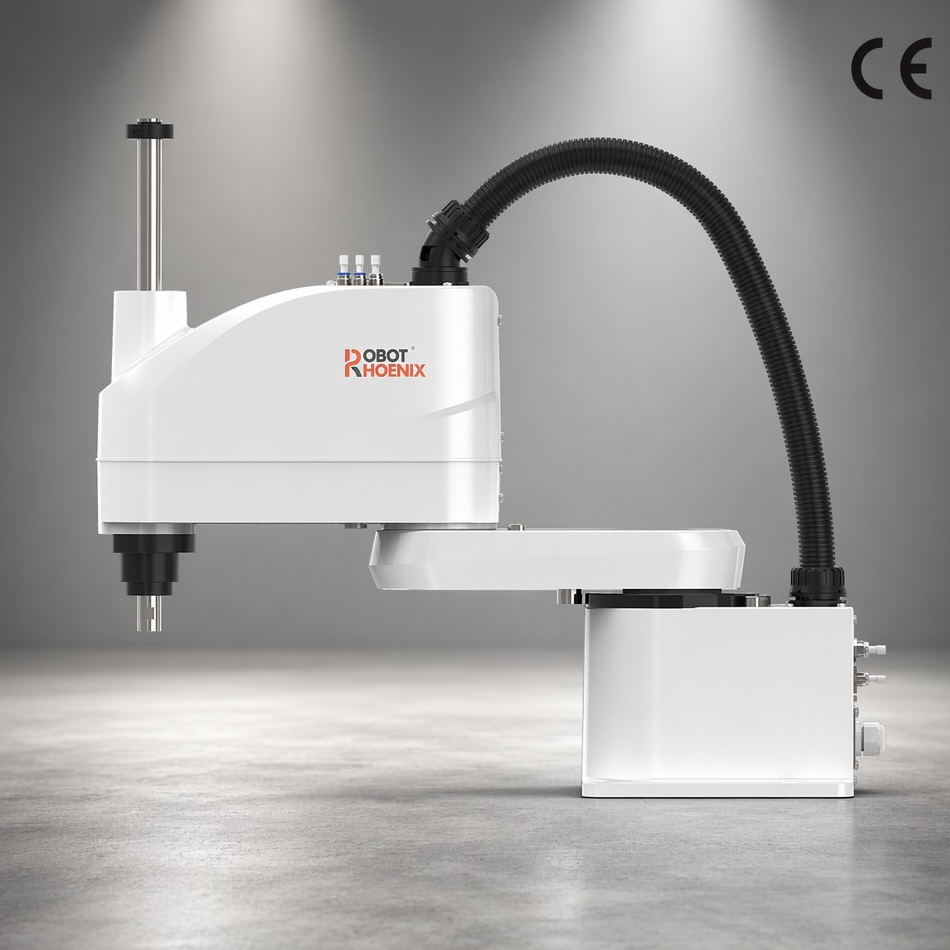
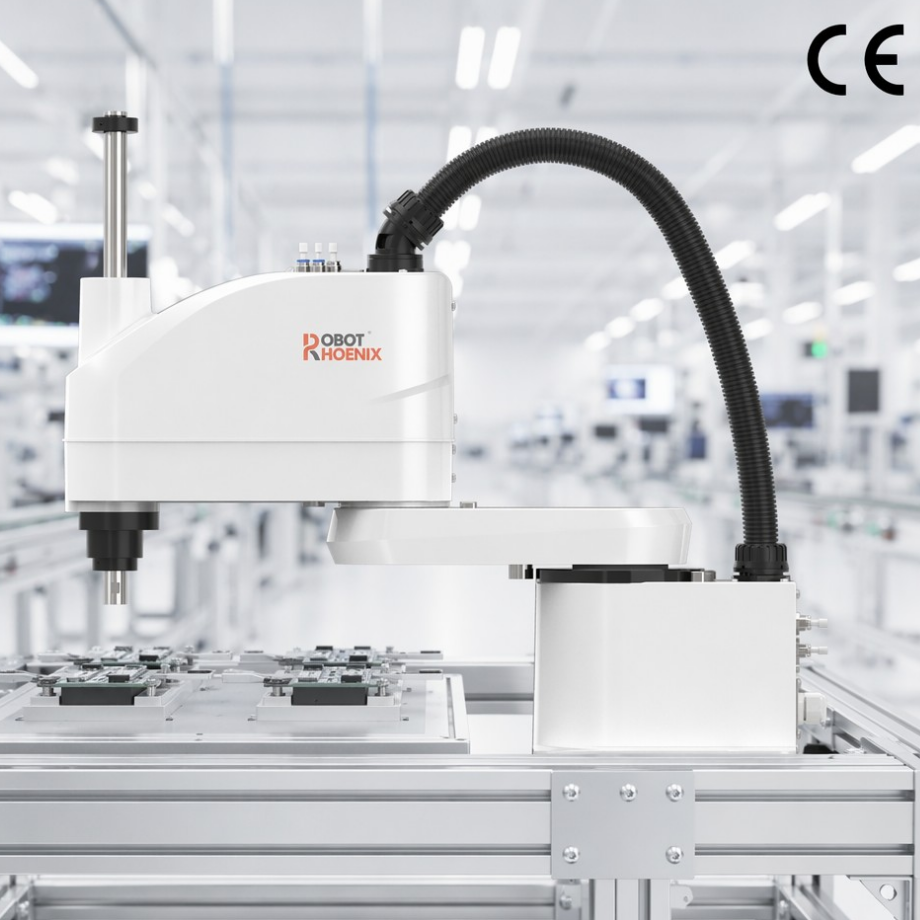
Need a model outside this shortlist? Send your part weight, required cycle time, stroke, vision requirement, line layout and target commissioning date so our engineers can recommend a platform instead of a catalogue guess.
Why Factory-Direct OEM/ODM Matters in 2026
Industrial robot purchasing is shifting from buying a single arm to buying a repeatable production capability. Machine builders, systems integrators, co-packers and factory owners are being asked to shorten commissioning, handle more SKUs, reduce labor dependence and keep spare parts available across borders. In that environment, the manufacturer behind the robot matters as much as the payload and repeatability figures.
A true OEM/ODM industrial robot manufacturer controls the motion controller, vision stack, mechanical architecture, quality process and after-sales documentation. This control reduces integration ambiguity. When a delta robot must synchronize with a cartoning machine, a SCARA must communicate with a PLC, or an AMR must hand off material to a conveyor, the problem rarely stops at the arm. It moves into I/O timing, safety logic, vision calibration, end-effector design and data exchange. Buyers who work directly with the original factory retain a shorter technical feedback loop.
This guide is written for procurement teams that need more than a product catalogue. It combines a buyer selection matrix, procurement trend analysis, product development signals, an evidence-based due-diligence checklist and a practical RFQ framework. Use it to compare OEM/ODM industrial robot manufacturers on total cost of ownership, engineering fit, response speed and verified manufacturing capability rather than price per unit alone.
Figures reflect company information and platform-verifiable profile details. Procurement teams should confirm current numbers, scope and certifications during supplier due diligence.
What OEM and ODM Mean for Industrial Robot Manufacturers
OEM and ODM are not merely labels on a quotation. They describe how much engineering responsibility, documentation and product identity the manufacturer can carry with the buyer.
OEM Manufacturing
The robot is built under the buyer brand or machine-builder label, with agreed controller parameters, mechanical interfaces, documentation, inspection records and spare-part lists. The value is consistency across repeat orders and a clear production responsibility chain.
ODM Platform Customization
The manufacturer adapts an existing delta, SCARA, AMR or wafer platform to the application through stroke, payload, coating, end-effector, vision, PLC interface and safety-logic changes. This reduces new-development risk while preserving application-specific performance.
Integrated Automation
Robots are delivered with controllers, 2D/3D vision, conveyor tracking, end-effectors and line-level integration support. Buyers avoid splitting responsibility between an arm supplier, a vision vendor and a local integrator when commissioning pressure is high.
Manufacturer Advantages That Reduce Integration Risk
JORI Intelligent Technology Co., Ltd. has focused on industrial robot R&D and production since 2012 in Jinan, Shandong, China. The company develops robots, controllers and 2D/3D vision in-house, supports OEM and design service, and serves machine builders and factory owners in Southeast Asia, Eastern Europe, North America, South America and China.
Original Factory Since 2012
JORI is an original robot factory with more than 500 employees and a 10,000+ m² manufacturing footprint, not a reseller chain. Buyers deal with the team that builds the arm, controller and vision package.
In-House Controller & Vision
Self-developed motion control and 2D/3D vision shorten the feedback loop between mechanical design, electrical interface and software behaviour. This is especially useful for PLC-ready delta cells and vision-guided SCARA picking.
Patent-Backed Robot Portfolio
Delta parallel robots, four-axis SCARA robots, AGV/AMR platforms, autonomous forklifts and silicon wafer handling robots are supported by national patents and application engineering experience.
ISO 9001 & Onsite Verification
Documented quality management runs from component inspection to final robot run-in testing. Factory premises and legal status can be checked through third-party supplier assessment and credit records.
OEM/ODM & Buyer-Label Support
OEM service, design service and buyer-label options are available for machine builders. Custom end-effectors, controller integration, packaging-machine interfaces and automated system integration can be scoped together.
Fast Global Response
JORI reports a 97.06% response rate and an average response time of 2 hours or less. For global buyers, that speed matters when a line is being designed, a FAT date is fixed or a spare-part question blocks production.
Robot Selection Matrix: Delta vs SCARA vs AMR/AGV vs Forklift vs Wafer
Use this matrix to shortlist the robot family before requesting a quote. The right platform is the one that meets the application with the fewest assumptions about part presentation, environmental protection and line integration.
| Robot family | Typical figures | Best-fit buyer scenario | Procurement check |
|---|---|---|---|
| Series 01Delta parallel robot | 3–6 kg payload · 0.08 mm repeatability · up to 120 pcs/min labeling · IP54 option | High-speed picking, sorting, bottle unscrambling, labeling and cartoning from moving conveyors. | Request cycle-time validation with your actual part, conveyor speed and vision target. Confirm PLC interface and washdown or IP protection. |
| Series 02SCARA robot | Four-axis planar motion · compact footprint · mini and 6 kg vision variants | Food loading, electronics assembly, insertion, precise placement and inspection in small cells. | Check stroke, payload at offset, repeatability, vision calibration and end-effector weight. Ask for acceptance criteria. |
| Series 03AMR / AGV | 400–500 kg payload · laser SLAM navigation · fleet management | Material transport between stations, narrow-aisle warehouse movement and flexible layout change. | Review floor conditions, traffic rules, charging strategy, fleet software, hand-off accuracy and safety configuration. |
| Series 04Autonomous forklift | Laser SLAM navigation · pallet handling · Camel Series platform | Repetitive pallet shuttles across shifts where labor availability is unstable. | Confirm aisle width, rack interface, pallet quality, lift height, safety scanners and site-layout planning support. |
| Series 05Wafer handling robot | Self-developed motion control · custom end-effectors · fragile substrate handling | Semiconductor and photovoltaic wafer transfer where smoothness and cleanliness are critical. | Check cleanroom requirement, end-effector material, vibration control, teaching method and contamination-control documentation. |
Catalogue figures are a starting point. Final specifications should be confirmed per configuration, part weight, stroke, environment and acceptance protocol.
What Industrial Robot Buyers Will Expect by 2026–2030
Procurement is becoming more technical, more service-aware and more risk-sensitive. The winning supplier will not simply quote a robot; it will prove application fit, provide integration data and support the line after acceptance.
Pilot-First, Scale-Later Buying
Buyers increasingly validate one cell or one factory area before scaling. MOQ 1 set for standard delta, SCARA and AMR platforms supports this approach and lowers the cost of technical proof.
TCO and Service-Level Contracting
Purchase price is being evaluated together with commissioning support, training, spare parts, response time and software updates. A lower unit price can lose on total cost of ownership very quickly.
Modular Cells for Mixed-Model Production
More SKUs and shorter product lifecycles favour modular robot cells that can change end-effectors, recipes and vision jobs without replacing the entire automation asset.
Vision-First, Software-Defined Integration
2D/3D vision, conveyor tracking and PLC-ready interfaces are moving from options to baseline expectations. Buyers want fewer black boxes and clearer data exchange at the cell level.
Supply-Chain Resilience
Machine builders want confidence in repeat orders, spare-part availability and documentation continuity. Factory-direct sourcing reduces the risk of a trading layer disappearing between engineering and production.
Traceability, Energy and Safety Evidence
Procurement teams now ask for inspection records, safety logic, energy data and change-control evidence. Robots are becoming part of a broader factory compliance and sustainability file.
How Delta, SCARA and AMR Platforms Are Evolving
Robot development is moving toward higher speed with less mass, tighter vision integration, simpler interfaces and application-specific protection. The practical result is shorter commissioning and more stable production.
Lighter, Faster Delta Architecture
Structural optimisation, lightweight arms and refined kinetics help delta robots reach high cycle rates while maintaining repeatability. For food, daily chemical and packaging lines, the gain appears as higher throughput and less product handling stress.
Compact SCARA With Embedded Vision
SCARA platforms are becoming smaller and more intelligent. Integrated 2D/3D vision supports picking, placement and inspection in the same compact cell, reducing the need for external vision hardware and complex calibration hand-offs.
PLC-Ready and Open Interfaces
Machine builders need robots to talk to cartoning machines, packaging equipment and line controllers. PLC-ready delta robots and documented I/O maps shorten integration and simplify acceptance testing.
Laser SLAM Fleets and Forklifts
AMR and autonomous forklift platforms continue to shift toward laser SLAM navigation, fleet management and flexible route planning. The buyer benefit is faster layout change without floor tape and better scalability across the plant.
Hygienic and Cleanroom Variants
Food, pharmaceutical and semiconductor applications demand more than a standard robot. IP-rated protection, cleanroom-compatible materials, smooth surfaces and validated cleaning procedures are becoming part of the product definition.
Wafer and Fragile-Substrate Handling
Wafer-handling robots require smooth motion, custom end-effectors and low-vibration transfer. As semiconductor and photovoltaic capacity grows, buyers will compare suppliers on motion control depth, not only payload data.
A Practical Procurement Scorecard for OEM/ODM Robot Tenders
Price is only one part of an industrial robot decision. A transparent scorecard helps procurement, engineering and operations compare suppliers on the same basis before a technical review turns into a price-only negotiation.
Suggested buyer weighting
Adjust these weights to line criticality, product value and integration complexity. The percentages are an evaluation framework, not a performance claim.
RFQ data that produces a serious answer
A clear RFQ protects both sides. It lets the manufacturer quote a configured robot with the right end-effector and acceptance criteria instead of an optimistic headline price.
How to Verify an Industrial Robot Manufacturer Before You Buy
Experience, expertise, authoritativeness and trust are not abstract SEO ideas in industrial procurement. They appear as factory access, engineering documentation, test records, trade history and service responsiveness.

Review the company profile, factory video, trade capacity, transaction level, trade history, credit profile, supplier assessment and buyer reviews. JORI exposes these verification paths for serious buyers.
Ask for a controller, vision and I/O architecture explanation. A manufacturer that owns the core technology can answer integration questions with drawings, not vague promises.
Request a cycle-time simulation or a FAT protocol using your actual product. Catalogue speed is useful for shortlisting; validated motion is what protects your launch date.
Confirm ISO 9001 scope, inspection records, incoming-component control, final run-in testing, packaging method and spare-part identification.
Discuss training, warranty, software updates and service escalation in the quotation stage. These items determine how quickly the line recovers after an issue.
Check export experience and references in comparable applications. Delta, SCARA and AGV suppliers should be able to explain the constraints of your industry, not only the robot datasheet.
High-ROI Applications for OEM/ODM Industrial Robots
Applications with clear ROI usually combine repetitive motion, quality consistency and a measurable labour or cycle-time constraint. The robot should remove a bottleneck, not become a new one.
Food & Beverage
Bottle unscrambling, delta pick-and-place, sorting and case packing. Vision-guided handling helps manage product variation and conveyor speed.
Electronics & 3C
SCARA assembly, insertion, screw driving, inspection and small-part placement in compact cells where repeatability and footprint both matter.
Warehouse & Logistics
Latent AGV, 400–500 kg AMR and autonomous forklift platforms for material transport, narrow aisles and multi-shift pallet movement.
Packaging & Vision
2D/3D vision-guided picking, labeling, lid application and cartoning. Integrated vision reduces the risk of mis-picks and product damage.
From Inquiry to Stable Production: Four Steps
A disciplined OEM/ODM project moves from application data to verified production in controlled stages. This reduces late-stage changes and protects the commissioning schedule.
Define the Real Problem
Share part data, cycle time, layout, environment and acceptance criteria. Clarify whether the priority is speed, precision, hygiene, labour reduction or traceability.
Simulate and Select
Compare delta, SCARA, AMR or wafer architecture and confirm end-effector, vision and controller requirements. Shortlist one platform, not three incompatible concepts.
Verify Before Shipment
Agree on FAT items such as cycle time, repeatability, vision accuracy, safety logic, documentation and spare-part identification. Test the actual product whenever possible.
Ramp and Support
Use SAT, operator training and a clear escalation path to stabilize production. Capture preventive-maintenance intervals and recommended spare parts for the first year.
Industrial Robot Procurement FAQ
These are the questions machine builders, integrators and factory buyers ask most often when comparing OEM/ODM industrial robot manufacturers.
What is the minimum order quantity for JORI industrial robots?
Standard delta robots, SCARA robots and AMR/AGV platforms can be ordered from 1 set. This allows buyers to validate a single cell or pilot line before scaling to multiple stations or factories.
Does JORI offer OEM or custom robot solutions?
Yes. JORI provides OEM service, design service and buyer-label options, and supports machine builders with custom end-effectors, controller integration, vision configuration and automated system integration.
Should I choose a delta robot or a SCARA robot?
Choose a delta robot for very fast, lightweight pick-and-place from moving conveyors, typically 3–6 kg payload. Choose a SCARA robot for planar assembly, insertion, food loading and precise placement in a compact footprint. Share part weight, cycle time and layout so engineers can recommend a model.
Can JORI robots integrate with existing packaging machines?
Yes. JORI develops its own controllers and 2D/3D vision, offers PLC-ready delta robots for cartoning machines, and supports machine builders such as wet wipe lid applicator and carton packer manufacturers.
Which delivery and payment terms are accepted?
Accepted delivery terms include FOB, CFR, CIF, EXW, CIP, FCA, CPT and express delivery. Payment methods include T/T, L/C, credit card, PayPal, Western Union, MoneyGram and escrow, in currencies such as USD, EUR, GBP, JPY, CAD, AUD, HKD, CHF and CNY.
How quickly does JORI respond to inquiries?
JORI maintains an average response time of 2 hours or less and a 97.06% response rate. Include application details, drawings, videos or product samples in the first message to speed up the technical review.
What information should I send with my RFQ?
Send part weight, dimensions, centre of gravity, product presentation, required cycle time, uptime target, available footprint, vision requirement, PLC and safety interfaces, hygiene or cleanroom constraints, target delivery date and acceptance criteria.
What about warranty, spare parts and after-sales support?
Warranty, spare-part recommendations, training and service terms are confirmed in the quotation and contract for the agreed configuration. Buyers should request a recommended spare-part list and escalation path before purchase order release.
Can I audit the factory or request a test video before shipment?
Yes. Serious buyers should ask for factory verification, production and testing evidence, and a FAT or test video for the agreed cycle time and accuracy. This is part of a professional industrial robot procurement process.
How should I compare OEM/ODM industrial robot manufacturers?
Compare total cost of ownership, technical fit, cycle-time proof, integration risk, controller and vision ownership, service response, spare-part availability, certification and verifiable trade records. Use a weighted scorecard rather than price alone.
Turn Your Robot Requirement Into a Verifiable OEM/ODM Project
Send your product data, cycle-time target, layout, vision requirement and integration constraints. Our engineering team will help you shortlist a delta, SCARA, AMR/AGV, forklift or wafer robot platform and define the next technical step.
Email: info@joribot.com · Factory-direct industrial robot manufacturer since 2012 · ISO 9001 · OEM/ODM support