OEM/ODM Industrial Vision System Factories & Exporter
JORI engineers vision-guided delta robots, SCARA robots, AMR/AGV platforms, autonomous forklifts and wafer-handling robots in-house — with self-developed controllers, 2D/3D vision, ISO 9001 quality management and export support since 2012.
MOQ from 1 set · OEM/ODM design · Average response ≤2 hours · Exporting to five continents
8 Industrial Robot Products for OEM/ODM Vision Projects
Shortlist delta, SCARA and mobile robot platforms for pick-and-place, assembly, carton packing, precision handling and narrow-aisle transport. Product links are preserved exactly as supplied.
 Delta
Robotphoenix New 4-Axis Parallel Robot Arm Delta Spider Hand Robot for Carton Packer Line
A high-speed delta spider-hand platform for carton packing, conveyor tracking and repetitive pick-and-place. Suits OEM machine builders that need a compact, PLC-ready robot cell.
View product details →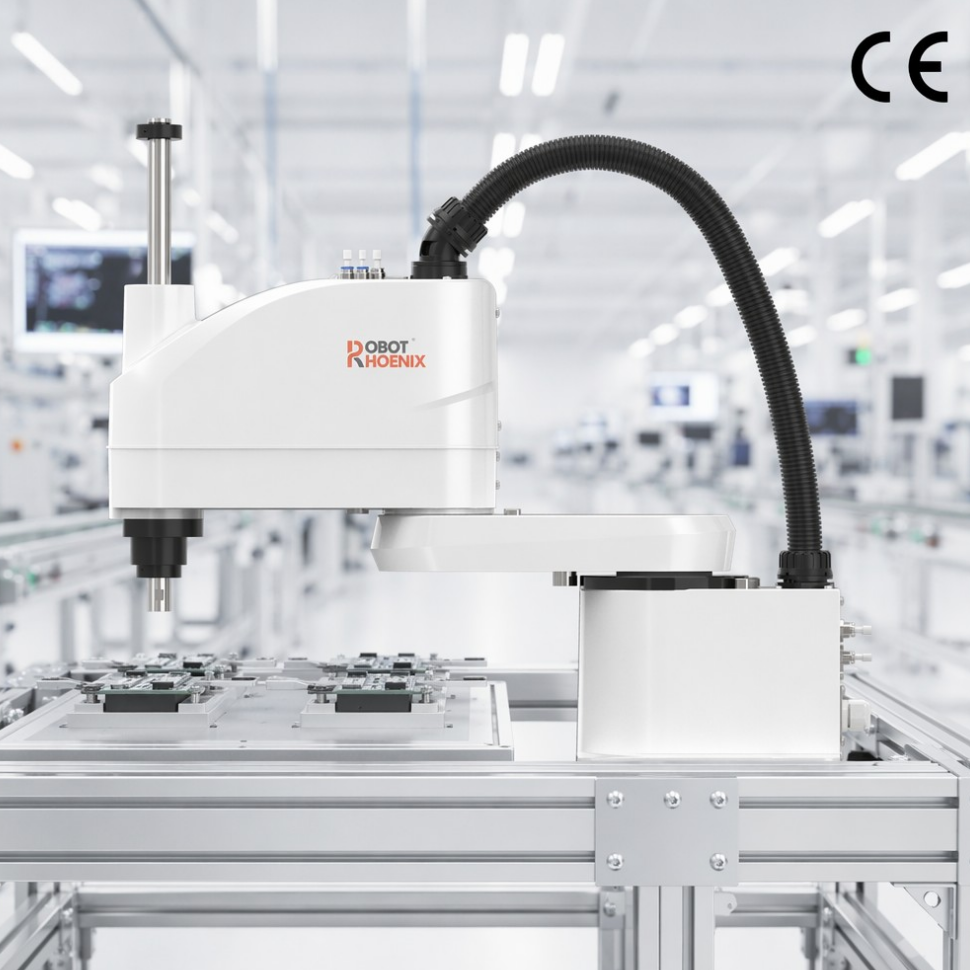 SCARA
High Speed and Accuracy Newly Developed Industrial Robot Arm Four Axis Scara Robot
A four-axis SCARA for fast planar handling, assembly, insertion and inspection. A practical choice for compact cells where repeatability and floor-space efficiency matter.
View product details →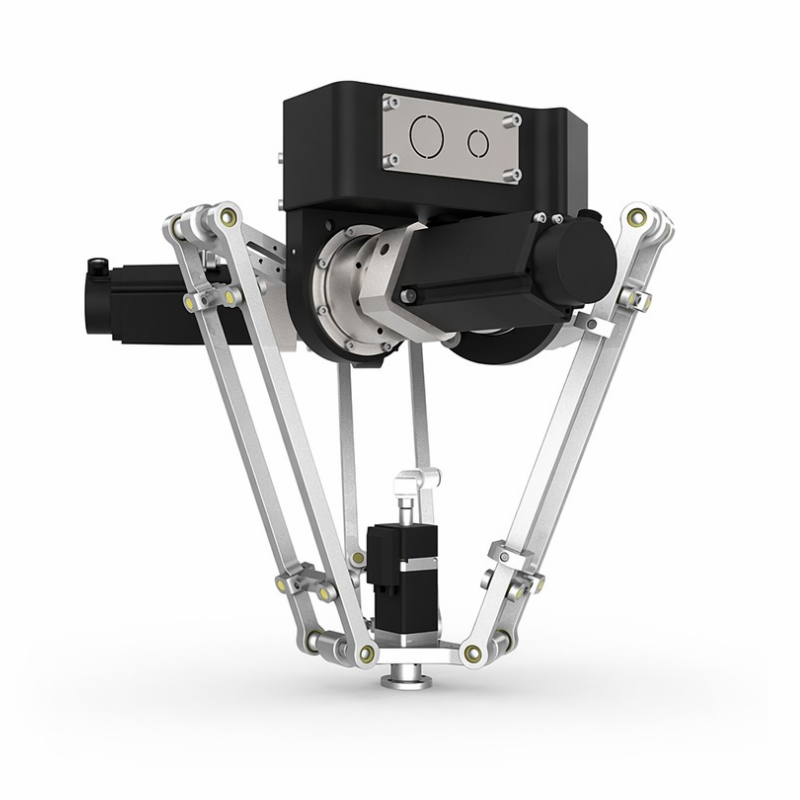 ODM
Low Cost Customized 2/3/4 Axis Industrial Manipulator Delta Robot for Pick and Place
A customizable 2/3/4-axis delta manipulator for cost-sensitive pick-and-place projects. Well suited to OEM/ODM buyers that need application-specific reach, tooling and controls.
View product details →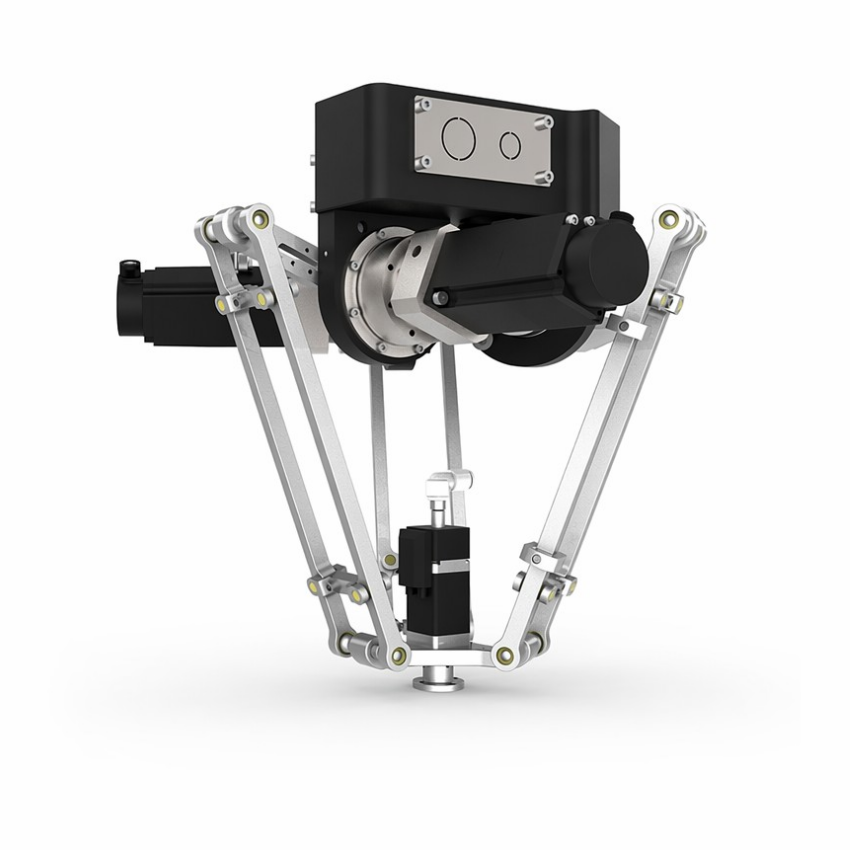 Vision
High Precision Pick and Place 4 Aixs Parallel Robot Delta with Vision Tracking System
A vision-tracking delta robot for randomly oriented parts on moving conveyors. Designed for high-precision pick-and-place where camera, lighting and robot motion must work as one system.
View product details →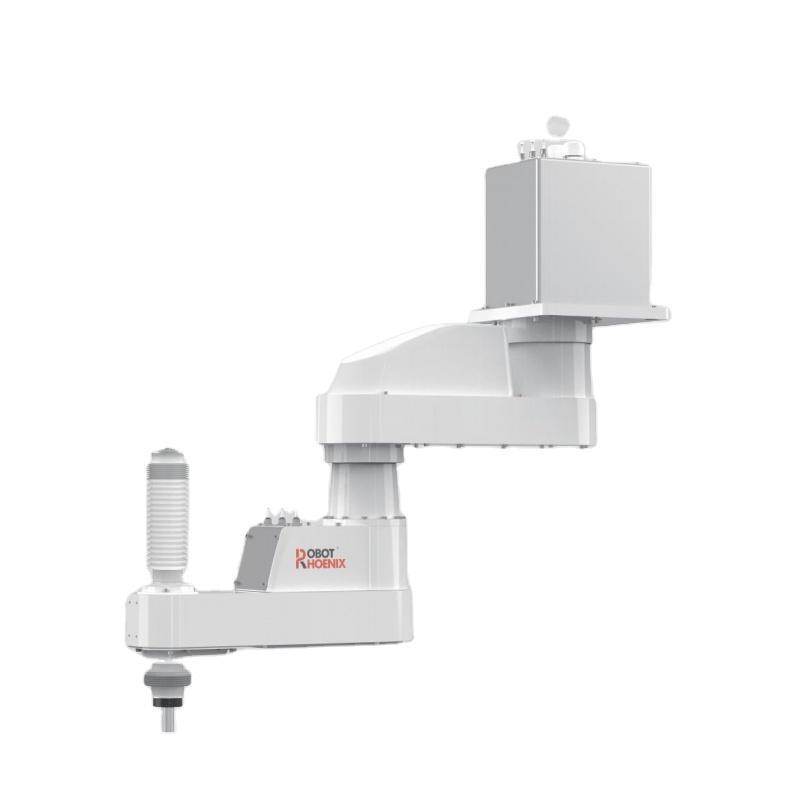 SCARA
Compact Structure High Precision 550mm Reach Radius 3kg Payload 4-axis SCARA Robot
A compact 3 kg payload, 550 mm reach SCARA for small parts, electronics handling and precision placement. Its footprint helps machine builders fit automation into existing production lines.
View product details →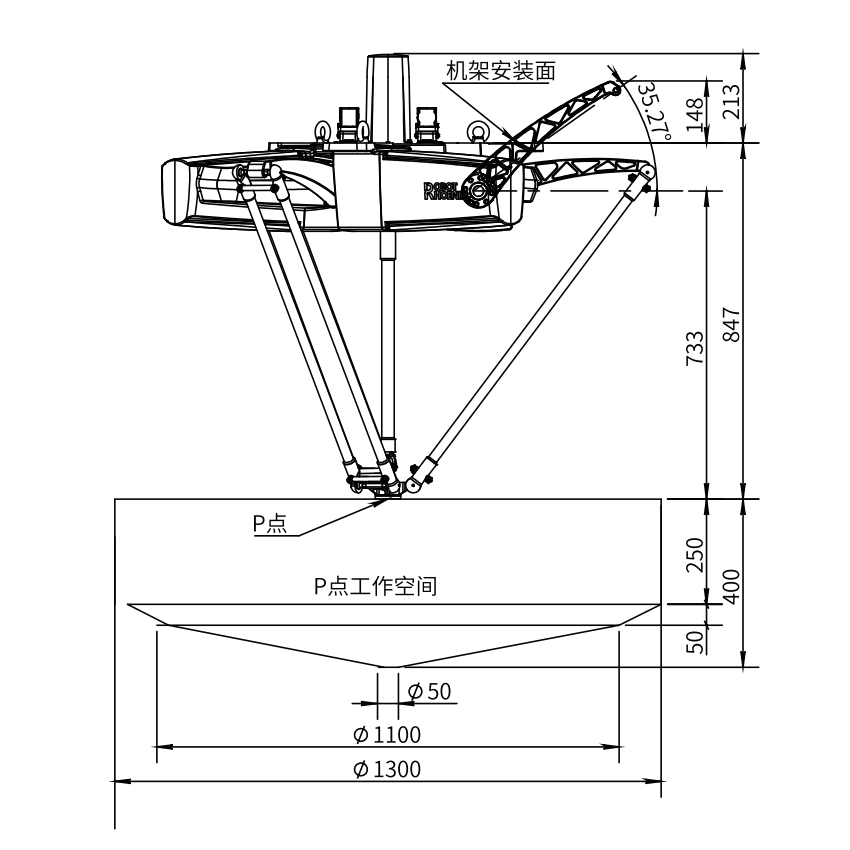 Delta
Industrial Robotic Arm Parallel Robot 2/3/4 Axis Delta Robot for Pick&Place Application
A general-purpose parallel robot family for pick-and-place, sorting and packaging applications. Multiple axis configurations allow engineers to match cycle time, payload and tooling.
View product details →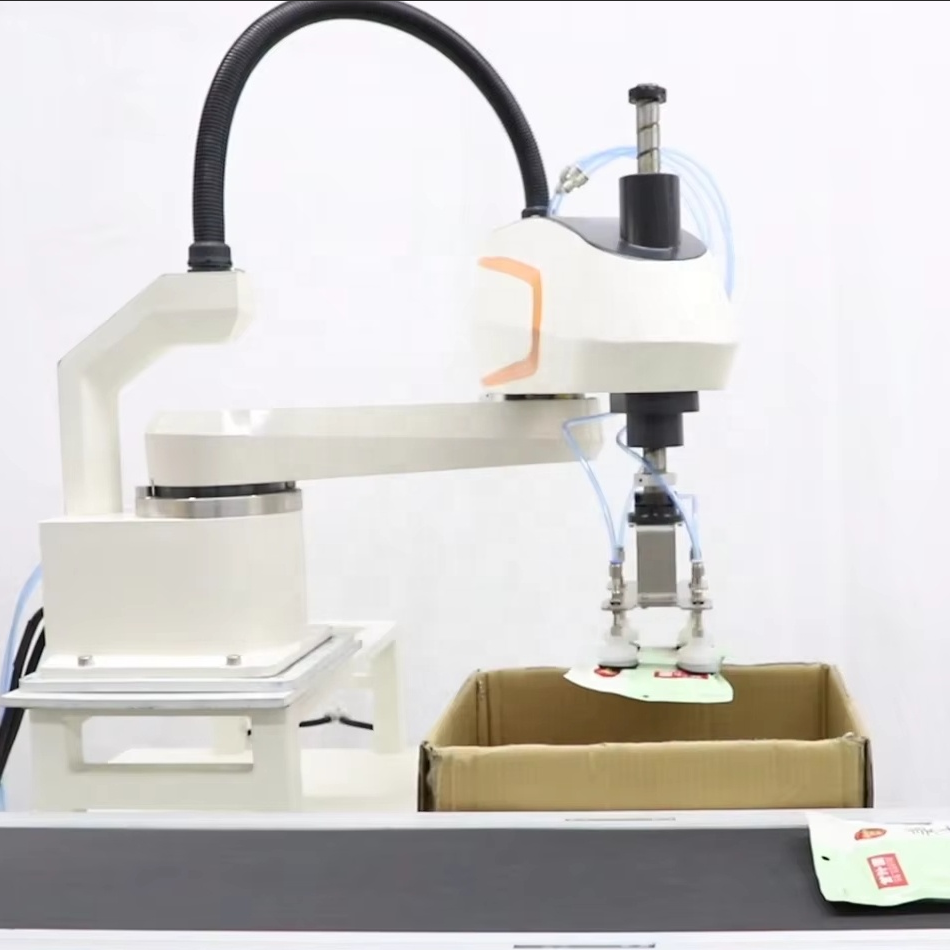 Assembly
Newly Design Industrial Articulated Robotic Arm Scara for Precision Assembly & Handling
A SCARA platform for precision assembly and handling tasks, including insertion, dispensing and test loading. Suitable for OEM equipment where repeatable planar motion is critical.
View product details →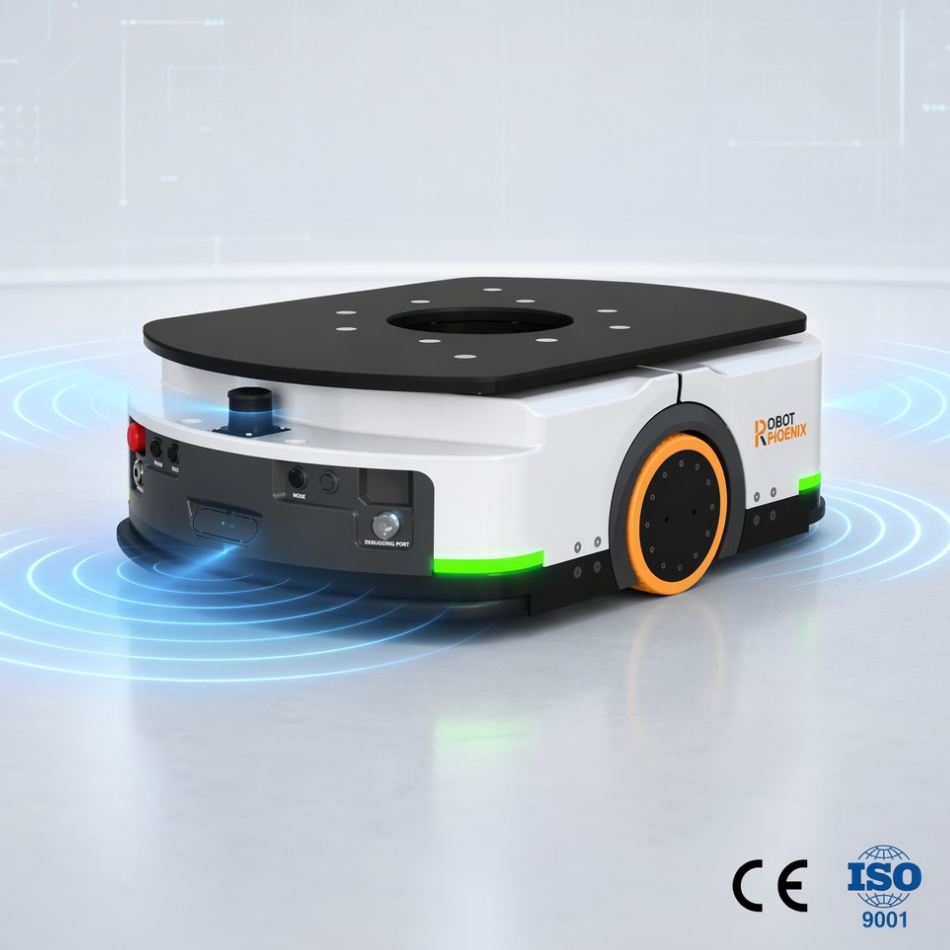 AGV
Compact and Latent Mobile Robot AGV for Narrow Aisle Warehouse and Factory Transportation
A low-profile latent AGV for narrow aisles, warehouse transport and factory material flow. Helps reduce manual cart pushing while fitting space-constrained layouts.
View product details →Founded
In-house R&D and original factory manufacturing.
Employees
Engineering, production, quality and export teams.
m² Factory Area
Robot assembly, testing and system integration capacity.
Response Rate
Average reply time of 2 hours or less.
What an OEM/ODM Industrial Vision System Factory and Exporter Should Deliver
Procurement teams searching for an OEM/ODM industrial vision system factory are usually not buying a camera in isolation. They are buying a repeatable production result: a robot that sees, decides, moves and communicates inside a line. The system may include industrial cameras, lenses, lighting, image-processing software, robot mechanics, motion controllers, PLC handshakes, safety logic, end-effectors and commissioning support. When one factory controls more of that stack, fewer interfaces are left to chance.
The OEM/ODM distinction matters. Under OEM, the factory manufactures to the buyer’s specification, drawing, brand and documentation. Under ODM, the buyer starts from a mature robot or vision platform and adapts it to the application. A genuine exporter must also handle voltage variants, packaging, export documentation, spare-parts planning and remote engineering. JORI has been an original robot factory since 2012, with in-house development of delta robots, SCARA robots, AGV/AMR platforms, wafer robots, controllers and 2D/3D vision.
For buyers, the strongest information gain comes from verifiable evidence rather than catalogue claims. Ask whether the supplier is an original manufacturer, whether controllers and vision are developed in-house, which patents and quality systems are in place, how factory acceptance tests are documented, and how spare parts and engineering support are handled after shipment. JORI publishes company verification, credit, trade capacity, buyer reviews and factory video resources so procurement teams can complete due diligence before committing to a pilot cell.
- Independent R&D for robot mechanics, controllers and 2D/3D vision
- Original factory for delta, SCARA, AGV, forklift and wafer robots
- OEM, design and buyer-label support for machine builders
- One-stop automation integration and PLC-ready robot cells
- ISO 9001, onsite-verified status and export support
Factory Snapshot
Evidence buyers can review before requesting a quotation.
Six Reasons Global Machine Builders Choose JORI for OEM/ODM Projects
OEM and ODM buyers need more than a robot arm. They need a manufacturing partner that can control the vision stack, document quality and support export projects after shipment.
In-House R&D, Not a Reseller Shell
Delta robots, SCARA robots, AGV/AMR platforms, wafer robots, controllers and 2D/3D vision are developed in-house and protected by national patents. Buyers deal directly with an original factory.
One Accountable Source for the Vision Cell
Robot mechanics, controller, vision, software and system integration come from one engineering team. This reduces interface risk between camera, robot, PLC, conveyor encoder and safety circuits.
OEM, ODM and Buyer-Label Support
Design service, buyer-label options and custom end-effectors are available. PLC-ready delta robots can integrate with cartoning machines, carton packers and wet wipe lid applicator machines.
Verified Quality and Compliance
ISO 9001 quality management, onsite-verified manufacturer status, third-party supplier assessment, trade history and buyer reviews support a serious procurement due-diligence process.
Export-Ready Commercial Support
Buyers across five continents are supported with MOQ from 1 set, FOB, CFR, CIF, EXW, CIP, FCA, CPT and express delivery, multiple currencies and common international payment methods.
Engineering Reply Within 2 Hours
JORI maintains a 97.06% response rate and an average response time of 2 hours or less. Engineers review parts, cycle time, layout and process video before recommending a model.
Which Vision-Guided Robot Platform Fits Your Application?
Use this shortlist to align the robot family with product weight, cycle time, tolerance, floor space and material-flow requirements.
Delta Parallel Robot
Best for food, pharmaceutical, carton packing and labeling lines where lightweight products arrive randomly on a conveyor. Typical advantages include 3–6 kg payload, 0.08 mm repeatability, IP54 options and high cycle rates.
Explore delta robots →SCARA Robot
Best for assembly, insertion, dispensing, inspection and precise placement in a compact footprint. A four-axis SCARA is often easier to integrate into existing machine frames than a larger articulated robot.
Explore SCARA robots →AMR / AGV & Forklift
Best for replacing manual cart pushing and repetitive pallet transport. Laser SLAM navigation, 400–500 kg payload platforms, compact latent AGVs and fleet management support flexible warehouse layouts.
Explore AMR / AGV →Wafer Handling Robot
Best for semiconductor and photovoltaic wafer transfer where smooth, repeatable handling matters. Custom end-effectors and self-developed motion control help match cleanroom and process requirements.
Explore wafer robots →Industrial Vision Procurement Trends Buyers Should Plan For
The supplier selection process is shifting from lowest robot price toward lifetime output, changeover speed, data visibility and supply-chain resilience.
High-Mix, Low-Volume Production
Buyers increasingly need one cell to handle multiple SKUs, frequent changeovers and smaller batches. Modular end-effectors, quick-change tooling, recipe-driven vision and PLC-ready robot controllers are becoming procurement requirements, not extras. This favours OEM/ODM partners that can customize mechanics and software without rebuilding the entire platform.
Total Cost of Ownership and Supply Resilience
Procurement scorecards now compare robot price, controller, vision, integration, energy use, spare parts, documentation and engineering response together. Export buyers also examine voltage variants, packaging, warranty terms, remote support and replacement-part planning. A verified manufacturer with transparent trade records reduces sourcing risk.
AI Vision, Traceability and Data
Deep-learning inspection, OCR, barcode reading and conveyor tracking are moving from pilot projects into routine production. Buyers will ask for image logs, reject reasons, MES/ERP handshakes, software update policies and cybersecurity controls. Vision-guided robot suppliers must therefore behave more like data-aware equipment partners.
Where Vision-Guided Industrial Robotics Is Heading
The next generation of OEM/ODM vision systems will combine faster mechanics, embedded AI, easier integration and stronger cleanroom or mobile capabilities.
3D Vision and Edge AI Controllers
3D cameras, structured light and AI-based recognition make bin picking and random-orientation handling more practical. Embedded edge computing can reduce cabinet space, simplify cabling and bring image processing closer to the robot. For buyers, the gain is faster commissioning and more tolerance for lighting variation, reflective parts and mixed product batches.
Faster, More Compact Mechanisms
Delta robots continue to push cycle time for lightweight picking, while compact SCARA designs serve small assembly cells. EtherCAT communication, PLC-ready control, direct-drive architectures and IP-rated protection help machine builders standardize cells across plants. Wafer-handling robots add smooth motion and custom end-effectors for fragile substrates.
Mobile Manipulation and Digital Twins
AMR/AGV platforms, autonomous forklifts and robot arms are converging into mobile manipulation. Fleet management, safety sensors and digital-twin commissioning allow factories to simulate traffic and cell layouts before installation. Cleanroom and narrow-aisle variants will expand the range of tasks that can be automated without major facility changes.
Where Vision-Guided Robot Systems Deliver Measurable ROI
Start from the production problem, then choose the robot family. The most successful projects define part variation, acceptance criteria and operator workflow before selecting hardware.
Food & Beverage
Vision-guided delta picking, sorting and case packing at conveyor speed. Stainless-steel execution and IP-rated options can be discussed for washdown environments.
Pharmaceutical & Medical
Blister, vial, carton and medical-device handling with repeatable motion. Vision can support presence checks, orientation correction and reject confirmation.
Electronics & 3C
SCARA assembly, insertion, dispensing and inspection for compact production cells. Vision helps align small parts and confirm placement before the next operation.
Semiconductor & Solar
Silicon wafer transfer robots for semiconductor and photovoltaic lines. Smooth acceleration and custom end-effectors help protect fragile substrates.
Warehouse & Logistics
Laser SLAM AMRs, latent AGVs and autonomous forklifts for 24/7 material flow. Fleet management supports multi-robot traffic and changing layouts.
Daily Chemicals & Wet Wipes
Delta-based lid applicator and carton packer cells for hygiene products. PLC-ready robots can integrate with existing packaging machinery and line controls.
Experience, Expertise, Authority and Trust — Verifiable Before You Buy
Google’s quality guidance rewards content and businesses that demonstrate real experience, specialist expertise, authority and trustworthy service. Procurement teams should apply the same standard when selecting an industrial vision exporter.
Experience
Original robot factory operating since 2012, with more than a decade of overseas market support across five continents.
Expertise
In-house delta, SCARA, AGV, forklift and wafer robot development, plus controllers, 2D/3D vision and system integration.
Authority
ISO 9001 quality management, onsite-verified manufacturer status, national patents and public trade-capacity records.
Trust
97.06% response rate, 2-hour average response, buyer reviews and transparent company, credit and transaction profiles.
Review credentials directly, then request a pilot configuration for your part, cycle time and layout.
OEM/ODM Industrial Vision System Buyer FAQ
Practical answers for procurement teams comparing suppliers, robot types, integration scope and export terms.
What is the minimum order quantity for JORI industrial robots?
Standard delta robots, SCARA robots and AMR/AGV platforms can be ordered from 1 set, so buyers can validate a single cell or pilot line before scaling. For custom OEM/ODM projects, MOQ depends on tooling, private-label documentation, end-effector design and software configuration; share your target annual volume and prototype schedule for a project-specific answer.
Can JORI manufacture under our brand or to our drawing?
Yes. JORI provides OEM service, design service and buyer-label options. Machine builders can request custom end-effectors, controller integration, vision recipes, packaging and documentation. The final brand, labels, manuals and software restrictions should be defined in the project specification before production.
Should I choose a delta robot or a SCARA robot?
Choose a delta robot for very fast, lightweight pick-and-place from moving conveyors, typically 3–6 kg payload, such as cartoning, labeling and sorting. Choose a SCARA robot for planar assembly, insertion, dispensing and precise placement in a compact footprint. Share part weight, tolerance, cycle time, conveyor speed and available floor space, and the engineering team can recommend a model.
Can vision-guided robots integrate with existing packaging machines?
Yes. JORI develops its own controllers and 2D/3D vision, and offers PLC-ready delta robots for cartoning machines, carton packers and wet wipe lid applicator machines. Existing PLC logic, conveyor encoders, safety circuits and machine interfaces can be reviewed during the technical evaluation.
Which delivery and payment terms are accepted?
Accepted delivery terms include FOB, CFR, CIF, EXW, CIP, FCA, CPT and express delivery. Accepted payment methods include T/T, L/C, credit card, PayPal, Western Union, MoneyGram and escrow, in USD, EUR, GBP, JPY, CAD, AUD, HKD, CHF and CNY.
How quickly will our inquiry receive a technical response?
JORI maintains an average response time of 2 hours or less and a 97.06% response rate. For a faster review, send product photos, part dimensions, required cycle time, current layout, PLC details and a short video of the existing process to info@joribot.com.
How should we define vision performance before shipment?
Agree on measurable acceptance criteria: picking accuracy, repeatability, cycle time, false-reject rate, lighting conditions, product mix and changeover procedure. Factory run-in testing and documentation can be aligned with those criteria, and final specifications should be confirmed for each configuration before the order.
Do you support after-sales planning and spare parts?
Export support includes technical documentation, commissioning guidance, spare-parts planning and engineering response. The exact service path depends on the region and project scope, so buyers should agree the response process, recommended spare-parts list and support responsibilities in the contract.
Build a Vision-Guided Robot Cell with a Verified OEM/ODM Factory
Send product photos, cycle time, target accuracy and layout to info@joribot.com. The engineering team will help shortlist delta, SCARA, AGV or wafer robot configurations and prepare the next technical step.