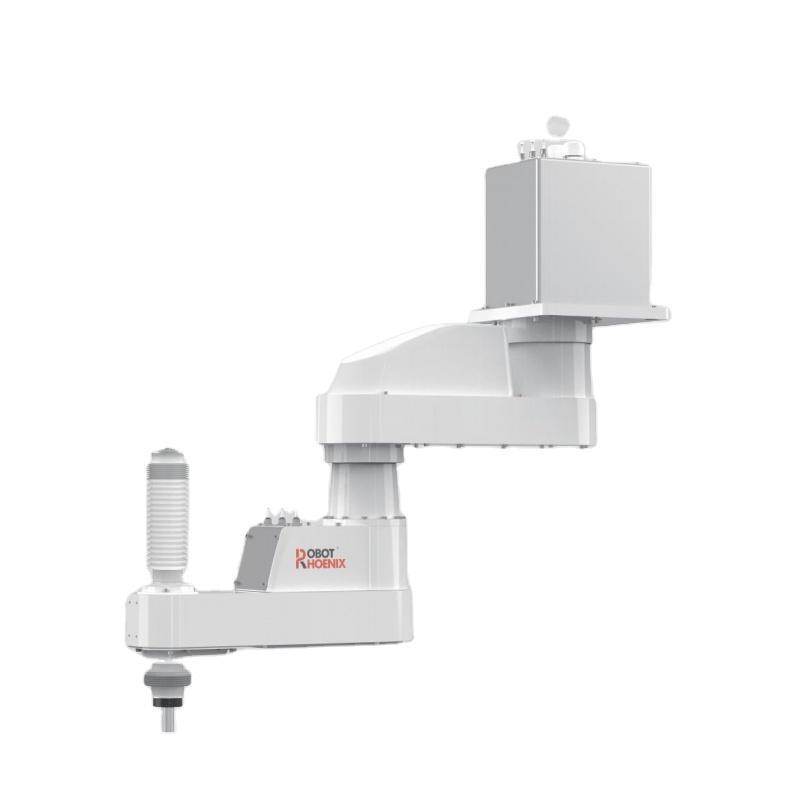
SCARA
Compact Structure High Precision 550mm Reach Radius 3kg Payload 4-axis SCARA Robot
A compact SCARA for high-accuracy placement in tight end-of-line cells, small cases, trays and infeed orientation.
The fastest way to separate a serious automatic palletizer supplier from a catalogue wholesaler is to inspect the robot layer. These eight JORI modules are relevant to pick-and-place, case packing, lid application, assembly and palletizer infeed. Product URLs and images are preserved so engineers can verify reach, payload, controller options and protection directly.
A compact SCARA for high-accuracy placement in tight end-of-line cells, small cases, trays and infeed orientation.
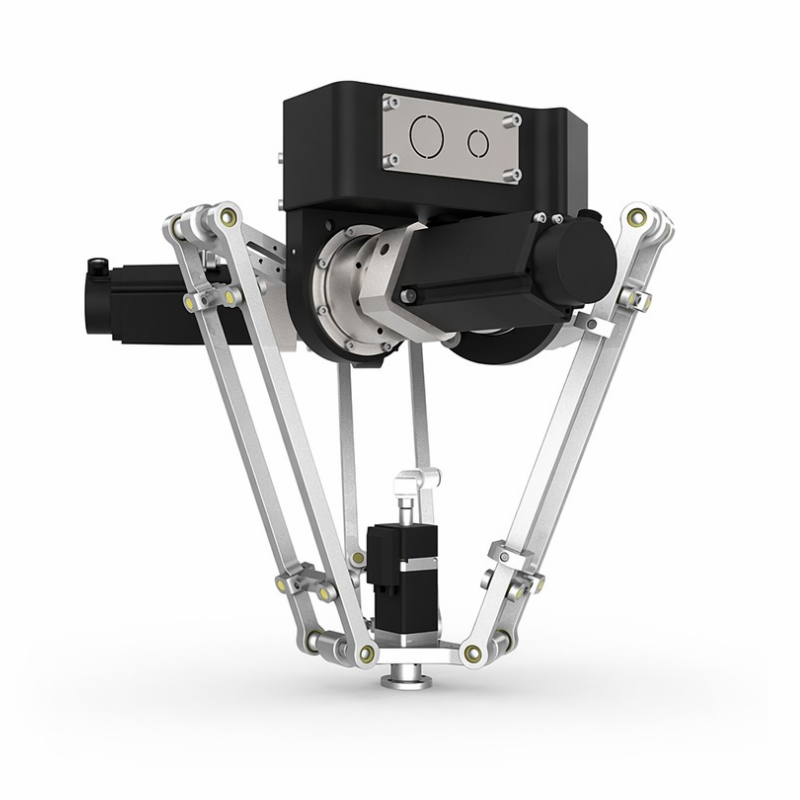
A flexible delta platform for high-speed sorting and case packing, with custom axis and end-effector options for OEM palletizer builds.

Purpose-built for wet-wipe lid application; shows how a robot module integrates with a packaging machine instead of standing alone.
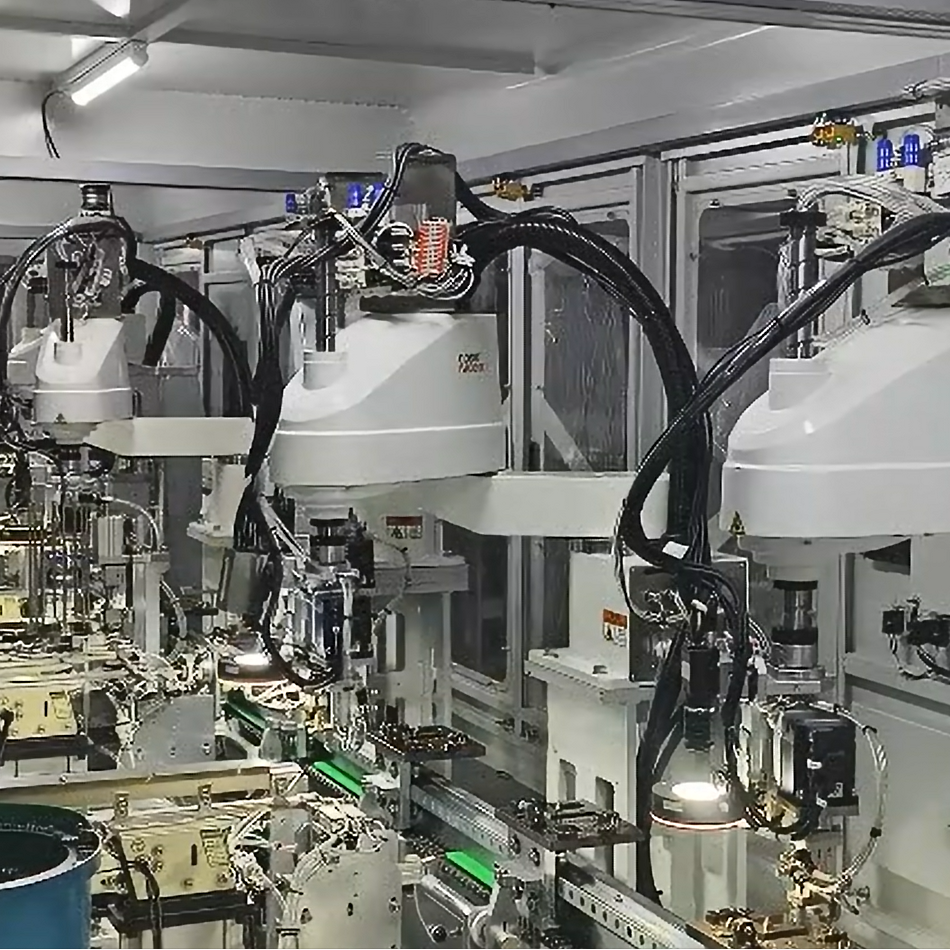
Mini SCARA for cost-sensitive cells where footprint and repeatability matter more than heavy payload.
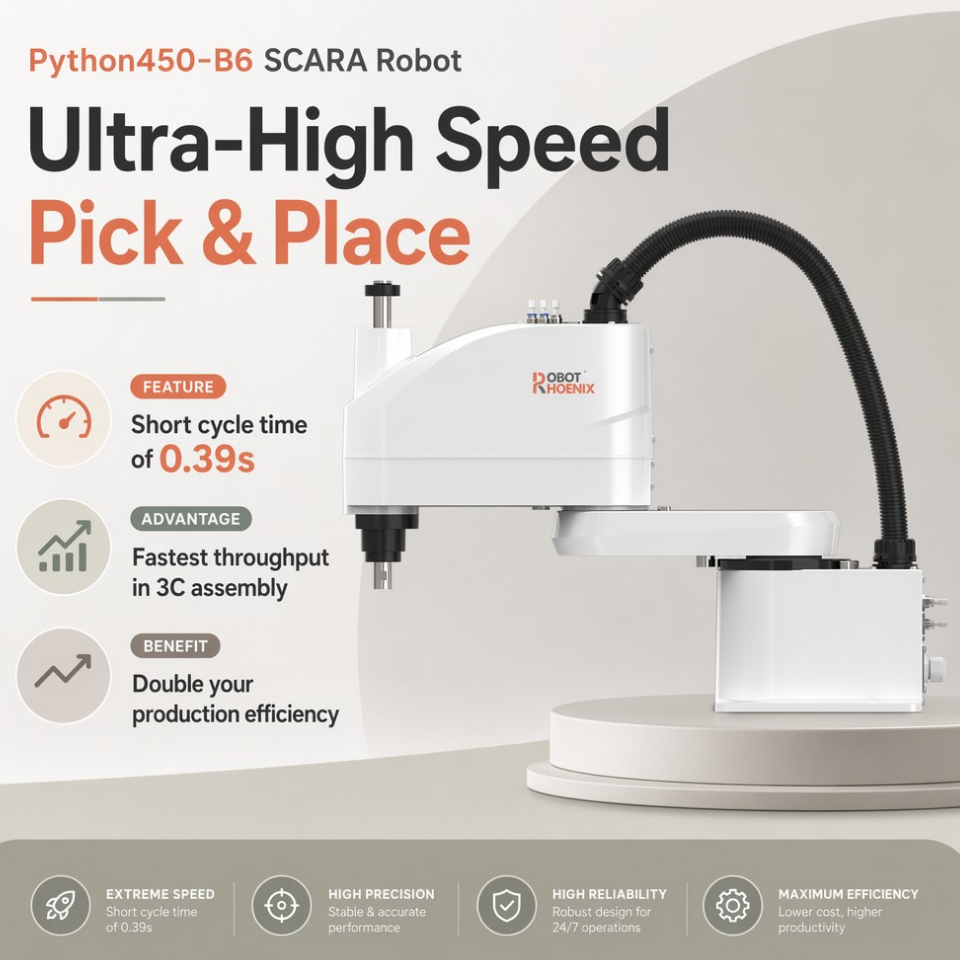
SCARA with gripper for accurate picking; suitable for assembly, inspection and palletizer infeed where placement accuracy is critical.

400 mm reach and PLC integration for 3C electronics; a useful benchmark for compact, precise automation.
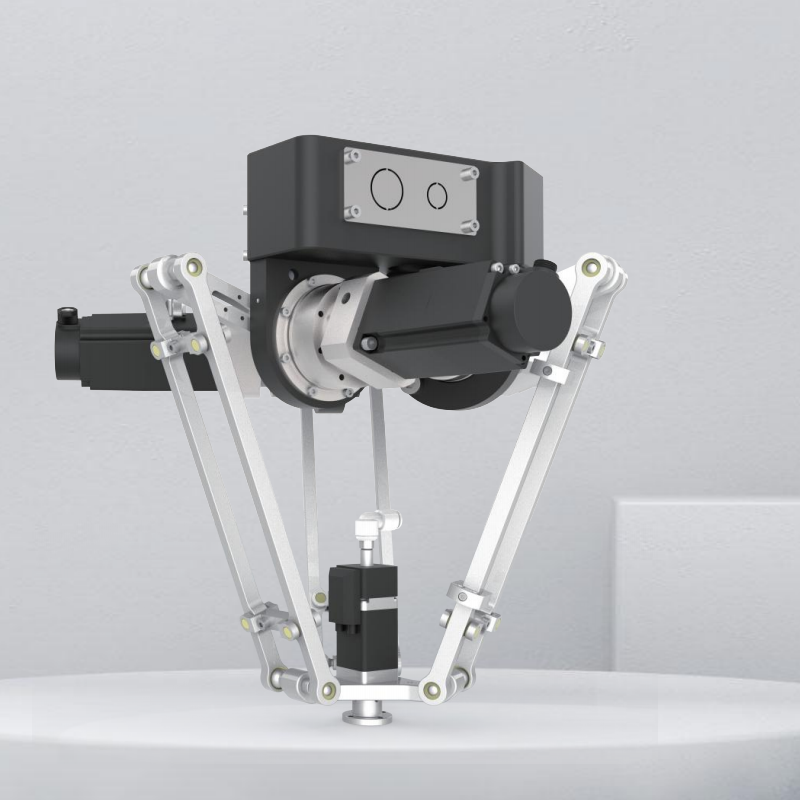
IP54 protection and 3 kg payload for dusty or splash-prone environments, food, daily chemical and packaging lines.
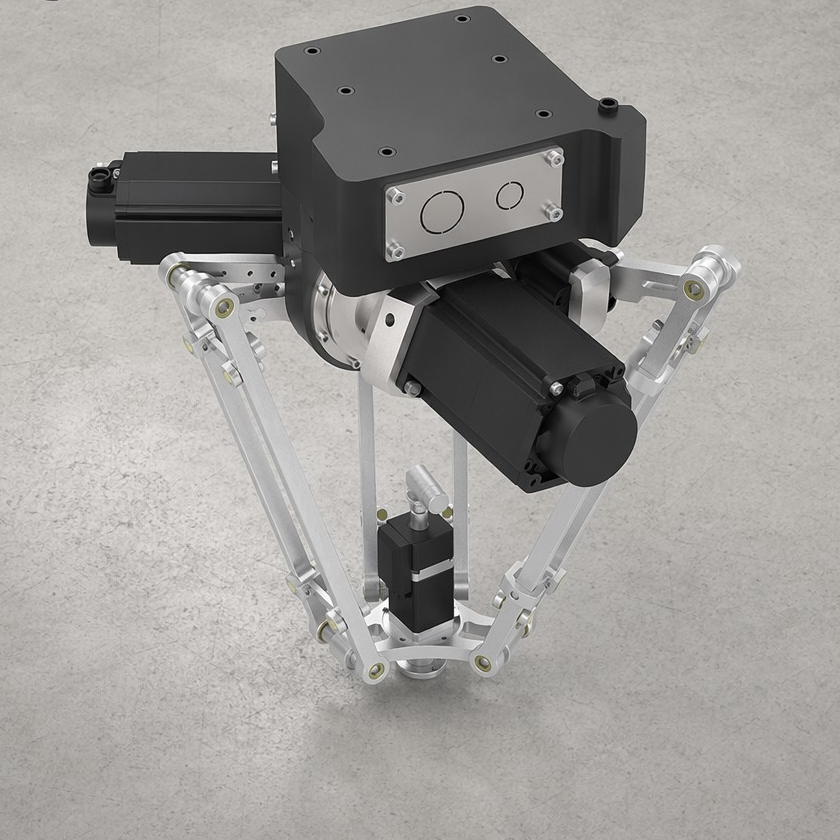
High-speed delta for light industry; supports fast pick-and-place and can be integrated into a larger palletizer or case packer.
| Robot family | Best palletizer-adjacent role | Key figures to verify | Choose it when |
|---|---|---|---|
| DeltaParallel robot | High-speed picking, sorting, case packing, lid application and infeed | 3–6 kg payload · 0.08 mm repeatability · up to 120 pcs/min labeling · IP54 options | Cycle time is the bottleneck and products arrive randomly on a conveyor. |
| SCARA4-axis robot | Assembly, insertion, precise placement and compact pick-and-place | Compact footprint · mini low-cost models · PLC-ready options | You need accurate planar motion in a small cell, such as electronics or parts feeding. |
| AMRMobile robot | Material transport between lines, palletizer and warehouse | 400–500 kg payload · laser SLAM · smart fleet management | Operators spend hours pushing carts and your layout changes often. |
| ForkliftAutonomous forklift | Pallet shuttling and warehouse intralogistics | Laser SLAM navigation · Camel Series · site planning support | Repetitive pallet transport runs across shifts amid labor shortages. |
An automatic palletizer is not a single commodity. It is an engineered cell: robot arm, gripper, pallet-pattern software, conveyor, safety, pallet dispenser, stretch wrapper and increasingly an AMR or autonomous forklift for pallet transport. A shortlist based only on price per unit is therefore a weak procurement tool.
A wholesaler may quote quickly, but the buyer still carries integration risk. A factory-direct manufacturer with in-house controllers and vision can reduce that risk—if it can document the application. That is the difference between a directory listing and a supplier that belongs on a serious automatic palletizer supplier shortlist.
This guide uses a 10-point scorecard based on engineering evidence, integration proof, quality verification, total cost of ownership and service response. JORI Intelligent Technology Co., Ltd., founded in 2012 in Jinan, Shandong, is used as a factory-direct benchmark. Its portfolio includes delta parallel robots, SCARA robots, AGV/AMR platforms, autonomous forklifts and silicon wafer handling robots. JORI develops controllers and 2D/3D vision in-house, holds national patents, operates an ISO 9001 quality system, offers OEM, design and buyer-label service, and accepts MOQ from one set. Those claims matter only when they are tied to a buyer’s actual cycle time, product mix and layout.
The same standard should be applied to every automatic palletizer supplier and wholesaler on your list. Ask for evidence, not adjectives. Score the supplier on documents, reference cells, factory video, sample acceptance criteria and spare-parts clarity. A top-10 shortlist should be a filter for risk—not a popularity contest.
Ask who designs the robot, controller and vision. A trading wholesaler may resell a good arm, but a direct manufacturer can control change notices, firmware and spare parts after commissioning.
Top suppliers coordinate robot, gripper, conveyor, safety and pallet-pattern software. Breadth reduces hand-offs when building an end-of-line cell.
AI and 3D vision are becoming standard for mixed SKUs. In-house control and vision shorten debugging and make upgrades less dependent on third parties.
Demand cycle-time calculations, gripper concepts, simulation or video of a comparable product. A reference application is stronger than a catalogue claim.
ISO 9001 is a baseline. Onsite-verified premises, inspection records, run-in testing and traceable component checks are better signals than a badge alone.
MOQ, OEM/design service, buyer-label support and pilot-line quantities matter. MOQ 1 set lets a plant validate a cell before scaling to multiple lines.
Check the countries served, spare-parts lead time, remote support capability and English documentation. A low unit price is not low cost if service is slow.
Ask for 2D/3D drawings, PLC interface information, safety assumptions and an RFQ response time. A supplier that replies in hours with clear questions is usually better organized.
Compare energy use, maintenance intervals, wearing parts and expected life. Total cost of ownership over five years is the correct comparison, not the first invoice.
Look for PLC-ready integration, fleet management for AMRs, data export and support for new end-effectors. The palletizer should remain upgradeable as packaging formats change.
Buyers do not need another list of logos. They need a supplier that can show how the arm, controller, vision, integration and after-sales engineering fit together.
JORI Intelligent Technology Co., Ltd. is a high-tech manufacturer founded in 2012 in Jinan, Shandong, China. The company specializes in industrial robot R&D and production, controller and 2D/3D vision development, OEM support and automated system integration. Its product lines include delta parallel robots, SCARA robots, AGV/AMR mobile robots, autonomous forklifts and silicon wafer handling robots.
For palletizer buyers, the most relevant advantage is not a single model but the combination: in-house engineering, patented robot technology, ISO 9001 quality management, onsite-verified status, 500+ employees, a 10,000+ m² factory area, export experience across North America, South America, Eastern Europe, Southeast Asia and China, and an average response time of two hours or less with a 97.06% response rate. JORI also supports OEM, design service, buyer-label options and integration with machine builders such as wet wipe lid applicator and carton packer manufacturers.
Because the delta robots, SCARA robots, wafer robots, AGV/AMR platforms, controllers and vision systems are developed in-house and protected by national patents, buyers get one accountable source for hardware, software and after-sales engineering—not a reseller chain. That is the practical meaning of a factory-direct advantage in a palletizer procurement decision.



Robot arms, controllers and 2D/3D vision are developed under one engineering system, giving buyers clearer accountability.
Hardware, software, integration support and after-sales engineering come from a single factory-direct team.
OEM service, design service and private-label support help machine builders adapt robot modules to their own palletizer brands.
ISO 9001 management, onsite-verified supplier status and documented QC from component inspection to final run-in testing.
Buyers in North America, South America, Eastern Europe, Southeast Asia and China use JORI robots in production and integration projects.
Average reply time of two hours or less and a 97.06% response rate make it easier to keep an RFQ moving.
The buying process is shifting from “who has the lowest quotation?” to “who can prove the cell will run, be serviced and remain upgradeable?”
Buyers are calculating five-year cost including energy, maintenance, training, spare parts and changeover time. A cheaper palletizer wholesaler can lose on total cost if service and documentation are weak.
Palletizer projects increasingly use standardized robot, gripper and controller modules so lines can be replicated faster across plants and reconfigured as packaging formats change.
Video, digital twins, cycle-time simulation and remote factory acceptance are becoming normal. Suppliers must provide data-rich proposals, not only PDF catalogues.
Remote support, spare-parts availability and local service response are now scored beside price. Palletizers are production assets; downtime risk belongs in the commercial evaluation.
Palletizer buyers are asking for more SKU flexibility, faster changeover, cleaner documentation and better integration with mobile robots.
Palletizer cells need to identify randomly oriented cases, trays and bags. Vision-guided picking reduces mechanical changeover and supports high-mix production.
End-of-line cells are getting tighter. Mini SCARA and compact delta robots help machine builders add automation without rebuilding the entire packaging line.
Food, wet-wipe and daily-chemical lines require dust and splash protection. IP54 and cleanable surfaces are becoming procurement requirements, not options.
Robot cells are no longer isolated. AMRs and autonomous forklifts connect palletizer output to warehouse flow, creating demand for fleet-level coordination.
Suppliers that can simulate reach, collision and cycle time before shipment reduce commissioning risk and make remote engineering reviews more credible.
High-speed pick-and-place still has to justify power use. Efficient drives, optimized trajectories and standby logic are becoming part of the ROI calculation.
The bars below are an illustrative weighting model for a palletizer supplier RFQ. Use them to structure discussions with factory-direct manufacturers, integrators and wholesalers.
This is a procurement evaluation model, not a market forecast. Final weights should reflect your line speed, product mix, labor cost and service risk.
Clear answers reduce RFQ cycles. These are the questions buyers most often ask when comparing factory-direct robot suppliers and wholesalers.
Standard delta robots, SCARA robots and AMR/AGV platforms can be ordered from one set, so buyers can validate a single cell or pilot line before scaling up. This is useful when an automatic palletizer project needs a proof-of-concept before a multi-line rollout.
Yes. JORI provides OEM service, design service and buyer-label options, and supports machine builders with custom end-effectors, controller integration and automated system integration. That flexibility matters when a palletizer wholesaler or integrator needs a robot layer tailored to its own machine design.
Choose a delta robot for very fast, lightweight pick-and-place from moving conveyors, typically 3–6 kg payload. Choose a SCARA robot for planar assembly, insertion and precise placement in a compact footprint. Share part weight, cycle time and layout, and our engineers will recommend a model.
Yes. JORI develops its own controllers and 2D/3D vision, offers PLC-ready delta robots for cartoning machines, and supports machine builders such as wet wipe lid applicator and carton packer manufacturers. The integration discussion should include I/O, safety logic, gripper design and pallet-pattern software responsibility.
Delivery terms include FOB, CFR, CIF, EXW, CIP, FCA, CPT and express delivery. Payment methods include T/T, L/C, credit card, PayPal, Western Union, MoneyGram and escrow, in USD, EUR, GBP, JPY, CAD, AUD, HKD, CHF and CNY.
JORI maintains an average response time of two hours or less and a 97.06% response rate. Buyers can review the company profile, onsite supplier assessment, credit profile, trade capacity and transaction records before issuing an RFQ. Email info@joribot.com with application details, drawings or video of the current process.
Score each supplier on engineering evidence, integration proof, quality verification, MOQ flexibility, export service, response speed, TCO and future interoperability. Do not rely on a directory ranking alone. Ask each supplier to prove its claim with a reference cell, test data, factory video or engineering calculation.
Send your product, cycle-time, payload and layout requirements. Our engineering team will help you match the right delta, SCARA, AMR or forklift module to your palletizer and end-of-line project.
Factory-direct since 2012 · ISO 9001 · MOQ 1 set · Average reply ≤2 hours