Top 10 Automatic Sorting Robot Factory & Exporter
How global buyers de-risk high-speed sorting automation with factory-direct delta robots, SCARA robots, AMR logistics and wafer handling — engineered in-house since 2012, ISO 9001 certified and export-ready.
Eight Automatic Sorting Robot Models Built for Fast Factory Acceptance
The models below are practical starting points for an automatic sorting cell: high-speed parallel robots for conveyor tracking, compact SCARA arms for precision placement, and hygienic four-axis handling for food loading, unloading and end-of-line sorting. Each link goes to the original product page so engineering teams can compare reach, payload, repeatability, controller options and integration scope before requesting a tailored quotation.
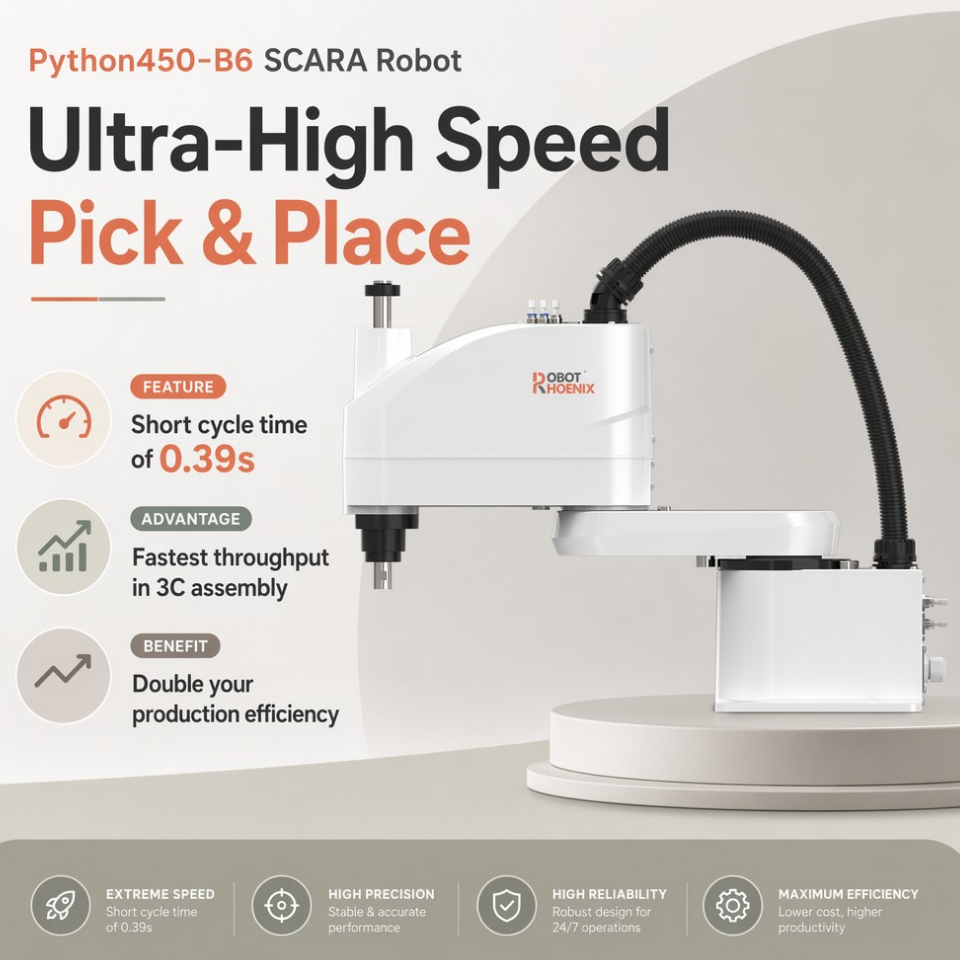
Robotphoenix High Speed Manipulator SCARA Robot with Gripper for Product Accuracy Picking
A high-speed SCARA manipulator with gripper for accuracy-critical picking. Suited to compact cells where repeatable placement matters more than long reach.
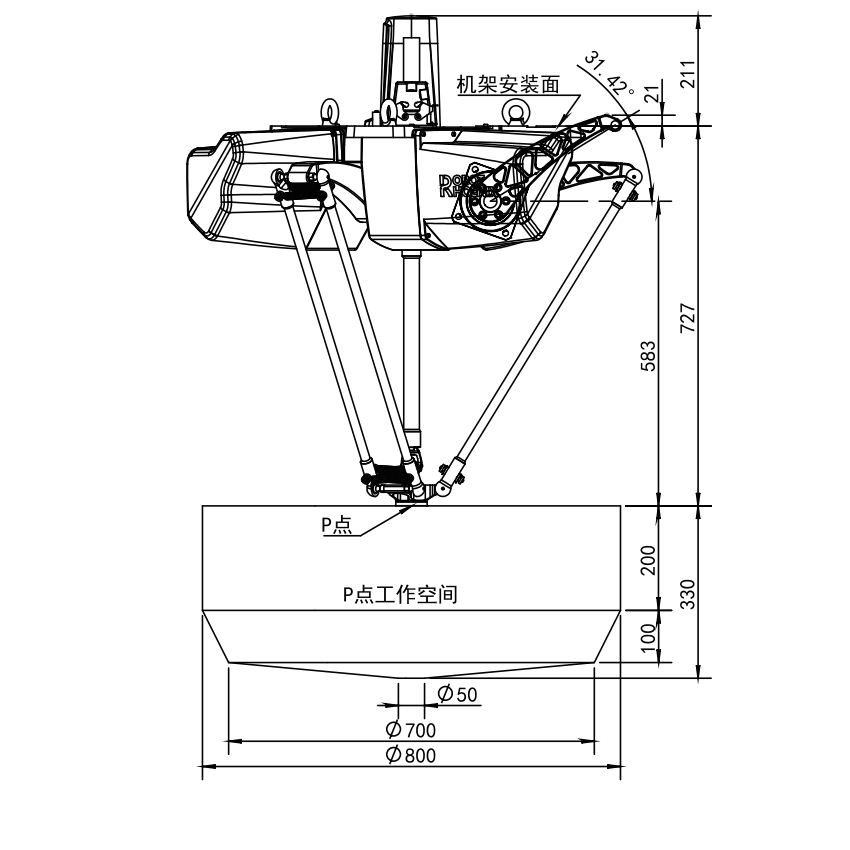
Industrial Robotic Arm Parallel Robot 2/3/4 Axis Delta Robot for Pick&Place Application
A 2/3/4-axis parallel robot for pick-and-place tasks. A strong first model for conveyor-linked sorting when layout changes and line speed are the main constraints.
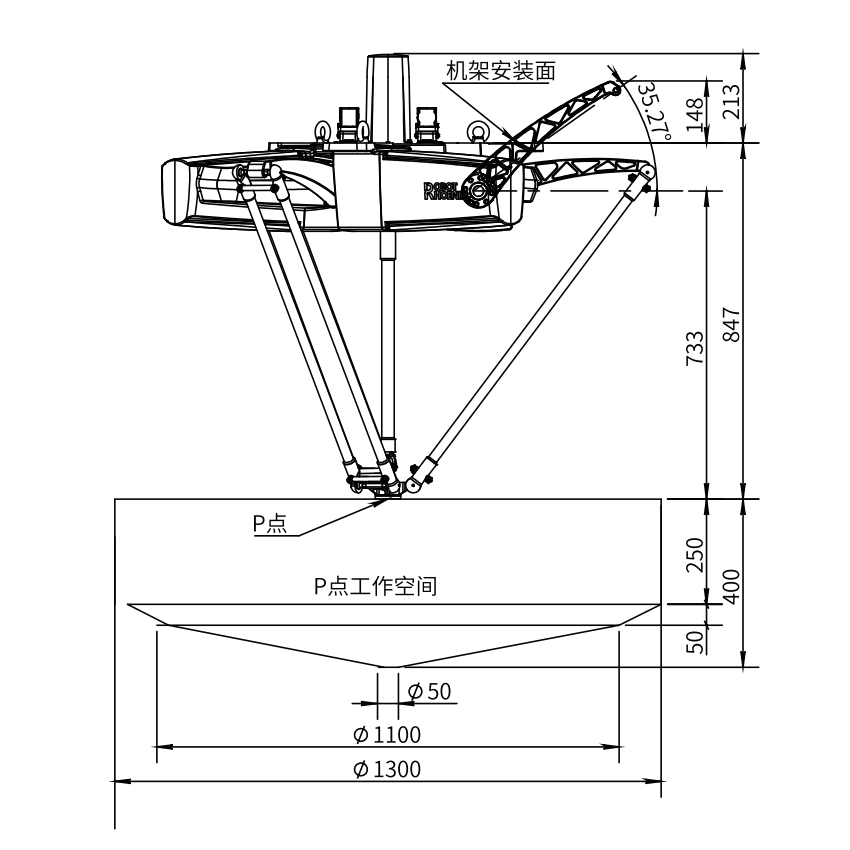
Industrial Delta Robot High Efficiency Parallel Robot for Goods Picking Placing Sorting
High-efficiency delta robot for goods picking, placing and sorting. Recommended when the business case depends on continuous high-speed throughput.
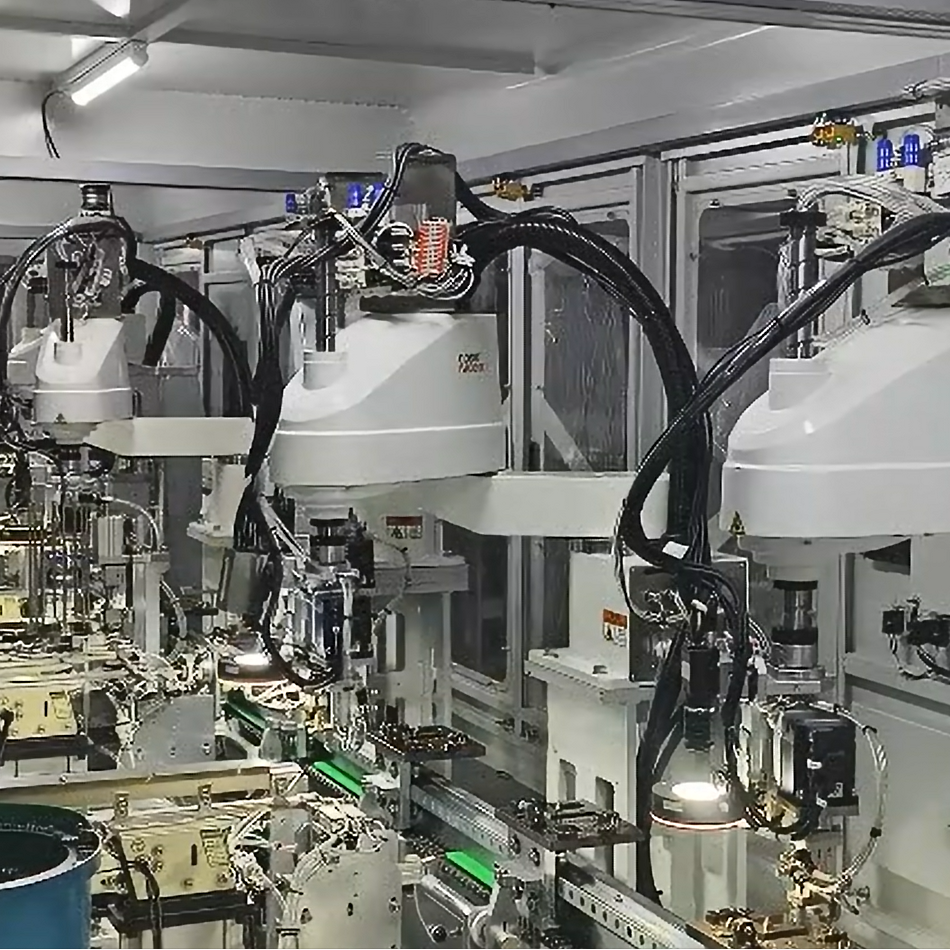
High Quality Mini Industrial Robot SCARA for Pick and Place at Low Cost-New Condition
Low-cost mini SCARA for simple pick-and-place. Useful for pilot automation, secondary operations and price-sensitive projects that still need factory support.

New Condition High Precision 400mm Reach Arm Scara Robot with PLC for 3C Electronic Assembly
A 400 mm reach SCARA with PLC for 3C electronic assembly. A good option for small parts, fine insertion and electronic sorting where compactness is critical.
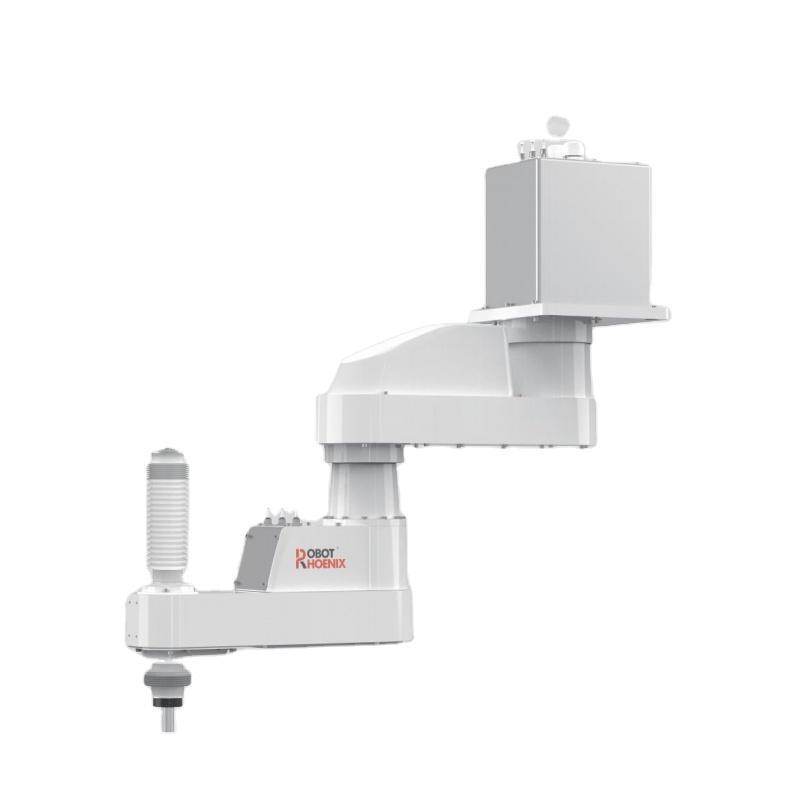
Compact Structure High Precision 550mm Reach Radius 3kg Payload 4-axis SCARA Robot
A 550 mm reach, 3 kg payload, 4-axis SCARA. Suitable for medium-envelope sorting and assembly where a compact structure and clean integration are priorities.
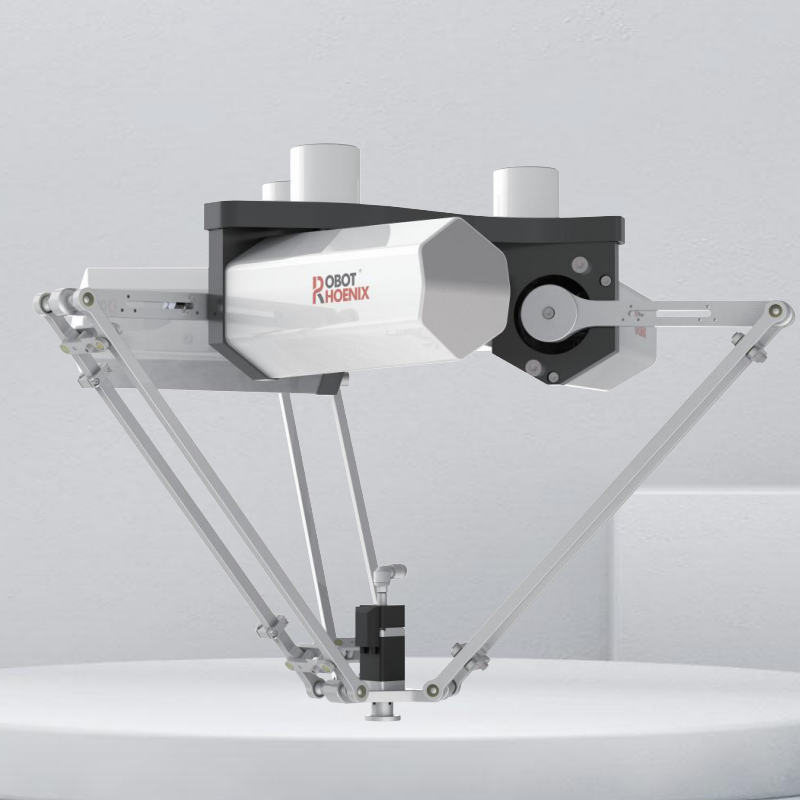
Robotphoenix New Design Industrial Robot Delta 6kg Payload 0.08mm Repeatability 2/3/4 Axis
A 6 kg delta with 0.08 mm repeatability. Recommended for mixed carton, food and consumer-goods sorting where payload and accuracy must be balanced.
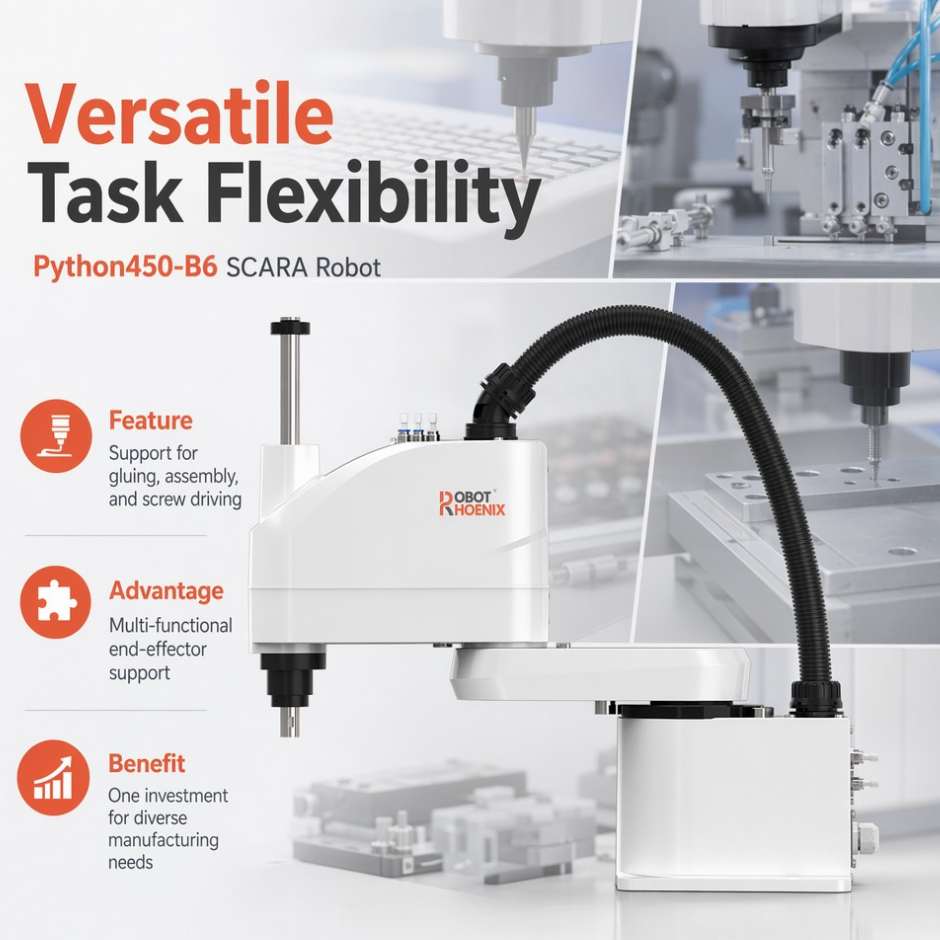
Four-Axis Industrial Robot Hand SCARA for Loading/Unloading and Sorting in Food Industry
Four-axis SCARA for loading, unloading and sorting in food production. Suited to food-industry teams that need hygienic handling and end-of-line labour reduction.
Which Factory Can Prove Sorting Throughput, Not Just Robot Specifications?
Automatic sorting robots are no longer evaluated as isolated machines. Serious buyers compare factories on their ability to prove application throughput, integrate vision and conveyors, document acceptance tests and support spare parts across the asset life.
The title Top 10 Automatic Sorting Robot Factory & Exporter should be read as a due-diligence lens, not a decorative ranking. A reliable partner will connect robot payload and repeatability to the actual part, gripper, conveyor speed, changeover routine and operator skill level. Buyers who ask for this evidence early avoid the most expensive failure mode in sorting automation: a robot that performs well in a catalogue but cannot sustain the line’s real product mix.
JORI’s product range is relevant because it covers both sides of sorting economics. Delta robots provide high-speed pick-and-place for lightweight products arriving randomly on a conveyor. SCARA robots handle precise planar assembly, insertion and placement in compact cells. AMR and autonomous forklift platforms move totes and pallets between sorting stations, while wafer robots extend the same engineering discipline to fragile, high-value substrates.
The practical advantage of working with an original manufacturer is information gain during the sales process. Buyers can see how controllers, 2D/3D vision, end-effectors and PLC handshakes are developed together. They can ask for a factory acceptance test that mimics the real line. They can compare ROI at 80% of nominal speed, not at a laboratory peak. That is how a sorting robot purchase becomes a throughput project rather than a component transaction.
2025 sorting buyer priority index
Indicative procurement weighting for high-mix sorting projects. Confirm the weighting against your own OEE, labour and payback model.
The 10-Point Factory & Exporter Audit Behind a Reliable Sorting Robot Supply Chain
Use this audit with any factory. The order reflects how experienced procurement teams separate a credible exporter from a catalogue trader — and why the phrase “top 10” should always be backed by evidence.
Structured application data
Part dimensions, material, tolerance, arrival pattern, target cycle and shift pattern should be collected before model selection.
Throughput proof, not peak claims
Ask for ideal cycle versus sustained output, tested with the worst-case product mix and normal stoppages.
Vision and conveyor ownership
Clarify who supplies tracking, lighting, calibration and recipe logic; unclear ownership slows ramp-up.
End-effector accountability
Vacuum, gripper, tool changer and part presentation must be designed together, not chosen after the robot arrives.
Controller and PLC compatibility
Verify EtherCAT, Ethernet/IP, Profinet or discrete I/O and the handshake logic with existing machines.
Acceptance test protocol
Require a documented FAT with real parts, vision, speed, accuracy, recovery steps and operator handover.
Spare parts and service model
Confirm critical spares, mean time to respond, remote diagnostics and local support responsibilities.
Hygiene, safety and compliance
Check IP rating, food-grade materials, guarding, CE requirements and the site risk assessment.
Export terms and documentation
Incoterms, payment routes, packing, customs data and commissioning scope should be in writing.
Engineering response quality
Measure reply time, technical questions asked, drawings shared and willingness to co-engineer with OEMs.
Matching the Robot to the Sorting Job
A robot should be selected from the production constraint backward: part presentation, gripper strategy, cycle time, inspection requirement and operator changeover.
High-speed delta sorting for random product flow
For lightweight products arriving randomly on a conveyor, start with the Industrial Delta Robot for goods picking, placing and sorting or the 6 kg delta with 0.08 mm repeatability. The selection should be validated with the gripper, vision lighting and conveyor tracking logic, because the robot alone does not determine output.
Precision SCARA sorting for compact cells
For small-part placement, insertion and inspection-adjacent sorting, compare the Robotphoenix high-speed SCARA with gripper against the 400 mm reach SCARA with PLC. A compact footprint is valuable only when repeatability, cable routing and maintenance access are proven in the actual cell.
Cost-controlled mini SCARA for pilot lines
Pilot automation should prove demand, changeover and operator acceptance before scale-up. The low-cost mini industrial SCARA and 550 mm reach 3 kg SCARA are useful when a factory wants one set to validate a cell, then standardise on the same engineering team for expansion.
Food loading, unloading and end-of-line sorting
Food-industry projects require clean handling, tooling hygiene and reliable changeover. The Four-Axis SCARA for loading, unloading and sorting in food and the 2/3/4-axis delta robot for pick and place can be assessed against your washdown routine and product-contact requirements.
Procurement Trends Reshaping Automatic Sorting Robot Purchasing
Buyers are moving from “buy the fastest robot” to “buy the most provable sorting capability per lifecycle cost”. That shift changes which factory and exporter questions matter.
TCO and energy per 1,000 picks
Procurement teams increasingly compare energy use, spare parts, training, uptime and changeover labour — not just the purchase price. A factory that can supply controller diagnostics and spare-part planning helps make this total cost of ownership visible.
High-mix, low-volume changeover
Sorting lines now handle more SKUs with shorter runs. Recipe-based vision, quick-change grippers and clear operator prompts become part of the robot specification. Suppliers who treat changeover as an afterthought rarely deliver a smooth ramp-up.
Virtual FAT and digital twin
Remote engineering teams increasingly expect simulation, data logging and virtual acceptance before shipment. This reduces travel and shortens site commissioning, but it requires the factory to have disciplined controller and vision documentation.
Resilient service and multi-country compliance
Cross-border buyers want packing data, Incoterms, payment terms, spare kits and a named escalation path in one place. The exporter’s ability to answer technical questions quickly is often more valuable than a marginal difference in robot specification.
What Buyers Should Ask Suppliers to Demonstrate, Not Merely Describe
Development claims are easy to write and difficult to verify. The most useful supplier questions focus on integration depth, operator usability and the engineering evidence behind each feature.
Integrated controllers and vision
Robot arm, controller and 2D/3D vision developed together reduce integration interfaces. Ask the supplier to show the handshake with PLC, conveyor tracking and operator recipe screens — not just a standalone robot demonstration.
AI-assisted vision and no-code recipes
High-mix sorting needs operators to switch products without writing code. The practical test is how a new SKU is taught, how lighting variation is handled and how quickly recovery steps are displayed when a pick is missed.
Hygienic and delicate-handling design
Food, pharmaceutical and wafer lines demand more than a standard arm. Buyers should review IP protection, surface materials, cable management and the end-effector strategy for fragile or contamination-sensitive products.
Edge data and MES integration
Production managers increasingly want OEE dashboards, traceability and predictive service data from the sorting cell. A factory that understands its own controller data can document how the robot will communicate with MES, ERP or fleet-management systems.
Why JORI Fits the Profile of a Factory & Exporter Buyers Can Audit
JORI Intelligent Technology Co., Ltd. was founded in 2012 in Jinan, Shandong, China — a national robotics and manufacturing hub. The company specialises in industrial robot R&D and production, controller and vision development, OEM support and automated system integration.
Because delta robots, SCARA robots, silicon wafer robots, AGV/AMR platforms, controllers and 2D/3D vision are developed in-house and protected by national patents, buyers gain one accountable source for hardware, software, end-effector integration and after-sales engineering. The factory profile is supported by ISO 9001 quality management, onsite-verified supplier credentials, over 500 employees and more than 10,000 m² of manufacturing space.
For export buyers, the commercial profile matters as much as the robot. JORI supports machine builders with OEM service, design service and buyer-label options. Standard robots can be ordered from one set, so a buyer can validate one sorting cell before scaling across lines. Across Southeast Asia, Eastern Europe, North America, South America and China, the team supports customers with delivery terms such as FOB, CFR, CIF, EXW, CIP, FCA, CPT and express delivery, plus a range of payment routes including T/T, L/C, credit card, PayPal, Western Union, MoneyGram and escrow.
The response model is equally important for procurement. JORI maintains a 97.06% response rate with an average response time of two hours or less. That speed matters when a buyer needs layout feedback, a model recommendation, clarification of a controller interface or a quotation for a pilot line.


In-house R&D across arm, controller and vision
Delta, SCARA, AGV/AMR, autonomous forklift and wafer robot families share engineering resources rather than relying on disconnected reseller supply chains.
Factory-direct quality and pilot validation
ISO 9001 processes, documented QC and run-in testing support single-set pilots as well as multi-line expansions.
OEM, design and buyer-label support
Machine builders can request custom end-effectors, controller integration and buyer-label options for their own automation platforms.
Export support and fast technical response
Incoterms, payment routes, packing and engineering questions are handled by an export team with a 97.06% response rate and ≤2-hour average reply target.
Delta, SCARA, AMR or Wafer Handling: Which Sorting Robot Fits the Line?
Use this comparison as a pre-engineering filter. Final selection should always be confirmed with real parts, conveyor data and an acceptance test plan.
| Sorting scenario | Recommended family | Why it fits | Risk control to request |
|---|---|---|---|
| Random-flow conveyor picking | Delta parallel robot | High-speed pick-and-place for lightweight products with vision-guided sorting. | Conveyor tracking, lighting, gripper and missed-pick recovery test. |
| Small-part assembly and precise placement | SCARA robot | 4-axis planar motion in a compact cell with repeatable insertion and placement. | Repeatability over a full shift, PLC handshake and operator recipe change. |
| Low-cost pilot line or secondary operation | Mini SCARA robot | Lower entry cost with a smaller footprint for simple pick-and-place tasks. | Cycle time at 80% speed and expansion path to a larger model. |
| Food loading, unloading and end-of-line sorting | Food-grade SCARA or delta | Hygienic handling, fast changeover and reduced manual loading. | IP rating, cleaning routine, product-contact materials and guarding. |
| Fragile or high-value substrate transfer | Wafer handling or high-precision SCARA | Smooth motion and controlled contact for delicate parts and clean environments. | End-effector design, surface contact, particle control and validation samples. |
The common mistake is buying axes and payload first. Start with part presentation, target cycle time, changeover frequency and acceptance criteria — then match the robot family and factory support model.
Automatic Sorting Robot Procurement FAQ
These are the questions most often raised by procurement, engineering and factory-owner teams before a sorting robot quotation is approved.
What information should I prepare before requesting a sorting robot quotation?
Send product dimensions, weight, material, surface sensitivity, arrival pattern, target cycle time, shift pattern, conveyor speed, available footprint and any existing PLC or vision standard. Photos or a short video of the current manual sorting process are often more useful than a long specification document because they reveal part presentation and handling risks.
Should I choose a delta robot or a SCARA robot for automatic sorting?
Choose a delta robot for very fast, lightweight pick-and-place from a moving conveyor, typically in the 3–6 kg payload range. Choose a SCARA robot for planar assembly, insertion, precise placement and compact cells. If the product is fragile, high-value or requires clean handling, discuss wafer-handling or high-precision SCARA options before finalising the layout.
Can JORI supply only one set for a pilot line?
Yes. Standard delta robots, SCARA robots and AMR/AGV platforms can be ordered from one set, allowing buyers to validate a single cell or pilot line before scaling. A pilot should still include a clear acceptance test, operator training and a plan for how the line will expand if the business case is proven.
How do you integrate with existing conveyors, packaging machines or cartoning equipment?
Integration starts with the controller interface and the mechanical handshake. JORI develops its own controllers and 2D/3D vision, and PLC-ready robot configurations can be discussed for cartoning machines, carton packers and wet-wipe lid applicator equipment. The buyer should provide existing PLC type, communication protocol, safety logic and a line-layout drawing.
Which delivery and payment terms are accepted?
Delivery terms include FOB, CFR, CIF, EXW, CIP, FCA, CPT and express delivery. Payment methods include T/T, L/C, credit card, PayPal, Western Union, MoneyGram and escrow. Supported currencies include USD, EUR, GBP, JPY, CAD, AUD, HKD, CHF and CNY. The final terms should be confirmed in the quotation and contract.
How are robots tested before shipment?
Acceptance testing should be agreed before production. A practical protocol covers mechanical inspection, controller start-up, I/O handshake, vision calibration, cycle testing with real parts, accuracy verification and recovery steps after a missed pick. Ask for the test record, packing specification and commissioning checklist so the site team knows what to expect on arrival.
Do you offer OEM, custom end-effectors or buyer-label robots?
Yes. JORI provides OEM service, design service and buyer-label options, and supports machine builders with custom end-effectors, controller integration and automated system integration. For custom work, provide the part drawing, gripper concept, communication protocol and target cycle time so the engineering scope can be evaluated accurately.
What is the response time, and how can buyers verify the company?
JORI maintains an average response time of two hours or less and a 97.06% response rate. Buyers can verify the company through its supplier assessment, credit profile, trade capacity, transaction level and trade history pages. For technical evaluation, send application details to info@joribot.com or use the inquiry button below to start a direct conversation.
Send Your Sorting Challenge — Get a Factory-Engineered Response
Share your product, cycle time, conveyor layout, payload, changeover requirement and target country. The JORI team can recommend a delta, SCARA, AMR or wafer-handling configuration, discuss OEM options and outline the acceptance-test path before you commit to a full line.
Factory-direct industrial robots since 2012 · ISO 9001 · Onsite-verified supplier · MOQ 1 set · info@joribot.com