Eight Industrial Robot Systems to Benchmark Before You Shortlist a Supplier
These eight configurations show how a serious industrial robot system manufacturer and wholesaler covers high-speed pick-and-place, vision-guided SCARA work, material sorting, carton packing and wet-wipe lid application. Product URLs are retained exactly; final specifications should always be confirmed at quotation.
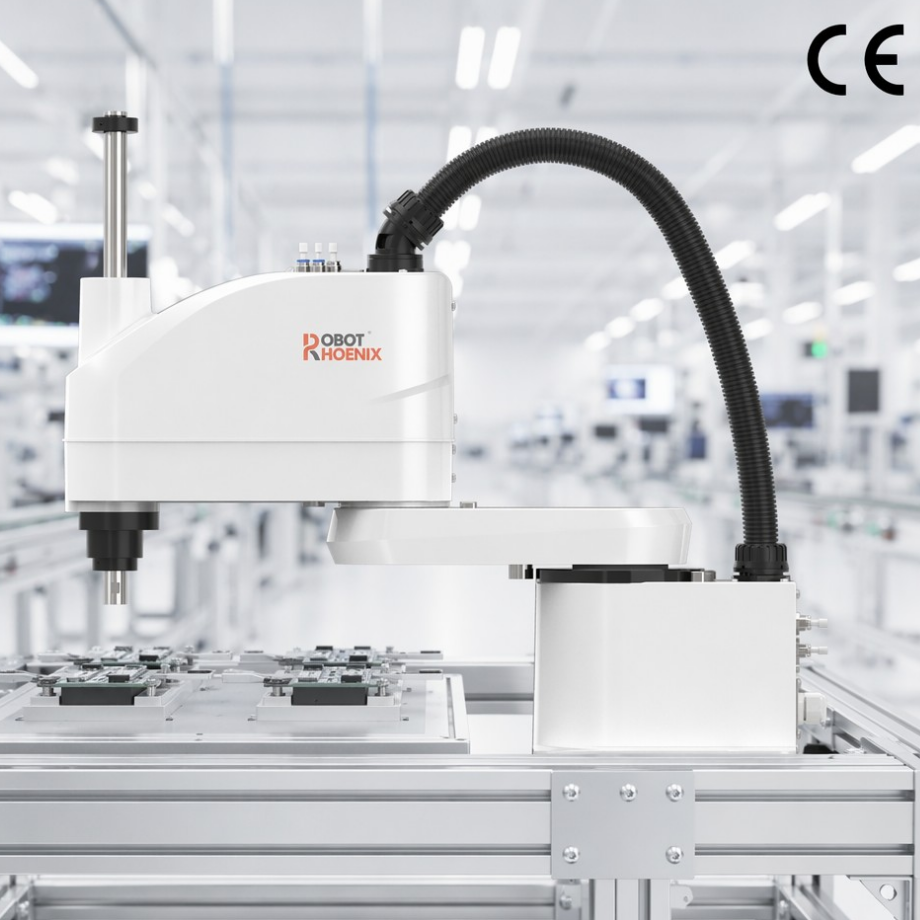
New Design Compact High Accuracy Industrial Robot Arm Scara with 2D/3D Vision System
A compact SCARA platform with 2D/3D vision for precise loading, inspection and assembly where floor space is tight and accuracy is non-negotiable.
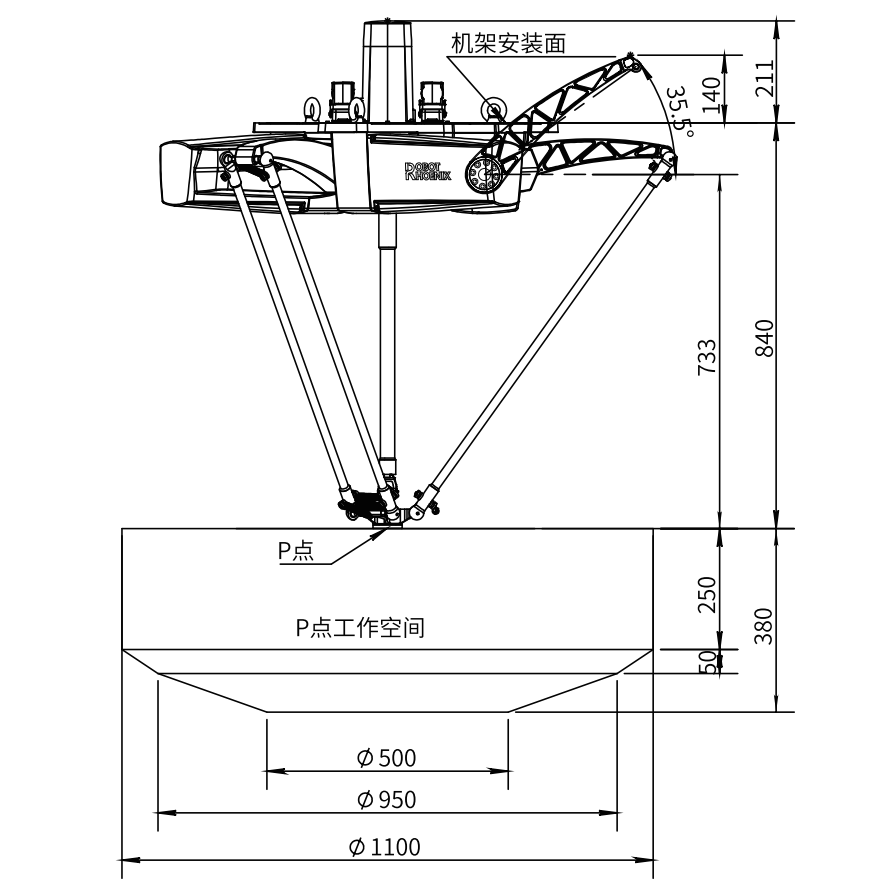
High-Speed Spider Arm Delat Robot for Fully Automatic Wet Wipe Lid Applicator Machine
A high-speed spider-arm delta engineered for wet-wipe lid applicator machines and packaging lines where hygiene, uptime and cycle time drive profitability.

High Precision Pick and Place 4 Aixs Parallel Robot Delta with Vision Tracking System
Four-axis parallel robot with visual tracking for high-precision pick-and-place from moving conveyors, especially where product position varies.
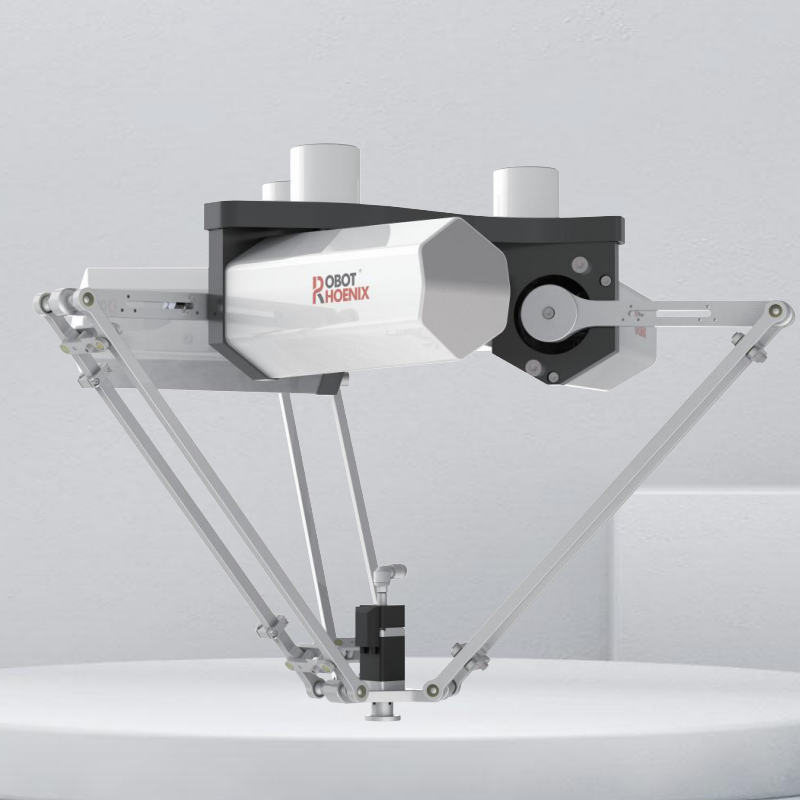
Robotphoenix New Design Industrial Robot Delta 6kg Payload 0.08mm Repeatability 2/3/4 Axis
A 6 kg payload delta with 0.08 mm repeatability and 2/3/4-axis options for packaging, sorting and medium-load pick-and-place cells.
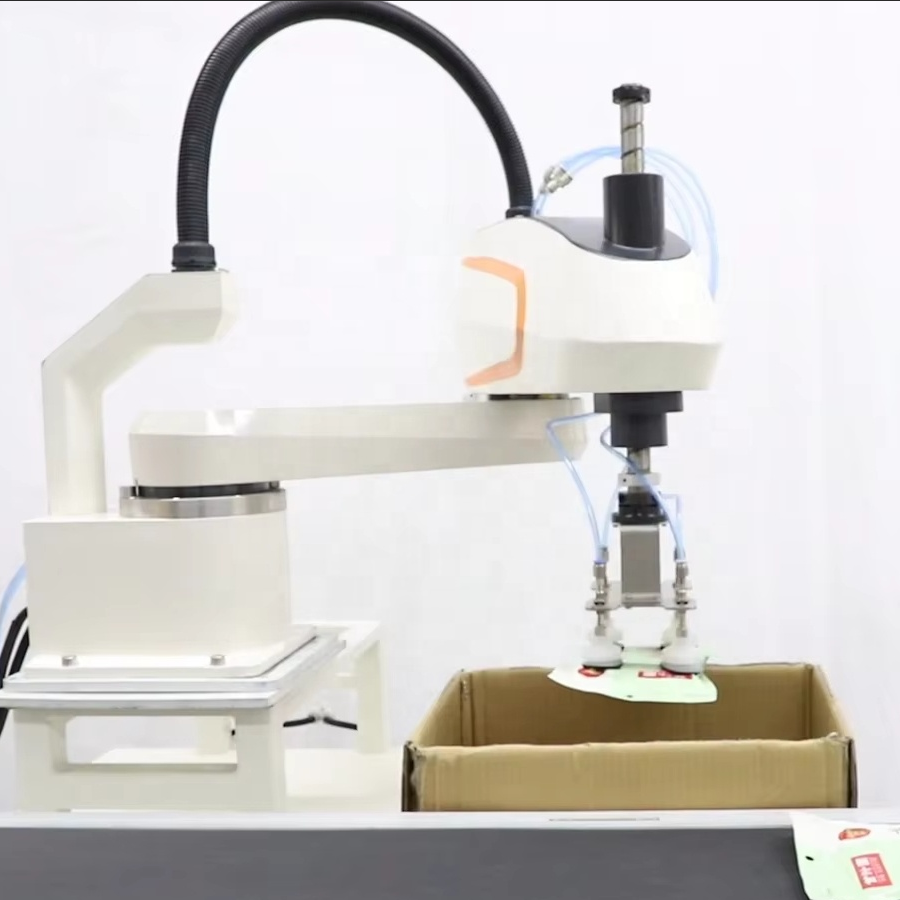
Light Load 4 Axis Industrial Manipulator Robot Scara Robot for Pick and Place Application
Light-load four-axis SCARA manipulator for repetitive pick-and-place, machine tending and compact assembly automation with a lower entry cost.
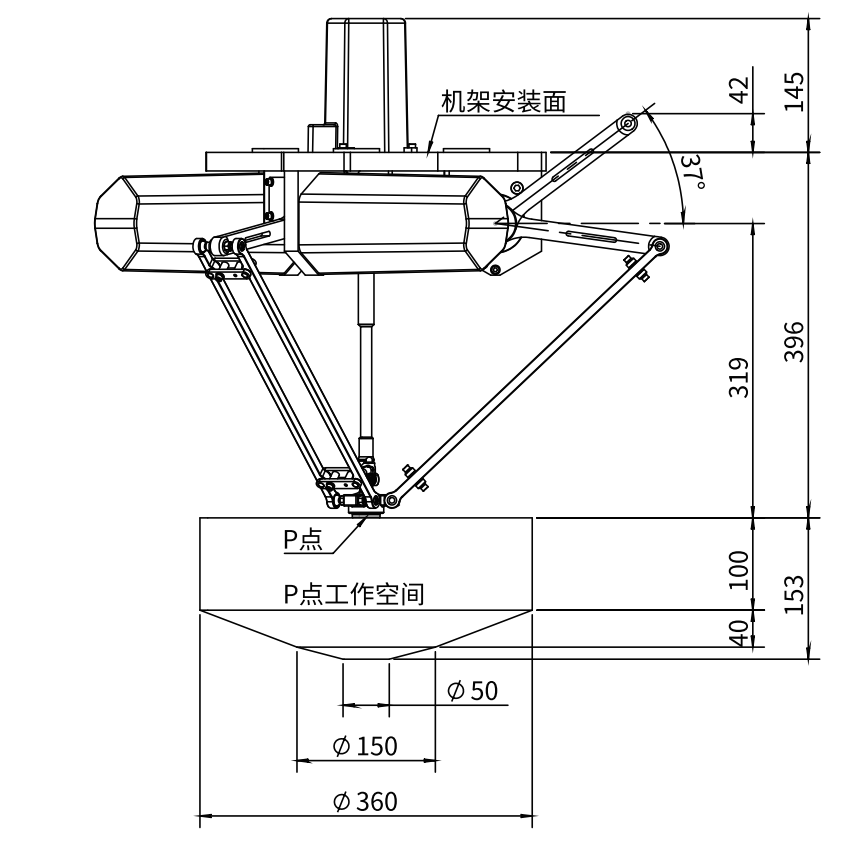
Hot Selling Parallel Robot Delta Industrial Robot Arm for Material Gripping Sorting
A parallel delta robot for material gripping, sorting and high-speed transfer — a practical benchmark for end-of-line and sorting-cell productivity.
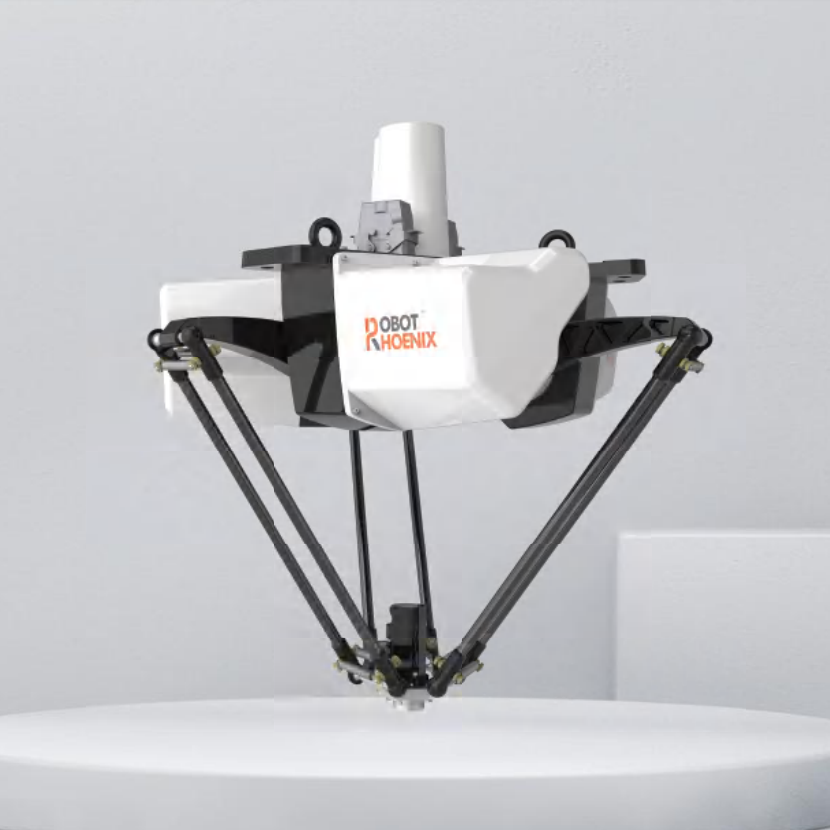
Robotphoenix New 4-Axis Parallel Robot Arm Delta Spider Hand Robot for Carton Packer Line
A four-axis parallel spider-hand robot for carton packing and end-of-line automation where product orientation and carton presentation must stay repeatable.
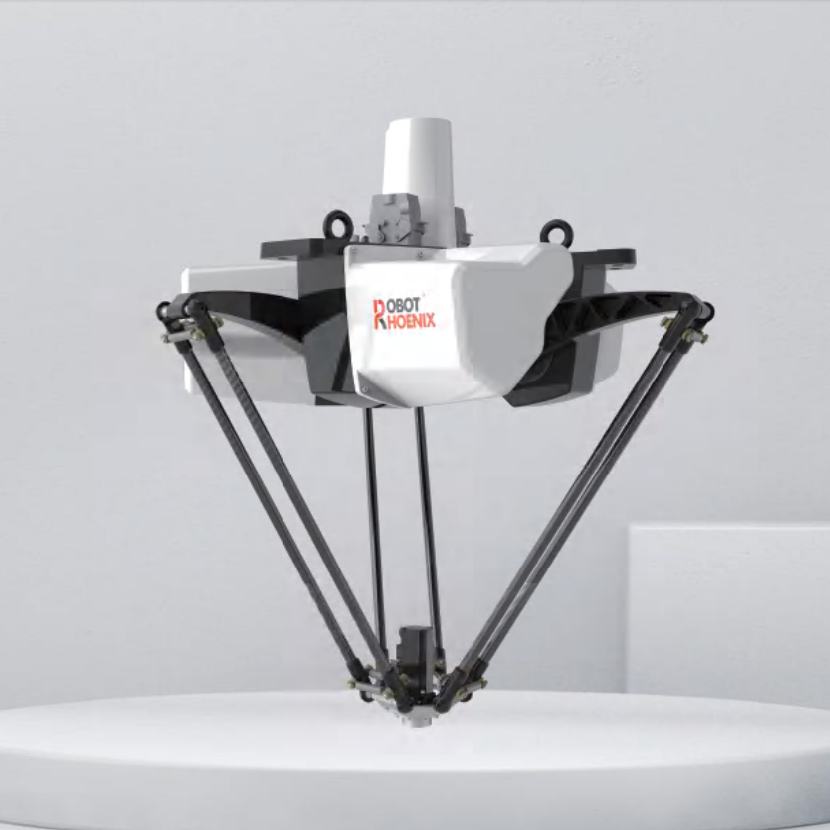
Robotphoenix 4 Arm Payload 3-6kgs Delta Robot for Pick Place Consumer Goods
A 3–6 kg payload four-arm delta for consumer goods picking, offering a useful reference point for high-speed, repetitive product handling.
What Should a Top 10 Industrial Robot System Manufacturer & Wholesaler Prove?
In a market where catalogue pages look similar, the difference between a dependable manufacturer and a trading intermediary appears after the purchase order: in controller access, application engineering, spare-part clarity and who owns the final performance target.
In-House R&D Beyond the Arm
JORI develops delta robots, SCARA robots, silicon wafer robots, AGV/AMR platforms, autonomous forklifts, controllers and 2D/3D vision in-house. That matters when a buyer needs one accountable source for motion, vision and integration.
Factory-Direct Engineering
As an original factory rather than a reseller chain, JORI supports OEM service, design service, buyer-label options and automated system integration — reducing the technical translation loss between buyer, machine builder and robot supplier.
Verified Quality and Manufacturing
ISO 9001 quality management, onsite-verified supplier status and documented production are practical risk controls. For export buyers, these checks are not decorative badges; they support repeatability across multiple shipments.
Global Service and Export Readiness
Founded in 2012, JORI has served overseas buyers across North America, South America, Eastern Europe, Southeast Asia and China, with delivery and payment terms structured for international procurement.
Instead of asking only for a unit price, ask who owns the motion-control firmware, who performs final run-in testing, who supplies the end-effector, who validates conveyor tracking, and who signs the service-level agreement. These five answers predict integration risk more reliably than a low quotation.
The Engineering Stack Behind Repeatable ROI: Controllers, Vision and Kinematics
A robot arm is only one part of an industrial robot system. The profitable result depends on kinematics selected for the part, a controller that machine builders can integrate, vision that handles real conveyor conditions, and factory acceptance testing that exposes problems before shipment.
Controller and Firmware
PLC-ready integration, motion tuning and access to configuration matter for cartoning, labeling and assembly cells. Ask how custom logic is documented and supported.
2D/3D Vision
Vision-guided picking must tolerate reflections, product overlap, variable orientation and conveyor speed. The vision stack should be tested with the actual product mix, not a sample image.
Kinematic Fit
Delta robots win on high-speed, light-payload pick-and-place. SCARA robots win on planar assembly and precise placement. Matching the topology to the task protects cycle time and service life.
Factory Acceptance Testing
Require cycle-time evidence, repeatability checks, safety validation, vision test logs and spare-part lists. A clear FAT package is a stronger quality signal than a generic catalogue claim.
| Robot Family | Best For | Key Figures | Choose It When | Procurement Check |
|---|---|---|---|---|
| Series 01Delta Robot | High-speed picking, sorting, labeling, cartoning and wet-wipe lid application | 3–6 kg payload · 0.08 mm repeatability · up to 120 pcs/min labeling · IP54 option | Light products arrive randomly and cycle time is the bottleneck | Ask for a cycle test video, conveyor-tracking proof and end-effector scope |
| Series 02SCARA Robot | Assembly, insertion, precise placement and compact pick-and-place | 4-axis architecture · compact footprint · mini low-cost models | Accurate planar moves in a small cell matter more than raw speed | Check repeatability, Z-axis duty, fixture design and PLC integration |
| Series 03AMR / AGV | Material transport between stations, lines and warehouse zones | 400–500 kg payload platforms · laser SLAM · fleet management | Operators spend hours pushing carts and the layout changes often | Request traffic simulation, charging strategy, safety fields and map ownership |
| Series 04Autonomous Forklift | Pallet handling in warehouses, smart logistics and repetitive shuttle routes | Laser SLAM navigation · Camel Series · site planning support | Pallet transport is repetitive, labor-constrained and shift-dependent | Verify pallet standards, aisle width, lift height, safety scanners and site survey |
| Series 05Wafer Robot | Semiconductor and photovoltaic wafer transfer | In-house motion control · smooth handling · custom end-effectors | Fragile substrates require clean, repeatable and contamination-conscious handling | Confirm cleanroom requirements, ESD controls, wafer handling validation and spare parts |
Figures reflect representative catalogue models. Final payload, speed, repeatability and protection class must be confirmed for the quoted configuration.
Where Robot Systems Create Measurable Capacity, Not Just Automation
The strongest robot business case ties every axis of motion to a measurable constraint: output per shift, labor dependency, changeover time, hygiene risk, scrap rate or floor-space utilization.
Food & Beverage
Vision-guided delta picking, sorting and case packing at conveyor speed, with hygiene-conscious layouts and repeatable product orientation.
Capacity gainPharmaceutical
Blister, vial and carton handling where clean, repeatable motion and documented change control matter as much as speed.
Risk reductionElectronics & 3C
SCARA assembly, insertion and inspection for compact production cells that need precise planar movement and fast product changeover.
PrecisionSemiconductor & Solar
Silicon wafer transfer robots for semiconductor and photovoltaic lines, with smooth handling for fragile substrates and custom end-effectors.
Yield protectionWarehouse & Logistics
Laser SLAM AMRs and autonomous forklifts for 24/7 material flow, fleet traffic management and repetitive pallet shuttles.
Labor resilienceDaily Chemicals & Wet Wipes
Delta-based lid applicator and carton packer cells for hygiene products, where lost lids and downtime directly affect line yield.
Line uptimeProcurement Trends Redefining 2025–2030 Industrial Robot Purchasing
Buyers are moving from isolated machine purchases toward integration-ready automation partnerships. The most competitive RFQs now ask for evidence of lifecycle performance, not only unit specifications.
Total Cost of Ownership Validation
Procurement teams increasingly compare energy consumption, maintenance intervals, spare-part pricing, programming time, changeover effort and line availability — not just the robot price.
TCO-led buyingIntegration-Ready Modularity
Machine builders prefer controllers, vision and end-effectors that can be configured quickly. Modular robot cells reduce engineering hours and shorten the path from concept to production.
RFQ prioritySupplier Transparency
Verified manufacturing, trade history, public company profiles and buyer reviews help international purchasers screen out intermediaries before committing to tooling or deposits.
Due diligenceService-Level Agreements
As labor shortages persist, buyers need response-time commitments, spare-part plans and remote diagnostics. A robot supplier becomes part of the production continuity plan.
ContinuityMixed-Product Production
Vision-first robot cells are being specified for short runs and frequent changeovers. The key question is how fast the system can be retrained or reconfigured without new mechanical tooling.
FlexibilityEnergy, Safety and Compliance by Design
Safety scanners, cleanroom readiness, ESD controls and energy-efficient motion are moving into the specification stage rather than being retrofitted after installation.
ComplianceProduct Trends to Put in Your Next Robot RFQ
Industrial robot development is shifting from “faster arms” to “faster commissioning.” The winning specification is the one that shortens validation, improves changeover and reduces the engineering burden on the buyer’s team.
AI-Assisted 2D/3D Vision
Better tolerance for reflections, overlap, texture variation and moving conveyors. Ask how training data, recipe management and model updates are handled after handover.
Compact, PLC-Ready Controls
Smaller controllers and cleaner PLC integration reduce panel space and programming risk. Buyers should request interface documentation, I/O maps and diagnostic access.
Modular Mechanics & End-Effectors
Quick-change grippers, custom fingers and modular mounting shorten product changeover. The robot supplier should clarify which parts are standard and which require custom engineering.
Simulation and Fleet Software
Digital layout validation, cycle-time simulation and multi-robot fleet management reduce installation risk, especially for AMR, AGV and forklift projects.
A 10-Point Due Diligence Framework for a Top 10 Industrial Robot System Manufacturer & Wholesaler
Use this framework to compare suppliers on evidence rather than adjectives. It is especially useful when the same robot model is offered through several trading companies at different prices.
Core Technology Ownership
Who develops the controller, firmware and vision? Can the supplier explain interfaces, diagnostics and software updates?
Application Proof
Ask for cycle-time evidence in a comparable product, not only a speed claim. Video alone is weaker than a test report plus reference details.
Quality System
ISO 9001, incoming inspection, run-in testing and final acceptance documentation should be available for review.
OEM and Customization Capability
Confirm whether the supplier can support buyer labels, custom end-effectors, special voltage, controller integration or line-specific fixtures.
MTTR and Spare Parts
Request the recommended spare-parts list, lead times, wear-item pricing and remote diagnostic process before the first shipment.
Safety and Compliance
Define guarding, safety scanners, stop categories, cleanroom or ESD requirements, and who validates the final cell.
Site Integration Responsibility
Clarify who supplies conveyors, fixtures, electrical interfaces, commissioning and operator training. Ambiguous scope is a hidden cost.
Commercial Terms
JORI accepts delivery terms such as FOB, CFR, CIF, EXW, CIP, FCA, CPT and express delivery, with MOQ from 1 set for standard models.
Export and Logistics
Confirm packaging, palletization, documents, warranty start date and customs support. These details affect total landed cost.
Escalation Path and Response Time
Ask for a named support route. JORI reports an average response time of 2 hours or less and a 97.06% response rate.
Due diligence is especially important when comparing factory-direct manufacturers with wholesalers that do not control controller or vision development.
Experience, Expertise, Authority and Trust in Industrial Robot Procurement
For buyers, E-E-A-T is not an abstract SEO acronym. It is a procurement screen: does the supplier have direct experience, technical depth, verifiable authority and transparent trust signals that reduce delivery risk?
Experience
JORI has operated since 2012 and supports applications across packaging, logistics, semiconductor, electronics and daily chemicals, with export experience across five continents.
Expertise
In-house development covers delta, SCARA, wafer, AMR/AGV and forklift robots, plus controllers, 2D/3D vision and automation integration — the technical stack behind a repeatable cell.
Authority
ISO 9001 certification, onsite-verified manufacturer status, public trade capacity, transaction-level records, buyer reviews and national patents provide verifiable authority signals.
Trust
MOQ from 1 set for standard robots, transparent international delivery and payment terms, and an average response time of 2 hours or less make the buying process easier to audit.
Industrial Robot System Buying Questions, Answered Directly
These are the questions that most often decide whether an industrial robot project moves from quotation to a successful factory acceptance test.
What is the minimum order quantity for JORI industrial robots?
Does JORI offer OEM or custom robot solutions?
Should I choose a delta robot or a SCARA robot?
Which delivery and payment terms are accepted?
Can JORI robots integrate with existing packaging machines?
How quickly does JORI respond to inquiries?
How should I validate cycle time and ROI before ordering?
What after-sales support and spare parts can be agreed?
Turn Your Automation Brief into a Quoted Robot Cell
Share your part weight, cycle time, conveyor speed, factory layout, target payback period and preferred commercial terms. The application team will map the right delta, SCARA, AMR, forklift or wafer-handling configuration and confirm specifications before quotation.
info@joribot.com · Average reply ≤2 hours