Eight Factory-Direct Robot Platforms for Dispensing Integration
A robotic dispensing cell is a system of motion, material delivery, vision, control, and traceability. The eight platforms below are supplied by JORI, a China-based industrial robot manufacturer founded in 2012, and can be evaluated as the motion backbone for adhesive, sealant, solder paste, reagent, or precision fluid-dispensing projects. User intent here is not simply “buy a robot arm”; it is to find a stable factory partner that can match repeatability, cycle time, integrating valves, and after-sales support.



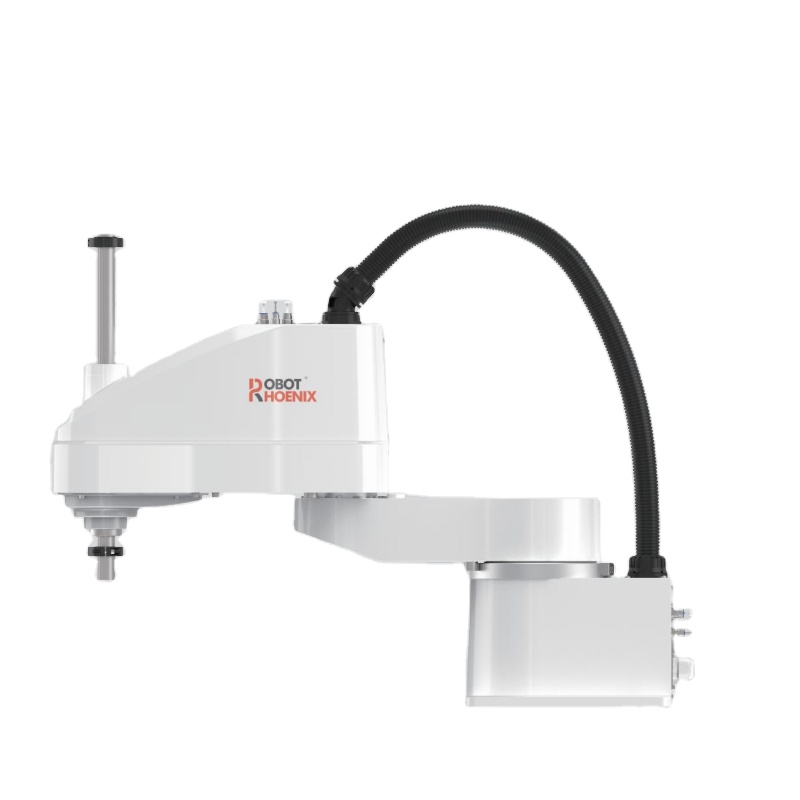
Product links and image paths above are preserved from the supplied catalogue. Specifications vary by end effector, valve package, vision configuration, and controller option; request a configuration-specific quotation before comparing landed cost.
What a Robotic Dispensing System Really Includes
Buyers searching for a “robotic dispensing system factory” often compare only robot pay load and price. In practice, the dispensing result is determined by six sub-systems. A factory that understands these interfaces can shorten commissioning and reduce scrap during ramp-up.
Motion Platform
The SCARA or delta robot determines acceleration, repeatability, working envelope, and how easily a dispense valve can reach the part.
Dispense Valve
Time-pressure, auger, progressive cavity, jet, or spray valves behave differently with viscosity, pot life, and required dot geometry.
Controller & PLC
An in-house controller or PLC-ready interface affects cycle programming, I/O handshakes, safety logic, and integration with existing lines.
Vision & Sensing
2D/3D vision and laser sensors locate parts, verify dispense paths, and enable closed-loop quality checks rather than blind dispensing.
Material Delivery
Syringe, cartridge, pail, or two-component mixing systems must match the duty cycle, purge routine, and viscosity control strategy.
Traceability
Recipe management, vision logs, and reject confirmation turn a dispensing robot into a verifiable production asset for regulated buyers.
Why Chinese Robotic Dispensing Factories and Wholesalers Deserve a Structured Evaluation
China is not a single supply source; it is a network of robot manufacturers, integrators, valve specialists, and wholesalers. A serious buyer should separate motion-platform expertise from dispensing-process expertise, then verify the factory evidence behind both. JORI Intelligent Technology Co., Ltd., founded in 2012 in Jinan, Shandong, is a useful benchmark because its capabilities sit across industrial robot R&D, controller and 2D/3D vision development, OEM support, and automated system integration.
Original Factory Advantage
JORI is an original factory for delta, SCARA, AGV/AMR, autonomous forklift, and wafer robot product lines, rather than a pure trading layer.
In-House Development
Controllers, 2D/3D vision, and robot mechanisms are developed in-house and protected by national patents, reducing multi-vendor finger-pointing.
Quality Evidence
ISO 9001 quality management, onsite-verified supplier status, credit records, trade history, and buyer reviews are available for due diligence.
OEM & Buyer Label
OEM service, design service, and buyer-label options let machine builders and wholesalers create differentiated dispensing packages.
Factory Scale
The company reports 500+ employees and more than 10,000 m² of factory area, supported by an engineering team accustomed to export projects.
Integration Support
JORI supports cartoning, packaging, wet-wipe lid applicator, and system-integration scenarios that often sit beside dispensing stations.
These figures reflect JORI’s published company information and supply credentials. Buyers should still verify current certificates, test reports, and project references for the exact dispensing application.
Match the Motion Platform to the Dispensing Duty
The fastest way to shorten a China sourcing project is to send the supplier a precise application brief. Use this matrix to narrow the robot family before requesting a quotation, then confirm the valve, material system, vision, and safety scope.
| Dispensing Duty | Recommended Platform | Why It Fits | Buyer Checks |
|---|---|---|---|
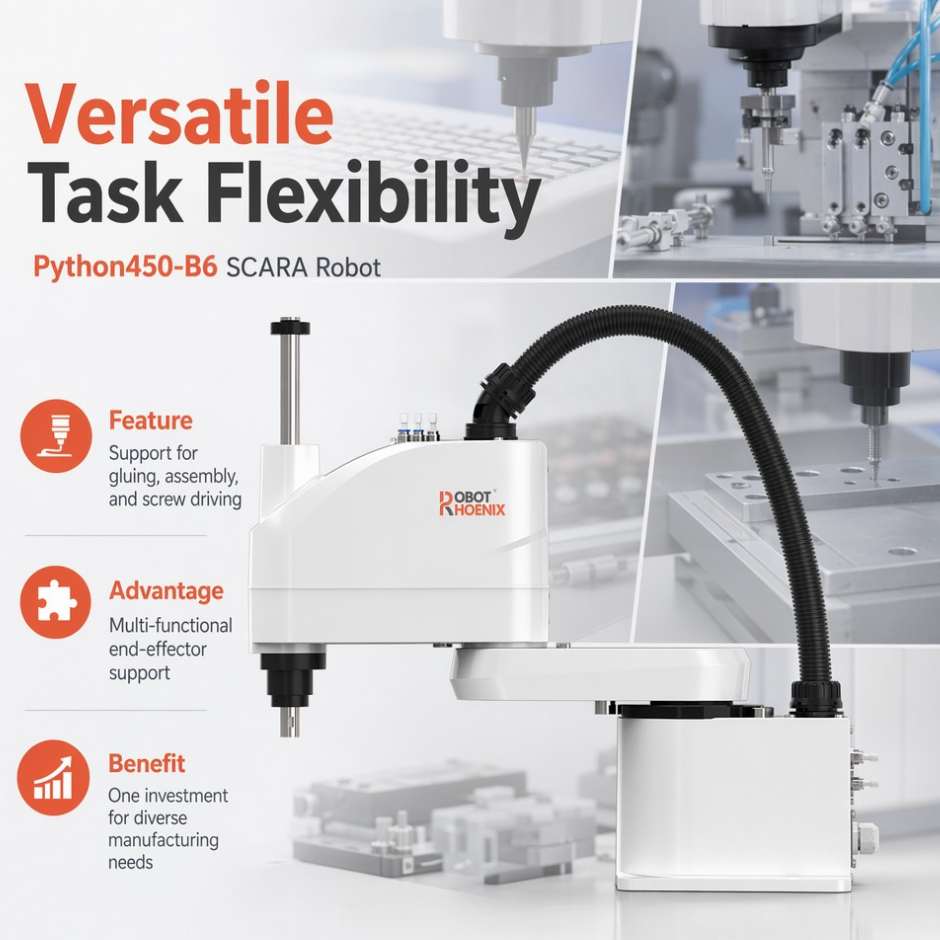
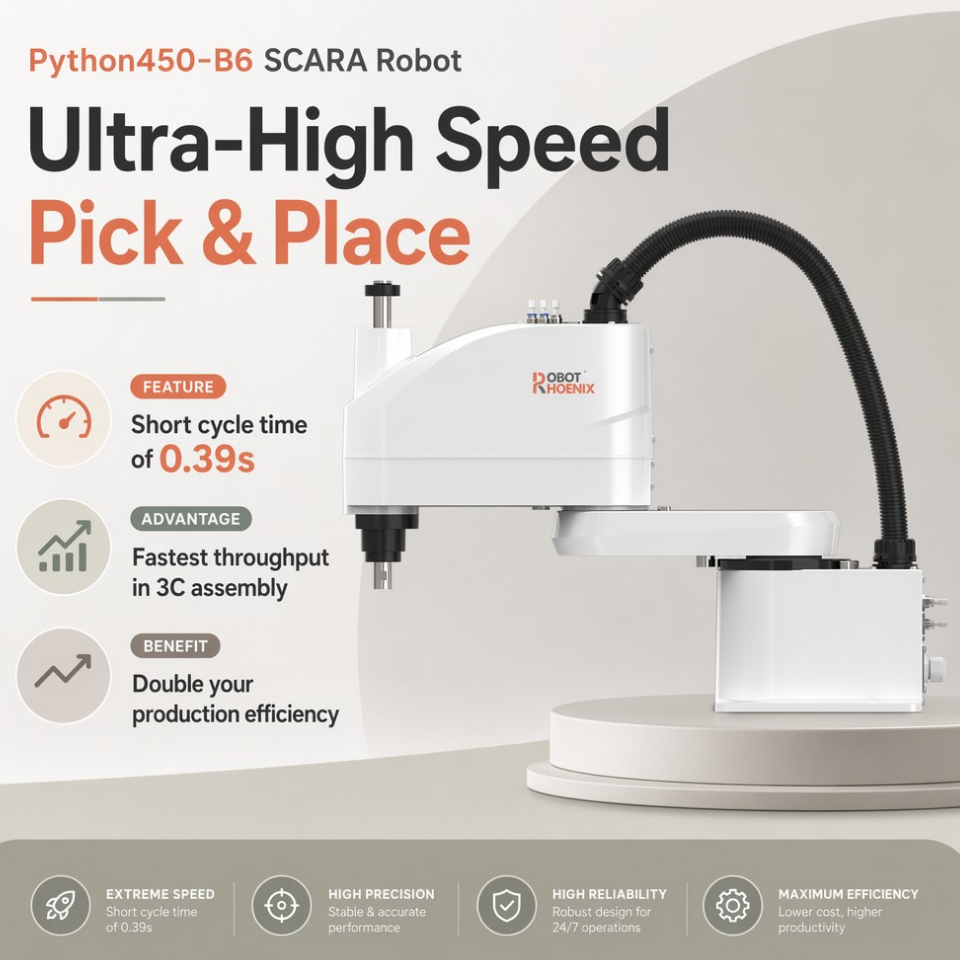
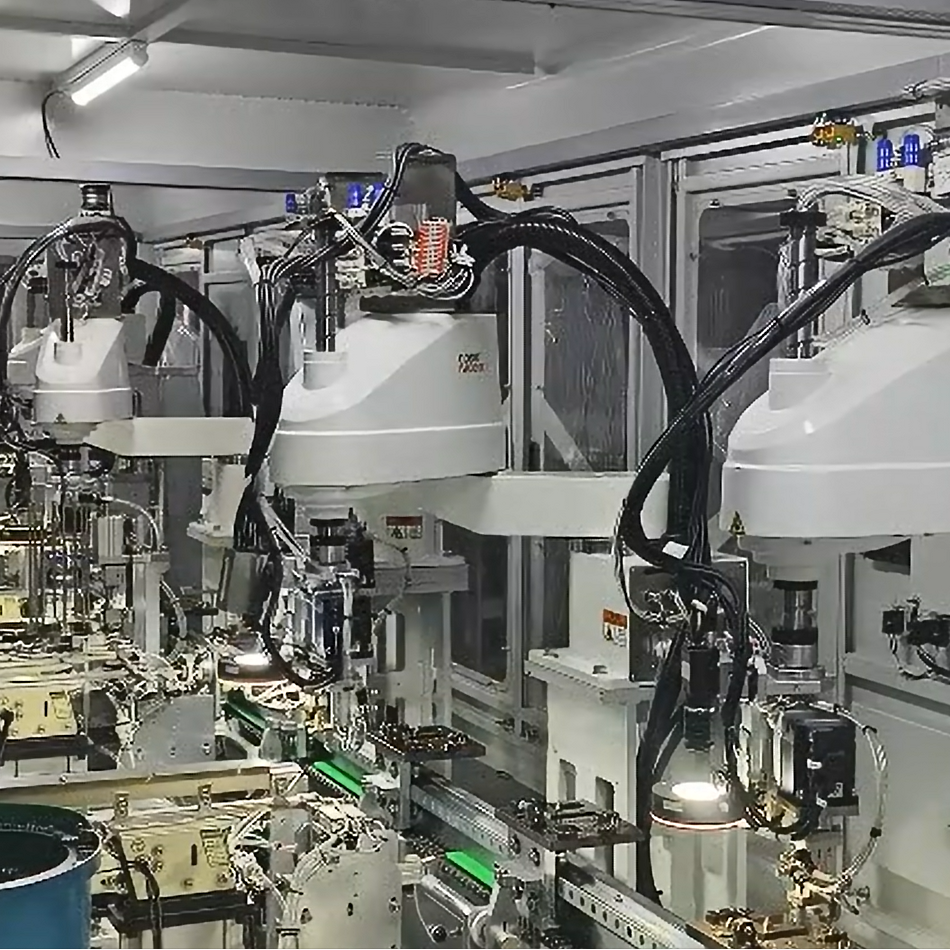
| ElectronicsAdhesive dots & underfill | 400 mm reach SCARA with PLC for 3C electronic assembly | Compact planar motion, precise placement, and PLC-ready integration for electronics cells. | Needle-to-part distance, dot diameter, vision alignment, ESD, and cleanroom compatibility. |
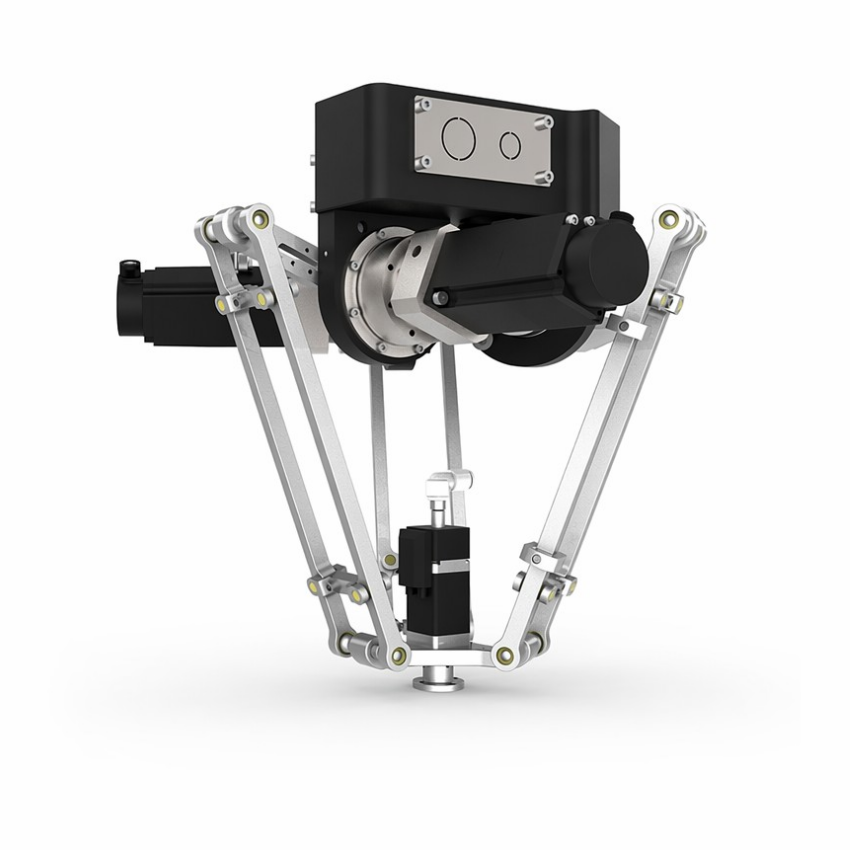
| High SpeedVision-guided small-part dispensing | 4-axis delta parallel robot with vision tracking | High-speed pick-and-place architecture supports moving-conveyor synchronisation and short cycle times. | Conveyor tracking accuracy, reject handling, vision latency, and maintenance access. |
| Entry LevelPilot dispensing cell | Mini industrial SCARA for low-cost pick-and-place | Lower capital risk with a compact four-axis robot for validation before multi-line rollout. | Repeatability, teaching time, valve weight, I/O count, and future expansion space. |
| Light IndustryPrecision assembly & dispensing | High-precision SCARA for light-industry pick-and-place | Balances compact footprint with stable repeatable motion for small parts and narrow workspaces. | Payload margin, cable routing, fixture clearance, and dispense path verification. |
| Food & PackagingHygienic handling support | Four-axis SCARA for food loading, unloading, and sorting | Food-industry configuration can support loading, sorting, and packaging-adjacent tasks around a dispensing line. | IP rating, washdown plan, food-safe materials, gripper changeover, and line clearance. |
| WholesaleMulti-unit standard cells | Low-price industrial SCARA arm with integrated motor | Integrated motor design can simplify deployment and support price-sensitive channel programmes. | Spare-parts strategy, OEM label, packaging, batch consistency, and warranty terms. |
3C Dispensing Cell
Start with a 400 mm reach SCARA and pair it with a jet valve or auger valve, vision alignment, and recipe control for repeatable dispensing.
View SCARA platformVision-Guided Delta Cell
Choose a delta robot when lightweight parts arrive randomly and throughput is the bottleneck rather than access to a large work envelope.
View delta platformPilot Production Line
Validate material behaviour, curing, operator workflow, and takt time on a mini SCARA before scaling to multiple dispensing stations.
View mini SCARAFuture Procurement Trends for Robotic Dispensing Systems
Between 2026 and 2030, buyers will likely move from “robot price” comparisons toward system-level risk, service response, and validated process outcomes. The following procurement shifts are especially relevant for distributors, machine builders, and factory owners sourcing from China.
Total Cost of Ownership
Buyers will compare scrap rate, commissioning hours, spare-parts cost, and uptime impact alongside the robot quotation, not just FOB price.
Simulation-First Buying
Digital twin layouts and robot reach simulations will be requested before purchase to verify cycle time, clearance, and valve access.
Mixed-Model Flexibility
Procurement teams will favour programmable recipes, quick-change tooling, and vision systems that support frequent product changeovers.
Service Response Commitments
Fast response becomes a purchasing criterion. A 2-hour average response and high response rate are operational advantages, not marketing details.
Open Integration
PLC-ready, vision-ready, and OEM-friendly interfaces will reduce lock-in and help machine builders integrate Chinese robot platforms into global lines.
Audit-Ready Traceability
Regulated buyers will request dispensing logs, reject records, calibration history, and version-controlled recipes as part of supplier qualification.
Product Development Trends in Robotic Dispensing
Robotic dispensing is shifting from a mechanical accessory market to a software-defined process. The winning platform will not simply move faster; it will verify the dispense, adapt to variation, and document the result.
Closed-Loop Dispense Verification
Vision and sensors will confirm bead width, dot presence, and position in real time rather than relying on offline sampling alone.
Integrated Controllers & Vision
Self-developed controllers and 2D/3D vision reduce box count, simplify synchronisation, and improve recipe portability across cells.
Modular End Effectors
Quick-change valve mounts, camera brackets, and purge stations will allow one robot platform to serve several dispensing recipes.
Higher Protection Ratings
IP-rated joints, sealed cable routing, and cleanroom-friendly surfaces will expand robot use into food, medical, and chemical environments.
Predictive Maintenance
Motion logs, valve cycle counts, and drift monitoring will feed maintenance schedules before a dispensing defect reaches production.
Data-Driven Commissioning
Recipe templates and simulation-assisted commissioning will shorten site acceptance tests, especially for multi-site wholesale deployments.
Inside JORI: E-E-A-T and Supplier Due Diligence
Experience, expertise, authoritativeness, and trust are not slogans for industrial procurement. They are checkable facts. JORI presents a traceable manufacturer profile: founded in 2012, based in Jinan, Shandong, with in-house robot R&D and production, controller and 2D/3D vision development, OEM support, and automated system integration.
One Accountable Source for Robot, Controller, Vision, and Integration
For dispensing projects, a fragmented supply chain creates avoidable risk. If the robot, controller, and vision come from different vendors, the integrator may spend days resolving communication issues. JORI’s advantage is that delta robots, SCARA robots, silicon wafer robots, AGV/AMR platforms, autonomous forklifts, controllers, and 2D/3D vision are developed in-house and supported by national patents.
The company serves machine builders, system integrators, and factory owners across North America, South America, Eastern Europe, Southeast Asia, and China. Standard robots can be ordered from 1 set, which supports pilot validation before a multi-cell or wholesale programme. OEM, design, and buyer-label services are available for channel partners.
- Founded 2012 · Jinan robot industrial base
- Original factory for SCARA, delta, AGV and wafer robots
- Self-developed controllers and 2D/3D vision
- ISO 9001 quality management system
- Onsite-verified supplier · credit and trade records
- OEM, design service, buyer label, system integration



For higher-confidence sourcing, review the company profile, factory video, trade capacity, supplier assessment, credit profile, transaction level, and buyer reviews before placing a dispensing project order.
How to Brief a Robotic Dispensing Supplier Before You Ask for Price
A precise brief reduces quotation cycles and protects both sides from scope confusion. The best Chinese factories and wholesalers will ask application questions before recommending a model.
Part & Material Data
Provide part drawings, material viscosity, pot life, required bead or dot size, and whether two-component mixing is needed.
Takt Time & Quality
Share cycle time, dispense length, tolerance, inspection method, scrap cost, and whether production runs one shift or 24/7.
Work Envelope
Show fixture layout, conveyor direction, access clearance, robot mounting, service space, and any future product-size expansion.
Integration Protocol
State PLC brand, fieldbus, MES requirements, safety category, vision interface, recipe management, and data logging expectations.
Compliance & Documents
Request certificates, spare-parts list, calibration plan, risk assessment support, packing standard, and warranty scope.
Commercial Terms
Confirm MOQ, delivery term, payment term, lead time, acceptance test, packing, and after-sales response commitment.
JORI’s published commercial terms include delivery options such as FOB, CFR, CIF, EXW, CIP, FCA, CPT, and express delivery; payment methods such as T/T, L/C, credit card, PayPal, Western Union, MoneyGram, and escrow; and currencies including USD, EUR, GBP, JPY, CAD, AUD, HKD, CHF, and CNY. Confirm applicability per order.
Robotic Dispensing System Procurement FAQ
These answers reflect the questions most relevant to overseas buyers comparing Chinese robot factories, wholesalers, and dispensing integration partners.
What is a robotic dispensing system, and how is it different from a standard robot arm?
Should I choose a SCARA robot or a delta robot for dispensing?
What is the minimum order quantity from JORI?
Does the factory support OEM, buyer label, or custom end effectors?
How can I verify a China robotic dispensing factory before paying?
Can JORI robots integrate with existing packaging or cartoning machines?
Which delivery and payment terms are accepted?
How fast can I receive a response and technical recommendation?
Ready to Shortlist a Dispensing-Ready Robot Platform?
Send your part, fluid, cycle-time, layout, and integration requirements. Use the quote button to start a technical review with the factory.