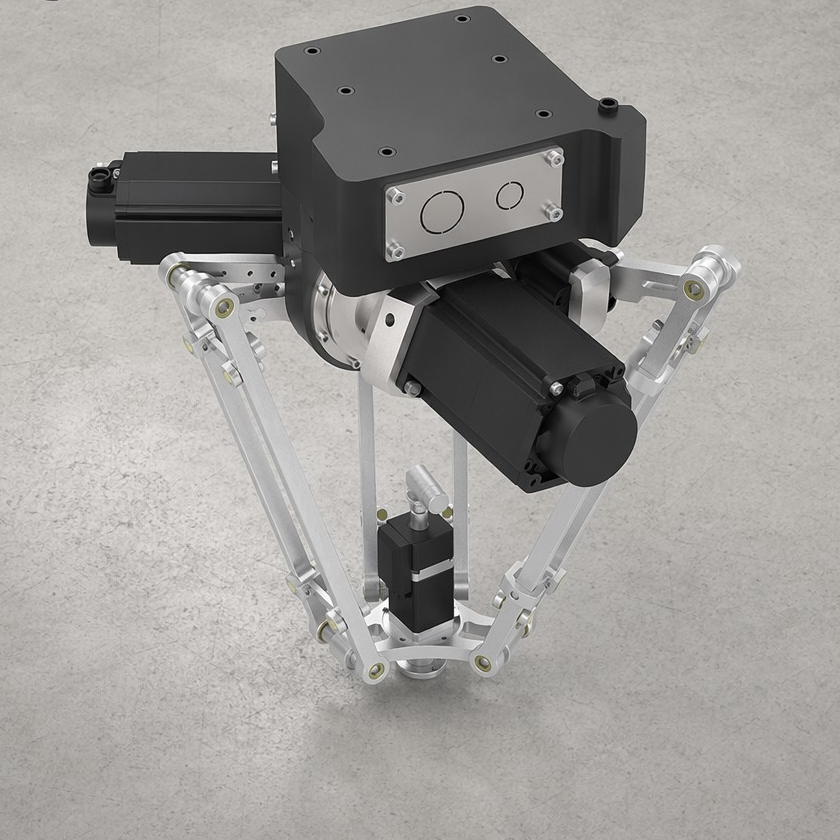
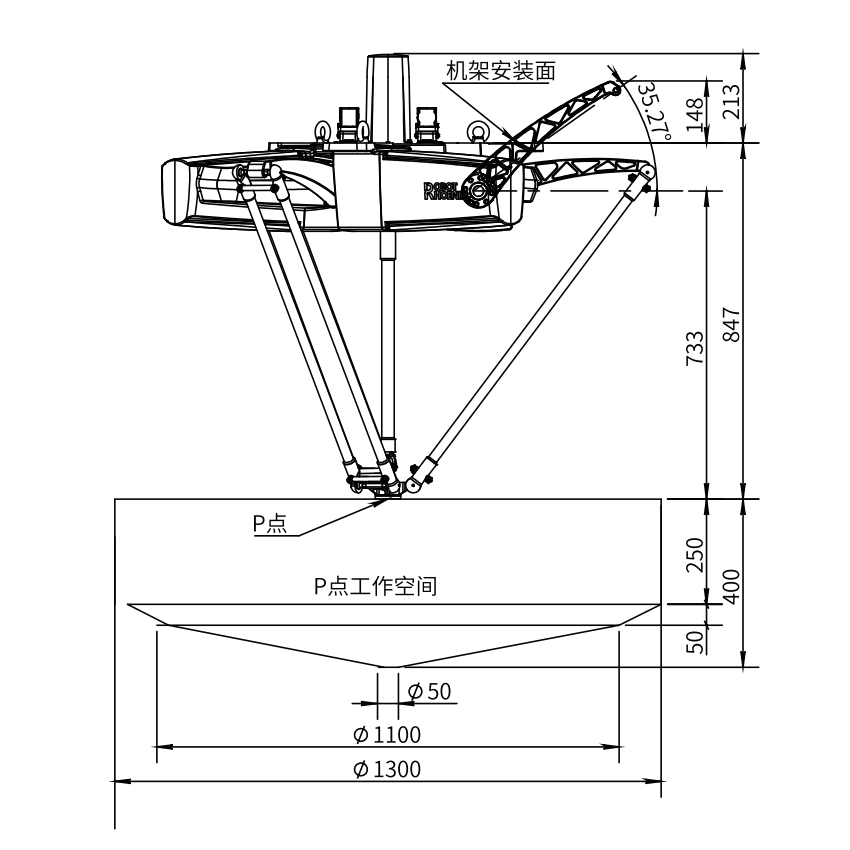
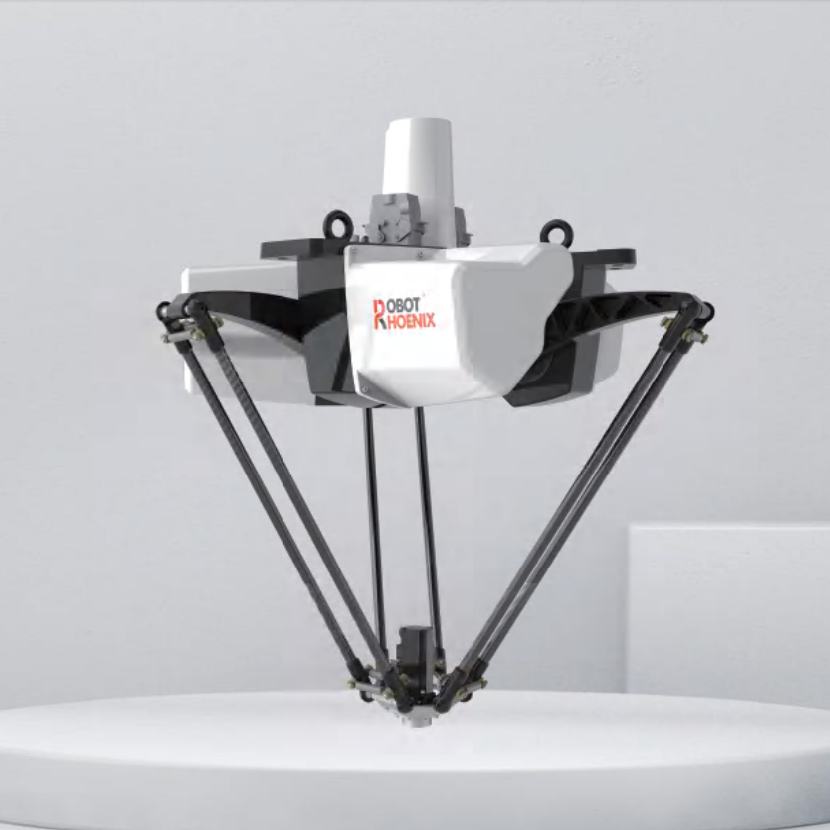
Robotphoenix 4 Arm Payload 3-6kgs Delta Robot for Pick Place Consumer Goods
Four-arm delta platform for consumer goods picking, sorting and light packaging where conveyor speed and repeatability set the cycle time.
An evidence-led white-paper guide for factory owners, machine builders and system integrators comparing delta, SCARA, AMR/AGV, autonomous forklift and wafer-handling robots. Learn how to verify supplier capability, reduce total cost of ownership and specify the right robot for your line.
These systems cover the buying intents most often hidden behind the phrase “trusted industrial robotics suppliers”: high-speed pick-and-place, wet-wipe lid application, carton packing, SCARA assembly and low-cost entry automation. Each link below points to the exact product page.
Four-arm delta platform for consumer goods picking, sorting and light packaging where conveyor speed and repeatability set the cycle time.
High-speed light-industry manipulator with a compact footprint for sorting, loading and secondary packaging cells.
Spider-arm delta configuration for wet-wipe lid applicator machinery, matching robot motion to indexing conveyors and lid-feeding modules.
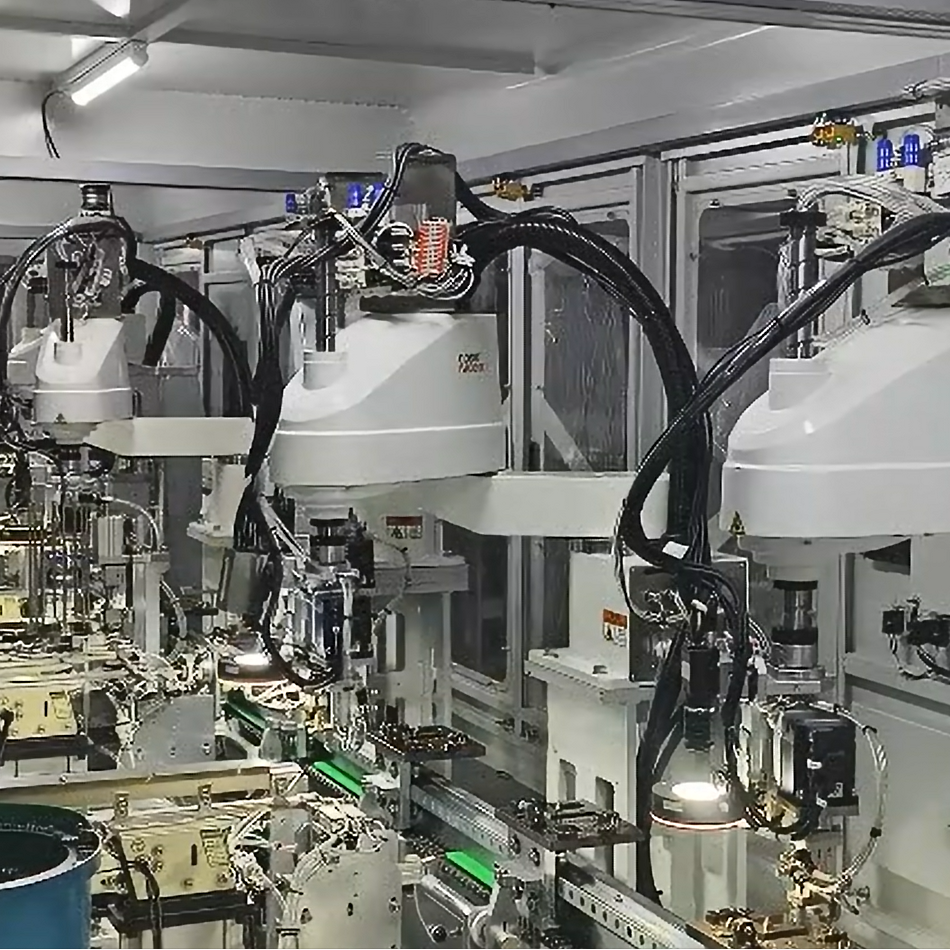
Four-axis SCARA with vision for auto-parts handling, inspection and precise placement in compact automation cells.
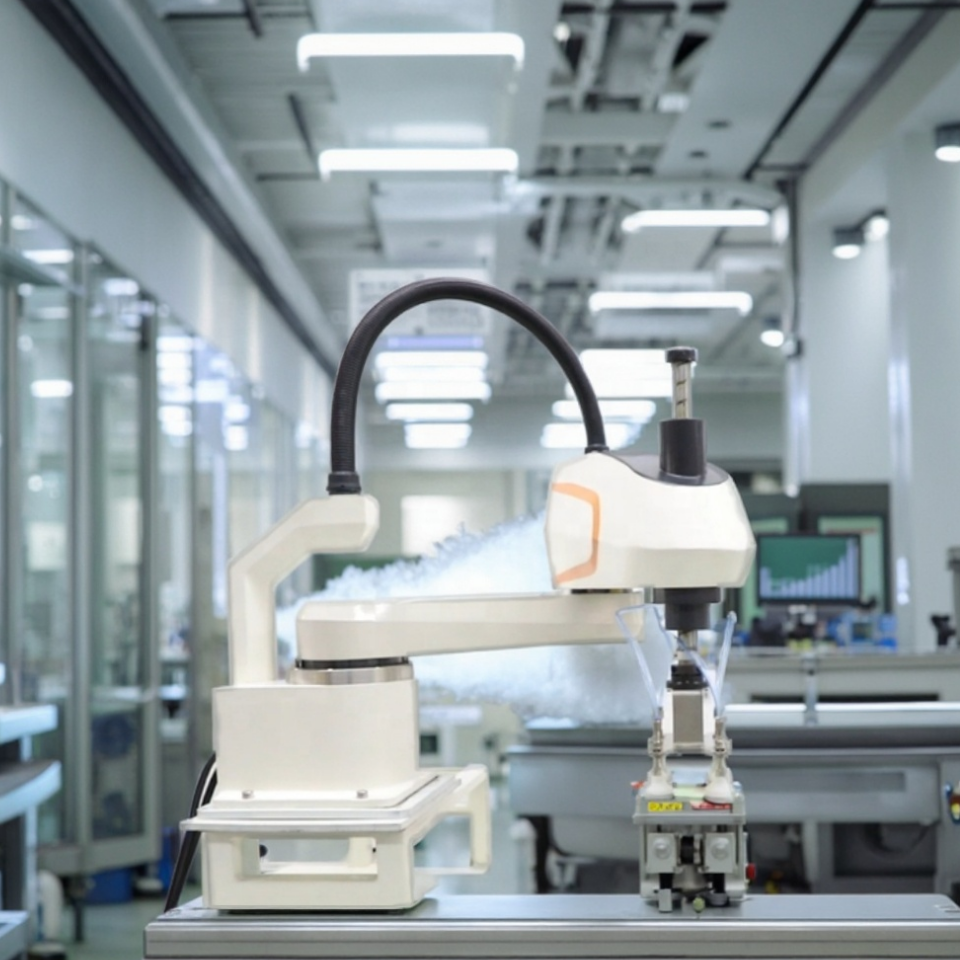
Mini SCARA for cost-sensitive pick-and-place, fast prototype cells, electronics and small-part handling.
Four-axis parallel spider-hand robot for carton packer lines, designed for end-of-line picking and PLC-ready integration.
400 mm reach SCARA with PLC control for 3C electronic assembly, small-part insertion, screwdriving and inspection.
Configurable 2/3/4-axis delta robot for general pick-and-place; vision and conveyor tracking can be specified for line integration.
The search phrase “Top Trusted Industrial Robotics Supplier & Suppliers” contains two buying intents. The singular form usually signals a project owner looking for one accountable partner. The plural form signals a comparison stage: engineers and procurement teams are building a shortlist, checking evidence and narrowing suppliers before requesting a quotation. This guide serves both intents.
A robot arm is only one part of a production outcome. A trusted supplier must prove that its controller, vision stack, end-effector interface, safety logic and after-sales engineering can work together on the buyer’s line. That is why serious buyers ask for cycle-time validation, sample testing, fieldbus compatibility, spare-parts strategy and integration support before they compare price.
Trust is not a badge; it is verifiable evidence. Strong evidence includes in-house R&D, national patents, ISO 9001 processes, onsite verification, transaction history, buyer reviews, factory video and a clear path from a single pilot unit to series production.
For machine builders, the supplier must also behave like an engineering partner. The robot needs to fit the machine frame, communicate with the existing PLC, accept a custom end-effector and support the buyer’s brand under OEM or private-label terms. For end users, the priority is usually uptime, repeatability, operator training and spare-part availability.
“A supplier who cannot explain how the robot will hit cycle time on your sample has not yet become a supplier. They are still only a catalogue.”
Self-developed controllers, motion software and 2D/3D vision reduce integration uncertainty and supplier finger-pointing.
Ask for cycle time, payload, repeatability, rejected-part handling and sample testing under real line conditions.
ISO 9001 management, incoming component checks, run-in testing and documented inspection records matter more than slogans.
Integration engineering, spare parts, training, OEM support and fast response decide whether automation keeps producing.
JORI Intelligent Technology Co., Ltd. is a high-tech manufacturer founded in 2012 in Jinan, Shandong, China, a recognized robotics industrial base. The company specializes in industrial robot R&D and production, controller and 2D/3D vision development, OEM support and automated system integration. Its product portfolio covers delta parallel robots, SCARA robots, AGV/AMR mobile robots, autonomous forklifts and silicon wafer handling robots.
Because core motion control, controllers and vision are developed in-house and protected by national patents, buyers work with one accountable engineering source from concept to after-sales support rather than a reseller chain. This matters most when the robot must be fitted into an existing packaging machine, connected to a PLC, tuned for vision-guided picking or branded for an OEM programme.
A supplier shortlist becomes useful only when it maps to a real line constraint. Use these four buying paths to narrow the robot family before a technical review.
Prioritize a spider-arm delta robot that can synchronize with indexing conveyors and lid-feeding modules. Verify hygienic construction, changeover time and vision options.
Use a SCARA with PLC or vision for planar assembly, insertion and inspection. Check reach, repeatability, fieldbus compatibility and end-effector clearance.
A 4-axis delta or 2/3/4-axis parallel robot can stabilize packing throughput when products arrive randomly. Confirm carton pitch, product weight and reject handling.
Start with a mini SCARA or standard delta from one set. A pilot cell exposes real cycle-time, fixture and operator-training issues before capital scale-up.
The best robot is not always the fastest one. It is the one whose mechanical architecture, control stack and integration path fit the product, the line and the maintenance team.
Indicative fit, not a substitute for sample testing.
| Robot Family | Best Fit | Procurement Reason | Verify Before Order |
|---|---|---|---|
| Delta Robot | High-speed picking, sorting, labeling, cartoning | 3–6 kg payload, 0.08 mm repeatability, high cycle rates, IP54 options | Sample test, conveyor tracking, gripper design, hygienic washdown needs |
| SCARA Robot | Assembly, insertion, precise placement | 4-axis planar motion, compact cell footprint, mini low-cost models | Reach, repeatability, fieldbus, vision interface, fixture clearance |
| AMR / AGV | Material transport between stations | 400–500 kg payload options, laser SLAM, fleet management | Traffic rules, charger planning, floor conditions, fleet software handover |
| Autonomous Forklift | Pallet handling and warehouse shuttles | Laser SLAM navigation, repetitive shift work, labour resilience | Aisle width, pallet quality, safety zones, site mapping and route planning |
| Wafer Robot | Semiconductor and photovoltaic handling | Self-developed motion control, smooth handling of fragile substrates | Cleanliness level, end-effector material, wafer size, particle control |
Figures reflect current catalogue models; final specifications are confirmed per configuration and application test.
Procurement teams are moving away from isolated unit-price comparisons toward verified outcomes, pilot-first purchasing and supplier consolidation. Four shifts will shape the next buying cycle.
Buyers will compare integration, energy, maintenance, spare parts and downtime alongside the robot price. A low sticker price can lose once engineering hours and stoppages are counted.
Single-set orders and pilot cells will remain a practical risk-control method. Suppliers that support MOQ 1 and quick validation will win earlier commitments.
Machine builders increasingly need private-label robots, custom end-effectors and controller-level integration rather than generic catalogue products.
Third-party assessment, buyer reviews, trade history and factory video will become the first filter before a technical discussion begins.
The product roadmap is being shaped by integration simplicity, modularity, line-level intelligence and application-specific protection—not by payload numbers alone.
Robot, controller and 2D/3D vision are converging into one engineering stack. This shortens commissioning and gives buyers a single technical owner.
2/3/4-axis delta configurations, mini SCARA platforms and 400–500 kg AMR bases let buyers scale a proven architecture across several lines.
Simulation, route planning and smart fleet management reduce commissioning risk and allow mixed robot fleets to work in one facility.
IP54 delta versions, wet-wipe lid applicator support and wafer-handling robots show how application protection is becoming a buying criterion.
A robot specified for 2030 should be evaluated by what can be upgraded: vision, fieldbus, end-effector, safety configuration, fleet software and data access. Hardware that cannot be integrated is expensive regardless of its catalogue specification.
A trusted supplier helps you model the whole project, not only the robot. The most useful quotation is one that exposes integration assumptions, spare-parts scope, training and response commitments.
Robot, controller, teach pendant, software options, vision and end-effector. Clarify what is included and what is buyer-supplied.
Fixtures, conveyors, safety guarding, PLC programming, trial production and line-side validation. This is often larger than the robot budget.
Energy, maintenance, consumables, operator training and changeover time. Fast cycle time has little value if changeover creates hidden downtime.
Spare-part lead time, response rate, warranty terms, OEM support and resale or redeployment potential across future products.
Purchase + integration + commissioning + energy + maintenance + spare parts + downtime + training − residual value = total cost of ownership. Use your own labour rate and throughput assumptions; do not accept a generic calculator.
Look for verifiable evidence: in-house controller and vision capability, ISO 9001 quality management, onsite verification, national patents, product references, buyer reviews and a clear response-time commitment. Also confirm that the supplier can support sample testing, OEM terms, spare parts and system integration instead of only shipping a robot arm.
Choose a delta robot for very fast, lightweight pick-and-place from moving conveyors, typically 3–6 kg payload. Choose a SCARA robot for planar assembly, insertion and precise placement in a compact footprint, especially for electronics, auto parts and small components. Share part weight, cycle time, tolerance, conveyor speed and layout with the supplier to get a model recommendation.
Yes. Standard delta robots, SCARA robots and AMR/AGV platforms can be ordered from 1 set, so buyers can validate a single cell or pilot line before scaling up. A pilot project is the most practical way to test fixture design, operator workflow, cycle time and integration assumptions.
Yes. JORI provides OEM service, design service and buyer-label options, and supports machine builders with custom end-effectors, controller integration and automated system integration. This is especially relevant for packaging machine builders that need a robot embedded into their own equipment.
Yes. JORI develops its own controllers and 2D/3D vision, offers PLC-ready delta robots for cartoning machines, and supports machine builders such as wet-wipe lid applicator and carton packer manufacturers. Prepare line drawings, PLC protocol details, product samples and cycle-time targets for a useful review.
Accepted delivery terms include FOB, CFR, CIF, EXW, CIP, FCA, CPT and express delivery. Accepted payment methods include T/T, L/C, credit card, PayPal, Western Union, MoneyGram and escrow, in USD, EUR, GBP, JPY, CAD, AUD, HKD, CHF and CNY.
Review independent supplier assessment, credit profile, trade capacity, transaction level, trade history and buyer reviews. Request a factory video tour, ask for reference projects in your industry, and ask the supplier to run or document a sample test. Don’t rely on a single certificate image without checking its scope.
Send product drawings or samples, part weight and dimensions, required cycle time, conveyor speed, layout sketch, environment conditions, existing PLC or fieldbus, target ROI and annual volume. The more precise the input, the faster the supplier can recommend a delta, SCARA, AMR, forklift or wafer-handling configuration.
JORI maintains an average response time of 2 hours or less and a 97.06% response rate. Buyers can email info@joribot.com with application details, videos of the current process or drawings so the first response can include a relevant model path rather than a generic catalogue.
Share your product sample, line constraints and target output. JORI engineers can map your application to delta, SCARA, AMR/AGV, autonomous forklift or wafer-handling options—and outline the path from a single pilot set to series deployment.
info@joribot.com