China Top Collaborative Robot Arm Manufacturers & Exporter for the Guadalajara Market
A procurement-grade guide for Jalisco machine builders, system integrators and plant teams comparing high-speed delta, SCARA, vision-guided and mobile robot platforms for nearshoring-driven production.
Eight Production-Ready Robot Arms for Guadalajara Line Builders
The shortlist below matches common Guadalajara project briefs: mixed-model electronics assembly, medical-device packaging, food and beverage handling, bottle unscrambling, cartoning, sorting and vision-guided pick-and-place. Every card preserves the product URL and image so buyers can move from evaluation to specification without losing context.

High Precision Pick and Place 4 Aixs Parallel Robot Delta with Vision Tracking System
A high-speed four-axis parallel robot for randomly oriented parts, with vision tracking for pick-and-place, orientation checks and reject handling. Strong fit for Guadalajara electronics, connectors, small medical devices and consumer-goods lines where conveyor speed and traceability matter more than heavy payload.
View specifications →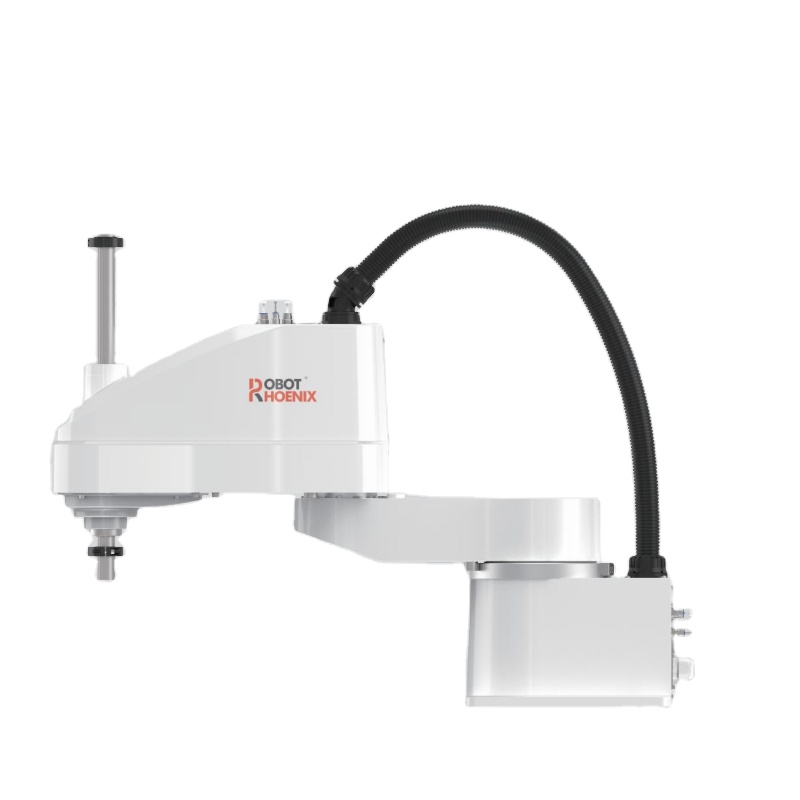
Advanced Industrial 4 Axis Robot Scara Robot for Pick and Place in Food Industry Gripping
Four-axis SCARA platform for food-industry gripping, tray loading, small-part placement and secondary packaging. Its compact working envelope suits Jalisco plants that need hygienic handling, repeatable placement and a cost-controlled alternative to a larger six-axis cell.
View specifications →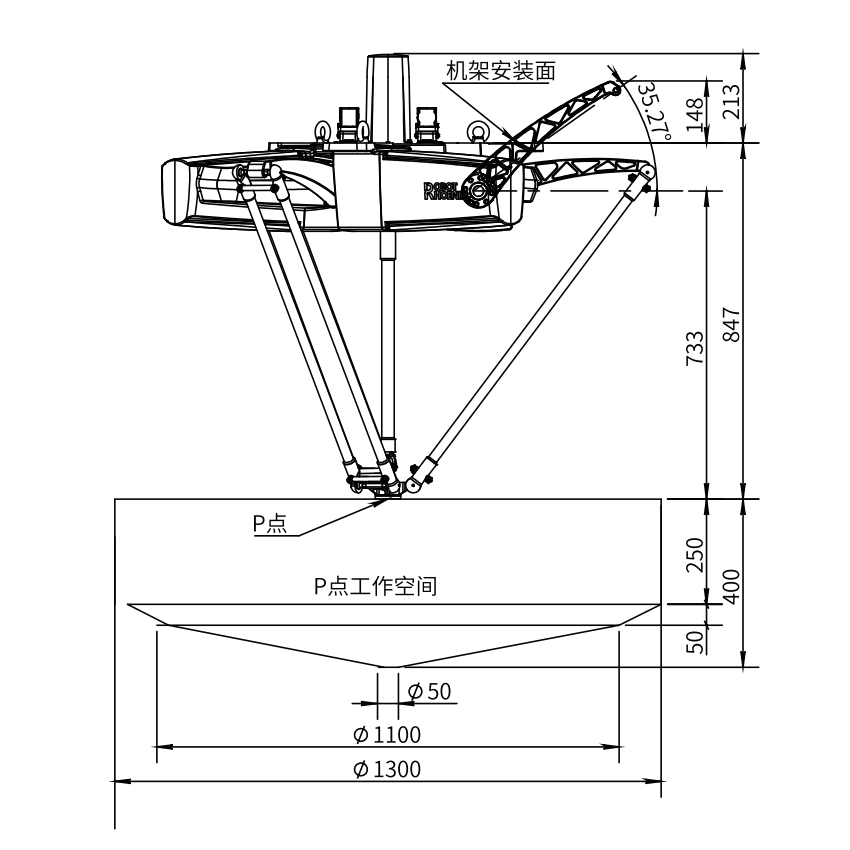
Industrial Robotic Arm Parallel Robot 2/3/4 Axis Delta Robot for Pick&Place Application
A configurable parallel robot for pick-and-place applications where line layout, product mix and cycle time vary. Buyers can match axis count, end-effector and conveyor tracking to the cell rather than forcing the line around a single fixed robot format.
View specifications →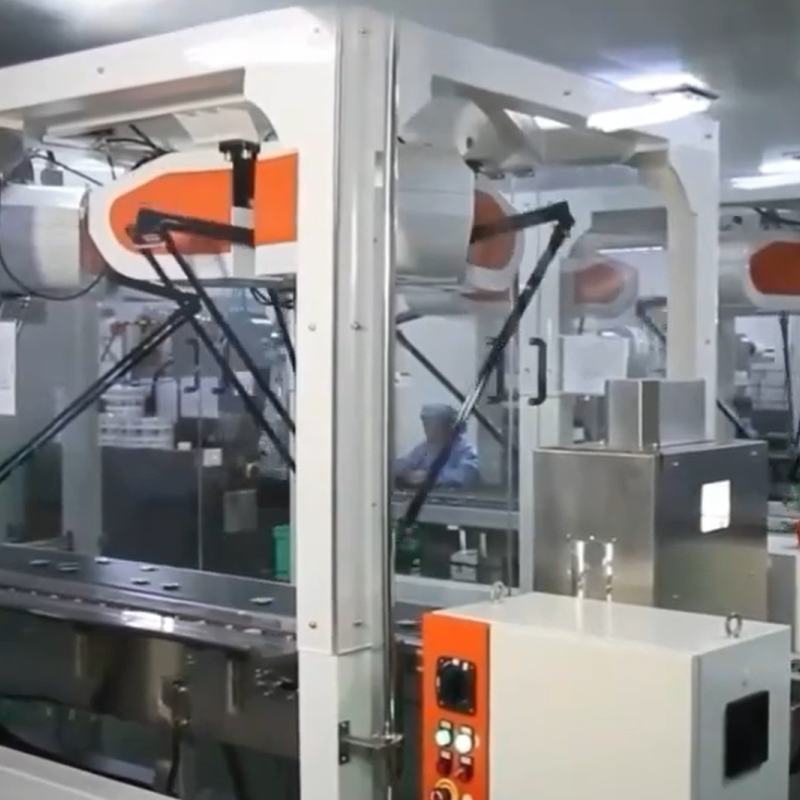
6kg Payload IP54 Protection Grade Pick Place Sorting Parallel Robot with Robot Gripper
Six-kilogram payload parallel robot with IP54 protection and gripper-ready mounting. Recommended for sorting and pick-place tasks in packaging, personal care, food and component handling where dust, splashes and repeatability require a protected, production-hardened arm.
View specifications →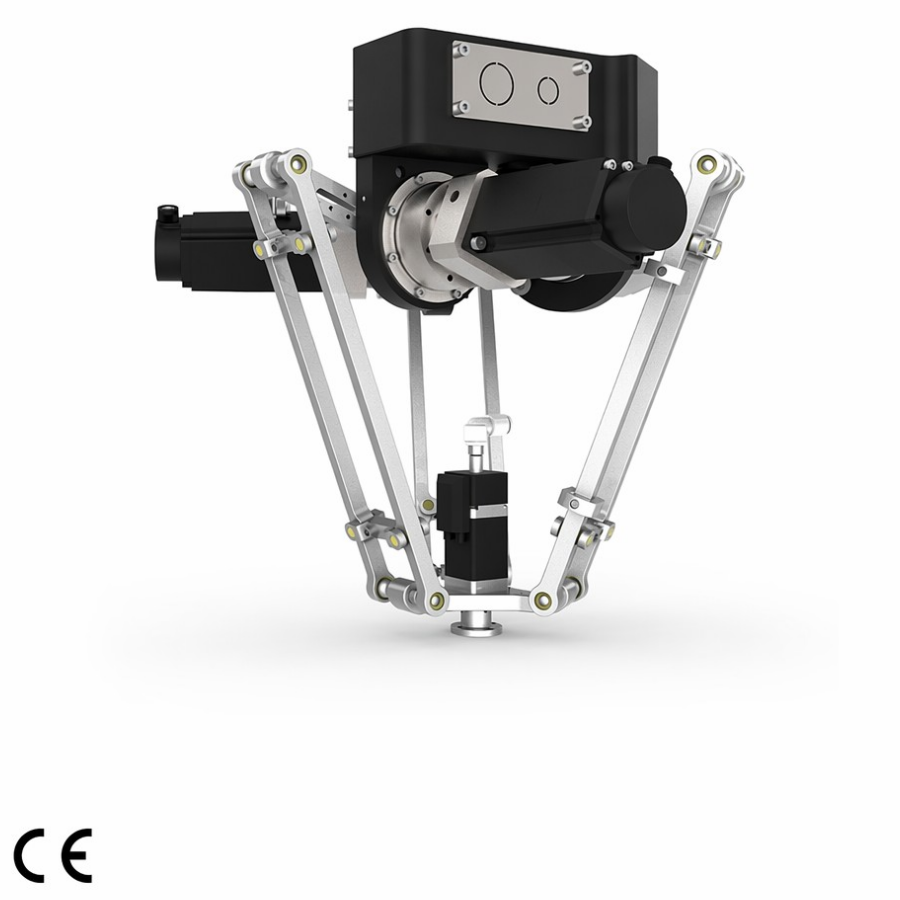
High Speed Consumer Goods Industries Bottle Unscrambling Machine Component Delta Robot
A high-speed consumer-goods robot for bottle unscrambling and similar orientation-dependent handling. Useful for beverage, tequila bottling, cosmetics and household products where stable infeed, gentle handling and high throughput affect overall line efficiency.
View specifications →
New Condition High-Speed Industrial Innovative Manipulator Delta Robot for Light Industry
A high-speed manipulator for light-industry pick-and-place, cartoning and assembly support. The platform is aimed at plants that need fast cycle times and flexible redeployment as product families change.
View specifications →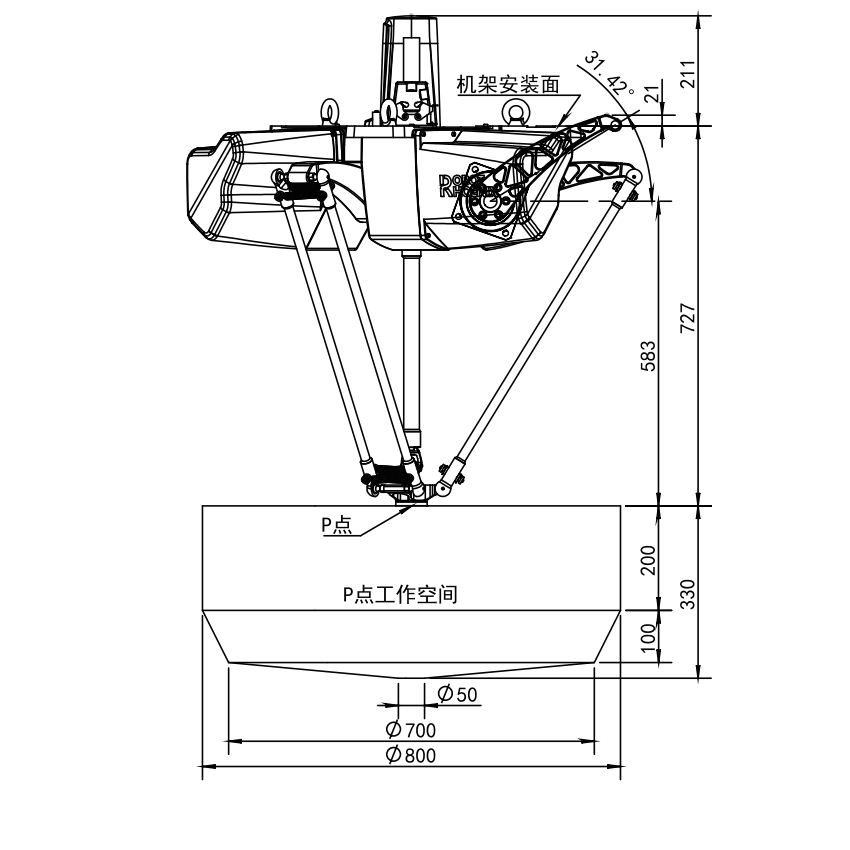
Industrial Delta Robot High Efficiency Parallel Robot for Goods Picking Placing Sorting
An efficiency-focused delta robot for goods picking, placing and sorting. Recommended for order consolidation, pack-out, quality separation and end-of-line sorting where consistent throughput and small footprint are priorities.
View specifications →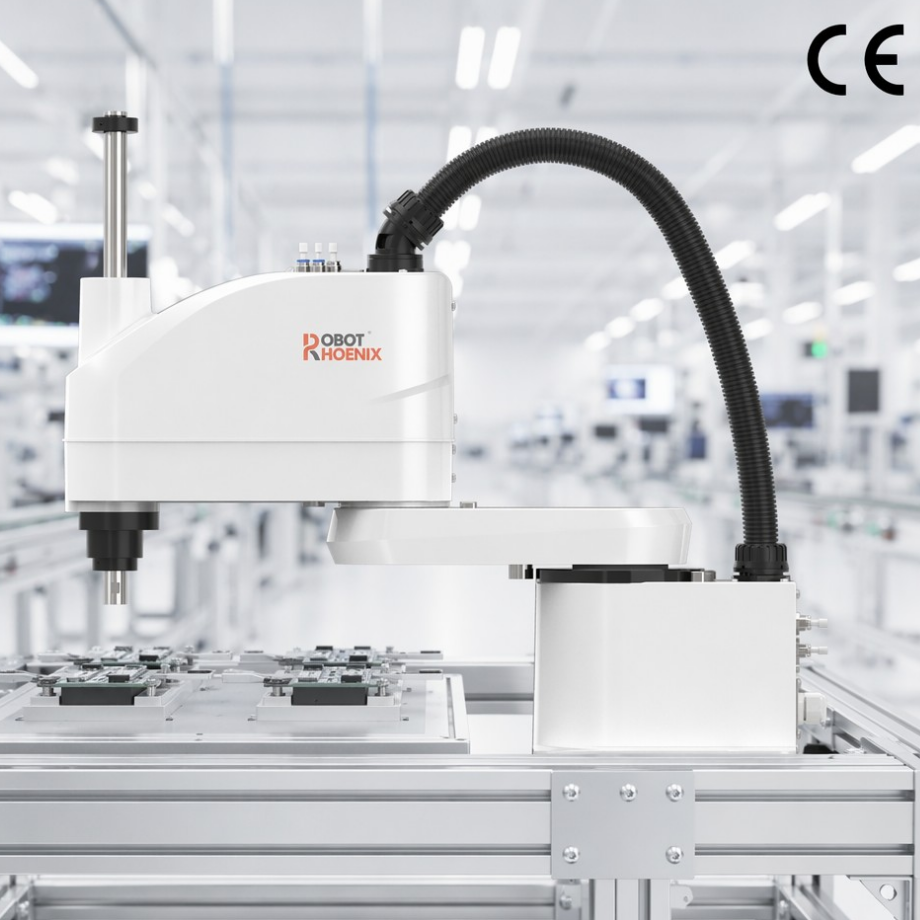
New Design Compact High Accuracy Industrial Robot Arm Scara with 2D/3D Vision System
Compact SCARA robot with a 2D/3D vision option for high-accuracy assembly, insertion and inspection. A strong candidate for Guadalajara electronics, automotive electronics and medical-device cells where floor space is tight and changeover must stay fast.
View specifications →Specification Signal, Not Marketing Noise
Guadalajara buyers need more than a catalogue. They need a supplier whose factory, response time, quality system and product scope can be checked before a pilot purchase.
A Guadalajara Buyer's Lens for China Robot-Arm Sourcing
Guadalajara is not a price-only market. It is a production cluster where a robot arm must survive audit questions, multi-SKU changeovers, Spanish-language operator training and a local system integrator's schedule.
The H1 phrase "collaborative robot arm" often covers two buying conversations. One is a true collaborative robot for fenceless or semi-attended work. The other is a compact, easily integrated robot arm deployed beside people inside a risk-assessed cell. This guide focuses on the second—practical high-speed delta and SCARA automation—because those platforms match the supplied product series and the high-throughput packaging, electronics and medical-device work common in Jalisco. For fenceless operation, a formal risk assessment is still required.
Guadalajara is one of Mexico's most concentrated engineering markets: electronics, medical devices, automotive electronics, food and beverage, and consumer packaging sit within a short drive of each other. For a plant engineer, that means a robot arm cannot be selected only on payload and price. It must fit the local maintenance team, the integrator who will commission the cell, the importer's compliance file, and the operator training plan. The strongest China-based suppliers are not the ones with the longest catalogue; they are the ones that can answer a localized application brief with verifiable engineering detail.
The key information gain is to separate robot hardware from cell responsibility. Ask who owns conveyor tracking, vision lighting, gripper design, safety relay logic, PLC handshake, FAT and SAT. A delta robot with a good controller but an unclear safety scope can cost more in Guadalajara than a slightly higher-priced package with a documented integration plan. JORI's portfolio is relevant because controllers, 2D/3D vision, delta, SCARA, AMR and wafer robots are developed in-house, which reduces the number of suppliers a plant must coordinate.
Use this article as a pre-RFQ white paper. It does not replace a site survey, risk assessment or compliance review. It does give a structured way to compare Chinese manufacturers, local Guadalajara integrators and the actual production outcome.
7-Point Pre-RFQ Checklist
- Confirm 220 V or 127/220 V plant supply, 60 Hz frequency and control-voltage details.
- Define the exact part family, weight, geometry and incoming orientation.
- Validate cycle time with your samples, not only a catalogue figure.
- Clarify who owns vision lighting, conveyor tracking, PLC handshake and safety logic.
- Request FAT criteria, reject-handling rules and traceability data.
- Plan spare parts, wear parts, operator training and Spanish documentation.
- Review NOM/electrical documentation and importer-of-record responsibility before shipment.
Localized Demand Signals for Robot Arms
The Guadalajara metropolitan area—especially El Salto, Zapopan, Tlaquepaque and Tlajomulco—has become a reference point for nearshoring conversations. Demand is shaped by production mix, not by a single industry.
Electronics and 3C Assembly
SCARA arms with 2D/3D vision fit compact cells for connectors, housings, labels and inspection. Delta robots support high-speed tray loading and test-handler feeding. Specify ESD-safe tooling and repeatability targets early.
Medical Device and Pharma Packaging
Kit assembly, blister handling, vial transfer and carton loading need repeatable motion and clear documentation. Buyers should align cleanroom requirements, changeover procedures and inspection records before choosing the arm.
Automotive Components and E-Mobility
Small-part insertion, sensor assembly, labeling and inspection benefit from SCARA precision or delta speed. The procurement file should connect cycle time, traceability and line-side rework rules.
Food, Beverage and Agave Bottling
Bottle unscrambling, case packing and tray loading demand stable infeed and gentle handling. For tequila, sauces and beverages, confirm washdown expectations, gripper materials and line-clearance procedures.
Personal Care and Household Products
Lid placement, bottle sorting, cartoning and pack-out are classic delta applications. The IP54 6 kg model is a practical shortlist option where dust or splashes are part of the environment.
Warehouse, E-commerce and Pack-out
Delta sorting cells and JORI's AGV/AMR, autonomous forklift and wafer robot portfolio support broader intralogistics planning. Route planning, charger placement and fleet rules belong in the same business case.
What Guadalajara Buyers Will Ask in 2025–2026
Automation decisions are shifting from "Can we buy a robot?" to "Can we replicate, support and audit this cell across plants?" That changes the supplier scorecard.
1. Nearshoring Line Replication
A cell proven in one Guadalajara plant may need to be copied in another Jalisco site or in the Bajío. Buyers increasingly ask for standard cell documentation, controller backups and a repeatable bill of materials.
2. High-Mix, Lower-Volume Changeover
Packaging and electronics lines handle more SKUs than before. Quick-change grippers, recipe management and vision recalibration are becoming as important as maximum speed.
3. Vision-First Quality and Traceability
Pick-and-place is no longer only about moving a part. Guadalajara buyers want orientation checks, missing-part detection, reject confirmation and data that can support customer audits.
4. Bilingual Service and Local Integration
Spanish operator training, English engineering communication and a local integrator's first-line response are practical requirements. A supplier's average response time and documentation quality matter.
5. Energy, Footprint and Safety
Factory floor space is expensive. Compact delta and SCARA cells can reduce conveyor length and building load. Safety scope, risk assessment and lockout procedures should be included in the layout review.
6. Pilot-to-Scale Procurement
MOQ 1 set allows a pilot cell before a multi-line roll-out. Procurement teams increasingly request a staged plan: sample test, FAT, pilot production, then repeat order.
Illustrative Project Weighting Used in Early Application Reviews
Example weighting for a Guadalajara robot-arm discussion. Final priorities should be recalculated with your own line data, product samples and site constraints.
Which Robot Arm Should a Guadalajara Line Team Shortlist?
A quick engineering comparison before you contact an integrator or request a quotation.
| Guadalajara Use Case | Recommended Platform | Verify Before PO | Why It Matters |
|---|---|---|---|
| Randomly oriented parts at conveyor speed | Delta with vision tracking | Cycle time, reject handling, vision calibration | Vision tracking removes the need for perfect manual orientation and protects throughput. |
| Bottle and cap handling | Delta for unscrambling; SCARA for placement | Gripper design, bottle stability, changeover | High speed must be paired with gentle handling and repeatable infeed. |
| Food tray loading and secondary packaging | SCARA or delta with hygienic gripper | IP rating, food-grade materials, washdown plan | Hygiene risk assessment is part of the return-on-investment case. |
| Small electronics assembly | Compact SCARA with 2D/3D vision | Repeatability, ESD-safe tooling, floor space | Planar precision and inspection often matter more than raw payload. |
| IP54 sorting cell | 6 kg IP54 delta robot | Payload, protection, gripper weight, dust/splash exposure | Protected hardware avoids premature maintenance in real production environments. |
| Cartoning and light industry | 2/3/4-axis delta | PLC integration, line layout, safety handshake | Fast pick-and-place must fit the existing machine sequence and controls. |
| Internal logistics and pack-out | AGV/AMR, forklift or delta sorting | Route planning, fleet rules, charger placement | Material flow is a system decision, not a single robot purchase. |
Why JORI Fits a Guadalajara Sourcing Strategy
JORI Intelligent Technology Co., Ltd. was founded in 2012 in Jinan, Shandong, China, a national robotics hub. The company is a high-tech manufacturer focused on industrial robot R&D and production, controller and 2D/3D vision development, OEM support and automated system integration.
Because delta robots, SCARA robots, silicon wafer robots, AGV/AMR platforms, 2D/3D vision and controllers are developed in-house and protected by national patents, buyers get one accountable source for hardware, software and after-sales engineering—not a reseller chain. JORI serves buyers in North America, South America, Eastern Europe, Southeast Asia and China domestic markets, with ISO 9001 quality management and onsite-verified supplier status.
- Independent R&D capability
- Original factory for delta, SCARA and AGV
- 10+ years serving overseas markets
- One-stop automation integration
- OEM, design and buyer-label service
- ISO 9001 quality management system
- MOQ from 1 set for pilot validation
- Average response time of 2 hours or less
JORI also supports machine builders with PLC-ready delta robots, custom end-effectors, controller integration and automated system integration for cartoning machines, carton packers and wet wipe lid applicator machines. For a Guadalajara project, this means the supplier conversation can start with the application rather than only the robot model.



In-House Controller and Vision
Motion control and 2D/3D vision are developed by JORI, reducing supplier fragmentation and making vision-guided delta or SCARA configurations easier to specify.
Original Factory, Not a Trading Layer
Robot production, R&D and integration sit under one manufacturer. Buyers can request factory video, company profile, trade capacity, transaction level and buyer reviews before a pilot order.
Pilot Validation from 1 Set
Standard delta robots, SCARA robots and AMR/AGV platforms can be ordered from 1 set, so a Guadalajara line team can validate one cell or pilot line before scaling.
OEM and Buyer-Label Support
JORI provides OEM service, design service and buyer-label options, and supports machine builders with custom end-effectors, controller integration and automated system integration.
Quality and Verification Signals
ISO 9001 quality management, onsite-verified supplier status, national patents and documented QC from component inspection to final robot run-in testing support procurement due diligence.
Fast Engineering Response
JORI maintains an average response time of 2 hours or less and a 97.06% response rate. Buyers can send application details, drawings or process videos to info@joribot.com.

- North America
- South America
- Eastern Europe
- Southeast Asia
- China Domestic
For Guadalajara buyers, North America is the relevant export lane. Shipping usually enters Mexico through Manzanillo or Lázaro Cárdenas before inland transport; final routing, Incoterms and customs responsibilities should be confirmed during quotation.
Questions Local Buyers Ask Before a Pilot PO
These answers are written for plant engineers, purchasing managers, machine builders and system integrators evaluating a China-based robot-arm supplier.
What does "collaborative robot arm" mean in this Guadalajara sourcing guide?
The title reflects a common search phrase. This shortlist covers industrial delta and SCARA arms that can be integrated into semi-attended or collaborative workcells after risk assessment. If your project requires a certified fenceless cobot, specify that separately; cycle time, payload and safety category must be confirmed.
What is the minimum order quantity for JORI industrial robots?
Standard delta robots, SCARA robots and AMR/AGV platforms can be ordered from 1 set. This lets a Guadalajara buyer validate a single cell or pilot line before committing to a multi-line roll-out.
Does JORI offer OEM or custom robot solutions?
Yes. JORI provides OEM service, design service and buyer-label options, and supports machine builders with custom end-effectors, controller integration and automated system integration.
Should we choose a delta robot or a SCARA robot?
Choose a delta robot for very fast, lightweight pick-and-place from moving conveyors, typically 3 to 6 kg payload. Choose a SCARA robot for planar assembly, insertion and precise placement in a compact footprint. Share your part weight, cycle time and layout and the engineering team can recommend a model.
How should we handle 220 V / 60 Hz and Mexican compliance?
Confirm voltage, frequency, control voltage, safety architecture and importer-of-record details in the technical agreement. Request drawings, bill of materials and compliance documentation early. Do not assume a standard export cabinet will meet local plant requirements without review; final NOM/electrical responsibility should be validated per project.
Which delivery and payment terms are accepted?
Accepted delivery terms include FOB, CFR, CIF, EXW, CIP, FCA, CPT and express delivery. Accepted payment methods include T/T, L/C, credit card, PayPal, Western Union, MoneyGram and escrow, in USD, EUR, GBP, JPY, CAD, AUD, HKD, CHF and CNY.
Can JORI robots integrate with existing packaging machines?
Yes. JORI develops its own controllers and 2D/3D vision, offers PLC-ready delta robots for cartoning machines, and supports machine builders such as wet wipe lid applicator and carton packer manufacturers.
How do we validate cycle time before shipment?
Provide sample parts, target takt time, reject criteria, vision requirements and line video. Agree on a factory acceptance test that includes cycle-time runs, reject handling, recipe changeover and safety checks. This reduces commissioning risk after the equipment arrives in Mexico.
What should be included for spare parts, training and Spanish documentation?
Agree the recommended spare-parts list, wear parts, controller backups, operator training scope and documentation language during the PO stage. A local Guadalajara integrator can support first-line response and Spanish operator training, while JORI engineers provide product and integration support.
How quickly will JORI respond to an inquiry?
JORI maintains an average response time of 2 hours or less and a 97.06% response rate. Buyers can email info@joribot.com with application details, drawings or videos of the current process.
Planning a Guadalajara Robot Cell or Packaging Upgrade?
Send your product, cycle-time, voltage and plant-layout requirements. The JORI application team will match a robot arm, clarify end-effector options and outline the information needed for a pilot review.
Contact Us