China Wholesale End Of Line Automation Exporter & Wholesalers serving Toronto
A Toronto-focused sourcing and application guide to delta robots, SCARA robots, vision-guided pick-and-place, integrated motor options, and OEM end-of-line automation support from JORI.
Robot Modules That Fit Toronto End-of-Line Automation Projects
These eight products from the JORI range give Toronto wholesalers, system integrators, machine builders, and plant teams a practical starting point for packaging, assembly, sorting, lid application, and light-load pick-and-place. Product links are preserved for engineering review.
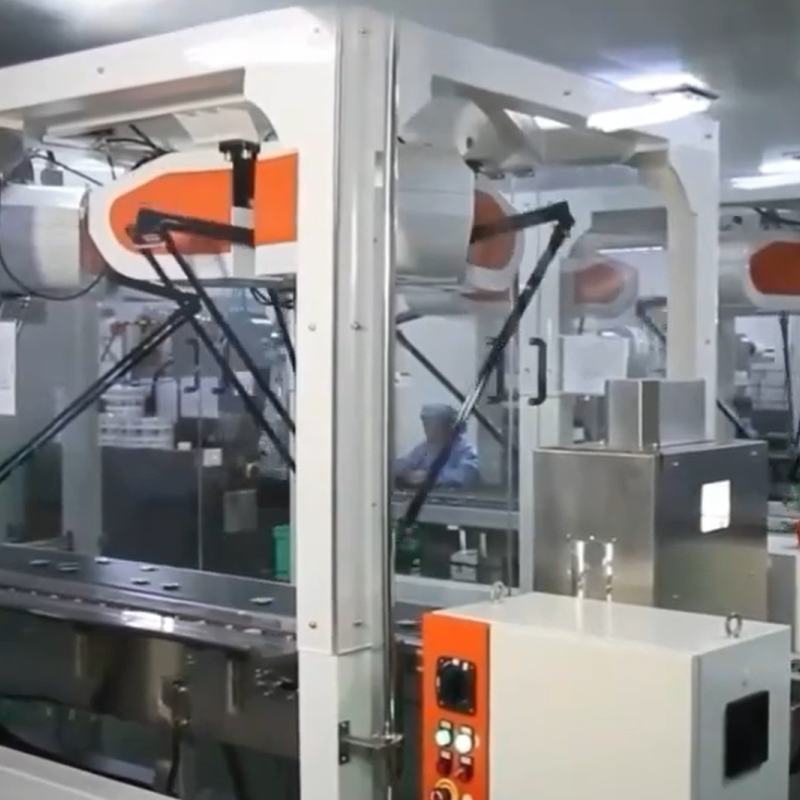
6kg Payload IP54 Protection Grade Pick Place Sorting Parallel Robot with Robot Gripper
A useful first cell for Toronto packagers that need speed, a defined payload, and splash-resistance discussions for wet-wipe, food-adjacent, or dusty environments. Confirm gripper tooling and vision before layout approval.
View product details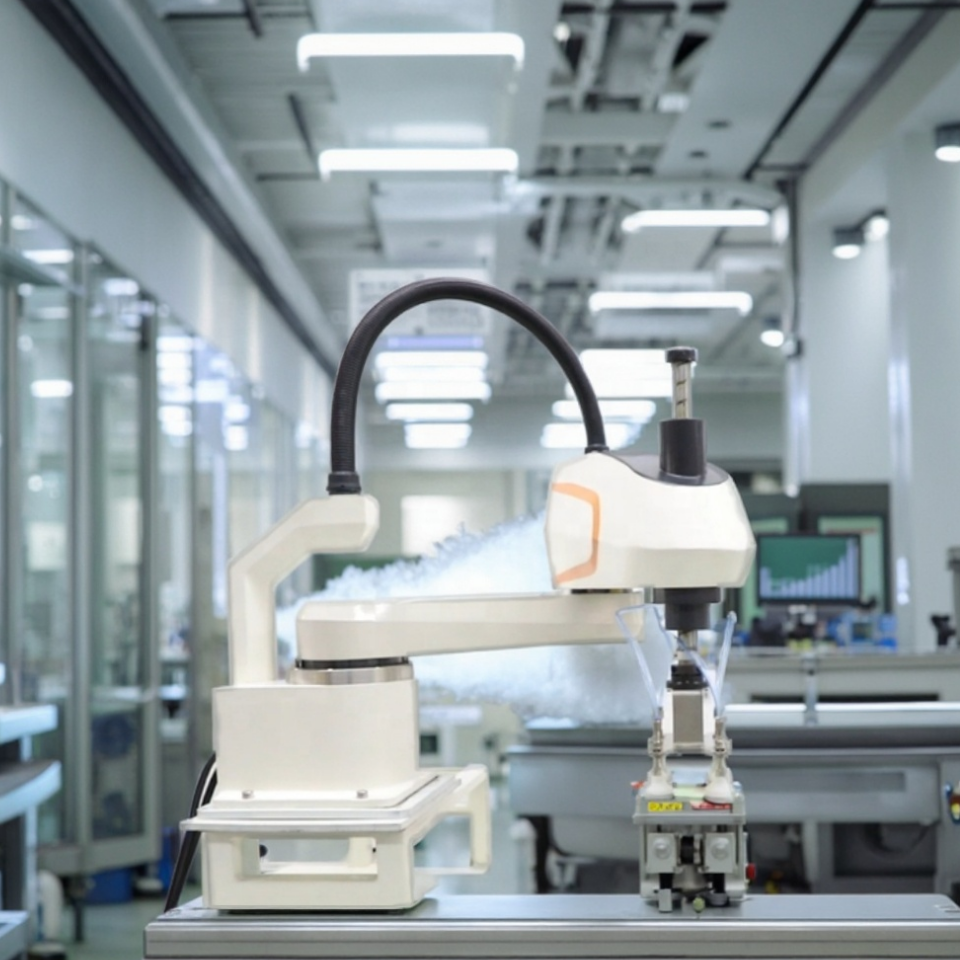
Industrial 4-Aixs Robot Arm Scara Robot Arm with Vision System for Auto Parts Industry
A strong fit for Ontario automotive parts sorting, kitting, inspection handling, and machine tending where part orientation changes. Vision support helps Toronto integrators reduce custom fixturing risk.
View product details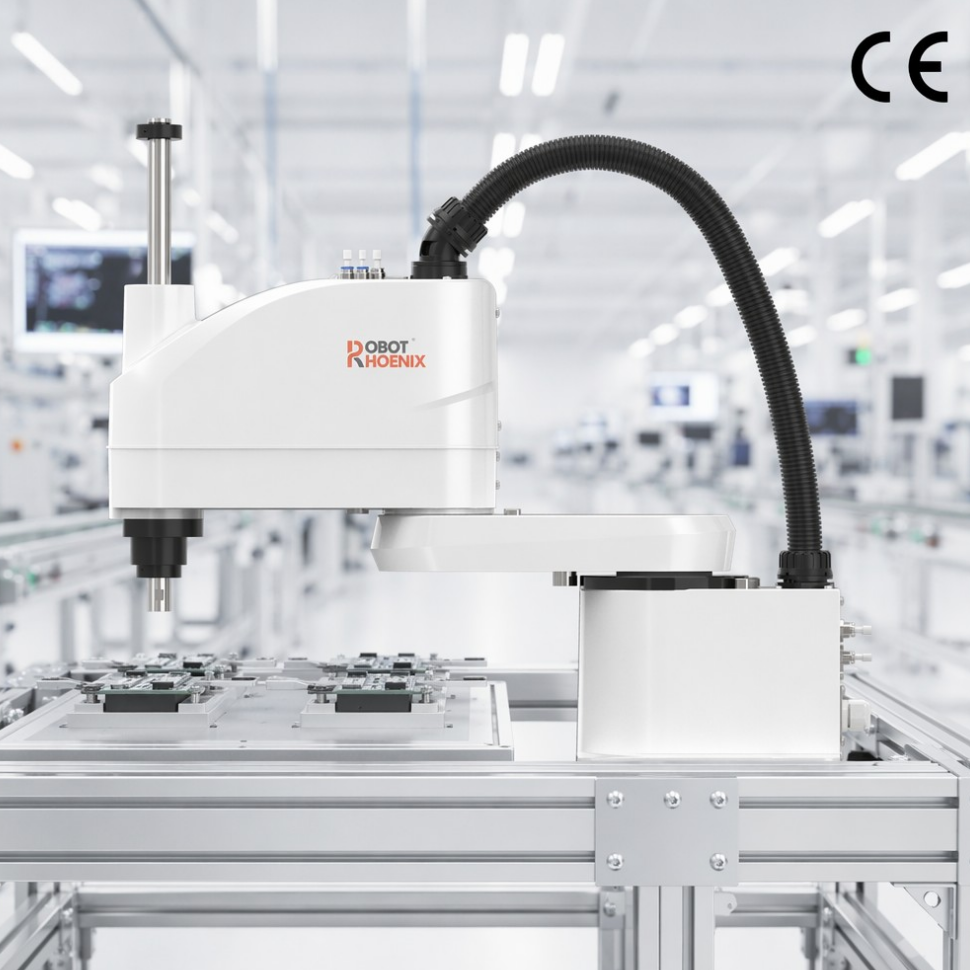
High Speed and Accuracy Newly Developed Industrial Robot Arm Four Axis Scara Robot
Designed for compact assembly and placement cells where cycle time and repeatability are the real buying criteria. A good candidate for GTA electronics, appliance, and medical-device production lines.
View product details
Newly Design Low Price Industrial Manipulator Scara Robot Arm with Integrated Motor
A cost-sensitive platform for wholesalers and end users testing their first automated cell. Integrated motor design simplifies the mechanical envelope, but final electrical and safety integration should still be reviewed locally.
View product details
High-Speed Spider Arm Delat Robot for Fully Automatic Wet Wipe Lid Applicator Machine
This is directly relevant to Toronto-area wet-wipe and daily-chemical converters. The value is in high-speed lid placement plus integration with PLC logic, vision, and existing container handling.
View product details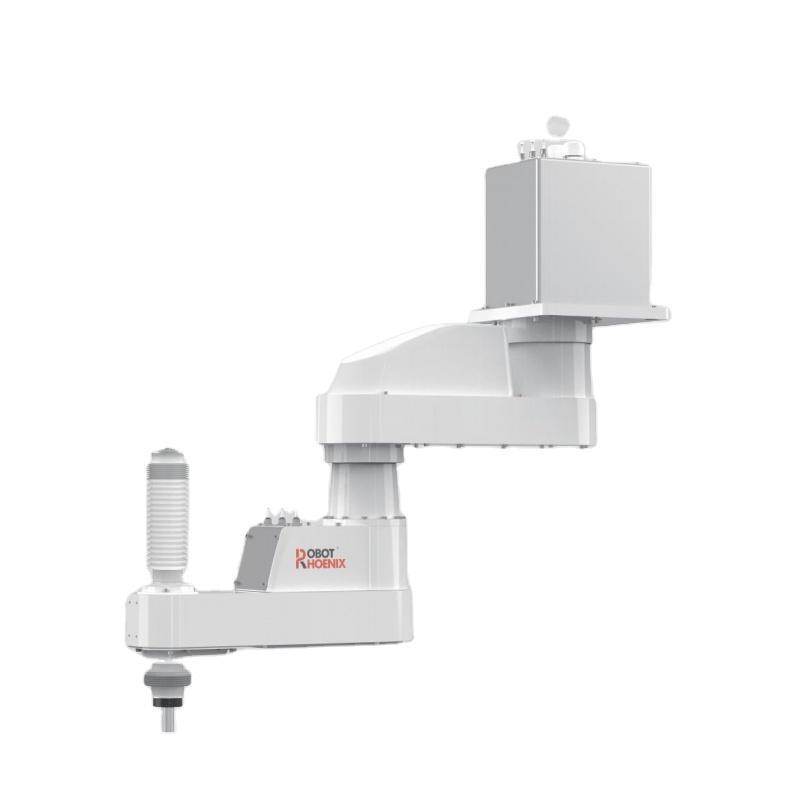
Compact Structure High Precision 550mm Reach Radius 3kg Payload 4-axis SCARA Robot
A 3 kg payload and 550 mm reach make this easy to place in crowded Markham, Vaughan, or Scarborough cells. Suitable for small-part placement, inspection handling, and compact assembly support.
View product details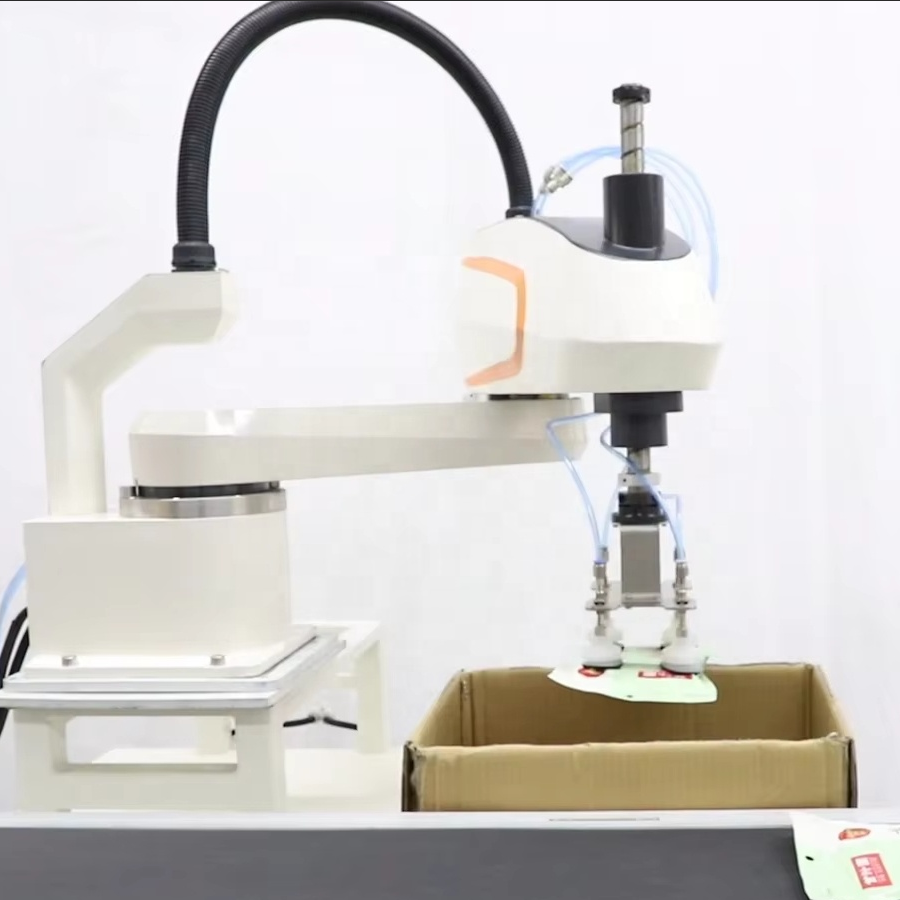
Light Load 4 Axis Industrial Manipulator Robot Scara Robot for Pick and Place Application
A practical option for conveyors, indexing tables, plastics, packaging, and consumer goods where payload is limited but uptime matters. Easy to position as a repeatable wholesale platform for multiple end users.
View product details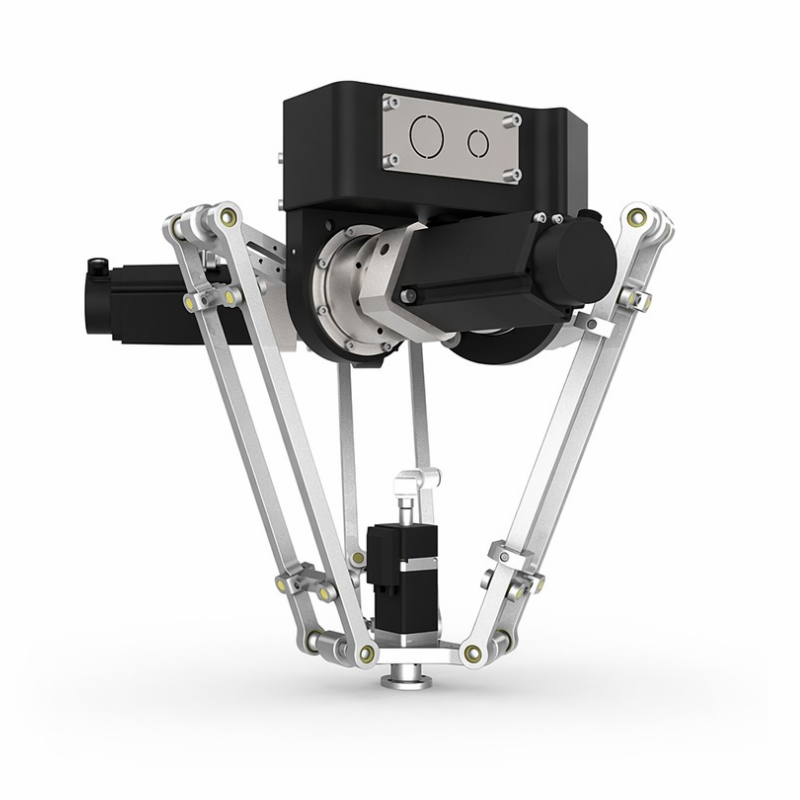
Low Cost Customized 2/3/4 Axis Industrial Manipulator Delta Robot for Pick and Place
Useful for distributors that need a configurable delta platform for dry goods, hardware, or consumer products. Customization should be tied to part geometry, gripper strategy, and target cycle time before quotation.
View product detailsWhat Toronto Buyers Really Need From a China Wholesale End-of-Line Automation Exporter
Toronto searches for end-of-line automation rarely stop at “cheap robot.” Distributors, machine builders, and plant engineers are trying to reduce integration risk, protect cycle time, and buy from a supplier that can answer engineering questions after the Purchase Order.
A search such as “China wholesale end of line automation exporter and wholesalers serving Toronto” combines several user intents. A distributor in Mississauga may be looking for a repeatable SCARA platform that can be quoted to several Ontario customers. A machine builder in Vaughan may need a delta robot inside a wet-wipe lid applicator or carton-packing line. A plant engineer in Scarborough may need a pilot cell that can handle small parts from a conveyor without adding a large footprint. These buyers are not asking for the same product, even if they use similar keywords.
That is why this page separates the robots by application reality rather than by catalogue order. The goal is to provide information gain: not just an image and a model number, but a clear view of which Toronto use case fits which platform, what must be confirmed before ordering, and where the limits of a robot-only supply scope begin. For example, JORI supplies the robot, controller, vision and integration support; the final guarding, conveyors, safety controls, and line commissioning are usually coordinated with a local Toronto integrator and the end user.
A credible supplier should make that boundary transparent. Buyers should be able to compare payload, reach, protection grade, repeatability, vision readiness, controller architecture, OEM options, minimum order quantity, and after-sales response. JORI’s company profile states that standard delta robots, SCARA robots, and AMR/AGV platforms can be ordered from 1 set, which supports pilot-cell validation before scaling to multiple lines.
Three buying intents to separate before you request a quote
- Standard robot for repeat wholesale quoting
- Robot plus gripper, vision, and PLC integration
- OEM delta or SCARA platform for a machine builder
- Pilot cell at MOQ 1 set before line expansion
- Spare-parts and remote-support planning
- Local electrical and safety review with a Toronto integrator
Where Delta and SCARA Robots Fit in Toronto and the GTA
Toronto’s manufacturing base is not a single industry. The GTA includes automotive suppliers, food and beverage processors, life-sciences companies, electronics manufacturers, warehousing operations, and consumer-packaging converters. Each environment changes the robot selection logic.
Automotive parts and Tier suppliers
For automotive parts sorting, kitting, machine tending, and insertion, a SCARA with vision is often the first conversation. Toronto-area suppliers serving the Ontario automotive corridor need error-proofing, fixture repeatability, and clear documentation before production approval.
Food and beverage co-packers
High-speed delta robots support primary and secondary packaging, sorting, and case packing where products arrive randomly on a conveyor. Toronto food processors should discuss hygiene, washdown-adjacent conditions, gripper materials, and protection grade early, not after the cell layout is frozen.
Life sciences and medical devices
Compact SCARA cells fit labs and controlled production rooms where floor space is limited. Toronto medical-device manufacturers should align traceability, cleaning, documentation, and change-control requirements with the robot supplier and the local validation team.
Electronics and 3C assembly
SCARA robots are a practical choice for small-part placement, screwdriving support, inspection handling, and test-cell loading. In Markham, Vaughan, and Toronto tech-manufacturing clusters, compact reach and clean integration often matter more than maximum payload.
Warehouse and distribution support
End-of-line automation often ends at pallet transfer. JORI’s wider portfolio also includes AMR/AGV, autonomous forklifts, and wafer robots. For Toronto distribution centres, the robot cell should be planned together with pallet flow, labels, scanning, and fleet interfaces.
Wet wipes and daily chemicals
Lid application is a classic high-speed delta task. Toronto and GTA converters can evaluate the 6 kg IP54 delta or the dedicated wet-wipe lid applicator delta based on line speed, lid geometry, container spacing, and PLC/vision architecture.
What Is Changing in Toronto End-of-Line Automation Demand?
Local buying behaviour is being shaped by labour availability, flexible packaging, traceability, floor-space pressure, and the need for distributors to support multiple end users without carrying excessive custom inventory.
Labour stability over pure labour replacement
Toronto manufacturers are not only trying to reduce headcount. They want predictable output, repeatable quality, and fewer line stoppages when skilled operators are difficult to schedule.
More SKUs, more changeovers
Flexible packaging and smaller batch sizes push Toronto packagers toward modular cells, recipe-driven changeovers, and robots that can be redeployed as product mixes change.
Vision and traceability expectations
Vision-guided picking, label checks, and part-position confirmation are becoming normal parts of a Toronto automation quotation. Buyers expect the robot supplier and integrator to speak the same data language.
Floor-space efficiency and uptime
GTA plants rarely have unlimited expansion space. Compact SCARA and delta cells that fit existing lines and protect uptime are often more attractive than large greenfield automation projects.
Application fit signal for Toronto sourcing conversations
Indicative fit only. Final selection depends on part weight, cycle time, gripper design, vision, safety, and line layout.
How Toronto Buyers Can Shortlist the Right Robot Cell
Use the comparison below to move from a vague “pick-and-place robot” request to a clear engineering brief. The best supplier conversation starts with the process, not the model number.
| Line requirement | Recommended platform | Why it fits | Toronto procurement note |
|---|---|---|---|
| High-speed lid placement | Wet-wipe lid applicator delta or 6 kg IP54 delta | Fast pick-and-place motion with gripper and vision options for lid handling | Confirm lid geometry, container spacing, PLC logic, and hygiene requirements before the line trial. |
| Automotive parts sorting | 4-axis SCARA with vision | Planar handling, inspection support, and flexible part orientation | Discuss fixturing, error-proofing, documentation, and cycle-time validation with the local integrator. |
| Compact electronics assembly | 550 mm reach 3 kg SCARA | Small footprint and enough reach for crowded cells | Review ESD, cleanroom, electrical compatibility, and safety integration with the plant team. |
| Light-load pick-and-place | Light-load 4-axis SCARA | Cost-effective standard platform for conveyors and indexing tables | Check gripper weight, part presentation, and future SKU expansion before choosing reach. |
| Custom dry goods or hardware picking | Customized 2/3/4-axis delta | Configurable speed and tooling for repeatable pick-and-place | Ask for OEM, buyer-label, and acceptance-test details if you are a Toronto wholesaler or machine builder. |
Why JORI Can Support Toronto Wholesalers, Integrators, and Plant Teams
E-E-A-T is not a badge. It is the combination of real manufacturing experience, engineering capability, verifiable company facts, and the discipline to state what the supplier can and cannot do.
JORI Intelligent Technology Co., Ltd. was founded in 2012 in Jinan, Shandong, China. The company specializes in industrial robot R&D and manufacturing, controller and vision system development, OEM support, and automated system integration. Its product range includes delta parallel robots, SCARA robots, AGV/AMR mobile robots, autonomous forklifts, and silicon wafer handling robots. For a Toronto buyer sourcing an end-of-line automation robot, this matters because the controller, vision, robot arm, and integration support can come from one accountable manufacturing source rather than an untraceable reseller chain.
The company states that its delta, SCARA, wafer, and AGV robots, controllers, and 2D/3D vision are developed in-house and protected by national patents. It also states ISO 9001 quality management, onsite verification, and a factory area of more than 10,000 m², with more than 500 employees. For an Ontario distributor or machine builder, these are useful starting points for supplier qualification, but they should still be combined with project-specific acceptance criteria, documentation review, and local integration planning.
In-house engineering
Robot, controller, and 2D/3D vision development under one roof helps shorten technical clarification and reduce finger-pointing during integration.
OEM and buyer label
OEM service, design service, and buyer-label options support Toronto machine builders and wholesalers who need a repeatable platform behind their own brand.
Verification and quality
ISO 9001, onsite verification, credit profile, trade capacity, and transaction records give procurement teams a more structured supplier review path.
Responsive export support
JORI reports a 97.06% response rate and an average response time of 2 hours or less. That is valuable when a Toronto integrator needs clarification during a live quotation cycle.
 Manufacturing base and company premises in Jinan, Shandong.
 Robot assembly, testing, and production support.
 Engineering and automation project support.
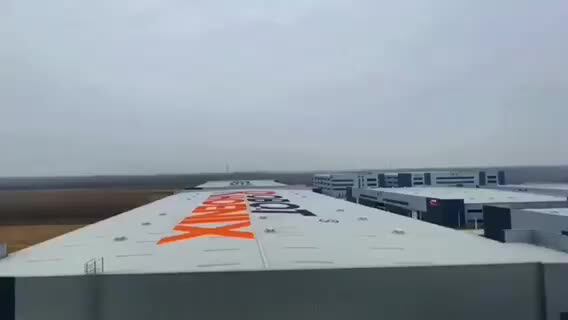 Factory tour content helps Toronto buyers verify capability remotely.
A Practical Buying Process for Toronto Importers and Wholesalers
The strongest quotation is the one built from process evidence, not a model number alone. This four-step playbook helps Toronto buyers compare a China wholesale end-of-line automation exporter on total project value.
Define the process
Share product photos, part weight, dimensions, cycle-time target, upstream and downstream equipment, existing bottleneck, and layout constraints. For a Toronto pilot, include the destination city, available floor space, and operator access requirements.
Confirm integration scope
Clarify who supplies the gripper, vision, conveyor, guarding, PLC, safety relay, and commissioning. Ontario electrical and safety requirements should be reviewed by the local integrator before the robot specification is finalized.
Compare landed project cost
Review Incoterms, freight, brokerage, duties, tooling, spare parts, training, warranty support, and engineering time. A lower robot price can disappear quickly if the integration scope is unclear or spare-part planning is deferred.
De-risk with a pilot
Use MOQ 1 set where possible, request factory evidence, agree on acceptance criteria, and identify critical spares. A single-cell pilot in Toronto can validate cycle time and operator fit before a wholesaler commits to a multi-unit programme.
Common Procurement Questions From Toronto and GTA Buyers
These answers reflect the company information available on JORI’s website and the practical questions Toronto distributors, machine builders, and end users usually ask before a robot cell quotation.
What does “China wholesale end of line automation exporter” mean for a Toronto buyer?
It usually means a China-based manufacturer or exporter that supplies robot modules or automation hardware to distributors, machine builders, system integrators, and end users. The important distinction is whether the supplier is factory-direct and can support engineering clarification after the sale. JORI describes itself as a manufacturer of delta, SCARA, AMR/AGV, forklift, and wafer robots with in-house controller and vision development.
Can I order one robot set for a Toronto pilot cell?
JORI states that standard delta robots, SCARA robots, and AMR/AGV platforms can be ordered from 1 set. That is useful for Toronto buyers who want to validate a single cell, prove cycle time, or test operator acceptance before scaling to multiple lines. Final configuration, tooling, and integration scope are confirmed project by project.
Which robot is best for automotive parts in Toronto?
For automotive parts sorting, kitting, insertion, and inspection handling, a 4-axis SCARA with vision is often the starting point. The vision system helps when part orientation varies. Buyers should provide part geometry, target cycle time, gripper concept, and quality documentation requirements so the robot and fixture strategy can be reviewed together.
Are these robots ready for an Ontario packaging line?
A robot is one part of a packaging line. The final cell still needs guarding, safety controls, conveyor interfaces, PLC logic, vision, gripper design, and commissioning. For Ontario installations, the local integrator should verify electrical compatibility, safety requirements, and any applicable standards. JORI’s PLC-ready delta robots and in-house controller and vision capability can support that integration discussion.
Which shipping terms and payment methods are accepted?
JORI lists delivery terms including FOB, CFR, CIF, EXW, CIP, FCA, CPT, and express delivery. Accepted payment methods include T/T, L/C, credit card, PayPal, Western Union, MoneyGram, and escrow, with currencies including USD, EUR, GBP, JPY, CAD, AUD, HKD, CHF, and CNY. Toronto buyers should confirm the final Incoterm and documentation package in the quotation.
Can JORI support OEM or private-label programmes for Toronto wholesalers?
Yes. JORI provides OEM service, design service, and buyer-label options. The company also supports machine builders with custom end-effectors, controller integration, and automated system integration. Toronto wholesalers should define the target market, expected annual volume, branding requirements, and technical support model before requesting an OEM proposal.
How quickly does JORI respond to technical inquiries?
JORI reports an average response time of 2 hours or less and a 97.06% response rate. For fastest review, include the product or application, part weight and dimensions, cycle-time target, current layout, gripper and vision requirements, destination in Toronto or the GTA, and any local electrical or safety requirements.
What should a Toronto buyer send with the first inquiry?
Send a short process description, product photos or drawings, part weight, dimensions, required throughput, existing equipment, layout constraints, and the desired outcome. If you are a wholesaler or machine builder, also state whether you need a standard robot, OEM label, custom tooling, or a pilot cell. That information lets the supplier recommend a robot family and clarify what must be handled by the local Toronto integrator.
Planning a Toronto End-of-Line Automation Cell?
Send your application details, cycle-time target, and layout constraints. JORI can review the robot platform, gripper and vision requirements, OEM options, and the information needed for a Toronto integrator to quote the full cell.
info@joribot.com