Mobile Robot Factory & Exporters in Boston
A factory-direct guide for Boston procurement, operations and automation leaders comparing mobile robot factories, delta robots, SCARA systems, autonomous platforms and vision-guided pick-and-place for life sciences, electronics, medical devices, packaging, logistics and advanced manufacturing.
8 Factory-Direct Robot Models for Boston Automation Teams
The eight product links below preserve the original product destinations. They are strong starting points for Boston-area teams evaluating high-mix pick-and-place, precision assembly, packaging, wet-wipe lid application and vision-guided transfer. Standard models can be quoted from one set, which supports pilot-first purchasing.
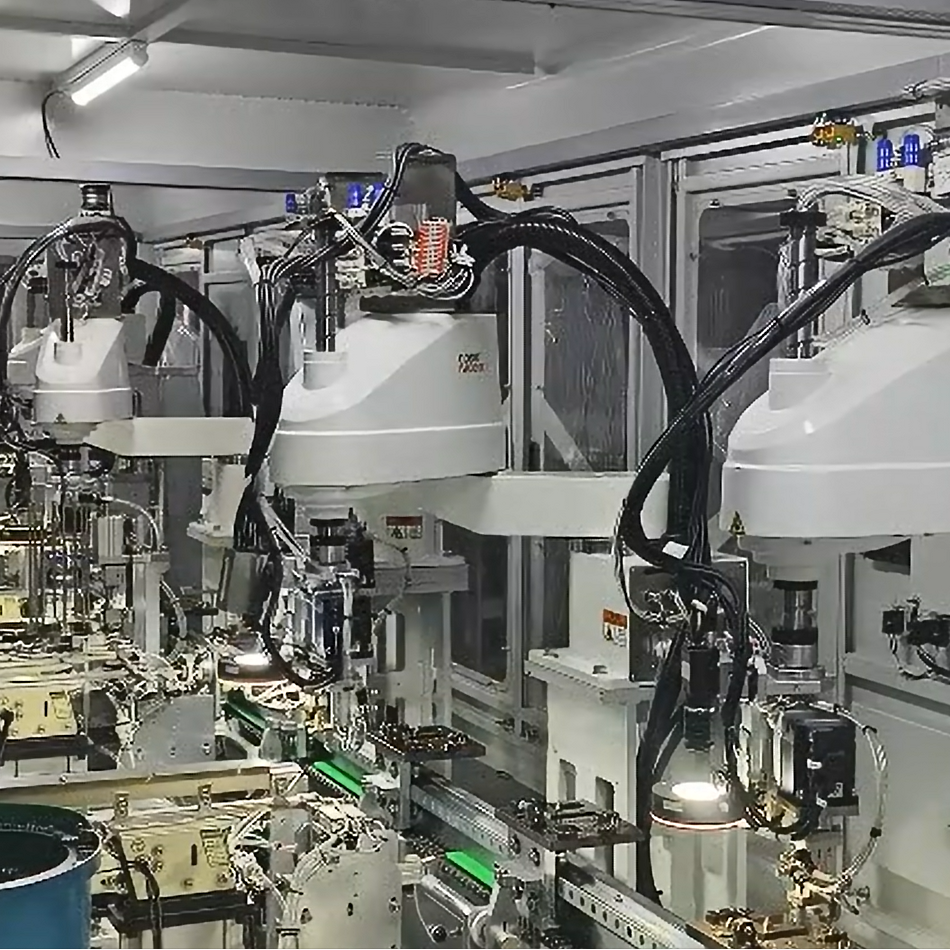
High Quality Mini Industrial Robot SCARA for Pick and Place at Low Cost — New Condition
A low-cost mini SCARA for compact pick-and-place cells, small-part kitting and high-mix laboratory or electronics support where floor space is the constraint.
View model
New Condition High-Speed Industrial Innovative Manipulator Delta Robot for Light Industry
A high-speed delta manipulator for light-industry sorting, feeding and packaging where stable cycle time and repetitive precision matter.
View model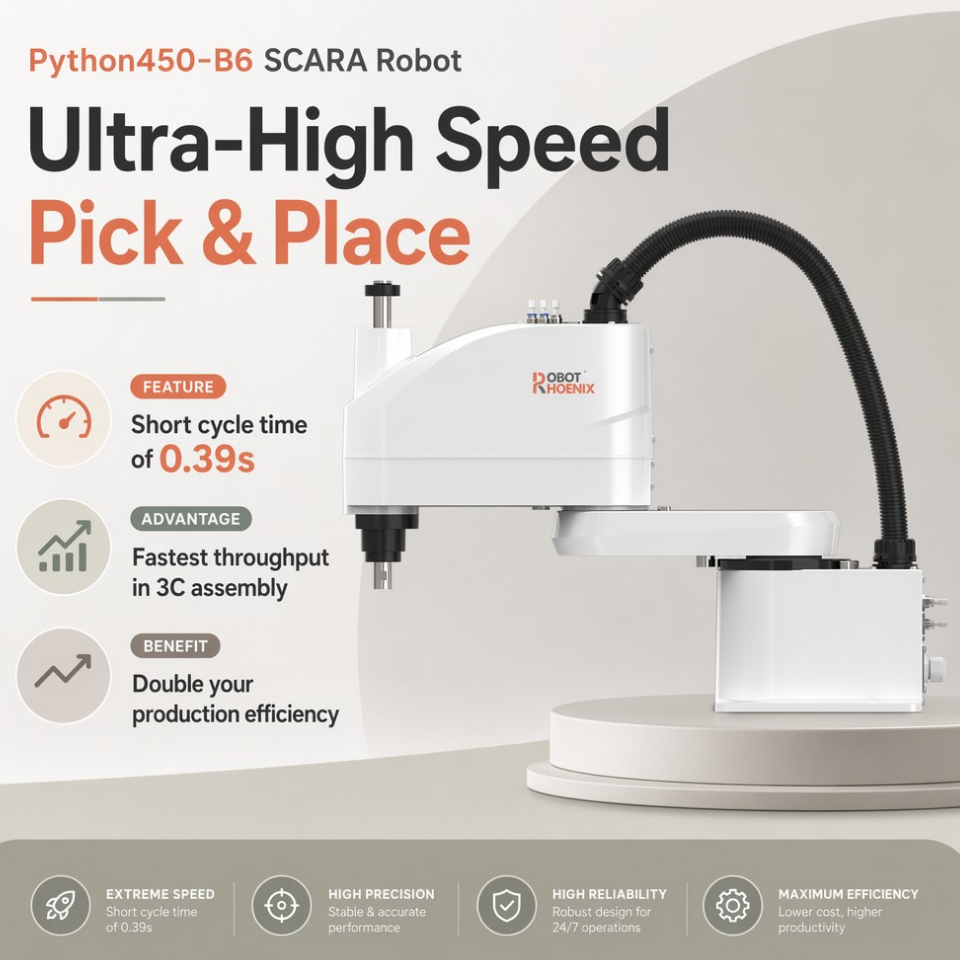
Robotphoenix High Speed Manipulator SCARA Robot with Gripper for Product Accuracy Picking
A high-speed SCARA with gripper for accurate product picking and repeatable placement in inspection-gated transfer and machine-tending cells.
View model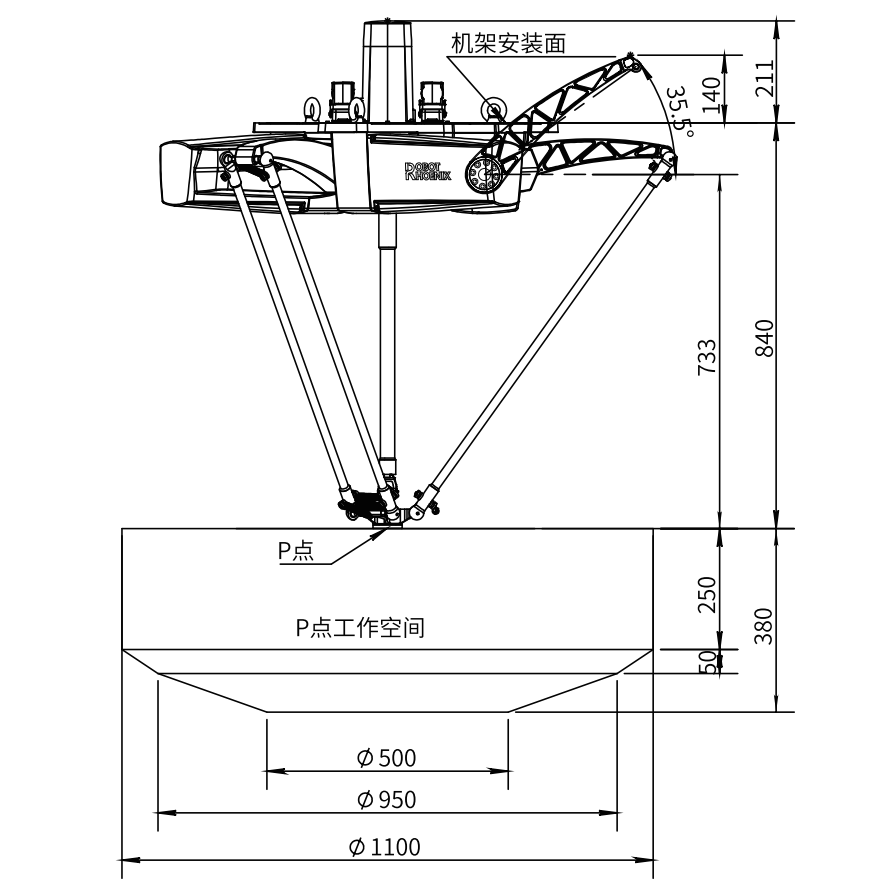
High-Speed Spider Arm Delta Robot for Fully Automatic Wet Wipe Lid Applicator Machine
A spider-arm delta configuration for fully automatic wet-wipe lid application and similar repetitive packaging operations.
View model
High Precision Pick and Place 4-Axis Parallel Robot Delta with Vision Tracking System
A 4-axis parallel robot with vision tracking for moving conveyors, inspection gates and precision pick-and-place where part position varies.
View model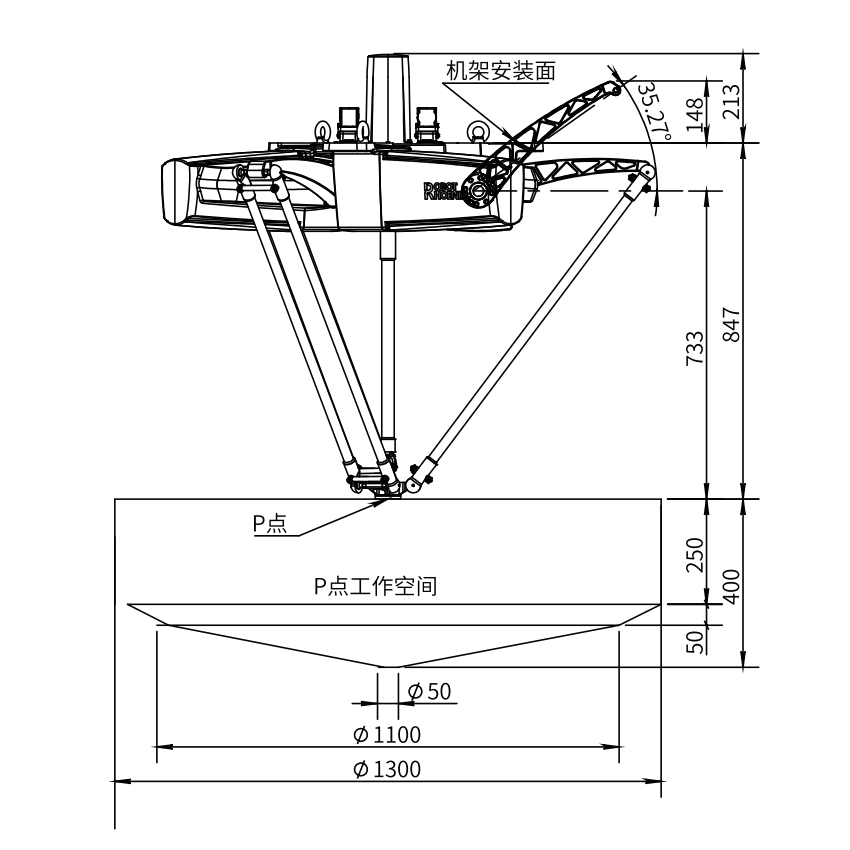
Industrial Robotic Arm Parallel Robot 2/3/4 Axis Delta Robot for Pick & Place Application
A flexible 2/3/4-axis delta platform for industrial pick-and-place and OEM machine integration; suitable for integrators that need a robot platform.
View model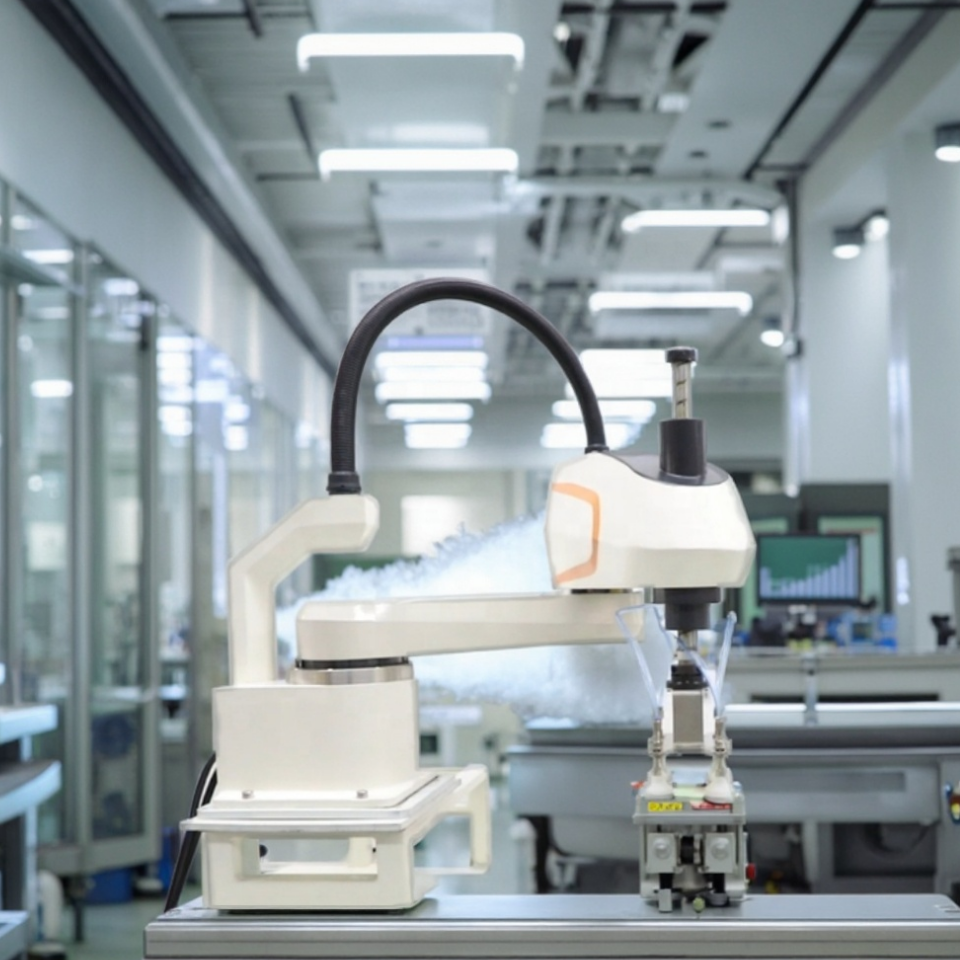
Industrial 4-Axis Robot Arm SCARA Robot Arm with Vision System for Auto Parts Industry
A 4-axis SCARA with vision for auto-parts picking, assembly support and quality-gated transfers, relevant to New England suppliers serving industrial OEMs.
View model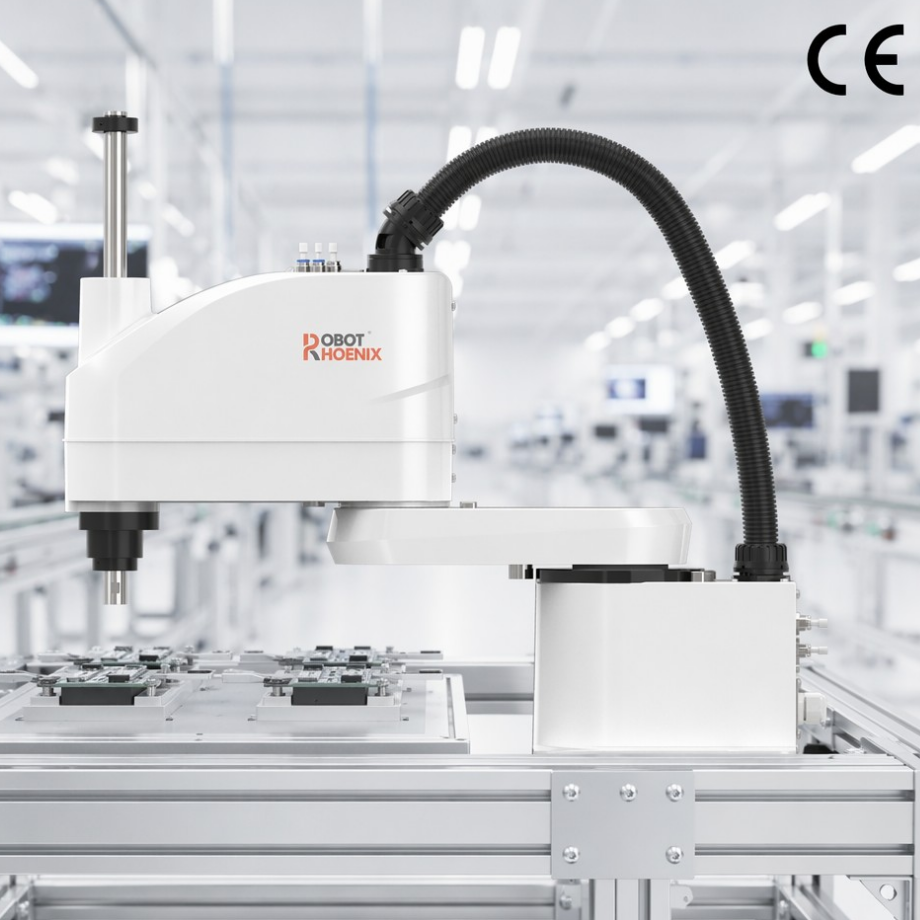
New Design Compact High Accuracy Industrial Robot Arm SCARA with 2D/3D Vision System
A compact high-accuracy SCARA with 2D/3D vision for restricted-footprint assembly and inspection; relevant to Boston labs and medical-device lines.
View modelWhy Mobile Robot Sourcing Is Different in Boston
Boston is not a low-cost, single-process manufacturing market. Its demand is concentrated in high-value, high-regulation and high-mix environments: life-science instruments, medical devices, robotics start-ups, electronics, specialty food, cold chain, warehouse modernization and university research. Facilities are often retrofitted into tight floorplates, so cleanroom access, ESD control, traceability and changeover discipline can matter as much as payload.
For procurement teams comparing mobile robot factories and exporters for Boston projects, catalogue price is only one variable. The stronger questions are whether the supplier can expose engineering evidence, support a one-cell pilot, own the controller and vision stack, integrate with an existing cartoner or lid applicator, and respond quickly when the application changes.
One engineering chain
Robots, controllers and 2D/3D vision are developed under one factory system, reducing hand-off risk between hardware and software.
Verifiable manufacturing
ISO 9001, onsite-verified credentials and national patents help Boston buyers qualify the supplier before a pilot.
OEM-ready integration
OEM, design service and buyer-label options support local machine builders, integrators and private-label automation brands.
Pilot-first commercial model
Standard platforms can be ordered from one set, with a response rate of 97.06% and average reply time of two hours or less.
Boston-Localized Application Scenarios
Boston buyers rarely ask for a robot in isolation. They ask for a reliable cell, interface or material-flow solution that fits a specific facility constraint. These scenarios reflect the application questions that most often appear in Boston and New England procurement discussions.
Life Sciences & Biotech
Precise tray handling, kit assembly, vial and device transfer, and laboratory support where repeatable motion reduces manual variability. Compact SCARA and vision-guided cells are often the first validation step.
Medical Device & Electronics
SCARA assembly, insertion, small-part kitting, adhesive-dispensing support and inspection-gated transfer. The value is not only speed; it is repeatability in a high-mix, regulated production environment.
Food, Seafood & Packaging
Delta robots for high-speed sorting, lid application and cartoning. Boston and New England food processors often need fast changeover, washdown planning and integration with existing end-of-line machines.
Warehouse & Cold Chain Logistics
Laser SLAM AMRs and autonomous forklifts for 400–500 kg pallet movement and repetitive replenishment. Fleet management matters in tight Boston-area facilities where routes change and aisle space is limited.
Advanced Manufacturing & Auto Parts
Vision-guided SCARA for auto-parts picking, assembly support and quality-gated transfer. Delta models support high-speed feeding where light parts arrive randomly on a conveyor.
Research, University & Pilot Labs
MOQ from one set supports teaching cells, grant-funded projects and pilot automation. Engineering teams can validate an end-effector, vision routine or PLC handshake before scaling to a production line.
Boston-Area Trends Shaping Mobile Robot Procurement
Boston's automation market is moving faster than a generic catalogue can capture. These four trends explain why factory evidence, integration depth and information gain now matter more than a simple unit price.
High-mix, low-volume automation
Biotech, electronics and specialty manufacturing teams need robots that can change fixtures, recipes and end-effectors quickly. Compact SCARA and flexible delta platforms are easier to justify than single-purpose machines.
Vision-first retrofits
2D/3D vision is increasingly used to compensate for part variation, conveyor movement and manual loading. A supplier that develops vision in-house can shorten debugging and reduce integration ambiguity.
Laser SLAM intralogistics
Boston warehouses and labs prefer flexible navigation over fixed floor tape. Laser SLAM AMRs and autonomous forklifts let teams reconfigure routes as racks, workcells and cold-chain zones change.
Verification-led purchasing
Procurement teams now ask for trade capacity, transaction records, buyer reviews and factory evidence before a pilot. E-E-A-T is not an SEO slogan; it is a practical filter for supplier risk.
Boston-fit capability indicators
Representative catalogue capabilities that matter when a Boston team compares a local integrator's proposal with a factory-direct exporter's baseline. Final performance is confirmed per model, end-effector and application.
Information gain: always request the model-level datasheet, controller architecture, vision specification and acceptance-test plan.

What to Verify in a Factory-Direct Exporter Before a Boston Pilot
JORI Intelligent Technology Co., Ltd. was founded in 2012 in Jinan, Shandong, China. The company develops robots, controllers and 2D/3D vision in-house and manufactures an original factory portfolio that includes delta parallel robots, SCARA robots, AGV/AMR platforms, autonomous forklifts and silicon wafer handling robots. For Boston buyers, that means a supplier conversation can move beyond reseller claims into controller architecture, end-effector design, PLC handshakes, vision routines and acceptance-test planning.
- ISO 9001 quality management system
- Onsite-verified manufacturer credentials
- National patents on robot and control technology
- OEM, design service and buyer-label support
- One-stop automation integration capability
- MOQ from one set for standard platforms
- Delivery terms: FOB, CFR, CIF, EXW, CIP, FCA, CPT and express
- Payment terms: T/T, L/C, credit card, PayPal and more
Quick Selection Guide: Which Robot Family Fits the Boston Project?
Use this comparison to prepare a more precise inquiry. The goal is not to force every Boston application into one robot family; it is to match the work envelope, cycle time, cleanliness requirement and integration path to the right platform.
| Robot Family | Best for in Boston | Evidence to request | Shortlist signal |
|---|---|---|---|
| Delta Parallel Robot | High-speed picking, sorting, labeling, wet-wipe lid application and cartoning | 3–6 kg payload options, 0.08 mm repeatability, IP54 version, 120 pcs/min labeling reference, vision and PLC integration | Light products arrive randomly on a conveyor and cycle time is the bottleneck. |
| SCARA Robot | Assembly, insertion, precise placement, small-part kitting and electronics support | 4-axis architecture, compact footprint, mini low-cost model options, controller interface and vision specification | You need accurate planar moves in a small cell where operators or floor space are constrained. |
| AMR / AGV | Material transport between stations, labs, warehouses and production zones | 400–500 kg payload platform data, laser SLAM navigation, fleet management, route-planning method and safety configuration | Operators spend hours pushing carts and the layout changes more often than fixed conveyors can support. |
| Autonomous Forklift | Pallet handling in warehouses, cold-chain zones and repetitive replenishment | Camel Series configuration, laser SLAM navigation, pallet recognition, site-layout planning support and charging strategy | Repetitive pallet shuttles run across shifts and labor availability is a recurring constraint. |
| Wafer Handling Robot | Semiconductor and photovoltaic wafer transfer where fragile substrates need smooth handling | Motion-control architecture, end-effector customization, cleanliness requirements and acceptance-test criteria | Fragile or high-value substrates require repeatable, contamination-conscious transfer. |
Figures reflect current catalogue models and typical application ranges. Final specifications must be confirmed per configuration, end-effector and site requirements.
A Low-Risk Path from Boston Inquiry to Pilot Cell
Factory-direct purchasing works best when the application data is clear. A structured four-step process reduces engineering ambiguity and gives Boston buyers a defensible basis for pilot approval.
Send the real constraint
Share a part photo or video, weight, cycle time, conveyor behavior, available footprint, cleanroom or ESD requirement, PLC details and the target acceptance test.
Engineer the interface
Confirm end-effector, vision routine, controller handshake and safety boundary. Ask for model-level drawings and a clear list of what the factory supplies versus what the local integrator supplies.
Validate with one cell
Use the one-set MOQ to run a pilot, FAT or sample test. Capture cycle time, repeatability, changeover time and operator feedback before scaling the line.
Scale with OEM support
Roll out additional cells with consistent controllers, vision settings and spare-part planning. OEM and buyer-label options help local machine builders protect their brand.
Local Procurement Questions Asked by Boston Buyers
These are the practical questions that appear in first-round supplier screening. Clear answers reduce back-and-forth and help procurement compare total risk, not just the unit price.
Is JORI a mobile robot factory or a trading company?
How do Boston buyers handle shipping, import and delivery terms?
Can the robot meet U.S. electrical and safety requirements?
Which robot is best for a Boston life-science or medical-device application?
What is the minimum order quantity and typical lead time?
Does JORI offer OEM, private label or custom end-effectors?
Can the robot integrate with existing packaging machines or PLC lines?
How can a Boston buyer verify quality before placing an order?
Request the 2025 Boston Robot Catalogue
Share your part, cycle time, footprint, conveyor behavior and integration requirements. The factory team can recommend a model, confirm MOQ from one set and outline the information needed for a Boston pilot-cell review.
Factory-direct R&D since 2012 · ISO 9001 · OEM support · Average reply within 2 hours