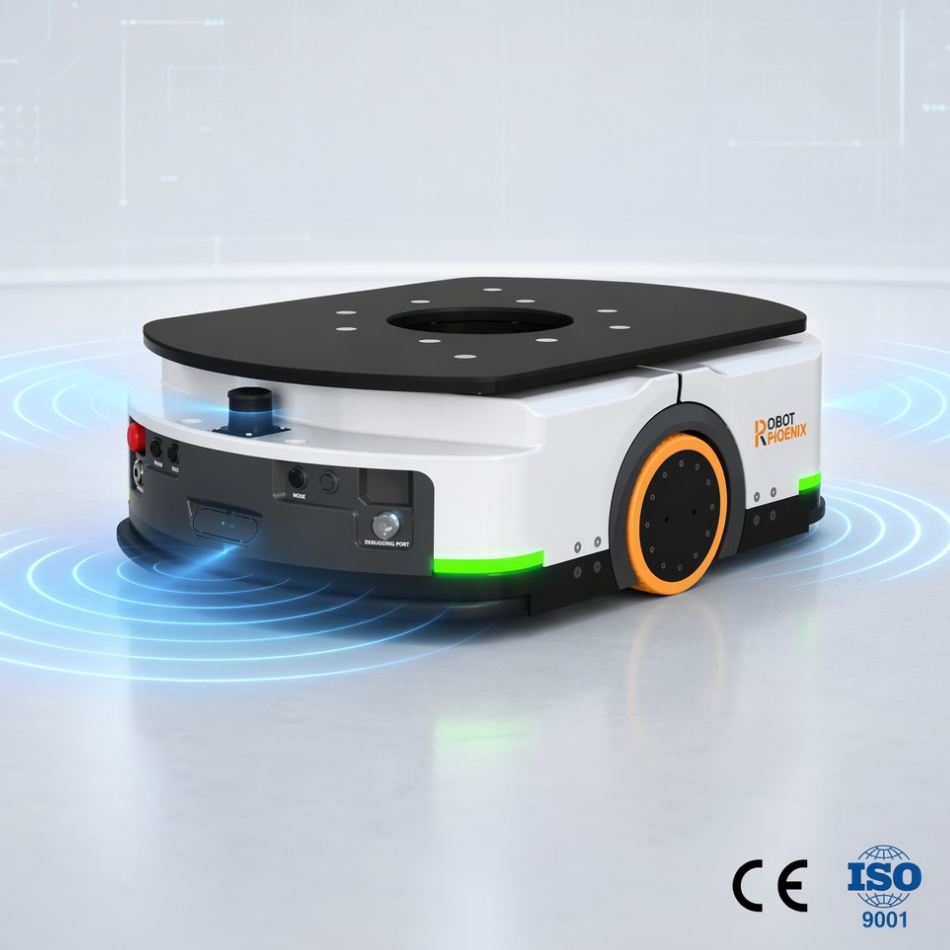
Compact and Latent Mobile Robot AGV for Narrow Aisle Warehouse and Factory Transportation
For line-side replenishment and finished-goods movement where aisle width, turning radius, and low-profile clearance matter.
View productThese models are relevant to buyers building or upgrading precision assembly, pick-and-place, carton packing, 3C electronics, and narrow-aisle logistics across Hai Phong’s industrial zones. Product links are preserved for direct technical review.

For line-side replenishment and finished-goods movement where aisle width, turning radius, and low-profile clearance matter.
View product
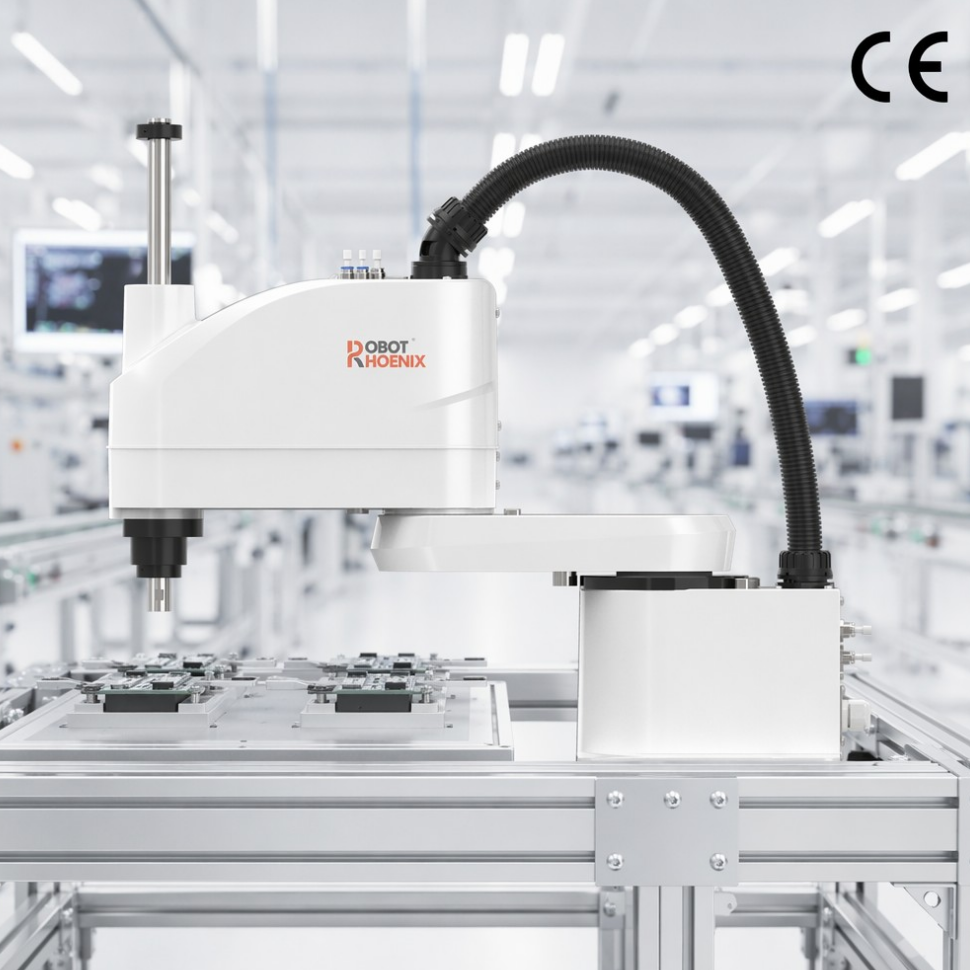
A practical entry point for connectors, small components, sorting, and light assembly cells with space constraints.
View product
For compact 3C electronic assembly cells that need PLC coordination, consistent small-part placement, and controlled reach.
View product
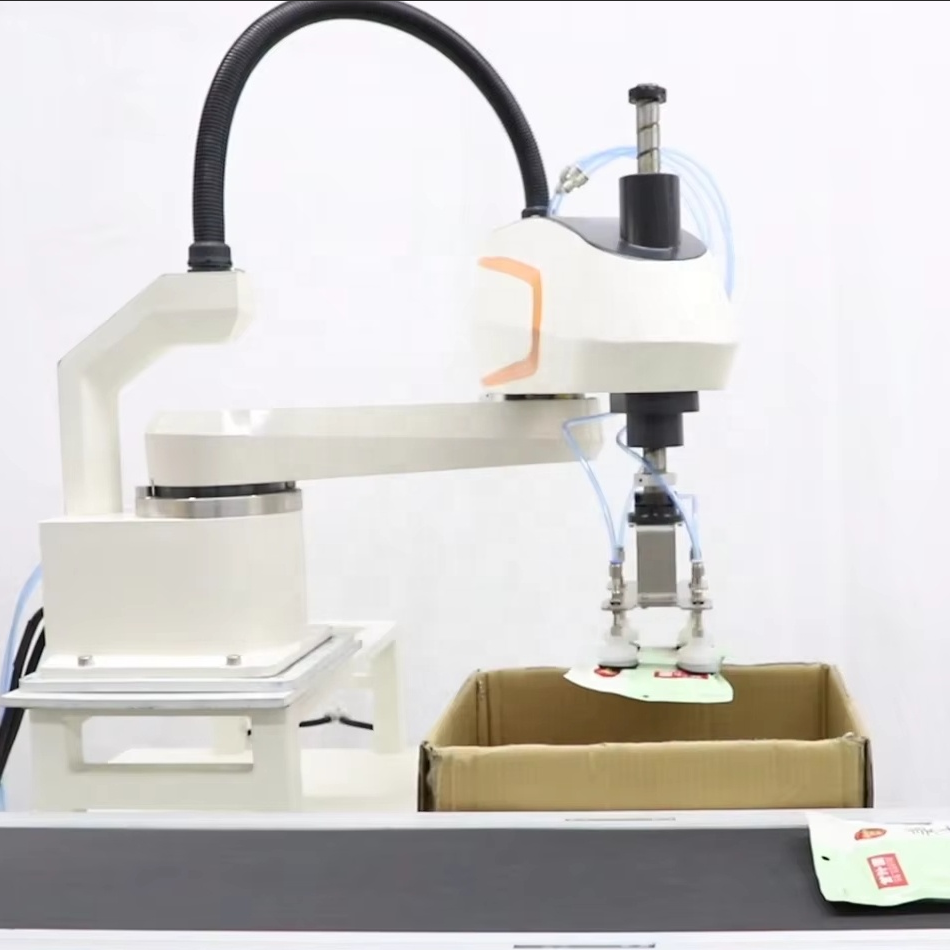
When a Hai Phong line needs fast planar handling and simple layout integration without a larger articulated footprint.
View product
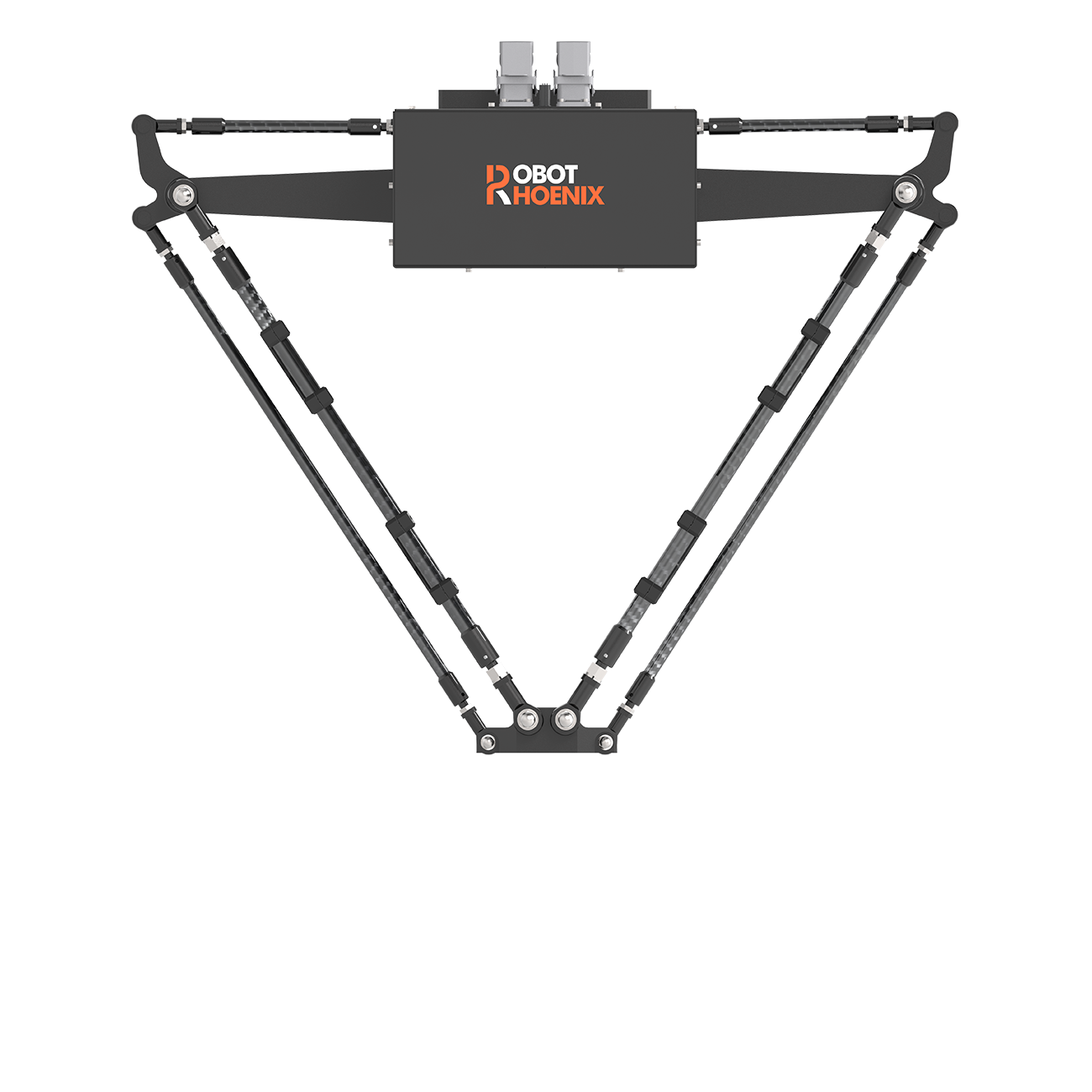
For end-of-line carton packing, top loading, and high-speed sorting where synchronized motion reduces bottlenecks.
View product
For precision assembly and handling tasks where rigidity, reach stability, and tooling repeatability drive scrap reduction.
View product
For repetitive pick-and-place where stable high-speed motion, compact mechanics, and reduced rejected picks matter.
View product
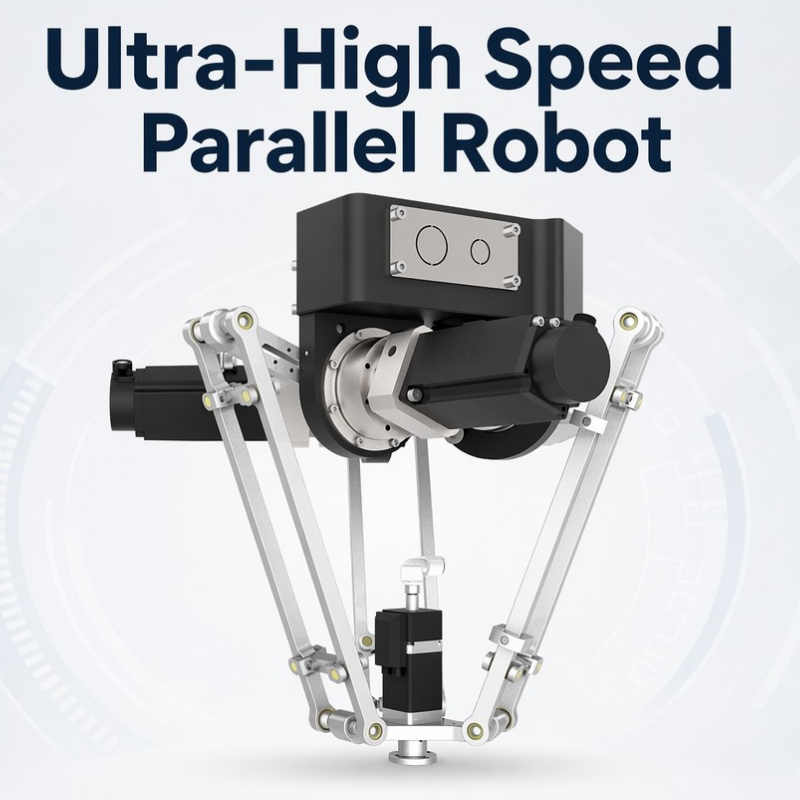
For machine builders and integrators needing a parallel robot matched to custom grippers, sortation logic, and line layout.
View productHai Phong has become a strategic production gateway for northern Vietnam. The city combines the Lach Huyen deep-water port, Dinh Vu–Cat Hai Economic Zone, Deep C industrial parks, Trang Due, Nam Cau Kien, and a growing network of electronics, automotive, packaging, and logistics suppliers. For plant teams in these zones, precision assembly robots are not bought as stand-alone showroom machines. They are bought to protect takt time, stabilize quality, reduce operator fatigue, support traceability, and absorb product changeovers without stopping the line.
The toughest cost in Hai Phong is often not the robot’s purchase price. It is the unplanned changeover, an end-effector that cannot handle the full part family, a PLC handshake that delays commissioning, a vision setup that rejects good parts under factory lighting, or a spare-part delay that turns a minor fault into a full-shift loss. That is why a serious robot shortlist should be built around the manufacturing system—not the catalogue ranking.
JORI Intelligent Technology Co., Ltd. is an original robot manufacturer founded in 2012 in Jinan, Shandong. The company develops delta robots, SCARA robots, AGV/AMR platforms, autonomous forklifts, wafer-handling robots, robot controllers, and 2D/3D vision in-house. Its public company profile lists ISO 9001 quality management, onsite-verified manufacturer status, OEM and design services, a 500+ workforce, a 10,000 m² factory area, and a 97.06% response rate with an average reply of two hours or less. For buyers in Hai Phong, that means one accountable engineering source across robot selection, controller integration, vision, end-of-arm tooling, documentation, and after-sales support.
A factory-direct wholesaler model can also reduce the friction between a local integrator and the robot factory. Instead of a reseller chain that loses technical detail, the buyer can keep the specification, acceptance criteria, spare-parts list, and training plan connected to the people who build the robot. That does not replace local integration expertise. It strengthens it.
Hai Phong’s manufacturing mix rewards robots that can be integrated quickly, documented clearly, and supported across a wide range of part families. The most useful selection lens is the production problem, not the robot type alone.
For compact cells near Trang Due, VSIP Hai Phong, and Dinh Vu, SCARA robots with PLC coordination and vision can support small-part placement, screw-driving interfaces, adhesive dispensing, inspection loading, and connector assembly. The value is stable planar motion in a small footprint, plus a controller platform that can be documented for local integrators.
Automotive and EV suppliers in northern Vietnam need repeatable handling, traceable process data, and disciplined change control. SCARA and delta systems can handle clips, housings, seals, small brackets, inspection fixtures, and packaging support. Buyers should request cycle validation with the real gripper and part family—not a bare robot demonstration.
Delta robots are a strong fit for high-speed pick-and-place, lid handling, carton loading, sorting, and packer-line synchronization. For factories producing personal-care, household, food, or wet-wipe products, the acceptance test should include product variation, conveyor tracking, reject handling, and cleaning routines—not only maximum pick rate.
AGV/AMR and autonomous forklift options align with line-side replenishment, finished-goods transfer, pallet shuttling, and narrow-aisle warehouse layouts. In multi-shift operations, fleet management, charging strategy, traffic rules, and floor-marking discipline matter as much as payload. A pilot route with real congestion data is usually more valuable than a large theoretical layout.
Machining, stamping, and injection-molding suppliers often need machine tending, deburring support, insert loading, or inspection transfer. A robot should be selected with tooling stiffness, part presentation, chip/oil protection, and operator-safe access in mind. IP rating and corrosion protection deserve early attention in humid coastal conditions.
For new-product introduction teams, a single robot cell can validate tolerances, fixture design, operator workflow, and data capture before full automation. The original JORI catalogue supports MOQ from one set for standard delta, SCARA, and AMR/AGV platforms, which makes a controlled pilot practical before scaling a line in Hai Phong.
Buyers should separate durable trends from short-term hype. In Hai Phong, the strongest signals come from production complexity, port-linked logistics, workforce productivity, and energy-aware factory planning.
Electronics and consumer-goods factories increasingly run more variants per shift. Robots need quick tooling changes, recipe management, vision flexibility, and documentation that helps local engineers adapt instead of locking the line to one product.
Hai Phong’s port and industrial-zone ecosystem puts a premium on material flow between warehouses, production buildings, and dispatch areas. Laser SLAM AGV/AMR and autonomous forklifts reduce dependence on fixed floor paths when layouts change.
As production expands, operators and maintenance technicians are stretched across more lines. The winning robot package includes intuitive HMI, clear fault recovery, structured training, and remote engineering support—not only a high-speed arm.
Over-specifying a robot can waste power, space, and capital. Right-sizing payload, cycle time, and controller capacity is becoming part of factory sustainability planning, especially where uptime and electricity cost are tracked together.
For Hai Phong buyers, the supplier should be able to explain how the robot is built, controlled, tested, documented, and supported. JORI’s advantage is the combination of original manufacturing and application-level integration.
JORI develops its own robot controllers and vision systems. That matters when a Hai Phong cell needs non-standard part detection, conveyor tracking, or a PLC data handshake that cannot be solved by a generic box-mover.
Machine builders and distributors can request OEM service, design service, buyer-label options, and custom end-effectors. This supports local integrators who need factory-level customization without building their own robot platform.
The company profile reports ISO 9001 quality management and onsite verification. For procurement teams, these are starting points for due diligence—not a substitute for factory acceptance tests, serial-number traceability, and warranty review.
From delta cells for cartoning to SCARA cells for 3C assembly, JORI supports robot selection, end-of-arm tooling, controller integration, and automated system integration. Buyers can reduce the interface risk between robot, gripper, vision, and line PLC.
The original company data states a 97.06% response rate and average response time of two hours or less. Accepted terms include FOB, CFR, CIF, EXW, CIP, FCA, CPT, and express delivery, with T/T, L/C, card, and other payment options subject to order review.
JORI serves buyers in Southeast Asia, Eastern Europe, North America, South America, and China. For Hai Phong projects, that experience can translate into clearer packing, voltage confirmation, documentation, and spare-parts planning.


Use this comparison as an early filter, then confirm with part trials. Payload alone is a weak selection criterion; the real question is whether the robot can hold the required cycle time and quality window across the full product family.
| Robot family | Best for | Why it matters in Hai Phong | Ask before ordering |
|---|---|---|---|
| Series 01Delta parallel robot | High-speed picking, sorting, carton loading, conveyor tracking | Supports packaging and FMCG lines where throughput and stable motion reduce end-of-line bottlenecks. | Cycle validation with real products, tracking accuracy, reject handling, and cleaning access. |
| Series 02SCARA robot | Planar assembly, insertion, placement, light handling | Compact cells suit electronics and component assembly in multi-tenant industrial zones. | Reach, repeatability, PLC handshake, gripper weight, and operator-safe layout. |
| Series 03Compact AGV / AMR | Line-side replenishment, narrow-aisle transfer, warehousing | Port-linked logistics and changing layouts reward flexible navigation over fixed floor paths. | Route pilot, traffic rules, charging strategy, fleet management, and floor conditions. |
| Series 044-axis SCARA configuration | Fast planar pick-and-place with simple integration | Useful where footprint and ROI matter more than complex multi-plane articulation. | Peak rate, payload with tooling, fixture tolerance, and changeover time. |
| Series 05Customized delta system | Sortation, custom pick-and-place, integrated packaging cells | Machine builders need a parallel robot that fits their gripper and control architecture. | End-effector design, line protocol, safety concept, spare parts, and acceptance criteria. |
Record part variants, tolerances, cycle time, presentation method, and operator tasks. Identify the true bottleneck before choosing a robot.
Confirm reach, payload with tooling, gripper approach, safety zones, and PLC data exchange. Validate the layout in the real cell envelope.
Run the actual part family, verify cycle time, reject handling, recovery logic, vision tolerance, and documentation before shipment.
Check installation, voltage, grounding, compressed air, safety, and operator response. Train maintenance and line leaders with recorded procedures.
These answers reflect the company data and application logic available in the original product and company materials. Final terms should always be confirmed in the quotation and technical agreement.
Share your part family, target cycle time, gripper concept, PLC protocol, and site constraints. The right conversation is not “which robot is cheapest?” but “which configuration reaches stable production with the lowest total cost of ownership?”
info@joribot.com · Include drawings, part photos, and cycle-time targets for a faster response.