Robot Vision Module Factories & Supplier Serving the United States Market
JORI builds delta, SCARA, parallel and mobile robot platforms with self-developed controllers and vision—engineered for U.S. machine builders, systems integrators and plant teams that need faster picking, repeatable quality and lower integration risk.
Vision-Ready Robots for U.S. Pick-and-Place, Assembly and Packing Projects
These eight industrial robot platforms are practical starting points for U.S. buyers comparing cycle time, payload, footprint, PLC integration and in-line vision. Every product link is preserved from the original catalogue.


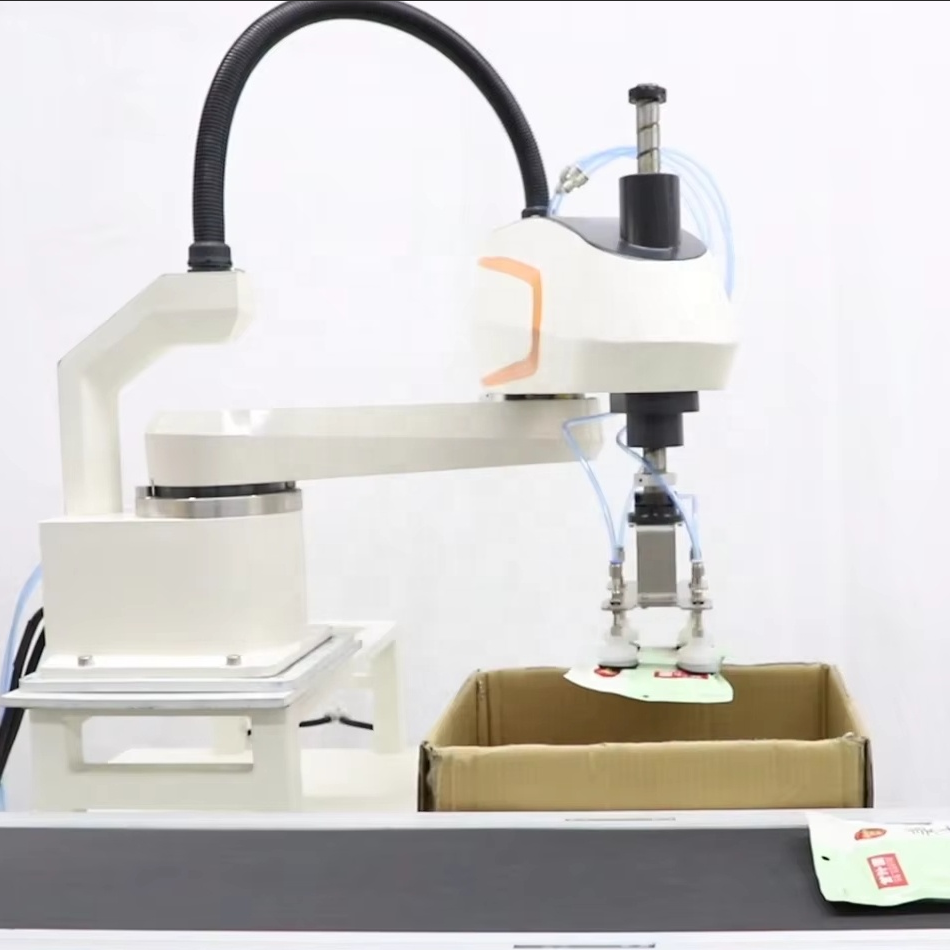
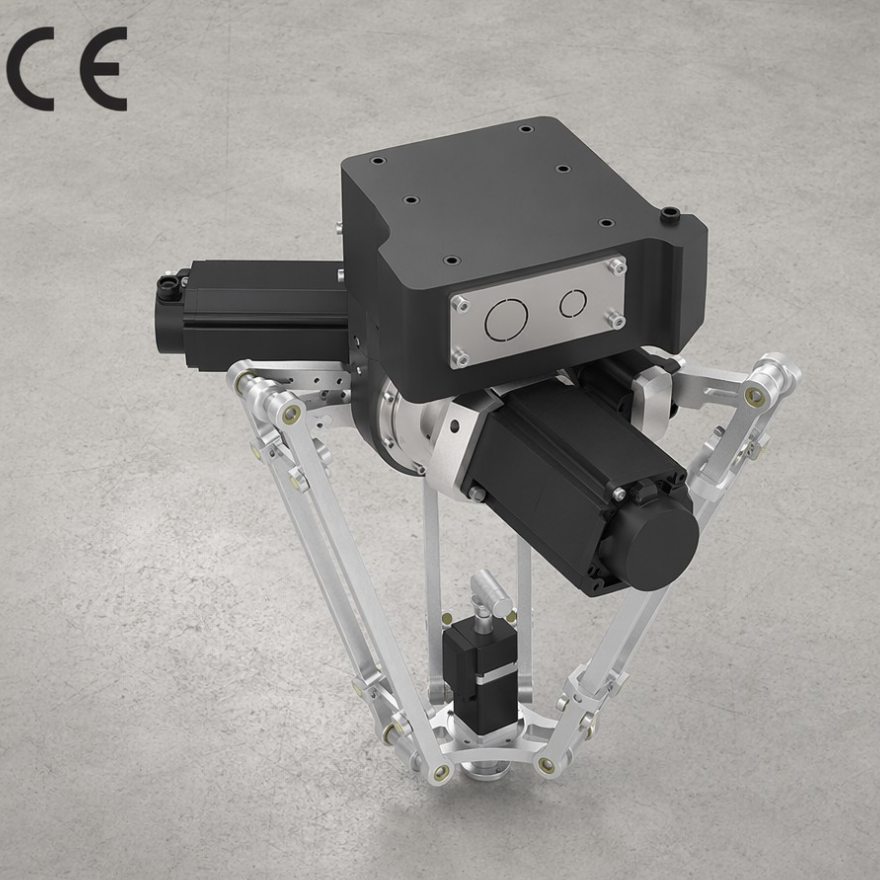
A Factory-Direct Robot Vision Module Supplier—Not a Catalogue Reseller
The United States is not one buying market. A co-packer in California, a medical-device plant in New Jersey, an electronics assembler in Texas and a fulfillment center in Atlanta evaluate robot vision modules against very different constraints: washdown routines, changeover frequency, validation paperwork, operator skill levels, floor space and uptime risk.
A robot vision module is more than a camera mounted near a robot. It combines imaging, lighting, lens choice, calibration, part-presentation control, communication with the robot controller and acceptance logic. The module succeeds when the robot, controller and vision software behave as one production system. That is why JORI develops delta robots, SCARA robots, controllers and 2D/3D vision together rather than assembling unrelated components.
For U.S. buyers, the most useful supplier is one that can answer engineering questions before the purchase order, document what will be tested during factory acceptance, and support the integrator after installation. JORI has manufactured industrial robots since 2012, operates a 10,000+ m² factory, supports OEM and buyer-label projects, and maintains an average inquiry response time of about two hours.
What U.S. Procurement Teams Should Verify
Application fit: part weight, orientation, cycle time, changeover and reject handling.
Integration fit: PLC handshake, safety controls, electrical requirements, vision output and line layout.
Supplier fit: factory ownership, controller development, documentation, spare-parts planning and response speed.
What to Define Before Requesting a U.S. Robot Vision Quote
Strong quotes begin with measurable inputs—not a product name. These six items help U.S. buyers compare suppliers on equal terms and reduce late-stage integration changes.
Payload and Part Presentation
Confirm gripper weight, product weight, center-of-gravity offset, incoming orientation and whether parts arrive randomly on a conveyor or in fixed nests. A 3–6 kg delta robot may be ideal, but the effective moving mass includes the end-effector.
Cycle Time and OEE Target
Give the required picks per minute, allowable miss rate, infeed variation and planned operating hours. U.S. plants often justify automation on throughput, scrap reduction, overtime avoidance and repeatable quality—not robot speed alone.
Vision Acceptance Criteria
Define the defects or features the vision system must detect, the smallest feature size, lighting conditions, tolerance and reject action. “Vision-guided” is not a specification; calibration, resolution and pass/fail logic are.
Controls and Safety Integration
Share PLC brand, communication expectations, line-stop logic, guarding strategy and who will perform risk assessment. Final electrical and safety compliance must be confirmed for each U.S. installation by the responsible integrator and facility owner.
Environment and Changeover
State whether the cell needs IP54 protection, cleanroom-compatible motion, washdown-adjacent placement, mixed-SKU recipes or quick end-effector changes. Environmental requirements should be discussed before model selection.
Service, Spares and Documentation
Ask for drawings, I/O lists, recommended spare-parts lists, software backup expectations and remote-support process. A vision cell is a long-term production asset, so documentation quality is part of the total cost of ownership.
Where Robot Vision Modules Create Measurable Value in the United States
U.S. manufacturers are deploying vision-guided robotics to stabilize output amid labor shortages, high-mix production and quality-traceability pressure. The application determines whether a delta, SCARA, parallel or mobile platform is the better starting point.
Food & Beverage Packaging
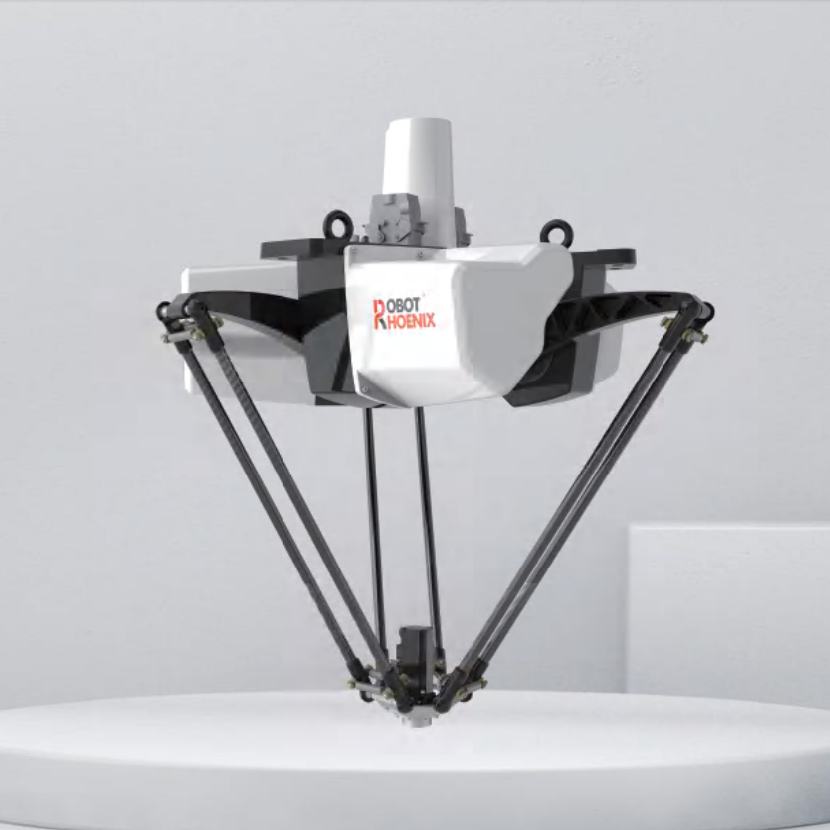
Co-packers and food processors use high-speed delta robots for sorting, labeling, tray loading and case packing. For splash-prone zones, specify the 6 kg IP54 parallel robot only after confirming washdown and hygiene expectations with the facility’s food-safety team.
Pharmaceutical & Medical Devices
Compact SCARA cells support vial, blister, pouch and device handling where repeatability and documentation matter. U.S. buyers should align validation, change-control and cleaning procedures with the vision module’s inspection logic.
Electronics & 3C Assembly
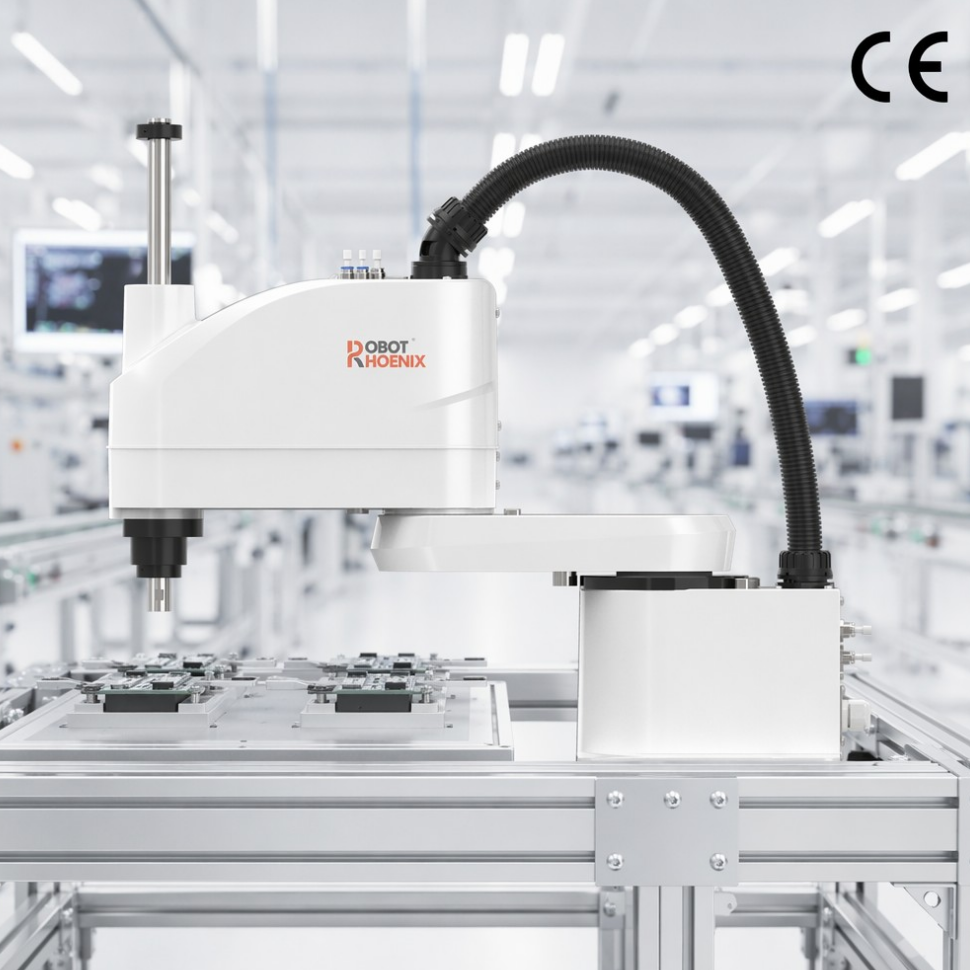
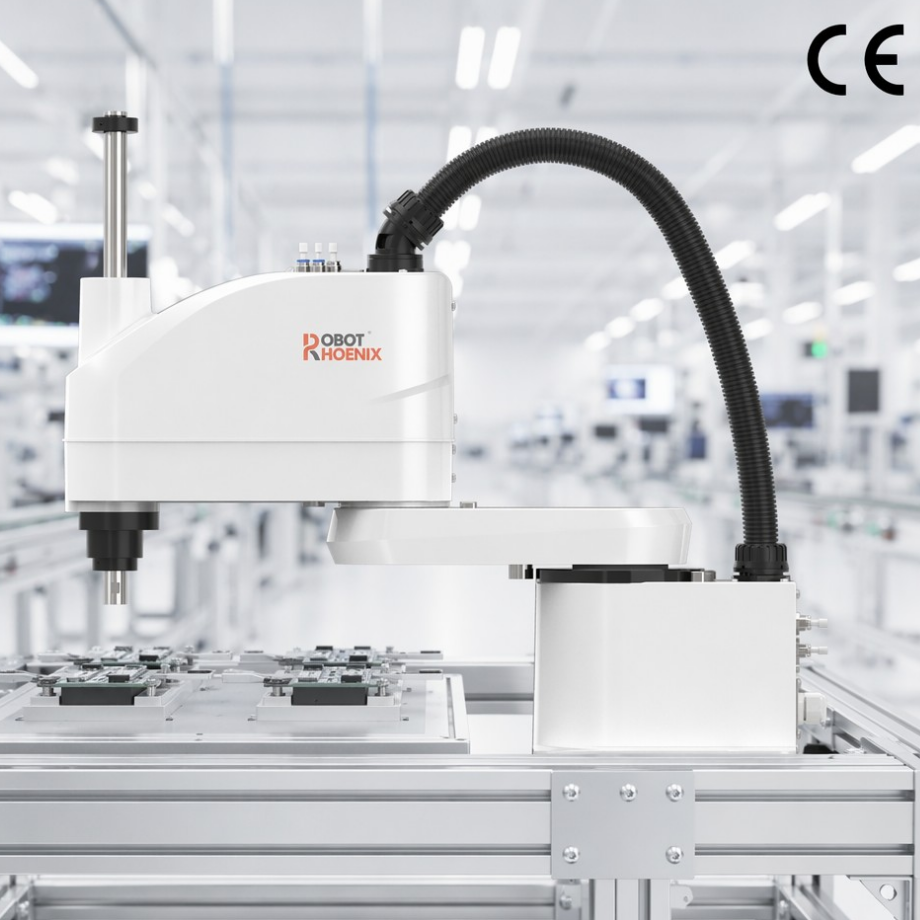
In California, Texas, Massachusetts and other electronics hubs, a 400 mm reach SCARA with PLC fits precise pick-and-place, screw-feeding, adhesive and inspection stations where floor space is expensive.
Consumer Goods & Carton Packing
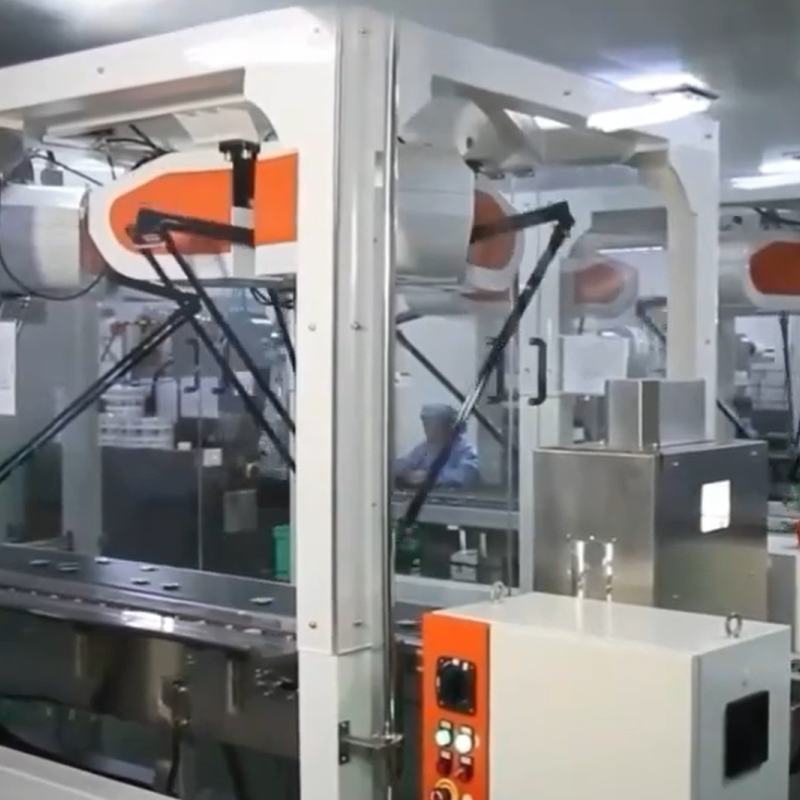
Four-axis delta spider robots are suited to carton packer lines, wet-wipe lid applications, bag-in-box feeding and other repetitive end-of-line tasks. Vision can handle orientation checks and reject diversion before the carton closes.
Warehouse & Fulfillment Logistics
For material movement, JORI supplies laser SLAM AMR/AGV and autonomous forklifts alongside robot arms. U.S. logistics teams can pilot one route or station before scaling fleet management across a building.
Semiconductor & Solar
Wafer handling robots require smooth, repeatable transfer and contamination-conscious design. Discuss end-effector material, cleanroom requirements and wafer size before selecting a configuration for U.S. semiconductor or photovoltaic lines.
Four Trends Shaping Robot Vision Module Demand
Procurement decisions are increasingly driven by resiliency and labor flexibility, not only unit price. These trends help explain why vision-ready robot platforms are moving from pilot projects into standard production planning.
Reshoring and Labor Flexibility
U.S. producers are adding capacity closer to customers while facing skilled-labor gaps. A robot cell must be easy to retask and support multiple recipes, so controller and vision architecture matter as much as payload.
High-Mix, Lower-Volume Production
Long runs are giving way to more changeovers. Vision-guided picking and recipe-driven SCARA or delta systems help handle mixed packaging formats and reduce mechanical changeover time.
Quality Data and Traceability
Buyers increasingly want pass/fail images, reject reasons and production counts available for line-level analysis. Vision acceptance criteria should be written into the project scope from the beginning.
Integration-Ready Automation
Plant teams prefer modules that communicate clearly with existing PLCs and packaging machines. PLC-ready delta robots and in-house controllers reduce the number of vendors responsible for a stoppage.
Which Robot Family Fits the Application?
Use this comparison to shortlist a platform before contacting engineering. Final specifications are confirmed per configuration, part geometry, gripper design and line interface.
| Robot Family | Best U.S. Application Fit | Relevant Catalogue Evidence | Ask Before Ordering |
|---|---|---|---|
| DeltaParallel Robot | High-speed pick-and-place, sorting, labeling, tray loading and carton packing. | 3–6 kg payload options, 0.08 mm repeatability references, IP54 version, 2/3/4-axis configurations and 120 pcs/min labeling capability in the product range. | What is the effective moving mass? Will parts arrive randomly? What reject and re-pick logic is needed? |
| SCARARobot | Electronics assembly, insertion, precise placement, small-part handling and compact production cells. | 4-axis architecture, 400 mm reach model with PLC, mini low-cost models and 2D/3D vision configuration options. | What planar accuracy and repeatability are required? What gripper and part-presentation method will be used? |
| VisionModule | Randomly oriented parts, orientation checks, presence/absence inspection and reject diversion. | In-house 2D/3D vision development, controller integration and vision-equipped SCARA/delta product references. | What lighting, calibration, camera resolution and acceptance criteria are required for the U.S. line? |
| AMR / AGVand Forklift | Material transport, pallet movement, warehouse routes and repetitive inter-station logistics. | Laser SLAM navigation, 400–500 kg payload platforms, compact latent models, autonomous forklifts and fleet management. | What route layout, traffic rules, charging strategy, floor conditions and WMS/PLC handshakes are required? |
| WaferRobot | Semiconductor and photovoltaic wafer transfer where smooth, repeatable handling is critical. | Self-developed motion control, clean-handling focus and custom end-effector support on request. | What wafer size, end-effector material, cleanroom class and contamination-control procedure apply? |
Specifications shown here reflect current catalogue references and product titles. U.S. buyers should confirm final model, safety integration, voltage, documentation and compliance requirements in the quotation.
Why JORI Is a Practical Supply Partner for U.S. Robot Projects
JORI Intelligent Technology Co., Ltd. is an industrial robot manufacturer founded in 2012 in Jinan, Shandong, China. The company specializes in robot R&D and production, controller and 2D/3D vision development, OEM support and automated system integration. Product lines include delta parallel robots, SCARA robots, AGV/AMR mobile robots, autonomous forklifts and silicon wafer handling robots.
Because the arm, controller and vision technology are developed in-house and supported by national patents, U.S. machine builders and integrators gain a more accountable source for hardware, software and after-sales engineering. The company operates a factory area of more than 10,000 m² with 500+ employees, follows ISO 9001 quality management, and has export experience across North America, South America, Eastern Europe, Southeast Asia and China.
- Independent R&D capability
- Original factory for delta, SCARA and AGV
- In-house controllers and 2D/3D vision
- OEM, design and buyer-label service
- One-stop automation integration support
- ISO 9001 and onsite-verified credentials

How to Evaluate Total Cost Without Overlooking Integration Risk
The lowest robot price is rarely the lowest project cost. U.S. buyers should compare the complete cell, including engineering, end-effector, vision, controls, safety, freight, commissioning and spare-parts planning.
Compare the Complete Cell
Include gripper, vision lighting, calibration, PLC interface, guarding, reject conveyor and commissioning labor. A lower-cost robot that requires more integration hours can erase the savings before the first production shift.
Document the Handshake
Define what the robot sends to the PLC, what the PLC sends back, how faults are cleared, and how the line recovers after a jam. Clear I/O and state logic reduce commissioning delays and operator confusion.
Plan for Spares and Training
Ask which components are wear items, how software backups are handled and what remote-support information is required. Training should cover recipe changes, recovery steps and basic vision troubleshooting.
Accepted delivery terms in the original company information include FOB, CFR, CIF, EXW, CIP, FCA, CPT and express delivery. Accepted payment methods include T/T, L/C, credit card, PayPal, Western Union, MoneyGram and escrow, with multiple currencies available. Confirm final commercial terms in the quotation.
Common Questions from United States Procurement Teams
These answers address the questions that most often arise before a sample order, pilot cell or full production rollout.