8 High-Speed Sorting Robots for Phoenix Pick-and-Place Cells
The following models are drawn from JORI’s delta, SCARA and vision-guided sorting range. Use them as a technical benchmark when comparing the wider top-10 manufacturer and wholesaler field. All standard models can be ordered from one set, so Phoenix integrators can validate a pilot cell before scaling to multiple lines.
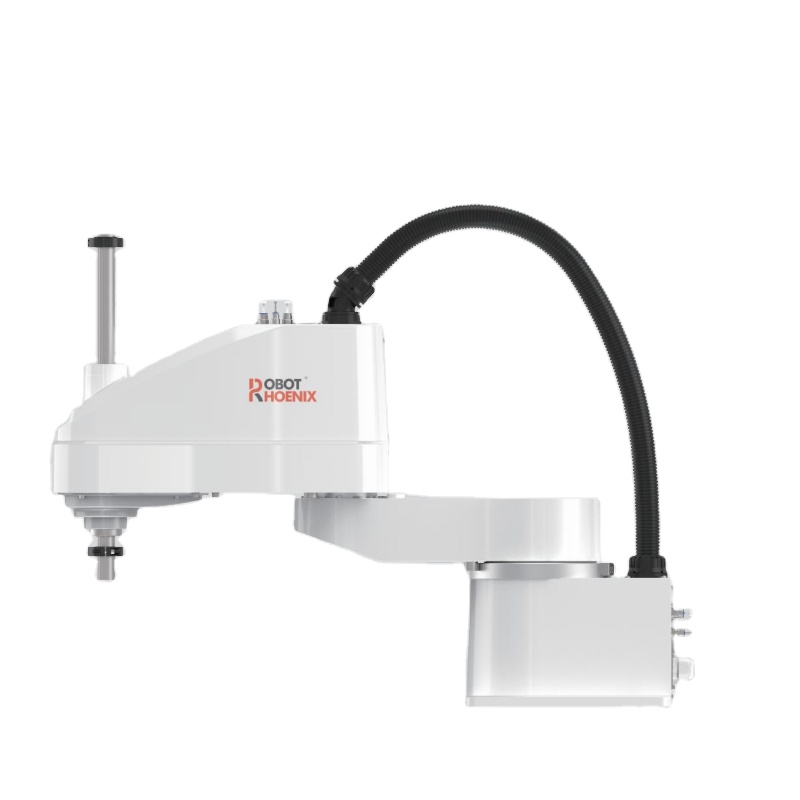
Advanced Industrial 4 Axis Robot Scara Robot for Pick and Place in Food Industry Gripping
Food-handling benchmark for gripper integration, fast changeover and repeatable pick-and-place on bakery, produce and packaged-food lines.
View product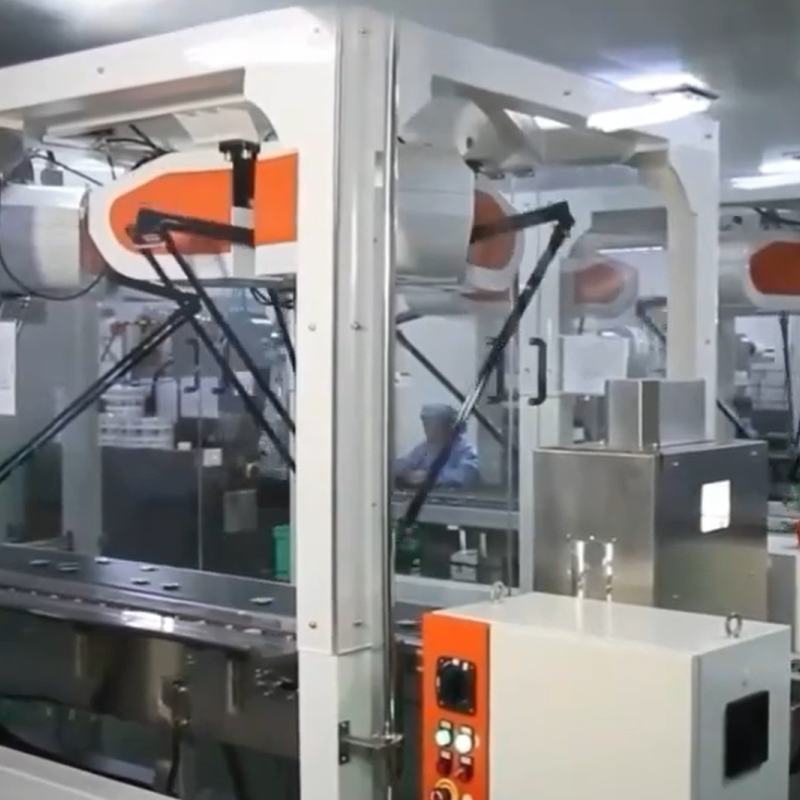
6kg Payload IP54 Protection Grade Pick Place Sorting Parallel Robot with Robot Gripper
A 6 kg delta benchmark for carton sorting, high-cycle pick-and-place and dust-exposed packaging environments common in Southwest facilities.
View product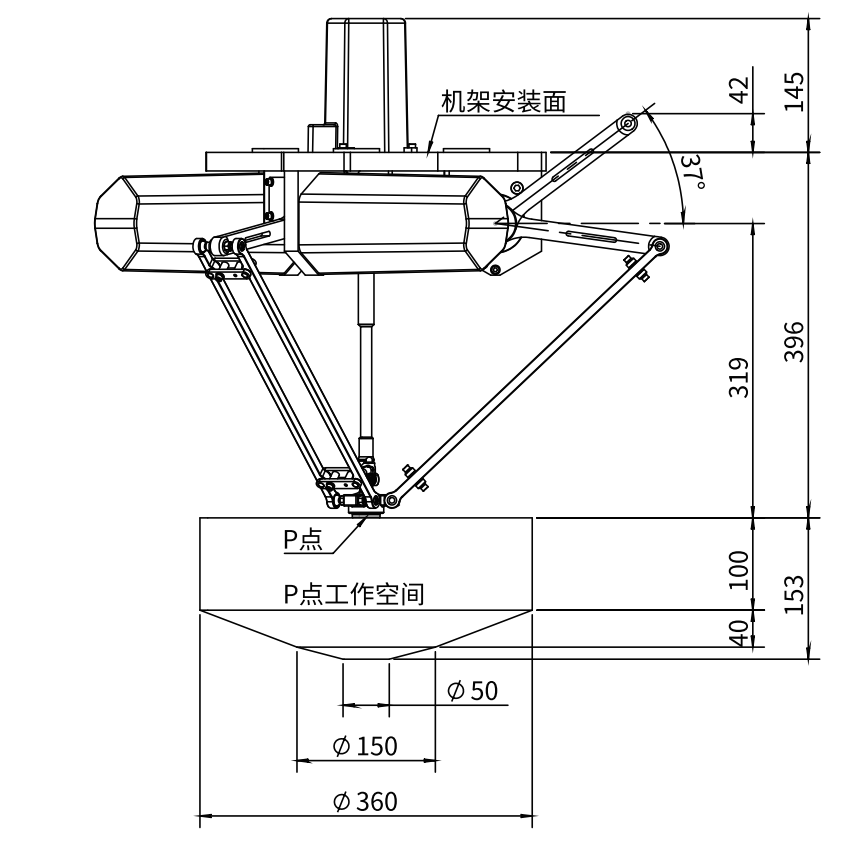
Hot Selling Parallel Robot Delta Industrial Robot Arm for Material Gripping Sorting
High-speed spider-style picking for mixed materials, small parts and conveyor-fed sorting stations where throughput defines the business case.
View product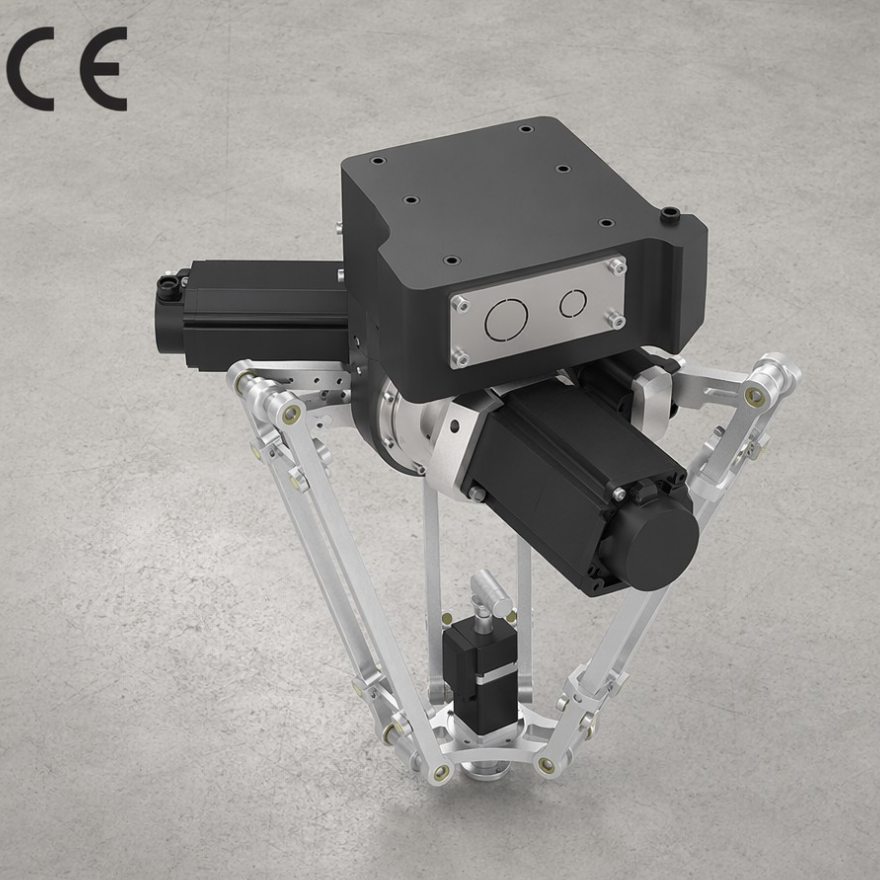
Smart Parallel Robot Picking and Placing Robot Manipulator Delta Robot with Visual System
Vision-guided picking for randomly oriented parts, e-commerce items and quality-graded products without hard tooling for every SKU.
View product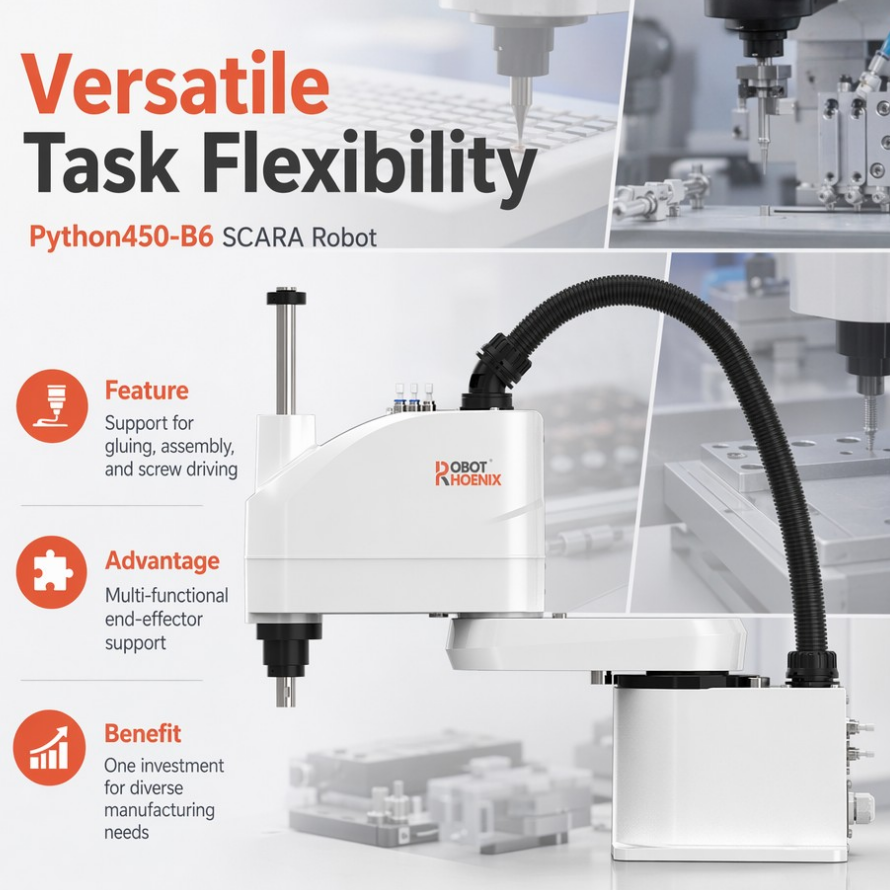
New Condition High Precision 400mm Reach Arm Scara Robot with PLC for 3C Electronic Assembly
Compact 400 mm reach for electronics assembly, screwdriving, insertion and inspection cells where floor space is at a premium.
View product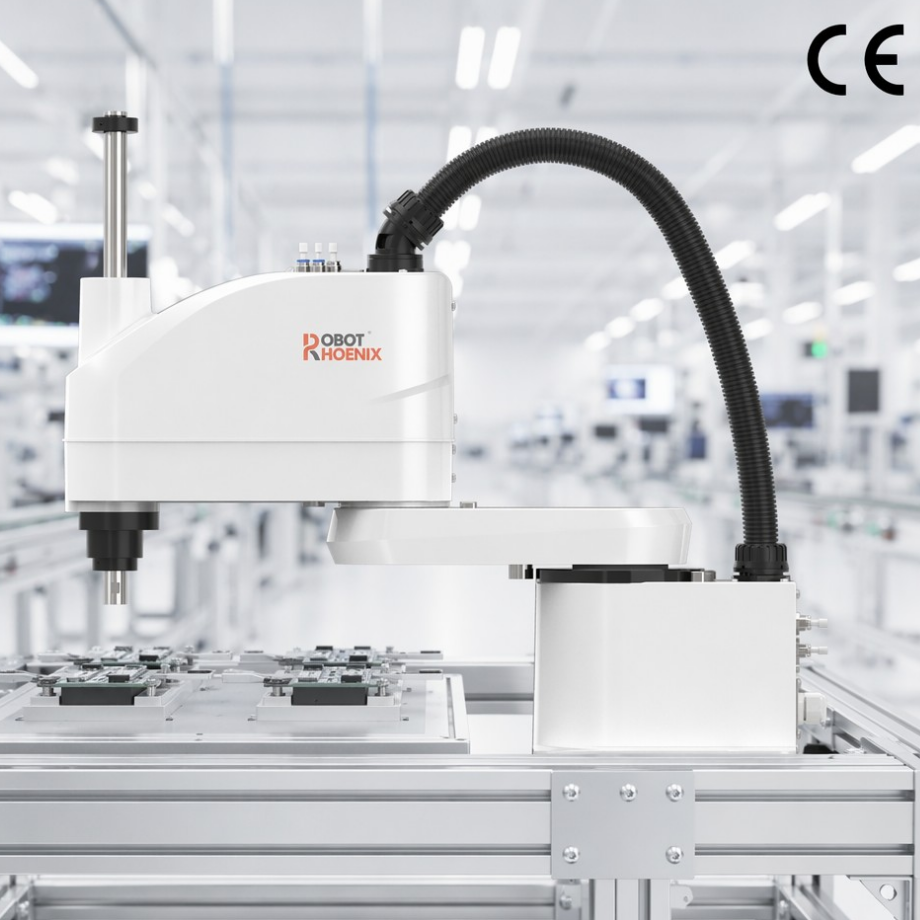
New Design Compact High Accuracy Industrial Robot Arm Scara with 2D/3D Vision System
A small-footprint SCARA with vision for precise placement in space-constrained Phoenix labs, micro-factories and machine-tending cells.
View product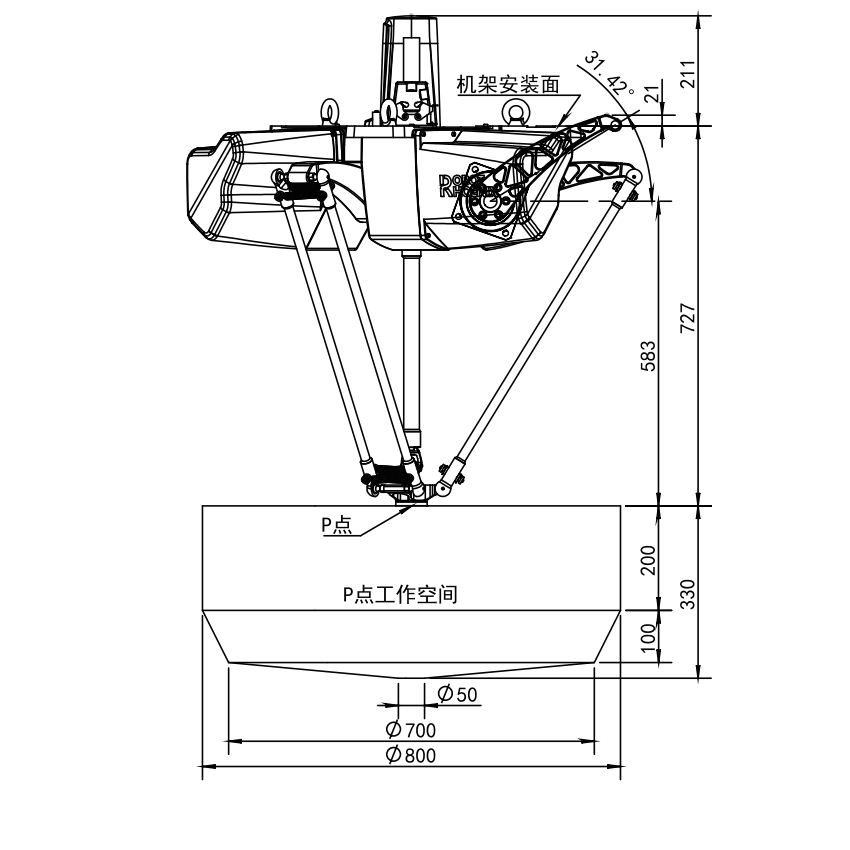
Industrial Delta Robot High Efficiency Parallel Robot for Goods Picking Placing Sorting
High-efficiency parallel robot for conveyor sorting, case packing and end-of-line automation where cycle time and uptime are the primary KPIs.
View product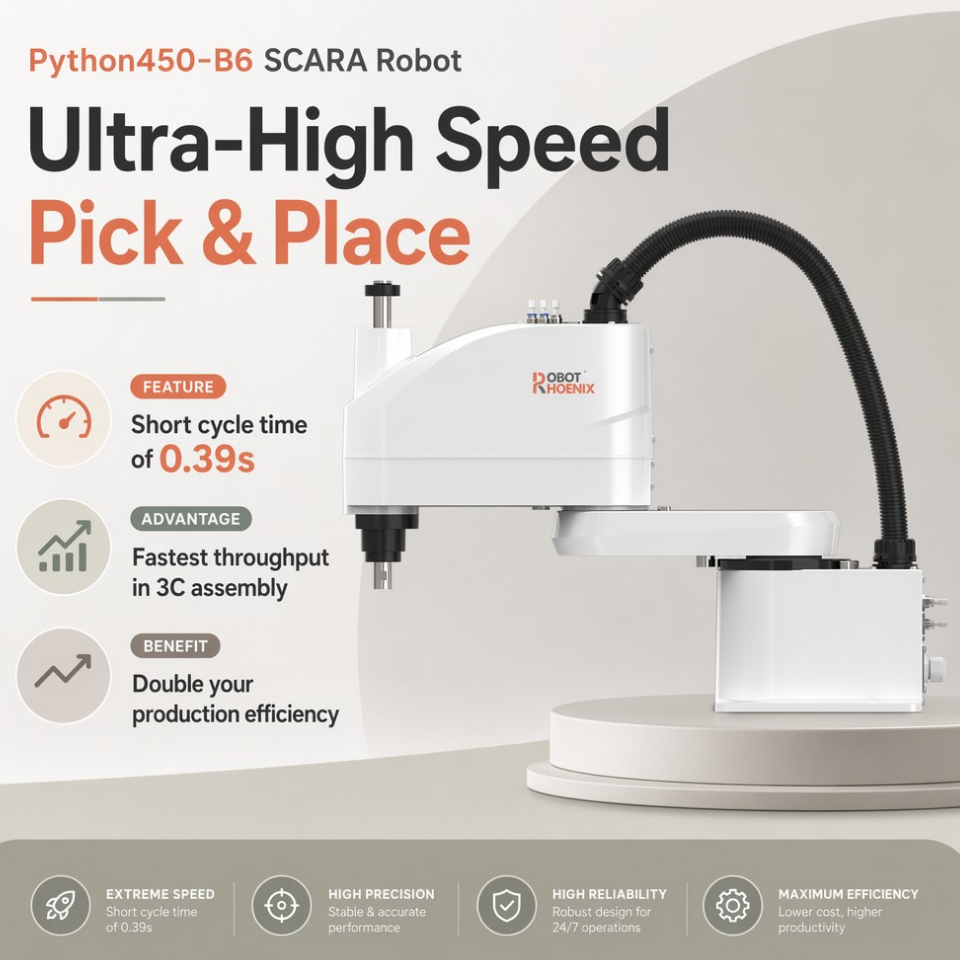
Robotphoenix High Speed Manipulator Scara Robot with Gripper for Product Accuracy Picking
Accurate picking with an integrated gripper for product handling where repeatability, footprint and changeover simplicity matter.
View productNot sure which model fits your conveyor? Send part photos, weight, cycle time, conveyor speed and facility constraints. JORI engineers will compare delta, SCARA and vision configurations against your Phoenix sorting cell requirements.
Get a QuoteWhy High-Speed Sorting Robots Matter in Greater Phoenix
Greater Phoenix has become a serious logistics, advanced-manufacturing and distribution market. For buyers in Phoenix, Mesa, Chandler, Gilbert, Tempe, Glendale and the surrounding Valley, sorting automation is no longer a future concept — it is a practical response to labor variability, SKU growth, service-level pressure and the need to run more shifts without expanding floor space.
High-speed sorting robots support conveyor-paced pick-and-place, goods-to-person fulfillment, case packing, parcel sortation, machine tending and end-of-line quality separation. The right system is not simply the fastest arm on a specification sheet. It is the arm, gripper, vision package, controller and integration strategy that fits your actual Phoenix facility — including ceiling height, aisle width, dust exposure, washdown expectations, voltage, PLC architecture and maintenance staffing.
Food, Produce and Agriculture Sorting
Arizona food processors, bakeries, cold-chain operators and produce distributors need fast, sanitary handling. Four-axis SCARA and IP-rated delta robots can support packaged-food picking, tray loading, inspection rejection and carton sorting without forcing every product into fixed tooling.
Parcel, E-Commerce and Order Fulfillment
Phoenix fulfillment centers face mixed-SKU orders and tight delivery windows. Vision-guided delta robots and compact SCARA cells help sort small parcels, poly bags, consumer goods and returns where random orientation and frequent changeover reduce the value of fixed automation.
Semiconductor, Electronics and 3C Manufacturing
The Greater Phoenix technology corridor includes semiconductor and electronics supply chains that demand clean, repeatable handling. Compact SCARA robots with 2D/3D vision support precise insertion, assembly, inspection and tray-based sorting in tight footprints.
Medical Devices and Pharmaceutical Packaging
Phoenix-area medical manufacturers and packagers value traceability, repeatability and low contamination risk. High-speed parallel robots can separate rejected units, load blisters and cartons, and maintain stable cycle times in controlled production environments.
Warehouse and Distribution Intralogistics
Sorting robots are often paired with AMRs, conveyors and fleet-management software. For multi-building distribution sites across Maricopa County, modular cells allow buyers to start with one station and expand as volume grows rather than over-automating on day one.
Aerospace, EV and Precision Manufacturing
Higher-value manufacturing in the Phoenix metro requires accurate part handling, traceable quality and flexible changeover. SCARA and delta robots can be integrated with grippers, vision and PLC systems to sort, inspect and place components at production speed.
Phoenix Localization Trends Shaping 2025 Sorting Robot Procurement
Regardless of which of the top 10 high-speed sorting robot manufacturers and wholesalers serving Phoenix a buyer shortlists, several local trends are changing how projects are specified, justified and supported.
Nearshoring and Regional Fulfillment
Regional distribution and nearshoring continue to push more inventory through Southwest hubs. Phoenix buyers need sorting cells that can scale from pilot volumes to multi-shift operation without a complete redesign.
Vision-Guided Sortation Becomes Standard
Vision is moving from a premium option to a practical requirement. Random orientation, mixed packaging and incoming-quality variation are better handled with 2D/3D vision than with dedicated mechanical fixtures for every SKU.
Mixed-SKU and Quick Changeover
Phoenix facilities increasingly support small-batch production, subscription commerce and returns processing. Quick-change grippers, recipe-driven controller settings and modular safety layouts reduce downtime between product families.
Labor Availability and Ergonomics
High-speed sorting robots help reduce repetitive lifting and monotonous pick-and-place tasks. Buyers should quantify labor stability, injury risk, training time and shift coverage when building the business case — not only headcount reduction.
Energy and Water-Conscious Operations
Arizona operating conditions make heat, dust and energy efficiency relevant. IP-rated robots, efficient controllers, proper enclosure planning and compressed-air reduction can lower lifecycle cost and improve uptime.
Simulation, Digital Twin and Remote Support
Before installing a Phoenix sorting cell, teams increasingly validate layout, reach, cycle time and conveyor tracking through simulation. Remote diagnostics and documented controller architecture also reduce the cost of ongoing engineering support.
What Phoenix Buyers Should Quantify Before an RFQ
Illustrative specification emphasis for high-speed sorting cells, not third-party market statistics. Use these categories to structure supplier comparisons.
The 10-Point Scorecard for Comparing High-Speed Sorting Robot Manufacturers & Wholesalers in Phoenix
A search for the top 10 manufacturers and wholesalers serving Phoenix is most useful when it becomes a repeatable procurement scorecard. Use the ten criteria below to compare factory-direct manufacturers, regional wholesalers and system integrators on the same basis.
In-House Controller and Vision
Confirm who develops the controller, motion software and vision package. Fewer handoff points usually mean faster debugging and clearer accountability.
Payload, Reach and Cycle-Time Proof
Validate performance with your part, gripper and conveyor speed. A robot rated at maximum payload may not achieve your required cycle time once tooling is added.
Gripper and End-Effector Fit
Ask whether the supplier can support vacuum, pneumatic, electric or custom grippers — and whether gripper weight has been included in the payload calculation.
Conveyor Tracking and PLC Integration
Phoenix packaging lines often mix new robots with existing PLCs, conveyors and safety systems. Check PLC-ready options, fieldbus support and encoder tracking capability.
IP Rating, Washdown and Dust Protection
Southwest facilities may face dust, heat and hygiene requirements. Match IP54 or other protection levels to the actual environment rather than defaulting to the lowest-cost model.
Safety and Risk Assessment
Review guarding, emergency stop, speed-and-separation logic and documentation. The supplier should support your risk assessment and local integrator requirements.
Freight, Crating and Lead Time to Phoenix
Compare export packing, freight coordination, customs documentation and realistic delivery windows. A low robot price is not useful if the cell waits for missing documentation.
Spare Parts and Remote Diagnostics
Check recommended spares, controller access, remote support policy and response time. Phoenix buyers should know who answers when a line is down.
OEM, ODM and Pilot Scalability
For machine builders and multi-site operators, OEM support, buyer-label options and one-set minimum orders can reduce the risk of a pilot project.
Total Cost of Ownership
Evaluate integration labor, floor space, energy, maintenance, changeover time, spare parts and expected uptime. The best sorting robot supplier lowers cost per pick, not just the purchase price.
How JORI Supports Phoenix Sorting Projects
JORI Intelligent Technology Co., Ltd. was founded in 2012 in Jinan, Shandong, China, and specializes in industrial robot R&D and manufacturing, controller and 2D/3D vision development, OEM support and automated system integration. The product portfolio includes delta parallel robots, SCARA robots, AGV/AMR platforms, autonomous forklifts and silicon wafer handling robots.
Because key robot arms, controllers and vision systems are developed in-house and protected by national patents, buyers deal with one accountable engineering source for hardware, software and after-sales support. That matters for Phoenix projects that need fast technical feedback, a pilot-friendly minimum order and a clear path from a single sorting cell to a multi-station line.
JORI operates an ISO 9001 quality management system and has been onsite-verified as a manufacturer. Standard delta robots, SCARA robots and mobile robot platforms can be ordered from one set. For machine builders, JORI offers OEM service, design service and buyer-label options, including custom end-effectors and controller integration.
- Independent R&D and national patents
- 500+ employees and 10,000+ m² factory
- In-house controller and 2D/3D vision
- Delta, SCARA, AMR/AGV and wafer robots
- OEM, design and buyer-label support
- MOQ 1 set for pilot validation
- ISO 9001 quality management
- Average response time ≤2 hours



One Engineering Source
Robot arm, controller and vision developed together for faster integration and clearer technical ownership.
Factory-Direct Pricing
Reduce reseller layers and keep configuration decisions close to the engineering team.
Pilot-First MOQ
Order one set to validate cycle time, gripper fit and line layout before scaling to production volumes.
Custom End-Effectors
Support for vacuum, pneumatic and application-specific grippers matched to your product and conveyor.
Export Experience
Delivery terms include FOB, CFR, CIF, EXW, CIP, FCA, CPT and express delivery for North American buyers.
Responsive Communication
97.06% response rate with average replies in two hours or less for qualified project inquiries.
Common Questions About High-Speed Sorting Robots and Wholesale Procurement
These are the questions Phoenix buyers ask most often when comparing manufacturers, wholesalers and factory-direct robot suppliers.
Do you ship high-speed sorting robots to Phoenix and across Arizona?
What is the minimum order quantity for a sorting robot?
Should I choose a delta robot or a SCARA robot for high-speed sorting?
Can JORI robots integrate with existing packaging lines and PLCs in Phoenix?
Which delivery and payment terms are accepted?
How should we evaluate total cost for a Phoenix sorting cell?
Build a Phoenix Sorting Cell with Factory-Direct Engineering
Send product photos, part weight, gripper requirements, cycle time, conveyor speed and facility constraints. JORI engineers will benchmark delta, SCARA and vision configurations for your application and return a quotation with suitable models and options.