Top Trusted Industrial Handling Robot Exporters & Wholesalers serving the Indianapolis market
JORI supports Indianapolis machine builders, integrators, distributors, and plant teams with SCARA, delta, and parallel handling robots for assembly, pick-and-place, packaging, inspection, and machine tending. Evaluate eight application-ready models, compare fit, and request an engineering review backed by in-house controllers, 2D/3D vision capability, and export experience.
Eight Handling Robot Configurations for Indianapolis Integration Projects
Industrial handling robot sourcing in Indianapolis is rarely a catalogue transaction. Buyers must reconcile part geometry, cycle time, PLC architecture, safety scope, spare-parts strategy, and total landed cost. The models below are practical starting points for applications involving precision assembly, machine tending, conveyor picking, carton packing, and compact pick-and-place cells. Product URLs are preserved exactly.
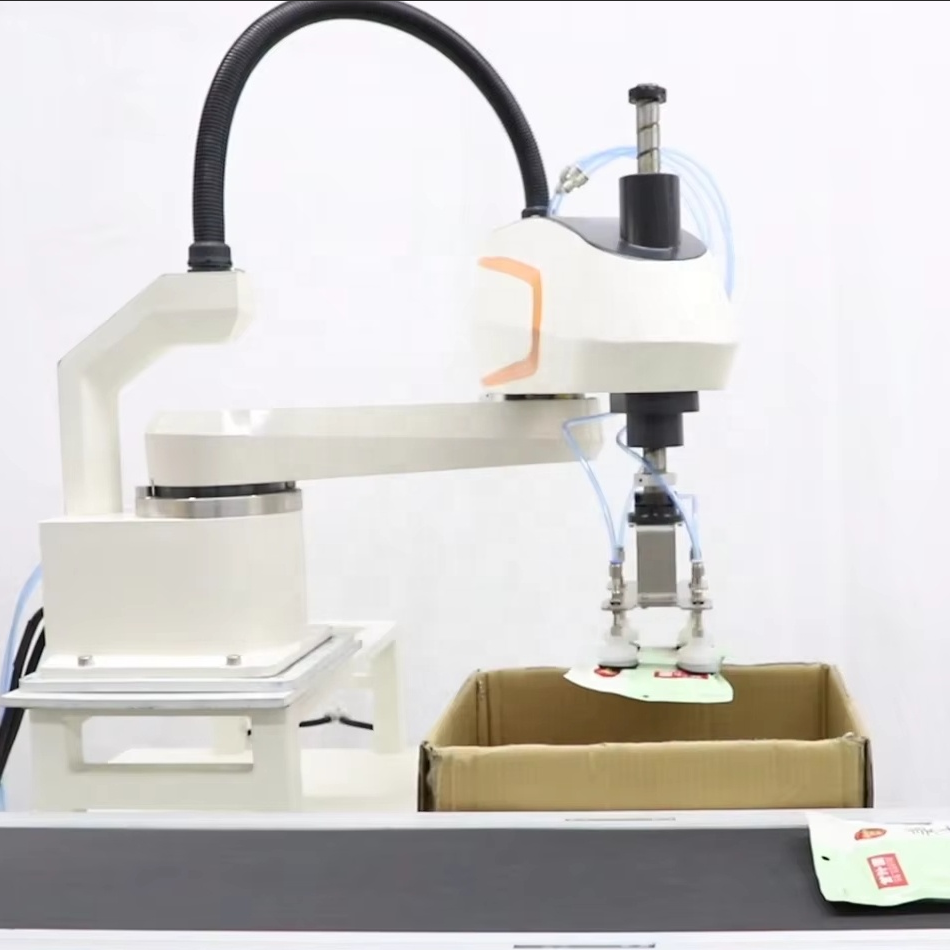
Newly Design Industrial Articulated Robotic Arm Scara for Precision Assembly & Handling
A compact SCARA platform for assembly and handling cells where repeatable planar motion and a small footprint reduce integration friction.
- SCARA
- Assembly
- Handling
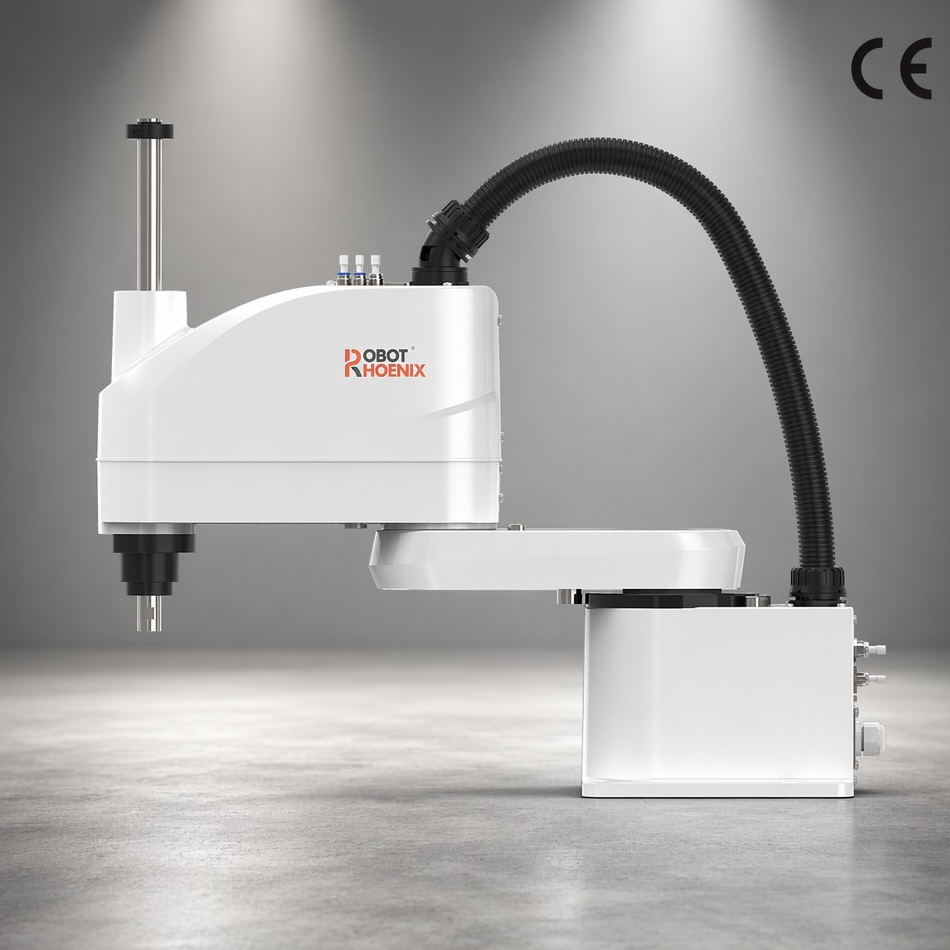
High Efficiency 6kg Payload Manipulator Scara Robot with Vision for Picking and Placing
A 6 kg, vision-ready SCARA pick-and-place option for high-mix assembly and packaging lines that need reliable part location.
- 6 kg payload
- Vision
- Pick & place
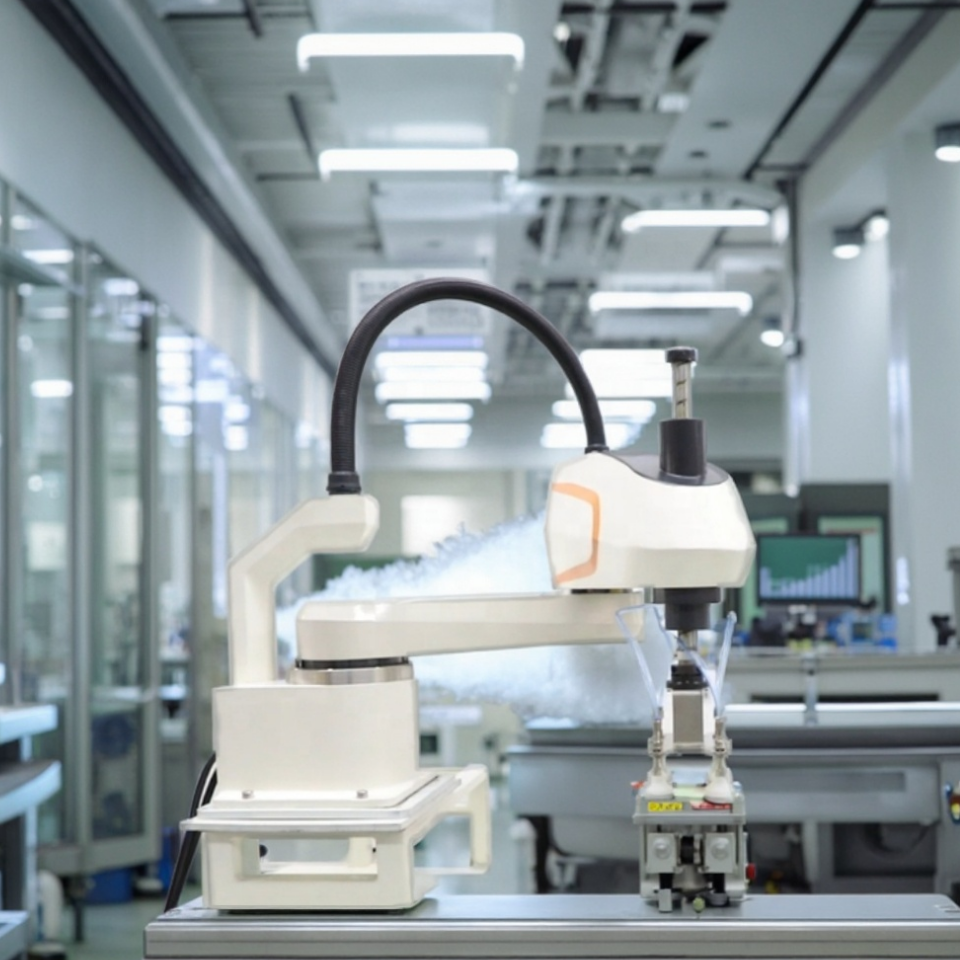
Industrial 4-Aixs Robot Arm Scara Robot Arm with Vision System for Auto Parts Industry
A vision-equipped 4-axis SCARA arm for automotive parts handling, inspection support, and machine-tending tasks.
- 4-axis
- Vision system
- Auto parts

Newly Design Low Price Industrial Manipulator Scara Robot Arm with Integrated Motor
An integrated-motor SCARA manipulator for pilot cells, secondary packaging, and distributor stock programs with tighter cost targets.
- Integrated motor
- Low price
- Pilot cell

High-Precise Industrial Scara Robot Arm Scara Robot for Pick and Place in Light Industry
A high-precision SCARA pick-and-place robot for light industry, medical devices, and electronics where fine positioning supports quality.
- High precision
- Light industry
- Pick & place
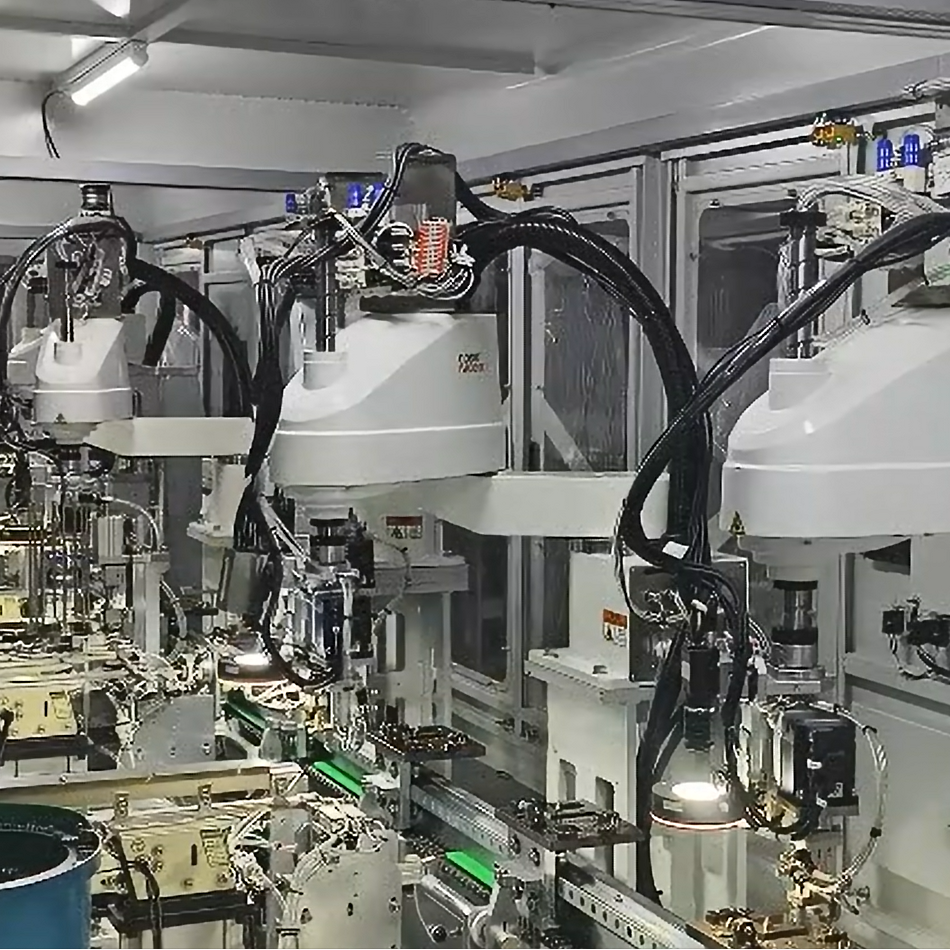
High Quality Mini Industrial Robot Scara for Pick and Place at Low Cost-New Condition
A mini industrial SCARA for low-cost pick-and-place, ideal for job shops, startups, and space-constrained cells.
- Mini
- Low cost
- Compact cell

New Condition High Precision 400mm Reach Arm Scara Robot with PLC for 3C Electronic Assembly
A 400 mm reach SCARA with PLC integration for 3C electronics assembly, inspection, and compact transfer tasks.
- 400 mm reach
- PLC
- 3C assembly

Robotphoenix New 4-Axis Parallel Robot Arm Delta Spider Hand Robot for Carton Packer Line
A 4-axis parallel delta robot for carton packing and conveyor-based product flow where speed and repeatability drive line output.
- 4-axis delta
- Carton packing
- Conveyor line
Why Indianapolis Buyers Shortlist JORI as an Export & Wholesale Robot Source
JORI Intelligent Technology Co., Ltd. was founded in 2012 in Jinan, Shandong, a major robotics hub in China. The company specializes in industrial robot R&D and production, controller and 2D/3D vision development, OEM support, and automated system integration. For Indianapolis buyers, the advantage is not simply a product list; it is a single accountable source for robot hardware, motion control, vision options, custom end-effectors, and export coordination.
Because delta robots, SCARA robots, wafer handling robots, AGV/AMR platforms, autonomous forklifts, controllers, and vision systems are developed in-house and protected by national patents, JORI can support both standard catalogue purchases and engineering-led projects. That matters when a distributor needs repeatable stock configurations, while a system integrator needs a robot that can fit an existing PLC, conveyor, safety, and packaging architecture.
- In-house R&D and controller development
- Original factory for SCARA, delta, and AGV/AMR
- OEM, design, and buyer-label support
- ISO 9001 quality management
- 10+ years serving overseas markets
- One-stop automation integration support
Controller & vision ownership
Self-developed controllers and 2D/3D vision help reduce integration ambiguity when a cell must match an existing line architecture.
Patent-backed technology
National patents cover multiple robot families, controllers, and vision-related development, supporting long-term spare-parts planning.
OEM & private label
OEM service, design service, and buyer-label options support distributors and machine builders serving Indianapolis.
Export-ready documentation
ISO 9001, onsite-verified manufacturing status, trade records, and buyer-review channels help procurement teams verify the supplier.
Where Handling Robots Fit the Local Production and Distribution Landscape
Indianapolis sits at the center of major manufacturing, life sciences, packaging, and logistics corridors. The right robot is the one that solves a specific handling constraint—not the one with the longest specification sheet.
Automotive & mobility components
Indianapolis-area suppliers and integrators can deploy SCARA robots for small-part assembly, machine tending, inspection support, and repeatable placement. Delta robots are well suited to fast sorting or packaging of small components where conveyor flow is continuous.
Life sciences & medical device packaging
Indianapolis has a strong life-sciences and medical-device ecosystem. Precision SCARA cells support kitting, tray loading, and insertion, while flexible vision options help handle repeatable positioning for high-mix packaging.
Warehouse & distribution centers
With dense logistics operations around Plainfield, Whitestown, Lebanon, and the I-465 beltway, handling robots can support tote transfer, sortation, order-pack, and end-of-line carton operations. JORI also manufactures AMR/AGV and autonomous forklift platforms for broader material flow projects.
Food, beverage & consumer packaging
Delta and parallel robots fit high-speed pick-and-place, sorting, carton packing, and lid or label handling. For Indianapolis co-packers and packaging machine builders, PLC-ready configurations can shorten integration time.
Electronics & advanced manufacturing
A 400 mm reach SCARA with PLC integration is a practical choice for compact 3C electronic assembly, transfer, and inspection cells. Distributors can stock standard models while integrators configure end-effectors and vision.
Packaging machine builders
JORI supports machine builders with PLC-ready delta robots, custom end-effectors, and integration support for carton packers, cartoning machines, and wet-wipe lid applicator systems. This is useful when the robot must become part of a machine rather than a standalone cell.
What Is Changing for Indianapolis Handling Automation Buyers?
Local procurement decisions are being shaped by manufacturing resilience, labor flexibility, logistics density, and the need to prove ROI before scaling.
Pilot-first automation and reshoring pressure
Indianapolis manufacturers are increasingly evaluating automation in phases. A pilot cell that handles one family of parts can validate cycle time, labor impact, and quality before expansion. JORI supports this with a MOQ of 1 set for standard delta, SCARA, and AMR/AGV platforms.
Labor availability and ergonomic substitution
Repetitive pick-and-place, machine tending, and carton packing remain strong automation candidates. Buyers are looking for robots that fit existing operator workflows, not systems that require a complete line rebuild. PLC-ready control and vision options help bridge the gap.
Logistics density and flexible material flow
The Indianapolis region’s distribution footprint is driving interest in flexible automation for sorting, packing, and transport. Handling robots are often paired with AMR/AGV or autonomous forklifts so that fixed cells and mobile platforms can share the same facility plan.
Selection signals: what Indianapolis RFQs tend to prioritize
Illustrative evaluation weighting based on common handling-robot project requirements; it is not a published market statistic. Use it to structure your own scoring model.
SCARA, Delta, or a Staged Rollout? Match the Robot to the Constraint
A shortlist should start with the motion problem. The three paths below help convert an application description into a precise RFQ.
Planar assembly, insertion, and compact placement
SCARA robots are often the better fit when the work is flat, repeatable, and space-constrained. They suit electronics assembly, small-part handling, machine tending, and precise loading.
- 4-axis planar motion
- Compact cell footprint
- Vision and PLC options
- Recommended models: 6 kg vision SCARA, 400 mm 3C SCARA, mini SCARA
High-speed picking from a moving or indexed conveyor
Delta and parallel robots are effective when lightweight products arrive rapidly and the line needs fast, repeatable pick-and-place, carton packing, sorting, or label handling.
- High-speed pick-and-place
- Carton and packaging lines
- Conveyor-oriented layouts
- Recommended model: Robotphoenix 4-axis delta for carton packing
You need to prove ROI before scaling the line
When the part family, cycle time, or labor model is still being validated, a pilot robot cell is a lower-risk step. JORI’s MOQ of 1 set allows a single-cell trial before wholesale or multi-line deployment.
- MOQ 1 set on standard models
- OEM and custom end-effectors
- Export documentation support
- Recommended path: start with one SCARA or delta cell, then standardize
What Indianapolis Buyers Should Verify Before Selecting an Exporter
For a high-value handling robot purchase, supplier verification should be as rigorous as the engineering review. These four buyer checks reduce hidden integration and lifecycle risk.
Who owns the controller and vision?
Ask whether the supplier develops motion control and vision in-house. JORI’s self-developed controllers and 2D/3D vision simplify responsibility when a cell must match an existing packaging or assembly process.
What documentation will be released?
Request drawings, electrical specifications, controller interfaces, spare-parts lists, and applicable quality documents. Verify ISO 9001, onsite-verified manufacturing status, and product-specific compliance requirements before the PO.
Who supports the lifecycle?
Confirm remote engineering, spare-parts planning, end-effector drawings, and integration responsibilities. For Indianapolis projects, clarify time zones, escalation paths, and who coordinates with the local integrator.
What is the true landed cost?
Compare robot cost with freight, duty, customs brokerage, integration, safety validation, training, spare parts, and downtime risk. A MOQ of 1 set supports a controlled pilot before scaling.
Questions Indianapolis Buyers Ask Before Requesting a Quote
These answers focus on export, integration, and procurement details that commonly affect handling-robot projects.
Does JORI have a local stocking warehouse in Indianapolis?
JORI is a factory-direct manufacturer and exporter. “Serving the Indianapolis market” means the company supports buyers with export documentation, remote engineering, OEM/wholesale options, and coordination with local integrators. Confirm current inventory, lead time, and shipping terms in the quotation rather than assuming local stock.
How are robots shipped to Indianapolis?
Orders can be quoted under delivery terms including FOB, CFR, CIF, EXW, CIP, FCA, CPT, and express delivery. For Indianapolis, buyers typically appoint a customs broker and combine international freight with inland truck or rail delivery into Indiana. HTS classification, duties, final voltage, and safety documentation should be confirmed before ordering.
What is the minimum order quantity?
Standard delta robots, SCARA robots, and AMR/AGV platforms can be ordered from 1 set. This allows an Indianapolis buyer to validate a single handling cell, packaging line, or pilot project before expanding to multiple units or wholesale volumes.
Can JORI support OEM, private label, or custom end-effectors?
Yes. JORI provides OEM service, design service, and buyer-label options. The team can support machine builders with custom end-effectors, controller integration, and automated system integration for packaging and assembly projects.
Which payment methods and currencies are accepted?
Accepted payment methods include T/T, L/C, credit card, PayPal, Western Union, MoneyGram, and escrow. Currencies include USD, EUR, GBP, JPY, CAD, AUD, HKD, CHF, and CNY. Final terms are confirmed in the proforma invoice.
Can the robot integrate with existing packaging or PLC systems?
JORI’s PLC-ready delta robots and in-house controllers are designed to support integration with cartoning machines, carton packers, wet-wipe lid applicator machines, and other automated equipment. Share the existing PLC, conveyor interface, vision requirements, and safety architecture so the engineering team can recommend a configuration.
Send Your Handling Application Details for an Engineering Review
Include part weight and dimensions, target cycle time, current conveyor or packaging layout, PLC/vision preference, and whether you are buying for a single cell, distribution inventory, or an OEM machine line. JORI will use those details to shortlist SCARA, delta, or parallel robot configurations for your Indianapolis project.