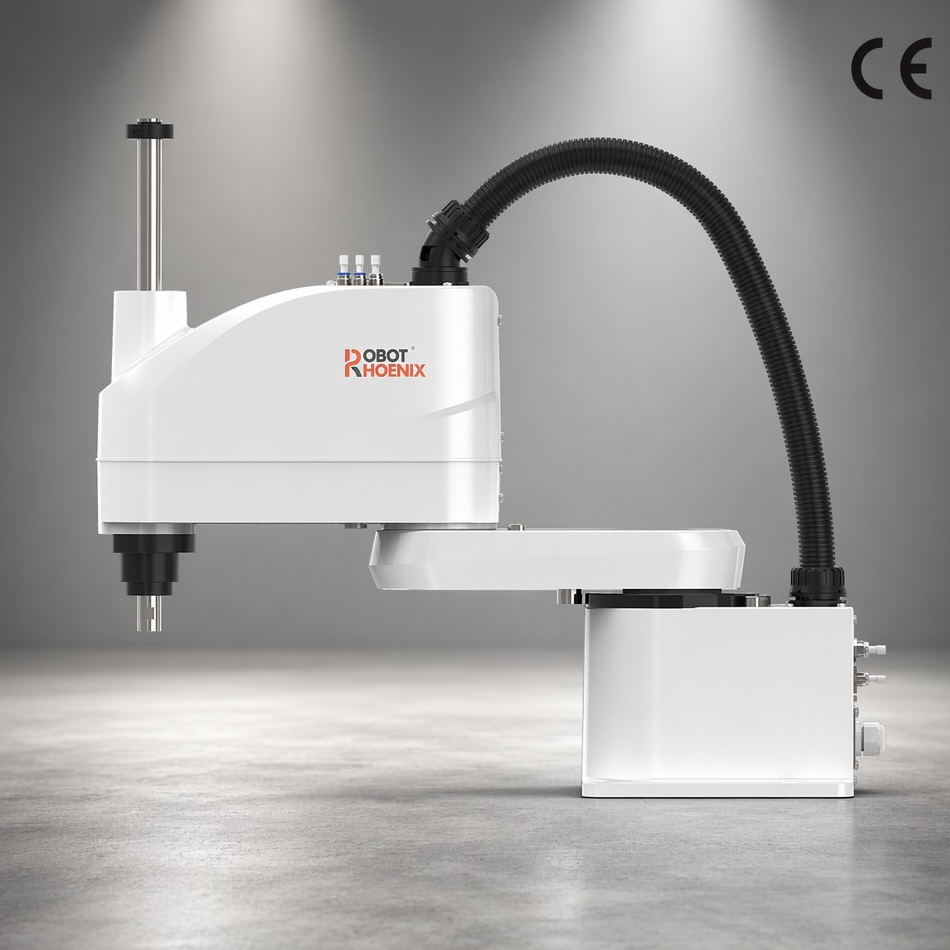
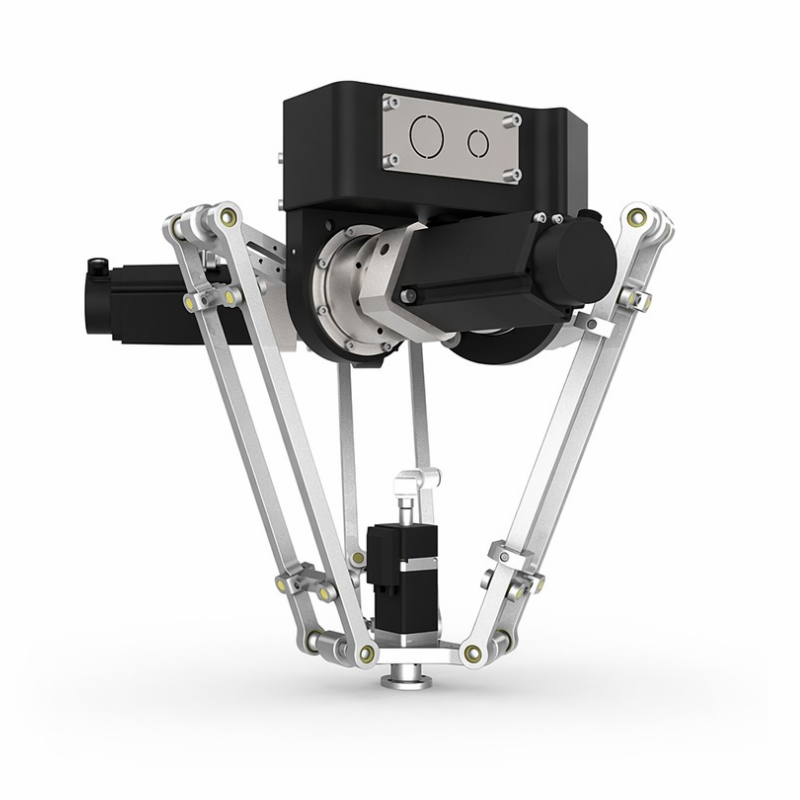
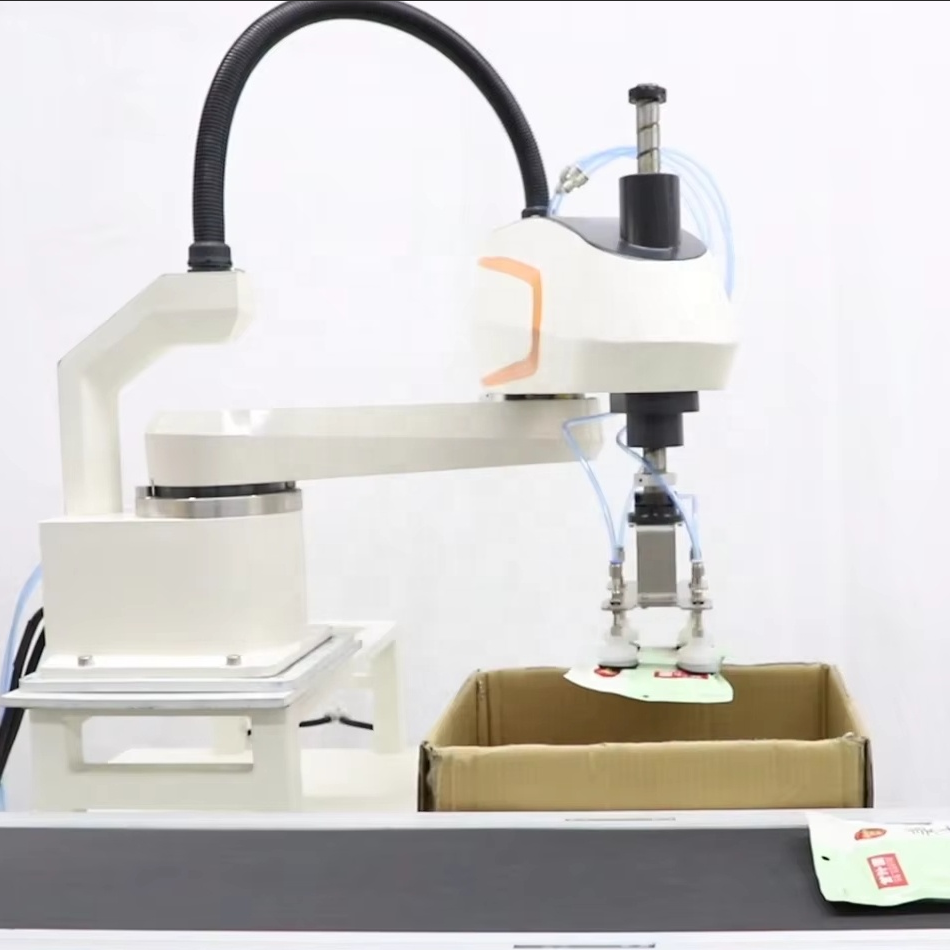
Newly Design Industrial Articulated Robotic Arm Scara for Precision Assembly & Handling
For compact lid-fitment modules that need repeatable planar placement, insertion work and easy integration with canister or carton infeed lines.
A factory-direct guide for Central Java packaging teams comparing delta robots, SCARA handling, IP54 lid-placement cells, vision guidance and AMR logistics for wet wipe lid application lines.
These eight options cover the practical layers of a lid applicator project: high-speed delta picking, compact SCARA placement, vision-guided handling, IP54 protection and narrow-aisle logistics for Semarang factories and warehouses.

For compact lid-fitment modules that need repeatable planar placement, insertion work and easy integration with canister or carton infeed lines.

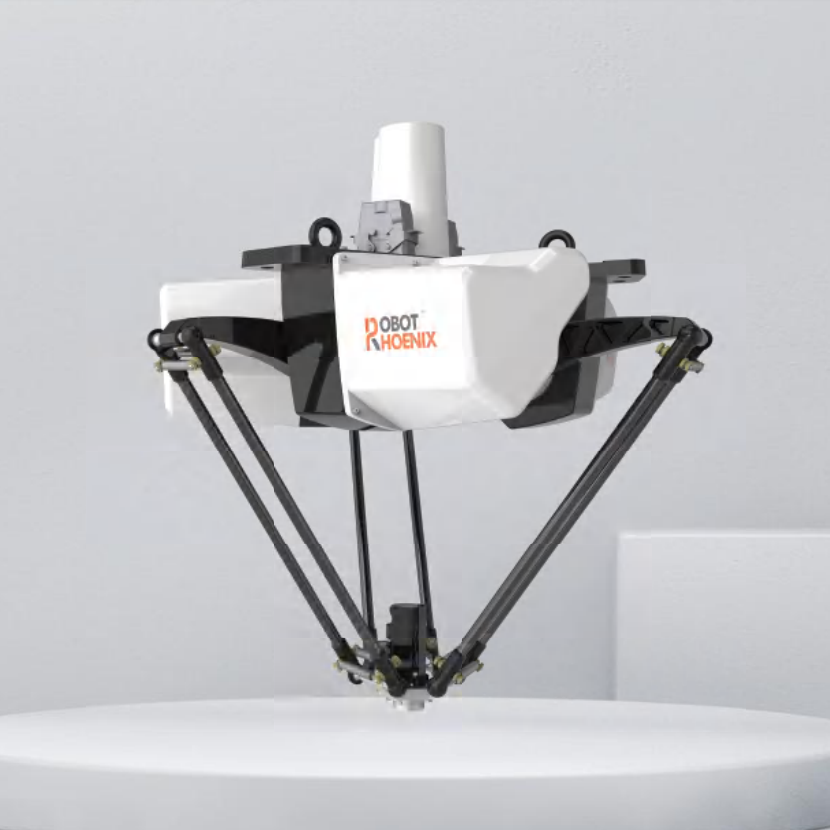
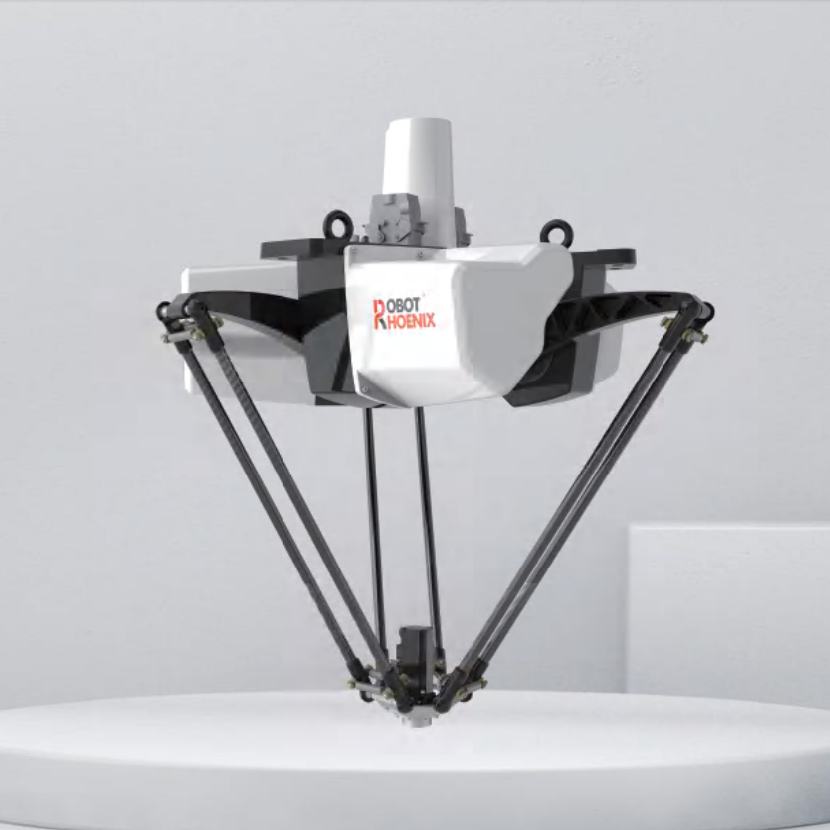
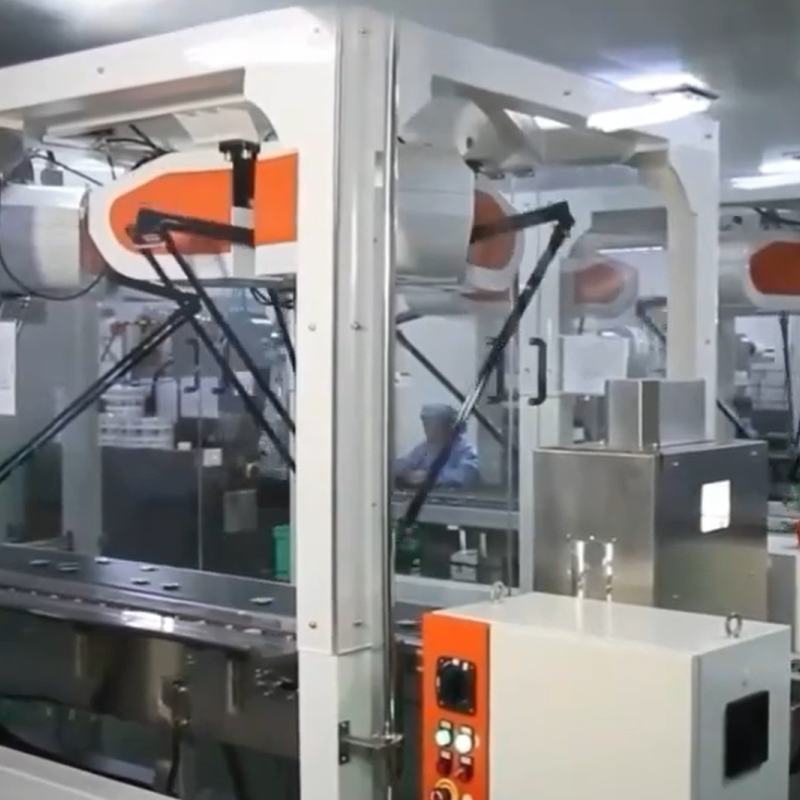
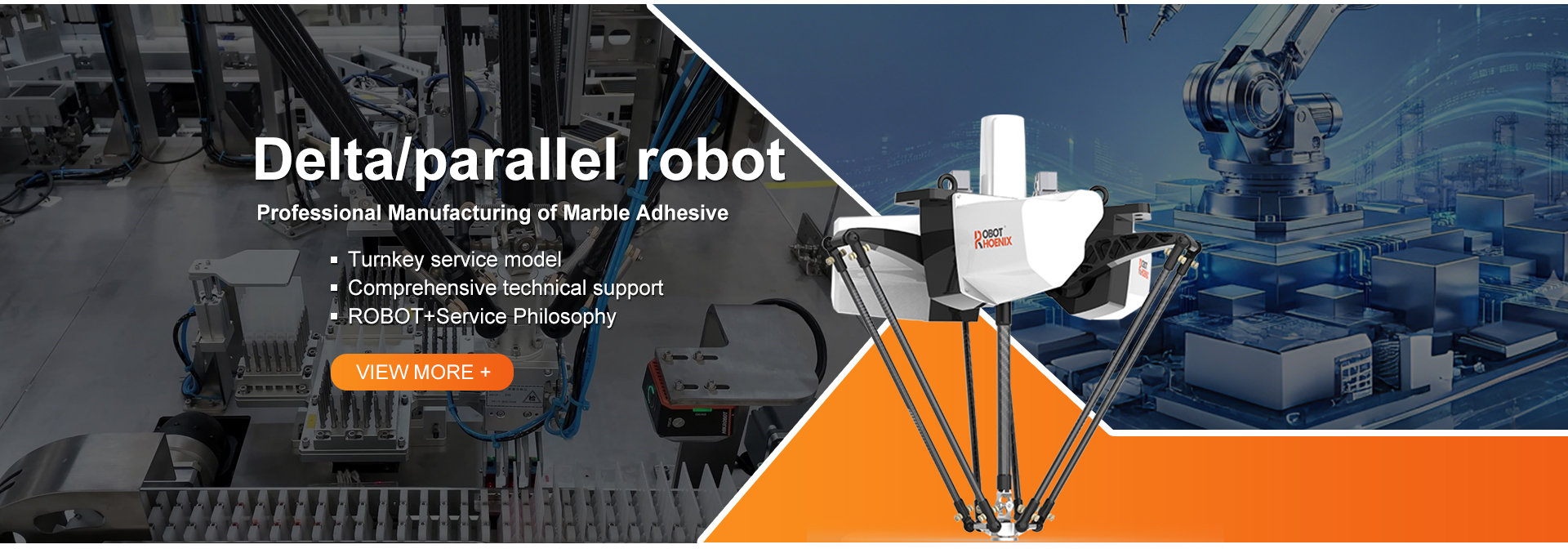
High-speed delta platform for lid pick-and-place, carton-packer infeed, vision-guided sorting and repetitive small-part handling.

Suited to wet wipes, personal care and household consumer goods where line speed, small payloads and repeatable picks drive output.

An accessible entry point for Semarang SMEs and contract packers adding a single lid-placement cell before scaling to multiple lines.

Combines compact reach with 2D/3D vision options for lid orientation checks, mixed-SKU handling and reject confirmation.

For machine builders that need a delta platform tailored to a specific lid applicator frame, conveyor height or carton-packing layout.

Useful where humidity, splash risk and dust control demand a more protected parallel robot without leaving the compact cell envelope.

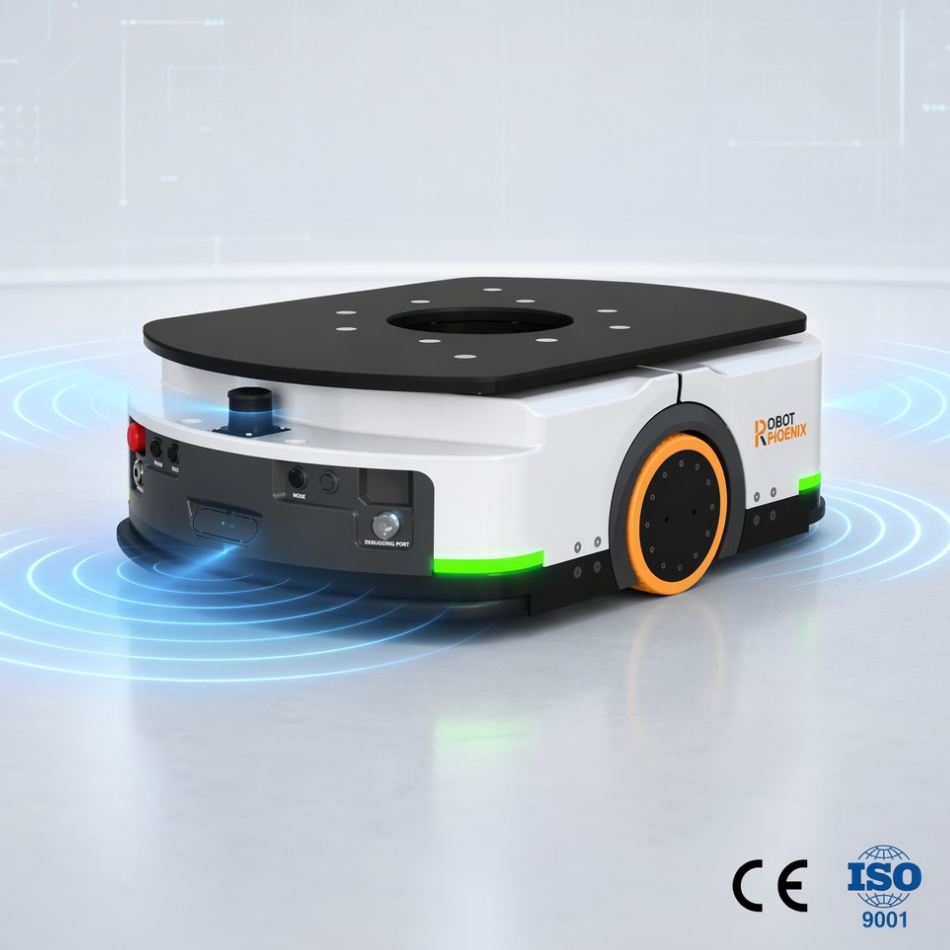
Connects lid-carton handling to line-side storage and finished-goods staging in space-constrained Semarang warehouses.
All listed products link to their product pages. For configuration support, request a factory review of your lid shape, canister format, conveyor layout and target cycle time.
Founded as an R&D-driven robot manufacturer
Employees across robot R&D, production and service
Square metres of manufacturing and testing space
Response rate with average replies in ≤2 hours
Semarang is more than the capital of Central Java. It is a working port city and a practical gateway for food, personal-care, household-chemical and packaging products moving through Tanjung Emas and onward to regional and international buyers. For wet wipes manufacturers, contract packers and OEM brand owners in and around Semarang, the lid applicator is a small machine that creates an outsized quality signal: a canister lid that is misaligned, under-pressed or contaminated can stop a packing line, trigger rework and damage retail confidence.
That is why the phrase wet wipe lid applicator machine Factory & Wholesalers for the Semarang market usually signals a serious procurement question rather than a casual search. Buyers are comparing a factory-direct engineering partner with a wholesaler or trading channel. A wholesaler may offer faster access to a standard unit, but a factory can expose the robot kinematics, controller logic, end-effector design, vision strategy and spare-parts plan that determine whether the lid applicator performs reliably across multiple shifts.
Semarang’s packaging ecosystem is also diverse. A single producer may run canister wipes for household use, flat-pack wipes for retail promotions and small-format packs for travel or personal care. The lid applicator therefore cannot be treated as a fixed, single-SKU machine. It must accommodate lid geometry changes, stack height changes, press-fit depth, orientation control and reject confirmation without turning each changeover into an engineering project. A lid applicator is not a generic pick-and-place cell; it is a fitment-quality control station.
JORI’s relevant advantage is that delta robots, SCARA robots, AGV/AMR platforms, robot controllers and 2D/3D vision have been developed in-house since 2012. That matters for Semarang buyers because a lid application project rarely stops at the robot arm. It needs a controller that talks to the packaging machine, a gripper that handles the lid without deformation, a vision routine that checks orientation, and a support path for spare parts. Factory-direct access creates one accountable engineering route instead of a chain of distributors.
For a Semarang plant, the most useful starting point is not a robot catalogue but a process map. How is the lid presented? Is it bowl-fed, magazine-fed, conveyor-fed or manually staged? Does the lid need a vacuum cup, a mechanical gripper or a custom nest? Is the canister stationary or moving? Does the line need press-force monitoring, lid-position verification and reject IO? Answering these questions before selecting a delta or SCARA robot will generally reduce total project cost more than negotiating a lower robot price.
Semarang manufacturers rarely need a robot in isolation. They need a reliable interface between lids, canisters, cartons, operators and warehouse flow.

Delta robots take lids from a feeder or conveyor, reorient them with vision support and place them into the canister nest at line speed.

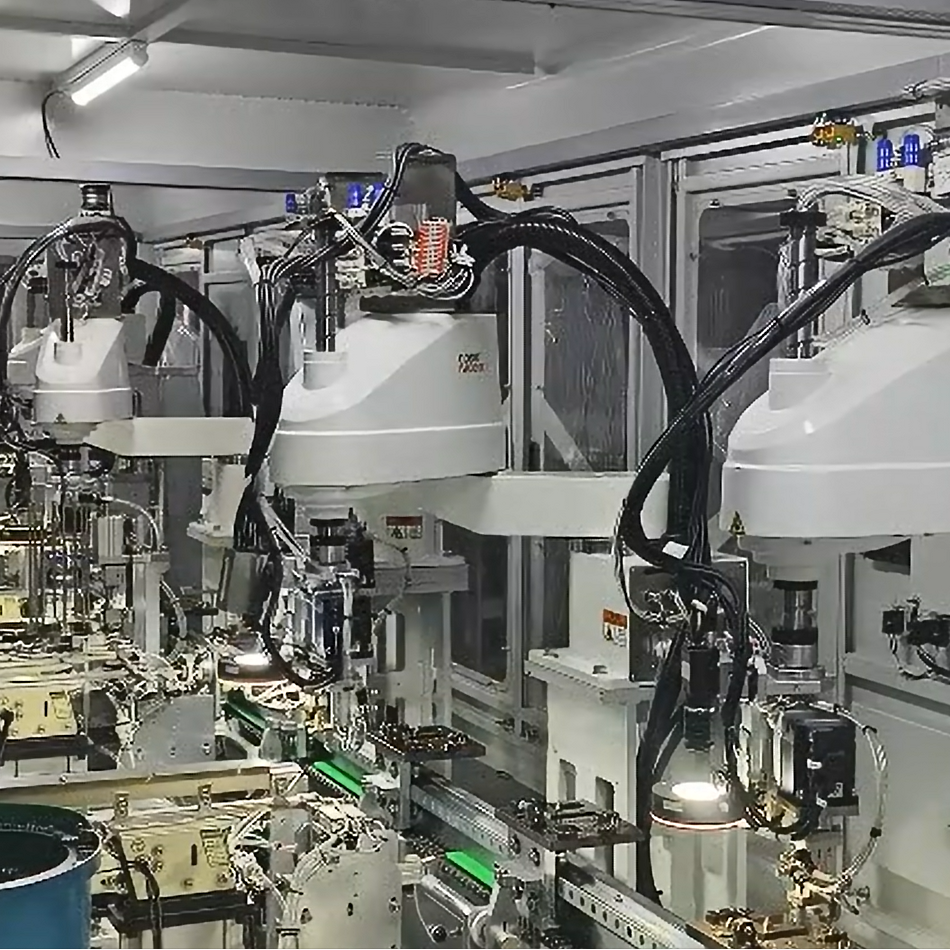
A SCARA or compact delta cell applies controlled press force, checks seating depth and rejects incomplete or tilted lids before cartoning.

2D/3D vision reduces the risk of upside-down or rotated lids, especially useful when Semarang lines switch between canister and flat-pack SKUs.

Delta platforms can support lid application, label placement and carton infeed in one compact machine frame, improving line-level traceability.

Compact latent AGV/AMR platforms move lids, empty canisters or finished cartons between line-side storage and dispatch in constrained Semarang facilities.

Semarang machine builders can combine JORI robot hardware with local frames, safety guarding and commissioning support for faster site acceptance.
The strongest business case is not simply “replace an operator”. It is “stabilise lid-fit quality, shorten changeover and protect output across shifts.”
Across Central Java, packaging teams are moving from isolated manual stations to modular automation cells that can be replicated as demand grows. The following planning-weighted view is illustrative, based on common application-enquiry priorities; it is not a statistically representative market survey.
For Semarang, humidity and coastal air should also be considered when specifying IP54 protection, corrosion-resistant fasteners and moisture-aware electrical enclosures.
Retail promotions and export orders increase lid and canister variety. Recipe-driven vision and quick-change grippers are becoming more important than raw speed alone.
Buyers increasingly ask for lid-present confirmation, press-fit verification and reject logs that can support internal quality reviews.
Lid applicator cells are being linked to line-side AGV/AMR transport so empty canisters and finished cartons move without blocking narrow aisles.
Semarang machine builders prefer a component partner that can support OEM design, controller integration and spare-parts planning rather than a one-off box sale.
Both channels can be useful. The key is to know which capability you are buying: standard stock, engineering ownership, local integration or lifecycle support.
| Procurement requirement | What to ask a factory / wholesaler | Why it matters in Semarang |
|---|---|---|
| Lid tooling | Can you design a vacuum cup, gripper or press-fit tool for our lid drawing and sample? | Lid geometry changes can create mis-picks. A tailored end-effector is often more valuable than a lower robot price. |
| Vision and reject logic | Is 2D/3D vision available in-house? How is a tilted or missing lid rejected? | Manual visual checks vary by shift. Vision creates repeatable quality evidence for contract packers and brand owners. |
| Controller integration | Can the robot controller exchange signals with our cartoner, PLC, safety circuit or MES? | Semarang lines often combine local frames with imported packaging equipment. Clear IO responsibility reduces commissioning delays. |
| Spare-parts plan | Which critical spares should be stocked: vacuum cups, gripper fingers, vision light, sensors, controller fan? | Production continuity depends on response time. Factory-direct lists can be reviewed before the line starts. |
| Verification | Can you provide ISO 9001, onsite verification, trade records and buyer reviews? | Semarang buyers need E-E-A-T signals before paying deposits or committing to multi-line rollouts. |
| Delivery and payment | Which Incoterms, currencies and payment methods are supported? | JORI supports FOB, CFR, CIF, EXW, CIP, FCA, CPT and express delivery, with T/T, L/C, credit card, PayPal, Western Union, MoneyGram and escrow options. |
| Minimum order | Can we validate one cell before scaling up? | Standard delta robots, SCARA robots and AMR/AGV platforms can be ordered from 1 set, which fits pilot-line validation. |
Send lid photos, dimensions, canister format, cycle-time target and line layout. Our engineers can recommend delta, SCARA or a combined cell.
For wet wipe lid application, the robot should be selected from the motion requirement backwards. Delta robots are strongest where lightweight lids or caps must be picked from a moving conveyor at high cycle rates. Their parallel-link architecture supports fast, compact pick-and-place, which is why they are common in food, personal-care and cartoning lines. SCARA robots are often better where the lid must be inserted, pressed or placed with a compact planar approach and the cell has limited overhead space.
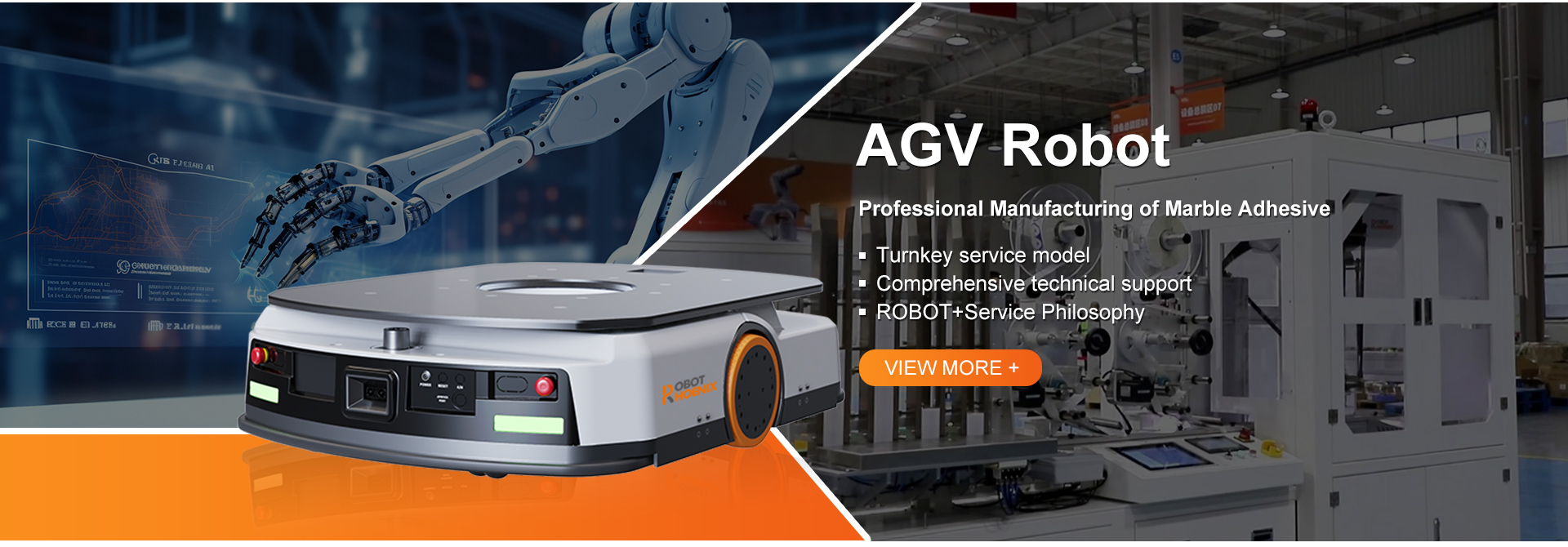
AGV/AMR platforms do not apply lids. They solve a different but related problem: moving lids, empty canisters, finished cartons or pallets between warehouse and production. In Semarang facilities where aisles are narrow and manual cart movement competes with forklift traffic, a latent AGV can reduce line-side congestion without rebuilding the entire warehouse. The best projects treat these layers as one flow: lid supply, lid application, carton packing and finished-goods staging.
When comparing product families, use the following engineering shortlist:
One information-gain point is often missed during tender comparison: ask for the lid-acceptance definition. A cycle-rate claim without a clear definition of “accepted lid” is not comparable across suppliers. The useful definition includes lid presence, correct orientation, press depth, no deformation, no double-lid feed and a recorded reject signal. Once that definition is agreed, robot speed becomes only one variable in the line’s overall equipment effectiveness.
The value of a factory-direct partner is visible in engineering ownership, documented quality and response speed, not only in the machine specification sheet.
JORI Intelligent Technology Co., Ltd. was founded in 2012 in Jinan, Shandong, China, a national robotics and manufacturing hub. The company specialises in industrial robot R&D and production, controller and 2D/3D vision development, OEM support and automated system integration. Its product lines include delta parallel robots, SCARA robots, AGV/AMR mobile robots, autonomous forklifts and silicon wafer handling robots.
Because the robot arm, controller, vision and integration capability are developed in-house, Semarang buyers can discuss the whole lid-application cell with one engineering team. That reduces the risk of gaps between the robot supplier, the packaging-machine builder and the local integrator. It also makes OEM and buyer-label support more practical for machine builders who want to offer a lid applicator solution under their own brand.
The company states ISO 9001 quality management, onsite verification and national patents covering delta, SCARA, wafer and AGV technologies. Its robots are exported to buyers in Southeast Asia, Eastern Europe, North America, South America and China. For procurement teams, these are useful signals when evaluating whether a supplier has the experience and authority to support a production line rather than only ship a box.
Review assessment, credit, trade capacity and buyer feedback.
These answers reflect the practical questions raised by machine builders, contract packers and brand owners evaluating a lid applicator project.
It picks a lid from a feeder or conveyor, orients it, places it onto a wet-wipe canister or pack, applies controlled press force and confirms that the lid is correctly seated. In an automated line, it may also reject incomplete lids and send a signal to the cartoner.
JORI is a robot manufacturer with factory-direct supply, OEM support and wholesale/OEM cooperation for machine builders and distributors. Standard robots can be ordered from 1 set, so Semarang buyers can validate a pilot cell before scaling.
Choose delta when the priority is very fast picking from a moving conveyor or feeder with lightweight lids. Choose SCARA when the lid needs compact planar placement, insertion or press-fit in a small cell. Many projects use vision with either robot family.
Yes, provided the changeover strategy is defined early. Tooling, vacuum cups, gripper fingers, vision recipes and press-depth settings may need to change between SKUs. Share samples or 3D drawings so the factory can review orientation and fitment risks.
A typical approach uses 2D/3D vision for orientation, a vacuum or mechanical gripper for stable transfer, and position or force feedback for press-fit. The cell should output a reject signal when the lid is missing, tilted, double-fed or not seated to the agreed depth.
Standard delta robots, SCARA robots and AMR/AGV platforms can be ordered from 1 set. Custom end-effectors, integrated frames and full line automation are quoted according to the engineering scope.
Delivery terms include FOB, CFR, CIF, EXW, CIP, FCA, CPT and express delivery. Payment methods include T/T, L/C, credit card, PayPal, Western Union, MoneyGram and escrow, in USD, EUR, GBP, JPY, CAD, AUD, HKD, CHF and CNY.
JORI maintains an average response time of 2 hours or less and a 97.06% response rate. Include lid photos, dimensions, target cycle time and line layout in the first message to shorten the engineering review.
Yes. JORI develops its own controllers and 2D/3D vision, offers PLC-ready delta robots and supports machine builders such as carton packer and wet wipe lid applicator manufacturers. Local Semarang integrators can handle frames, guarding and site installation.
Review the supplier assessment, credit profile, trade capacity and buyer reviews. Ask for factory video, test reports, spare-parts lists and references relevant to packaging or lid-application projects. A pilot order can reduce scale-up risk.
Semarang’s port and industrial estates make import logistics manageable, but a lid applicator project still needs a clear handover plan. Confirm the plant voltage and frequency, compressed-air quality, floor condition, safety guarding responsibilities and the interface between the robot controller and the packaging PLC. If the cell will be built by a local machine builder, agree early on who supplies the frame, gripper, vision lighting, reject conveyor and safety interlocks.
Because Semarang is coastal and humid, specify protection appropriate to the room rather than assuming a standard IP rating is sufficient. An IP54 delta robot can be relevant where dust or splash is present, while stainless guards, drainage strategy and corrosion-resistant fasteners may matter in washdown areas. The goal is not to over-specify every component; it is to identify the few environmental factors that could cause unplanned stops.
Spare-parts planning should start before the purchase order. Typical critical items include vacuum cups, gripper fingers, lid-orientation sensors, vision light modules, controller fans and fuses. A small critical-spares kit, combined with remote engineering support and clear escalation contacts, is often more useful to a Semarang plant than a large inventory of low-wear parts.
Finally, define acceptance criteria in measurable terms: cycle time at a specified lid and canister format, lid orientation success rate, press-fit pass rate, reject response time and changeover time between two SKUs. When these numbers are written into the factory acceptance test, the buyer can compare factory-direct offers on total lifecycle performance rather than headline robot price.
Better input produces a faster and more accurate factory recommendation.
Tell us your lid type, canister format, cycle-time target and existing line layout. We will help you shortlist delta, SCARA, IP54 or AGV options and prepare a factory-direct proposal for your Semarang project.