Silicon Wafer Handling Robot Series
Wafer transfer · Custom end-effector
Application-engineered · MOQ 1 set
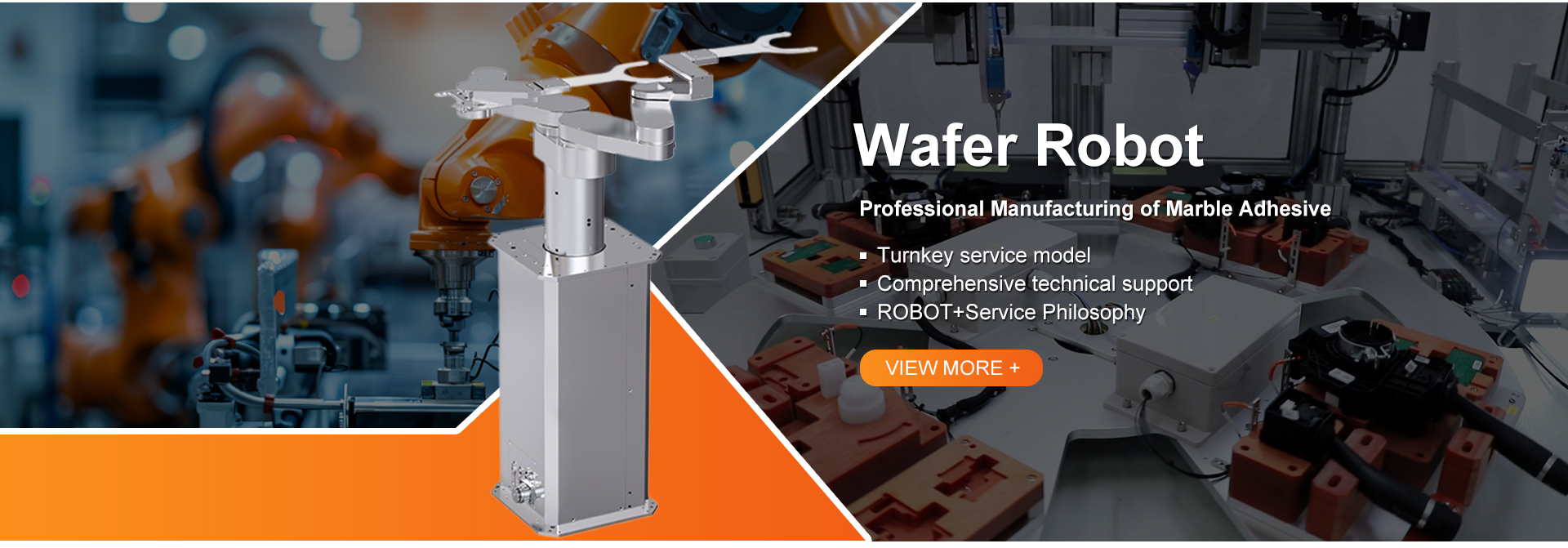


A silicon wafer handling robot is not only a robot arm. It is a transfer system engineered around yield protection, cleanroom discipline, tool integration and serviceability.
Short answer for procurement teams: select a silicon wafer handling robot by application fit, not catalogue payload. Define wafer diameter and thickness, carrier or cassette type, required cycle time, cleanroom target, EFEM or process-tool interface, handling method, communication protocol, safety interlocks, acceptance tests and spare-parts plan. Then request a written compliance matrix and a validation plan using representative wafers. JORI Intelligent Technology Co., Ltd. supports this process as an original robot manufacturer with in-house motion control, controller and 2D/3D vision capability, custom end-effectors, OEM support and automated system integration experience.
For a confidential engineering review, send your wafer data, layout drawing, current manual process and target takt time to info@joribot.com.
Start with the wafer, carrier and process. Wafer size, thickness, warpage, coating and edge profile determine end-effector design, motion limits and inspection method. Two fabs may use the same wafer size but require very different transfer strategies.
Ask for particle-control assumptions, ESD provisions, cable-routing details, materials, lubrication strategy, cleanroom compatibility and wafer breakage risk analysis. Yield protection must be designed into the transfer module, not inspected after damage occurs.
Confirm the robot-to-tool handshake, load-port interface, communication protocol, safety logic, fault recovery, remote support and spare-parts path. A fast robot with unclear integration support can become a bottleneck during ramp-up.
Use these recommended solution paths to structure a first RFQ. Final specifications are confirmed after wafer samples, layout review and acceptance criteria are agreed.
No matching wafer solutions on this page. Please email info@joribot.com for a custom configuration.
| Typical Use Case | Recommended JORI Path | RFQ Data to Provide | Acceptance Focus |
|---|---|---|---|
| Use Case 01Cassette-to-cassette transfer | Silicon wafer handling robot with custom end-effector and in-house controller | Wafer size and thickness, cassette type, takt time, cleanroom class, layout drawing | Cycle time, repeatability, particle control, wafer damage checks and fault recovery |
| Use Case 02Tool or EFEM integration | OEM integration package with controller, vision and interface engineering | Load-port type, tool interface, handshake logic, protocol, safety requirements | Communication reliability, interlocks, wafer mapping and maintenance access |
| Use Case 03Thin or fragile wafer handling | Engineering review for end-effector method, motion profiles and support strategy | Wafer thickness, warpage, coating, edge condition, breakage history, sample wafers | Low-vibration motion, edge contact risk, wafer support, cleanliness and operator recovery |
| Use Case 04Pilot line or single-cell automation | Single-set robot platform with recipe validation and integration support | Product mix, future capacity plan, recipe changes, footprint, utility data | Pilot-to-production scalability, documentation, spare parts and training |
Final configurations, cleanliness class, interface protocols and performance figures are confirmed per project specification.
Procurement is shifting from price comparison to verified capability, total cost of ownership and long-term integration support.
Semiconductor buyers increasingly verify factory capability, quality systems, patents, references and export documentation before technical review. A supplier that can show in-house R&D, controller development, vision capability and OEM project experience reduces procurement risk. JORI’s profile includes ISO 9001 quality management, onsite-verified supplier credentials and a documented response rate of 97.06%.
Purchase price is only one line in the business case. Procurement teams now compare wafer breakage risk, particle contamination risk, maintenance time, spare-parts lead time, training requirements, energy footprint and integration hours. A wafer robot that supports faster fault recovery and predictable maintenance can deliver a lower total cost of ownership than a lower-cost arm with limited support.
Many fabs and machine builders prefer to validate a single transfer cell before scaling to multiple stations. Flexible MOQ, staged acceptance and documented change control are becoming more important. JORI supports single-set and pilot project discussions, which helps buyers test handling quality, cycle time and integration before committing to a larger roll-out.
New semiconductor, advanced packaging and photovoltaic capacity is being planned across Southeast Asia, Eastern Europe, North America, South America and China. Buyers need suppliers who can support English-language documentation, remote engineering reviews, export packaging, spare-parts planning and commissioning coordination across time zones.
Cleanroom class, particle generation, ESD control, material compatibility and lubrication strategy are moving from optional questions to mandatory gates. Procurement teams should ask for a cleanroom compliance checklist, material declarations and maintenance procedures that avoid introducing contamination into the process environment.
Wafer handling robots must communicate with load ports, EFEMs, process tools, MES and safety systems. Buyers increasingly request early confirmation of I/O, Ethernet, PLC, handshake logic and recipe-management expectations. The ideal supplier provides clear interface documentation and engineering support before the purchase order is issued.
Machine builders and process-tool companies often need custom end-effectors, branding, controller options and integration support. OEM-friendly suppliers can shorten development cycles by combining standard robot platforms with project-specific tooling. JORI’s OEM service, design service and buyer-label options are designed for this type of collaboration.
Long-term uptime depends on documentation, training, spare-part strategy, maintenance access and remote troubleshooting. Buyers are asking for a clear service model at the RFQ stage: recommended spare parts, wear items, calibration procedure, response time and escalation path. Suppliers with in-house engineering can usually close technical issues faster than reseller chains.
Wafer transfer technology is developing around thinner substrates, higher cleanliness, tighter integration and better data visibility.
The next generation of wafer handling automation is being evaluated as a complete module. Buyers care about the end-effector, cable routing, wafer detection, mapping, interlocks, cleanroom materials, maintenance access and software handshake as much as the robot mechanism. For a project engineer, the goal is not maximum speed alone, but stable throughput with controlled risk.
JORI’s development model combines robot mechanics, self-developed motion control, controller development and 2D/3D vision capability. That combination allows buyers to discuss custom end-effectors, controller integration and automated system integration with one engineering team. For wafer handling, this can reduce the gap between the robot supplier and the tool integrator.
A complete technical brief helps the supplier recommend a realistic wafer handling configuration instead of a generic catalogue model.
Use these answers to align engineering, procurement and quality teams before you issue an RFQ.
JORI Intelligent Technology Co., Ltd. was founded in 2012 and is located in Jinan, Shandong Province, China. The company specializes in industrial robot R&D and manufacturing, controller and vision system development, OEM support and automated system integration. Its product and technology portfolio includes delta robots, SCARA robots, silicon wafer robots, AGV/AMR platforms, 2D/3D vision and robot controllers.
For wafer handling projects, this breadth matters. Buyers can discuss the robot mechanism, controller, vision, end-effector, factory integration and acceptance planning with one accountable engineering source. JORI’s self-developed robot and control technologies are supported by national patents, ISO 9001 quality management and export experience across North America, South America, Eastern Europe, Southeast Asia and China.
Use the gallery to review the application context and manufacturer capability before requesting a formal technical discussion.
Send wafer size, carrier type, cycle time, cleanroom target, tool interface and layout details. Our engineers will help you define a practical evaluation path.
info@joribot.com