China Best Three Axis Robot Wholesaler & Wholesalers
A buyer-first, engineering-led guide for importers, machine builders and factory owners comparing three-axis, delta, SCARA, AMR and AGV robot wholesale partners in China.
8 Wholesale-Ready Robot Models for Three-Axis, Delta, SCARA and AMR Projects
Wholesale buyers rarely need one isolated machine. They need a repeatable product family that can cover high-speed sorting, precision assembly, food handling, electronics assembly and warehouse transport. The eight models below are selected from JORI’s current catalogue because they answer the most common requests behind “China three axis robot wholesaler” searches.
6kg Payload IP54 Protection Grade Pick Place Sorting Parallel Robot with Robot Gripper
IP54 protection and 6 kg payload for sorting, packing and pick-and-place where dust, splash risk and repeatability matter.
View specification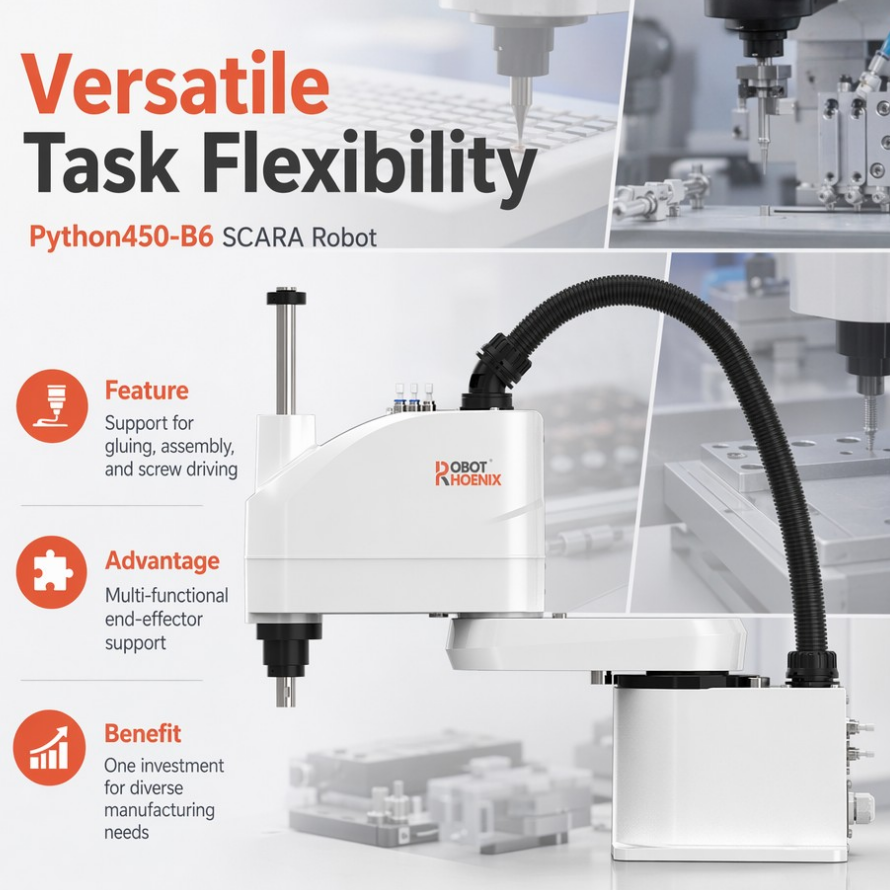
New Condition High Precision 400mm Reach Arm Scara Robot with PLC for 3C Electronic Assembly
A 400 mm reach SCARA option for compact 3C cells, PLC-ready integration and repeatable electronic assembly.
View specification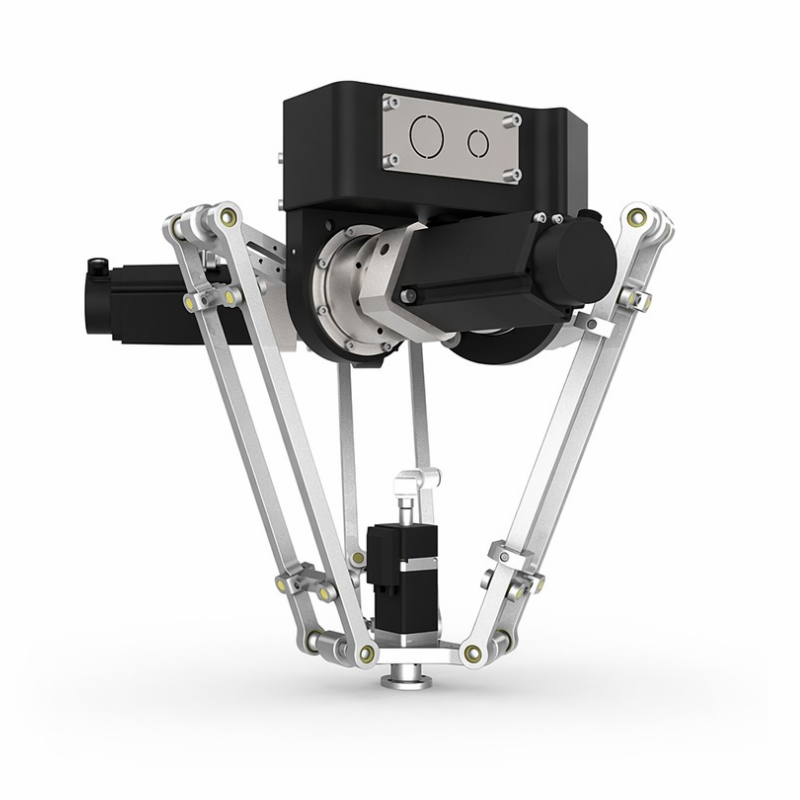
Low Cost Customized 2/3/4 Axis Industrial Manipulator Delta Robot for Pick and Place
Flexible 2/3/4-axis delta configuration for buyers who need cost control without losing high-speed motion.
View specification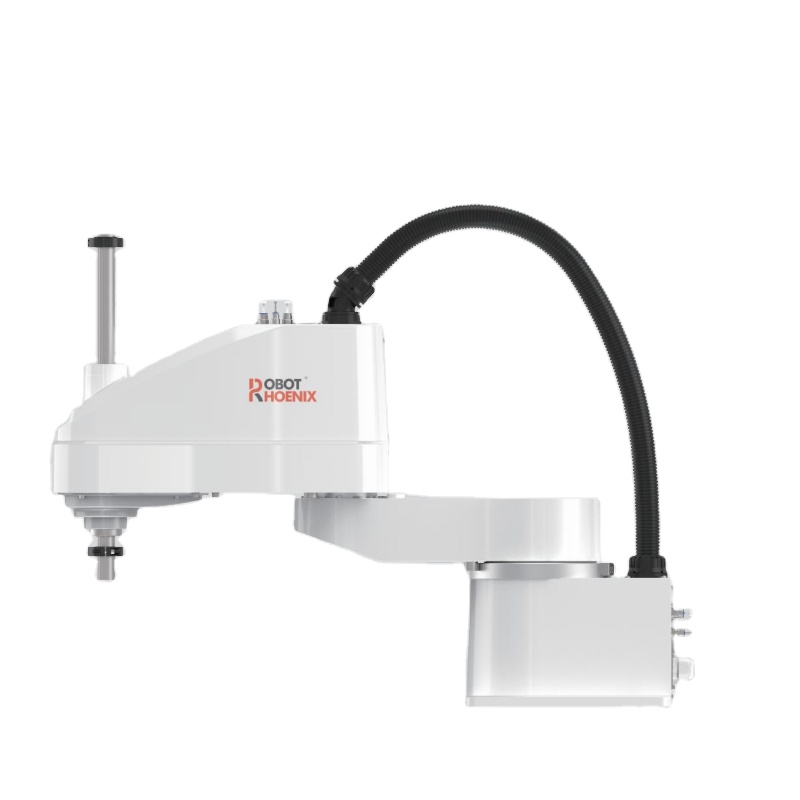
Advanced Industrial 4 Axis Robot Scara Robot for Pick and Place in Food Industry Gripping
Food-industry pick-and-place with a 4-axis SCARA structure for hygienic, repeatable gripping tasks.
View specification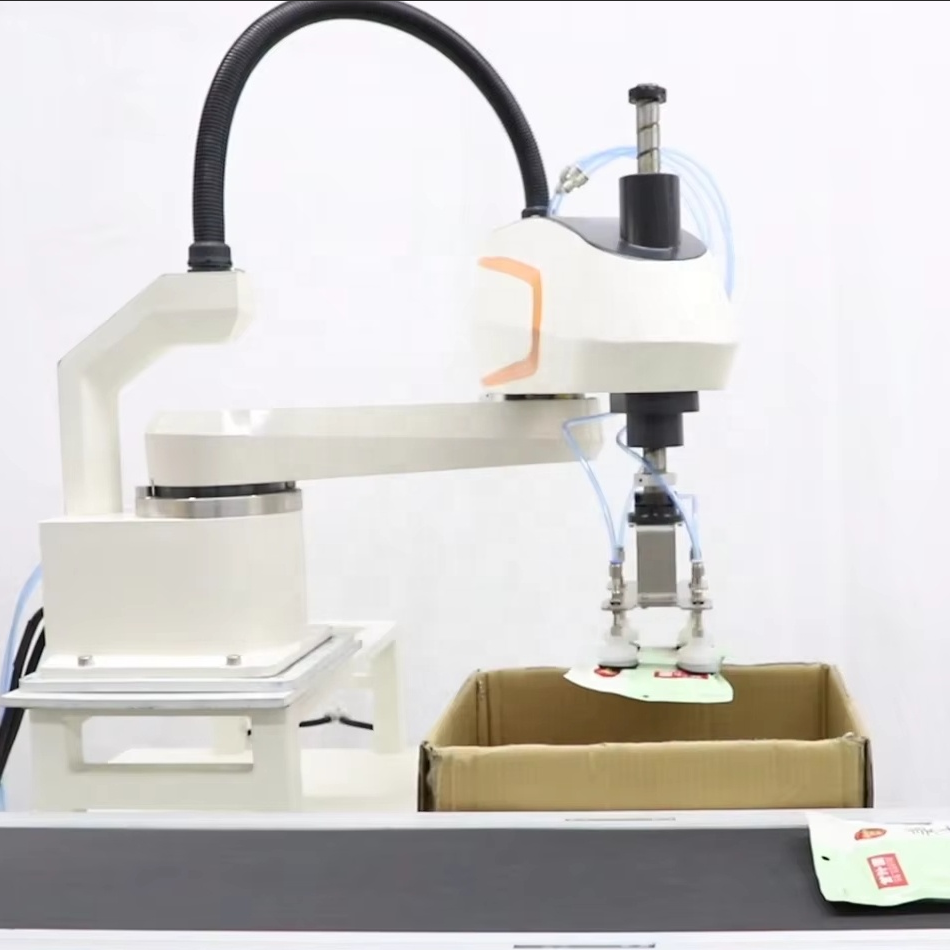
Newly Design Industrial Articulated Robotic Arm Scara for Precision Assembly & Handling
Precision assembly and handling for buyers sourcing a compact robotic arm with integration headroom.
View specification
High Performance Material Handling Verhicel AMR Robot AGV Robot for Warehouse Logistic System
Laser SLAM AMR/AGV transport for warehouses that need flexible material flow without fixed floor tracks.
View specification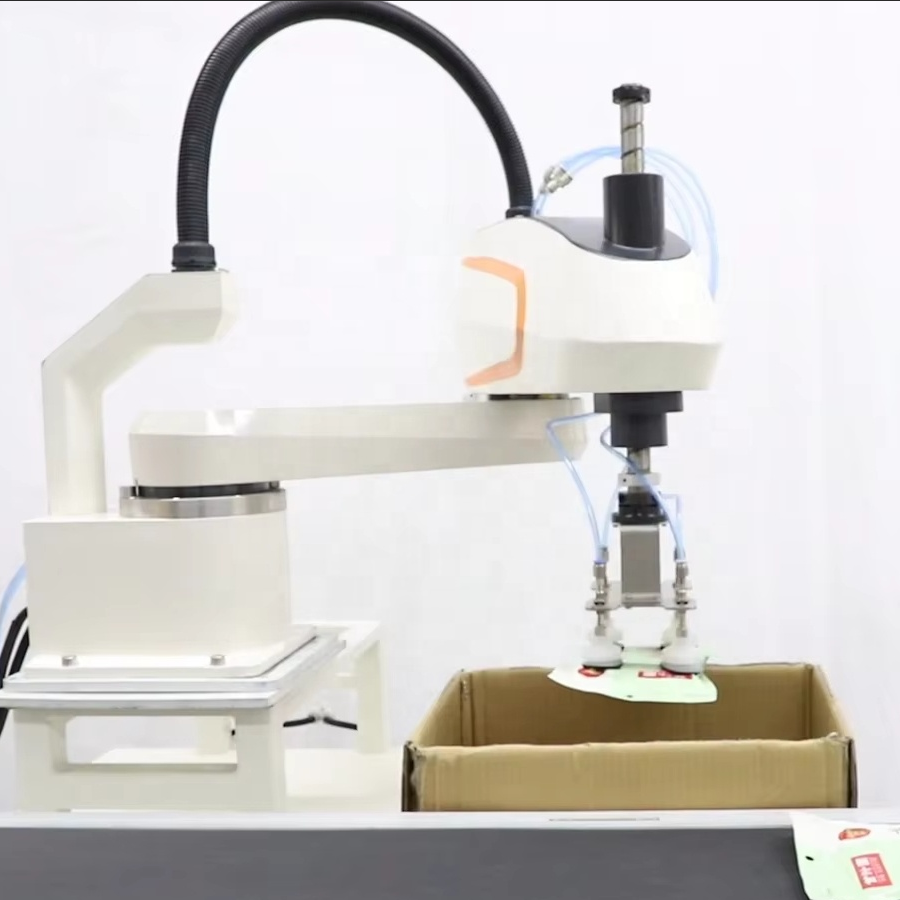
Light Load 4 Axis Industrial Manipulator Robot Scara Robot for Pick and Place Application
Light-load SCARA pick-and-place for cost-sensitive cells that still require stable cycle time.
View specification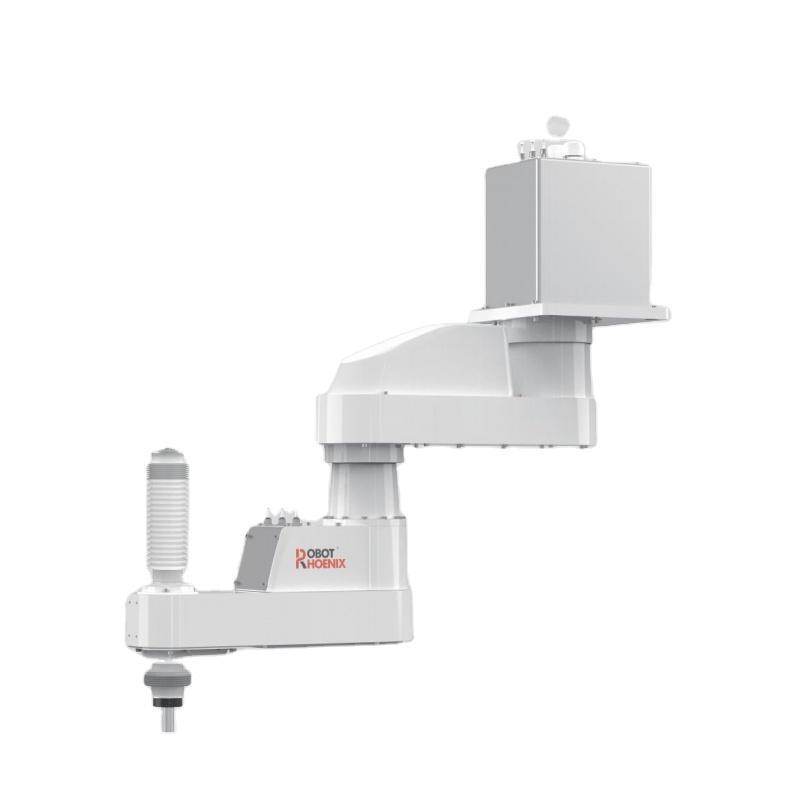
Compact Structure High Precision 550mm Reach Radius 3kg Payload 4-axis SCARA Robot
550 mm reach and 3 kg payload in a compact footprint for space-constrained production lines.
View specificationWhat “China Best Three Axis Robot Wholesaler & Wholesalers” Really Means to a Procurement Team
Google does not rank a page because it repeats a phrase. It ranks content that satisfies the full intent bundle behind the query: supplier discovery, technical fit, risk reduction, price benchmarking, OEM flexibility and after-sales capability.
When a buyer searches for China best three axis robot wholesaler & wholesalers, the surface intent is obvious: find a supplier. The deeper intent is more commercial. The buyer wants to know whether a three-axis platform can replace manual labour, whether the robot can be integrated with existing packaging or assembly equipment, whether one set can be ordered before scaling, and whether the “wholesale” price still includes engineering support.
In industrial automation, “three-axis” is not one universal product category. It may mean an X-Y-Z Cartesian gantry, a three-axis delta platform for high-speed transfer, or a stripped-down pick-and-place mechanism without wrist rotation. Many projects that begin as three-axis later become 4-axis SCARA or 4-axis delta because the product must be oriented, not simply moved. A credible wholesaler should therefore clarify the kinematic requirement before quoting.
Wholesaling robots is also different from consumer-goods wholesale. Standard delta, SCARA and AMR platforms can be ordered from one set, which lowers the trial barrier. Real wholesale value appears when the supplier can support repeat orders, OEM/private label, controller integration, safety validation, spare parts and global delivery. That is why the purchasing decision should be based on total cost of ownership, not the lowest unit price.
For SEO, this is the information gain a generic directory cannot provide: an engineering explanation of what to verify, how to compare quotes, and where the technical risk sits. For the buyer, it turns a vague “best” claim into an auditable procurement process.
Evidence file to request before you shortlist a wholesaler
- ✓Business licence, factory address and onsite-verification record
- ✓ISO 9001 quality certificate and incoming-inspection process
- ✓Controller, servo and vision architecture with interface list
- ✓Payload, reach, repeatability and cycle-time test report
- ✓OEM, private-label and custom end-effector capability
- ✓Spare-parts list, warranty terms and response-time commitment
- ✓Export terms, packaging standard and installation documentation
Information-gain model: TCO for a three-axis or SCARA robot cell
TCO = landed robot price + end effector + controller/vision + safety guarding + integration + commissioning + training + spare parts + downtime risk + changeover cost. A quote that looks 12% cheaper at the unit-price level can be more expensive after integration if the controller protocol, I/O map or vision package is incomplete. Ask every wholesaler to quote against the same TCO template.
| Buyer question | Technical answer | Wholesale evidence to request |
|---|---|---|
| Can a three-axis platform handle my part? | Confirm payload, reach, repeatability, cycle time, part orientation and end-effector weight. | Cycle-time simulation, video of a similar application, and a buy-off protocol. |
| Will it integrate with my line? | Check PLC protocol, digital I/O, safety signals, vision interface and fieldbus options. | Interface list, electrical drawings, controller manual and sample PLC mapping. |
| Is the quotation comparable? | Normalise landed cost, spare parts, training, warranty and commissioning scope. | TCO sheet, spare-parts price list and after-sales response SLA. |
| Can the supplier scale with me? | Check MOQ, repeat-order lead time, OEM flexibility and production capacity. | Factory audit, production schedule and private-label sample. |
| Is the supplier reliable? | Verify legal status, quality system, export record and buyer feedback. | ISO 9001, onsite assessment, credit profile and transaction history. |
What Wholesale Buyers Will Demand from China Robot Suppliers Through 2030
Procurement teams are becoming more technical and more risk-aware. The winning wholesaler will behave less like a catalogue and more like a production engineering partner.
TCO over sticker price
Buyers will compare landed cost, integration hours, spare-parts velocity and changeover cost. Low unit price without local engineering support will lose to a slightly higher quote with a clear payback model.
Pilot-first, scale-second
MOQ 1 set makes it practical to validate a single cell before scaling. Procurement will ask for a pilot acceptance checklist, not only a product brochure.
Multi-family consolidation
Machine builders prefer one accountable source for delta, SCARA, AMR and wafer handling. Consolidating suppliers reduces interface risk and spare-parts complexity.
Open interfaces
PLC-ready I/O, fieldbus options and documented controller APIs will matter as much as payload. Buyers will reject black-box systems that slow down integration.
Service velocity
Response time, remote diagnostics and spare-parts dispatch will become formal SLA items. A 2-hour response average and a 97.06% response rate are commercially meaningful.
Illustrative buyer-priority model for robot wholesale shortlisting
How Three-Axis and Multi-Axis Robot Products Are Evolving
The next generation of pick-and-place and assembly robots will be judged by integration speed, data openness and application flexibility, not only by mechanical speed.
Vision-first standard cells
2D and 3D vision are moving from optional add-ons to core modules. Random-orientation picking, inspection and traceability are becoming standard expectations in packaging and electronics.
In-house controllers as differentiators
Suppliers that develop their own motion controllers can tune cycle time, add application logic and support custom I/O more quickly than suppliers that assemble third-party components.
Modular end effectors
Quick-change grippers, vacuum tools and custom fixtures allow one robot family to serve multiple SKUs. Buyers gain flexibility without buying a new robot for every product change.
Digital twin and offline programming
Simulation reduces commissioning time and risk. Offline programming will become a procurement requirement for multi-robot cells and frequently changing production layouts.
Cleaner, safer, energy-aware design
Food, pharmaceutical and electronics buyers will demand better protection ratings, easier cleaning, safer guarding and energy monitoring as part of the robot specification.
Why JORI Is a Credible China Robot Wholesaler for Serious Buyers
JORI Intelligent Technology Co., Ltd. was founded in 2012 in Jinan, Shandong, China. The company specialises in industrial robot R&D and manufacturing, controller and 2D/3D vision development, OEM support and automated system integration.
Developed, not resold
Delta robots, SCARA robots, silicon wafer robots, AGV/AMR platforms, 2D/3D vision and controllers are developed in-house and protected by national patents. Buyers get one accountable source for hardware, software and after-sales engineering.
One team across five robot families
Delta parallel robots, SCARA robots, AMR/AGV mobile robots, autonomous forklifts and wafer handling robots are supported by one engineering organisation. That breadth helps buyers consolidate suppliers without losing application focus.
OEM, design and buyer label
OEM service, design service and buyer-label options support machine builders and distributors. Custom end effectors, controller integration and full automated system integration are available for repeat wholesale programmes.
Quality evidence before the invoice
ISO 9001 quality management covers component inspection through final robot run-in testing. Onsite-verified supplier status, credit profile, trade capacity and transaction records help procurement teams verify the factory before payment.
Fast commercial response
JORI maintains an average response time of 2 hours or less and a 97.06% response rate. For a buyer comparing several China three axis robot wholesalers, response speed is an early signal of project support quality.
Export-ready terms and support
Standard models can be ordered from 1 set. Accepted delivery terms include FOB, CFR, CIF, EXW, CIP, FCA, CPT and express delivery, with multiple payment currencies and methods for global buyers.
Inside the factory: the difference between a manufacturer and a reseller
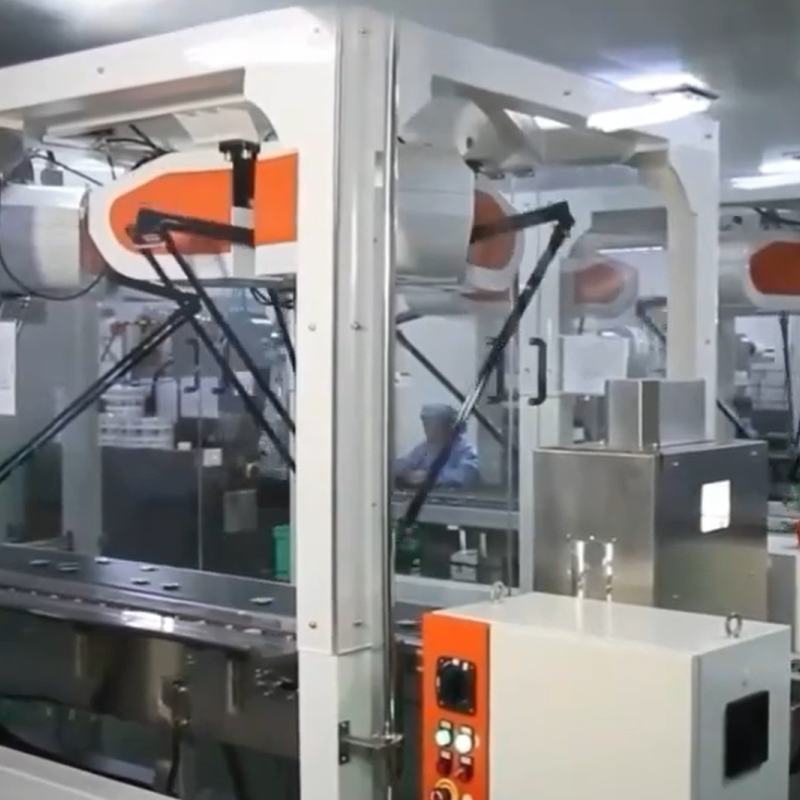
For wholesale buyers, a factory visit is not a courtesy; it is a risk-control step. Look for a defined assembly flow, incoming component inspection, controller testing, vision calibration, run-in testing and packaging documentation. JORI’s public profile, factory video, trade capacity, credit profile and buyer reviews are designed to make these checks practical before an order is placed.
The company’s product strategy is also relevant to procurement. Because the controller, vision and robot body are developed together, an OEM buyer can request interface changes, private-label documentation and application-specific tuning without navigating a chain of third-party suppliers.
- ✓2012-founded manufacturing base in Jinan, Shandong
- ✓ISO 9001 quality management and onsite verification
- ✓National patents across robot bodies, controllers and vision
- ✓Global export experience across Asia, Europe and the Americas



Where Three-Axis, SCARA, Delta and AMR Robots Deliver ROI
The application determines the kinematic choice. A high-speed delta, a compact SCARA and a laser SLAM AMR solve different bottlenecks and should be evaluated against different payback drivers.
Food & Beverage
Vision-guided delta picking, sorting and case packing at conveyor speed. IP54 protection and washdown-friendly layouts are common requirements for packaging and daily chemical lines.
Electronics & 3C
SCARA assembly, insertion, screwdriving and inspection for compact production cells. Reach, repeatability and PLC interface compatibility matter more than raw payload for many 3C projects.
Warehouse & Logistics
Laser SLAM AMRs and autonomous forklifts support 24/7 material flow without fixed tape. A site layout review and fleet-management plan are essential parts of the wholesale quotation.
A Practical Due-Diligence Checklist for First-Time China Robot Buyers
Use the same four-stage process whether you buy one set for a pilot or 50 sets for a distributor programme. The goal is to remove ambiguity before purchase order approval.
Define the motion problem
Write down part weight, dimensions, orientation, required cycle time, reach envelope, environment and existing PLC. A three-axis platform may be sufficient for simple transfer; orientation usually requires a fourth axis.
Request engineering evidence
Ask for a cycle-time estimate, interface list, controller manual, vision option and end-effector drawing. Compare every supplier using the same data sheet rather than brochure language.
Audit the factory and credentials
Check ISO 9001, onsite verification, patents, trade capacity and buyer reviews. If a factory cannot explain its inspection and run-in process, the quotation is not yet procurement-ready.
Compare TCO and service
Normalise spare parts, training, commissioning support, warranty and response SLA. The lowest robot price may not be the lowest production cost after installation and changeover.
FAQ: Buying Three-Axis Robots from China Wholesalers
These are the questions that repeatedly appear in procurement reviews for delta, SCARA and AMR projects.
What is a three-axis robot, and how is it different from a 4-axis SCARA or delta robot?
A three-axis robot commonly controls X, Y and Z translation. A 4-axis SCARA or delta adds rotation around the vertical axis, which is often required to orient a product. If your part must be picked and placed at a specific angle, confirm the fourth axis early.
Are delta robots three-axis or four-axis?
Delta parallel robots can be supplied in 2-axis, 3-axis or 4-axis configurations depending on the required rotation. For simple high-speed transfer, a three-axis layout may be enough; for packaging and sorting, a fourth axis is often specified.
Why buy from a China three-axis robot wholesaler instead of a local distributor?
A factory-direct wholesaler can provide OEM flexibility, faster engineering feedback and more competitive repeat-order pricing. However, buyers should still verify integration support, spare-parts logistics and after-sales response, not only the unit price.
What is the minimum order quantity?
Standard delta robots, SCARA robots and AMR/AGV platforms can be ordered from one set, allowing a pilot cell or single-line validation before scaling. Volume pricing and private-label programmes can be discussed once the model and configuration are fixed.
Can JORI support OEM, private label and custom end effectors?
Yes. JORI provides OEM service, design service and buyer-label options, and supports machine builders with custom end effectors, controller integration and automated system integration. Share drawings, part samples or a video of the current process for review.
Which delivery and payment terms are accepted?
Delivery terms include FOB, CFR, CIF, EXW, CIP, FCA, CPT and express delivery. Payment methods include T/T, L/C, credit card, PayPal, Western Union, MoneyGram and escrow, in currencies such as USD, EUR, GBP, JPY, CAD, AUD, HKD, CHF and CNY.
How can I verify quality before shipment?
Request the inspection plan, run-in test record, repeatability report and packing checklist. For larger projects, schedule a factory acceptance test. ISO 9001 certification, onsite verification and transaction records provide additional procurement evidence.
How quickly does JORI respond to inquiries?
JORI maintains an average response time of 2 hours or less and a 97.06% response rate. Send part weight, cycle-time target, reach requirement, plant voltage and a short video of the current process to speed up the engineering reply.
Request a Wholesale Robot Shortlist, Cycle-Time Review or OEM Quotation
Send your product dimensions, target cycle time, payload, reach, plant voltage and current process video. The JORI engineering team will map your requirement to delta, SCARA, AMR or a custom three-axis configuration and reply with a practical next step.