8 Vision-Guided Robot Models for Fast, Flexible Production
These are not catalogue filler. Each platform below targets a specific automation bottleneck — high-speed picking, precise 3C assembly, hygienic packaging, carton packing or autonomous material flow — and can be configured with JORI controllers, vision and end-effectors.

New Condition High Precision 400mm Reach Arm SCARA Robot with PLC for 3C Electronic Assembly
A compact SCARA platform for repeatable placement, screwdriving, inspection and small-part handling in electronics cells. PLC-ready integration reduces engineering friction.
View product
High-Speed Spider Arm Delta Robot for Fully Automatic Wet Wipe Lid Applicator Machine
Vision-guided lid picking and placement for hygiene packaging lines. The parallel-arm architecture is built for short, fast cycles on randomly presented lids.
View product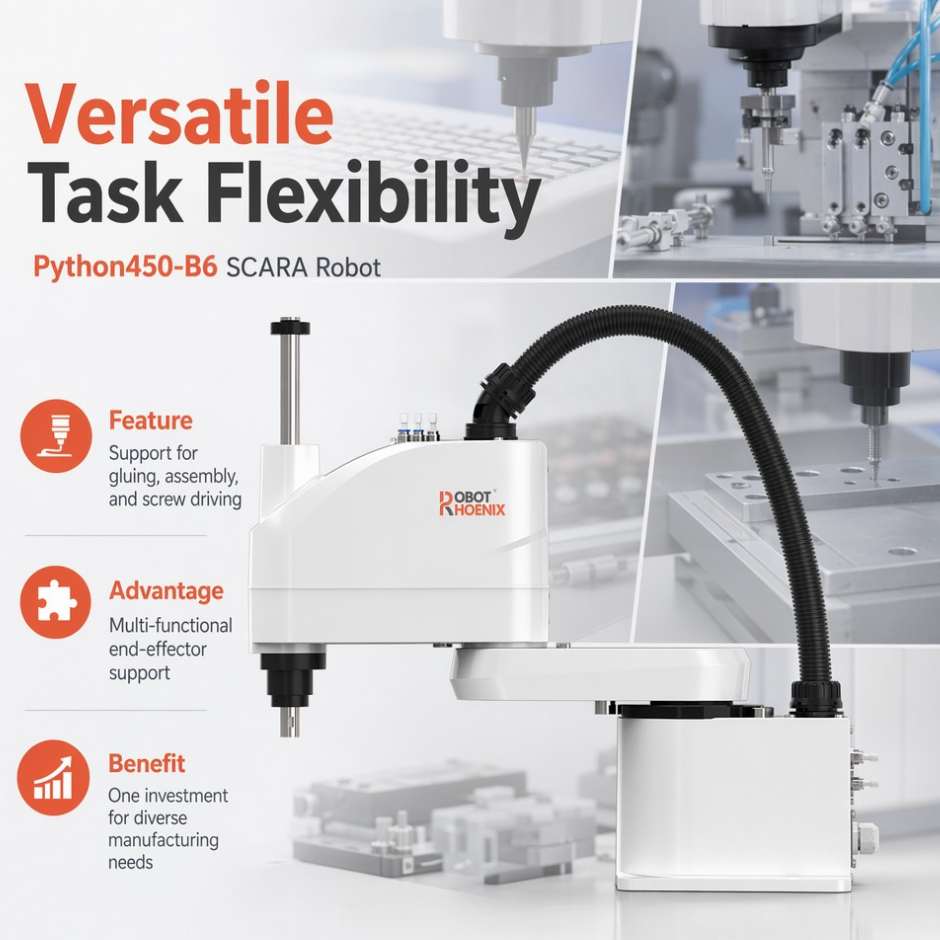
Four-Axis Industrial Robot Hand SCARA for Loading/Unloading and Sorting in Food Industry
Designed for loading, unloading and sorting tasks where compact reach, hygiene-aware integration and repeatable motion matter more than heavy payload.
View product
Robotphoenix New 4-Axis Parallel Robot Arm Delta Spider Hand Robot for Carton Packer Line
A carton-packing delta robot for end-of-line case packing, where throughput and changeover flexibility decide the real cost per carton.
View product
High Performance Material Handling Vehicle AMR Robot AGV Robot for Warehouse Logistic System
An autonomous material-handling platform for warehouses and production floors. Laser SLAM navigation supports layout changes without fixed floor tape.
View product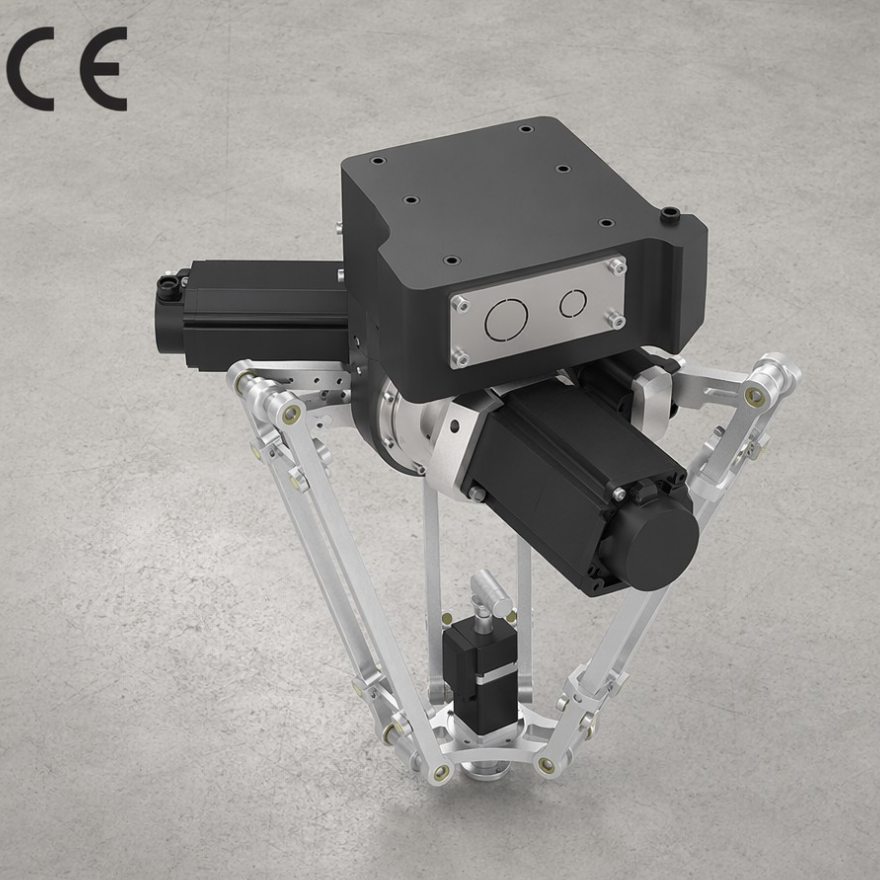
Smart Parallel Robot Picking and Placing Robot Manipulator Delta Robot with Visual System
A visual delta robot for pick-and-place tasks where parts arrive in random orientation. The vision loop locates, validates and places parts at production speed.
View product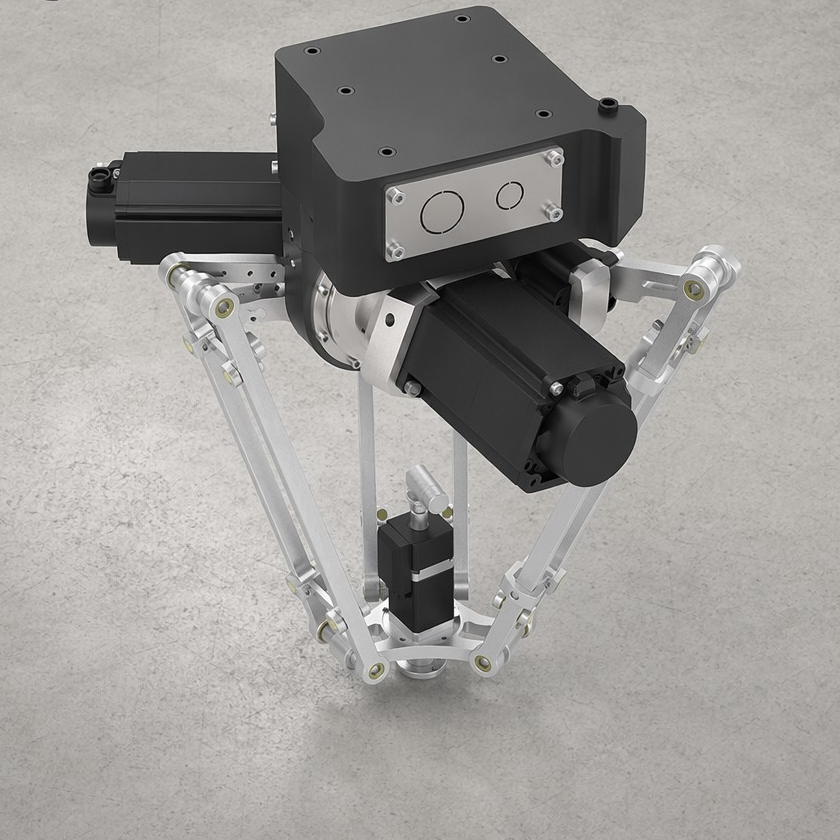
New Condition High-Speed Industrial Innovative Manipulator Delta Robot for Light Industry
Built for light-industry pick-and-place, sorting and packaging cells that need very short cycle times with stable repeatability.
View product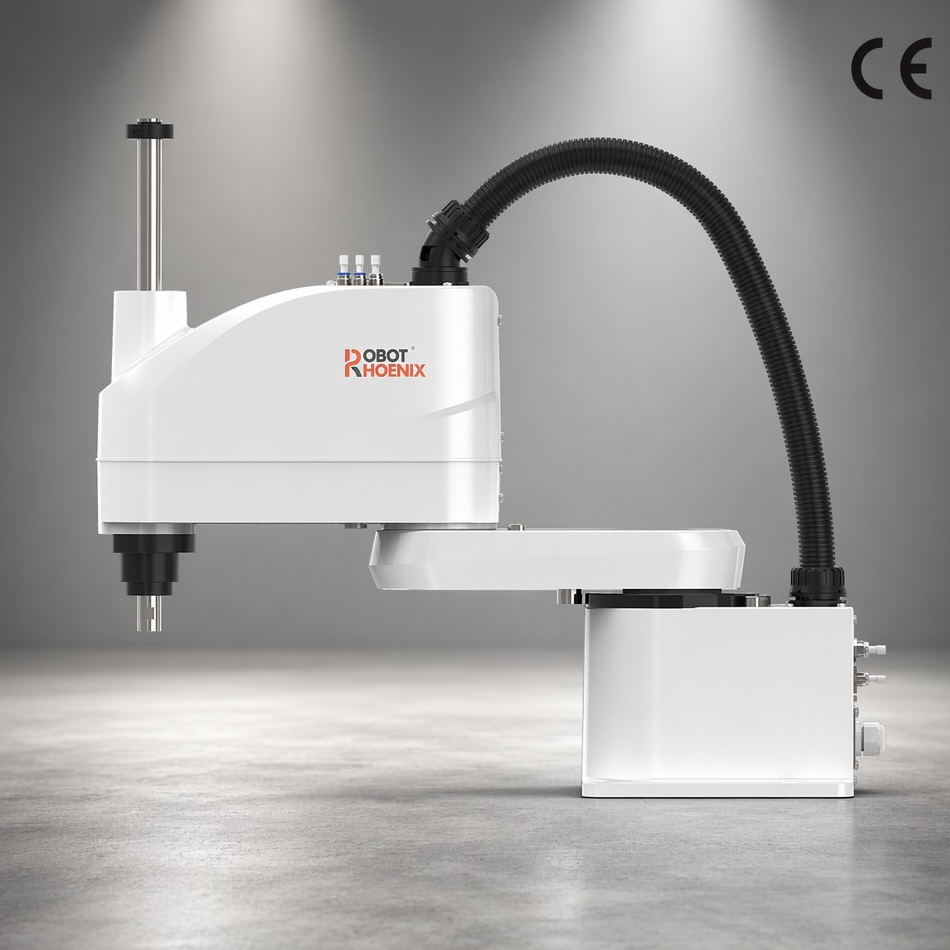
High Efficiency 6kg Payload Manipulator SCARA Robot with Vision for Picking and Placing
A practical bridge between high-speed delta picking and precise SCARA assembly, with vision guidance for flexible product changeover.
View productWhat “Best” Really Means When Sourcing Vision-Guided Robots from China
The strongest supplier is not the one with the largest catalogue. It is the one that can prove application capability, control the critical subsystems and stay accountable after the robot leaves the factory.
In a modern production cell, a vision-guided robot combines a high-speed manipulator with cameras, lighting, image processing and motion control so that it can locate, inspect and handle parts without hard fixtures. For packaging, electronics, food, pharmaceutical, semiconductor and warehouse teams, that capability turns fixed automation into flexible automation.
For buyers comparing China’s best vision guided robot manufacturers and exporters, the real differentiator is not simply payload or price. It is the ability to control the robot arm, controller, vision layer, end-effector interface, safety logic and commissioning support as one system. JORI Intelligent Technology Co., Ltd. was founded in 2012 in Jinan, Shandong, and builds delta robots, SCARA robots, silicon wafer robots, AGV/AMR platforms, controllers and 2D/3D vision in-house. That structure gives buyers one accountable source for hardware, software and after-sales engineering.
This guide adds practical information gain for procurement teams: where hidden integration costs appear, which robot family fits which process, how to verify a China exporter before payment, and what technology shifts should be written into a 2025–2030 automation plan.

Six Subsystems That Decide Whether a Vision Robot Performs
A vision-guided robot is a system, not a single machine. Buyers should evaluate all six layers together because weakness in any one layer becomes downtime on the factory floor.
Robot Arm and Kinematics
Delta robots favour ultra-fast lightweight picking. SCARA robots favour planar assembly and precise placement. The wrong kinematic choice cannot be fixed by software alone.
2D/3D Vision and Lighting
Part contrast, surface finish, ambient light and presentation method determine vision reliability. Lighting and calibration are engineering decisions, not accessories.
Controller and Software Stack
An in-house controller improves motion tuning, vision integration and PLC handshaking. It also makes troubleshooting faster when the cell is running under production pressure.
End-Effector and Gripper
Vacuum cups, soft grippers, magnetic tools and custom fingers must match part weight, surface and cycle time. A poor end-effector can destabilise an otherwise good robot.
Safety and Line Interface
Safety scanners, guarding, interlocks, e-stop logic and PLC handshakes must be validated for the actual line. Quoting a robot without line-interface scope invites project risk.
Data, Traceability and Support
Modern buyers increasingly require production logs, vision results, changeover recipes and remote support readiness. Data capability should be specified during procurement.
Future Buying Trends for Vision-Guided Robot Systems
Robot hardware continues to improve, but procurement value is shifting toward integration speed, changeover flexibility, data readiness and lifecycle risk control.
AI-Native Edge Vision
Buyers will ask for edge inference that handles variation, classification and anomaly detection without sending every image to the cloud. Suppliers must prove model maintenance and retraining workflows.
Modular, Plug-and-Play Cells
Instead of one-off machines, procurement teams will favour modular robot cells with standard interfaces, faster line reconfiguration and reusable vision recipes.
TCO over Purchase Price
Energy use, changeover labour, spare parts, calibration time, training and downtime will be evaluated more rigorously than the initial robot quotation.
Digital Twins and Simulation
Simulation before shipment reduces commissioning risk. Expect suppliers to provide layout models, cycle-time studies and robot reach verification as part of serious projects.
Traceability and Compliance
Food, pharma, semiconductor and export-oriented factories will require richer production records, vision audit trails and changeover documentation.
China as an Engineering Partner
Leading exporters are no longer evaluated only as low-cost factories. Buyers want co-development, OEM support, rapid sampling and global after-sales coordination.
Product Development Trends Buyers Should Specify Now
These trends are already visible in serious automation tenders. Writing them into the requirement now protects the cell from premature obsolescence.
From 2D to 3D + AI
3D vision and AI classification improve handling of stacked, tilted and reflective parts. Specify accuracy, lighting tolerance and retraining responsibilities.
Controller Convergence
Robot control, vision recipes and PLC handshaking are moving into tighter workflows. PLC-ready models reduce the cost of integrating with packaging and assembly machines.
Safety by Design
Safety validation is becoming part of the quotation, not a post-installation fix. Ask for risk assessment, guarded-zone logic, e-stop architecture and handshake documentation.
Fleet-Level Orchestration
AMR and forklift projects increasingly require multi-robot traffic management, charger strategy and integration with WMS or MES systems.
Why JORI Is Shortlisted as a China Vision-Guided Robot Manufacturer & Exporter
JORI combines original manufacturing, in-house control and vision development, OEM flexibility and export service discipline. The result is a supplier that can support both a single pilot cell and a multi-line roll-out.
Original Factory Since 2012
JORI has manufactured industrial robots since 2012, with roughly 10,000 m² of factory space and 500+ employees supporting R&D, production and export projects.
Independent R&D Capability
Delta, SCARA, wafer, AGV/AMR, controller and 2D/3D vision technologies are developed in-house and supported by national patents.
ISO 9001 and Onsite-Verified
Documented quality management, factory premises checked onsite and third-party supplier assessment give procurement teams verifiable confidence.
OEM, Design and Buyer Label
Machine builders can request OEM service, design service, buyer-label options, custom end-effectors, controller integration and full automated system integration.
Export Experience Across Continents
JORI serves buyers in Southeast Asia, Eastern Europe, North America, South America and China, with 10+ years of overseas market support.
Fast Response and Lifecycle Support
Average response time of 2 hours or less and a 97.06% response rate help overseas buyers keep feasibility studies and spare-parts requests moving.



Verify the Supplier Before You Approve the PO
Review company, credit, trade capacity, supplier assessment and buyer feedback records. A serious manufacturer should make verification easy.
Match the Robot Family to the Real Process Bottleneck
Do not start with a model number. Start with part presentation, cycle time, accuracy, hygiene, payload and line-interface requirements.
Delta Robot
Best for high-speed pick-and-place from moving conveyors, lightweight packaging and vision-guided sorting. Typical payload range is 3–6 kg with very short cycle times.
SCARA Robot
Best for planar assembly, insertion, precise placement, loading and sorting in a compact footprint. Ideal when accuracy and repeatable vertical motion matter.
AMR / AGV
Best for material transport, warehouse intralogistics and production-floor replenishment. Laser SLAM reduces infrastructure work and supports layout changes.
Autonomous Forklift
Best for repetitive pallet shuttles and warehouse transport where labour shortages or shift patterns limit manual forklift productivity.
A Practical Procurement Model for Vision-Guided Robot Projects
The lowest quotation is not automatically the lowest cost. Build the business case around cycle-time payback, quality cost, labour flexibility and lifecycle support.
Cycle-Time Payback
Calculate savings from higher throughput, reduced waiting and stable takt time. A robot that removes a bottleneck can pay back faster than a cheaper cell that does not.
Quality Cost Reduction
Vision guidance reduces misplaced parts, scratches, wrong-orientation picks and manual inconsistency. Include scrap, rework and inspection labour in the ROI model.
Labour Flexibility
Robots should be evaluated for redeployment, changeover and multi-product use. Standard interfaces and recipe management improve utilisation across product cycles.
Spares, Training and SLA
Confirm spare-parts lists, recommended critical spares, remote support process, warranty scope and training deliverables before approving the final supplier.
Common Questions from Procurement and Engineering Teams
These answers reflect the practical questions asked by machine builders, system integrators and factory owners sourcing vision-guided robots from China.
1. Is JORI a manufacturer or a trading company?
JORI Intelligent Technology Co., Ltd. is an original robot manufacturer founded in 2012. The company develops and produces delta robots, SCARA robots, AGV/AMR platforms, autonomous forklifts, wafer-handling robots, controllers and 2D/3D vision systems, and also provides OEM service and automated system integration.
2. Can vision-guided robots handle randomly oriented parts?
Yes, when the vision system, lighting, calibration and end-effector are engineered together. Random picking usually requires a clear definition of part surfaces, contrast, allowable overlap and cycle-time tolerance. JORI develops controllers and 2D/3D vision in-house, which helps align robot motion with image processing.
3. What is the minimum order quantity for standard robots?
Standard delta robots, SCARA robots and AMR/AGV platforms can be ordered from 1 set. This allows buyers to validate a pilot cell, packaging line or warehouse route before scaling to multiple units.
4. Can JORI integrate with existing packaging or assembly machines?
Yes. JORI supports PLC-ready delta robot integration and has experience with cartoning machines, carton packers and wet wipe lid applicator machines. The engineering scope can include robot, controller, vision, end-effector, line handshaking and commissioning support.
5. Which industries are the best fit?
Typical applications include 3C electronics assembly, food loading and sorting, pharmaceutical packaging, daily chemical and wet-wipe production, carton packing, warehouse logistics, semiconductor and photovoltaic wafer handling.
6. What delivery and payment terms are accepted?
Delivery terms include FOB, CFR, CIF, EXW, CIP, FCA, CPT and express delivery. Payment methods include T/T, L/C, credit card, PayPal, Western Union, MoneyGram and escrow, with multiple settlement currencies available. Final terms are confirmed per project and destination.
7. Does JORI provide OEM and custom end-effectors?
Yes. JORI offers OEM service, design service and buyer-label options. Custom end-effectors, controller integration and full automated system integration can be discussed for machine builders and private-label projects.
8. How quickly will our inquiry receive a reply?
JORI maintains an average response time of 2 hours or less and a 97.06% response rate. To speed up the feasibility review, include part photos, weight, dimensions, cycle-time target, line layout, existing PLC details and any inspection requirements.
Planning a Vision-Guided Robot Cell or Export Project?
Send your application details, part photos, cycle-time target and line interface requirements. JORI’s engineering team can recommend the right delta, SCARA, AMR/AGV or wafer robot configuration and respond with the next technical steps.
info@joribot.com