Eight High-Precision Robot Configurations Buyers Can Evaluate First
The fastest way to compare precision robot manufacturers is to start with concrete models. These eight systems cover high-speed delta picking, low-cost SCARA placement, 4-axis food handling, 6 kg vision-guided SCARA work, and AMR/AGV material flow.

New Condition High-Speed Industrial Innovative Manipulator Delta Robot for Light Industry
High-speed pick-and-place platform for light-industry cells where cycle time, footprint, and stable repeatability drive line output.
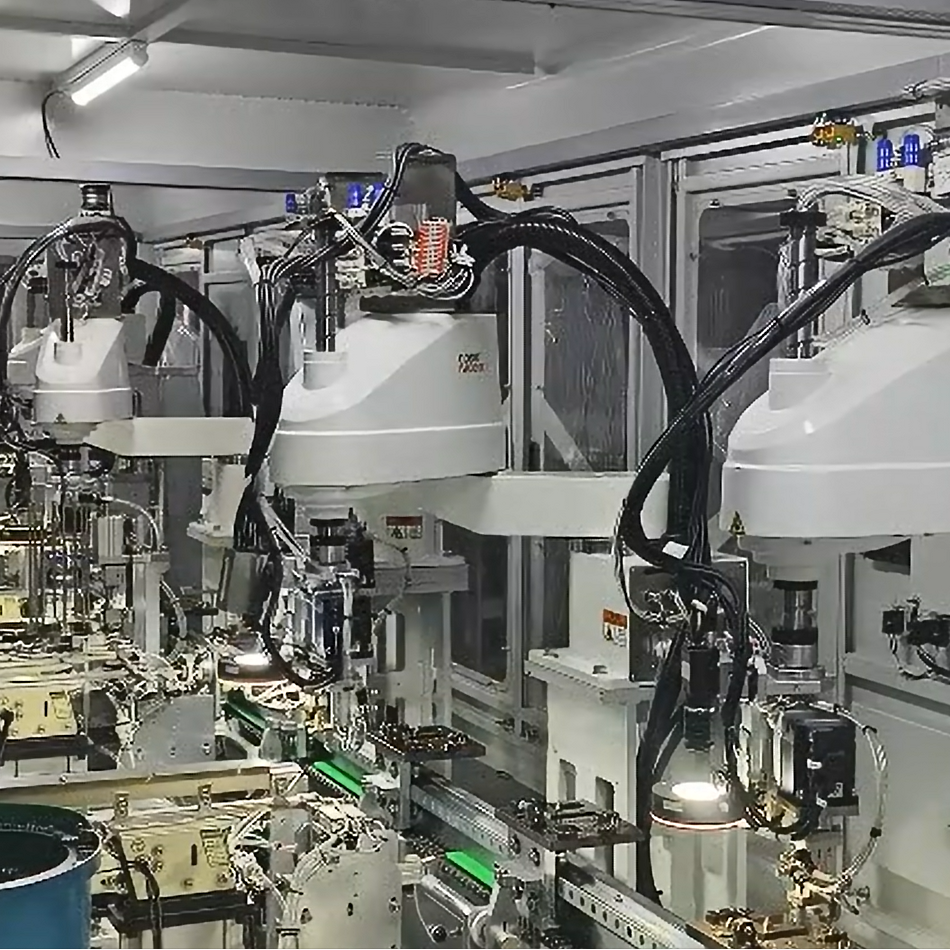
High Quality Mini Industrial Robot SCARA for Pick and Place at Low Cost — New Condition
Compact 4-axis SCARA option for budget-sensitive assembly, loading, and placement tasks that still require repeatable motion.
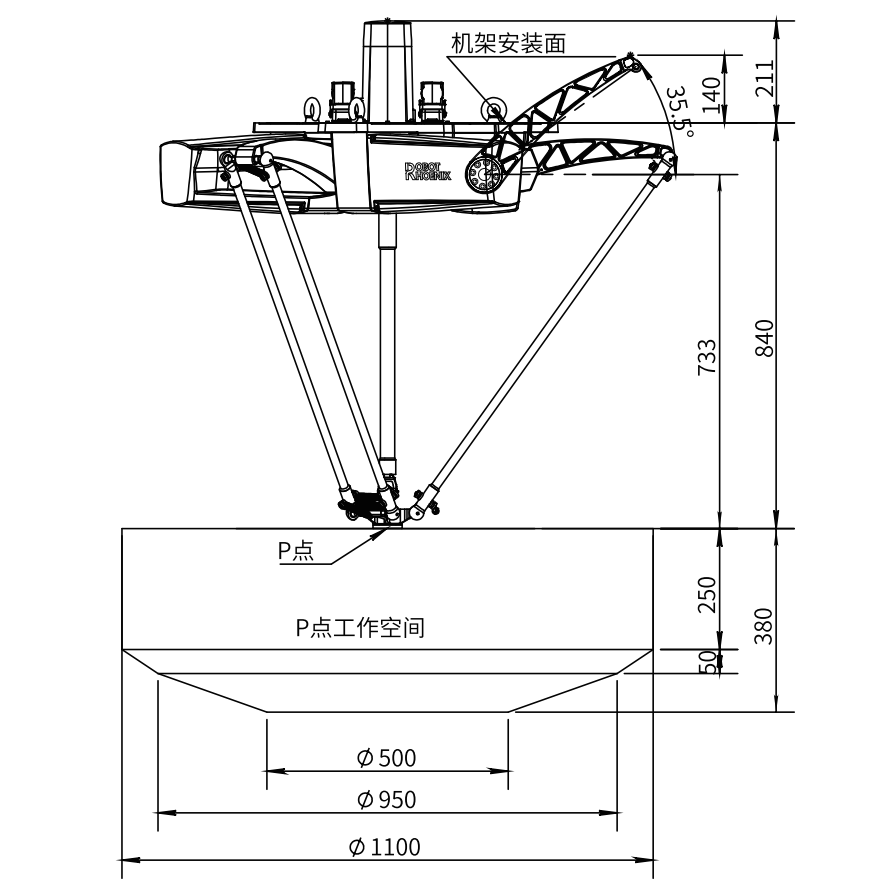
High-Speed Spider Arm Delta Robot for Fully Automatic Wet Wipe Lid Applicator Machine
Application-specific delta robot for wet-wipe lid application, cartoning support, and repetitive high-speed packaging motion.
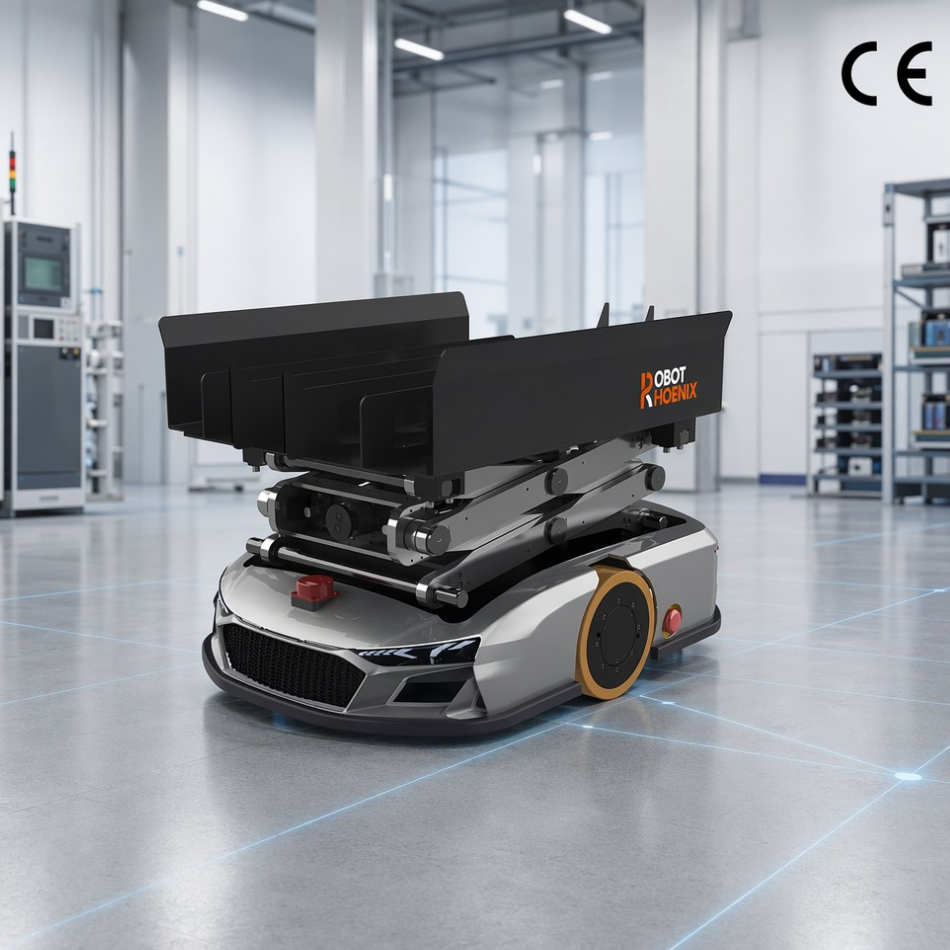
High-Performance Material Handling Vehicle AMR Robot AGV Robot for Warehouse Logistics Systems
Autonomous material handling platform for logistics flows that need flexible routing, fleet coordination, and less fixed infrastructure.
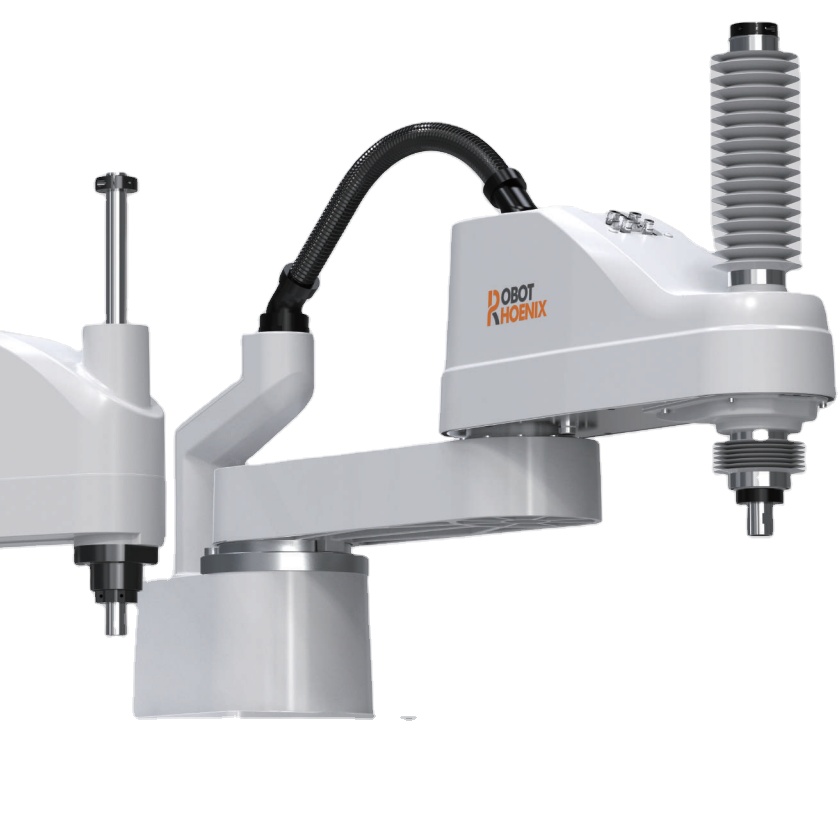
High-Precision Industrial SCARA Robot Arm for Pick and Place in Light Industry
For precise planar placement, small-part handling, and assembly cells where repeatability and compact reach matter more than heavy payload.
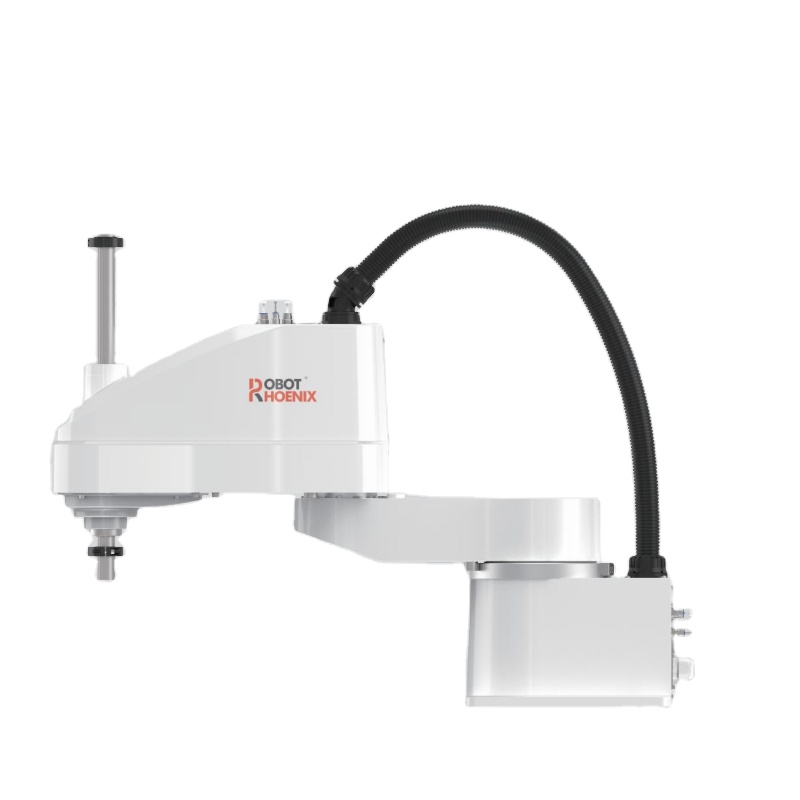
Advanced Industrial 4-Axis SCARA Robot for Pick-and-Place and Food Gripping
Four-axis SCARA robot for food pick-and-place, gripping, and repetitive handling where hygiene and changeover discipline are critical.
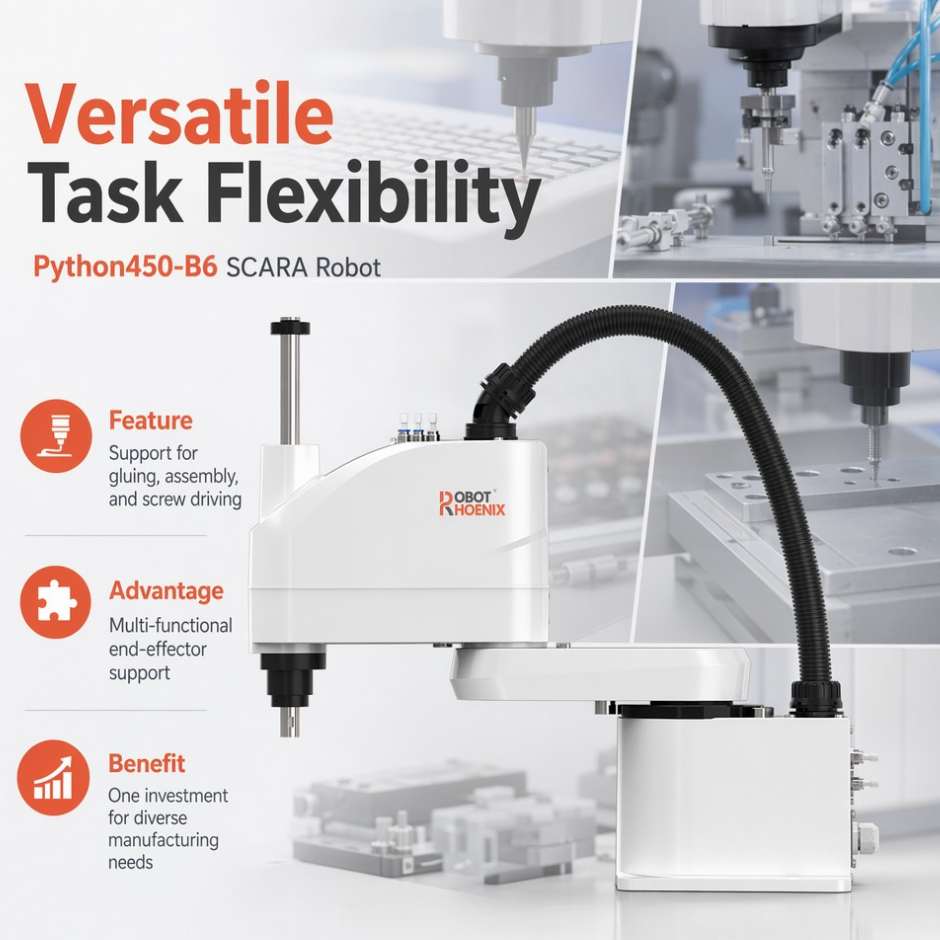
Four-Axis Industrial Robot Hand SCARA for Loading, Unloading and Sorting in the Food Industry
Designed around food-line loading and sorting tasks, with a compact robot footprint and straightforward cell integration.
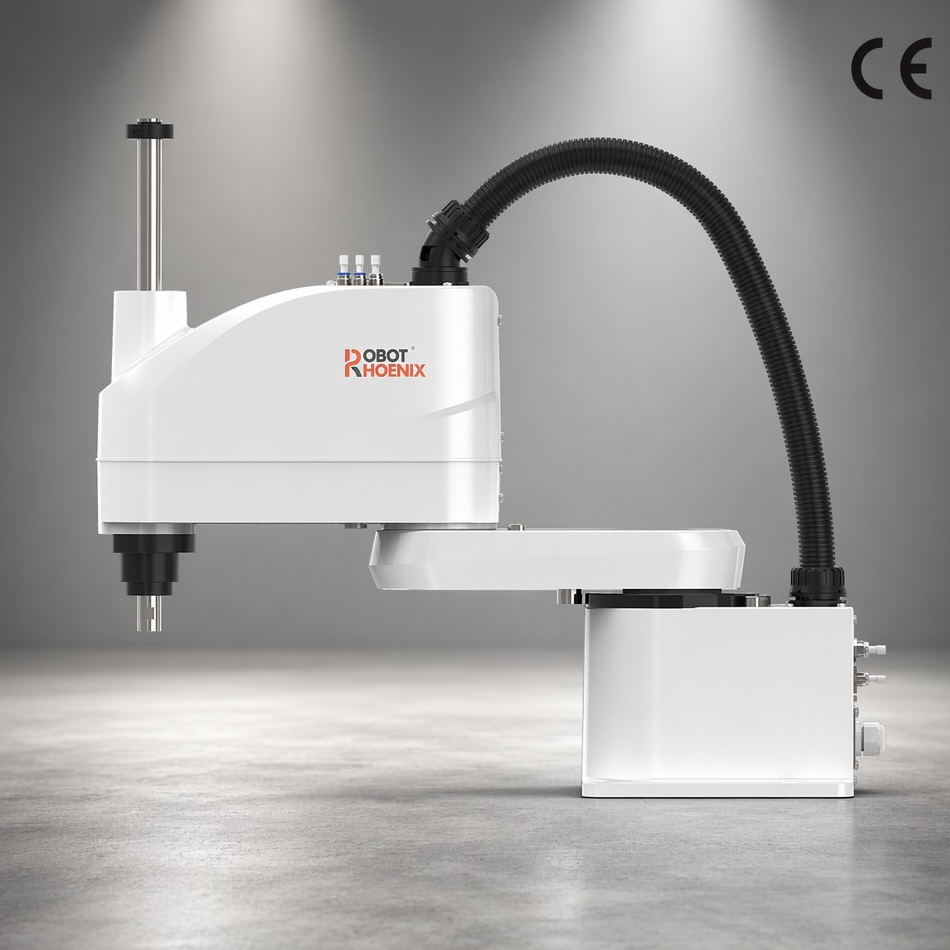
High-Efficiency 6 kg Payload Manipulator SCARA Robot with Vision for Picking and Placing
Vision-ready 6 kg SCARA platform for mixed-part picking, placement, and flexible automation cells with frequent product changes.
Need a model shortlist against your cycle time?
Send part weight, required cycle time, conveyor speed, vision requirements, and facility layout. An application engineer can narrow the field before your team requests quotations.
What “High Precision” Really Means in a Robot Procurement Decision
High precision is not a single catalogue value. It is the ability to hold accuracy, repeatability, and cycle-time consistency after fixtures, vision calibration, thermal load, conveyor vibration, and shift-level production are added to the system.
In a live production line, repeatability is only one component of precision. Path accuracy determines glue, label, and insertion quality. Settling time influences throughput. Thermal compensation protects the second and third hour of production, not only the first demonstration. Vision latency affects moving-conveyor picking. A supplier that can tune controller, servo, vision, mechanics, and end-effector together reduces integration risk for the buyer.
This is why procurement teams should evaluate the precision stack, not just a repeatability number. A robot that repeats ±0.02 mm in a controlled lab but loses accuracy after eight hours of operation may create more scrap than a ±0.05 mm robot with stable thermal behavior, calibrated vision, and a well-designed end-effector. The purchasing question is not “which robot has the smallest number,” but “which manufacturer can prove repeatable performance in my process window.”
Mechanical stiffness and arm design
Arm geometry, joint stiffness, and mass distribution determine how much vibration reaches the workpiece at speed. Delta and SCARA families solve different motion problems.
Servo and controller tuning
Self-developed controllers can synchronize motion, vision, and I/O more tightly than loosely matched third-party components. Tuning quality affects settling time and path stability.
Vision calibration and latency
For random picking, camera calibration, lighting, and image-processing latency can dominate accuracy at the pick point. Vision must be validated with real parts.
End-effector repeatability
The gripper, vacuum cup, or tooling interface often introduces more variation than the robot arm. Tooling mass, center of gravity, and quick-change design matter.
Thermal stability and IP protection
Continuous high-speed duty heats motors and gearboxes. IP54 or application-specific protection may be needed for dust, washdown, or hygienic zones.
Factory acceptance and line validation
A documented FAT protocol, sample runs, and cycle-time records give buyers evidence. Final validation should include the actual product, packaging, and operator conditions.
How Buyers Shortlist the Top 10 High Precision Robot Manufacturers
A top 10 list is a starting point, not a purchasing decision. The weighting should reflect the cell: packaging lines weigh cycle time and washdown; electronics assembly weighs path accuracy and small-footprint motion; warehouses weigh navigation uptime and fleet traffic.
A practical scorecard might allocate 30% to application fit, 25% to the precision stack, 20% to lifecycle support, 15% to commercial terms, and 10% to verifiable evidence. The exact weighting changes by project, but the principle does not: precision claims should be traceable to test methods, component choices, and application references.
1. In-house controller
Ask whether motion control, robot software, and vision are developed by one accountable team. This affects tuning depth and troubleshooting speed.
2. Payload and reach match
Use 60–80% of rated payload as a practical starting point for high-speed duty. Oversizing can increase cost; undersizing erodes precision and life.
3. Vision-guided picking
Validate camera resolution, lighting, calibration, and latency with real parts. A vision-ready robot is not the same as a proven vision cell.
4. Thermal repeatability evidence
Request repeatability data after warm-up and during continuous duty, not only a single cold-start measurement.
5. Factory acceptance test
Review the FAT protocol before shipment. It should define sample products, cycle-time criteria, accuracy checks, and pass/fail records.
6. OEM and integration support
Machine builders need design support, custom end-effectors, PLC-ready integration, and buyer-label options. Confirm what is included.
7. Spare parts and response
Ask for recommended spare parts, controller support terms, remote diagnostics, and response-time commitments for your region.
8. Certification and IP
Check ISO 9001, onsite verification, patents, and relevant protection ratings. Certificates should match the supplier and the product scope.
9. Total cost of ownership
Compare integration hours, changeover time, energy use, maintenance, scrap risk, training, and spare parts—not just robot unit price.
10. Verifiable references
Look for trade history, buyer reviews, factory evidence, and application references that can be checked before a purchase order is issued.
JORI as a Manufacturer Reference Point: In-House R&D Since 2012
JORI Intelligent Technology Co., Ltd. was founded in 2012 in Jinan, Shandong, China, and specializes in industrial robot R&D and production, controller and 2D/3D vision development, OEM support, and automated system integration.
Because JORI develops delta robots, SCARA robots, silicon wafer robots, AGV/AMR platforms, controllers, and 2D/3D vision in-house and protects key technologies with national patents, buyers get one accountable source for hardware, software, and after-sales engineering — not a reseller chain. The product families include delta parallel robots, SCARA robots, AGV/AMR mobile robots, autonomous forklifts, and wafer-handling robots.
For procurement teams, this manufacturing model creates a useful reference point when comparing high precision robot manufacturers. The supplier can discuss the arm, controller, vision, and integration path together. That matters when the application requires PLC-ready delta robots for cartoning machines, custom end-effectors for food handling, or laser SLAM navigation for warehouse logistics.
- Independent R&D capability
- Original factory for delta, SCARA, AGV/AMR, forklift, and wafer robots
- 10+ years serving overseas markets
- One-stop automation integration
- OEM, design, and buyer-label service
- ISO 9001 quality management
- Onsite-verified supplier profile and trade records
- Standard models available from 1 set for pilot validation
Buyers can verify the company through its company profile, supplier assessment, credit profile, trade capacity, and buyer reviews. These evidence layers are more useful than a generic “top 10” badge because they let procurement teams confirm identity, capability, and transaction history before issuing a purchase order.



Review a manufacturer’s evidence, not only its product list.
Share your process and ask for a configuration recommendation, factory acceptance test outline, and spare-parts plan.
Product Recommendation by Production Scenario
The best high-precision robot is the one that fits the production reality: product variation, required cycle time, cleaning regime, available floor space, and operator skill level.
High-speed food & wet-wipe packaging
Prioritize delta robots with PLC-ready integration, 3–6 kg payload options, and application-specific lid applicator experience. Review the light-industry delta robot and wet-wipe lid applicator delta robot.
Electronics and light assembly
Shortlist compact SCARA robots with precise planar motion, vision options, and low-cost mini models for high-mix cells. Compare the mini SCARA and 6 kg vision SCARA.
Warehouse and logistics
Evaluate laser SLAM AMR/AGV platforms by payload, fleet management, charging strategy, and route flexibility. Review the material handling AMR/AGV.
Semiconductor and solar
Wafer handling requires smooth motion, contamination-conscious design, and custom end-effectors. Review the wafer robot series through the wafer handling robot catalogue.
2025–2030 Procurement Trends Reshaping Precision Robot Buying
Robot purchasing is moving from isolated machine acquisition toward validated, scalable automation capability. Buyers want lower pilot risk, clearer lifecycle support, and evidence that the supplier can grow with the line.
Pilot-to-scale procurement
Buyers increasingly purchase one set or one cell to validate cycle time, precision, and operator acceptance before scaling to multiple stations. MOQ 1 for standard models supports this pattern.
Modular cell design
Robot, controller, vision, and end-effector are specified as modules so a line can be replicated or adapted without redesigning the entire automation architecture.
Single accountable integrator
When robot, controller, and vision come from one source, responsibility for precision and cycle time is clearer. This reduces finger-pointing between separate vendors.
Energy and footprint productivity
Compact SCARA and delta cells help buyers raise output per square meter. AMRs reduce fixed conveyor and floor-tape infrastructure in logistics areas.
Lifecycle contracts
Procurement teams now ask for spare-parts lists, remote support, training, and response-time commitments before the order, not after downtime occurs.
Data-ready equipment
Robots and AMRs are expected to connect with production dashboards, fleet managers, and quality records. Interface details should be clarified during technical review.
Product Development Trends Inside High-Precision Robot Systems
The next wave of robot competitiveness is less about a single arm and more about how tightly motion, vision, software, safety, and service are engineered together.
Controller and vision convergence
Vision-guided picking is becoming easier to deploy when camera calibration, robot motion, and I/O are managed inside one control environment.
Laser SLAM and fleet orchestration
AMR/AGV systems are moving toward flexible routing and multi-robot traffic management, reducing dependence on fixed floor infrastructure.
Hybrid robot cells
Delta robots, SCARA robots, and mobile platforms are increasingly combined to handle picking, assembly, and transport in one workflow.
Hygiene and IP-rated design
Food, pharmaceutical, and daily-chemical applications push suppliers to offer protection ratings, cleanable surfaces, and application-specific sealing.
Simulation-first engineering
Buyers benefit when suppliers can model reach, cycle time, and layout before fabrication. Simulation lowers risk in high-mix and constrained-footprint projects.
Modular end-effectors
Quick-change grippers and custom tooling allow one robot platform to serve multiple products, improving utilization and reducing changeover time.
Robot Family Selection Matrix for Precision Procurement
Use this matrix to align the robot family with the production problem before comparing quotations from different high precision robot manufacturers.
| Robot family | Best for | Key figures | Choose it when | Procurement note |
|---|---|---|---|---|
| Series 01Delta robot | High-speed picking, sorting, labeling, cartoning, lid application | 3–6 kg payload · 0.08 mm repeatability · up to 120 pcs/min labeling · IP54 option | Light products arrive randomly on a conveyor and cycle time is the bottleneck. | Validate vision latency, gripper design, and PLC integration with real products. |
| Series 02SCARA robot | Assembly, insertion, precise placement, loading/unloading | 4-axis · compact footprint · mini low-cost models · vision-ready options | You need accurate planar moves in a small cell, such as electronics or food handling. | Confirm reach, payload margin, tooling mass, and required repeatability under duty cycle. |
| Series 03AMR / AGV | Material transport between stations and warehouse flows | 400–500 kg payload platforms · laser SLAM · fleet management | Operators spend hours pushing carts and the layout changes often. | Review route planning, charging strategy, traffic management, and safety configuration. |
| Series 04Autonomous forklift | Pallet handling and repetitive warehouse shuttles | Laser SLAM navigation · Camel Series · site planning support | Pallet transport runs across shifts and labor availability is unstable. | Check floor conditions, pallet standards, aisle width, and handover points. |
| Series 05Wafer robot | Semiconductor and photovoltaic wafer transfer | Self-developed motion control · custom end-effectors · smooth handling | Fragile substrates require clean, repeatable, contamination-conscious transfer. | Discuss end-effector design, cleanroom requirements, and wafer-size compatibility. |
Figures reflect current catalogue models; final specifications are confirmed per configuration and application validation.
Supplier Due Diligence Before You Issue a Purchase Order
High-precision automation is a long-lifecycle purchase. The supplier’s evidence, service model, and engineering depth matter as much as the robot’s headline specification.
Verify factory identity
Confirm legal entity, factory address, production scope, and onsite verification. A supplier assessment and credit profile reduce counterparty risk.
Check certifications and patents
Request ISO 9001 scope, patent evidence, and product documentation. Match the certificate holder to the company issuing the quotation.
Request a FAT protocol
Define cycle time, sample products, accuracy checks, vision validation, safety checks, and documentation before shipment.
Test with your sample
Send real parts, packaging, or images. The supplier should demonstrate picking, placement, or transport behavior under representative conditions.
Confirm spare parts and SLA
Clarify recommended spares, warranty terms, remote support, engineer availability, and response-time expectations.
Review commercial terms
Match Incoterms, payment method, currency, lead time, and packing requirements to your procurement policy before signing.
Published delivery terms include FOB, CFR, CIF, EXW, CIP, FCA, CPT, and express delivery. Payment methods include T/T, L/C, credit card, PayPal, Western Union, MoneyGram, and escrow, with currencies including USD, EUR, GBP, JPY, CAD, AUD, HKD, CHF, and CNY.
JORI maintains an average response time of 2 hours or less and a 97.06% response rate. Buyers can send application details, current process videos, part drawings, or packaging samples to info@joribot.com for an engineering review.
Total cost of ownership deserves its own review. Unit price is only the visible layer. Integration labor, changeover time, operator training, spare-parts logistics, energy consumption, floor space, scrap risk, and downtime compound over the life of the cell. A high-precision robot from a responsive manufacturer can be less expensive over five years than a lower-cost robot that requires more engineering hours and carries higher stoppage risk.
Define the process window
Part weight, tolerance, cycle time, product variation, cleaning, and operator interface.
Request a validated model
Ask for a robot family recommendation with payload margin, reach, vision, and I/O details.
Approve the test protocol
Agree on samples, acceptance criteria, cycle-time measurement, and documentation.
Plan lifecycle support
Confirm spares, training, warranty, remote support, and escalation contacts before delivery.
Procurement FAQ: Questions Buyers Ask Before Selecting a Precision Robot Manufacturer
These are the questions that commonly appear in technical and commercial reviews for delta, SCARA, AMR/AGV, forklift, and wafer-handling robot projects.
What is the minimum order quantity for JORI industrial robots?
Standard delta robots, SCARA robots, and AMR/AGV platforms can be ordered from 1 set. This allows buyers to validate a single cell or pilot line before scaling to multiple stations. Custom integration scope should be discussed separately.
Does JORI offer OEM or custom robot solutions?
Yes. JORI provides OEM service, design service, and buyer-label options. The team supports machine builders with custom end-effectors, controller integration, PLC-ready delta robots, and automated system integration.
Should I choose a delta robot or a SCARA robot?
Choose a delta robot for very fast, lightweight pick-and-place from moving conveyors, typically 3–6 kg payload. Choose a SCARA robot for planar assembly, insertion, loading, and precise placement in a compact footprint. Share part weight, cycle time, and layout and an engineer can recommend the better fit.
Can JORI robots integrate with existing packaging machines?
Yes. JORI develops its own controllers and 2D/3D vision and offers PLC-ready delta robots for cartoning machines. The team also supports machine builders such as wet-wipe lid applicator and carton packer manufacturers.
Which delivery and payment terms are accepted?
Accepted delivery terms include FOB, CFR, CIF, EXW, CIP, FCA, CPT, and express delivery. Accepted payment methods include T/T, L/C, credit card, PayPal, Western Union, MoneyGram, and escrow, in USD, EUR, GBP, JPY, CAD, AUD, HKD, CHF, and CNY.
How quickly does JORI respond to inquiries?
JORI maintains an average response time of 2 hours or less and a 97.06% response rate. For a faster technical review, include product weight, cycle time, part photos, current process video, and target line layout.
What evidence should I request before approving a high-precision robot supplier?
Request factory verification, ISO 9001 scope, patent evidence where relevant, a factory acceptance test protocol, sample-run data, spare-parts recommendations, warranty terms, and references from comparable applications. For JORI, review the supplier assessment, credit profile, trade capacity, and buyer reviews linked in this whitepaper.
How should I compare repeatability claims across manufacturers?
Ask for test conditions: warm-up time, payload, speed, tooling mass, measurement method, and continuous-duty duration. Compare repeatability together with accuracy, cycle time, thermal behavior, vision calibration, and the end-effector. A supplier that provides a documented validation protocol is easier to compare than one that offers only a catalogue number.
Send Your Application Data for a Precision-Fit Recommendation
Share product weight, required cycle time, conveyor speed, packaging format, vision needs, facility layout, and target budget. The response should come back with a recommended robot family, integration questions, and a path to validation.
Send an InquiryEmail: info@joribot.com · Industrial robots, controllers, vision, OEM support, and automation system integration.