8 High-Speed Picking Robots Built on One Factory Floor
Every unit below is a production model, not a rendering. They share the same engineering floor — controllers, 2D/3D vision and application software developed in-house since 2012 — which makes them a working benchmark against which competing quotations can be compared. Standard models start at one set, so a single cell can be validated before a line is scaled.
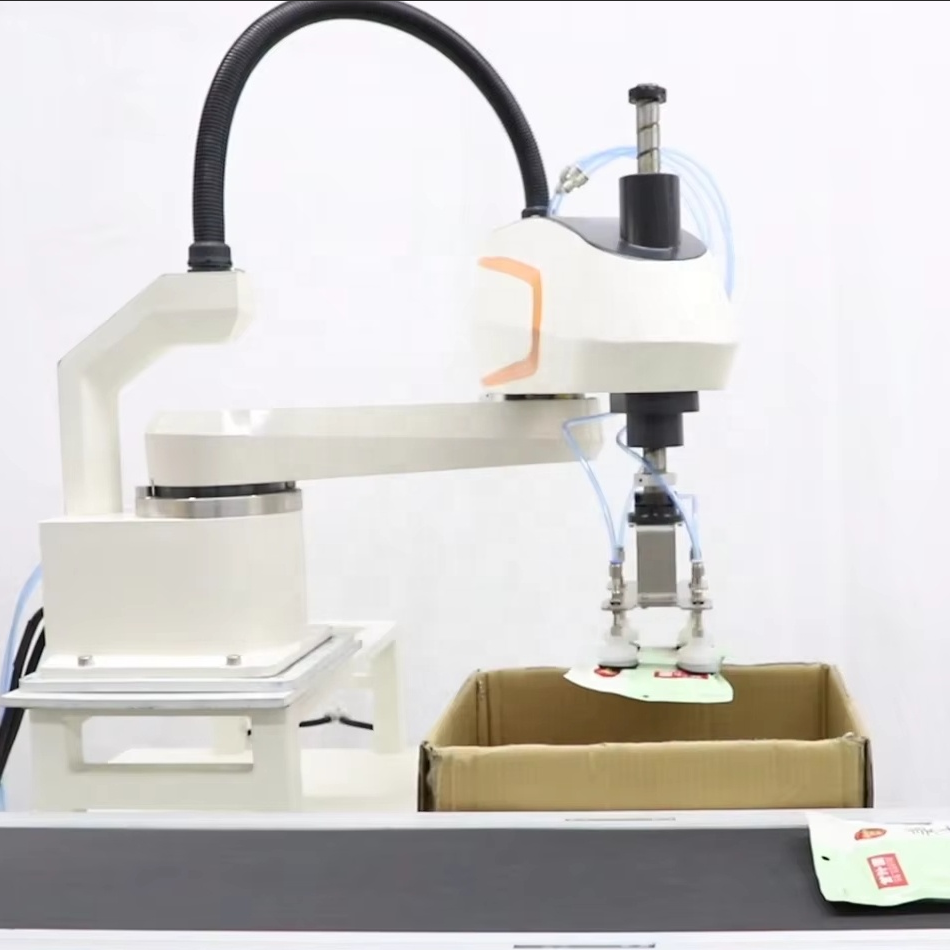
Newly Design Industrial Articulated Robotic Arm Scara for Precision Assembly & Handling
Four-axis planar motion for loading, insertion and transfer tasks where positioning accuracy sets the yield ceiling.
View specifications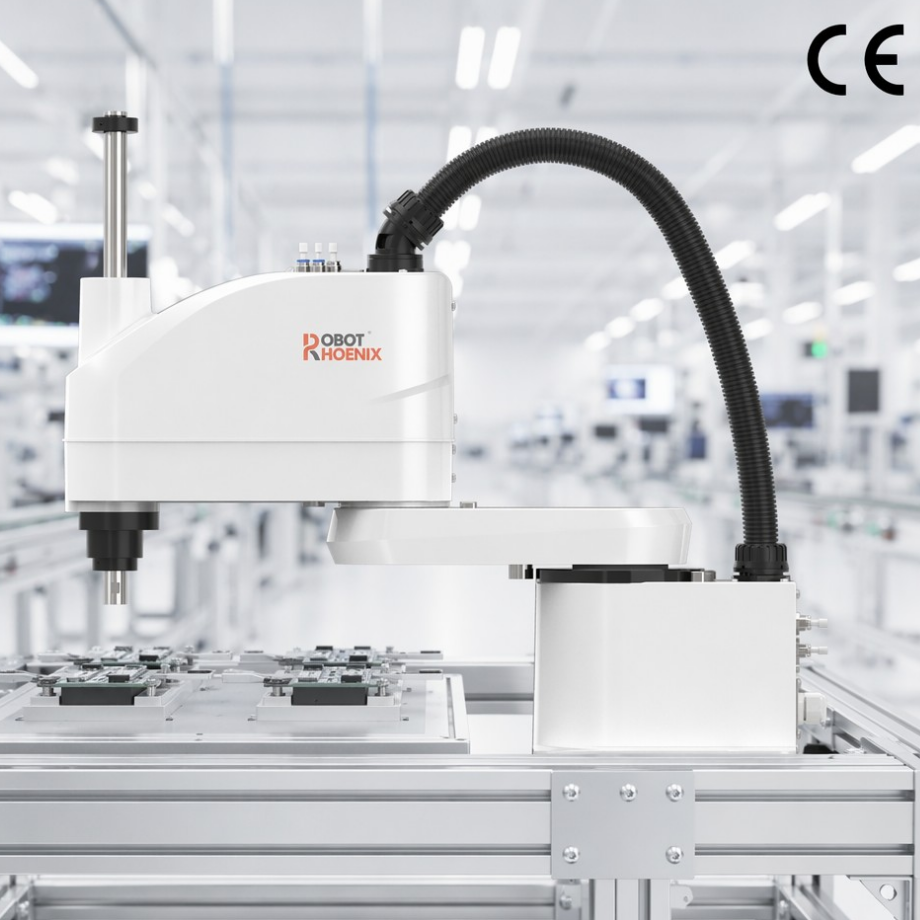
New Design Compact High Accuracy Industrial Robot Arm Scara with 2D/3D Vision System
A compact SCARA with integrated 2D/3D vision — built for small parts and congested cells.
View specifications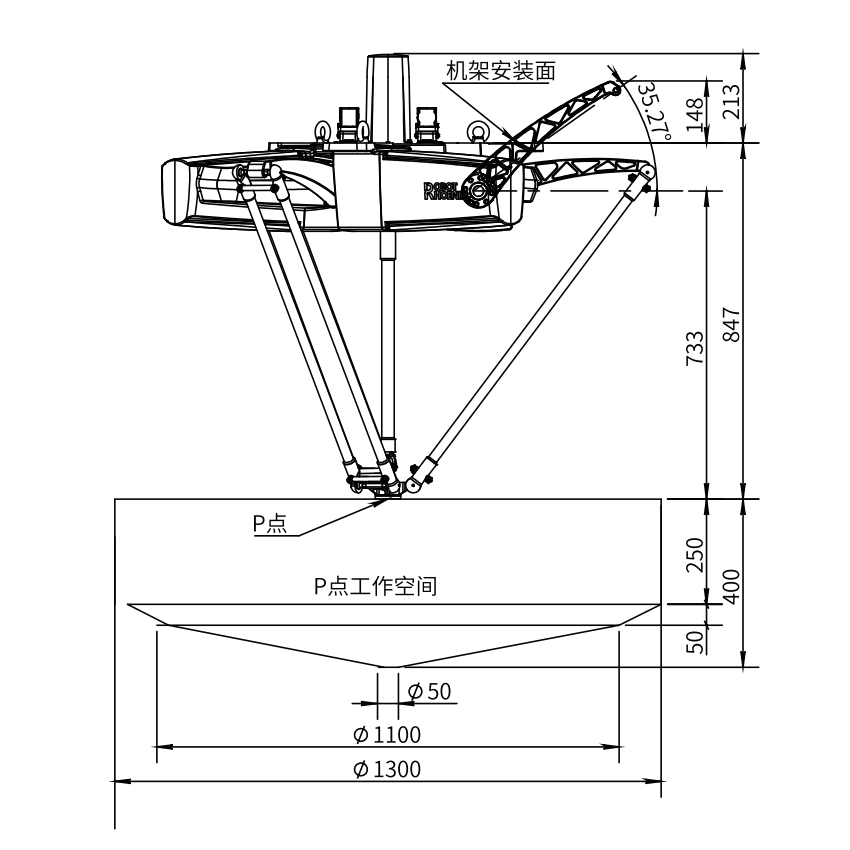
Industrial Robotic Arm Parallel Robot 2/3/4 Axis Delta Robot for Pick&Place Application
Parallel-link architecture engineered for conveyor-speed pick-and-place on random-orientation products.
View specifications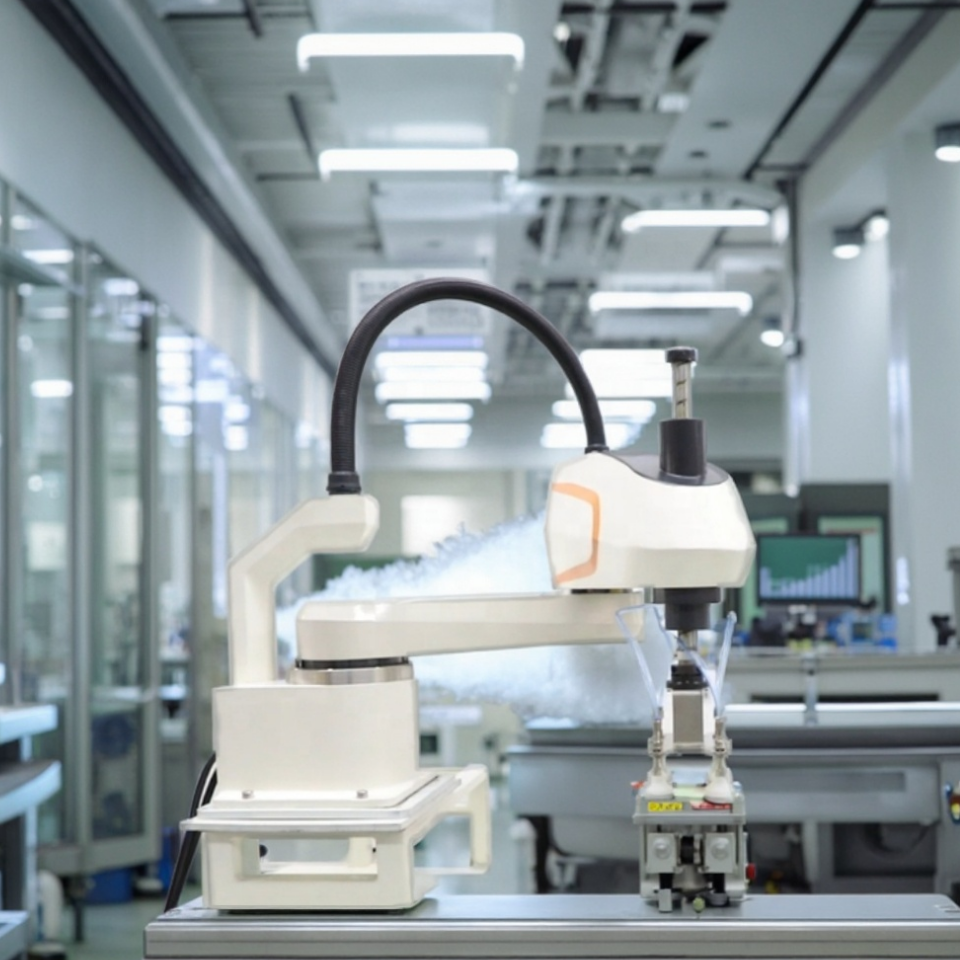
Industrial 4-Aixs Robot Arm Scara Robot Arm with Vision System for Auto Parts Industry
Four-axis SCARA plus vision for auto-parts handling, where repeatability across shifts is non-negotiable.
View specifications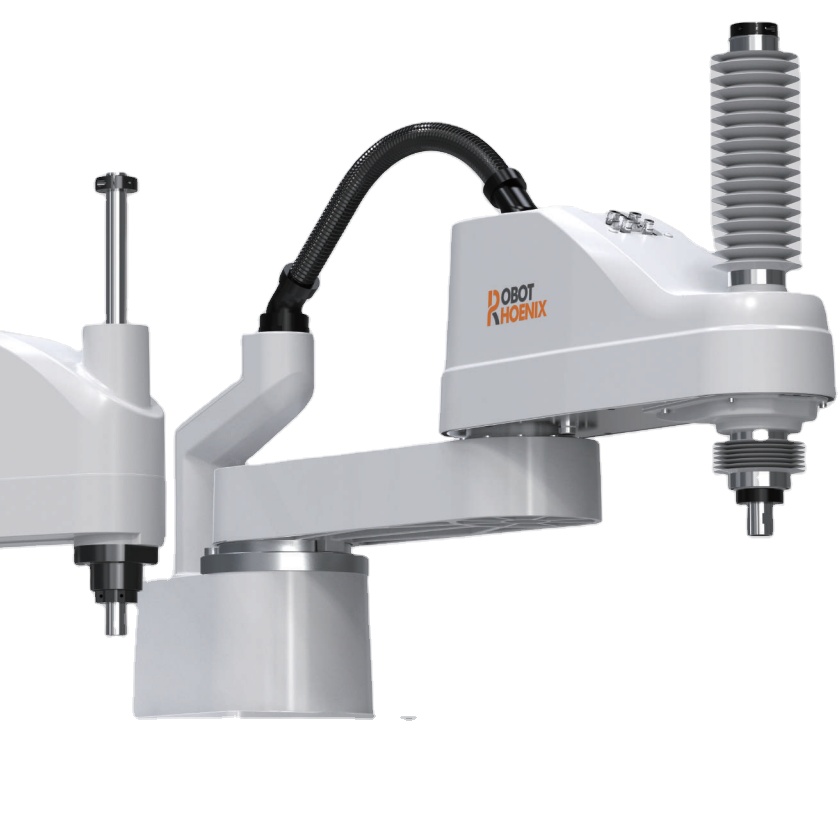
High-Precise Industrial Scara Robot Arm Scara Robot for Pick and Place in Light Industry
Precision-first SCARA configuration for light-industry placement and small-part assembly.
View specifications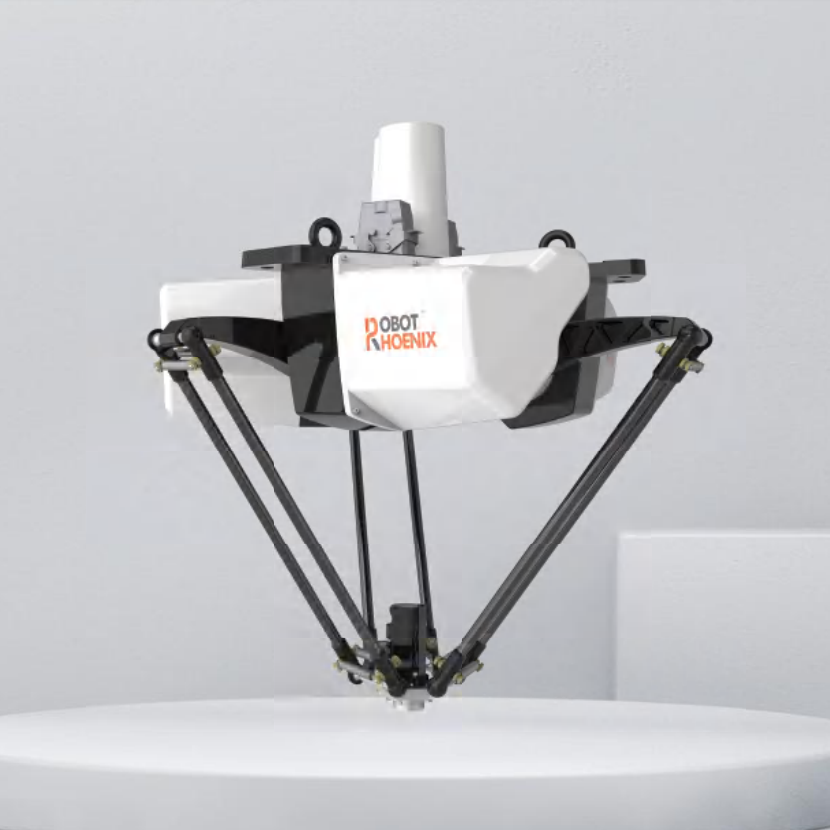
Robotphoenix New 4-Axis Parallel Robot Arm Delta Spider Hand Robot for Carton Packer Line
Four-axis spider-hand delta configured for carton packer lines and secondary packaging.
View specifications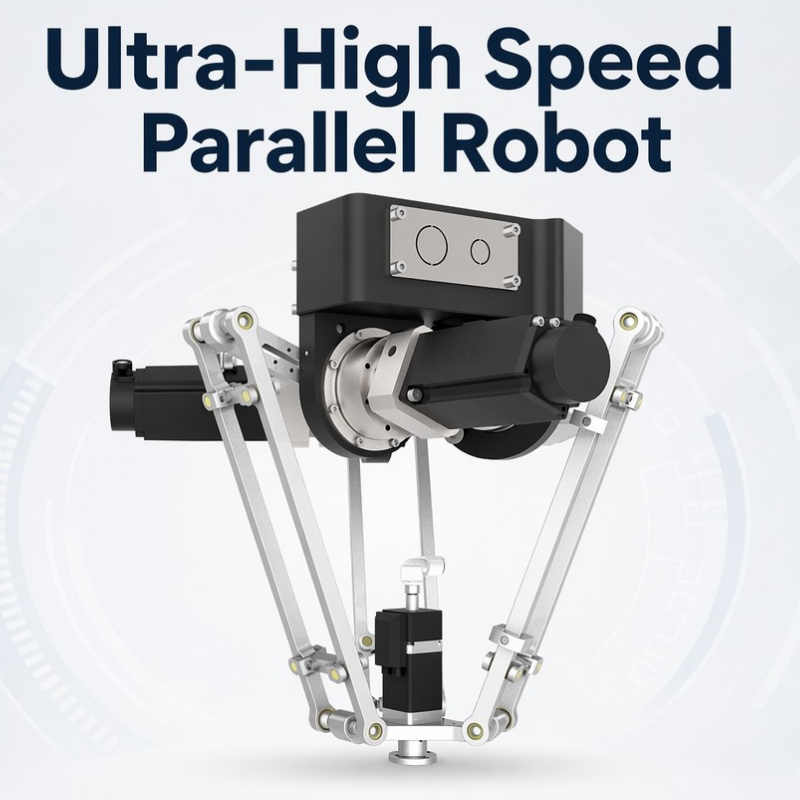
Newly Design Customized Integrated Robot Parallel Robot Delta for Pick Place and Sorting
Custom integrated parallel robot for mixed-SKU picking, placing and sorting duties.
View specifications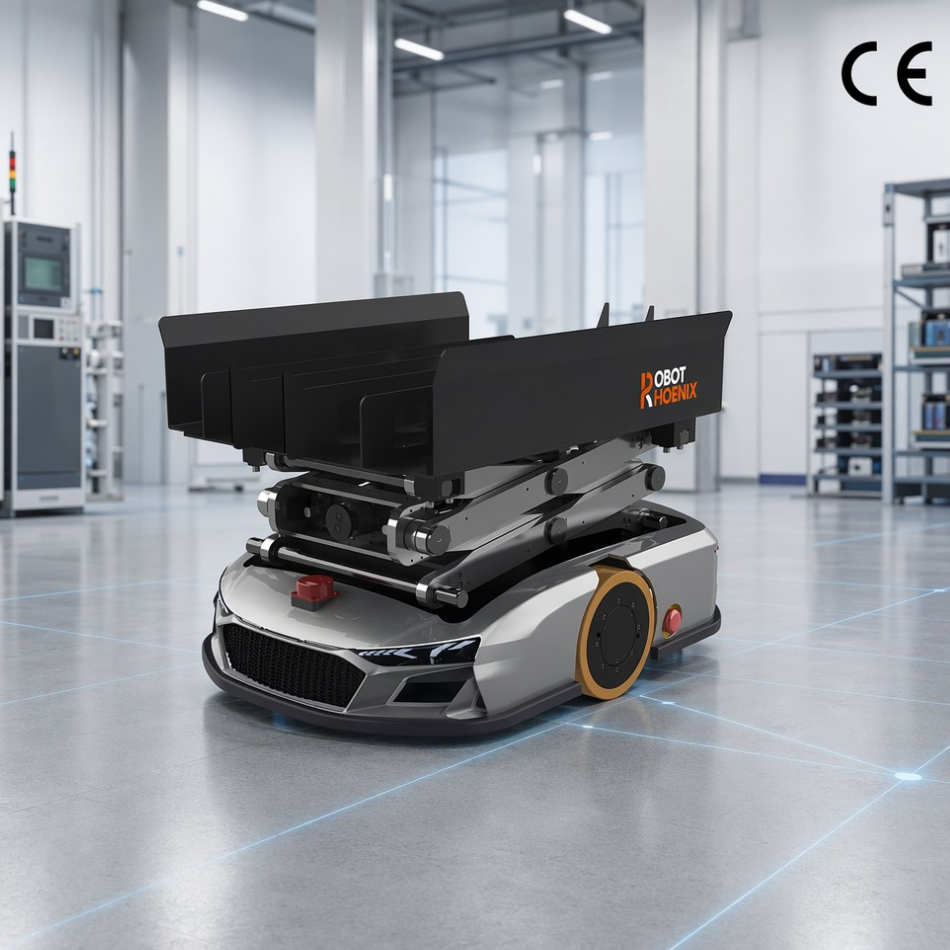
High Performance Material Handling Verhicel AMR Robot AGV Robot for Warehouse Logistic System
Heavy-duty autonomous carrier that keeps a high-speed picking cell synchronised with warehouse flow.
View specificationsWhat a High-Speed Picking Robot Factory Actually Builds
A picking cell is not one product. Understanding the six subsystems inside it is the fastest way to tell a genuine factory from a reseller with a catalogue.
A high-speed picking robot is not a single product. A working packaging cell contains the parallel or SCARA arm, the servo drives, the motion controller, the vision system, the conveyor encoder interface, the end-effector and the safety enclosure. What the buyer experiences on the line is the sum of how well those six parts behave together — and when a supplier outsources two or three of them, the mismatch moves downstream onto your production floor.
That is why a robot factory's engineering capability, rather than its catalogue price, decides whether you are running 120 picks per minute six months after commissioning or fighting to hold 60. A parallel-link delta arm rated at high speed means very little if the vision latency has not been characterised, the conveyor tracking has not been tuned, and the gripper was designed after the robot was ordered.
A practical distinction: when the controller and the 2D/3D vision are developed by the same engineering team that builds the arm, a change in one component does not trigger a firmware ticket with a third-party vendor. Sample-to-production cycles shorten from weeks to days, and the response to "can it pick this part faster" is an engineering answer rather than a sales answer.
Why "High Speed" Is a System Result, Not a Spec Number
The four variables that quietly consume the cycle time printed on a quotation.
A 3 kg delta robot that reaches a headline pick rate with a printed reference part on a bench will lose a significant share of that rate when it is asked to see a part, acquire it, track a moving conveyor, place it into a formed carton and return before the next index. Procurement teams with real line experience therefore never buy on a headline number — they buy on an acceptance test built around their own product, their own gripper and their own conveyor speed.
- Vision latency. Acquisition, exposure and inference time add directly to every cycle. A faster camera with a poorly tuned trigger can be slower than a slower camera that is correctly synchronised.
- Conveyor tracking accuracy. The robot must place onto a target that has moved. Encoder resolution and tracking latency determine whether that placement is repeatable at speed or only at demonstration speed.
- End-effector mass and compliance. Every gram on the tool flange reduces achievable acceleration. A gripper designed for handling flexibility rather than mass often costs 10–20% of theoretical throughput.
- Motion profile and settling. Aggressive profiles look impressive on video but increase settling time and vibration, which is where repeatability and product damage are actually decided.
The practical conclusion is that the fastest robot is rarely the cheapest robot in isolation — it is the robot whose control, vision and tooling were designed together and validated against the application. That is the engineering position a genuine high-speed picking robot factory should be able to defend in a technical review.
Six Signals That Separate a Real Picking Robot Factory
These are the criteria our own buyers use — and the criteria we publish evidence for.
Controller and Vision Developed In-House
Motion control and 2D/3D vision come from the same engineering team that builds the arm and the robot controller, so throughput tuning happens at the application layer instead of inside a supplier's ticket queue.
Source Factory Since 2012, ISO 9001 Certified
A high-tech manufacturer headquartered in Jinan's robot industrial park, with more than 10,000 m² of production space, documented quality control from component inspection to run-in testing, and a factory record that third parties can verify on site.
MOQ of One Set, Plus OEM and Buyer-Label Service
Standard delta, SCARA and AMR platforms can be ordered from a single set, which lets a plant validate one cell or a pilot line before committing capital. Machine builders can also take OEM service, design service and private-label options.
Export Track Record Across Five Continents
Robots are running with machine builders, system integrators and plant owners in Southeast Asia, Eastern Europe, North America, South America and the domestic Chinese market — supported by trade capacity, transaction level and trade history records that buyers can review before ordering.
Engineering Response Within Two Hours
An average response time of two hours or less and a 97% response rate matter more than most buyers expect, because a picking cell is usually specified in a short window between a line decision and a budget submission.
One-Stop Automation Integration
PLC-ready delta robots are designed for cartoning machines and carton packers, and the same team supports wet wipe lid applicator lines, end-effector customisation and full automated system integration — so the robot, the tooling and the machine builders' controls are one project, not three.
How Buyers Are Reshaping High-Speed Picking Robot Sourcing
Six shifts visible in live purchase decisions — and what each one means for the specification you write.
Buying Cycle Time Instead of a Robot
Purchase committees increasingly demand an acceptance test on their own product and conveyor speed. Suppliers that cannot run a material-specific trial on their factory floor are losing bids to those that can.
Total Cost of Ownership Replacing Unit Price
Spare part availability, changeover time, energy draw and unplanned downtime now sit in the same evaluation sheet as the robot price. A slightly higher purchase price with local engineering support usually wins.
Vision Specified as Standard, Not Optional
2D/3D vision and conveyor tracking are moving from add-ons to baseline expectations, because random-orientation products and mixed packaging formats make blind picking impractical.
High-Mix, Short-Run Production
Batch sizes continue to shrink. Buyers want recipe changeover in minutes, tooling that swaps without re-teaching, and controllers that store format parameters per SKU.
Picking Cells Merging With Mobile Robots
Stationary pick-and-place cells are increasingly fed and cleared by laser SLAM AMR or autonomous forklift platforms, so buyers now evaluate the robot and the intralogistics layer as one continuous flow.
Supplier Traceability Before Payment
Third-party supplier assessment, credit profile, trade capacity and buyer reviews are being checked before a deposit is issued — a reversal from the era when a catalogue and a brochure were sufficient.
The Four Changes Reshaping High-Speed Picking by 2027
Where the engineering budget inside a picking robot factory is actually going.
Lighter Structures, Higher Acceleration
Carbon-fibre and optimised cast geometries reduce moving mass, allowing higher acceleration without the settling penalty that erodes real throughput.
Edge AI and 3D Guidance
Inference moving to the controller shortens the vision-to-motion loop — the single most underrated lever on cycle time in vision-guided picking.
Simulation-First Commissioning
Cells are validated virtually before shipment, so the on-site tuning window shrinks and production start-up no longer consumes a full engineering week per line.
Modular and Quick-Change Tooling
Interchangeable end-effectors with stored recipes let one robot serve multiple packaging formats — the practical answer to shrinking batch sizes.
Matching the Robot Family to the Line Task
A short engineering comparison to shortlist the right platform before technical discussions begin.
| Robot Family | Best For | Key Figures | Choose It When |
|---|---|---|---|
| Series 01Delta Parallel Robot | High-speed picking, sorting, labelling, cartoning | 3–6 kg payload · 0.08 mm repeatability · up to 120 pcs/min labelling · IP54 option | Light products arrive in random orientation on a conveyor and cycle time is the bottleneck. |
| Series 02SCARA Robot | Assembly, insertion, precise planar placement | 4-axis architecture · compact footprint · mini low-cost models · vision options | You need accurate planar motion inside a small cell — electronics, auto parts or light industry. |
| Series 034-Axis Delta Spider Hand | Carton packing and secondary packaging lines | 4-axis parallel structure · PLC-ready integration · carton packer compatibility | The cell must synchronise with an existing cartoning machine or packer line. |
| Series 04AMR / AGV | Material transport between picking stations | 400–500 kg payload · laser SLAM · fleet management | Operators spend hours pushing carts and the layout changes too often for fixed conveyors. |
| Series 05Autonomous Forklift | Pallet movement in warehouses | Laser SLAM navigation · Camel Series · site planning support | Repetitive pallet shuttles run across shifts with persistent labour shortages. |
Figures reflect current catalogue models. Final specifications are confirmed per configuration and per application test.
Six Questions to Ask Any High-Speed Picking Robot Factory
Ask these before a deposit, not after commissioning. The quality of the answers usually predicts the quality of the line.
- Who owns the controller and the vision?If both are in-house, throughput optimisation is an engineering conversation. If both are third-party, you inherit two support chains.
- Can you run my part on your floor?A factory that can demonstrate your material, your gripper and your conveyor speed has already de-risked the project.
- What is the real changeover time?Ask for the recipe-switch procedure per SKU, measured in minutes rather than described in adjectives.
- Which delivery and payment terms are standard?Typical terms include FOB, CFR, CIF, EXW, CIP, FCA and CPT, with T/T, L/C, credit card, PayPal, Western Union, MoneyGram and escrow available in multiple currencies.
- What does integration with my existing machine look like?PLC-ready interfaces, end-effector design and safety enclosures should be specified in the same document as the robot.
- Can I verify the company independently?Supplier assessment, credit profile, trade capacity, transaction level and buyer reviews should all be publicly reviewable before payment.
Frequently Asked Questions About High-Speed Picking Robot Procurement
The questions procurement and engineering teams raise most often during evaluation.
What is the minimum order quantity for a high-speed picking robot?
Should I choose a delta robot or a SCARA robot for high-speed picking?
Does the factory support OEM, custom design and private label?
Can the robot integrate with my existing packaging machines?
Which delivery and payment terms are accepted?
How fast can I expect a technical response to an inquiry?
Can I verify the manufacturer before placing an order?
What happens after commissioning if throughput does not match the proposal?
Specifying a High-Speed Picking Cell for 2025?
Send your product details, target cycle time, conveyor speed and layout constraints. Our engineers reply within two hours with a model recommendation, an integration scope and a costed proposal — backed by a factory you can verify before you commit.
Send an Inquiry info@joribot.com