8 Robot Arm Platforms for Collaborative, SCARA, Delta and Mobile Automation
Use this shortlist to compare reach, payload, vision readiness, PLC integration and logistics capability before requesting a quotation or OEM discussion.

New Condition High Precision 400mm Reach Arm Scara Robot with PLC for 3C Electronic Assembly
Best for compact 3C assembly, PCB handling and PLC-ready cells where a 400 mm reach reduces integration time.

High-Precise Industrial Scara Robot Arm Scara Robot for Pick and Place in Light Industry
Best for repeatable planar pick-and-place, inspection transfer and end-of-line packing in light manufacturing.
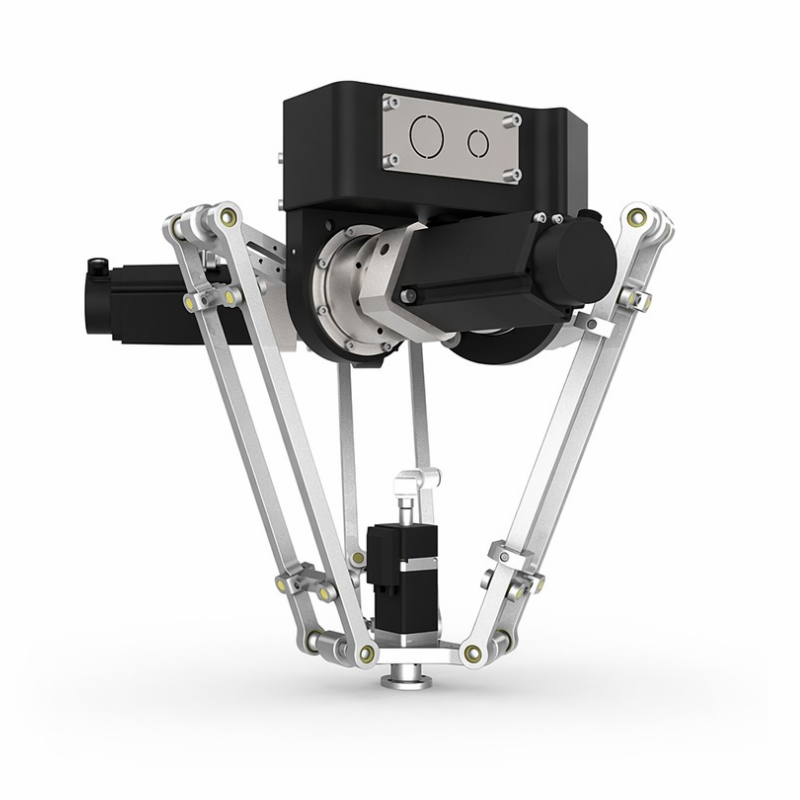
Low Cost Customized 2/3/4 Axis Industrial Manipulator Delta Robot for Pick and Place
Best for cost-sensitive machine builders needing custom axes, grippers or conveyor tracking without a long development cycle.
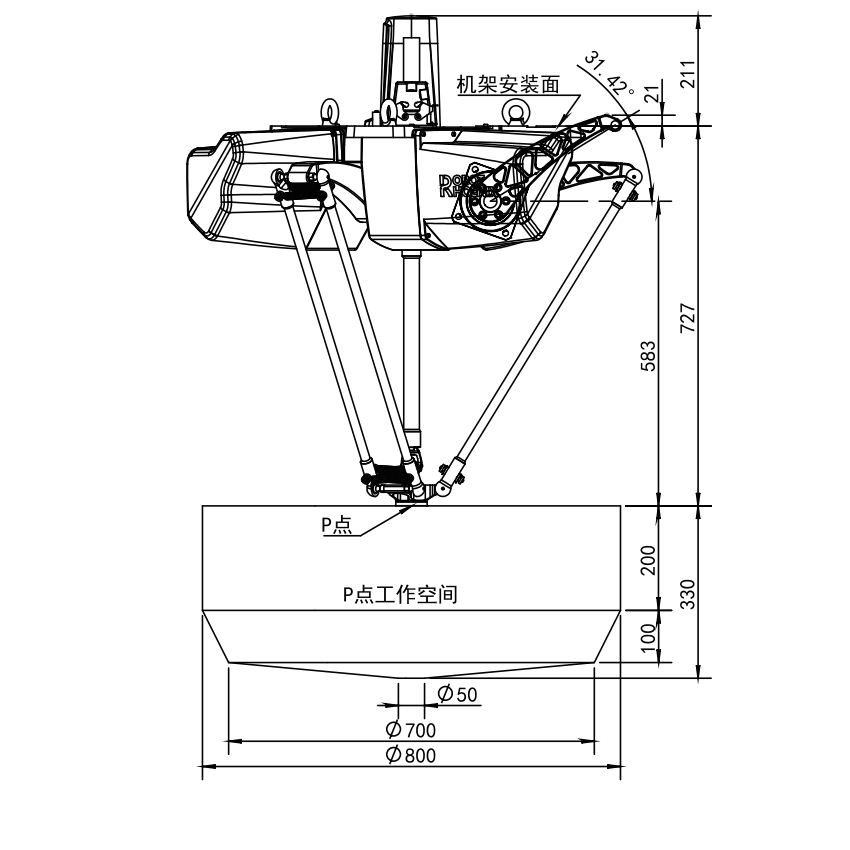
Industrial Delta Robot High Efficiency Parallel Robot for Goods Picking Placing Sorting
Best for high-speed sorting, grading and packing on moving conveyors in food, daily chemical and e-commerce lines.
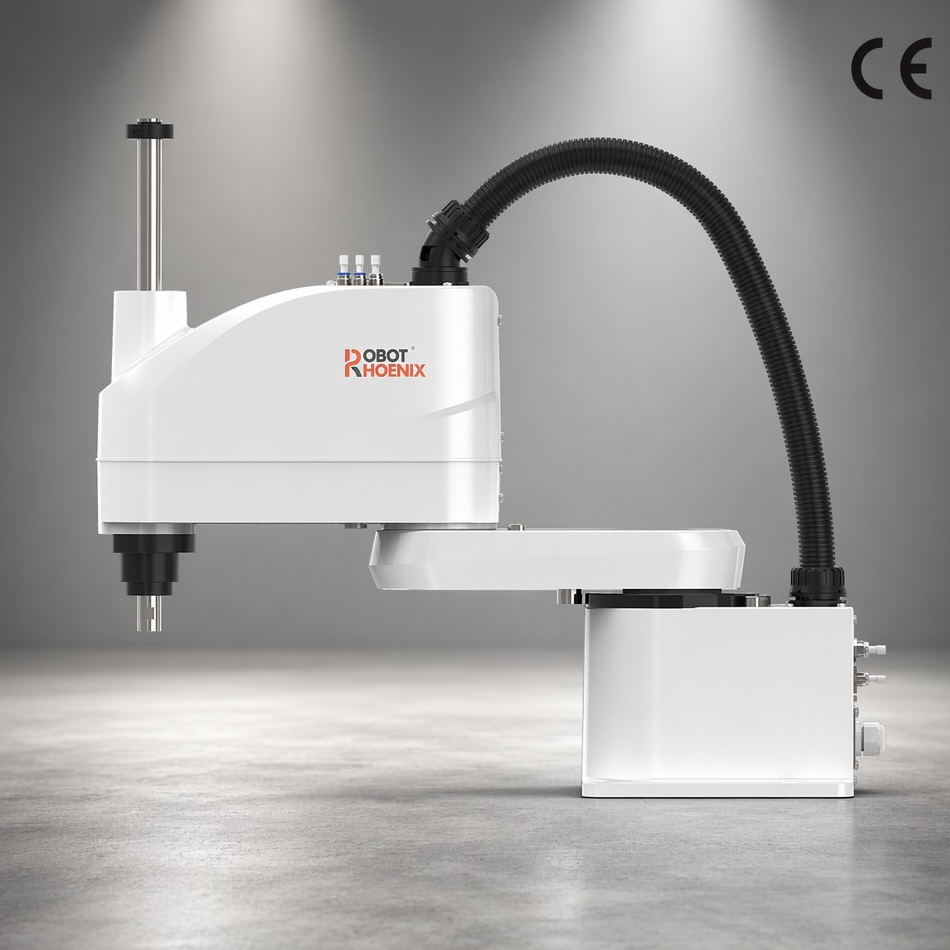
High Efficiency 6kg Payload Manipulator Scara Robot with Vision for Picking and Placing
Best for vision-guided picking where payload, reach and 2D/3D inspection need to be engineered together.
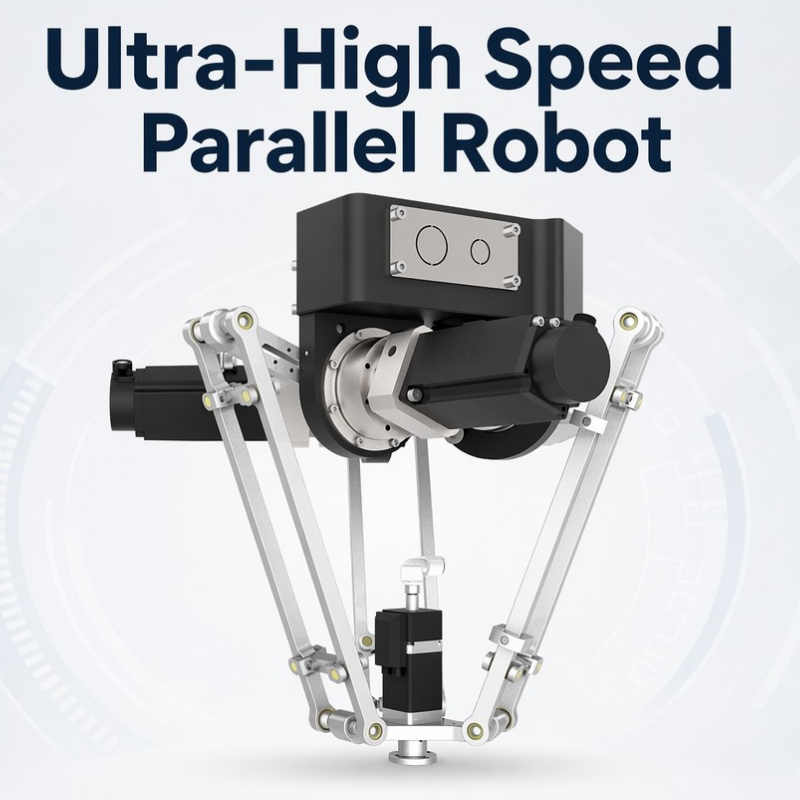
Newly Design Customized Integrated Robot Parallel Robot Delta for Pick Place and Sorting
Best for integrated delta cells that combine frame, controller, vision and guarding for faster commissioning.

High Performance Material Handling Verhicel AMR Robot AGV Robot for Warehouse Logistic System
Best for warehouse and line-side transport where laser SLAM, fleet management and 24/7 material flow are priorities.
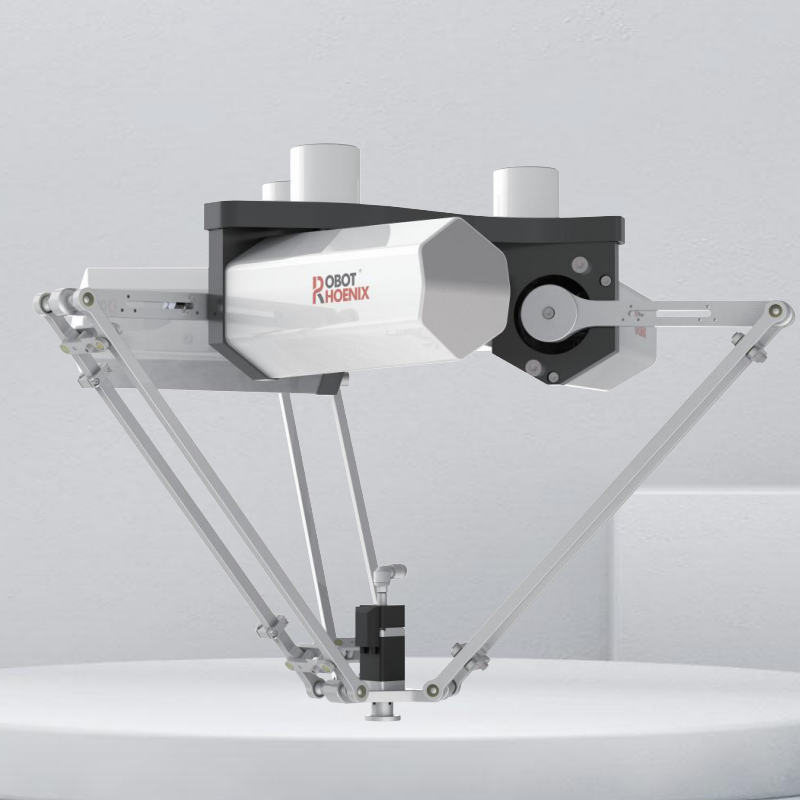
Robotphoenix New Design Industrial Robot Delta 6kg Payload 0.08mm Repeatability 2/3/4 Axis
Best for high-accuracy 6 kg delta picking with 0.08 mm repeatability and flexible 2/3/4-axis configurations.
What a China Collaborative Robot Arm Manufacturer and Wholesaler Must Prove
When buyers search for a China collaborative robot arm manufacturer and wholesaler, the real procurement intent is rarely limited to a unit price. The stronger buying decision usually depends on whether the supplier can prove manufacturing depth, application experience, controller ownership, vision integration, safety documentation, spare-parts continuity and a realistic path from a single pilot cell to volume delivery.
A genuine factory-direct model matters because robot arm projects fail at the seams: the arm does not arrive with the right end-effector, the controller does not speak to the PLC, the vision system cannot handle changing light conditions, or the mobile robot cannot join the plant’s fleet traffic rules. JORI Intelligent Technology Co., Ltd. was founded in 2012 in Jinan, Shandong, China, and its disclosed capabilities cover industrial robot R&D and production, controller and 2D/3D vision development, OEM support and automated system integration. That combination is the information gain a serious B2B buyer should look for: not only a robot arm, but an engineering team that can connect the arm to the production process.
How to separate a manufacturer from a catalogue reseller
Ask for the factory address, production and test process, controller source, vision source, calibration method, response-time history, OEM process and after-sales escalation path. JORI’s public profile states an average inquiry response time of 2 hours or less and a 97.06% response rate. It also identifies in-house R&D, national patents, ISO 9001 quality management, onsite-verified supplier status, 500+ employees and a 10,000+ m² factory area. These are not decorative trust badges; they are procurement filters that help a buyer judge whether the supplier can support a real production line after the sample unit ships.
For a collaborative robot arm wholesaler or OEM program, also request the exact scope of buyer-label service, custom end-effectors, controller integration, packaging requirements and documentation language. JORI supports OEM service, design service and buyer-label options, with standard products available from 1 set so a buyer can validate one cell before scaling. This pilot-first model is particularly useful for distributors who need to test local demand before committing to container-level inventory.
Practical RFQ packet for faster quotations
Send six items with your first inquiry to reduce engineering back-and-forth:
- Part weight, dimensions, material and gripping surface
- Required cycle time, accuracy and conveyor-tracking conditions
- Cell layout, existing PLC, fieldbus and safety architecture
- Vision inspection needs, lighting conditions and defect criteria
- Target country, voltage, language, certification and packaging
- Pilot quantity, annual volume, spare-parts plan and commissioning support
Robot R&D, controller and vision development, OEM support and system integration.
Engineering, production and service capacity for factory-direct robot programs.
Assembly, testing and integration space for industrial robot families.
Fast inquiry handling is a real operational advantage in global B2B sourcing.
Why JORI’s Factory-Direct Model Reduces Robot Arm Procurement Risk
The strongest wholesaler is not the one with the longest catalogue; it is the one that can close the gap between robot arm, controller, vision, integration and lifecycle support.
In-House Robot & Controller R&D
JORI develops delta robots, SCARA robots, wafer robots, AGV/AMR platforms, controllers and 2D/3D vision in-house — giving buyers one accountable technical source instead of a fragmented reseller chain.
One-Stop Automation Integration
Machine builders can align end-effectors, PLC-ready controls, vision inspection and system integration in one project. This reduces commissioning friction when a robot arm must work with existing cartoning or packaging lines.
OEM, Design & Buyer Label
OEM service, design service and buyer-label options support distributors and integrators who need differentiated robot configurations without building a factory from scratch.
ISO 9001 & Onsite Verified
ISO 9001 quality management and onsite-verified supplier status provide procurement teams with documented manufacturing checks, legal identity confirmation and a more reliable audit trail.
Export-Ready Commercial Support
Delivery terms include FOB, CFR, CIF, EXW, CIP, FCA, CPT and express delivery. Payment support includes T/T, L/C, credit card, PayPal, Western Union, MoneyGram and escrow in multiple currencies.
Global Buyer Experience
JORI reports buyers across North America, South America, Eastern Europe, Southeast Asia and China, with more than 10 years serving overseas markets and a response-time record that supports fast distributor communication.
How B2B Buyers Will Purchase Robot Arms in the Next Buying Cycle
Procurement is shifting from “buy the cheapest arm” to “secure a validated automation module with measurable lifecycle support.”
Pilot-to-Scale Purchasing
MOQ 1 set is becoming a strategic advantage. Buyers validate one cell, collect cycle-time data, then scale with the same supplier instead of risking a full line on an untested configuration.
Total Cost of Ownership
Price comparison now includes engineering hours, spare parts, response time, calibration, training, integration risk and the cost of production downtime.
Hybrid Robot Cells
A single project may combine a vision-guided SCARA, a high-speed delta, an AMR and an autonomous forklift. Buyers prefer suppliers who can coordinate multiple robot families.
Compliance & Traceability
Safety validation, ISO 9001 records, supplier assessment and documented factory checks are moving earlier into the RFQ stage, especially for distributors selling into regulated markets.
Where Collaborative and Industrial Robot Arms Are Heading
The next competitive gap is not only payload or repeatability. It is how quickly an arm becomes a working, connected and serviceable production asset.
Controller + Vision Integration
Self-developed controllers and 2D/3D vision reduce the mismatch between arm motion and inspection. This trend is especially relevant for random picking, labeling and assembly verification.
Modular End-Effectors
Custom grippers, vacuum tools, screwdriving modules and wafer end-effectors make one robot platform serve multiple SKUs. Modularity lowers changeover time and inventory risk for wholesalers.
Fleet & Line Interoperability
AMR/AGV fleet management and PLC-ready robot cells will increasingly be bought together, so production lines can move materials and perform pick-and-place under one automation plan.
Data-Driven Lifecycle Service
Buyers want calibration records, maintenance visibility, spare-parts continuity and remote engineering support. Suppliers with documented processes have an advantage over pure price traders.
Which Robot Arm Family Fits Your Application?
Use this comparison to shortlist the right platform before requesting a model-specific quotation.
| Robot Platform | Best For | Procurement Signal | Choose It When |
|---|---|---|---|
| 400 mm SCARA | 3C electronics assembly, PCB transfer, small-cell placement | PLC-ready, compact reach, precise planar motion | You need a compact arm that fits existing machine frames and communicates with line controls. |
| Industrial SCARA | Light-industry pick-and-place, inspection transfer, packing | Repeatable planar motion, integration-friendly footprint | Your parts arrive in defined positions and accuracy matters more than long reach. |
| Delta Parallel Robot | High-speed sorting, picking, labeling, cartoning | 3–6 kg payload, up to 120 pcs/min labeling, 0.08 mm repeatability on selected models | Light products arrive randomly on a conveyor and cycle time is the bottleneck. |
| Vision SCARA / Integrated Delta | Random picking, inspection, customized automated cells | 2D/3D vision, in-house controller, custom end-effector options | You need the supplier to engineer vision, robot motion and cell controls together. |
| AMR / AGV & Forklift | Warehouse transport, line-side delivery, pallet movement | Laser SLAM, 400–500 kg platforms, fleet management | Operators spend too much time moving carts or pallets and layout changes frequently. |
Where Factory-Direct Robot Arms Create Measurable Value
The same procurement logic applies across industries: define the process, prove the cycle, then scale the validated cell.
Electronics & 3C
SCARA assembly, insertion, inspection and compact pick-and-place where a 400 mm reach and PLC integration reduce engineering time.
Food, Daily Chemical & Packaging
High-speed delta robots for sorting, labeling, cartoning and lid application on moving conveyors, including wet wipe and carton packing lines.
Pharmaceutical & Medical
Repeatable handling for blister packs, vials, cartons and inspection transfer where documented quality processes and clean motion matter.
Semiconductor & Solar
Silicon wafer handling robots and custom end-effectors for fragile substrates that require smooth, repeatable transfer.
Warehouse & Logistics
Laser SLAM AMR/AGV platforms and autonomous forklifts for line-side delivery, pallet movement and multi-robot fleet traffic.
Machine Builders & Distributors
OEM service, design support and buyer-label options help integrators and wholesalers build differentiated automation offers.
Questions Buyers Ask Before Choosing a China Robot Arm Supplier
These answers are written for procurement teams comparing manufacturers, wholesalers, OEM options and collaborative automation projects.
What is the minimum order quantity for JORI industrial robots?
Does JORI offer OEM or custom robot solutions?
Should I choose a delta robot or a SCARA robot?
Which delivery and payment terms are accepted?
Can JORI robots integrate with existing packaging machines?
How quickly does JORI respond to inquiries?
What should I verify before treating a supplier as a collaborative robot arm manufacturer?
Can I start with one set and scale later?
Planning a Collaborative Robot Arm, SCARA, Delta or AMR Project?
Send your product, cycle-time and layout requirements. Use the inquiry button to start a direct technical conversation about model selection, OEM support, pilot quantity and export terms.
Inquire Now