Factory-direct industrial robots since 2012 ISO 9001 · Onsite-verified · OEM / ODM info@joribot.com
2026 Buyer White Paper · SCARA Supplier Intelligence

Top China SCARA Industrial Robot Suppliers & Exporter

A procurement-grade guide to SCARA robot selection, supplier due diligence, total cost of ownership, procurement trends, and the automation technologies reshaping electronics, auto parts, pharmaceutical, packaging, and logistics lines.

Founded · factory-direct R&D
+
Employees across engineering and production
+
m² manufacturing and testing base
%
Response rate · average ≤2 hours
Executive Summary

Why This SCARA Supplier Guide Is Different

Most supplier lists repeat payload, reach, and price. This white paper is structured around the questions that decide whether a SCARA cell reaches payback — or becomes an integration liability.

Search results for China SCARA industrial robot suppliers are crowded with directory pages that look similar. They rarely explain how to verify engineering depth, how to compare total cost of ownership, or how to test repeatability, cycle time, and integration risk before a purchase order. For procurement teams, the real decision is not “who sells the lowest-priced SCARA arm?” but “which exporter can deliver a stable, documented, serviceable automation cell that survives a multi-year production plan?”

JORI Intelligent Technology Co., Ltd. is a useful reference case because its operating model matches what global buyers increasingly demand from a China SCARA robot exporter: factory-direct manufacturing since 2012, in-house controller and 2D/3D vision development, national patents, ISO 9001 quality management, onsite-verified supplier status, OEM/design/buyer-label support, export experience across Southeast Asia, Eastern Europe, North America, South America, and China, plus a reported 97.06% response rate with an average reply time of two hours or less.

This guide covers eight recommended robot configurations, 2026–2030 procurement trends, technology development trends, a supplier due-diligence framework, JORI’s enterprise advantages, application scenarios, a four-step procurement playbook, cost and ROI drivers, and a buyer FAQ. Use it as a selection matrix for RFQ discussions — not as a generic catalog.

Product Recommendations

8 SCARA & Complementary Automation Configurations for 2026 Projects

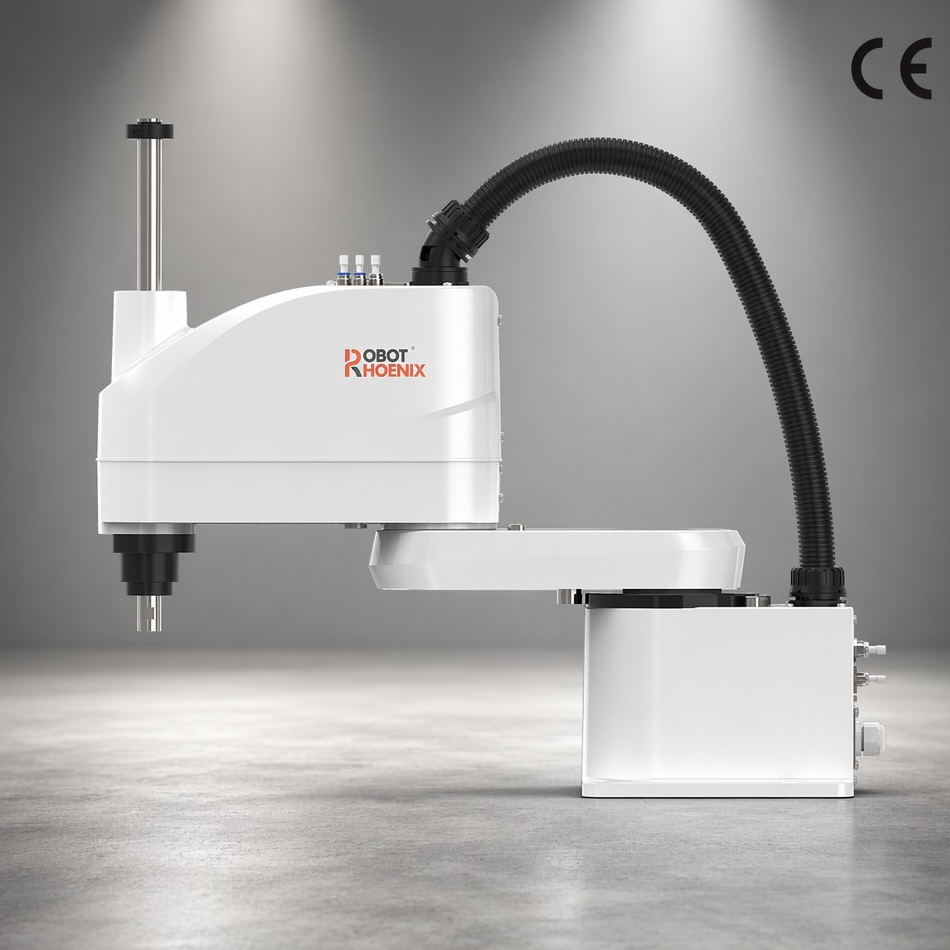
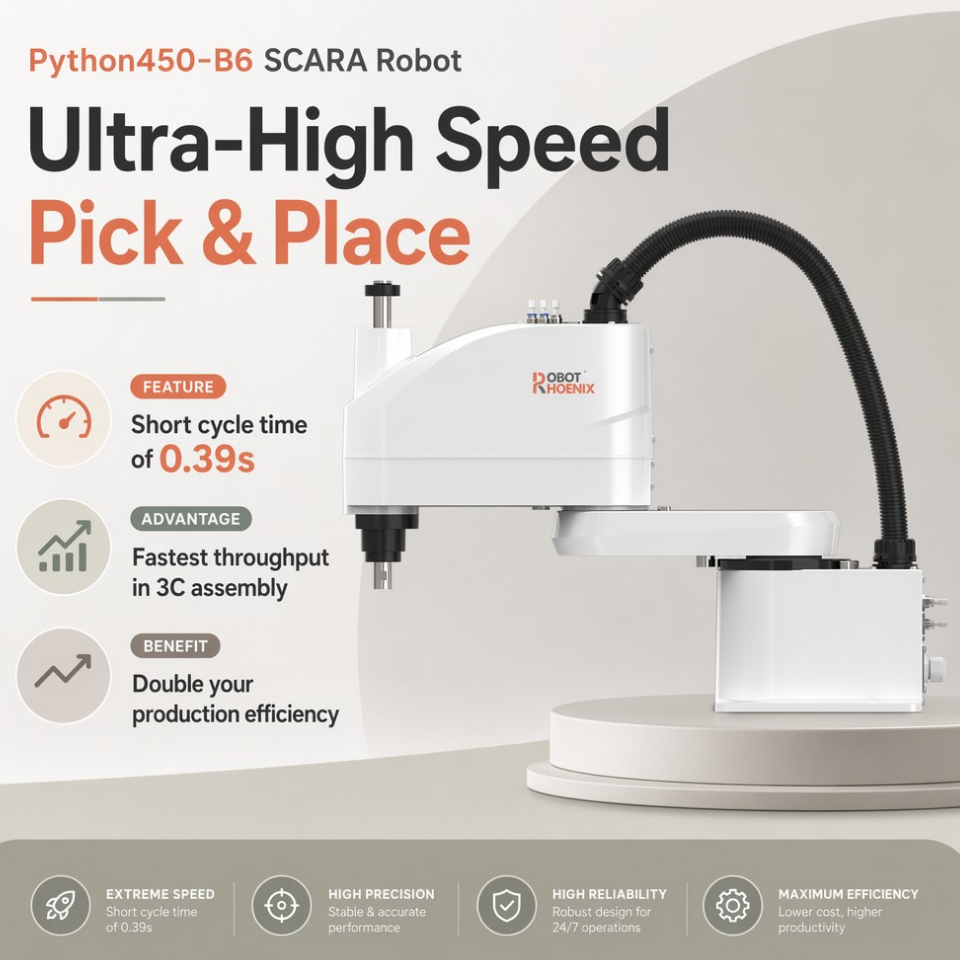
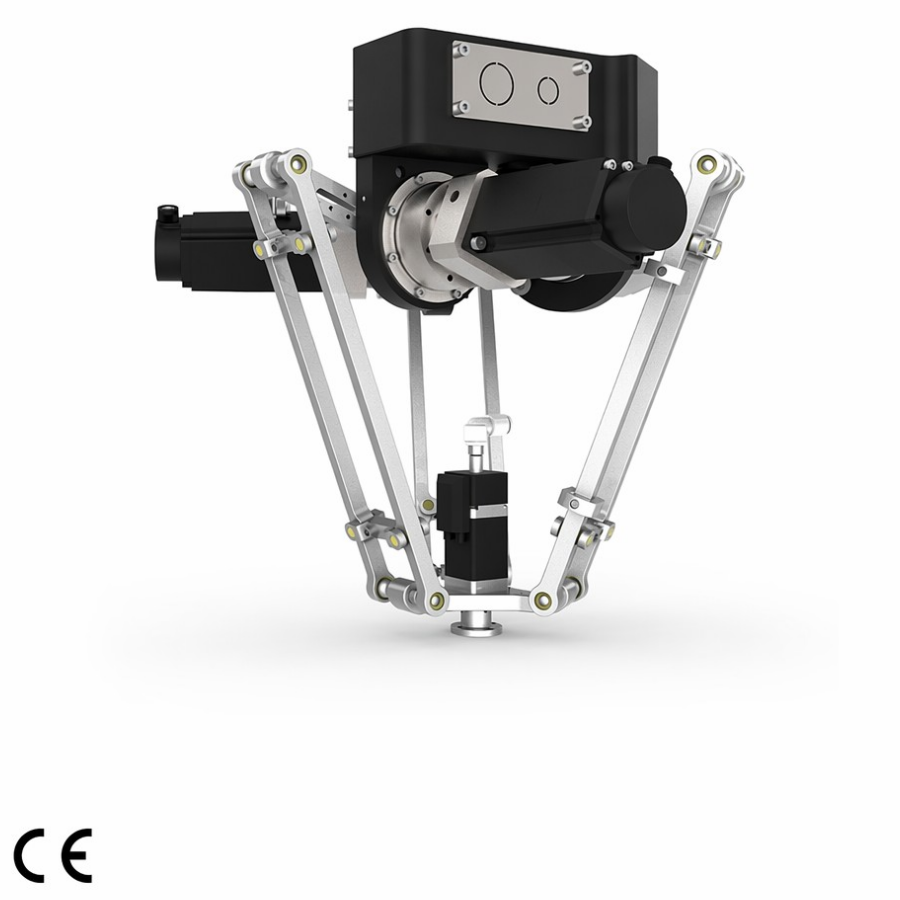
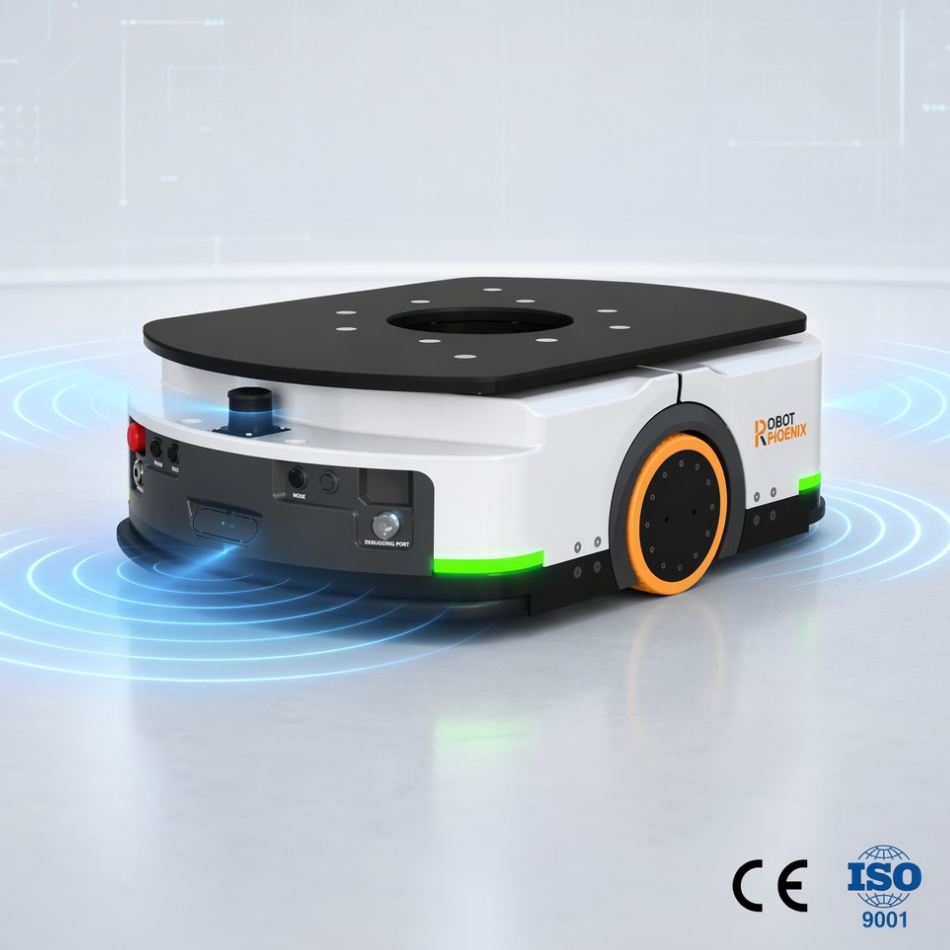
These configurations represent a SCARA-led automation portfolio plus adjacent robots often specified in the same production line. Product URLs are preserved so buyers can inspect specifications, application notes, and inquiry options.

Procurement Trends

2026–2030 SCARA Procurement Trends: What Smart Buyers Are Changing

Search intent is shifting from “SCARA robot price” to “SCARA integration risk, lifecycle cost, and supplier verification.” These four procurement trends explain why.

TCO replaces unit price

Buyers increasingly compare SCARA robots by cost per successful cycle, not by arm price. Energy, floor space, changeover time, spare-parts lead time, and integration labor can exceed the purchase price over a five-year horizon. Ask for a lifecycle model covering controller, teach pendant, vision, end-effector, safety, commissioning, and response-time commitments.

Vision-first, controller-open

Random bin picking, inline inspection, and traceability now push 2D/3D vision from option to baseline. The winning architecture is a SCARA robot, controller, and vision stack tuned by one engineering team, with PLC-ready I/O and open protocols for MES/ERP integration. Test camera latency, calibration stability, and recipe switching — not just repeatability on a test block.

Pilot-to-scale purchasing

Procurement teams prefer to prove one cell before scaling. A supplier that supports one-set orders, rapid sample testing, and repeatable documentation reduces the political risk of automation projects. After the pilot, scale should be governed by standard work instructions, spare-part lists, and version-controlled programs — not by renegotiating the robot from zero.

Hybrid cells, resilient supply

The factory of 2026 combines SCARA for precision, delta for speed, and AMR/AGV for transport. Buyers are also splitting orders between regions to balance landed cost, tariff exposure, and service response. China remains central for robot manufacturing depth, but the selection criterion is now whether the exporter can support multi-country documentation, training, and after-sales engineering.

Technology Development Trends

SCARA Technology Trends to Specify in 2026

Technology claims are easy to print. These are the specifications that separate a production-ready SCARA cell from a laboratory demonstration.

Accuracy vs repeatability

Repeatability numbers alone do not guarantee yield. A white-paper specification should define accuracy, repeatability, cycle time, settling time, payload at the tool flange, and path deviation under production speed. Require a FAT with your part, your gripper, and your recipe. For insertion and screwdriving, validate force/torque or compliance data, not only free-air motion.

Integrated controls & edge data

SCARA controllers are becoming data nodes. Buyers should request event logs, program versioning, remote diagnostics, and safe I/O for doors, light curtains, and stack lights. Where IIoT is required, confirm whether data can be exposed through OPC UA, Modbus TCP, EtherNet/IP, or a documented gateway. This matters for multi-site rollouts where local engineers must maintain the cell.

Compact, safe, energy-aware

Floor space is a hidden cost. New SCARA cells use smaller controllers, integrated safety, and low-profile fixtures to fit existing lines. Ask for measured power consumption, heat load, noise, and maintenance intervals. A compact robot that fits beside an existing conveyor can avoid a building expansion — a larger ROI lever than a small discount on the arm.

Digital twin & offline programming

High-mix production rewards suppliers that can simulate reach, cycle time, and collision zones before shipment. Offline programming reduces onsite commissioning days and protects production during changeovers. For global buyers, a documented digital workflow — model files, post-processors, and version control — is becoming part of the product, not a favor from the integrator.

Supplier Due Diligence

How to Verify a China SCARA Robot Exporter Before You Issue a PO

Use this six-point checklist to separate factory-direct manufacturers from trading companies, and to compare suppliers on evidence rather than brochure claims.

Factory status, not trading-company claims

Request the business license, factory address, floor plan, and video walk-through. Third-party onsite verification and credit records help separate manufacturers from resellers. If the supplier cannot show assembly, testing, and run-in areas, ask who actually builds and tests the robot.

In-house controller and vision capability

A true exporter should explain which subsystems are self-developed. Self-owned controllers and 2D/3D vision reduce integration finger-pointing and improve spare-parts continuity. Look for national patents, version-controlled software, and engineering staff who can discuss calibration, latency, and PLC handshakes.

Quality system and documented testing

ISO 9001 is a starting point, not a finish line. Ask for incoming inspection records, motor/gearbox traceability, run-in time, repeatability logs, and final inspection photos. For SCARA projects, the FAT should include your payload, acceleration profile, and production recipe.

Application engineering and OEM support

Machine builders need more than a catalog. Confirm whether the supplier supports custom end-effectors, mounting adapters, controller integration, buyer-label programs, and design reviews. A supplier that only sells standard arms may hand integration risk back to you.

Global service, training, spare parts

Ask for response-time commitments, spare-parts lead times, remote support capability, and training materials. For overseas projects, time-zone coverage and documentation quality often determine whether a minor fault becomes a lost shift.

Commercial transparency

A credible exporter states MOQ, Incoterms, payment methods, lead time, warranty, and packaging standards in writing. JORI, for example, supports one-set orders, FOB/CFR/CIF/EXW/CIP/FCA/CPT and express delivery, plus T/T, L/C, credit card, PayPal, Western Union, MoneyGram, and escrow in multiple currencies.

Enterprise Advantages

Inside JORI: A Factory-Direct SCARA and Automation Exporter

JORI Intelligent Technology Co., Ltd. combines robot manufacturing, controller and vision development, OEM support, and automated system integration in one engineering organization.

Factory-direct since 2012

Headquartered in Jinan, Shandong, JORI operates a 10,000+ m² manufacturing base with 500+ employees. More than a decade of robot R&D and export experience means the team has already seen the integration problems that appear after the purchase order.

Self-developed controllers and vision

Delta, SCARA, wafer, AGV/AMR, controllers, and 2D/3D vision are developed in-house and protected by national patents. One accountable source for hardware and software reduces finger-pointing between robot, camera, and PLC vendors.

Full automation portfolio

SCARA robots sit beside delta robots, AMR/AGV platforms, autonomous forklifts, wafer handling robots, and wet-wipe lid applicator solutions. This range lets JORI help buyers design the full material flow, not just the pick-and-place point.

OEM, design, and buyer label

JORI provides OEM service, design service, and buyer-label options for machine builders and distributors. Custom end-effectors, controller integration, and automated system integration are handled by the same engineering organization.

Verified quality and trade record

ISO 9001 quality management, onsite-verified supplier status, credit profile, trade capacity, and transaction history give procurement teams independent checkpoints before a PO. Buyers can review these records rather than relying on brochure claims.

Global response and MOQ 1

JORI maintains a 97.06% response rate and an average reply time of two hours or less. Standard robots can be ordered from one set, so a buyer can validate a single cell before committing to a multi-line rollout.

JORI Intelligent Technology headquarters and robot manufacturing facilityHeadquarters & manufacturing base
JORI robot assembly and testing areaAssembly, testing, and run-in
JORI engineering team and automation project supportEngineering & integration support
JORI factory video tour previewFactory video & production review
Southeast AsiaEastern EuropeNorth AmericaSouth AmericaChina Domestic
Application Map

Where SCARA Robots Pay Back Fastest

SCARA automation is strongest where planar motion, compact footprint, and repeatable placement decide throughput.

3C Electronics

PCB loading, connector insertion, screwdriving, adhesive dispensing, and inspection. The compact footprint fits beside existing SMT and assembly lines.

Automotive Parts

4-axis SCARA arms with vision for small castings, clips, sensors, and trim parts. Vision reduces fixture cost and supports traceability.

Pharmaceutical & Medical

Repeatable placement for blister packs, vials, and medical devices where documentation, cleaning routines, and validation matter.

Food & Beverage

SCARA and delta robots for carton loading, tray handling, sorting, and bottle unscrambling. Stainless and washdown requirements should be specified early.

Daily Chemicals & Wet Wipes

Delta-based lid applicator and carton packing cells, with SCARA loading and AMR transport for continuous hygiene production.

Warehouse & Logistics

AMR/AGV and autonomous forklifts move pallets and totes between SCARA workcells, reducing manual transport and waiting time.

Procurement Playbook

A 4-Step Procurement Playbook: From RFQ to Production Acceptance

A disciplined process protects both budget and schedule when sourcing SCARA robots from China.

1. Define the process window

Share part photos, CAD, weight, center of gravity, cycle time, conveyor speed, required accuracy, and environment. A good supplier will ask for a video of the current process before quoting.

2. Engineering review & RFQ

Require a reach study, payload check, cycle-time estimate, vision plan, safety scope, and interface list. Compare suppliers on assumptions, not just price.

3. FAT and SAT

Run the robot with your part and gripper. Record cycle time, repeatability, reject rate, changeover time, and fault recovery. Capture videos and signed acceptance criteria.

4. Scale and service

After acceptance, lock spare parts, program backups, training, and response-time commitments. Scale the cell only after the first line meets the agreed OEE target.

Cost & ROI

SCARA Project Economics: What Really Drives Total Cost of Ownership

Unit price is only one component. The full project budget determines whether the cell reaches payback on schedule.

In typical SCARA automation projects, the robot arm and controller account for about 30–40% of capital cost, end-effector and vision 20–30%, integration and safety 20–30%, and commissioning/service 10–20%. These ranges vary by scope; the point is to force a full-budget conversation before comparing quotes.

Payback accelerates when cycle time, yield, and uptime improve together. Avoid overpaying for unused payload or reach; a right-sized SCARA often runs faster and needs a smaller safety footprint. Ask for a payback model over three to five years that includes labor, scrap, energy, maintenance, and changeover.

Robot arm & controller30–40%
End-effector & vision20–30%
Integration & safety20–30%
Commissioning & service10–20%

Indicative ranges for planning discussion only; final shares depend on payload, vision, safety, and integration scope.

Buyer FAQ

SCARA Robot Buyer FAQ

Direct answers for procurement, engineering, and factory teams comparing China SCARA industrial robot suppliers.

What makes a China SCARA robot supplier top-tier?

Top-tier suppliers combine factory-direct manufacturing, in-house controller/vision capability, documented quality systems, application engineering, and export service. Look for evidence: ISO 9001, onsite verification, patents, FAT records, and spare-parts commitments. A low price without engineering support is not a top-tier supplier.

What MOQ and lead times should buyers expect?

Standard SCARA and adjacent robot models can typically be ordered from one set, which supports pilot cells. Lead time depends on configuration, vision, end-effector, and testing. Ask for a written schedule covering engineering review, production, FAT, packaging, and shipping.

How do I choose between SCARA and delta?

Choose SCARA for planar assembly, insertion, screwdriving, and precise placement in a compact footprint. Choose delta for very high-speed picking of lightweight products from moving conveyors. Many lines use both: delta for primary pick-and-place and SCARA for value-added assembly.

Can SCARA robots integrate with existing packaging machines?

Yes. PLC-ready I/O, EtherNet/IP, Modbus TCP, or other gateways can connect the robot to cartoners, labelers, wet-wipe lid applicators, and conveyors. Share the machine protocol and safety architecture during RFQ so the controller and handshakes are designed correctly.

Does JORI offer OEM, ODM, or private-label programs?

JORI provides OEM service, design service, and buyer-label options. Machine builders can request custom end-effectors, controller integration, mounting adapters, and documentation packages. Final scope is confirmed during engineering review.

Which delivery and payment terms are accepted?

Delivery terms include FOB, CFR, CIF, EXW, CIP, FCA, CPT, and express delivery. Payment methods include T/T, L/C, credit card, PayPal, Western Union, MoneyGram, and escrow, with quotation in USD, EUR, GBP, JPY, CAD, AUD, HKD, CHF, or CNY.

How should I validate repeatability and cycle time?

Use your part, gripper, and production recipe. Measure free-air cycle time, loaded cycle time, settling time, repeatability at the tool flange, and reject rate. For assembly, add insertion force or compliance testing. Record the acceptance method in the FAT/SAT document.

How fast is JORI’s response and after-sales support?

JORI reports a 97.06% response rate and an average response time of two hours or less. Buyers can share application videos, drawings, and PLC details to speed diagnosis. Spare-parts and training scope should be confirmed in the quotation.

Why use JORI as your SCARA robot exporter?

JORI combines factory-direct manufacturing since 2012, in-house controllers and vision, ISO 9001, onsite-verified status, OEM/design support, a broad robot portfolio, and export experience across multiple regions. Buyers get one engineering team for the robot, vision, and integration conversation.


Build a Lower-Risk SCARA Business Case

Use the eight recommended configurations above as a starting point. Send your part, cycle time, layout, and PLC details to JORI’s engineering team for a selection matrix and quotation. The catalog also covers delta, AMR/AGV, forklift, and wafer robots for projects that need a wider automation plan.

info@joribot.com
Get Catalog