Eight Factory-Direct Robots for Louisville Carton Packing and Wholesale Programs
These eight models cover the practical range requested by Louisville packagers: vision-guided delta robots, IP54 washdown-ready units, compact SCARA arms, and AMR platforms for material flow between carton packing cells.
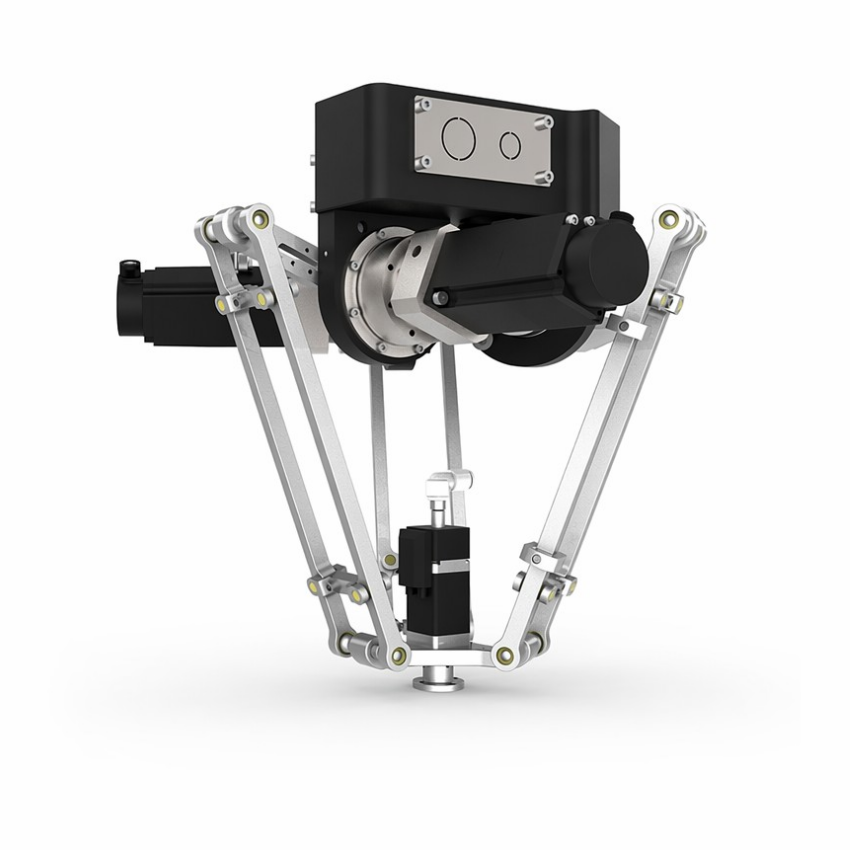
High Precision Pick and Place 4-Axis Parallel Robot Delta with Vision Tracking System
Recommended for randomly oriented cartons, pouches, and small components moving on infeed conveyors where vision correction reduces manual presentation.
View product details →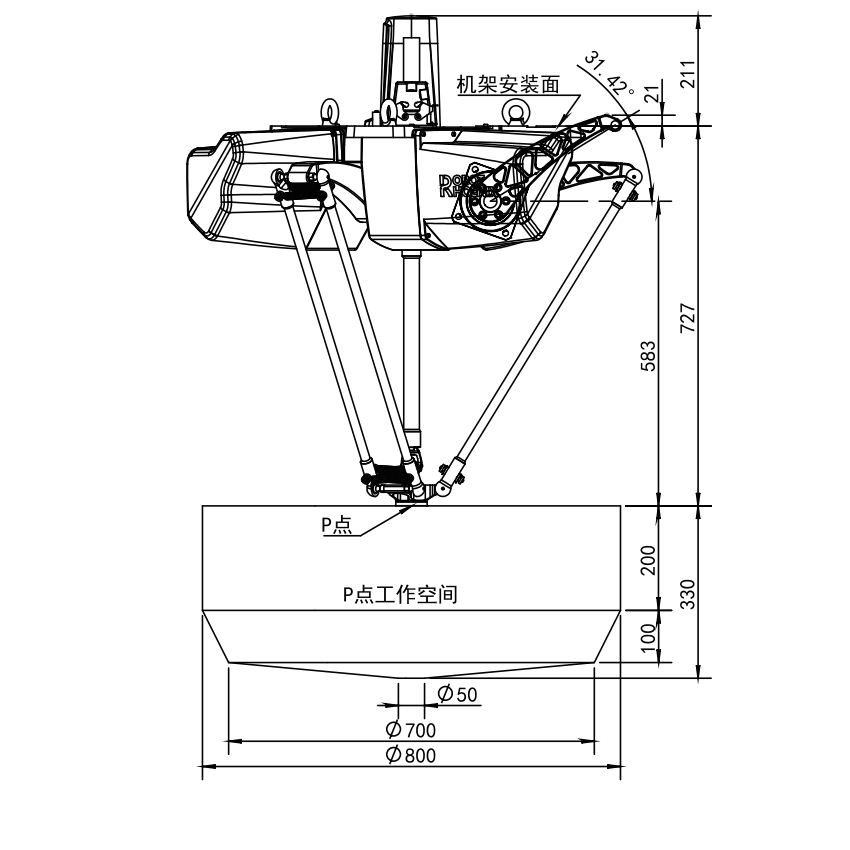
Industrial Delta Robot High Efficiency Parallel Robot for Goods Picking Placing Sorting
A strong fit for Louisville distribution and 3PL operations that need repeatable pick-and-place sorting before case packing or retail-ready carton assembly.
View product details →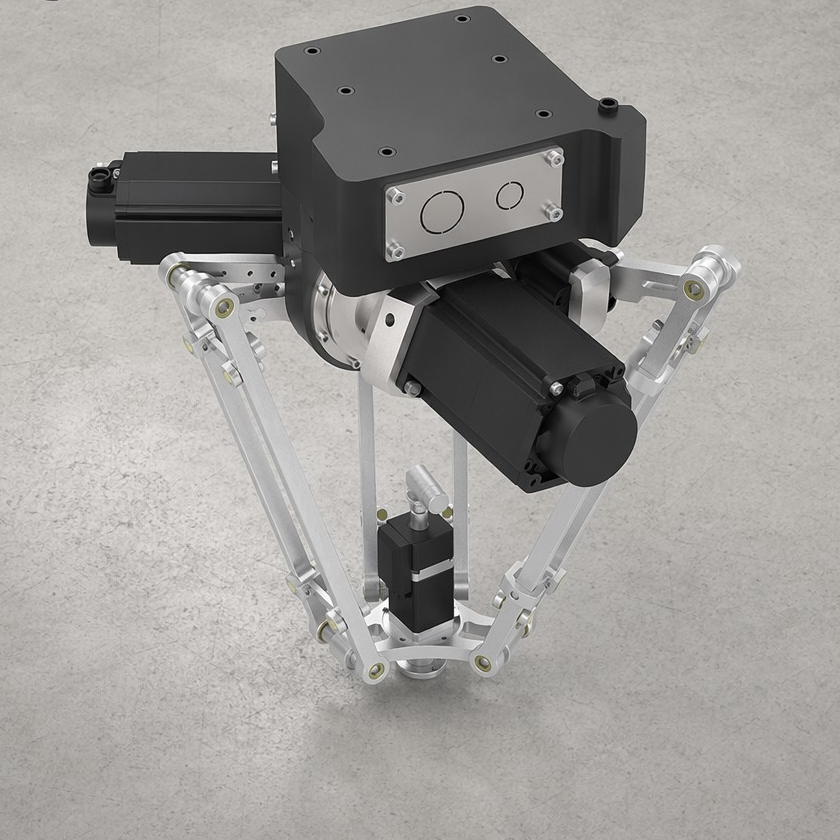
New Condition High-Speed Industrial Innovative Manipulator Delta Robot for Light Industry
For snack foods, personal care, and light consumer products where short cycle times and compact work envelopes drive carton packing throughput.
View product details →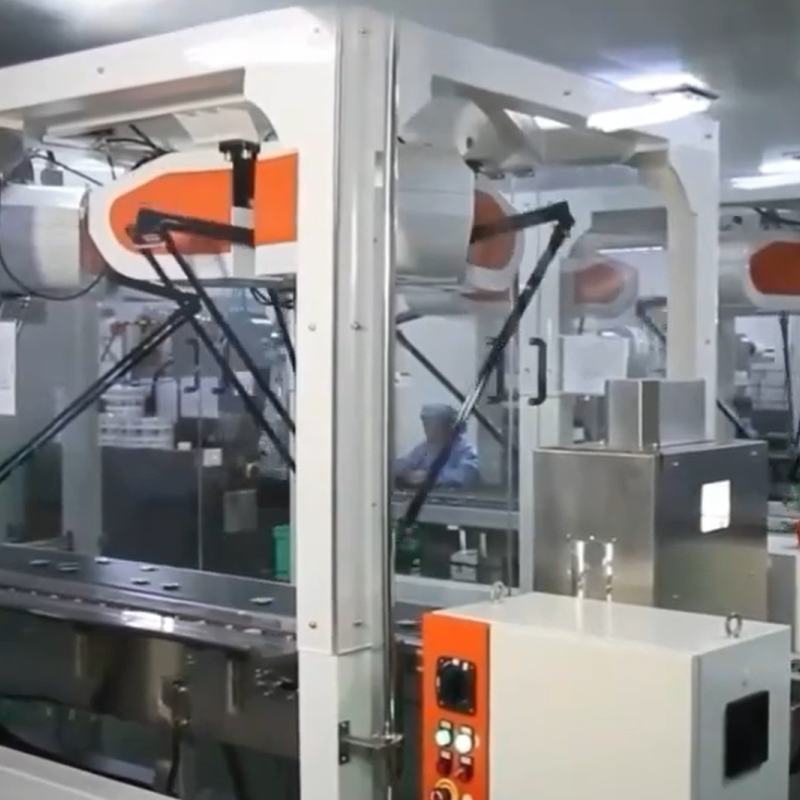
6kg Payload IP54 Protection Grade Pick Place Sorting Parallel Robot with Robot Gripper
A practical specification for Louisville food, wet-wipe, and household-product lines that need higher payload capacity with protection against dust and splashes.
View product details →
Newly Design Low Price Industrial Manipulator SCARA Robot Arm with Integrated Motor
Useful for planar insertion, label placement, and small carton assembly tasks that do not require the overhead work envelope of a delta robot.
View product details →
High Performance Material Handling Vehicle AMR Robot AGV Robot for Warehouse Logistic System
Connects carton packing outputs to stretch wrappers, palletizers, and staging lanes where operators otherwise push carts across long distances.
View product details →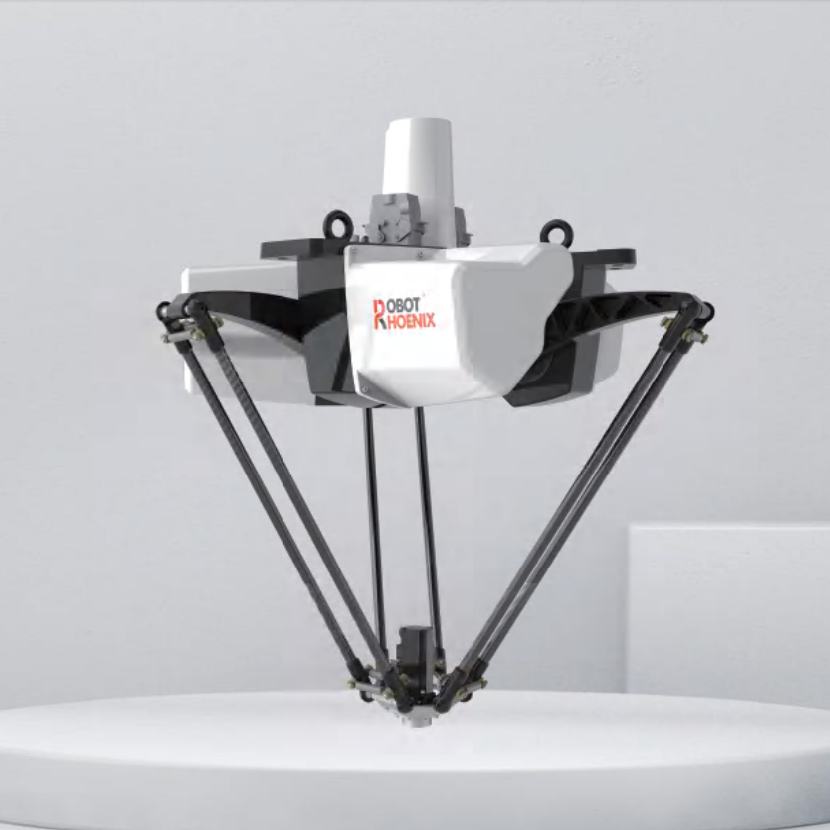
Robotphoenix 4 Arm Payload 3-6kgs Delta Robot for Pick Place Consumer Goods
Built for mixed consumer-goods cartoning, club-store multipacks, and secondary packaging where product weight varies within a narrow, predictable range.
View product details →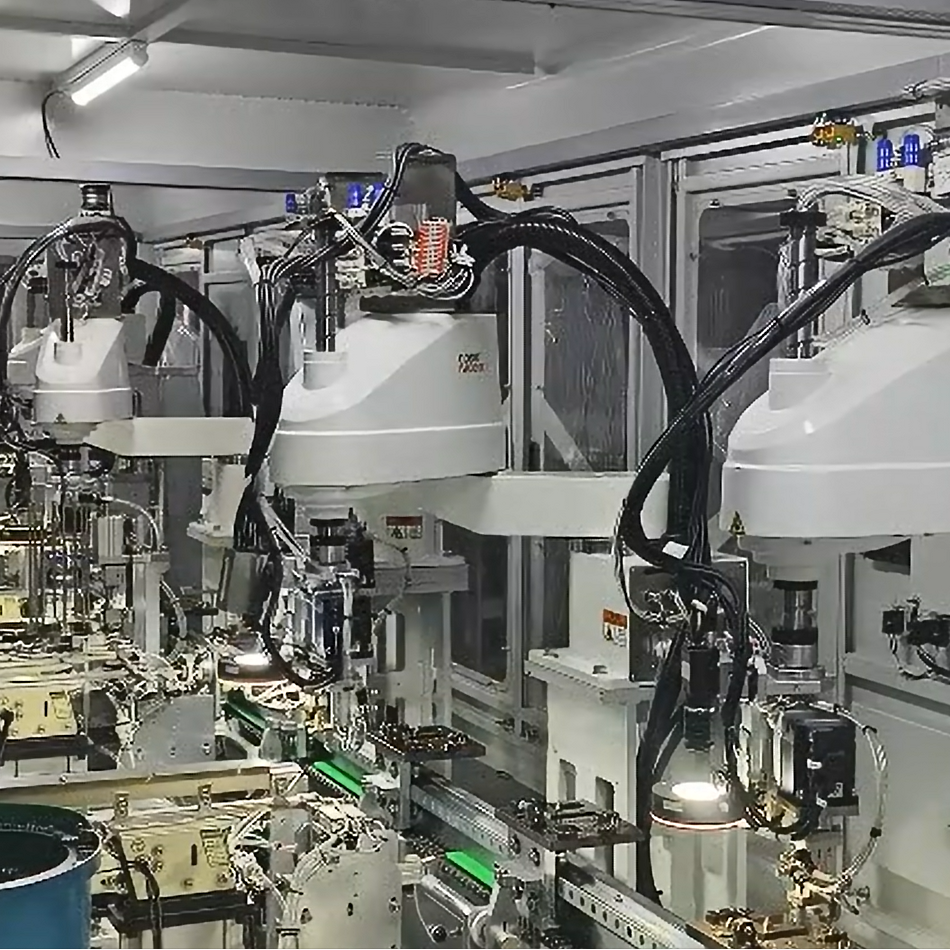
High Quality Mini Industrial Robot SCARA for Pick and Place at Low Cost — New Condition
An entry point for Louisville small manufacturers and co-packers validating automated carton loading before scaling to multiple cells.
View product details →A Factory-Direct Supply Partner for Louisville Wholesalers, Integrators, and Plant Engineers
JORI Intelligent Technology Co., Ltd. has manufactured industrial robots since 2012, with in-house development of robot bodies, controllers, and 2D/3D vision systems. For Louisville buyers, that means one accountable source for robot hardware, controls, integration support, OEM labeling, and after-sales engineering.
Figures are based on published company information and current export engagement data. Final commercial terms, lead times, and specifications are confirmed in the quotation and technical agreement.
Why a 4-Axis Delta Robot Fits Louisville Carton Packing Lines
Louisville sits at the center of a dense logistics and manufacturing corridor. Packagers here frequently run high-mix carton packing lines that must handle retail-ready packaging, e-commerce mailers, club-store multipacks, and shelf-ready trays—often on the same shift. A 4-axis delta robot is often the right motion platform because it combines overhead reach, short cycle times, and a compact footprint above the conveyor.
In a carton packing line, the robot usually performs one of four jobs: picking randomly oriented products from a conveyor, placing products into a carton or tray, closing or labeling the carton, or transferring finished packs to a sealing station. The delta architecture is especially effective when the product is light, the pick area is wide, and the line cannot stop for manual presentation. With vision tracking, the robot can follow moving products and adjust placement without mechanical re-tooling for every SKU.
For Louisville buyers, the evaluation should go beyond payload and repeatability. The real questions are: How often will the line change over? What is the range of carton sizes? Will the robot communicate with an Allen-Bradley/Rockwell controller or an existing cartoner? What happens when a product slips, overlaps, or arrives at an angle? A supplier that can answer those questions with controls, vision, and integration engineering is more valuable than a catalog reseller that only quotes an arm.
- 3–6 kg payload range
- 0.08 mm repeatability option
- IP54 protection option
- PLC-ready integration
- 2D/3D vision options
- OEM and buyer-label support

Where 4-Axis Delta Robots Earn Their Cycle Time in the Louisville Market
Louisville packagers rarely buy a robot in isolation. The robot has to fit a line layout, a labor model, a sanitation routine, and a customer compliance program. These are the application scenarios that most often justify a delta robot or a mixed delta/SCARA cell.
Food and Beverage Secondary Packaging
Delta robots place pouches, cups, bars, and single-serve packs into cartons or trays at conveyor speed. Louisville food plants often need stainless-friendly layouts, washdown awareness, and quick changeover between retail and foodservice pack formats.
E-Commerce and 3PL Carton Packing
High-mix fulfillment operations use vision-guided delta robots to pick small items, polybags, and accessories into mailers and cartons. The value is highest where SKU variation makes fixed automation impractical and seasonal labor is hard to secure.
Pharma and Medical Device Packing
Blister cards, vials, and device kits require repeatable placement and careful handling. A compact delta cell can reduce manual contact while fitting into an existing cleanroom or packaging room without a large floor footprint.
Automotive and Aftermarket Kitting
Louisville’s manufacturing base includes component suppliers and aftermarket distributors that kit parts into cartons. Delta robots handle small brackets, seals, and packaged parts where repeatable pick-and-place reduces fatigue and mis-picks.
Consumer Goods and Wet Wipes
Lid application, canister packing, and multipack assembly are classic delta robot tasks. A 6 kg IP54 model can support higher product weights and washdown-conscious environments while maintaining fast placement.
Warehouse and Packing-Line Material Flow
AMR and AGV platforms move empty cartons, finished cases, and pallet loads between packing, labeling, and stretch-wrapping stations. This is especially relevant in Louisville facilities that run multiple shifts and long internal transport routes.
Four Trends Shaping Carton Packing Automation Decisions in Louisville
For 2025–2026 capital planning, Louisville buyers are not simply asking for a faster robot. They are asking for a line that can absorb labor volatility, SKU proliferation, sustainability pressure, and integration risk.
Labor Availability and Turnover
Packaging rooms and distribution centers face persistent turnover in repetitive picking and carton-loading roles. A delta robot cell is often justified first on labor redeployment—moving operators to quality, changeover, and machine oversight—rather than headcount reduction alone.
Mixed-SKU and Retail-Ready Packaging
Retailer assortment changes and e-commerce order profiles create more carton sizes, tray formats, and pack counts. Vision-guided 4-axis delta robots reduce mechanical changeover because the recipe lives in the controls and vision system, not only in a fixed fixture.
Resilient Supply Chains and Spare-Parts Planning
Louisville’s logistics advantage is also a risk-management advantage. Buyers increasingly request documented spare parts lists, controller compatibility, remote diagnostics, and a clear escalation path so a line never waits for a reseller chain to solve a controls issue.
Compact Footprint and Energy Awareness
Floor space remains expensive in well-located Louisville industrial buildings. Overhead delta robots can free conveyor-level space, while efficient motion profiles and right-sized payloads avoid the energy penalty of oversizing a robot for every carton-packing task.
4-Axis Delta vs. SCARA vs. AMR: Which Robot Belongs on Your Louisville Line?
Use this comparison to shortlist the correct robot family before requesting a quotation. The best choice depends on product presentation, cycle time, carton orientation, and how material reaches the cell.
| Robot Family | Best Louisville Use Case | Key Selection Data | Choose It When |
|---|---|---|---|
| 4-axisDelta Robot | High-speed picking from moving conveyors into cartons, trays, or retail-ready packs | 3–6 kg payload options · 0.08 mm repeatability · IP54 option · vision tracking · PLC-ready | Products arrive randomly, cycle time is tight, and the work envelope is above the conveyor. |
| 4-axisSCARA Robot | Planar assembly, label placement, insertion, and compact carton-loading support | Compact footprint · integrated motor options · mini low-cost models · controller and vision options | The task is mostly planar, the cell is small, and precise X-Y placement matters more than overhead reach. |
| AMR / AGVMobile Robot | Moving empty cartons, finished cases, and pallet loads between packing and dispatch | 400–500 kg platform options · laser SLAM navigation · smart fleet management | Operators spend too much time pushing carts, and the layout changes more often than a fixed conveyor can support. |
| WholesaleMixed Cell | Delta robot for picking plus SCARA or AMR for secondary handling | OEM integration · custom end-effectors · controller handshake · line-side buffering | One robot cannot cover both high-speed picking and downstream material flow, but a single supplier can integrate both. |
Final robot selection requires a line audit: product weight, center of gravity, conveyor speed, pick window, carton range, controls architecture, compressed-air availability, sanitation method, and acceptance-test criteria.
A Robot Manufacturer That Builds the Arm, Controller, and Vision System
Many suppliers in the Louisville market can quote a robot. Fewer can explain how the controller, vision system, end-effector, PLC handshake, and safety circuit will work together on day one. JORI’s advantage is vertical engineering depth: robots, controllers, and 2D/3D vision are developed in-house, supported by national patents and ISO 9001 quality management.
For machine builders and wholesale buyers, this matters because customization does not stop at the robot arm. We support OEM service, design service, buyer-label programs, custom end-effectors, controller integration, and automated system integration. Standard models can be ordered from one set, so a Louisville buyer can validate a pilot cell before scaling to multiple lines.
- Independent R&D since 2012
- Original factory for delta, SCARA, AMR
- ISO 9001 quality management
- OEM, design, and buyer label
- One-stop automation integration
- MOQ 1 set for standard models

Controller and Vision Expertise
In-house controllers and 2D/3D vision reduce finger-pointing between robot vendor, vision vendor, and integrator when the line is commissioned.
ISO 9001 Quality System
Documented inspection and run-in testing help protect buyers from receiving a robot that performs on paper but fails during a production ramp.
Onsite-Verified Manufacturer
Factory premises and legal status can be checked through third-party supplier assessment and trade records before a Louisville buyer places a purchase order.
OEM and Wholesale Support
Machine builders and distributors can request buyer labels, custom end-effectors, controller integration, and documentation packages for their own customer base.
Fast Inquiry Response
Average response targets of two hours or less support fast-moving line upgrades, emergency spare-part questions, and wholesale quotation cycles.
Global Export Experience
Export experience across North America, South America, Eastern Europe, Southeast Asia, and China supports documentation, freight coordination, and voltage discussion.
The Louisville RFQ Packet That Shortens Robot Engineering Review
Most slow robot quotations are not caused by manufacturing lead time. They are caused by incomplete application data. Include these items in the first inquiry and a supplier can recommend the right 4-axis delta robot, gripper, vision strategy, and integration architecture much faster.
RFQ Checklist for Carton Packing Lines
- Product matrix: weights, dimensions, center of gravity, surface friction, and packaging materials.
- Carton and tray range: minimum and maximum length, width, height, board grade, and target pack count.
- Conveyor data: line speed, product spacing, orientation, infeed height, and whether products are randomly presented.
- Controls architecture: PLC brand, HMI requirements, safety circuit, network protocol, and line-side data reporting.
- Facility interface: voltage, frequency, compressed air, vacuum, sanitation method, ambient temperature, and floor space.
- Acceptance criteria: cycle-time target, changeover time, defect rate, operator training, and spare-parts list.
What Louisville Buyers Weigh Most in Early Screening
Illustrative planning weights based on common packaging automation screening criteria. They are not a performance guarantee; validate against your line trial and acceptance protocol.
Questions Louisville Buyers Ask Before Selecting a Delta Robot Supplier
These are the practical procurement questions that come up when a packager, machine builder, or wholesale distributor compares robot suppliers for a Louisville carton packing project.
Are you a Louisville-based distributor or a factory-direct supplier?
JORI is a factory-direct robot manufacturer based in Jinan, China, with export experience across North America. For Louisville buyers, we operate as a direct supply and engineering partner—not as a local stocking distributor. We can coordinate with your local integrator, controls contractor, or maintenance team while providing the robot, controller, vision, and OEM support from the factory.
What is the minimum order for a 4-axis delta robot pilot in Louisville?
Standard delta robots, SCARA robots, and AMR/AGV platforms can be ordered from one set. That allows a Louisville plant or co-packer to validate a single carton packing cell before scaling to multiple lines. Wholesale and OEM programs can be quoted with volume pricing, buyer labeling, and documentation packages.
Can the robot integrate with Allen-Bradley/Rockwell or an existing cartoner?
Yes, PLC-ready integration is part of the selection process. We confirm the controls architecture, safety circuit, network protocol, and handshake points before shipment. Final integration responsibility should be defined clearly between the robot supplier, the cartoner OEM, and the local controls contractor.
What voltage and facility data should Louisville buyers confirm?
Confirm plant voltage, frequency, compressed-air supply, vacuum requirements, ambient conditions, sanitation method, and available floor space. Many Louisville industrial facilities operate at 480V/60Hz, but the final controller configuration must be verified against the actual facility drawing and your electrical contractor’s requirements.
How do you protect fragile products and cartons during high-speed picking?
End-effector design, vacuum or gripper selection, acceleration limits, vision offset, and placement strategy all matter. For fragile products, we recommend a line trial with sample products and cartons so the robot motion profile and gripper can be validated against real packaging materials rather than catalog assumptions.
Which shipping and payment terms are accepted for Louisville orders?
Delivery terms include FOB, CFR, CIF, EXW, CIP, FCA, CPT, and express delivery. Payment methods include T/T, L/C, credit card, PayPal, Western Union, MoneyGram, and escrow. Currencies include USD, EUR, GBP, JPY, CAD, AUD, HKD, CHF, and CNY. Final terms are confirmed in the proforma invoice.
Do you support OEM and private-label programs for wholesalers?
Yes. OEM service, design service, and buyer-label options are available for machine builders and wholesale distributors. We can support custom end-effectors, controller integration, documentation, and automated system integration for repeat programs.
How can a Louisville buyer validate ROI before placing a full order?
Start with a line audit and a single-cell pilot. Define cycle-time targets, labor redeployment assumptions, changeover goals, scrap reduction, and spare-parts requirements. Then compare the pilot results against the current process. This approach reduces capital risk and gives procurement a defensible business case before scaling to multiple carton packing lines.
Planning a 4-Axis Delta Robot Cell for a Louisville Carton Packing Line?
Send your product matrix, carton range, conveyor speed, controls architecture, and layout constraints. Our engineering team will help shortlist the right delta, SCARA, or AMR configuration and prepare a factory-direct quotation for your Louisville project.