Why Makati Signs the Purchase Order While Cavite, Laguna and Batangas Move the Wafers
The Philippines' semiconductor and electronics cluster runs along the CALABARZON corridor. The teams that approve capital equipment usually sit in Makati and Bonifacio Global City. A wafer transfer system has to satisfy both addresses.
Makati is where a wafer transfer system is usually approved, and rarely where it is installed. Assembly, test, packaging, PCB and solar production are concentrated in Cavite, Laguna and Batangas, while regional headquarters, procurement, finance, legal and supply-chain teams that sign off on capital equipment are often sixty to one hundred and twenty minutes north, in the Makati central business district and BGC. That distance matters, because the questions asked in a Makati boardroom — duty treatment, spare-part lead time, voltage compatibility, service response — are not the questions asked on a cleanroom floor in Cavite. A supplier who can only answer one set of questions rarely survives the second meeting.
A wafer transfer system is not a single machine. It is a controlled chain of interfaces: a load port that accepts FOUP, FOSB, cassette or tray carriers; an aligner that finds the notch or flat; a robot — atmospheric SCARA, dedicated wafer arm or high-speed delta — that moves the substrate without touching the device side; a buffer or stocker that decouples process steps; and, increasingly, an autonomous mobile robot that moves carriers between tool islands, storage and inspection. Every link in that chain has a specification that changes the price, and most disappointing quotations in this market fail not on robot quality but on an unspecified interface.
We see three recurring buying patterns from Makati-based teams: outsourced assembly and test houses adding a second source for carrier handling; electronics and 3C manufacturers in Laguna automating pick-and-place ahead of a line transfer; and regional laboratories or solar lines that need one compact, bench-scale cell rather than a full fab retrofit. Each pattern has a different acceptance test, a different documentation pack and a different tolerance for lead time.
This guide is written for the people who have to defend a capex decision two quarters later. It sets out the platforms most often quoted into Metro Manila, the local application scenarios that actually justify the spend, the trends reshaping procurement between 2025 and 2028, and an RFQ framework you can copy into your own tender document.
- Information gain #1 — Philippine industrial sites run 220 V single-phase and 380–440 V three-phase at 60 Hz; a 50 Hz quotation copied from a Chinese domestic project will need drive re-parameterisation and a new acceptance test.
- Information gain #2 — PEZA-registered importers need a document pack (invoice, packing list, bill of lading, certificate of origin) before the equipment leaves the factory, not after arrival at MICT or Manila South Harbor.
- Information gain #3 — Substrate contact method — backside vacuum, edge grip or Bernoulli — is a yield decision, not an accessory line item, and it should be fixed before the robot model is chosen.
Eight Platforms Makati Buyers Quote Most for Wafer-Adjacent Transfer Work
Each model below can be supplied as a standalone unit, an OEM build with your own end-effector, or an integrated cell with controller, vision and safety package. Prices and lead times are confirmed against your carrier format and cycle time.
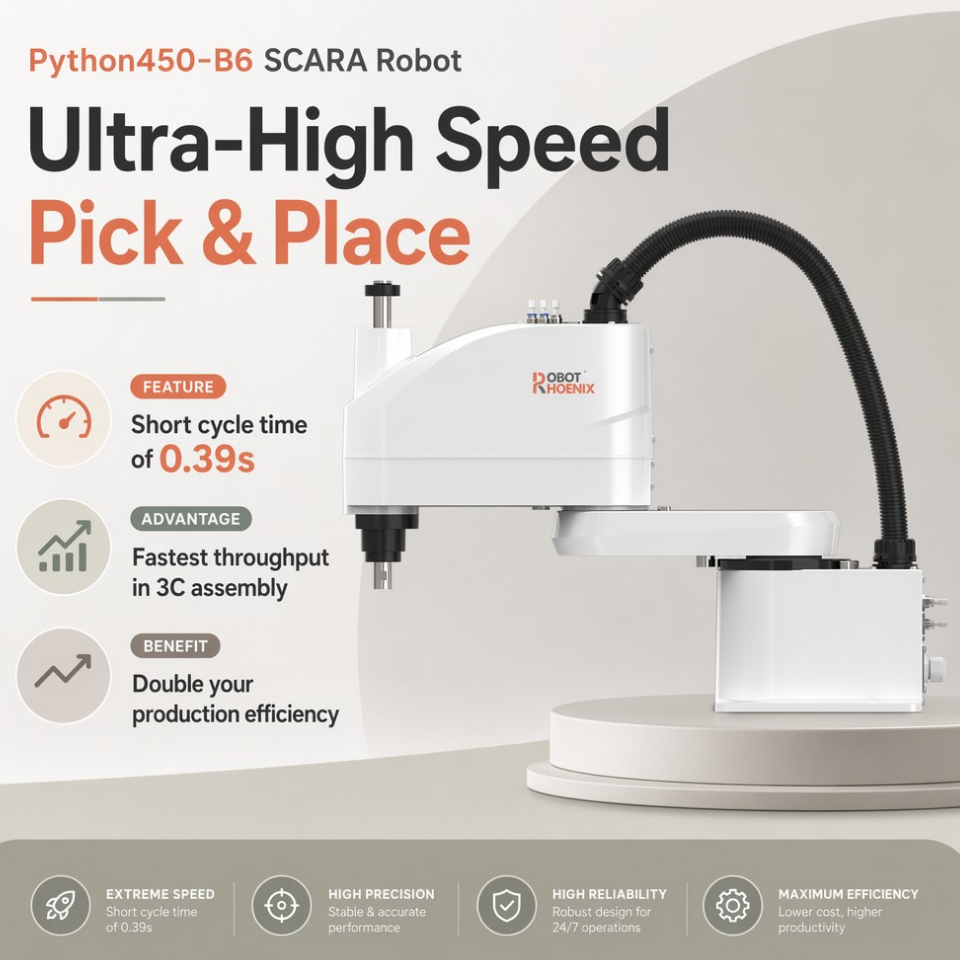


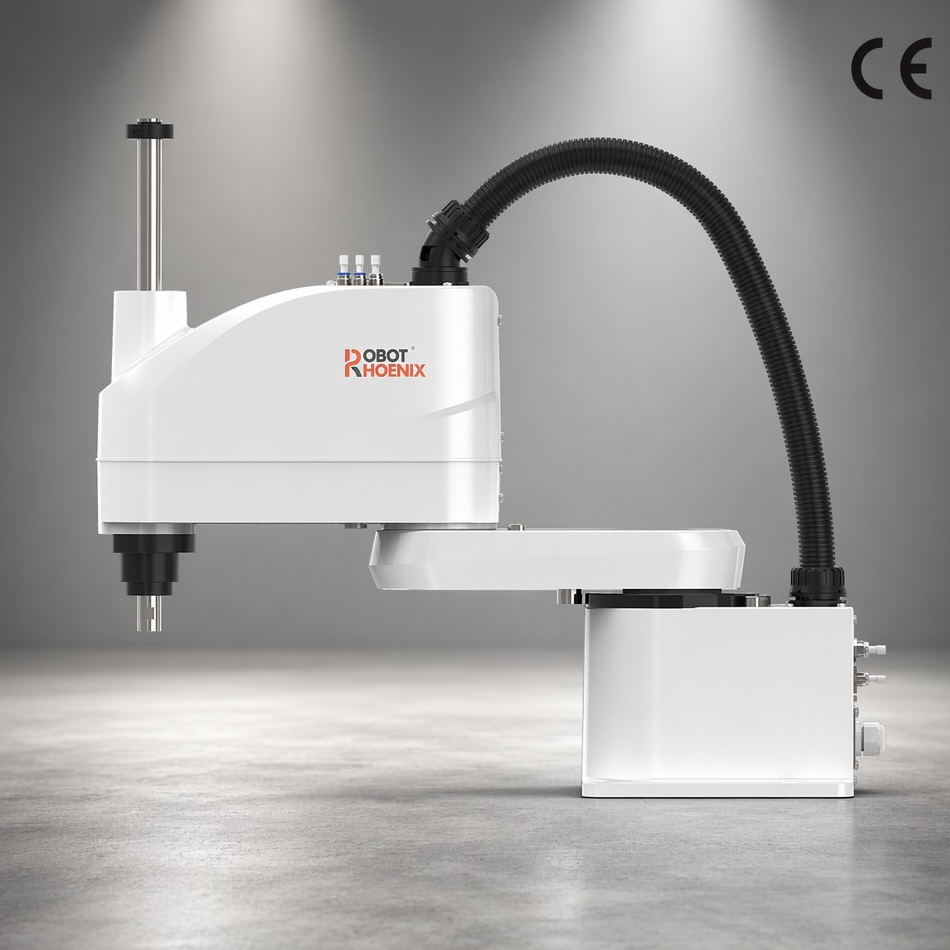
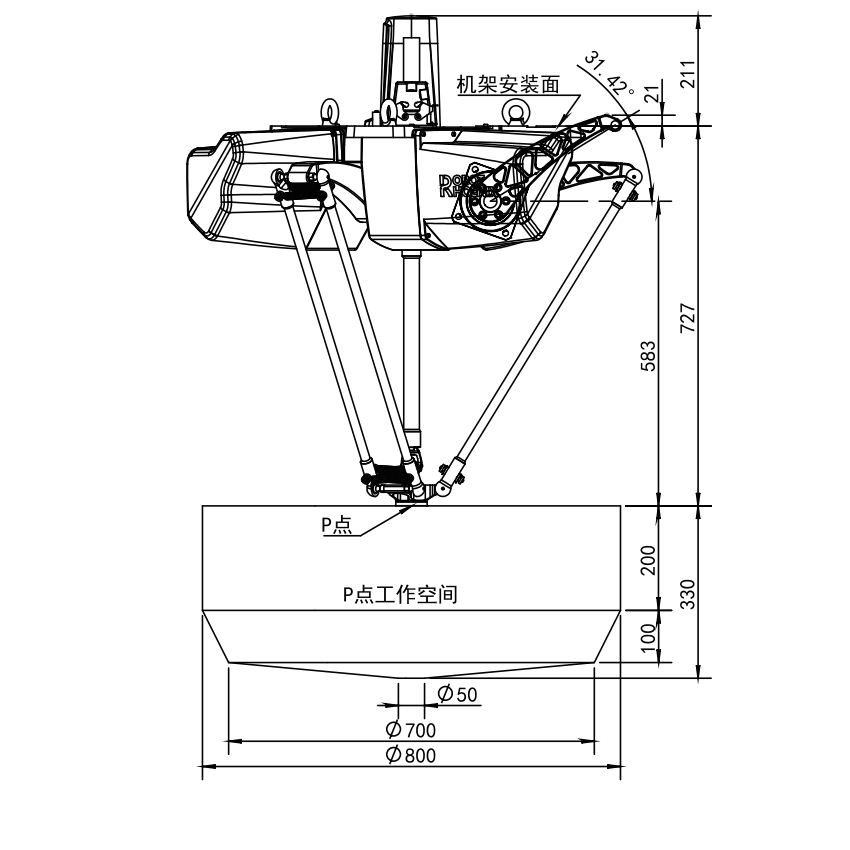

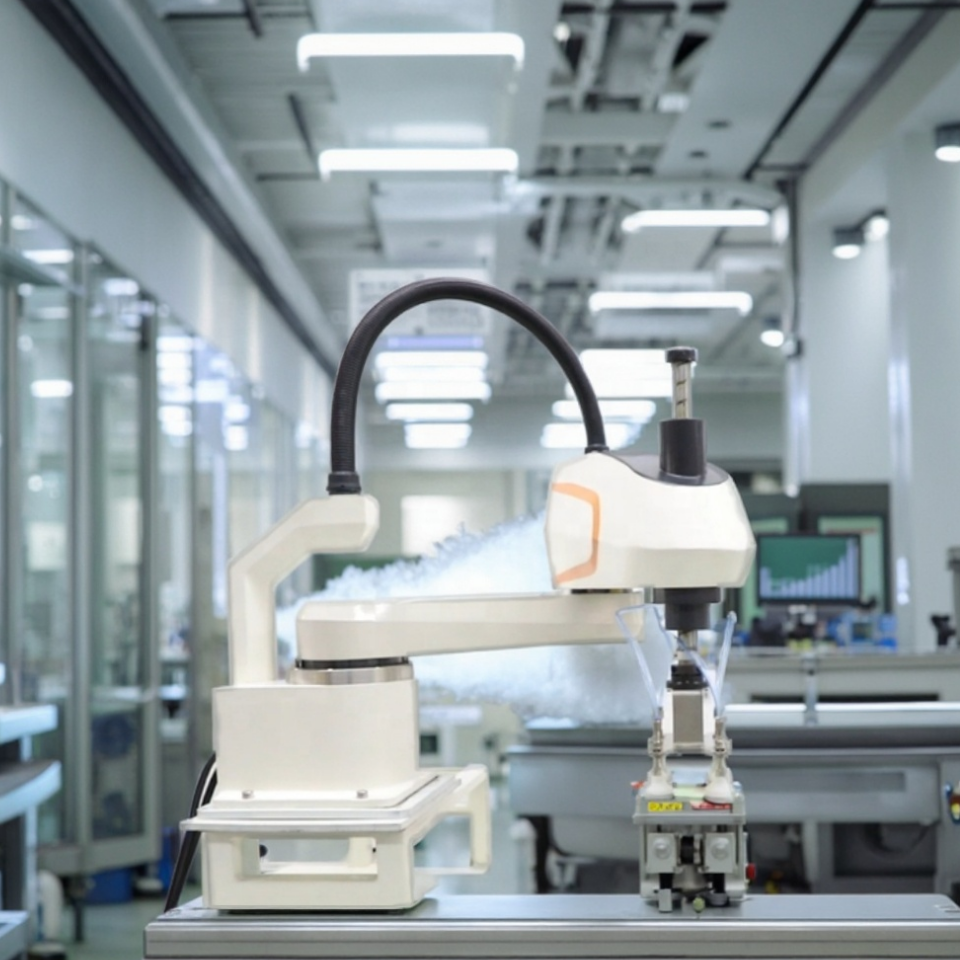
Not sure which platform matches your carrier, cycle time or cleanroom class? Send the drawing or a short video of the current process and our engineers will size it for you.
Contact UsWhere These Platforms Actually Run Across Metro Manila and CALABARZON
Generic catalogues describe food, pharma and automotive. These are the six situations we are asked to solve by teams procuring through Makati for plants in Cavite, Laguna, Batangas and Metro Manila.
Cassette-to-cassette transfer in Cavite assembly and test lines
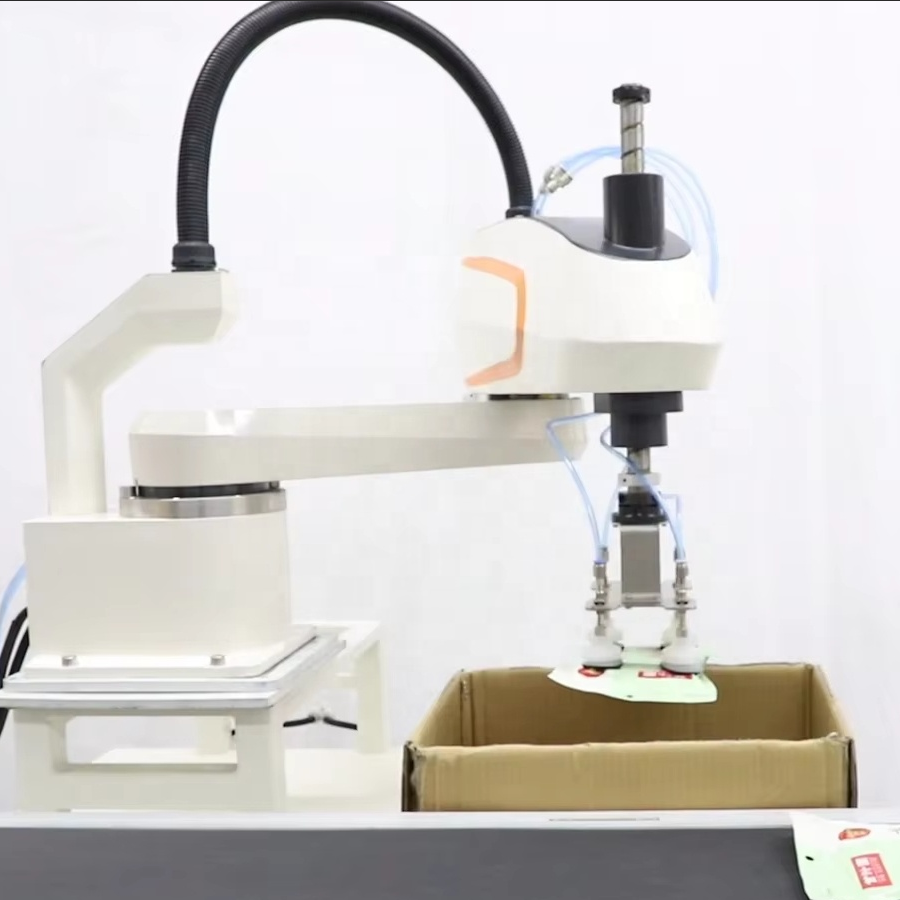
High-mix, low-volume lots make a fixed conveyor the wrong investment. A 400 mm-reach SCARA with a compliant edge-grip end-effector moves substrates between cassettes and can be re-tooled for the next product family within a single shift.
Cleanroom carrier transport between tool islands
When a conveyor is too rigid and a ceiling track is too expensive, laser-SLAM AMRs move FOUP and carrier boxes between islands. Mapping is measured in hours, and fleet software manages traffic in the narrow aisles typical of retrofitted Philippine plants.
Post-test IC sorting and tray-to-tray throughput
When sort rate is the bottleneck after final test, a delta robot at 3–6 kg payload with 0.08 mm repeatability beats a larger articulated arm on cycle time per square metre of cleanroom — the meter that actually appears on your rent invoice.
3C and PCB assembly in Laguna electronics parks
Mini SCARA models with integrated motors reduce cabinet space in crowded lines, and PLC-ready delta arms drop into existing cartoning and labelling machines without replacing the host control system.
Solar cell and thin-wafer handling in Batangas
Thin substrates deflect under their own weight. Vibration-damped motion profiles, gentle vacuum and a controlled approach speed matter more than peak acceleration — specify both, or the yield loss will be attributed to the process rather than the handling.
Sample preparation and failure analysis labs in Makati and BGC
Regional headquarters often keep a small lab for sample prep, cross-sections and customer demonstrations. A bench-scale SCARA inside a compact enclosure gives repeatable placement on a footprint that fits an office building, not a fab.
Four Forces Reshaping Wafer Handling Procurement in the Philippines
None of these trends is unique to the Philippines. What matters for a Makati buyer is how they combine here — and which ones a supplier can actually evidence in a quotation.
China+1 without writing China out
Most regional buyers are not replacing Chinese suppliers; they are adding a second source and demanding documentation that proves both sources are interchangeable. Dual-sourcing an end-effector and controller set is now a standard clause, not a negotiating tactic.
Throughput per kilowatt becomes a KPI
Industrial electricity in the Philippines is among the more expensive in the region. Energy consumed per wafer moved — including compressed air for vacuum and the chiller load of the cleanroom — is now written into the business case, not parked in overheads.
Cleanroom labour, not just labour cost
Gowning, certification and turnover make substrate handling expensive to staff even where wages are competitive. Every role moved out of the cleanroom also removes a contamination variable from the yield data — a strong argument when the approval committee is risk-averse.
Incentive paperwork moves earlier
Equipment imported under PEZA or BOI registration carries a documentation trail — invoice, packing list, bill of lading, certificate of origin. Buyers now request a customs-ready document pack at RFQ stage, because a missing certificate is a delay measured in weeks.
Total cost of ownership drivers we see in Philippine quotations
Directional weighting based on JORI quotation reviews for Southeast Asian projects. It is an engineering priority indicator, not a market statistic.
What to Put in Your Wafer Transfer System RFQ
Six decisions drive most of the price difference between two quotations. Fix them in writing before you compare numbers, or you will be comparing two different machines.
| Decision | What to specify | Why it changes the quotation |
|---|---|---|
| Carrier format | 300 mm FOUP, FOSB, 200 mm cassette, tray or tape frame; number of positions and load-port interface | Defines the end-effector, the docking tolerance and whether a load-port module is supplied with the cell. |
| Cleanroom class | ISO Class 5, 6 or 7 at the robot envelope; particle and outgassing limits; cable and bellows material | Drives surface finish, lubrication choice, vacuum routing and the acceptance test protocol. |
| Cycle time | Moves per hour, transfer distance, settle time allowed before the next process step | Sets the robot size, the number of arms and whether a buffer station is required. |
| Contact method | Backside vacuum, edge grip, Bernoulli or gravity nest; thin or warped substrate handling | Yield-critical. It must be agreed before the kinematic model is selected, not after. |
| Site electrical | 220 V single-phase or 380–440 V three-phase, 60 Hz; earthing scheme; available compressed air | Requires drive parameterisation and a different acceptance test from a 50 Hz domestic build. |
| Control and integration | EtherCAT, Modbus TCP, digital I/O, PLC handshake, host protocol, safety category | Determines engineering hours and whether your line integrator or ours owns the interface. |
Technical checklist
- Repeatability vs accuracy — ask for both, measured at the tool centre point under load.
- Particle budget — request the material list for bellows, cables and linear guides.
- Vibration signature — critical for thin wafers and for tools sharing a raised floor.
- Failure mode — what happens to the substrate during an emergency stop or power loss.
Commercial checklist
- Incoterm — FOB, CFR or CIF Manila; confirm who arranges insurance and unloading.
- Documentation pack — invoice, packing list, bill of lading, certificate of origin for PEZA processing.
- Spare-part list — a recommended two-year kit priced with the machine, not after commissioning.
- Acceptance criteria — cycle-time and repeatability numbers written into the purchase order.
Why Makati Buyers Shortlist JORI as Their Wholesale Supplier
JORI Intelligent Technology Co., Ltd. is a manufacturer, not a trading house — which changes who answers your technical questions and who is accountable when a cell underperforms.
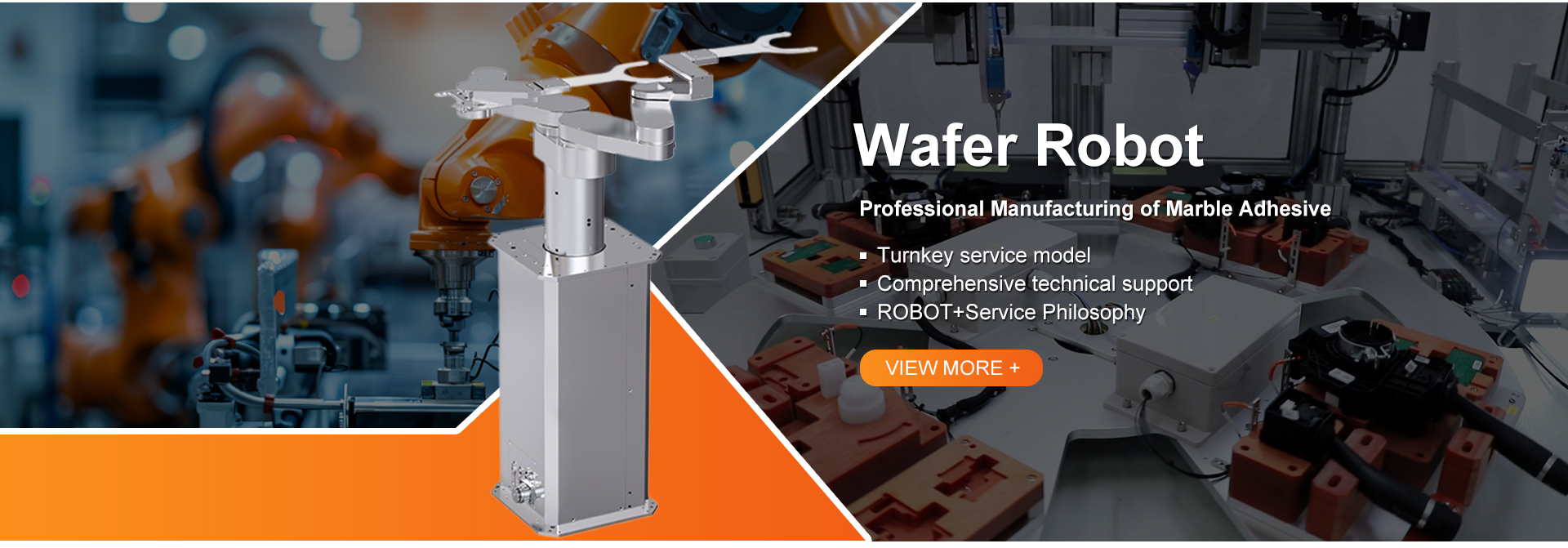
Founded in 2012 in Jinan, Shandong, JORI specialises in industrial robot R&D and manufacturing, controller and vision system development, OEM support and automated system integration. Delta parallel robots, SCARA robots, silicon wafer handling robots, AGV/AMR platforms, autonomous forklifts, 2D/3D vision and the controllers that drive them are developed in-house and protected by national patents.
That vertical integration matters to a Makati procurement team for a simple reason: there is one accountable source for hardware, software and after-sales engineering, rather than a reseller chain where the controller vendor, the arm vendor and the integrator each point at the other two.
With more than 500 employees, over 10,000 m² of manufacturing floor, ISO 9001 quality management and an onsite-verified supplier profile, JORI supports machine builders and factory owners across Southeast Asia, Eastern Europe, North America and South America — with an average inquiry response time of two hours or less.
Self-developed controller and vision
Motion control and 2D/3D vision are built in-house, so end-effector changes and integration questions are answered by the people who wrote the firmware.
OEM, design and buyer-label service
Machine builders can order a private-label cell with their own branding, custom end-effector tooling and controller integration support from the engineering team.
ISO 9001 and onsite verification
Documented quality control from incoming component inspection to final robot run-in testing, with a factory verified by a third-party onsite assessment.
Manufacturing scale
More than 500 employees and 10,000 m² of production space support repeat orders, spare-part continuity and OEM volumes without a third-party assembly step.
Two-hour response discipline
A 97.06% response rate and an average reply time of two hours or less — measured, not promised — shortens the gap between your RFQ and a costed engineering answer.
Export-ready trade terms
FOB, CFR, CIF, EXW, CIP, FCA, CPT and express delivery; payment by T/T, L/C, credit card, PayPal, Western Union, MoneyGram and escrow in multiple currencies.
From Makati RFQ to Running Cell in Four Steps
A clear sequence keeps freight, documentation and acceptance testing from colliding at the Manila port.
Send the requirement
Carrier drawing, substrate photo, target cycle time, cleanroom class and site voltage — a video of the current manual process is often worth more than a written specification.
Engineering review
We confirm the kinematic model, end-effector concept and control interface, then issue a quotation with the assumptions written down so they can be challenged.
FAT and documentation
Cycle-time and repeatability are verified against the purchase order, and the customs document pack is prepared before the unit leaves Jinan.
Delivery, install and training
Sea freight typically lands at MICP or Manila South Harbor, with air freight via NAIA for urgent spares. Remote commissioning support and operator training follow the agreed schedule.
Questions Local Procurement Teams Ask Before They Place an Order
Can you deliver a wafer transfer system to Makati, and how long does it take?
Yes. Standard platforms ship FOB, CFR or CIF, with Manila as the destination port. Ocean freight from a Chinese port to MICP or Manila South Harbor typically takes one to two weeks depending on the sailing, with customs clearance and inland delivery added to that. Urgent spares and end-effectors are usually sent by air through NAIA. The exact lead time is quoted per configuration, because a custom end-effector adds engineering time before shipment.
What is the minimum order quantity for wholesale pricing?
Standard SCARA, delta and AMR platforms can be ordered from one set, so you can validate a single cell or pilot line before scaling. Wholesale and distributor pricing applies from multi-unit orders, and OEM or buyer-label projects are quoted separately once the tooling scope is agreed.
Which payment methods and trade terms do you accept?
Delivery terms include FOB, CFR, CIF, EXW, CIP, FCA, CPT and express delivery. Payment can be made by T/T, L/C, credit card, PayPal, Western Union, MoneyGram and escrow, in USD, EUR, GBP, JPY, CAD, AUD, HKD, CHF and CNY. For first orders, the usual structure is a deposit against the purchase order and the balance against the pre-shipment inspection report.
Will the robots run on 220 V / 60 Hz power in the Philippines?
Yes, provided the configuration is confirmed at the quotation stage. Philippine industrial sites commonly use 220 V single-phase and 380–440 V three-phase at 60 Hz, which differs from a 50 Hz domestic Chinese build. Specify your actual supply, earthing scheme and available compressed-air pressure in the RFQ so the drives are parameterised and the acceptance test is run at your site frequency.
Which cleanroom class can the platforms be configured for?
ISO Class 5 to 7 environments are the usual operating range for our SCARA and wafer-adjacent platforms, with cable routing, bellows material and lubrication selected accordingly. Tell us the class at the robot envelope and any particle or outgassing limits your process owner requires, and we will confirm the material list rather than assume it.
Do you supply custom end-effectors for FOUP, cassette or thin wafers?
Yes. Custom end-effectors are available on request, including backside vacuum, edge grip and compliant designs for thin or warped substrates. Send the carrier drawing and the contact area your process engineer has approved — the contact method is a yield decision and should not be chosen by the robot supplier alone.
Can JORI integrate with our existing line, EFEM or PLC?
Our controllers and 2D/3D vision are developed in-house, and PLC-ready models are designed for direct handshake with cartoning machines, packers and existing line controllers. EtherCAT, Modbus TCP and discrete I/O interfaces are confirmed per project. If your host system requires a specific host protocol, state it in the RFQ so the engineering effort is priced transparently.
What about installation, training and spare parts after delivery?
Every quotation includes a recommended two-year spare-part kit, a commissioning plan and operator training. Where a site visit to Cavite, Laguna or Batangas is required, it is scheduled with the shipping timeline rather than after arrival. Retrofits and end-effector changes after the first year are handled by the same engineering team that built the cell.
Send Your Wafer Transfer Requirement — Get an Engineered Quotation Within Two Hours
Share the carrier format, substrate size, target cycle time, cleanroom class and site voltage. Our engineers will reply with a configured model, a realistic lead time and a document pack your Makati procurement team can file without follow-up questions.
Contact Us