Industrial Robot Controller Factories & Wholesalers Serving Dortmund
Factory-direct delta, SCARA, AMR/AGV and wafer robots with in-house controllers and 2D/3D vision — engineered for Dortmund’s automotive, packaging, logistics and electronics automation projects.
- ISO 9001 quality system
- MOQ 1 set for standard models
- OEM / buyer-label support
- ≤2 h average response
8 Industrial Robot Options for Dortmund Integrators, Wholesalers and Machine Builders
This shortlist is built for Dortmund buyers who need more than a catalogue. It combines high-speed pick-and-place, vision-guided SCARA assembly, carton packing, wet-wipe lid application and warehouse mobility in one factory-direct supply chain. Product URLs are preserved exactly; for custom end-effectors, PLC handshakes or buyer-label programs, use the quote button and our engineers will respond with a configuration path.

High-Speed Spider Arm Delta Robot for Fully Automatic Wet Wipe Lid Applicator Machine
A high-speed spider-arm delta cell for wet-wipe lid applicators, where lid orientation, vacuum confirmation and cadence decide line OEE.
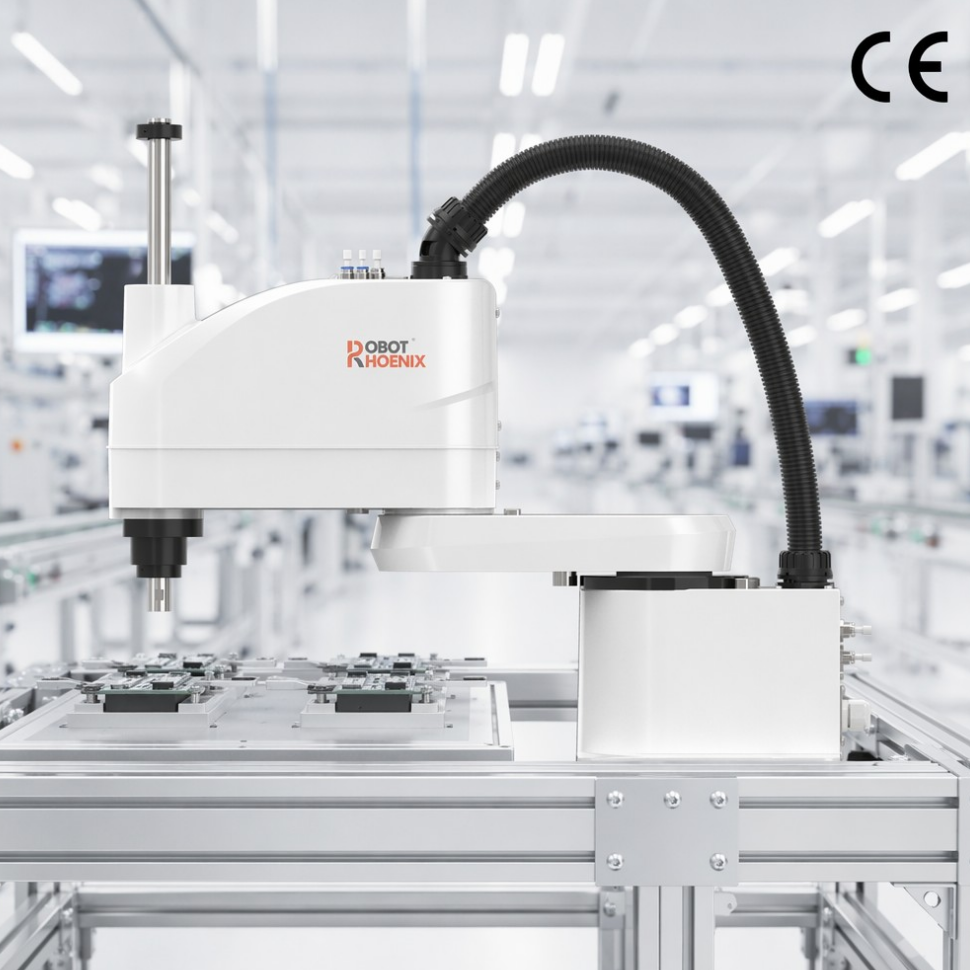
High-Speed and High-Accuracy Newly Developed 4-Axis SCARA Robot
Four-axis SCARA for accurate assembly, insertion and pick-and-place in compact cells; a practical fit for Dortmund automotive and electronics suppliers.
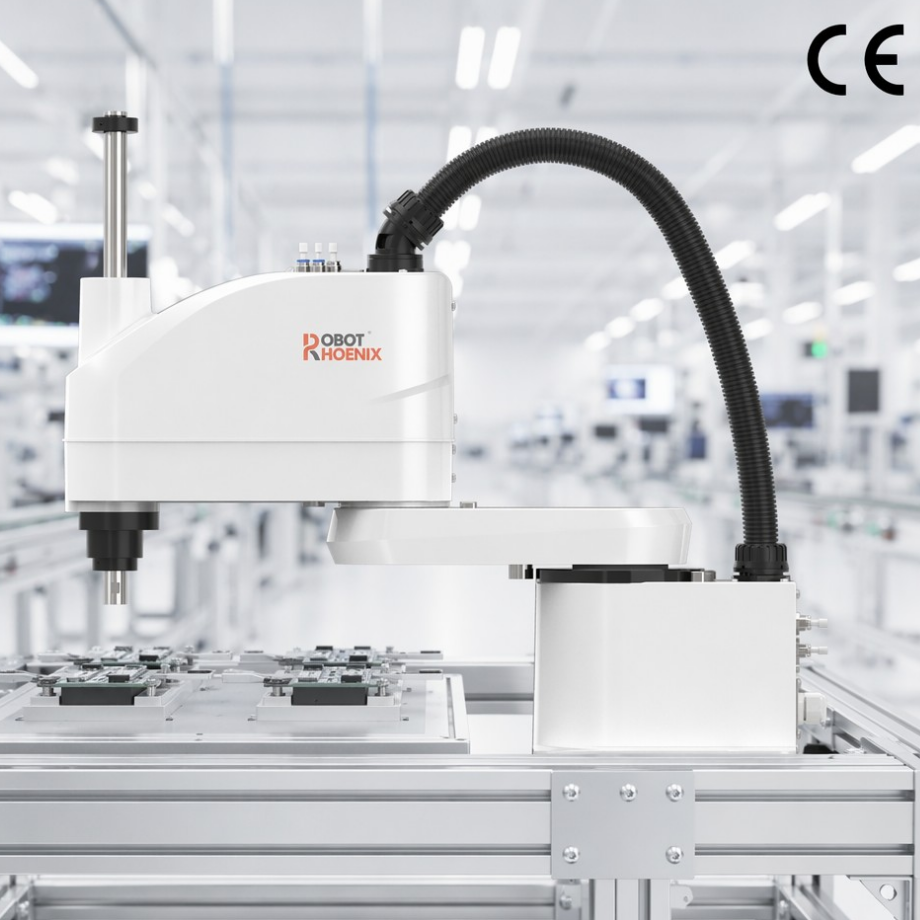
Compact High-Accuracy SCARA Robot with 2D/3D Vision System
Compact SCARA with 2D/3D vision for random-orientation picking, inspection and precise placement in high-mix production.

High-Performance Material Handling AMR Robot / AGV for Warehouse Logistics
AMR/AGV platform for warehouse logistics, line-side replenishment and material handling; laser-SLAM fleet options support layout changes.

Robotphoenix New 4-Axis Parallel Delta Spider-Hand Robot for Carton Packer Lines
Four-axis parallel delta spider-hand robot for carton packer lines, combining high cadence with end-of-line packing flexibility.
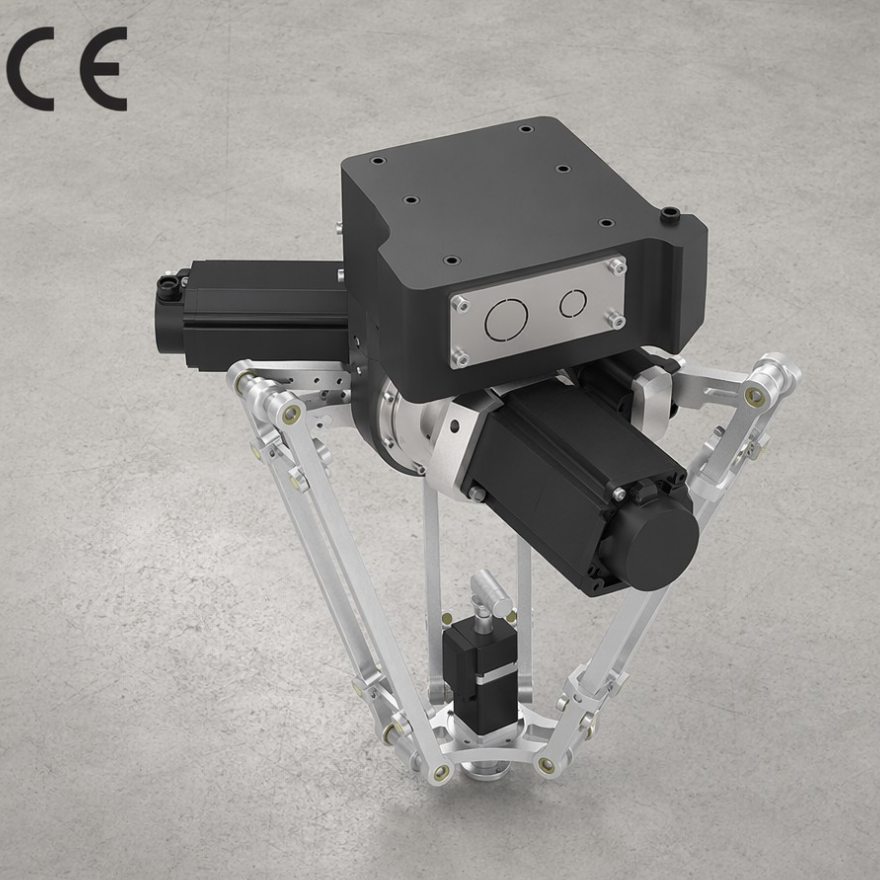
Smart Vision Delta Pick-and-Place Robot with Visual System
Vision-equipped delta manipulator for picking and placing randomly oriented products, with placement verification for traceability.
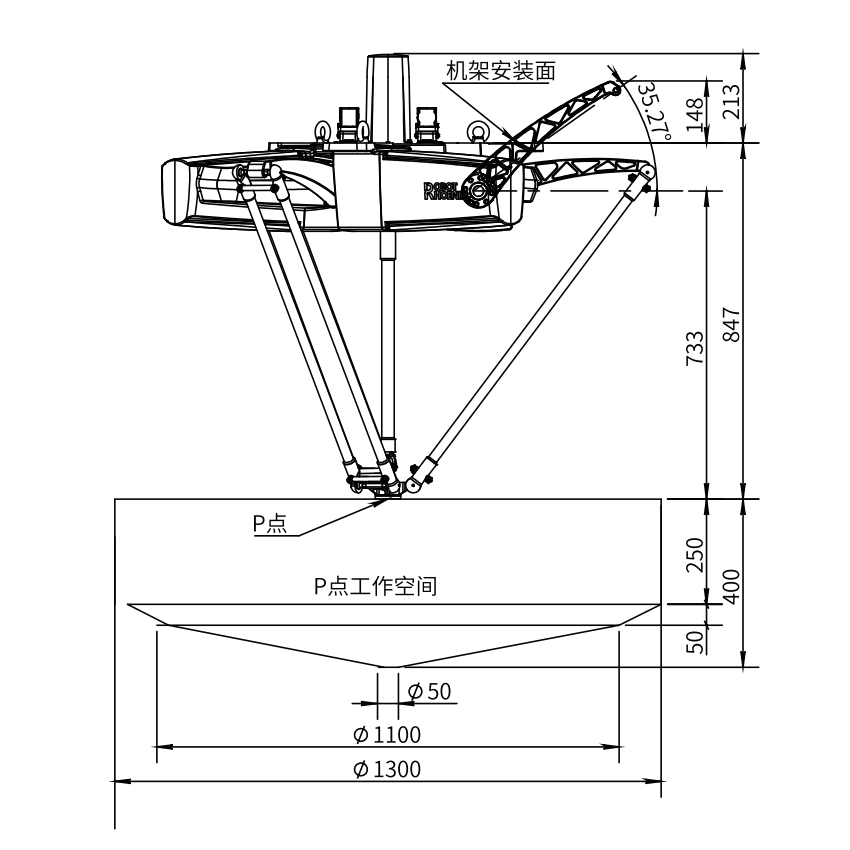
Industrial Robotic Arm Parallel Delta Robot 2/3/4 Axis for Pick-and-Place
2/3/4-axis delta robot for standard pick-and-place applications; a straightforward platform for integrators building repeatable cells.
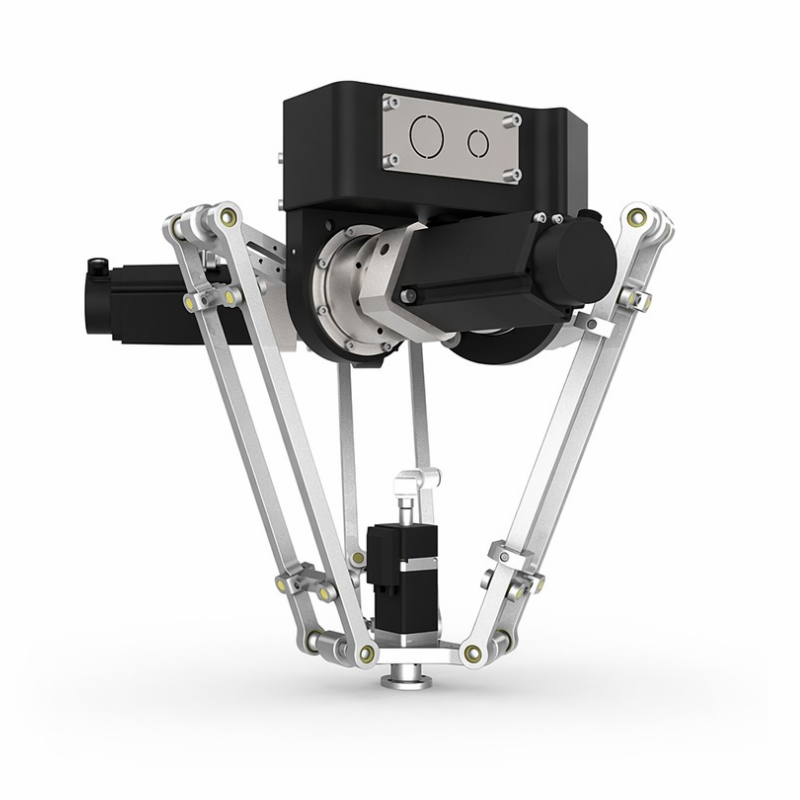
Low-Cost Customized 2/3/4-Axis Industrial Delta Robot for Pick-and-Place
Low-cost customised 2/3/4-axis delta manipulator for repetitive pick-and-place; configurable for wholesalers and machine builders.
Need a controller, end-effector or OEM label matched to a Dortmund project? Get a Quote
Why Dortmund Buyers Use JORI as a Controller Factory and Robot Wholesaler
Dortmund’s buyers rarely purchase a robot arm alone. They need a controller architecture that talks to the line PLC, vision that handles real-world variation, mechanical integration, spare-parts planning and a supplier who answers technical questions quickly. JORI supports that full chain with in-house R&D, factory-direct supply and OEM support.
In-house controller and 2D/3D vision
Because the controller, motion software and vision are developed in-house, Dortmund machine builders can align cycle time, PLC handshakes and end-effector logic with one engineering team instead of passing issues between vendors.
Factory-direct wholesale and OEM
JORI is an original factory for delta, SCARA and AGV/AMR robots, not a reseller chain. Wholesalers serving Dortmund can discuss buyer-label programs, custom end-effectors, controller integration and repeat-order configurations.
Low-risk validation from 1 set
MOQ starts at 1 set for standard delta, SCARA and AMR/AGV platforms. Dortmund integrators can run a pilot cell, validate cycle time and operator acceptance, then scale the same platform across lines.
Verified credentials and responsive engineering
ISO 9001 quality management, onsite-verified supplier status, national patents and a 97.06% response rate with average replies in 2 hours or less. Review assessment, credit, trade capacity and transaction records before approval.
One accountable source for arm, controller, vision and integration
Dortmund projects often involve a machine builder, an end user and a line PLC integrator. When the robot, controller and vision come from separate suppliers, every cycle-time deviation becomes a meeting. JORI’s in-house R&D model keeps those disciplines in one engineering loop: delta, SCARA, wafer and AGV/AMR mechanics; motion controllers; 2D/3D vision; custom end-effectors; and automated system integration.
The result is a clearer validation path for a Dortmund pilot cell and a more repeatable platform for multi-line rollout. Buyers can evaluate a single robot, a controller package or a complete automated cell without rebuilding the supplier map each time.
- In-house controllers and 2D/3D vision
- ISO 9001 quality management
- National patents on robot families
- Onsite-verified manufacturer
- OEM, design and buyer-label service
- MOQ 1 set for standard models



Why Local Automation Demand Is Moving Toward Flexible Robot Cells
Dortmund is not a single-industry city. Its logistics corridors, Port of Dortmund connections, automotive supply base, machine-building firms, packaging converters, electronics producers and life-science companies create a mix of high-speed, high-mix and high-traceability automation projects across the Ruhr. That mix explains why Dortmund buyers increasingly evaluate robot controllers and robot wholesalers together, rather than buying an arm and then searching for integration capacity.
Flexible high-mix production
Shorter product runs push buyers toward vision-guided delta and SCARA cells that can switch recipes without mechanical changeover. The controller must expose recipe management and PLC-ready handshakes.
Labour-flexible intralogistics
Warehouse operators around Dortmund face shift variability and narrow-aisle constraints. Laser-SLAM AMR/AGV platforms and autonomous forklifts reduce fixed conveyor or floor-tape infrastructure.
Energy and space productivity
High energy costs and limited floor space favor compact SCARA cells, high-speed delta robots and right-sized AMR fleets. Cycle time per square metre and energy per pick are becoming board-level metrics.
Traceability and vision quality
Pharma, food and automotive supply chains demand part-level traceability. 2D/3D vision for presence/absence, orientation and placement verification is moving from optional to standard.
Dortmund total-cost note
Compare robot price against engineering hours for PLC handshakes, vision recipe setup, operator training, spare-parts lead time and changeover time. A factory-direct controller with accessible parameters can reduce engineering hours more than a small hardware discount. Validate cycle time with your actual product, end-effector mass and vision latency before comparing quotations.
Dortmund Application Scenarios for Delta, SCARA, AMR and Wafer Robots
Each robot family is matched to a production reality: speed, hygiene, precision, traceability or heavy-load transport. The right answer for a Dortmund line is the configuration that makes the whole process predictable, not simply the fastest arm on the datasheet.
Automotive and EV components
SCARA and delta robots for clips, connectors, small castings, assembly and inspection. Dortmund’s automotive supply base values repeatability, PLC integration and fast changeover.
Packaging and hygiene products
Delta robots for wet-wipe lid applicators, carton packers, case packing and labeling at up to 120 pcs/min. Vision handles random orientation and placement verification.
Warehouse and logistics
AMR/AGV and laser-SLAM autonomous forklifts for line-side supply, pallet movement and cross-docking around Dortmund’s logistics corridors and multi-modal transport links.
Electronics and 3C assembly
Compact SCARA and vision-guided delta for PCB handling, connector insertion and small-part placement. In-house controllers simplify line-PLC handshakes.
Pharma and life science
Smooth, repeatable handling for vials, blisters, cartons and fragile substrates. Documentation, inspection results and clean integration are part of the project scope.
Machine builders and wholesalers
OEM controllers, buyer-label robots and custom end-effectors for Dortmund system integrators reselling or embedding robots into packaging and assembly machines.
Delta, SCARA, AMR or Forklift? A Dortmund Buyer’s Selection Matrix
Use this comparison to shortlist the right robot family before contacting our engineers. Final specifications are confirmed per configuration and application.
Delta Parallel Robot
High-speed picking, sorting, labeling, cartoning and wet-wipe lid application.
3–6 kg · 0.08 mm · up to 120 pcs/min labeling · IP54 option
Choose it when light products arrive randomly on a conveyor and cycle time is the bottleneck.
SCARA Robot
Planar assembly, insertion, precise placement and inspection.
4-axis · compact footprint · mini low-cost models · 2D/3D vision options
Choose it when accurate planar moves in a small cell matter more than raw payload.
AMR / AGV
Material transport, line-side replenishment and warehouse logistics.
400–500 kg · laser SLAM · fleet management · no floor tape required
Choose it when operators spend shifts pushing carts and the layout changes often.
Autonomous Forklift
Pallet transport and repetitive warehouse shuttles.
Laser SLAM navigation · Camel Series · site-layout planning support
Choose it when pallet flows run across shifts and labour availability is unpredictable.
Wafer Handling Robot
Semiconductor and photovoltaic wafer transfer.
Self-developed motion control · smooth handling · custom end-effectors
Choose it when fragile substrates require repeatable, contamination-conscious motion.
For a Dortmund line, validate cycle time with the real product, end-effector mass and vision latency — not only the robot datasheet. If the bottleneck is transport, evaluate AMR/AGV before adding another pick-and-place robot.
Controller and Vision Integration: The Hidden Lever for Dortmund Line Performance
Industrial robot controller factories are often compared on cabinet size, axis count and price. In a Dortmund machine-building project, the more important questions are how the controller exchanges data with the line PLC, how vision results are synchronised with motion, how fast a recipe can be changed, and what happens when an end-effector is swapped. JORI develops controllers and 2D/3D vision in-house, so these questions can be resolved in one engineering loop instead of being passed between vendors.
On a delta-based wet-wipe lid applicator, the controller must coordinate conveyor tracking, lid orientation, vacuum confirmation and reject logic. On a SCARA assembly cell, it must manage precise positioning, I/O handshakes and inspection results. On an AMR or autonomous forklift, laser SLAM navigation and fleet traffic rules must remain stable as routes change. A factory-direct supplier with in-house software can expose the right parameters to the integrator, support custom end-effector logic and keep documentation aligned with the delivered cell.
For wholesalers serving Dortmund, repeatability matters as much as performance. A consistent controller architecture across delta, SCARA and AMR families reduces training, spare-parts complexity and commissioning time. For end users, that translates into fewer integration surprises and a clearer path from a single pilot cell to a multi-line rollout. Confirm the exact I/O layout, safety scope, PLC protocol and documentation package for your project before release; JORI’s engineering team can review these points against your line requirements.
Factory-direct figures for project screening
- 0.08 mmDelta repeatability on current high-precision models
- 120 pcs/minLabeling class for selected delta robot models
- 400–500 kgAMR/AGV payload platforms for intralogistics
- 1 setMOQ for standard delta, SCARA and AMR/AGV models
- ≤2 hAverage technical response time
- ISO 9001Quality management from component inspection to run-in testing
Answers Buyers Ask Before Approving a Robot Controller or Wholesale Supply
These are the practical questions procurement and engineering teams raise when comparing factory-direct robot suppliers for a Dortmund pilot or rollout.
Can JORI supply both industrial robot controllers and complete robots to Dortmund?
What is the minimum order quantity for a Dortmund pilot cell?
Do you support OEM, private-label or wholesale programs for Dortmund distributors?
Which delivery and payment terms are accepted for Dortmund shipments?
Can JORI robots integrate with existing packaging machines in Dortmund?
How fast is the technical response, and what should we send?
Specify a Robot Controller and Robot Cell for Dortmund
Send your product, cycle time, layout, end-effector, line PLC and target delivery date. Our engineers will recommend a robot family, controller configuration and next validation step. For standard models, MOQ is 1 set and average response is 2 hours or less.
Get a Quote