OEM/ODM Robot Suction Cup Manufacturers & Manufacturer in Chiang Mai
JORI Intelligent Technology Co., Ltd. engineers delta robots, SCARA robots, AMR/AGV platforms, autonomous forklifts, wafer robots, controllers and 2D/3D vision in-house — with vacuum suction-cup end effectors customized for Chiang Mai electronics, food, medical, logistics and light-industry automation.
Why a Robot Suction Cup System Is an OEM/ODM Engineering Decision
For Chiang Mai buyers, the practical automation question is rarely just “Which suction cup is cheapest?” It is whether the robot, vacuum tooling, vision, controller and validation plan can work together at the required cycle time — with spare parts and engineering accountability after installation.
Chiang Mai is often described through tourism, but the industrial map around the city and the Chiang Mai–Lamphun corridor is changing. Electronics assembly, food and beverage processing, medical devices, packaging, automotive parts, cosmetics and regional distribution operations are investing in automation to manage high-mix production, labour variability, floor-space limits and traceability expectations from domestic and export customers.
A robot suction cup is the last centimetre of the automation chain. It touches the PCB, coffee sachet, medical tray, plastic trim or carton before anything else. Cup geometry changes vacuum response; material changes mark risk and cleanroom suitability; manifold weight changes robot payload; hose routing changes cycle time; and cup wear changes uptime. That is why serious buyers evaluate OEM/ODM robot suction cup manufacturers as engineering partners, not as rubber-part vendors.
JORI Intelligent Technology Co., Ltd. has manufactured industrial robots and developed controllers and 2D/3D vision in-house since 2012. The company is based in Jinan, Shandong, China, and supplies delta parallel robots, SCARA robots, AMR/AGV platforms, autonomous forklifts and wafer handling robots. For Chiang Mai buyers, JORI acts as the upstream OEM/ODM manufacturer: the robot, controller, vision, vacuum end-effector interface and integration support can be engineered as one system, then delivered directly or through a local integrator.
Because JORI does not claim a local robot factory in Chiang Mai, the due-diligence path is transparent: buyers can review the company profile, factory video, ISO 9001 credential, onsite verification, trade capacity, transaction records and buyer reviews before placing a pilot order. This is a stronger E-E-A-T position than an unverifiable local label, especially for buyers who need repeatable production, spare parts and clear engineering responsibility.
Information gain: vacuum-system cost drivers
- Cup count and vacuum reserve versus part porosity and surface finish.
- Air consumption, generator choice and factory compressed-air stability.
- Quick-change tooling for high-mix Chiang Mai production lines.
- Spare-cup strategy, cup life and mean time to repair.
- Acceptance protocol: drop, mark, slip, vacuum-loss and cycle tests.
8 Robot and Suction-Cup Platforms Recommended for Chiang Mai Production Cells
The eight products below are from JORI’s existing industrial robot catalogue. Standard platforms can be quoted from 1 set, so Chiang Mai buyers can validate a pilot cell before scaling. For custom cups, manifolds and vacuum generators, use the Contact Us button and share part photos, weight, surface material, cycle time and line layout.
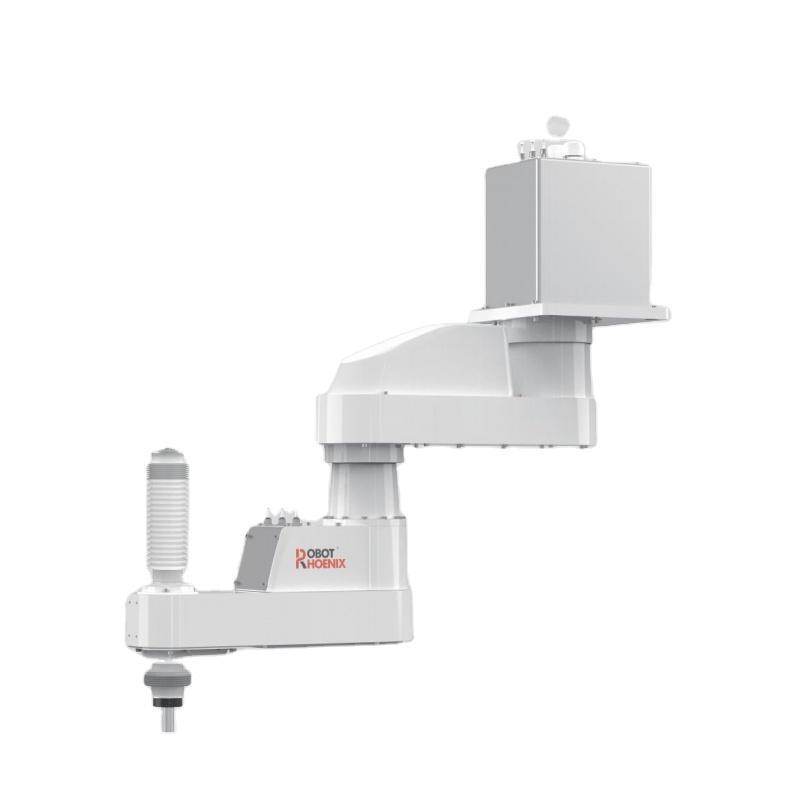
Compact Structure High Precision 550mm Reach Radius 3kg Payload 4-axis SCARA Robot
Best-fit use: compact assembly, small-part transfer, inspection and tray loading where a 3 kg payload and 550 mm reach are sufficient. Pair with a lightweight vacuum manifold and custom cup array for connectors, small plastic parts or cosmetic components.
- 550 mm reach
- 4-axis
- MOQ 1 set
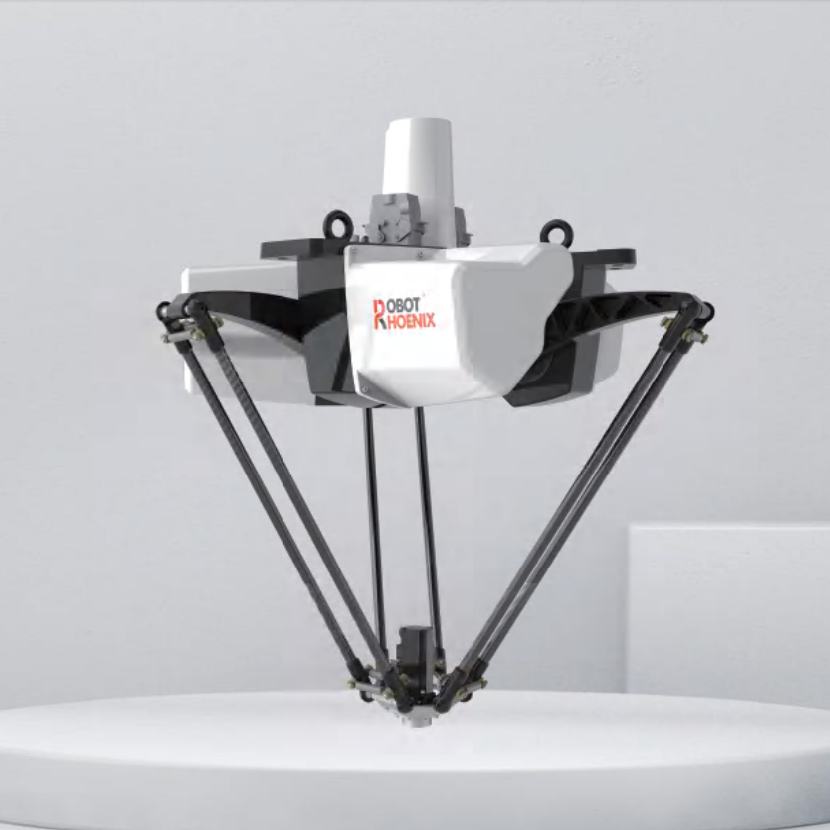
Robotphoenix 4 Arm Payload 3-6kgs Delta Robot for Pick Place Consumer Goods
Best-fit use: high-speed pick-and-place for consumer goods, food sachets, small cartons and tray filling. The 3–6 kg payload class suits multi-cup end effectors; food-grade silicone or bellows cups can be evaluated for porous or curved packaging.
- 3–6 kg payload
- 4-arm delta
- High speed

New Condition High Precision 400mm Reach Arm Scara Robot with PLC for 3C Electronic Assembly
Best-fit use: 3C electronic assembly, PCB handling and small precision parts. The 400 mm reach and PLC integration support compact cells; ESD-safe cups and a low-mass manifold help protect sensitive devices.
- 400 mm reach
- PLC integration
- 3C assembly
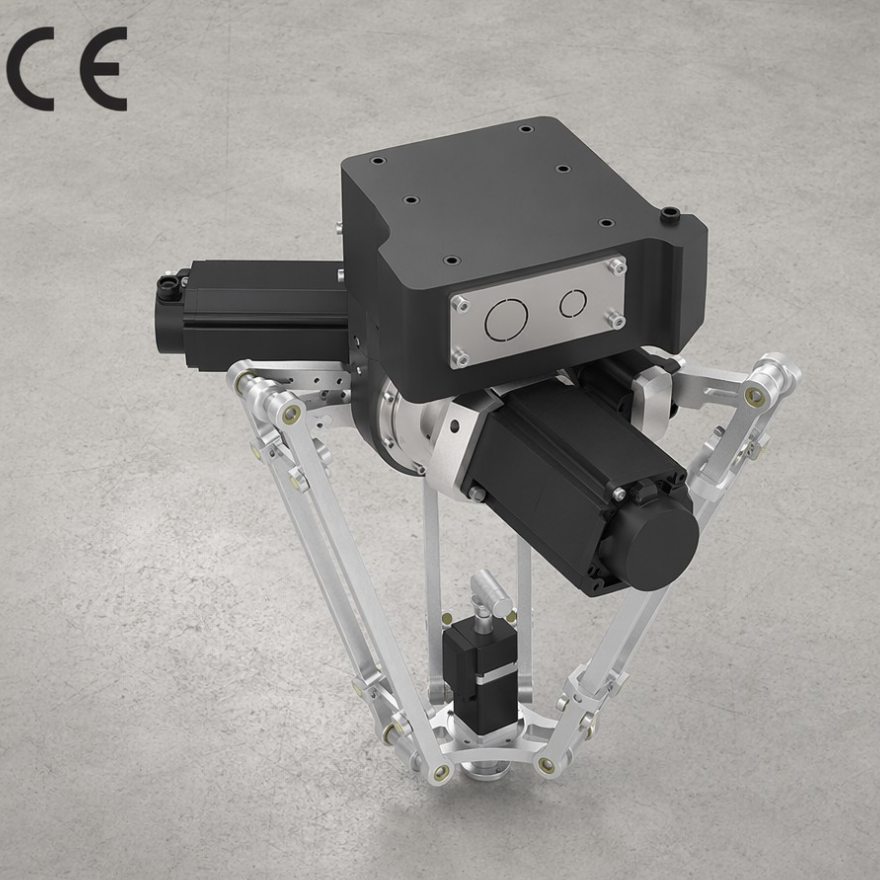
Smart Parallel Robot Picking and Placing Robot Manipulator Delta Robot with Visual System
Best-fit use: vision-guided picking from random orientation, quality sorting and mixed-SKU packaging. The visual system reduces fixed-fixture dependency when Chiang Mai lines run multiple product variants.
- 2D/3D vision
- Random picking
- Mixed SKU

High Performance Material Handling Verhicel AMR Robot AGV Robot for Warehouse Logistic System
Best-fit use: warehouse and line-side material transport. For loading and unloading, pair the AMR/AGV platform with a top module or robot arm and suction tool; the project should confirm floor flatness, route width and fleet traffic.
- Laser SLAM
- Material handling
- Fleet ready
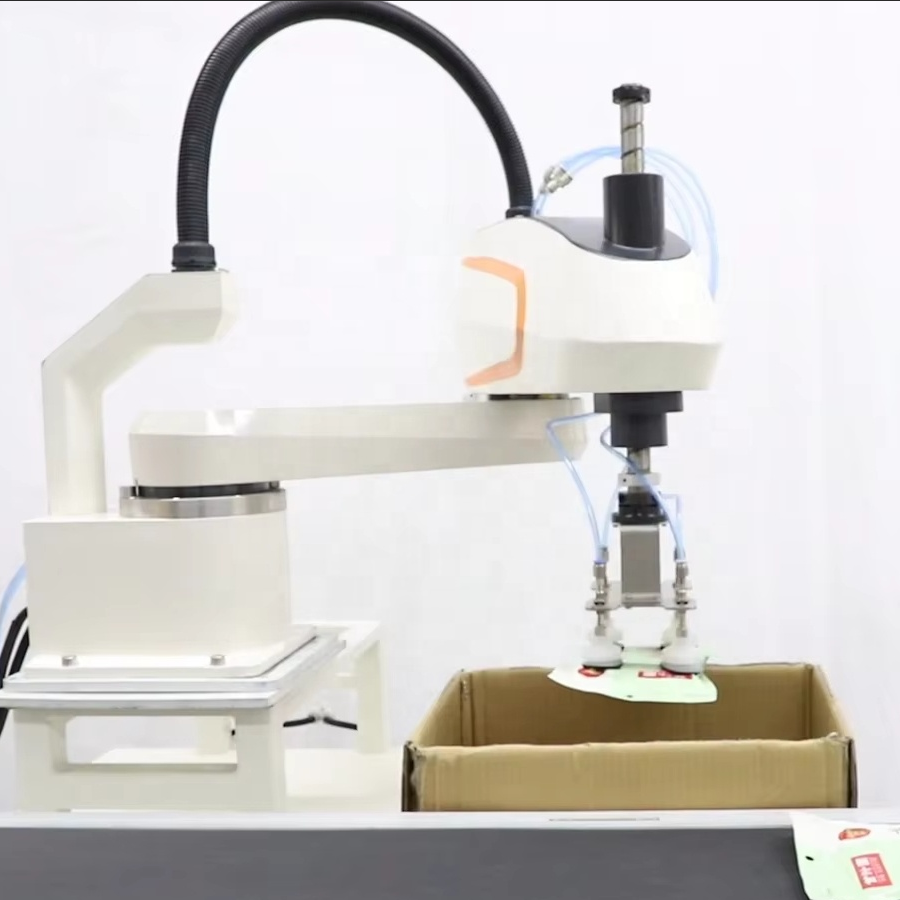
Light Load 4 Axis Industrial Manipulator Robot Scara Robot for Pick and Place Application
Best-fit use: light-load pick-and-place, cosmetics, small components and first-stage automation. A good entry platform for SMEs that need MOQ 1 set and a clear upgrade path.
- Light load
- 4-axis
- Pilot cell

High-Precise Industrial Scara Robot Arm Scara Robot for Pick and Place in Light Industry
Best-fit use: repetitive light-industry pick-and-place requiring stable repeatability in electronics, medical and small metal or plastic parts. Use the robot with vision and quick-change cup tooling for high-mix cells.
- High precision
- Light industry
- Quick-change tooling

Newly Design Low Price Industrial Manipulator Scara Robot Arm with Integrated Motor
Best-fit use: cost-sensitive pilot lines, simple pick-and-place and integrated-motor configurations. It is a practical starting point when the product mix is stable and the priority is fast payback.
- Integrated motor
- Low price
- Fast payback
Custom suction-cup note: Send 3D part files, material, weight, centre of gravity, surface finish, required cycle time, available air pressure, ESD/cleanroom requirement and line layout. JORI can then recommend cup type, vacuum generator, manifold, robot family and acceptance test.
Where Robot Suction-Cup Automation Fits in Chiang Mai and Northern Thailand
Chiang Mai production is diverse. A cup that works for a coffee sachet will not automatically work for a PCB, medical tray or automotive trim. These application modules show where delta, SCARA and mobile platforms are most often evaluated.
Electronics & 3C in the Chiang Mai–Lamphun corridor
SCARA robots with ESD-safe vacuum cups, vision and controlled placement handle PCBs, connectors, camera modules and small plastic housings. Quick-change cup tooling reduces changeover in high-mix electronics production.
SCARA · ESD · VisionFood, coffee, tea and dried-fruit packaging
Delta robots with food-grade silicone cups and stainless vacuum generators pick sachets, pouches, trays and cartons at high speed. Sanitary layout, washdown-compatible materials and cup validation help protect brand quality.
Delta · Food-grade · High speedMedical devices and cleanroom handling
Low-particle vacuum cups, smooth manifold surfaces and repeatable SCARA motion support vial trays, blister packs and device housings. Documented materials and change control are essential for regulated buyers.
Cleanroom · Medical · DocumentationAutomotive parts and EV supply chain
SCARA and delta cells handle plastic trim, gaskets, small brackets and battery-pack components. Anti-static cups and wear-resistant bellows help reduce marking, slippage and unplanned downtime.
Automotive · Anti-static · DurabilityWarehouse, distribution and intralogistics
Laser SLAM AMR/AGV and autonomous forklifts move pallets and totes in Chiang Mai distribution centres, with fleet management for multi-robot traffic. Robot arms with suction tools can be added for trailer or shelf loading.
AMR/AGV · Laser SLAM · Fleet controlProcessed agriculture and regional food brands
Packaged mango, longan, coffee and tea products can be tray-picked, labelled and cartoned with food-grade cups. Direct contact with wet or sticky product requires application testing; JORI engineers validate cup shape and vacuum reserve before quotation.
Northern Thailand · Packaged food · TestingWhat Chiang Mai Manufacturers Are Planning For Next
Automation investment in Northern Thailand is being shaped by high-mix production, export-quality packaging, cleanroom electronics, medical supply chains and labour flexibility. The indicators below are illustrative planning indices from JORI application discussions, not official market statistics.
High-mix, low-volume flexibility
78%SKU proliferation in food, cosmetics and electronics rewards quick-change suction tooling, recipe-based vision and fast changeover.
Precision packaging & traceability
74%Retail and export buyers expect consistent pack presentation, batch traceability and low product damage from automated cells.
Cleanroom electronics & medical
69%Northern Thailand’s electronics and medical supply chain needs ESD-safe, low-particle handling and documented change control.
Intralogistics & labour flexibility
66%AMR/AGV and autonomous forklifts reduce walking, pushing and repeated pallet moves in distribution and line-side replenishment.
Planning note: validate each trend against your own part mix, labour model, floor layout and payback target before selecting a robot family.
Why JORI Is a Credible OEM/ODM Partner for Chiang Mai Buyers
JORI is not a trading company assembling a catalogue from multiple suppliers. Robot bodies, controllers and 2D/3D vision are developed in-house, supported by national patents and an ISO 9001 quality system. That matters when a suction-cup tool must be traced across mechanical design, motion control, vision and after-sales engineering.
In-house engineering since 2012
Robot R&D, controller development and 2D/3D vision are handled internally, with national patents and a 500+ employee organisation. A suction-cup issue can be traced across tooling, motion and control instead of being blamed between vendors.
One platform family for material flow
Delta robots for high-speed picking, SCARA robots for planar assembly, AMR/AGV and autonomous forklifts for intralogistics, and wafer robots for fragile substrates. Buyers can standardise controls and spares across cells.
OEM/ODM and buyer-label support
Design service, buyer-label options, custom end effectors, controller integration and automated system integration are available. JORI supports machine builders, carton packers, packing lines and wet wipe lid applicator manufacturers.
Verified quality and export execution
ISO 9001 quality management, onsite-verified supplier status, trade capacity and transaction records; 97.06% response rate with average reply ≤2 hours; MOQ 1 set and export terms including FOB, CIF, EXW, CIP, FCA, CPT and express delivery.

JORI headquarters and robot facility — Jinan, Shandong, China.

Assembly and testing area for delta, SCARA and mobile robot platforms.

Engineering team and automation project support for global buyers.
From Requirement to Production: A Six-Step OEM/ODM Workflow
A successful robot suction-cup project starts with the part and the process, not the robot model. This workflow keeps the cup, manifold, robot, controller, vision and acceptance test aligned before shipment.
Application discovery and part audit
Share 3D/2D part files, material, weight, centre of gravity, surface finish, temperature, ESD/cleanroom requirement, required cycle time and line layout. A short video of the current manual process is often more useful than a long specification.
Suction cup and end-effector design
Cup type, material, count, manifold, vacuum generator, sensor and quick-change interface are selected together. Payload and acceleration are checked with a safety factor; hose routing is designed for cycle time and maintenance access.
Robot selection and cycle-time simulation
Delta, SCARA or mobile platform is selected against reach, payload, repeatability and footprint. Vision and PLC communication are reviewed before quotation so the robot is not oversized or under-specified.
Prototype, FAT and validation
Tests may include drop, mark, slip, vacuum-loss, cup-life and cycle-time validation. Factory acceptance testing can be documented by video and data sheets for Chiang Mai buyers who approve remotely.
OEM/ODM documentation and buyer label
Controller configuration, drawings, spare-parts list, maintenance instructions and buyer-label options are prepared. Machine builders can receive PLC-ready robots for cartoning, packing and lid-applicator lines.
Delivery, commissioning and support
Export packing, shipping terms and remote support are planned before shipment. For Thai time zones, JORI works with the buyer’s local integrator for site commissioning and Thai-language coordination when required.
Which Robot Family Fits Your Chiang Mai Cell?
Use this engineering comparison to shortlist the right platform before requesting a quotation. Final specifications must be confirmed against part samples, cycle-time targets and site conditions.
| Robot family | Best for | Suction-cup focus | Choose it when |
|---|---|---|---|
| Series 01Delta parallel robot | High-speed picking, sorting, labelling, tray filling and cartoning | Food-grade silicone, multi-bellows, ESD cups and lightweight manifold | The product is light, arrives randomly and cycle time is the bottleneck. |
| Series 02SCARA robot | Planar assembly, insertion, tray loading, inspection transfer | Flat/ESD cups, compact manifold and quick-change tooling | Footprint is limited and accurate planar movement matters. |
| Series 03AMR / AGV / forklift | Material transport, pallet and tote movement, line-side replenishment | Usually a top module; optional robot arm with suction tool | Walking, pushing and repeated pallet shuttles consume labour. |
| Series 04Wafer handling robot | Fragile semiconductor and photovoltaic wafer transfer | Low-particle vacuum interface and custom end effector | Cleanroom compatibility and fragile substrate handling dominate. |
Quick engineering rule: verify payload = (part mass × 1.5–2.0) + end-effector mass, then check acceleration, vacuum reserve and cup-count redundancy. Never size a robot only by catalogue payload.
OEM/ODM Robot Suction Cups, MOQ, Integration and Delivery
These are the questions procurement teams and integrators most often ask before opening a robot suction-cup project with JORI.
Are you a robot suction cup manufacturer located in Chiang Mai?
What is the minimum order quantity for standard robots and custom suction cups?
Can you supply food-grade, ESD-safe or cleanroom suction cups?
Can JORI robots integrate with existing packaging machines?
Which delivery and payment terms are accepted?
How quickly does JORI respond, and how is after-sales support handled?
Request an OEM/ODM Robot Suction Cup Proposal for Chiang Mai
Send your part, cycle time, layout, air supply and compliance requirements. JORI engineers will recommend a robot family, cup concept and validation plan. Standard robot platforms start at MOQ 1 set; custom end effectors are quoted after a part audit.
info@joribot.com