Top China Automated Assembly System Factories & Wholesalers in the El Paso Market
A procurement-grade guide for El Paso system integrators, maquiladora planners, and contract manufacturers comparing China automated assembly system factories, delta and SCARA robot cells, AMR intralogistics, and factory-direct wholesale terms.
8 China Factory-Direct Automated Assembly Robots for El Paso Integrators
Below are eight product pathways relevant to El Paso–Juárez electronics, medical, automotive, packaging, and warehouse projects. Each product URL is preserved from the original catalogue. These are factory-direct configurations, not generic marketplace listings, so buyers can shortlist a cell and then confirm tooling, cycle time, and integration responsibilities during the RFQ.
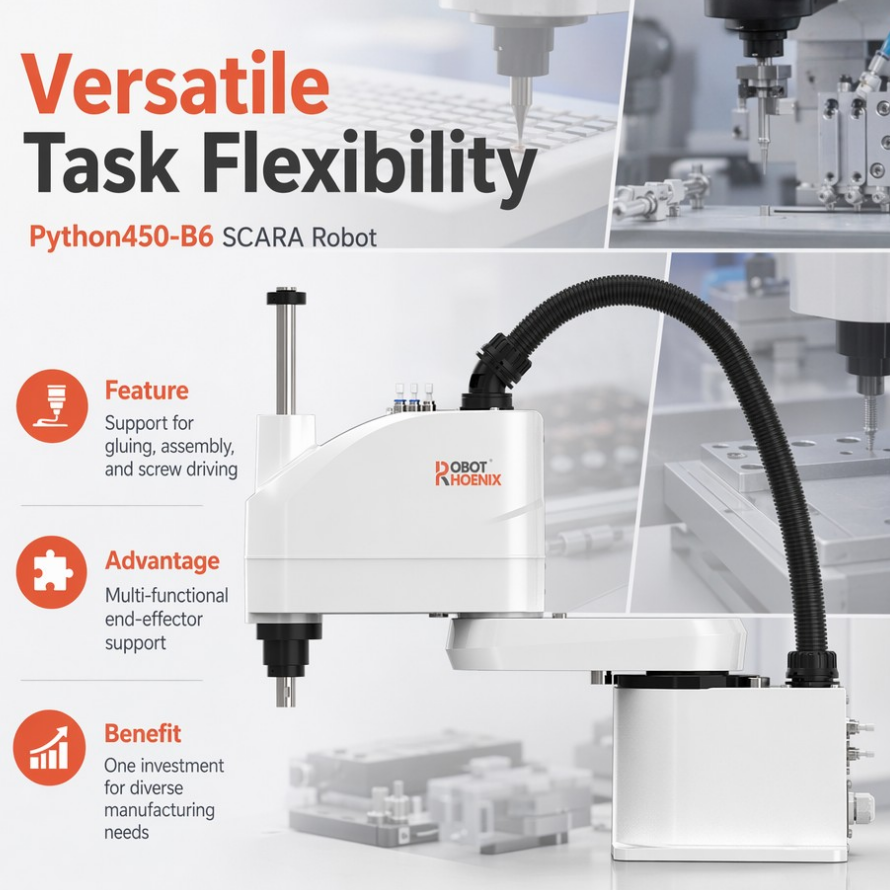
New Condition High Precision 400mm Reach Arm SCARA Robot with PLC for 3C Electronic Assembly
Best for compact electronics assembly, adhesive dispensing, screw fastening, and small-part pick-and-place. The 400 mm reach and PLC-ready control suit machine builders that need a repeatable SCARA cell without a long integration cycle.
View product →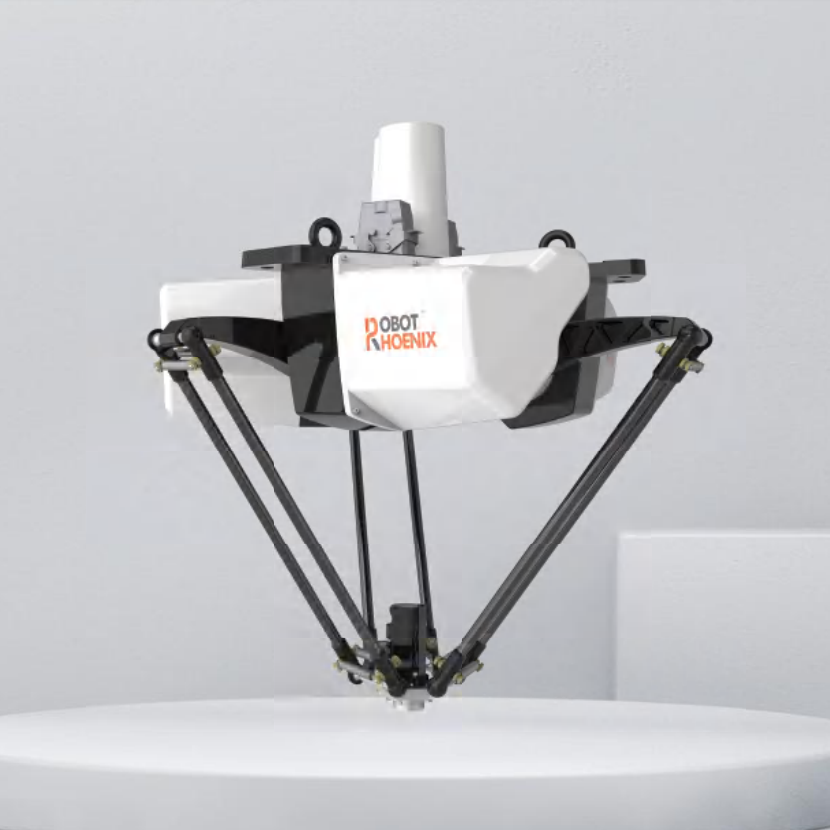
Robotphoenix New 4-Axis Parallel Robot Arm Delta Spider Hand Robot for Carton Packer Line
Designed for carton packer lines and secondary packaging. The parallel spider architecture delivers fast pick-and-place from moving conveyors, making it relevant to contract packaging, food, and consumer goods operations that need throughput without a large floor footprint.
View product →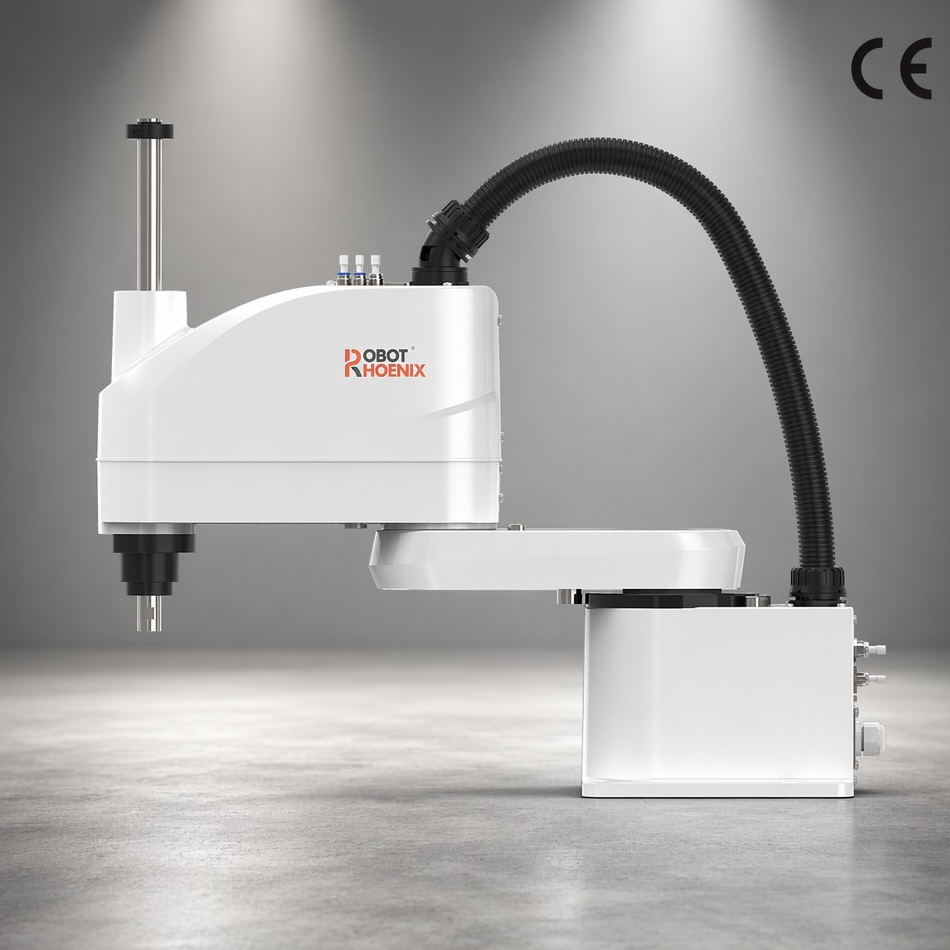
High Efficiency 6kg Payload Manipulator SCARA Robot with Vision for Picking and Placing
For heavier pick-and-place and vision-guided placement, the 6 kg payload SCARA gives El Paso integrators a middle ground between high-speed delta picking and long-reach six-axis work. It suits assemblies where the robot must identify, orient, and place parts with consistent repeatability.
View product →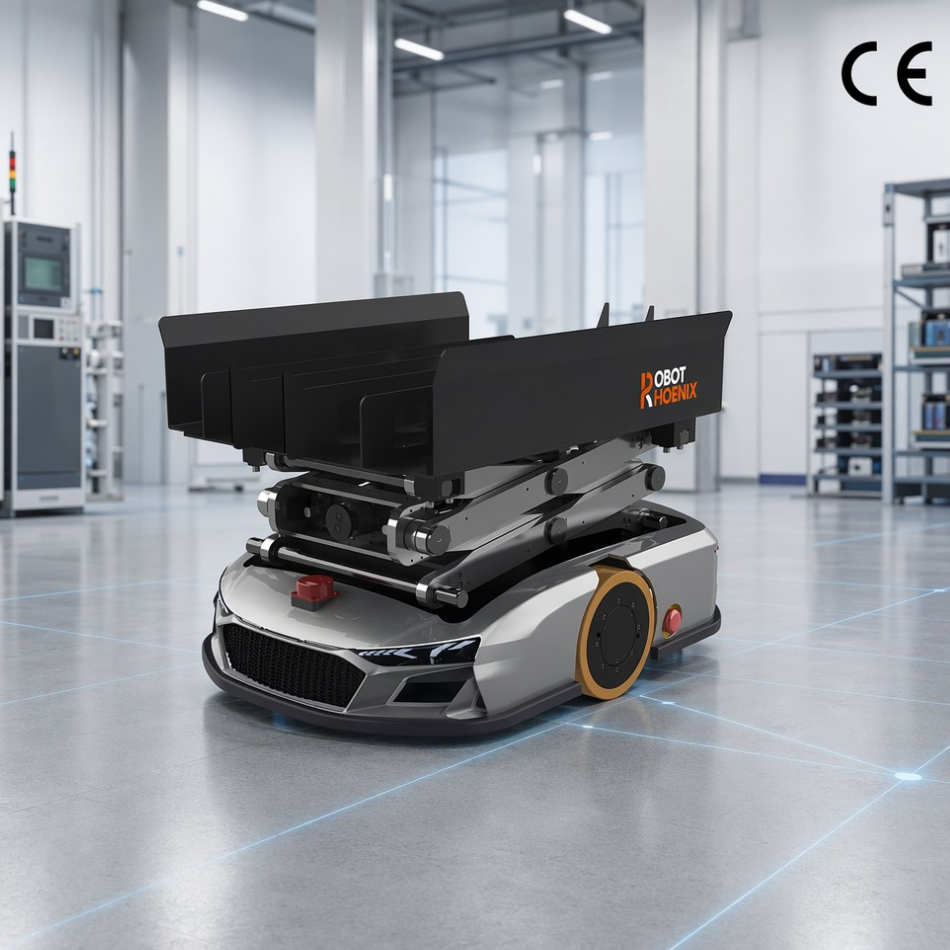
High Performance Material Handling Vehicle AMR Robot AGV Robot for Warehouse Logistic System
For warehouse and line-side logistics. This autonomous mobile robot platform supports material movement between receiving, kitting, assembly, and shipping. In a cross-border plant, it can reduce forklift traffic and manual cart pushes while keeping the layout flexible.
View product →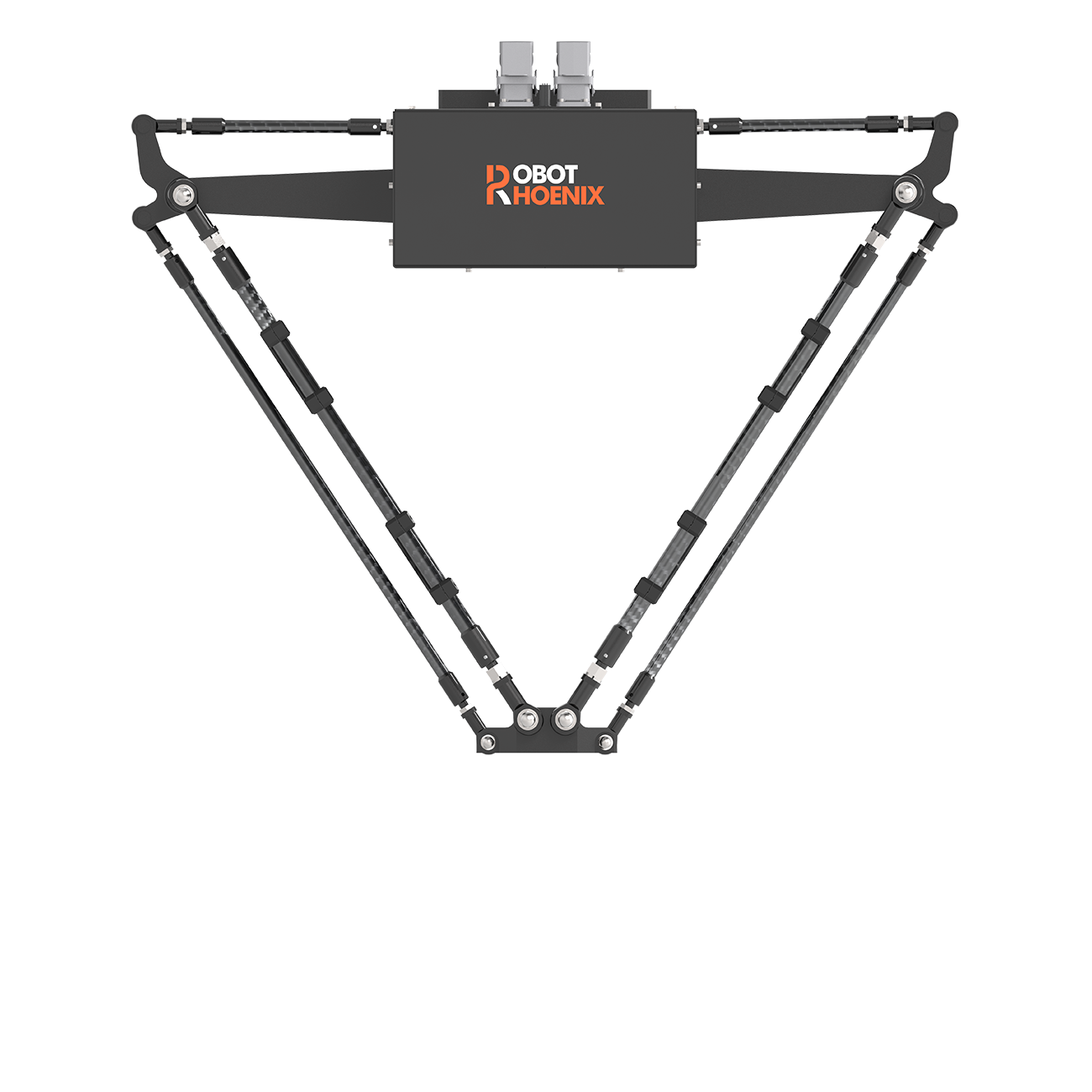
Industrial Manipulator High Speed and Accuracy Delta Robot with New Design Kinetics
An industrial delta robot for high-speed sorting, picking, and packing. The new kinetic design is aimed at accurate, repetitive motion where cycle time drives line economics. Use it for small, lightweight parts on conveyor-fed lines; confirm gripper design and product variability during RFQ.
View product →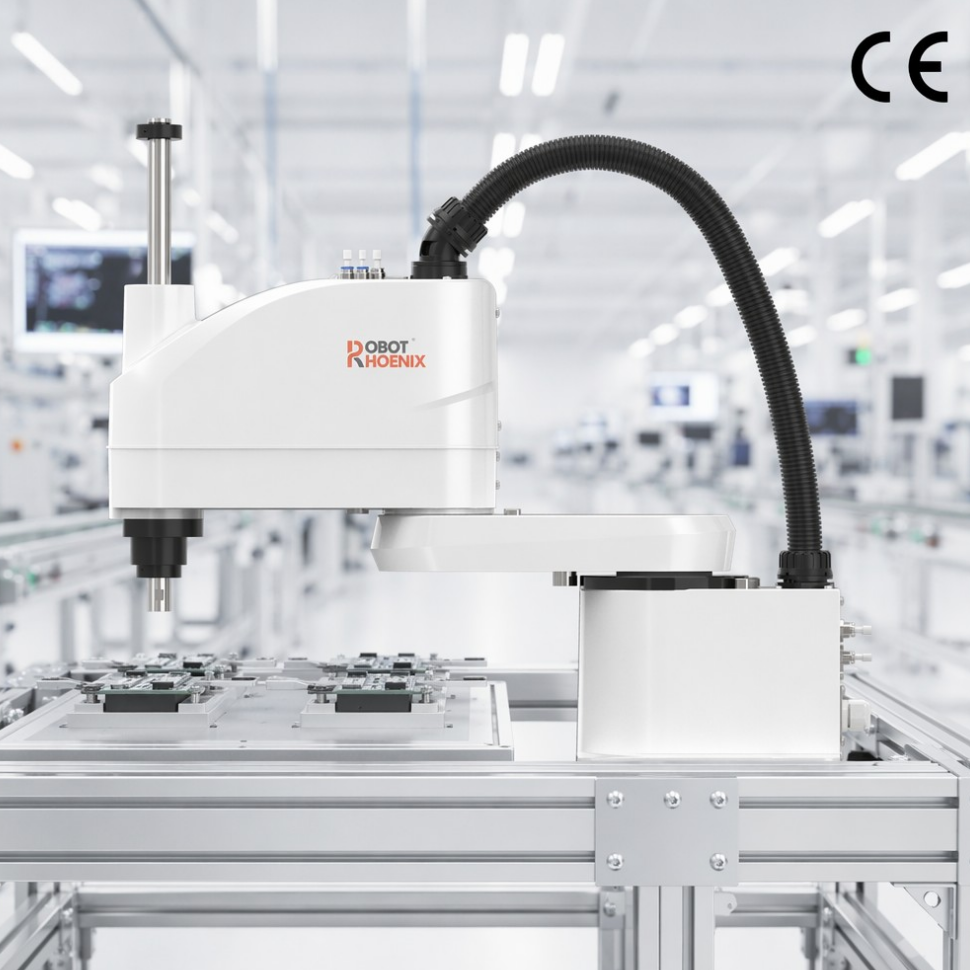
High Speed and Accuracy Newly Developed Industrial Robot Arm Four Axis SCARA Robot
A newly developed four-axis SCARA arm for fast, accurate planar assembly. It is well suited to cell layouts that need a compact footprint, repeatable insertion, and straightforward PLC integration. El Paso machine builders can use it as a standard building block across multiple customer projects.
View product →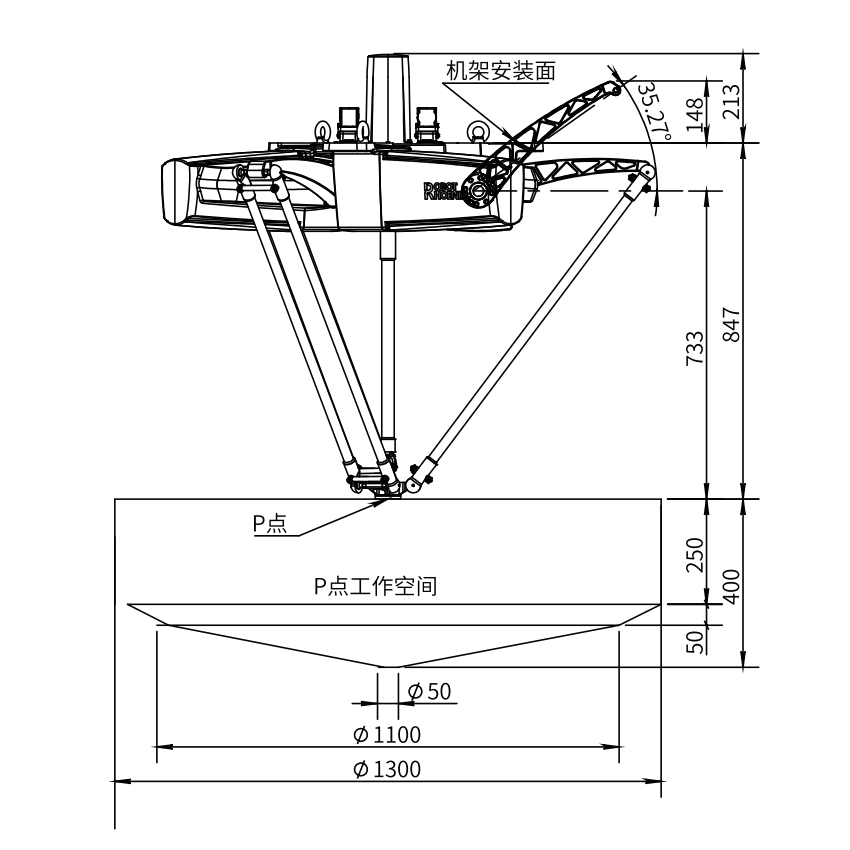
Industrial Robotic Arm Parallel Robot 2/3/4 Axis Delta Robot for Pick&Place Application
Flexible parallel robot for pick-and-place applications where the exact axis configuration depends on the product and gripper. This family is relevant for cartoning, sorting, and small-part transfer. Buyers should specify payload, cycle time, conveyor tracking, and vision requirements so the factory can confirm the right axis count.
View product →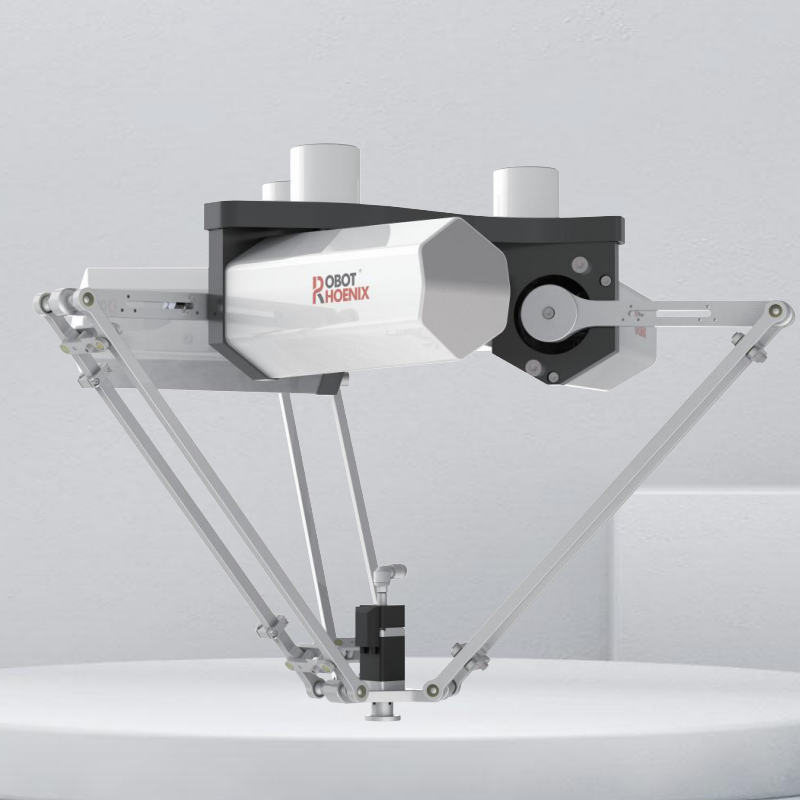
Robotphoenix New Design Industrial Robot Delta 6kg Payload 0.08mm Repeatability 2/3/4 Axis
New-design industrial delta robot with 6 kg payload and 0.08 mm repeatability. It matches applications that need more payload than a small high-speed delta while retaining fast cycle times. For El Paso packaging and assembly cells, it is a candidate when part weight, tooling mass, and repeatability all need to be balanced.
View product →El Paso Is a Cross-Border Assembly Market, Not a Generic U.S. Buying Hub
El Paso buyers rarely purchase an automated assembly system as a stand-alone machine. They buy a production outcome that must survive cross-border logistics, a bilingual workforce, just-in-time delivery to Juárez, and the audit expectations of U.S. customers.
The El Paso–Juárez–Santa Teresa corridor is one of North America’s densest manufacturing clusters for electronics, medical devices, automotive components, plastics, and contract packaging. That makes supplier selection different from buying a generic robot online: the factory must not only provide a fast robot, but also document repeatability, support end-effector changes, integrate with PLC-controlled packaging lines, and stay accountable after shipment.
For procurement teams, the most common mistake is comparing only robot price. A lower-priced SCARA or delta robot can become expensive if the supplier cannot confirm payload after tooling, cannot support vision integration, or cannot explain who owns the PLC and safety-interface scope. In a twin-plant model, delays at one station can interrupt a line that serves both El Paso and Ciudad Juárez. The right factory therefore behaves like an engineering partner: it asks for part samples, cycle-time targets, layout drawings, communication protocols, and acceptance criteria before quoting.
- Twin-plant alignment: equipment must suit both U.S. and Mexican line-side teams.
- Fast changeover: high-mix jobs demand recipe management and tooling discipline.
- Documentation control: drawings, BOMs, and acceptance criteria must be clear.
- After-sales path: response time and spare-parts planning matter after installation.
- Logistics clarity: Incoterms, customs brokers, and port of entry should be defined early.
This guide uses JORI Intelligent Technology Co., Ltd. as a benchmark China factory because its published company profile covers in-house robot R&D, controllers, 2D/3D vision, OEM support, and automated system integration. That does not replace due diligence, but it gives El Paso buyers a concrete factory-direct model to compare against local wholesalers, trading companies, and layered reseller chains.
El Paso–Juárez Automation Priority Index
A discussion framework for RFQ planning, not a market forecast. Validate each score against your own line audit, labor model, and customer requirements.
Information gain: this index combines cross-border production pressure, labor turnover, high-mix changeover, and intralogistics complexity. It is designed to help a buyer decide which cell to pilot first.
Where Automated Assembly Pays Back in El Paso and Juárez
Local payback depends less on robot speed alone and more on how well the cell absorbs product variation, operator changeover, and cross-border production schedules.
Electronics & 3C Assembly
SCARA and delta robots support connector insertion, screw driving, adhesive dispensing, label placement, and test handling. For cross-border electronics programs, standard cells with recipe management reduce changeover time and make it easier to move a proven process between lines.
Medical Device & Clean Assembly
Medical device and diagnostic manufacturing in the region demands traceability, repeatable force, and clean handling. SCARA robots and vision-guided delta systems fit blister, vial, tray, and cartridge handling; validation documentation should be confirmed at RFQ.
Automotive Components
Automotive suppliers use parallel robots and SCARA arms for small-part picking, clip insertion, inspection, and packaging. Nearshoring increases pressure for quick line changes, so modular robot cells and PLC-ready integration matter more than a single high-speed specification.
Contract Packaging & Cartoning
Carton packers, wet wipe lid applicators, and co-packers need flexible pick-and-place at conveyor speed. Delta robots with vision can handle random product orientation; compact SCARA cells can feed and seal secondary packaging.
Warehouse & Line-Side Logistics
AMRs and autonomous forklifts reduce manual transport between receiving, kitting, and shipping. In El Paso warehouses serving Juárez plants, fleet planning should include cross-dock dwell time, charging locations, and handoff to manned forklifts.
Machine Builders & Integrators
Local integrators need a factory partner that supports custom end-effectors, controller integration, and buyer-label programs. A factory with in-house controllers and vision can shorten debugging and clarify responsibility when a cell does not meet cycle time.
Six Trends Reshaping El Paso Automation Procurement
These trends explain why factory-direct engineering and information-rich RFQs are becoming more valuable than catalogue-only sourcing.
Nearshoring & USMCA
Manufacturing continues to shift closer to North American customers. El Paso and Juárez teams are asked to launch or expand lines quickly, which favors robot suppliers that can quote from standardized modules and support fast layout iterations.
High-Mix, Lower-Volume Production
Contract manufacturers often run more SKUs with shorter runs. The winning automation is flexible: recipe-driven SCARA cells, vision-guided delta pickers, and mobile robots that do not require fixed floor tape.
Labor Availability & Safety
High turnover makes cell training and error-proofing critical. Robots reduce repetitive strain and inconsistent manual placement, but only when the human-machine interface, safety controls, and maintenance routine are designed for the local team.
Factory-Direct Accountability
Buyers increasingly ask who owns the robot, controller, vision, and integration scope. Direct factory communication can reduce the “everyone blames the other supplier” risk that appears when components come from multiple resellers.
Bilingual Project Documentation
El Paso projects often involve English- and Spanish-speaking stakeholders. Drawings, I/O lists, alarms, and acceptance checklists should be clear enough for both plant teams and U.S. customers to review without ambiguity.
Pilot-First Automation
MOQ 1 set makes it practical to validate one cell before scaling. A pilot should define cycle time, yield, changeover, safety, and acceptance data so a second or third cell can be replicated with less engineering risk.
Why JORI Is a Credible China Factory Option for El Paso Buyers
JORI’s published company profile positions it as an engineering-led manufacturer rather than a pure trading layer. For cross-border buyers, that is the relevant distinction to test during supplier evaluation.
Independent R&D Capability
Founded in 2012 and based in Jinan, Shandong, JORI focuses on industrial robot R&D and production, controller and 2D/3D vision development, OEM support, and automated system integration.
Original Factory for Core Robot Lines
The product range includes delta parallel robots, SCARA robots, AGV/AMR robots, autonomous forklifts, and silicon wafer handling robots. Buyers can source multiple robot families from one factory engineering team.
Controller & Vision Under One Roof
Self-developed controllers and 2D/3D vision can shorten integration cycles. When a cell needs conveyor tracking or vision-guided placement, the factory can review the robot, controller, and vision requirement together.
OEM, Design & Buyer Label
OEM service, design service, and buyer-label options support machine builders and integrators that need a factory partner behind their own brand. Custom end-effectors and controller integration can be discussed at RFQ.
Export Experience & Fast Response
The company reports service to buyers across Southeast Asia, Eastern Europe, North America, South America, and China, with an average response time of two hours or less and a 97.06% response rate.
ISO 9001 & Onsite Verification
JORI presents ISO 9001 quality management, onsite verification, and national patents on delta, SCARA, wafer, and AGV robots, controllers, and vision. These credentials should still be matched to your project’s acceptance test.
Company Profile: A Factory-Direct Benchmark for El Paso Procurement
JORI Intelligent Technology Co., Ltd. was founded in 2012 in Jinan, Shandong, China. Its published profile describes a high-tech manufacturer specializing in industrial robot R&D and production, controller and 2D/3D vision development, OEM support, and automated system integration, with 500+ employees and a 10,000+ m² factory area.
For El Paso buyers, that matters because a cross-border automated assembly project usually involves more than a robot arm: end-effector design, PLC communication, vision, safety interface, spare parts, and commissioning support. When the robot, controller, vision, and integration team are under one factory roof, RFQ clarification is less likely to fragment. The practical next step is not to accept a brochure claim, but to send part samples, cycle-time targets, layout constraints, and acceptance criteria for a configuration review.
Local procurement teams should also compare a factory-direct quote against a wholesaler or reseller quote on total cost of ownership: engineering hours, changeover time, spare-parts logistics, and the cost of unclear responsibility after shipment.

Comparing a China Factory with a Local Wholesaler or Reseller
El Paso buyers often ask whether a local wholesaler is faster than a China factory. The answer depends on customization, engineering accountability, and how much integration risk the buyer wants to own.
| Buyer Priority | Factory-Direct Benchmark | Typical Wholesaler / Reseller | RFQ Question to Ask |
|---|---|---|---|
| Custom end-effectors and OEM | Robot, controller, vision, and tooling requirements can be reviewed together by the factory engineering team. | May offer catalogue models with limited changes; customization can be passed to a third party. | Will the factory review gripper mass, center of gravity, and product samples before quoting? |
| Controller and vision integration | Self-developed controllers and 2D/3D vision can create a single technical escalation path. | Multiple brands may be combined; responsibility can split between robot, vision, and PLC suppliers. | Who owns PLC communication, vision calibration, and debugging after shipment? |
| MOQ and pilot validation | Standard delta, SCARA, and AMR/AGV platforms can be ordered from 1 set, supporting a pilot cell. | Stock may be available, but pilot support and configuration advice depend on the reseller. | Can we start with one cell, prove cycle time, and then scale? |
| Delivery terms for El Paso | Accepted terms include FOB, CFR, CIF, EXW, CIP, FCA, CPT, and express delivery. | Local stock may reduce transit time, but technical scope may be narrower. | Which Incoterm covers our El Paso or Santa Teresa delivery point, and who handles customs? |
| After-sales accountability | Factory engineering escalation, spare-parts planning, and response-time target can be discussed directly. | Support quality varies; the reseller may depend on the original manufacturer for technical answers. | What is the response path, spare-parts list, and warranty scope for the cell? |
| Verification evidence | ISO 9001, onsite verification, patents, trade capacity, credit, and transaction records can be reviewed. | Evidence depends on the reseller’s documentation and supplier relationships. | Can we review assessment, credit, trade history, and product acceptance records? |
Common Local Procurement Questions About China Automated Assembly Systems
These are the questions El Paso machine builders, contract manufacturers, and cross-border plant teams should clarify before issuing a purchase order.
Should we buy from a local El Paso wholesaler or direct from a China factory?
What is the minimum order quantity for JORI industrial robots?
Does JORI offer OEM, private label, or custom robot solutions?
Should we choose a delta robot or a SCARA robot for our El Paso assembly cell?
Can the robots integrate with existing packaging, cartoning, or wet wipe lid applicator machines?
How are shipping, customs, and delivery handled for El Paso or Juárez?
Which payment terms and currencies are accepted?
What verification evidence can procurement review before ordering?
What response time and after-sales support should we expect?
Note: Product figures and company credentials reflect the provided source content. Final specifications, compliance requirements, lead time, and delivery scope must be confirmed in the quotation and project acceptance documents.
Ready to Shortlist a China Automated Assembly Factory for El Paso?
Send your product samples, cycle-time target, layout drawing, PLC/vision requirements, and delivery destination. The factory can then respond with a realistic robot configuration, tooling questions, and a quotation path instead of a generic catalogue price.
Get a QuoteTechnical inquiries: info@joribot.com